Where to Stay in Ho Chi Minh City: Neighborhoods, Hotels & Honest Advice
Choosing where to stay in Ho Chi Minh City (Saigon) shapes your entire trip. This guide breaks down the best neighborhoods by travel style and budget, with honest assessments of what each area delivers — and what it doesn't.
Tickets & tours
Live prices and dates from our booking partner. If you book, we may earn a commission at no extra cost to you.
TL;DR
- District 1 is the best base for first-timers: central, walkable, and close to top attractions like the Reunification Palace and Bến Thành Market.
- Budget hotels start around $25–$35/night; solid 4-star options run $50–$100; luxury 5-stars from around $100 off-peak.
- District 3 offers a quieter, more local feel at lower prices — only 10–20 minutes from central sights.
- Binh Thanh suits longer stays and those who prefer a residential pace near Landmark 81.
- Peak season (December to February) and Tết push prices up across the board — see the best time to visit guide for timing advice.
Understanding Ho Chi Minh City's Layout Before You Book
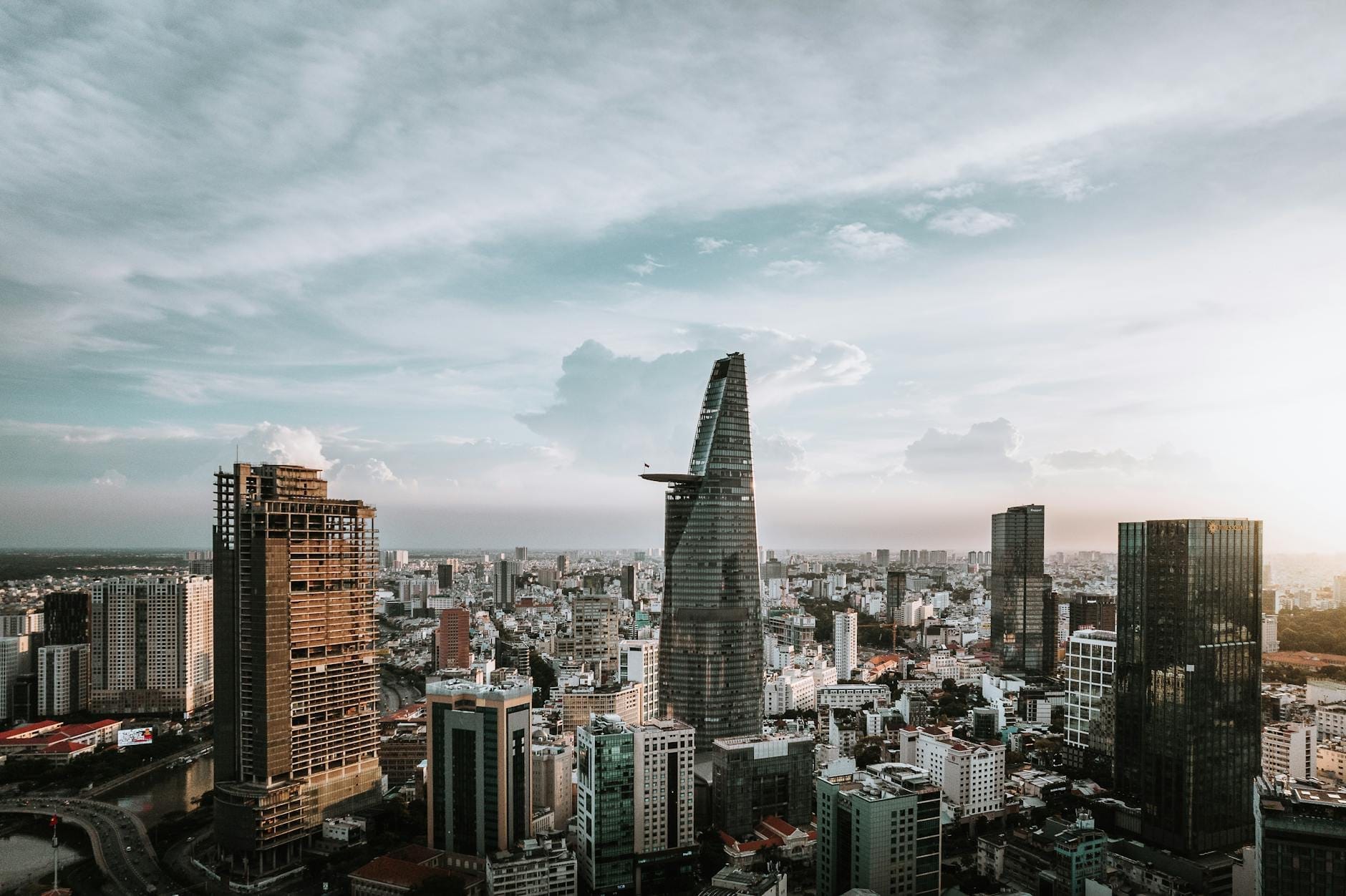
Ho Chi Minh City (officially Thành phố Hồ Chí Minh, still widely called Saigon) is a sprawling city of nearly 10 million people. Its historic core is divided into numbered districts, with District 1 functioning as the commercial and tourist center. Getting your bearings before booking matters: staying in the wrong area can mean 30–40 minutes in traffic just to reach the sites you came to see, and traffic here is no joke.
The city was administratively restructured in 2021 to incorporate surrounding areas, but for most travelers, the relevant zones are District 1, District 3, Binh Thanh, and Cho Lớn (Chinatown). Each has a distinct character and serves different types of travelers. Public transport is improving — Metro Line No. 1 is operational, and Line No. 2 remains in the planning stages — but for now, most people navigate by ride-hailing apps like Grab.
💡 Local tip
Install Grab before you arrive. It covers motorbike taxis, cars, and food delivery across HCMC. Fares are metered and transparent, which removes the hassle of negotiating with street taxis.
District 1: The Best Base for Most Travelers
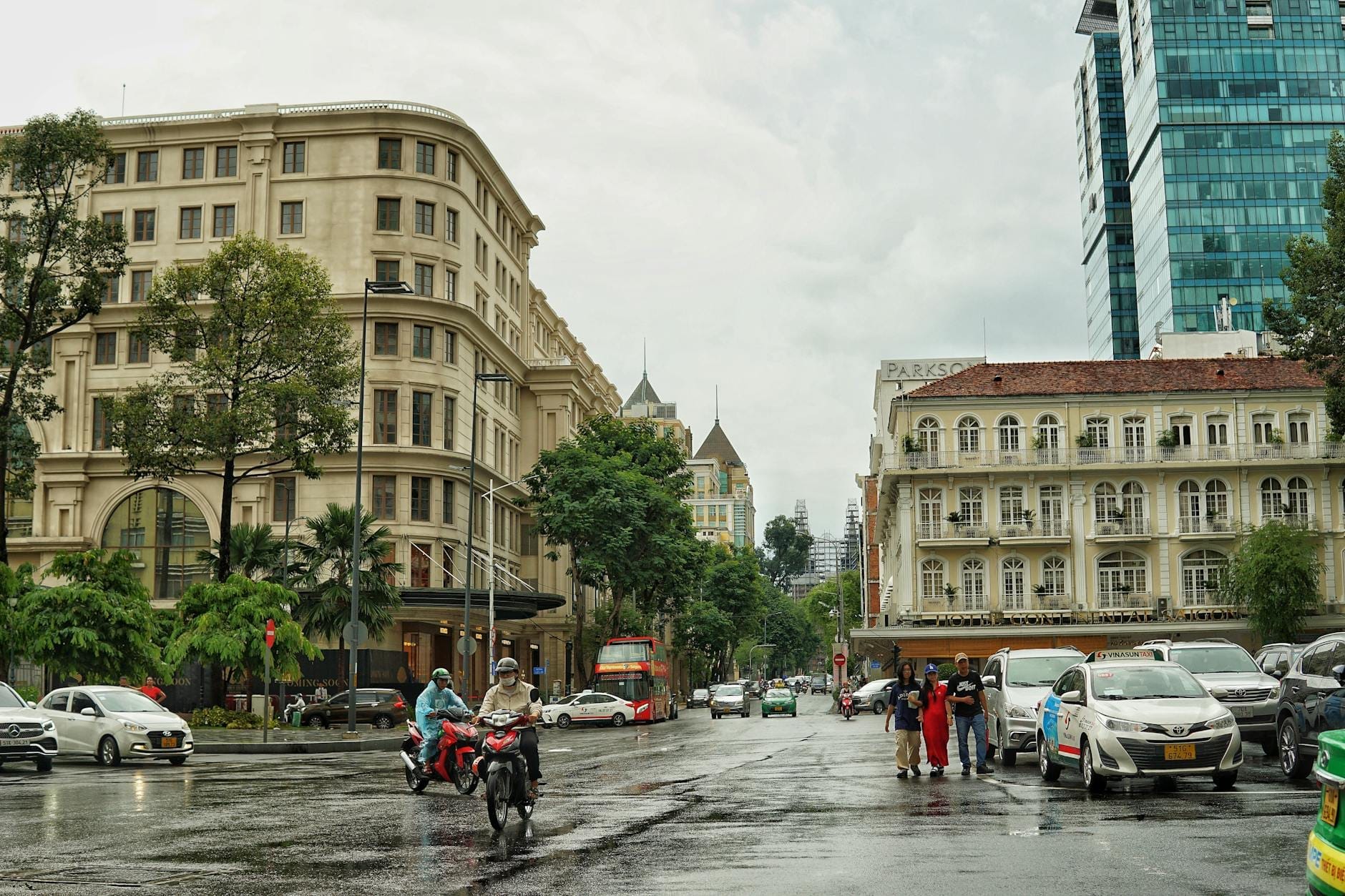
If this is your first trip to Ho Chi Minh City, District 1 is almost certainly where you should stay. It contains the highest concentration of historic sites, restaurants, rooftop bars, and booking offices for day tours. The key thing many guides get wrong: District 1 is not one uniform neighborhood. It has at least three distinct pockets, each with a different atmosphere.
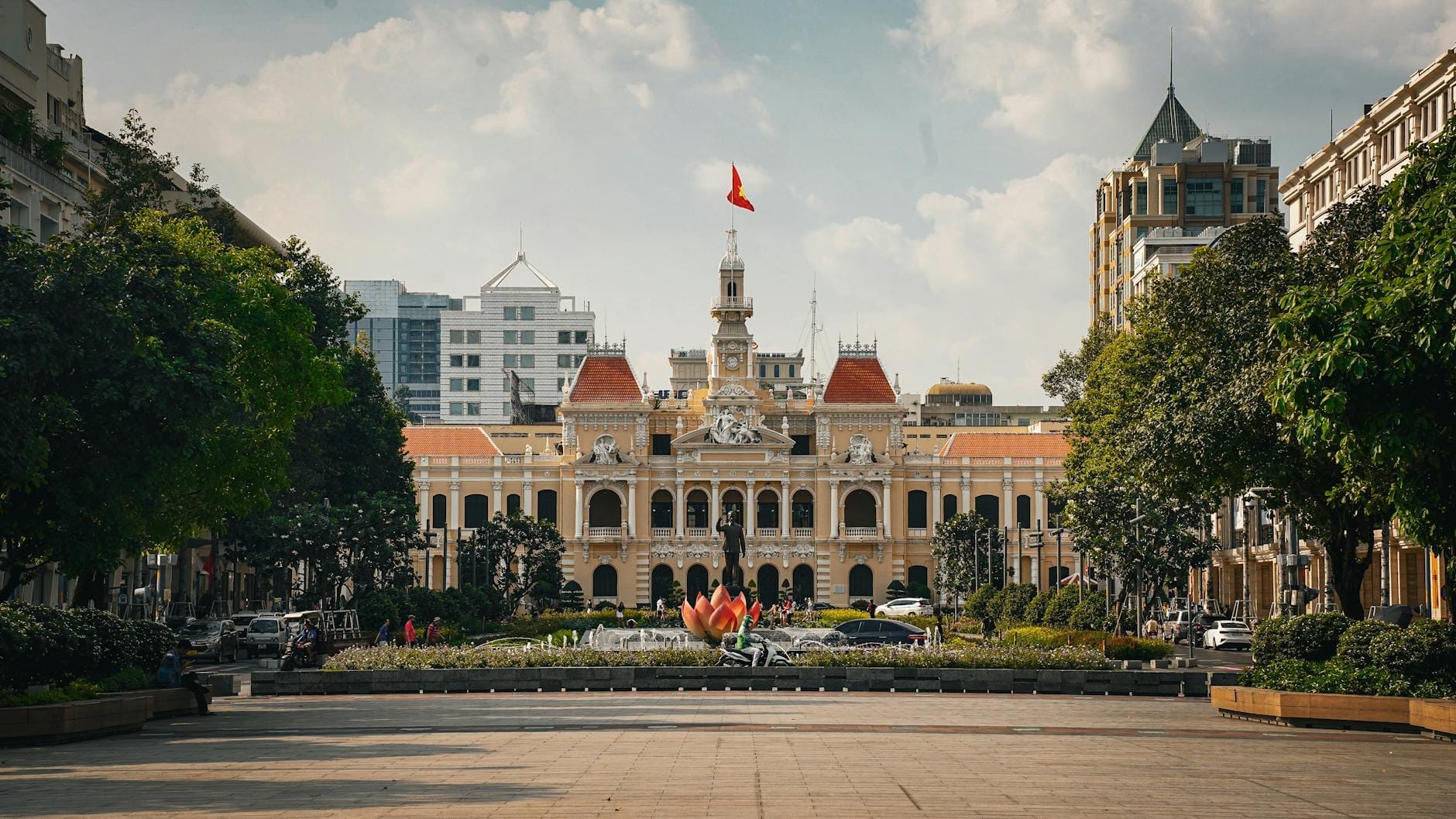
- Nguyen Hue & Dong Khoi corridor The upscale, walkable heart of the city. Close to the Saigon Opera House, the Reunification Palace, and luxury hotels. Calm during the day, with wine bars and restaurants in the evening. This is not backpacker territory.
- Bến Thành Market area More commercial, noisier, and very central. Good mid-range hotels here, easy access to street food and transport. Budget travelers do well in this zone.
- Bùi Viện Walking Street & Phạm Ngũ Lão The classic backpacker strip. Cheap hostels, bars that open at noon and close whenever, and non-stop noise on weekend nights. Great if that's what you want — genuinely exhausting if it's not.
On the hotel side, the range is wide. Budget properties near Bến Thành like Indochine Ben Thanh or Mia Hotel run around $25–$35/night. Mid-range 4-star options such as Liberty Central Citypoint or Cochin Zen fall in the $50–$100 range. For 5-star stays, the Reverie Saigon and Park Hyatt Saigon are the flagship names, starting around $150–$200 during peak season but occasionally dipping to $100 or below in the rainy months. The Nguyen Hue Walking Street is one of the city's most pleasant evening strolls and worth being within easy reach of your hotel.
⚠️ What to skip
Hotels advertising 'District 1 location' sometimes sit on the outer edges, 2–3 km from the central landmarks. Always check the map pin against Ben Thanh Market or the Reunification Palace before confirming a booking.
District 3: Quieter Streets, Local Feel, Lower Prices
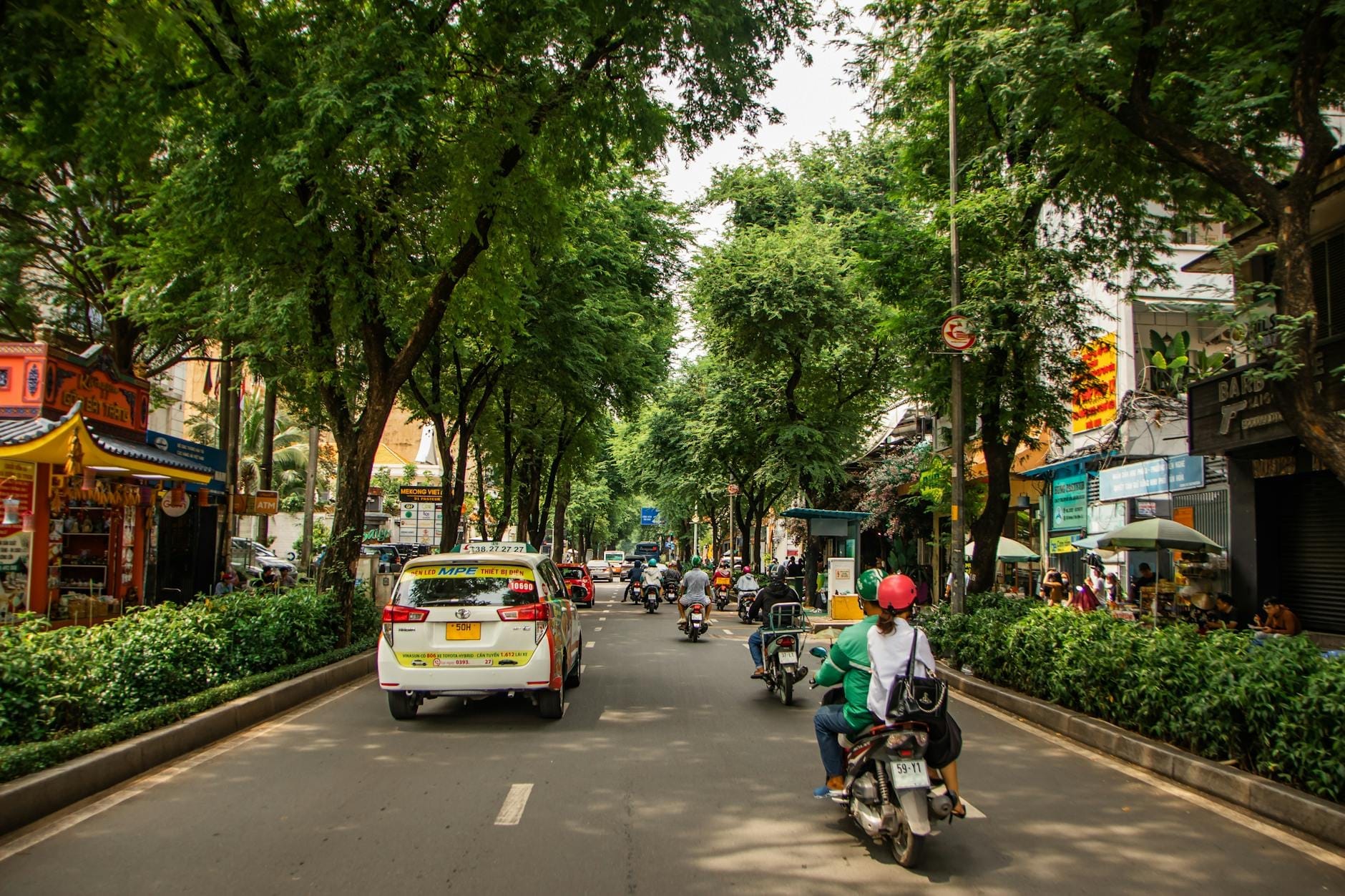
District 3 is the most underrated place to stay in Ho Chi Minh City. It borders District 1 to the north and west, meaning a Grab car puts you at the War Remnants Museum, the Reunification Palace, or Bến Thành Market in 10–20 minutes, depending on traffic. Prices for equivalent accommodation run 15–25% lower than District 1, and the streets are notably calmer.
The neighborhood has genuine local texture: café culture is strong, the streets are tree-lined in parts, and the Tân Định Church (the pink church) is a short walk from many hotels here. District 3 suits travelers who have done HCMC before and want something more residential, or anyone spending a week or longer in the city. It's not for those who want to roll out of the hotel and immediately be in the thick of tourist sights — for that, District 1 still wins.
Binh Thanh: For Longer Stays Near Landmark 81
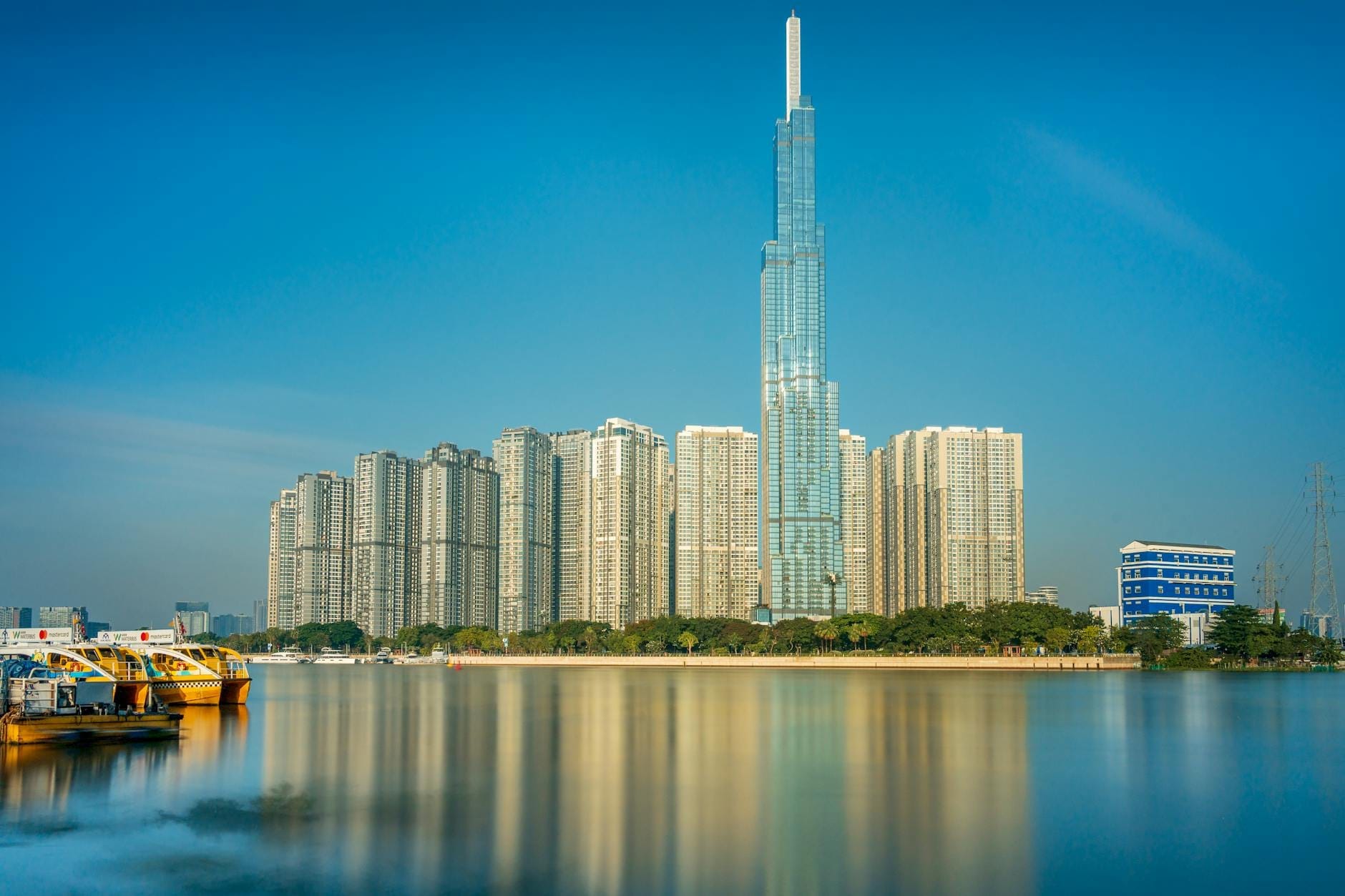
Binh Thanh sits just north of District 1 across the Saigon River bend and is home to Landmark 81, Vietnam's tallest building, which has a full commercial and dining complex at its base. The neighborhood has a genuinely local residential character: it's where many expats and long-term visitors end up, drawn by modern apartment-style hotels and serviced residences that offer better value for stays of five nights or more.
The tradeoff is distance. Binh Thanh is a solid 20–30 minutes from District 1's central landmarks in evening traffic. For a short city break focused on ticking off major attractions, this is inconvenient. For someone combining HCMC with remote work, or making it a base between day trips, it works well. The canal-side streets and local markets give it a pace that District 1 simply cannot offer.
Cho Lớn: Chinatown for the Culturally Curious
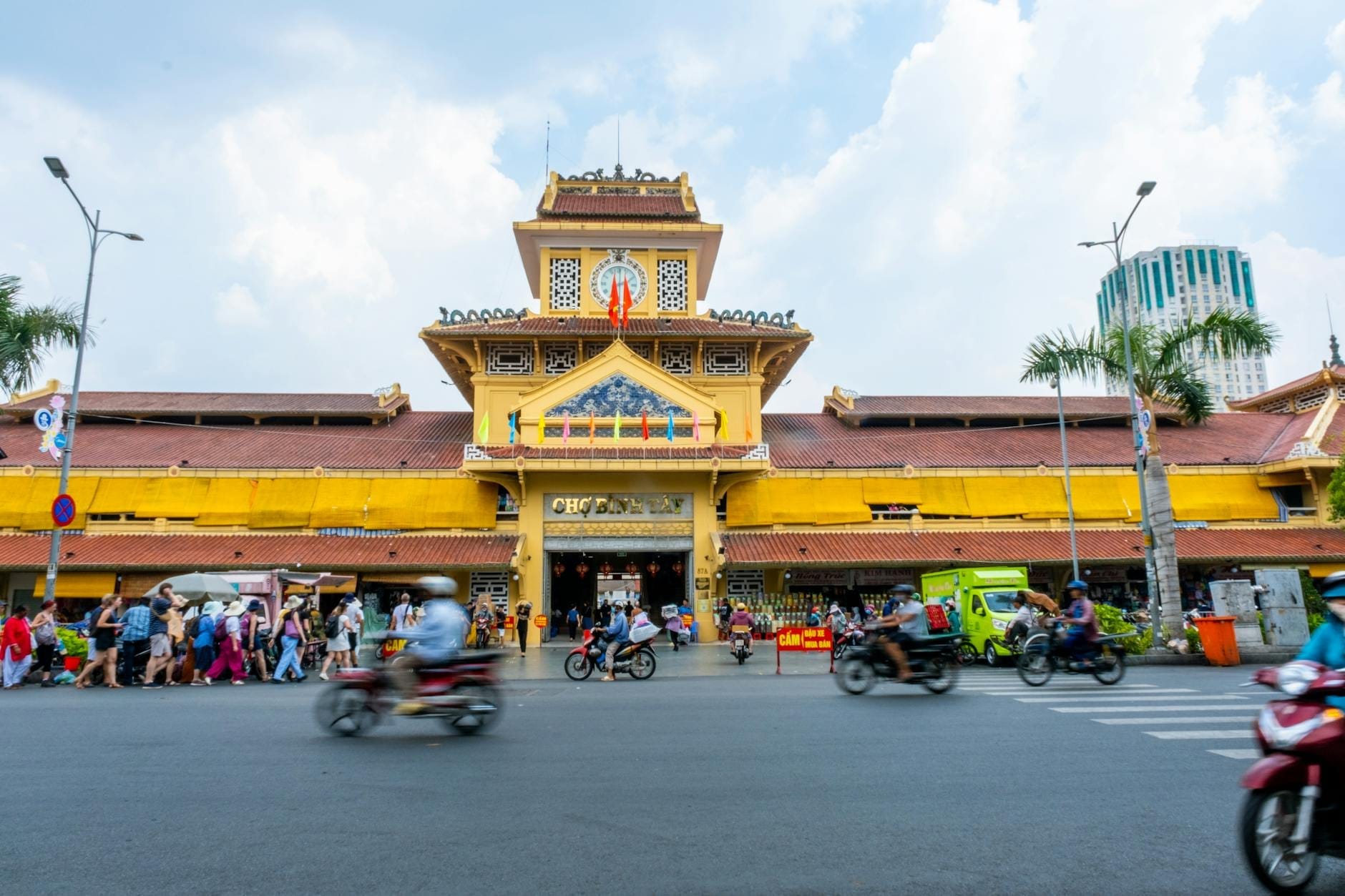
Cho Lớn is the commercial and cultural Chinatown of Ho Chi Minh City, located about 5 km west of District 1. Very few international tourists base themselves here, but those who do get access to some of the city's most atmospheric pagodas — including the Thiên Hậu Pagoda and the Bình Tây Market — along with streets that operate entirely independently of the tourist economy.
Hotel options in Cho Lớn are limited and mostly targeted at domestic business travelers. English is less commonly spoken than in District 1. Recommended for experienced Southeast Asia travelers who have already covered HCMC's main attractions and want a different angle on the city. Not the right base for a first trip.
✨ Pro tip
If you're staying in District 1 and want to experience Cho Lớn, it's easy as a half-day trip rather than a base. A Grab ride from Ben Thanh runs 15–25 minutes and under 80,000 VND depending on traffic.
Budget Breakdown and Booking Advice
Ho Chi Minh City offers genuinely good value compared to Bangkok or Singapore at every price point, but prices have risen steadily since 2022. Here is a realistic breakdown based on current market rates across the main neighborhoods.
- Budget ($15–$35/night) Hostels and guesthouses around Phạm Ngũ Lão and Bùi Viện. Fan rooms go cheap; air-conditioned en-suite rooms with decent reviews start around $25. Mia Hotel and Indochine Ben Thanh are frequently cited as reliable picks at this end.
- Mid-range ($50–$100/night) 4-star hotels with pools, gyms, and breakfast. This tier punches well above its price in HCMC. Liberty Central Citypoint and Cochin Zen are strong District 1 options. In District 3, the same budget buys notably more space.
- Luxury ($100–$250+/night) True 5-star properties with serious service and facilities. The Reverie Saigon is the standout for design and service; Park Hyatt Saigon for location. Sofitel Saigon Plaza is a step below on style but solid on location. Off-peak (June to September) these properties drop significantly.
- Serviced apartments ($40–$80/night) Best value for stays over five nights. Binh Thanh and District 3 have the strongest supply. Rates are per night but usually require a minimum two or three night booking.
For booking platforms, Agoda tends to offer the best rates for HCMC specifically, often undercutting Booking.com on the same property. Always cross-check with the hotel's direct website — some properties (particularly boutique hotels) match online rates for direct bookings and throw in early check-in or breakfast. Hotels.com and its sister platform Expedia list strong options including the Nikko Saigon and Majestic Saigon for those who prefer collecting loyalty points.
Seasonal Timing and What It Means for Your Booking
Ho Chi Minh City has a tropical monsoon climate with two distinct seasons. The dry season runs roughly December through April, and the rainy season covers May to November. For accommodation planning, the more relevant pressure point is Tết (Vietnamese Lunar New Year, usually falling in late January or early February) and the December to February peak. During this window, hotel prices across District 1 spike, availability in the better-reviewed mid-range properties tightens, and the city's streets and attractions are significantly more crowded. Book at least six to eight weeks ahead if you're traveling during this period. See the full best time to visit Ho Chi Minh City breakdown for more detail on crowd patterns and what each season actually looks like on the ground.
The rainy season (May to November) brings afternoon downpours that can briefly flood low-lying streets, including parts of Bùi Viện. This is rarely a serious problem for more than 30–60 minutes at a time, but it's worth knowing if you're planning to walk everywhere. The upside: 5-star rates in this period can drop to their lowest of the year, and the city has far fewer tour groups. For value-oriented travelers with some flexibility on weather, June to September is the sweet spot.
ℹ️ Good to know
Metro Line No. 1 (Bến Thành to Suối Tiên) is now operational and runs through District 1, making it easier to move between the central area and the eastern suburbs without relying entirely on Grab. Line No. 2 remains in the planning stages. The network remains limited, so most visitors still combine metro trips with ride-hailing.
If you're planning day trips out of the city — to the Củ Chi Tunnels or the Mekong Delta — staying in District 1 keeps your logistics simple. Most tour pickups depart from the central district, and early morning starts (common for Mekong trips) are easier when you're not adding a 30-minute Grab ride before the bus even leaves. Check the day trips from Ho Chi Minh City guide for departure logistics and what to prioritize.
FAQ
Which district is best to stay in Ho Chi Minh City for first-time visitors?
District 1 is the clear first choice. It places you within walking distance of the city's main attractions, has the widest range of hotels across all budgets, and is the hub for tour pickups, rooftop bars, and restaurant options. The Nguyen Hue and Dong Khoi area within District 1 is the most central and walkable pocket.
Is District 3 worth staying in compared to District 1?
Yes, particularly if you want a quieter base or are staying more than four or five nights. District 3 is 10–20 minutes from District 1's sights, noticeably calmer, and typically 15–25% cheaper for equivalent accommodation. It's not the obvious choice for a short trip, but for independent travelers it offers real advantages.
How much does a hotel in Ho Chi Minh City cost per night?
Budget guesthouses and hostels run around $15–$35 per night. Mid-range 4-star hotels cost $50–$100. Luxury 5-star properties start around $100–$150 off-peak and can reach $200–$300 during December to February and around Tết. Serviced apartments in Binh Thanh or District 3 offer good value for stays of five nights or more.
Is it safe to stay near Bùi Viện Walking Street?
Bùi Viện is safe in the standard sense — it's a busy tourist area with a constant police presence. The real issue is noise. The strip runs bars and clubs until the early hours, and street-facing rooms in budget hotels can be genuinely loud on Friday and Saturday nights. If you're a light sleeper or planning early starts, choose a hotel set back from the main street or stay in a quieter part of District 1.
When should I book hotels in Ho Chi Minh City in advance?
For travel during December to February (especially around Tết), book six to eight weeks ahead for anything well-reviewed in the mid-range and above. The rest of the year, two to three weeks is typically sufficient. During the rainy season (May to October), last-minute bookings are often available at reduced rates.
Tickets & tours
Live prices and dates from our booking partner. If you book, we may earn a commission at no extra cost to you.
Planning a trip? Discover personalized activities with the Nomado app.