Reunification Palace (Dinh Độc Lập): A Living Monument to Vietnam's Defining Moment
The Reunification Palace sits at the center of modern Vietnamese history. Preserved exactly as it was on April 30, 1975, the building offers a rare, unfiltered look at how power was housed, exercised, and ultimately surrendered. This guide covers what to expect, when to go, and how to make the most of your visit.
Quick Facts
- Location
- 135 Nam Ky Khoi Nghia Street, District 1, Ho Chi Minh City
- Getting There
- 10–15 min walk from Ben Thanh Market; accessible by Grab, taxi, or public bus from central District 1
- Time Needed
- 1.5 to 2.5 hours for a thorough visit
- Cost
- Paid admission; verify current prices on arrival or via official channels before visiting
- Best for
- History enthusiasts, architecture lovers, photographers, and anyone seeking context for Vietnam's 20th century
- Official website
- dinhdoclap.gov.vn
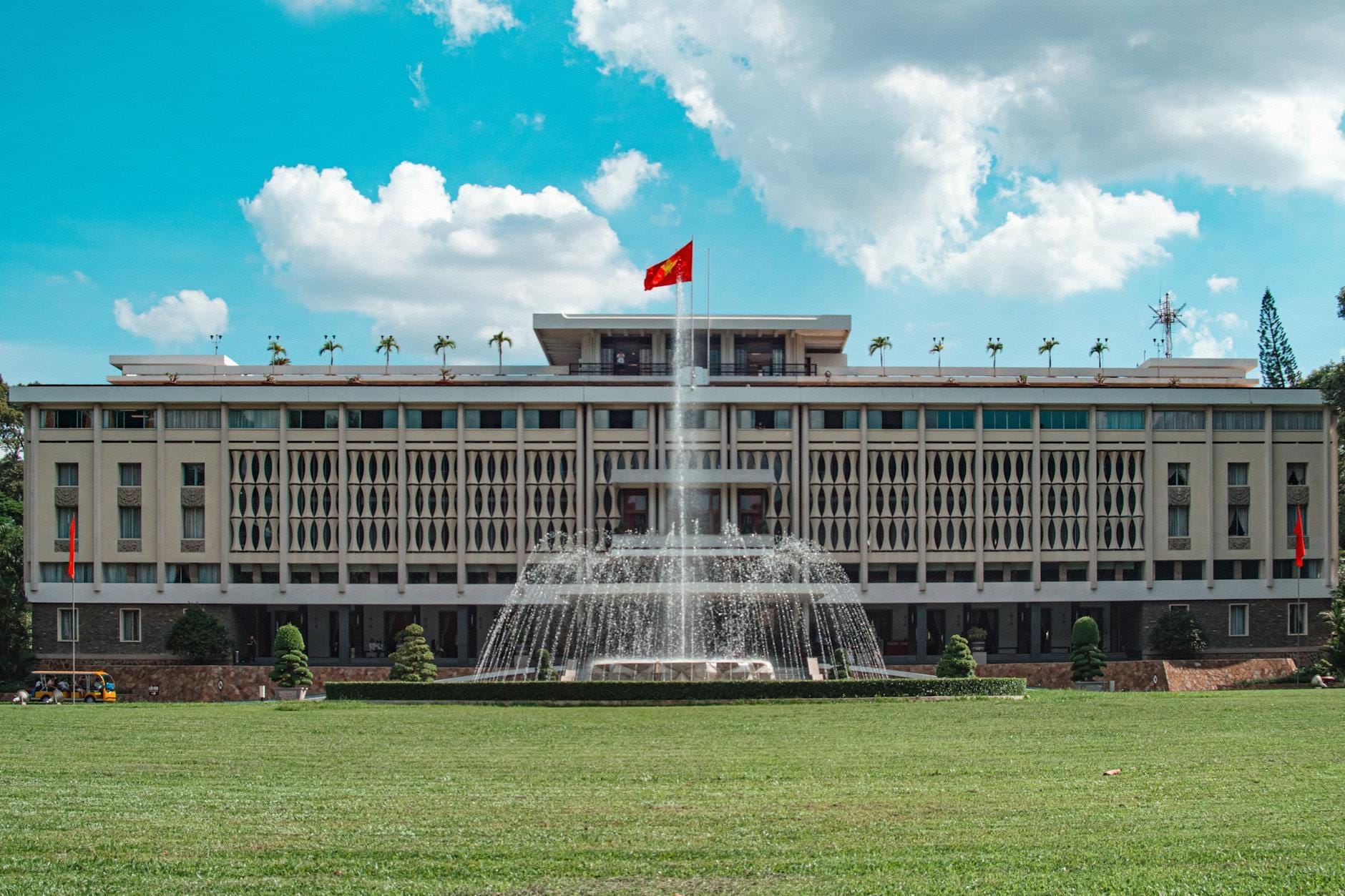
What the Reunification Palace Actually Is
The Reunification Palace, officially called Dinh Độc Lập (Independence Palace), is not a typical museum. There are no glassed-in artifacts, no chronological display cases, no audio tour leading you through a curated narrative. What you get instead is a building preserved largely intact: the same lacquered conference tables, the same rotary phones, the same war maps still pinned to the walls of the basement command center. Time stopped here in a very deliberate way.
The palace sits at 135 Nam Ky Khoi Nghia Street in District 1, occupying a site with deep colonial roots. The original Norodom Palace was constructed here by the French in 1871. After Vietnamese independence, the structure was renamed and repurposed. In February 1962, two South Vietnamese pilots bombed the building in a failed assassination attempt on President Ngo Dinh Diem. Rather than repair the old structure, the government commissioned a new one. Architect Ngo Viet Thu, the first Vietnamese winner of the Grand Prix de Rome, designed the replacement. Construction ran from 1962 to 1966, resulting in the current building: a confident piece of mid-century modernism that fuses French spatial logic with Vietnamese symbolic motifs.
On April 30, 1975, a North Vietnamese tank crashed through the palace gates, and the South Vietnamese president surrendered inside this building. That moment ended the war and gave the palace its current name. Today it functions as a state guest house for official ceremonies and simultaneously as a public museum, which creates an unusual atmosphere: formal, slightly hushed, and genuinely weighted with historical significance.
💡 Local tip
Arrive shortly after opening on a weekday morning. The large reception halls and rooftop terrace are far less congested before tour groups arrive, typically between 9:30 and 11:00 AM.
The Architecture: What Ngo Viet Thu Built and Why It Matters
From the street, the palace reads as a composed, horizontal structure set behind a wide lawn. The facade is a grid of concrete brise-soleil fins that filter light and reduce heat, a practical and elegant solution for Saigon's climate. The building's footprint, seen from above, incorporates the Vietnamese character for luck. These symbolic gestures are layered throughout: the layout of rooms, the placement of stairs, the ratio of open to enclosed space. Ngo Viet Thu was working within the conventions of international modernism while encoding a cultural vocabulary that would have been immediately legible to Vietnamese visitors.
The interiors reflect the ambitions of a government that wanted to project stability and sophistication. State reception rooms are fitted with lacquerwork panels, silk furnishings, and hand-knotted carpets. The banquet hall has a formal grandeur that feels almost theatrical now. What keeps it from feeling merely decorative is the specificity of the preservation: the phones still have the exchange numbers of Saigon ministries, the card tables in the recreation room still have chips stacked on them. These details, small and slightly absurd, give the palace a quality that polished restorations rarely achieve.
Tickets & tours
Live prices and dates from our booking partner. If you book, we may earn a commission at no extra cost to you.
Private full-day trip from Ho Chi Minh City to Mekong Delta
From 52 €Instant confirmationFree cancellationLandmarks of Ho Chi Minh City half-day tour
From 33 €Instant confirmationFree cancellationCu Chi tunnels guided experience from Ho Chi Minh City
From 33 €Instant confirmationFree cancellationHalf-day Cu Chi Tunnels guided tour from Ho Chi Minh City
From 21 €Instant confirmationFree cancellation
Moving Through the Building: Floor by Floor
Visitors move through the palace largely on their own, which is one of its strengths. The upper floors hold the formal state rooms: reception halls, the president's private quarters, a cinema screening room, and a rooftop helipad where the last helicopter departed on April 29, 1975, one day before the final surrender. The rooftop offers clear sightlines over the tree canopy of District 1 and is worth the climb for both the view and the context.
The basement is where the visit shifts gear entirely. This is the wartime command center, and it is essentially unchanged. Long corridors connect radio rooms, map rooms, and communications stations. The equipment is analogue and heavy, the kind of hardware that required operators who knew their machines intimately. The fluorescent lighting and low ceilings create a sense of compression that the open upper floors do not. Spend time here. It is the most grounding part of the visit.
The grounds surrounding the palace are also worth a slow walk. Two tanks are displayed near the main gate, representing the vehicles that entered on April 30, 1975. The lawn is large and well-maintained, and on weekday mornings it is often nearly empty. If you are planning a broader day in central Saigon, the palace pairs naturally with a visit to the War Remnants Museum, which is about ten minutes away on foot and provides complementary context from a different perspective.
When to Visit and What the Experience Is Like at Different Times
The palace opens in the morning and closes for a midday break before reopening in the afternoon. This is a common pattern for government-managed sites in Vietnam, so confirm current hours before planning your visit. The midday closure catches a surprising number of visitors off guard.
Early mornings on weekdays offer the calmest experience. The reception halls, which can feel slightly processional when packed with tour groups, become genuinely contemplative when nearly empty. You can stand in the center of the main conference room and hear the ceiling fans. By late morning, the pace changes considerably: school groups and organized tours arrive in overlapping waves, and the basement corridors, which are narrow, become slow-moving queues.
Afternoons, particularly in the dry season between November and April, bring strong light through the western-facing windows of the upper floors. Photographers will find the afternoon light useful for the rooftop and the state reception rooms. During the rainy season, roughly May through October, afternoon visits can be interrupted by heavy downpours. The palace itself is fully enclosed, so rain is not a problem inside, but the walk across the grounds becomes wet quickly. Bring a compact umbrella or check the forecast.
⚠️ What to skip
The palace closes for a midday break and may also close partially or fully for official state functions. Check hours before you go, as posted schedules can change without much notice.
Historical Context: Why This Building Carries So Much Weight
To understand why the Reunification Palace matters, it helps to understand what it was built to represent. The South Vietnamese government of the early 1960s was attempting to establish legitimacy, modernity, and permanence simultaneously. The palace was intended to embody all three. It was designed by a Vietnamese architect, built using Vietnamese labor, and decorated with Vietnamese art. The French colonial association of the previous Norodom Palace was explicitly being replaced by something that claimed a different identity.
That the building survived 1975 intact, and that it was preserved rather than demolished or repurposed beyond recognition, is itself historically significant. The choice to keep it as a museum and state site reflects a complicated relationship with recent history that Vietnam continues to navigate. Visitors from countries that were involved in the war, particularly American travelers, often find the experience unexpectedly affecting. The building does not editorialize aggressively. It simply exists, preserved, making its own argument.
For broader historical context about the city and its layers of colonial and post-colonial history, the Ho Chi Minh City Museum is a short walk away and covers a longer arc of the city's development. The nearby Saigon Central Post Office and Notre-Dame Cathedral illustrate the French colonial period the palace was designed to supersede.
Practical Details for Your Visit
The palace is centrally located in District 1 and easy to reach from most hotels in the city center. A Grab ride from Ben Thanh Market takes under five minutes. On foot from the market it is a comfortable ten to fifteen minute walk along Nam Ky Khoi Nghia Street, which is tree-lined and has reasonable footpaths by Saigon standards.
Dress modestly. While the palace is not a religious site, it is a government building and state ceremonial venue. Shorts and sleeveless tops are generally accepted but covered shoulders and knees are more appropriate and show respect for the site's continued official function. Shoes with soles that can handle polished marble floors are worth thinking about: some of the indoor surfaces are smooth and can be slippery.
Accessibility within the palace is partial. The upper floors are reachable by elevator, but the basement corridors are narrow and not designed for wheelchair access. If mobility is a concern, the ground floor reception rooms and the exterior grounds are the most accessible parts of the visit.
Photography is permitted throughout most of the building, including the basement. The state rooms on the upper floors provide the most visually striking interiors. For a broader sense of how to structure a day around the palace and other nearby attractions, the Ho Chi Minh City itinerary guide offers practical sequencing advice.
Who Will Get the Most From This Visit, and Who Might Not
Travelers with a genuine interest in 20th-century history, Cold War geopolitics, or Southeast Asian modernist architecture will find the Reunification Palace rewarding and worth extended time. The building rewards slow, attentive visitors who read the room labels and take the basement seriously.
Travelers looking for a dynamic, interactive experience may find the pace too slow. There are no multimedia exhibits, no dramatized displays, and no guided audio tour at most visit times. The building communicates through objects and space rather than interpretation. Young children tend to find it difficult to engage with unless they have a specific reason for being there.
It is also worth stating plainly: the palace is not the most emotionally charged historical site in the city. The War Remnants Museum, a short walk away, is considerably more direct in its presentation of the war's human cost. The palace is more architectural and political than visceral. That is not a flaw, just a difference worth knowing before you go.
Insider Tips
- The basement command center is the highlight for most visitors, but it is easy to rush through. Budget at least 30 minutes specifically for the basement and read the labels on the radio and communications equipment — they give specific operational context that the upper floors do not.
- The rooftop helipad is often overlooked because it requires walking up a final staircase that is not prominently signed. Ask staff at the top floor if the rooftop access is open that day — it usually is, and the perspective over central Saigon is genuinely useful for orientation.
- The palace grounds contain two of the actual tanks involved in the April 30, 1975 breach. Tank 843 and Tank 390 are displayed near the main gate. These are not replicas. The serial numbers and battle markings are documented.
- If you visit during the late dry season (February to April), the trees on the grounds are at their fullest and provide meaningful shade. The palace facade photographs best in morning light from the Nam Ky Khoi Nghia side before direct sun hits the concrete fins.
- The gift shop near the exit carries a range of books on Vietnamese architecture and history that are difficult to find elsewhere at reasonable prices. The titles on Ngo Viet Thu and mid-century Vietnamese modernism are particularly good value for architecture-focused visitors.
Who Is Reunification Palace For?
- History travelers with specific interest in the Vietnam War period and its aftermath
- Architecture enthusiasts interested in mid-century modernism and Southeast Asian design
- Photographers looking for dramatic interiors, wide facades, and rooftop city views
- Visitors wanting a grounded, non-sensationalized encounter with a defining moment in Vietnamese history
- Travelers building a full-day historical itinerary in District 1 alongside the War Remnants Museum and nearby colonial landmarks
Nearby Attractions
Other things to see while in District 1 (Colonial Quarter):
- Bến Nghé Canal & Riverside Walk
The Bến Nghé Canal cuts through the heart of District 1 as one of Ho Chi Minh City's oldest urban waterways, linking the Saigon River to the city's colonial core. Free to walk any hour of the day, the riverside path offers a grounded, unhurried perspective on a city that rarely slows down.
- Bến Thành Market
Bến Thành Market has anchored the heart of Saigon since 1912 and remains one of Ho Chi Minh City's most recognizable landmarks. With nearly 1,500 booths spread across 13,000 square meters, it sells everything from fresh produce and dried seafood to ao dai fabric, lacquerware, and street food. This guide covers the realities of visiting, including when it is worth your time and when it is not.
- Bitexco Financial Tower & Saigon Skydeck
The Bitexco Financial Tower is District 1's most recognizable skyscraper, its lotus-inspired silhouette rising 262 meters above the Saigon River. The Saigon Skydeck on the 49th floor offers a glass-enclosed, 360-degree panorama that takes in the whole city at once, from colonial rooftops to the river bends to the sprawling suburbs beyond.
- Saigon Central Post Office
Built between 1886 and 1891 and attributed to Gustave Eiffel's engineering office, the Saigon Central Post Office is one of the finest French colonial buildings in Southeast Asia. It functions as a working post office to this day, meaning you can mail a postcard home from inside a genuine architectural landmark. Free to enter and centrally located in District 1, it earns its place on most itineraries.
Planning a trip? Discover personalized activities with the Nomado app.