War Remnants Museum: An Honest Guide to Saigon's Most Sobering Attraction
The War Remnants Museum in District 3 is the most emotionally demanding attraction in Ho Chi Minh City, and one of the most important. Housing photographic archives, military hardware, and documentation of wartime consequences, it draws hundreds of thousands of visitors annually for good reason. This guide tells you what to expect, how long to allow, and how to approach the experience with the gravity it deserves.
Quick Facts
- Location
- 28 Võ Văn Tần Street, Ward 6, District 3, Ho Chi Minh City
- Getting There
- 10–15 min walk from Reunification Palace (approx. 1 km); taxi or ride-hail from District 1 takes under 10 min
- Time Needed
- 2–3 hours minimum; allow up to 4 if you read every exhibit
- Cost
- 40,000 VND (approx. $1.70 USD) per adult
- Best for
- History, photography, cultural understanding, serious travelers
- Official website
- baotangchungtichchientranh.vn/en
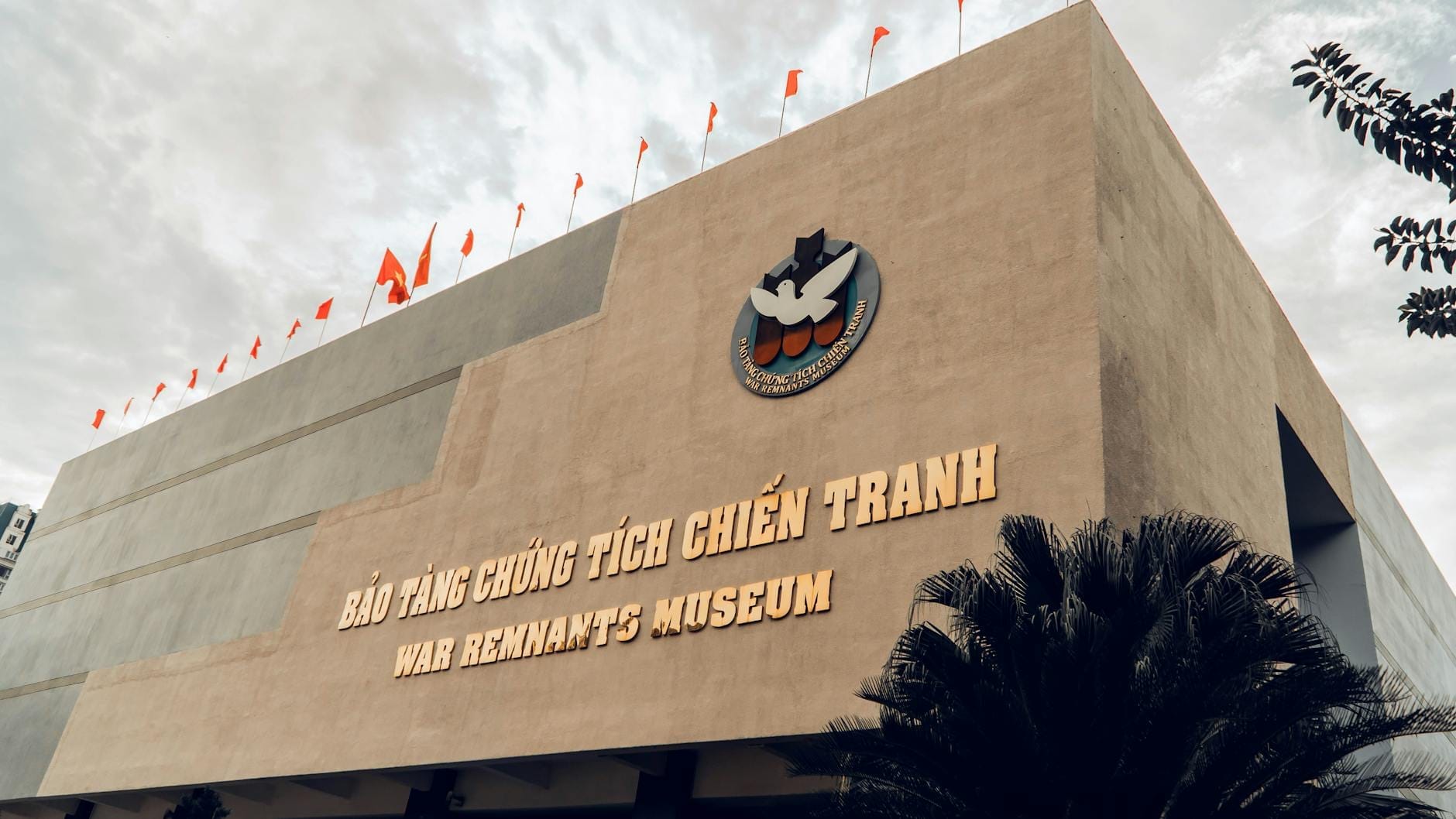
What the War Remnants Museum Actually Is
The War Remnants Museum, known in Vietnamese as Bảo tàng Chứng tích Chiến tranh, opened on September 4, 1975, just months after the fall of Saigon. Its original name, Exhibition House for US and Puppet Crimes, reflects the political framing of its founding era. The museum was renamed to its current title in 1995, the same year diplomatic relations between Vietnam and the United States were normalized. That context matters: this is an institution shaped by a particular historical vantage point, and visiting it honestly means holding that in mind.
The museum is not a neutral overview of the Vietnam War. It documents the conflict from the perspective of those who experienced it on Vietnamese soil, with a strong focus on civilian casualties, the use of Agent Orange, and the conduct of the American military campaign. For most international visitors, it presents information that is unfamiliar, uncomfortable, and meticulously sourced. Many of the photographs were taken by Western journalists, including those who died covering the conflict.
ℹ️ Good to know
Opening hours: 7:30 AM – 5:30 PM daily. Admission: 40,000 VND (approx. $1.70 USD). Arrive at least 2 hours before closing to avoid rushing.
The Outdoor Courtyard: Military Hardware Up Close
You enter through a ground-floor ticket area and step almost immediately into an open courtyard. Here, the museum has arranged a collection of captured military equipment: US-made fighter jets, Chinook and Huey helicopters, M48 Patton tanks, howitzers, and a guillotine used during the French colonial period. The machines are large, weathered, and sit in the open air, slightly faded from decades of tropical heat.
Children often run between the aircraft, which adds a strange layer to the experience. The equipment is not fenced off in most areas, which means you can stand directly beside a tank or look up into the belly of a helicopter. Photography here is straightforward and technically easy. Mornings offer better light on the aircraft before the courtyard fills with tour groups.
The courtyard gives you time to orient yourself before entering the indoor galleries, where the tone shifts considerably. Experienced visitors often suggest spending 15 to 20 minutes here first, as a kind of mental preparation.
Tickets & tours
Live prices and dates from our booking partner. If you book, we may earn a commission at no extra cost to you.
Inside the Galleries: Photographs, Documents, and Consequences
The indoor exhibition spreads across multiple floors of the main building. Each room is dedicated to a specific theme: the international press coverage of the war, the use of chemical weapons, the prison conditions at Con Dao and Phu Quoc, wartime resistance, and the ongoing effects of Agent Orange on subsequent generations of Vietnamese.
The photography galleries are the most widely discussed. Work by photographers including Larry Burrows, Nick Ut, and Eddie Adams appears alongside images by Vietnamese photographers, many of whom did not survive the war. The Pulitzer Prize-winning photograph of the Napalm Girl, taken by Nick Ut in 1972, is displayed here in its full original context, which is different from encountering it as a cropped icon. The gallery dedicated to international press is genuinely extraordinary as a collection of wartime photojournalism, regardless of any political framing around it.
The Agent Orange exhibit is the one that visitors most often describe as staying with them. It documents the multi-generational health consequences of herbicide use through medical records, photographs, and preserved specimens. This room is explicitly graphic. Parents should assess whether it is appropriate for younger children.
⚠️ What to skip
Several exhibits contain severely graphic images of war casualties and birth defects. This is not theatrical: the material is presented as historical documentation. If you are sensitive to graphic medical or conflict photography, be aware before you enter individual rooms — signage is sometimes present but not always.
How the Experience Changes by Time of Day
Arriving when the museum opens at 7:30 AM gives you the best conditions. The courtyard is cool, the light is soft, and the indoor galleries are quiet enough that you can stand in front of a photograph for several minutes without anyone pressing behind you. The stillness is appropriate to the material.
By 9:30 to 10:00 AM, tour groups begin arriving in numbers. The galleries become noisier, and guides speak in multiple languages simultaneously. Some visitors find this distracting; others find the presence of other people, including Vietnamese school groups and veterans' families, adds emotional weight to the experience.
Midday is the busiest and least comfortable period, particularly in the outdoor courtyard where there is limited shade. The building's interior is air-conditioned, but the combination of heat and the content of the exhibits can be physically draining. Late afternoon, from around 4:00 PM onward, sees crowds thin again. The light through the gallery windows is warmer, and the museum takes on a more contemplative quality in the final hour before closing.
Getting There and the Surrounding Area
The museum sits at 28 Võ Văn Tần Street in District 3, about one city block north of the Reunification Palace. If you are visiting both in a single morning, the logical sequence is to start at the War Remnants Museum when it opens, then walk south to the Reunification Palace, which opens at 8:00 AM.
From District 1, the museum is reachable in under 10 minutes by taxi or ride-hailing app. The walk from the Notre Dame Cathedral takes around 15 to 20 minutes on foot, passing through a quieter stretch of the city that feels notably calmer than the central tourist corridor.
Street parking for motorbikes is available outside the entrance. The surrounding streets have a handful of small cafes where you can decompress afterward, which many visitors find they need.
💡 Local tip
Combine this visit with the Reunification Palace on the same morning. Both are within a 5-minute walk of each other and together represent a coherent half-day of 20th-century Vietnamese history. Book a late lunch afterward, not before — the content of this museum affects appetite.
Photography Inside the Museum
Personal photography is permitted throughout the museum, including the indoor galleries. However, photographing individual display panels featuring identifiable victims requires judgment. The museum does not explicitly prohibit it, but many visitors choose not to photograph the most graphic exhibits out of basic respect.
The photojournalism galleries offer compelling compositions if you are interested in documentary-style photography. The contrast between the original conflict images and the architecture of the display cases can produce interesting layered shots. A wide-angle lens or phone camera is sufficient for the courtyard; inside, lower-light conditions benefit from a faster lens or a raised ISO.
Who Will Get the Most from This Museum, and Who Should Reconsider
The War Remnants Museum rewards visitors who come with some prior knowledge of the Vietnam War, or who are willing to read carefully. The exhibits assume no baseline familiarity, but visitors who arrive with context will leave with considerably more to think about. It is particularly meaningful for American, Australian, and South Korean visitors whose countries were directly involved in the conflict, and for Vietnamese diaspora visitors encountering this history from a different angle than they may have inherited.
Travelers who are primarily looking for lighter sightseeing should be honest with themselves about whether this is the right day for this museum. It is not an attraction you drift through on the way to dinner. If you have limited time in the city, the Reunification Palace or the HCMC Museum of History offer historical context with somewhat less emotional weight.
Families with young children should make a considered decision. The outdoor military equipment is genuinely interesting for older children and teenagers, and the museum experience can be powerful for adolescents in particular. The Agent Orange and casualties galleries, however, are not appropriate for most children under 12.
Insider Tips
- Arrive within the first 30 minutes of opening. The museum is one of the few major Saigon attractions where early arrival makes a genuinely significant difference to the quality of the experience.
- The third-floor gallery dedicated to international condemnation of the war includes rarely-seen protest imagery and documentation from Europe, Japan, and Australia, often overlooked by visitors who are fatigued by that point. Push through to see it.
- English-language audio guides are available for rent at the ticket counter and add meaningful depth to exhibits that otherwise rely on translated panel text, which can be uneven in places.
- There is a small bookshop near the exit selling academic texts, Vietnamese war literature in translation, and photographic collections. The books here are harder to find elsewhere in the city and worth browsing.
- Allow 20 to 30 minutes of quiet time after your visit before moving on to other sightseeing. The cafes on Võ Văn Tần Street are adequate for this. Jumping straight onto a scooter into Saigon traffic immediately after is a jarring transition most visitors regret.
Who Is War Remnants Museum For?
- History-focused travelers wanting to understand modern Vietnam on its own terms
- Photojournalism and documentary photography enthusiasts
- Students, researchers, and educators with an interest in 20th-century conflict
- Vietnamese diaspora visitors engaging with this period of history
- Travelers who have already visited the Cu Chi Tunnels and want the complementary urban perspective
Nearby Attractions
Other things to see while in District 3:
- Tan Dinh Church (Pink Church)
Built in 1876 and painted its signature shade of rose pink in 1957, Tan Dinh Church is one of Ho Chi Minh City's most photographed religious landmarks. Located on Hai Ba Trung Street in District 3, it offers a quieter, more genuine alternative to the city's more tourist-heavy churches, with free admission and a striking Gothic-Romanesque bell tower rising 52.6 metres above the street.
- Turtle Lake Roundabout
Tucked inside a busy roundabout in District 3, Turtle Lake (Hồ Con Rùa) is a free public square where Saigon residents come to eat, socialize, and unwind. It carries over a century of layered history, from a French colonial water tower to a South Vietnamese monument, and today draws both locals and curious visitors who wander up from the cathedral end of Phạm Ngọc Thạch street.
- Vĩnh Nghiêm Pagoda
Built between 1964 and 1971, Vĩnh Nghiêm Pagoda is one of Ho Chi Minh City's most architecturally significant religious sites. Its 7-story, 40-metre tower anchors a 6,000 m² campus that offers genuine spiritual atmosphere without the tourist crowds of more central attractions. Entry is free.
Planning a trip? Discover personalized activities with the Nomado app.