Vĩnh Nghiêm Pagoda: Saigon's Landmark of Concrete and Calm
Built between 1964 and 1971, Vĩnh Nghiêm Pagoda is one of Ho Chi Minh City's most architecturally significant religious sites. Its 7-story, 40-metre tower anchors a 6,000 m² campus that offers genuine spiritual atmosphere without the tourist crowds of more central attractions. Entry is free.
Quick Facts
- Location
- 339 Nam Kỳ Khởi Nghĩa Street, Ward 7, District 3, Ho Chi Minh City
- Getting There
- ~3 km from District 1 centre; 10 min by Grab/taxi. Car parking at 391A Nam Kỳ Khởi Nghĩa; motorbike parking at the main entrance.
- Time Needed
- 45 minutes to 1.5 hours
- Cost
- Free entry
- Best for
- Architecture lovers, photography, quiet reflection, cultural context
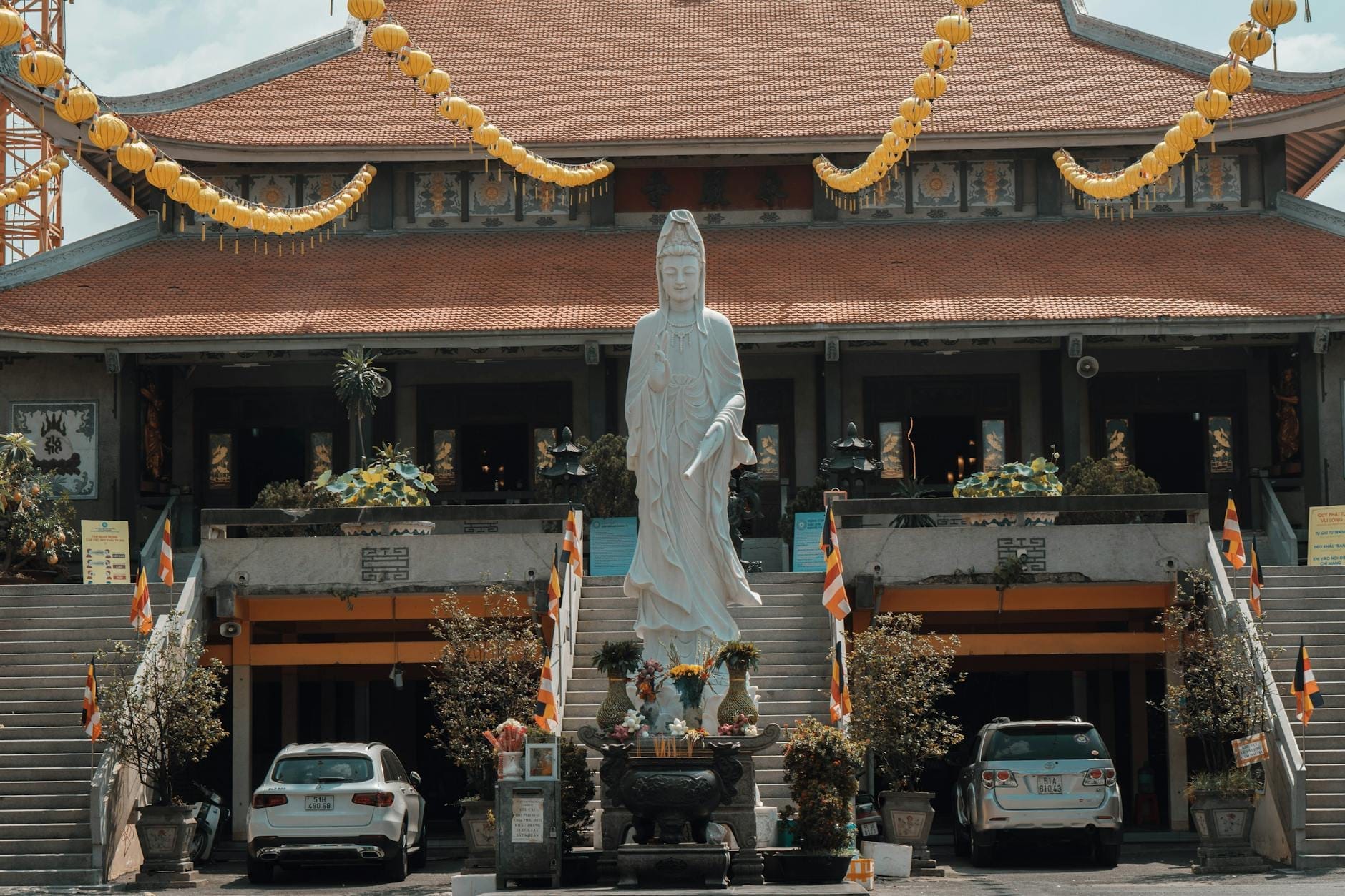
What Vĩnh Nghiêm Pagoda Actually Is
Chùa Vĩnh Nghiêm, whose name translates literally as "Ever Solemn," is one of the largest and most architecturally ambitious Buddhist pagodas in Ho Chi Minh City. It sits on a 6,000 m² campus at 339 Nam Kỳ Khởi Nghĩa Street in District 3, roughly three kilometres from the city centre. The compound is dominated by a seven-story tower rising 40 metres, which is recognized as the tallest stone tower in Vietnam.
What makes Vĩnh Nghiêm historically important is its construction method. It was the first Vietnamese pagoda built in a traditional architectural style using reinforced concrete rather than wood or brick, which allowed the scale and verticality that older techniques could not achieve. The result is a structure that reads as deeply traditional from a distance but reveals its modern engineering up close, particularly in the clean concrete lines of the tower's upper stories.
💡 Local tip
Opening hours are split into two sessions: 6:30am–11:30am and 1:30pm–7:00pm (some sources note openings until 9:00pm; confirm locally). The compound closes midday. Plan your visit for the morning session to catch the quietest atmosphere and the best light on the tower facade.
The History Behind the Architecture
Construction began in 1964, initiated by two prominent monks: Thích Tâm Giác and Thích Thanh Kiểm. The timing matters. The 1960s were a turbulent decade for Buddhism in southern Vietnam, and the decision to build on this scale was as much a statement of institutional permanence as a spiritual undertaking. The pagoda took seven years to complete, opening in 1971 during a period when religious construction projects were rare.
The pagoda follows the design conventions of northern Vietnamese Buddhist architecture, which Thích Thanh Kiểm, who had studied and practiced in northern Vietnam and Japan, brought to the project. This gives Vĩnh Nghiêm a visual grammar somewhat different from the Chinese-influenced pagodas common in Saigon's Cholon district. The tower's tiered silhouette, upturned eaves at each level, and the layered rooflines across the main hall follow a tradition more associated with Hanoi than with the south.
For context on how this differs from the Chinese-Vietnamese temple tradition, a visit to the Thien Hau Pagoda in Cholon makes for an instructive comparison. The two sites represent distinct strands of Buddhist practice and architecture that coexist in the same city.
Tickets & tours
Live prices and dates from our booking partner. If you book, we may earn a commission at no extra cost to you.
Full-day excursion to Mekong Delta and Vinh Trang Pagoda
From 19 €Instant confirmationFree cancellationCar Hire and Driver from Ho Chi Minh City to Cai Be and Vinh Long
From 2.144 €Instant confirmationFree cancellationAccess to the Vinh International Airport business lounge
From 24 €Instant confirmationPrivate full-day trip from Ho Chi Minh City to Mekong Delta
From 52 €Instant confirmationFree cancellation
Walking Through the Compound
Entry is through a gate on Nam Kỳ Khởi Nghĩa, and the tower is immediately visible as you step inside. The forecourt is wide and paved, with ornamental plants along the perimeter. The scale of the compound is immediately apparent: this is not a cramped urban temple squeezed between shophouses, but a purpose-built religious campus with room to move.
The main hall on the ground floor houses the primary worship space, with altars, incense burners, and large Buddha statues. The air inside carries a constant low-grade incense smell that intensifies near the altar area, particularly during morning prayers. Monks conduct regular ceremonies, and if your visit coincides with one, you will hear the low rhythm of chanting and the occasional strike of a wooden mallet on a hollow drum. These are not performances for visitors; they are the working schedule of an active monastery.
Beyond the main hall, the campus includes a lecture hall and library. The library holds a significant collection of Buddhist texts, and the lecture hall reflects the pagoda's historical role as a center for Buddhist education, not just worship. The ground floor areas are accessible and worth exploring at a slow pace. Dress conservatively: covered shoulders and knees are expected. Removing shoes before entering worship spaces is standard.
ℹ️ Good to know
Dress code: Covered shoulders and knees are required. If you arrive underprepared, fabric wraps are sometimes available at the entrance, but it is safer to dress appropriately before you arrive.
How the Experience Changes by Time of Day
Early morning, roughly 7:00am to 9:00am, is the most rewarding time to visit. Monks are active, devotees arrive with fresh offerings of fruit and flowers, and the incense smoke catches the low morning light as it rises through the open corridors. The forecourt smells of jasmine and sandalwood at this hour. There is a sense of purposeful quiet that disappears once school groups and tour visitors begin arriving mid-morning.
By 10:00am, the compound has noticeably more visitors, though it never reaches the congestion levels of more famous sites in District 1. The wide campus absorbs crowds well. If you are primarily interested in photography, the tower photographs best in the first two hours after opening, when the light falls on the eastern facade. By midday, the light is flat and harsh, and the midday closure begins anyway.
The afternoon session, beginning at 1:30pm, draws a smaller crowd and has a more contemplative quality. Local residents use the campus as a place to sit and rest, and the atmosphere is closer to a neighborhood park than a tourist attraction. The tower's western face catches warm afternoon light, which makes for different but equally worthwhile photographs.
Practical Logistics
Vĩnh Nghiêm is about three kilometres from the central District 1 area. A Grab car or taxi takes roughly 10 minutes in normal traffic, though Nam Kỳ Khởi Nghĩa can slow significantly during morning and evening rush hours. Motorbike taxis (xe ôm) are faster in congested conditions. Motorbike parking is available directly at the main entrance; car parking is at 391A Nam Kỳ Khởi Nghĩa, a short walk from the gate.
The pagoda pairs naturally with other District 3 sites. Tan Dinh Church, with its distinctive pink facade, is in the same district and makes for a logical half-day route combining Buddhist and Catholic architecture. If you are building a fuller itinerary, the Reunification Palace is approximately 2 kilometres away and gives historical weight to a morning that starts at Vĩnh Nghiêm.
There are no food vendors inside the compound. The street outside has small café stalls and convenience stores, but for a proper meal before or after, the side streets off Nam Kỳ Khởi Nghĩa have reliable local restaurants serving rice and noodle dishes at low prices.
⚠️ What to skip
The pagoda closes midday (approximately 11:30am to 1:30pm). Do not plan a lunchtime visit. Also note that the compound is an active place of worship: loud conversation, photography with a flash near altars, and entering worship spaces without removing shoes will be unwelcome.
Honest Assessment: Is It Worth Your Time?
Vĩnh Nghiêm is not the most visually spectacular pagoda in Ho Chi Minh City. The Jade Emperor Pagoda, for instance, packs far more decorative intensity into a smaller space. What Vĩnh Nghiêm offers instead is scale, architectural coherence, and the feeling of a place that functions primarily for its community rather than for tourists. Those qualities are increasingly rare in the more central areas of the city.
If you are working through a broader list of the city's religious architecture, Vĩnh Nghiêm belongs on it. It also works well as a calmer counterpoint to the intensity of Ben Thanh Market or the concentrated history of the War Remnants Museum, both of which are within a short taxi ride.
Visitors who prefer high visual stimulation or want a quick, photogenic stop should consider the Jade Emperor Pagoda instead. Vĩnh Nghiêm rewards slower exploration and genuine curiosity about Vietnamese Buddhist practice. If you want to walk in, look around for 20 minutes, and leave, the experience may feel underwhelming. If you allow 45 minutes to an hour, walk the full campus, and observe rather than just photograph, it holds up well.
Insider Tips
- Arrive within the first 30 minutes of opening (6:30am or 7:00am depending on the day) to coincide with morning prayers. The sound and incense atmosphere at that hour is the most distinctive thing about the site.
- The tower is best photographed from the far end of the forecourt using a moderate telephoto or standard lens. Getting too close compresses the perspective and loses the tiered silhouette that defines the structure.
- If you visit on the 1st or 15th day of the lunar calendar, attendance is significantly higher and the offerings are more elaborate. The atmosphere is more ceremonial, which is interesting to observe but means slower movement through the compound.
- The library inside the compound holds Buddhist texts and scriptures collected over decades. It is not a tourist exhibit, but monks are generally receptive to respectful visitors who express genuine curiosity.
- Combine with Tan Dinh Church (about 2 km north) for a half-day architecture walk that covers two completely different religious traditions and building styles without requiring a taxi between them.
Who Is Vĩnh Nghiêm Pagoda For?
- Architecture enthusiasts interested in how traditional Vietnamese Buddhist design was adapted for 20th-century concrete construction
- Travelers looking for an active place of worship with genuine community atmosphere, not a museum-style temple
- Photographers working in the early morning who want a large, photogenic structure with manageable crowds
- Those building a wider religious and cultural itinerary across District 3 and beyond
- Visitors wanting a free, unhurried stop that contrasts with the commercial intensity of District 1
Nearby Attractions
Other things to see while in District 3:
- Tan Dinh Church (Pink Church)
Built in 1876 and painted its signature shade of rose pink in 1957, Tan Dinh Church is one of Ho Chi Minh City's most photographed religious landmarks. Located on Hai Ba Trung Street in District 3, it offers a quieter, more genuine alternative to the city's more tourist-heavy churches, with free admission and a striking Gothic-Romanesque bell tower rising 52.6 metres above the street.
- Turtle Lake Roundabout
Tucked inside a busy roundabout in District 3, Turtle Lake (Hồ Con Rùa) is a free public square where Saigon residents come to eat, socialize, and unwind. It carries over a century of layered history, from a French colonial water tower to a South Vietnamese monument, and today draws both locals and curious visitors who wander up from the cathedral end of Phạm Ngọc Thạch street.
- War Remnants Museum
The War Remnants Museum in District 3 is the most emotionally demanding attraction in Ho Chi Minh City, and one of the most important. Housing photographic archives, military hardware, and documentation of wartime consequences, it draws hundreds of thousands of visitors annually for good reason. This guide tells you what to expect, how long to allow, and how to approach the experience with the gravity it deserves.
Planning a trip? Discover personalized activities with the Nomado app.