Ho Chi Minh City Street Food Guide: What to Eat, Where to Go, and What to Skip
From crispy bánh xèo in District 4 to late-night snails on Nguyễn Thượng Hiền Street, Ho Chi Minh City's street food scene is one of the most diverse and affordable in Southeast Asia. This guide breaks down the essential dishes, the best neighborhoods to find them, honest pricing, and the traps worth avoiding.
Tickets & tours
Live prices and dates from our booking partner. If you book, we may earn a commission at no extra cost to you.
TL;DR
- Ho Chi Minh City's best street food is spread across Districts 1, 3, and 4, each with distinct specialties and atmospheres.
- Essential dishes to try: bánh mì (~25,000 VND), gỏi cuốn (15,000-20,000 VND), bánh xèo, hủ tiếu, and grilled seafood.
- Phở is a Hanoi staple, not a Saigon signature. For HCMC-specific noodle soup, seek out hủ tiếu instead. See our full where to eat in Ho Chi Minh City guide for restaurant picks beyond street stalls.
- Street food vendors run from around 6am to midnight depending on the district. Night markets and 'snail streets' come alive after 6pm.
- Prices are genuinely cheap: a full street meal rarely exceeds 80,000-100,000 VND (about $3.50-4 USD) if you eat where locals do.
Why Ho Chi Minh City's Street Food Is Different from the Rest of Vietnam
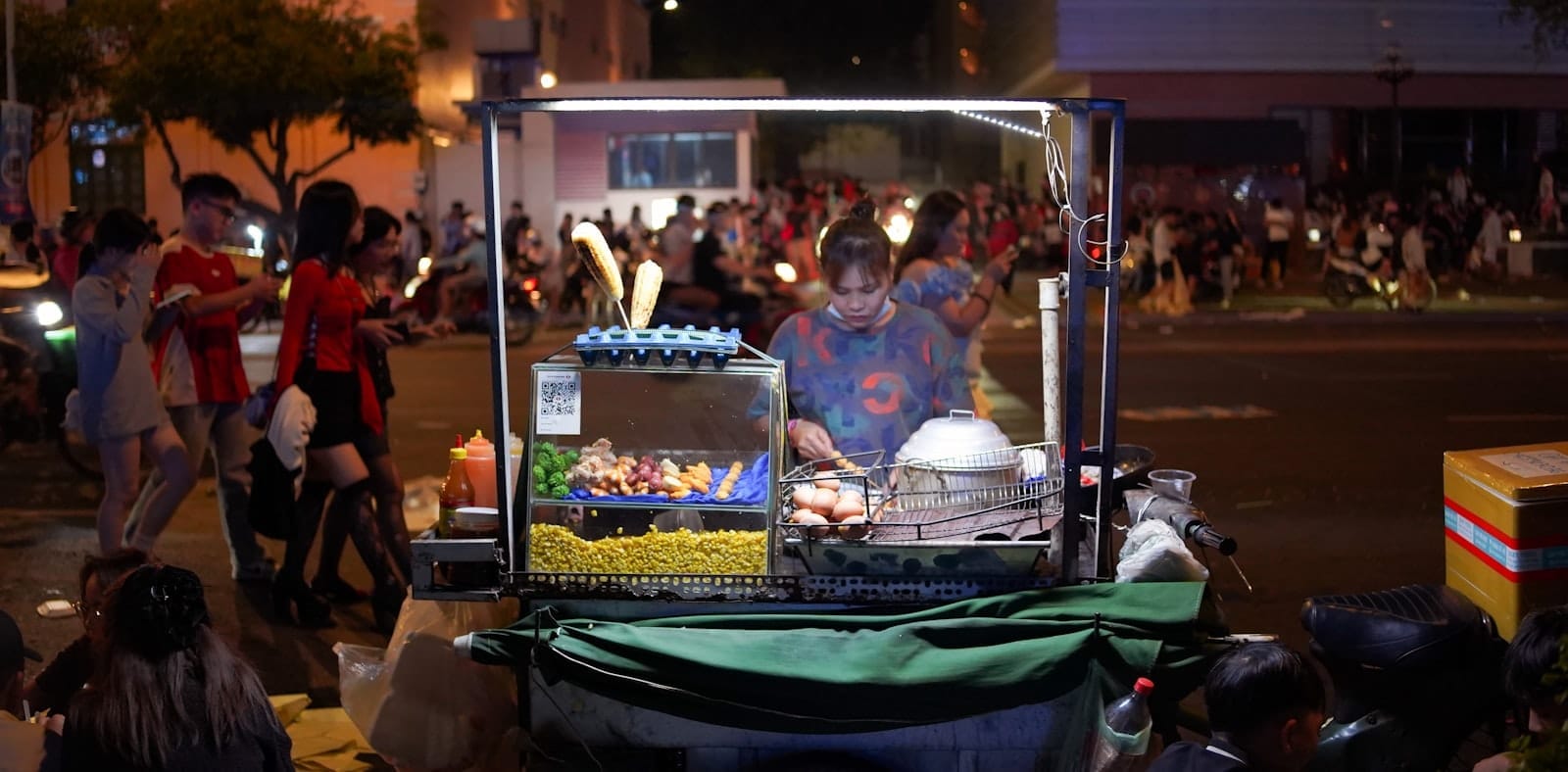
Vietnam's cuisine varies significantly by region, and Saigon's food culture reflects its southern location, its history as a commercial port city, and its large Cantonese and Teochew Chinese communities concentrated in Cholon. The result is a street food scene that is sweeter, more herb-forward, and more influenced by Chinese-Vietnamese fusion than anything you'll find in Hanoi or Hue.
The city's proximity to the Mekong Delta means fresh seafood, river fish, and tropical produce arrive daily. This is why dishes like bánh xèo (a turmeric-yellow crispy rice pancake filled with shrimp and pork) are so much better here than elsewhere. The area around Cholon adds another dimension entirely: Teochew-style congee, dim sum carts at dawn, and pork offal noodles you won't find in tourist districts.
One persistent myth worth correcting: phở is not the signature dish of Ho Chi Minh City. It originated in the north and is certainly available here, but locals are more likely to start their morning with hủ tiếu Nam Vang (a clear broth noodle soup with pork and dried shrimp, tracing its roots to Phnom Penh) or a bowl of bún bò Huế. Ordering phở at a street stall and declaring it 'authentic Saigon food' is like eating fish and chips in Paris.
ℹ️ Good to know
Ho Chi Minh City is still widely called Saigon by locals and on street signs, menus, and restaurant names. Both names are correct to use. The former name refers to the central urban core, while Ho Chi Minh City is the official name of the broader municipality, encompassing a broader metropolitan area including former neighboring districts.
The Essential Dishes: What to Order and What to Pay
Street food in Ho Chi Minh City is structured around specific dishes tied to specific times of day. Knowing what to order when makes the difference between eating well and eating whatever the tourist-facing stall pushes at you.
- Bánh mì The Saigon baguette sandwich, filled with pâté, cured pork, pickled vegetables, cucumber, chili, and cilantro. Around 25,000-35,000 VND ($1.10-1.50 USD). Available from early morning until mid-afternoon at dedicated bánh mì carts city-wide. The bread should shatter when you bite it.
- Gỏi cuốn (fresh spring rolls) Rice paper rolls filled with shrimp, pork, vermicelli, mint, and lettuce, served with hoisin-peanut dipping sauce. Around 15,000-20,000 VND ($0.75 USD) per roll. A cooler, lighter option well-suited to the heat.
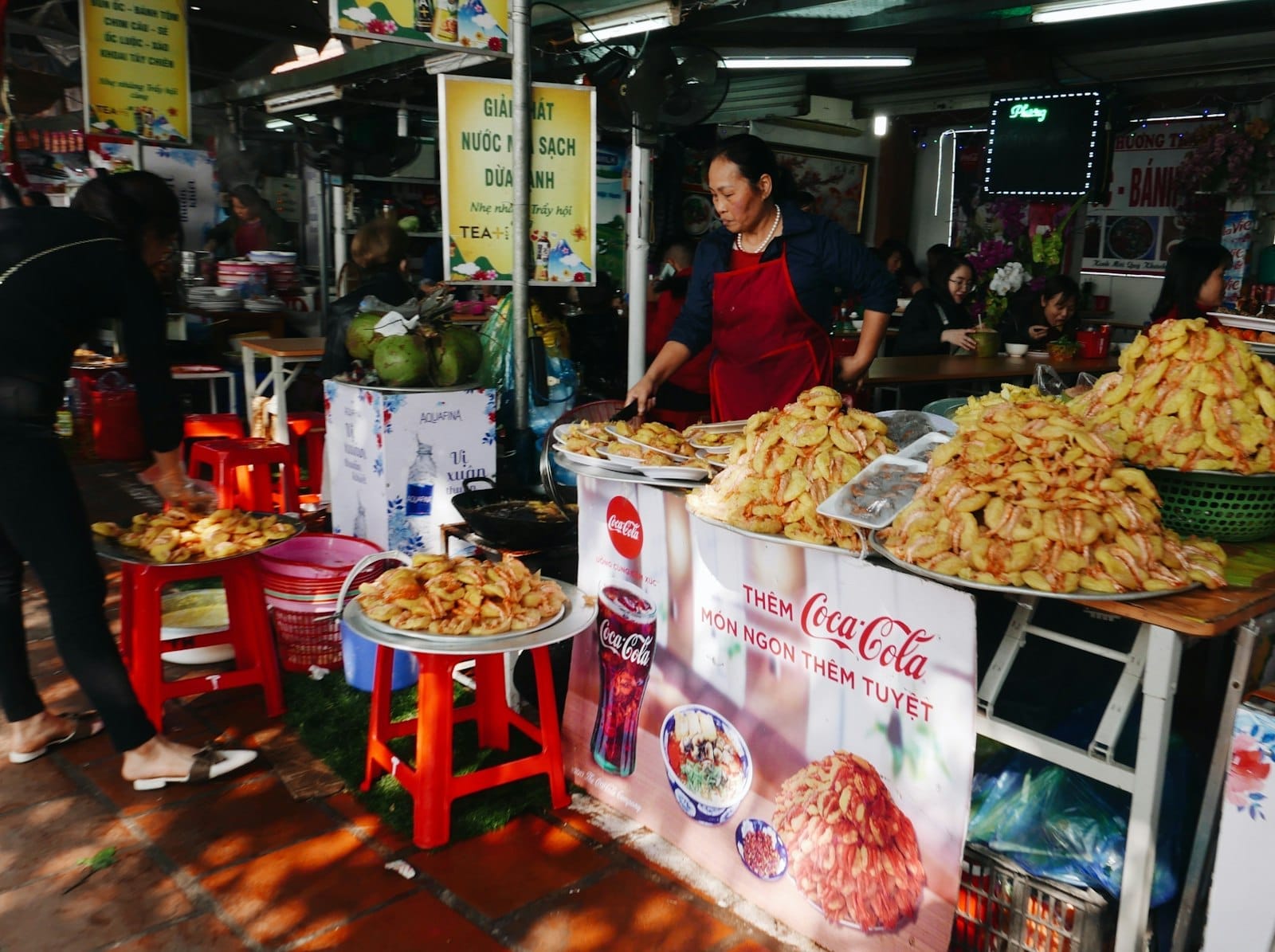
- Bánh xèo (sizzling pancake) A crispy, turmeric-yellow rice flour crepe cooked in a hot pan with pork belly, shrimp, and bean sprouts. You tear off pieces and wrap them in lettuce and herbs, then dip in fish sauce. Around 30,000-50,000 VND at a street stall; higher at sit-down spots.
- Hủ tiếu Nam Vang Clear pork bone broth with thin rice noodles, ground pork, liver, dried shrimp, and fried garlic. The quintessential Saigon noodle soup, served morning to noon. Around 40,000-60,000 VND.
- Bánh tráng nướng Grilled rice paper topped with egg, dried shrimp, spring onion, and chili sauce. Often called 'Vietnamese pizza', which undersells it. A street snack popular in the evening, around 15,000-25,000 VND.
- Ốc (snails and shellfish) Steamed, grilled, or wok-tossed snails, clams, and cockles eaten at outdoor plastic-table restaurants from early evening. Prices vary by type and weight, typically 30,000-80,000 VND per dish.
💡 Local tip
When ordering at a street stall, look at what locals at the table next to you have ordered and point at it. Most stall vendors have very limited English, but pointing is universally understood and you'll often get a better dish than what's listed on the tourist-facing menu board.
The Best Neighborhoods for Street Food, by District
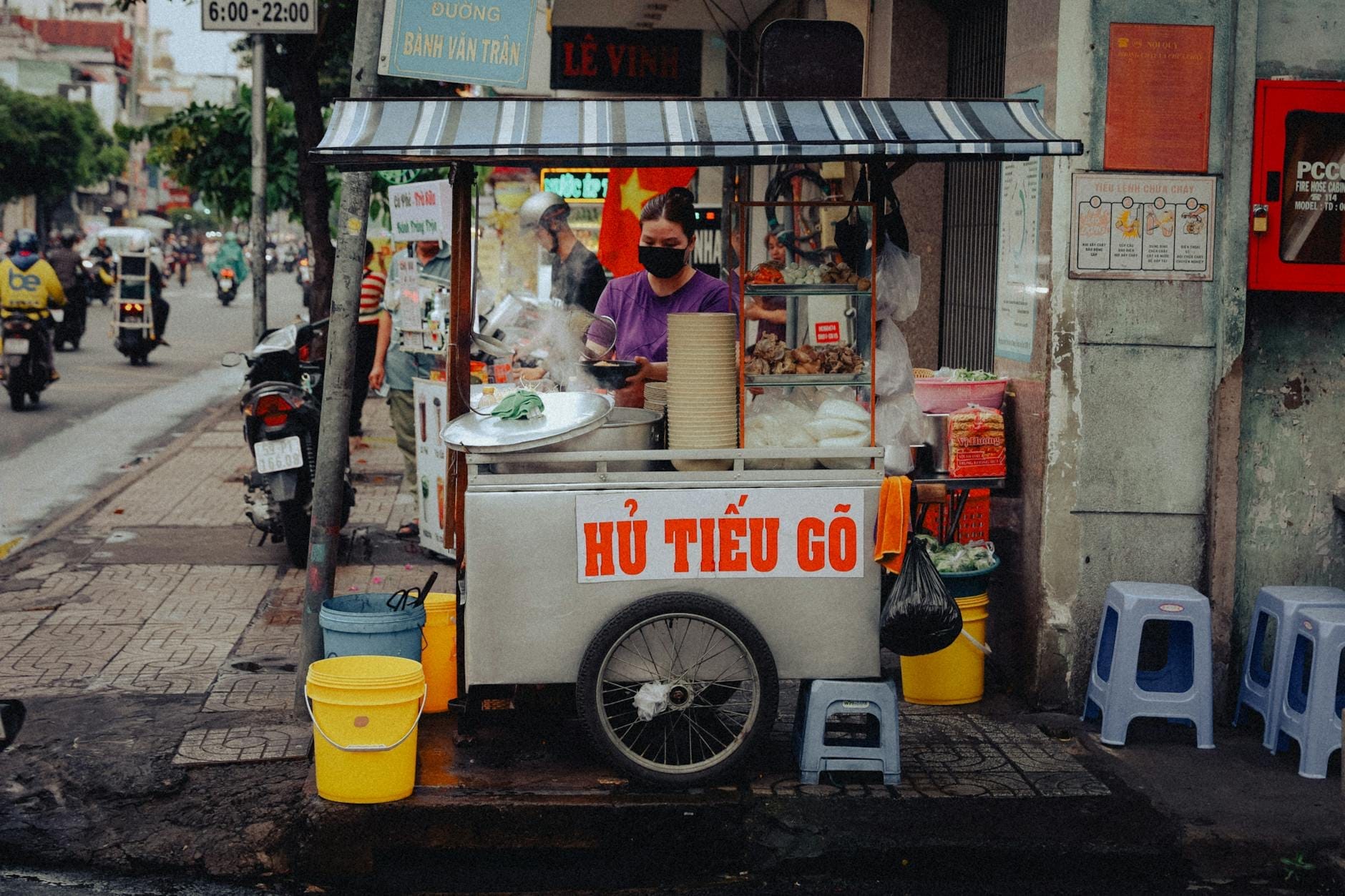
Street food is not evenly distributed across the city. Knowing which district to go to for which dish saves time and prevents disappointment. District 1 is the most accessible for first-time visitors but not the deepest cut. For serious eating, you need to venture further.
- District 1: Tourist-accessible, genuinely good Ben Thanh Market area has fresh bánh mì and gỏi cuốn vendors that are legitimately good, not just tourist traps. The Ben Nghe Street Food Market is a reliable option for cheap beer (around 20,000 VND) and a range of Vietnamese dishes in a low-pressure environment. Bui Vien Walking Street is better for nightlife than food.
- District 3: Local favorites, lower crowds Bàn Cờ Market is where locals in District 3 go for bánh tráng nướng and bánh bột chiên (pan-fried rice cakes with eggs and green onion). Nguyễn Thượng Hiền Street, nicknamed 'Snail Street', comes alive after 6pm with dozens of ốc (snail and shellfish) stalls, plastic stools on the pavement, and cold beer.
- District 4: Seafood and bánh xèo country Vĩnh Khánh Street is a dedicated seafood street with dozens of vendors grilling and steaming shellfish from around 5pm onward. This is the most local-feeling of the main food streets. District 4 is also the place to find bánh xèo done properly: crispy, not soggy.
- Cholon (District 5): Chinese-Vietnamese fusion The commercial and culinary heart of the city's ethnic Chinese community. Binh Tay Market area has congee stalls open from dawn, offal noodles, and savory soy milk that you will not find in District 1. Less English spoken, but the food quality is high and prices are low.
If you want to explore Cholon properly, Cholon's food and market culture deserves at least a half-day. The area around Bình Tây Market is particularly dense with early-morning food stalls selling dishes that have disappeared from more central neighborhoods.
Timing Your Eating: When Street Food Is Best
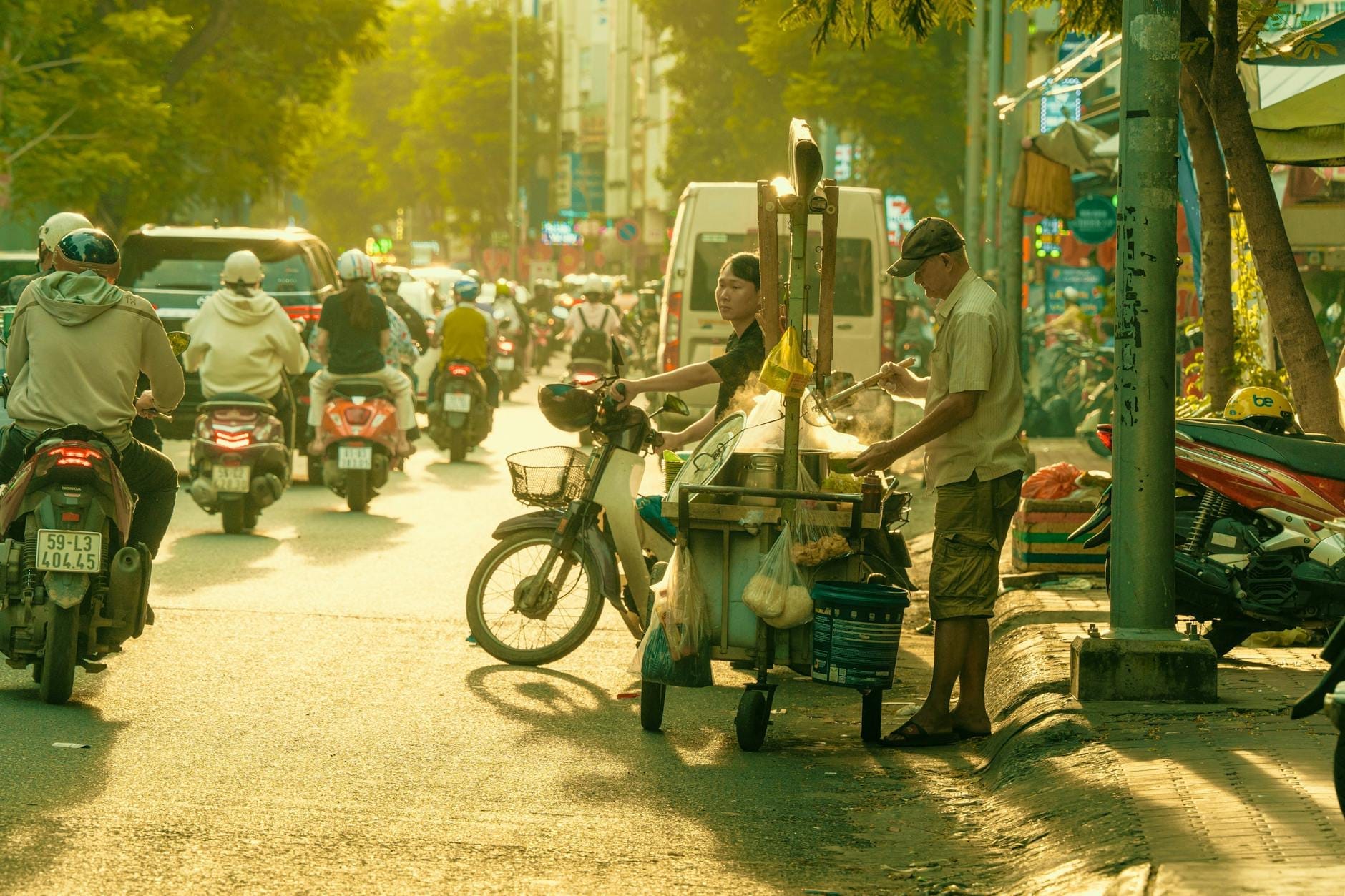
Street food in Ho Chi Minh City is time-sensitive. Certain dishes are only available in the morning, others only come alive after sunset. Planning around this rhythm significantly improves what you'll eat.
Early morning (6am-9am) is the best time for hủ tiếu, congee, and bánh mì. The bread for bánh mì is freshest in the first half of the morning. By 10am, many dedicated breakfast stalls pack up entirely. Lunch hours (11am-1pm) bring out bún thịt nướng (vermicelli with grilled pork) and cơm tấm (broken rice with grilled pork chop), both of which peak at midday.
Evening, from around 5pm to 10pm, is when the city's outdoor shellfish restaurants, bánh tráng nướng carts, and night market stalls come into their own. Temperatures drop slightly (or at least feel more manageable), and the social atmosphere at plastic-table seafood spots is at its best after dark. Most street vendors start to wind down by 10pm-11pm, though some snack carts near Bui Vien stay open later.
⚠️ What to skip
Avoid eating raw shellfish from street stalls if you have a sensitive stomach. Steamed or wok-cooked is always the safer choice. Also, ice in drinks at street stalls is generally made from filtered water in the city, but if you are cautious, stick to bottled water or iced coffee from established vendors.
What's Overrated (And What to Do Instead)
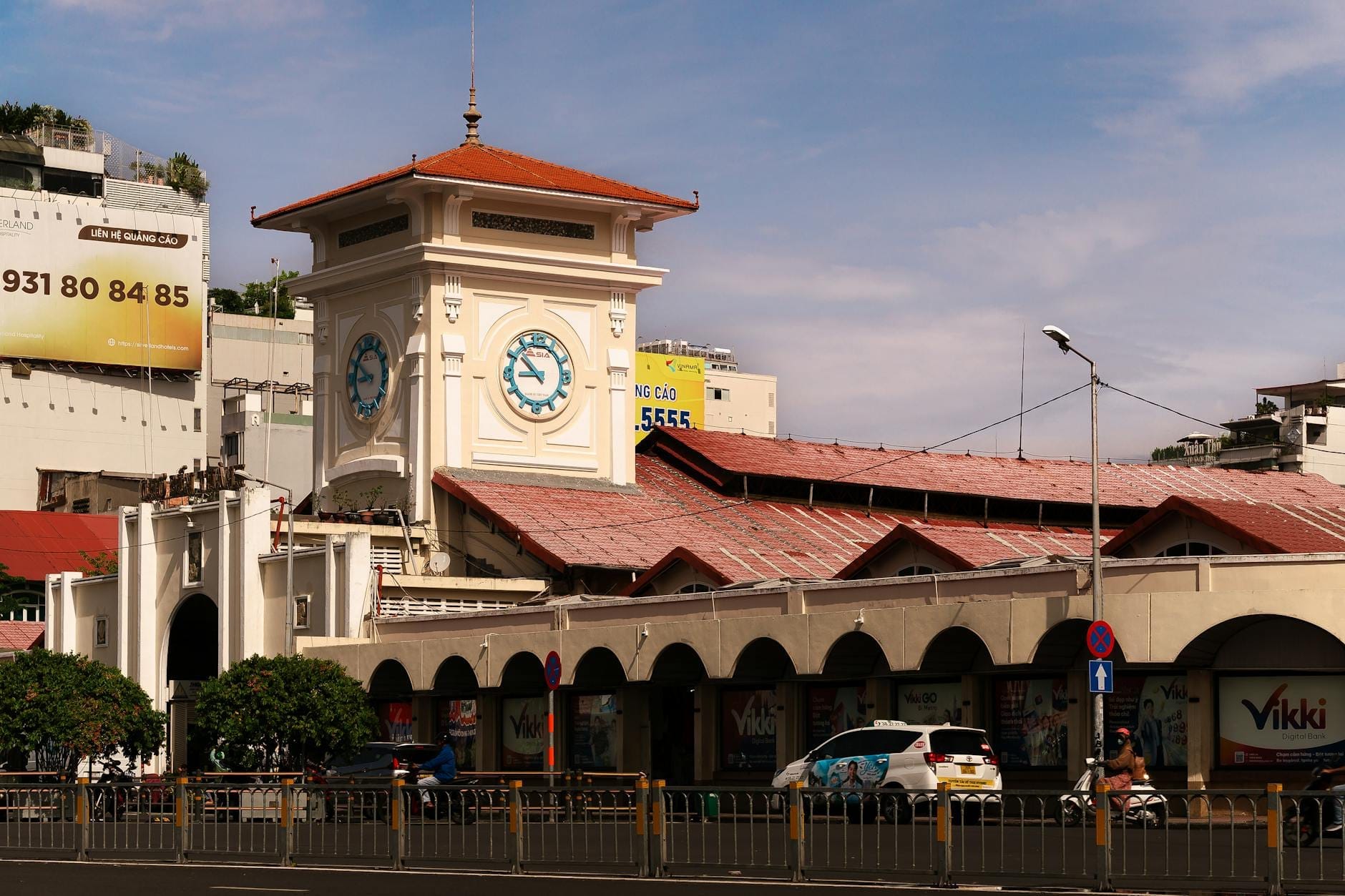
Ben Thanh Market gets a lot of attention in travel guides, and the indoor market itself is worth a look for context and orientation. However, the food stalls surrounding it are almost entirely tourist-oriented, with prices roughly double what you'd pay two blocks away. The market is better for a quick bánh mì from the outdoor carts than for a sit-down meal. For a more authentic market food experience, Ben Thanh Market is worth visiting in the morning before tour groups arrive, then heading to District 4 for actual eating.
Bui Vien Walking Street is primarily a bar street, not a food street. The food served there is generally overpriced and aimed at backpackers who want something recognizable. If nightlife is your goal, it serves that purpose. If eating is your goal, head to Nguyễn Thượng Hiền Street in District 3 instead. For what to do in the evenings beyond eating, see the Ho Chi Minh City nightlife guide.
Street food tours booked through hotels tend to be expensive (often $30-50 USD per person) and prioritize 'safe' stops where the guide gets a commission. Independent walking is almost always better. That said, a reputable small-group food tour booked through a dedicated operator can be worthwhile for first-timers who want context and translation, particularly in Cholon where language barriers are real.
Practical Tips for Eating Street Food in Saigon
Payments are almost universally cash in Vietnamese Dong (VND). Carry small bills: 10,000, 20,000, and 50,000 VND notes are the most useful denominations at street stalls. Vendors rarely have change for 500,000 VND notes, and fumbling with large bills at a busy stall creates unnecessary friction.
- Download Grab (Southeast Asia's dominant ride-hailing app) before you arrive. It makes getting between food neighborhoods far easier than negotiating with motorbike taxis.
- Eating at a plastic stool on the pavement is the norm, not a sign of lower quality. Some of the best food in the city is served this way.
- If a stall has a queue of locals, that is a stronger quality signal than any online review.
- Learn two phrases: 'không cay' (khong kai, 'not spicy') and 'bao nhiêu tiền?' (bao nyew tyen, 'how much?'). They will serve you well.
- Shellfish dishes at snail streets are typically priced per portion rather than per item. Confirm the price before ordering if the menu isn't visible.
- The cool season (roughly December to February) is the most comfortable time to eat outdoors. During the hot season (March to May), early morning and evening street eating is far preferable to the midday heat.
For full orientation before your trip, the things to do in Ho Chi Minh City guide covers the city's major neighborhoods and attractions, which helps in planning food routes logically. The best time to visit Ho Chi Minh City guide also covers seasonal patterns that affect outdoor eating comfort.
FAQ
Is street food in Ho Chi Minh City safe to eat?
Generally yes, provided you apply basic judgment. Choose stalls with high turnover, where food is cooked fresh to order rather than sitting out. Avoid raw seafood and unpeeled raw fruit from unknown sources. Cooked dishes, grilled items, and anything made to order in front of you carry the lowest risk. Hundreds of thousands of locals eat street food daily without issue.
How much does street food cost in Ho Chi Minh City?
Most individual street food items cost between 15,000 and 60,000 VND (approximately $0.65 to $2.60 USD). A filling street meal of a noodle soup or rice dish with a drink typically comes to 50,000-100,000 VND ($2-4 USD). Prices near Ben Thanh Market and tourist areas run 20-50% higher than in residential neighborhoods.
What is the best area for street food in Ho Chi Minh City?
District 4 is the strongest overall, combining seafood on Vĩnh Khánh Street with good bánh xèo and a genuinely local atmosphere. District 3's Nguyễn Thượng Hiền Street is best for shellfish in the evenings. Cholon (District 5) is best for early-morning Chinese-Vietnamese dishes. District 1 is most convenient for first-time visitors but is not where the deepest food experiences are.
Is phở the most popular street food in Ho Chi Minh City?
No. Phở is strongly associated with Hanoi and northern Vietnam. In Ho Chi Minh City, the local equivalents are hủ tiếu (clear pork broth noodle soup) and bún bò Huế (spicy central Vietnamese noodle soup). Phở is available and sometimes very good, but ordering it as your first Saigon street food experience means missing what the city actually does best.
Do I need to book a food tour, or can I explore independently?
You can absolutely eat well independently, especially in Districts 1, 3, and 4 where some English is spoken and navigation is easier. Cholon and District 4's deeper back streets benefit from a local guide or at least a Vietnamese-speaking companion, partly for language and partly for knowing which stalls to prioritize. If you do book a tour, choose a small-group walking tour with a maximum of 8-10 people rather than a large bus-based itinerary.
Tickets & tours
Live prices and dates from our booking partner. If you book, we may earn a commission at no extra cost to you.
Planning a trip? Discover personalized activities with the Nomado app.