Ho Chi Minh City Book Street (Nguyen Van Binh): A Calm Corner in the Heart of District 1
Đường Sách Nguyễn Văn Bình, known in English as Ho Chi Minh City Book Street, is a 100-meter pedestrian lane in District 1 dedicated entirely to books, reading culture, and literary events. Shaded by mature trees and set against the backdrop of Notre Dame Cathedral and the Saigon Central Post Office, it offers a rare pocket of quiet in one of Southeast Asia's most traffic-intense cities. Entry is free, and the street is open seven days a week.
Quick Facts
- Location
- Nguyen Van Binh Street, Ben Nghe Ward, District 1, Ho Chi Minh City
- Getting There
- 8–10 min walk from Ben Thanh Market via Le Loi and Dong Khoi Streets; 500m from Nguyen Hue Walking Street
- Time Needed
- 45 minutes to 1.5 hours
- Cost
- Free entry; books and drinks at vendor prices
- Best for
- Book lovers, photography, a quiet break from sightseeing
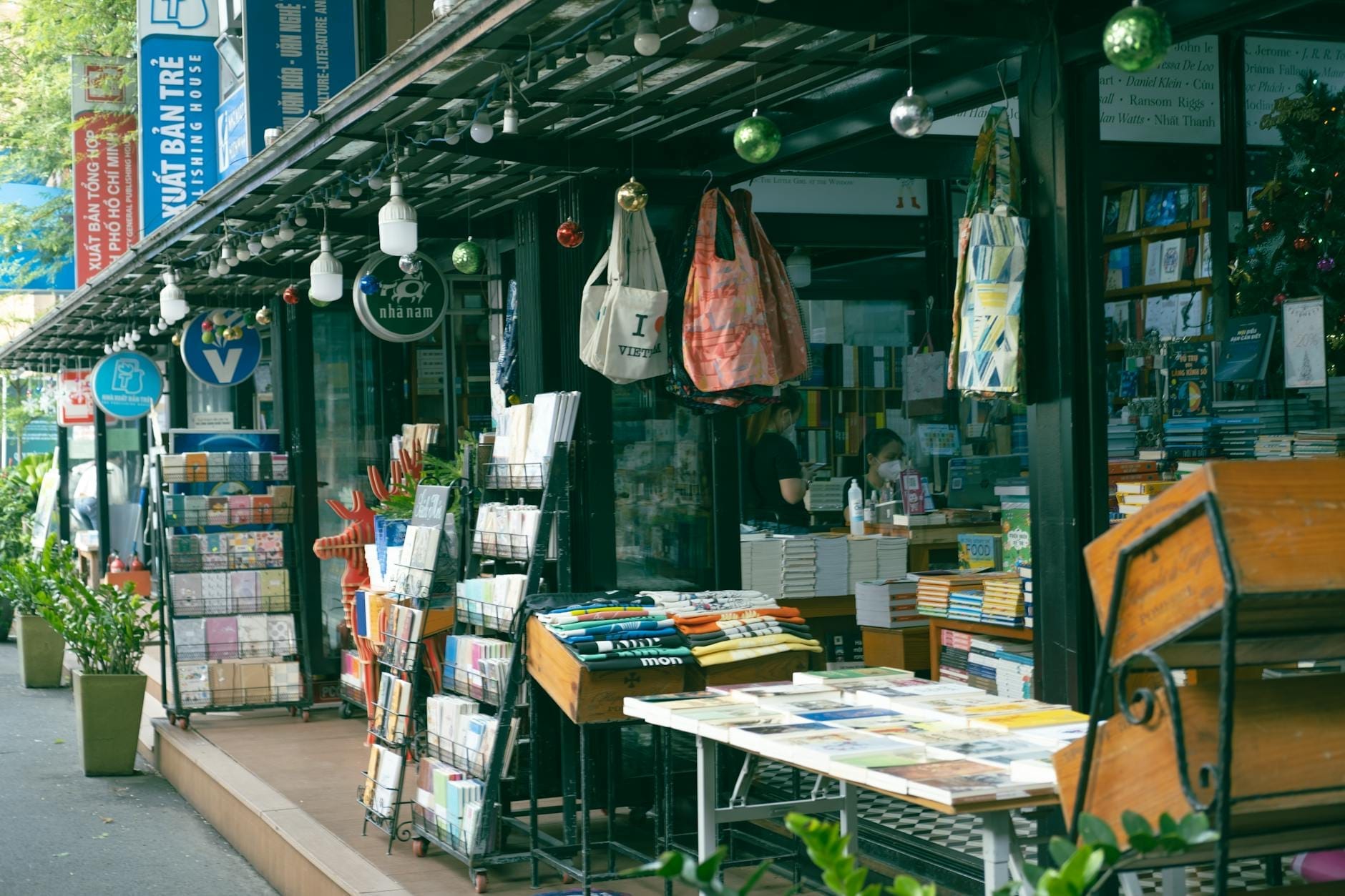
What Is Ho Chi Minh City Book Street?
Đường Sách Nguyễn Văn Bình, officially opened on September 1, 2016, is a pedestrian-only street roughly 100 meters long, running from Hai Ba Trung Street toward the grounds surrounding Notre Dame Cathedral and the Saigon Central Post Office. Both landmarks frame the far end of the street in a way that gives even an ordinary afternoon here a slightly cinematic quality.
The street is named after Paul Nguyễn Văn Bình, Archbishop of Saigon (later Ho Chi Minh City) from 1960 until his death in 1995, a figure closely associated with the Catholic community of southern Vietnam. The road itself has changed names several times: it was called Cardis under French colonial administration (from 1897), then Nguyen Hau from 1955, and finally renamed in his honor in April 2000.
Today, roughly 20 to 30 stalls and small bookshops line both sides of the street, representing major Vietnamese publishers, secondhand dealers, stationery sellers, and a handful of vendors carrying foreign-language titles. Small cafe carts and beverage stands are scattered throughout, and wooden benches sit beneath shade trees that make the space genuinely comfortable even in the middle of the day.
ℹ️ Good to know
Opening hours: 8:00 AM – 10:00 PM daily. Admission is free. The street is no-smoking and car-free throughout its length.
How the Street Changes Through the Day
Early morning, around 8 to 9 AM, is the most peaceful time to visit. The vendors are still arranging their displays, the light is soft and angled, and the cathedral behind you casts a long shadow over the northern end of the street. A few locals stop in before work, flipping through magazines or picking up children's titles. The smell of freshly brewed Vietnamese coffee drifts from the small carts near the entrance.
By late morning and early afternoon, the street sees a steady mix of tourists and Vietnamese students. School groups occasionally arrive in organized clusters, and the noise level rises noticeably. This is also when the photography is most active: the combination of colonial architecture, colorful book displays, and midday light draws phone cameras constantly. If you want a quieter experience, this is the window to avoid.
Evenings, particularly on weekends after 6 PM, are when the street takes on a different character entirely. Vendors switch on warm string lights, families stroll with young children, and some stalls set out low stools and boards for board games or chess. The air cools noticeably, street food carts appear at the perimeter, and the scene becomes more social than commercial. Weekend evenings occasionally feature small literary events or book launches in the open-air space near the center of the street.
💡 Local tip
For photos of the street with Notre Dame Cathedral in the background: position yourself near the Hai Ba Trung end and shoot toward the south in the late afternoon. The cathedral lights up at dusk and the book displays are still fully active.
Tickets & tours
Live prices and dates from our booking partner. If you book, we may earn a commission at no extra cost to you.
Private full-day trip from Ho Chi Minh City to Mekong Delta
From 52 €Instant confirmationFree cancellationLandmarks of Ho Chi Minh City half-day tour
From 33 €Instant confirmationFree cancellationCu Chi tunnels guided experience from Ho Chi Minh City
From 33 €Instant confirmationFree cancellationHalf-day Cu Chi Tunnels guided tour from Ho Chi Minh City
From 21 €Instant confirmationFree cancellation
What You'll Actually Find Here
The majority of titles are in Vietnamese: fiction, history, self-help, children's books, and academic texts from major publishers including Nha Nam, Tre Publishing House, and Kim Dong. Visitors who read Vietnamese will find this genuinely rewarding browsing. For those who don't, the selection is more limited but not empty: a handful of stalls carry translated classics, English-language guidebooks, and bilingual editions.
Stationery, notebooks, postcards, and bookmarks are sold alongside the books, and these make practical, lightweight souvenirs. Prices are consistent with Vietnamese retail rather than tourist-inflated, which is a pleasant change from the souvenir shops closer to Ben Thanh Market. Secondhand stalls at the northern end of the street occasionally surface older Vietnamese-language titles that are difficult to find elsewhere.
There are no large-format coffee shops inside the street itself, but several small carts serve ca phe sua da (iced milk coffee), fresh coconut, and fruit drinks. Seating is informal: benches and low stools rather than table-service cafes. If you want a proper sit-down meal or coffee, the surrounding streets offer many options within a short walk.
The Setting: Architecture and Urban Context
Book Street sits in one of District 1's most architecturally concentrated zones. Within a two-minute walk, you have the French colonial-era Saigon Central Post Office, designed by Gustave Eiffel's firm and completed in 1891, and Notre Dame Cathedral, built between 1877 and 1880. The Saigon Opera House and the People's Committee Building are a short walk further. This density of colonial-era civic architecture makes the immediate neighborhood worth exploring slowly on foot.
The street itself is physically modest: it is short enough to walk end to end in under two minutes. What makes it work spatially is the tree canopy, which filters direct sunlight and creates a corridor that feels separate from the traffic on surrounding roads. The noise from motorbikes and horns is audible but muffled, which is about as quiet as District 1 gets at street level.
This area is explored in more detail in the Ho Chi Minh City itinerary guide, which groups Book Street with the surrounding cathedral square and post office into a logical half-day walking sequence.
Getting There: Practical Directions
The most straightforward walking route from central District 1 is via Nguyen Hue Walking Street: walk south along Nguyen Hue toward the Saigon River end, then turn west toward the Opera House and continue to the cathedral square. The entrance to Book Street is on the north side of the cathedral grounds, on Nguyen Van Binh Street.
From Ben Thanh Market, the walk takes roughly 8 to 10 minutes along Le Loi Street, passing through the commercial corridor and arriving near the cathedral precinct. Ride-hailing apps (Grab is the dominant platform in Ho Chi Minh City) are a practical alternative if the midday heat makes walking uncomfortable. Simply enter 'Duong Sach Nguyen Van Binh' as your destination.
The street is fully pedestrian within its boundaries and is reasonably accessible on foot, with a flat, paved surface and no significant obstacles. The wooden benches along the way allow for rest at regular intervals. There are no dedicated facilities for visitors with wheelchairs, but the terrain itself is flat and manageable.
⚠️ What to skip
Ho Chi Minh City's rainy season runs roughly May through November. Afternoon downpours are common during these months and can arrive quickly. The tree canopy provides some shelter, but vendors do pull in their displays during heavy rain. Morning visits are more reliable in the wet season.
Honest Assessment: Is It Worth Your Time?
Book Street is genuinely pleasant but genuinely small. If you arrive expecting a sprawling literary market on the scale of Bangkok's weekend book fairs or a rambling secondhand district like Shakespeare and Company's neighborhood in Paris, you will find the reality underwhelming. It is 100 meters long. You can browse every stall in 30 to 45 minutes without rushing.
What it does well: it is free, it is calm by District 1 standards, it has decent coffee and affordable stationery, and it sits next to two of the most photographed landmarks in the city. If you are already visiting Notre Dame Cathedral and the Central Post Office, adding Book Street costs you nothing except the time to walk half a block out of your way. As a standalone destination requiring special transport from across the city, it is harder to justify unless you are specifically interested in Vietnamese publishing or literary culture.
Visitors who find crowds and noise draining will appreciate it more than most. It offers a real pause in a city that rarely stops moving. Those traveling with children will find the picture books, stationery, and relaxed seating arrangements well-suited to short rest stops. Travelers who speak no Vietnamese and have limited time will likely move through quickly, though the bookmarks and postcards are easy buys regardless of language.
For a fuller picture of what to prioritize in the city, the things to do in Ho Chi Minh City guide contextualizes Book Street within the broader range of District 1 attractions.
Insider Tips
- Weekend evenings occasionally feature small book launches, poetry readings, or author signings at the open-air space mid-street. There is no centralized events calendar in English, but checking Vietnamese Facebook pages for the street or asking vendors when you arrive often surfaces what's on.
- The stalls at the northern end (closest to Hai Ba Trung Street) tend to carry older and more eclectic secondhand stock. If you are hunting for vintage Vietnamese-language titles or French-era publications, start there rather than at the cathedral end where major publisher stalls dominate.
- Postcards sold here are consistently cheaper than those sold at souvenir shops on Dong Khoi Street and feature a wider range of Saigon-specific imagery. Stock up if you plan to send any.
- The street shares its immediate neighborhood with several quiet cafes on the side streets flanking the cathedral. If you want proper table seating and air conditioning after browsing, a short walk east finds several options that see fewer tourists than the main boulevard cafes.
- Photography of the full street length is best from the cathedral-facing end (southern entry point), where the tree canopy creates a natural tunnel effect toward the Hai Ba Trung end. Shoot in the hour before sunset for the warmest light.
Who Is Ho Chi Minh City Book Street For?
- Travelers who want a brief, calm interlude between major District 1 landmarks
- Book readers with an interest in Vietnamese publishing and literary culture
- Families with young children looking for a car-free, shaded resting point
- Photographers working the Notre Dame Cathedral area who want varied compositions
- Budget-conscious visitors seeking affordable, locally made souvenirs and stationery
Nearby Attractions
Other things to see while in District 1 (Colonial Quarter):
- Bến Nghé Canal & Riverside Walk
The Bến Nghé Canal cuts through the heart of District 1 as one of Ho Chi Minh City's oldest urban waterways, linking the Saigon River to the city's colonial core. Free to walk any hour of the day, the riverside path offers a grounded, unhurried perspective on a city that rarely slows down.
- Bến Thành Market
Bến Thành Market has anchored the heart of Saigon since 1912 and remains one of Ho Chi Minh City's most recognizable landmarks. With nearly 1,500 booths spread across 13,000 square meters, it sells everything from fresh produce and dried seafood to ao dai fabric, lacquerware, and street food. This guide covers the realities of visiting, including when it is worth your time and when it is not.
- Bitexco Financial Tower & Saigon Skydeck
The Bitexco Financial Tower is District 1's most recognizable skyscraper, its lotus-inspired silhouette rising 262 meters above the Saigon River. The Saigon Skydeck on the 49th floor offers a glass-enclosed, 360-degree panorama that takes in the whole city at once, from colonial rooftops to the river bends to the sprawling suburbs beyond.
- Saigon Central Post Office
Built between 1886 and 1891 and attributed to Gustave Eiffel's engineering office, the Saigon Central Post Office is one of the finest French colonial buildings in Southeast Asia. It functions as a working post office to this day, meaning you can mail a postcard home from inside a genuine architectural landmark. Free to enter and centrally located in District 1, it earns its place on most itineraries.
Planning a trip? Discover personalized activities with the Nomado app.