Bui Vien Walking Street: Inside Saigon's Famous After-Dark Strip
Bui Vien Walking Street in Pham Ngu Lao is Ho Chi Minh City's most concentrated stretch of bars, live music, street food, and late-night chaos. Free to enter and pedestrianized nightly until 2 AM, it draws backpackers, curious locals, and travelers looking for a loud, affordable night out in the heart of District 1.
Quick Facts
- Location
- Bui Vien Street, Pham Ngu Lao Ward, District 1, Ho Chi Minh City
- Getting There
- 10-15 min walk from Ben Thanh Market; short taxi or Grab ride from most of District 1
- Time Needed
- 2 to 4 hours; best experienced after 8 PM
- Cost
- Free entry; beers typically 20,000–50,000 VND; cocktails from 80,000 VND
- Best for
- Budget travelers, backpackers, first-time visitors wanting an easy intro to Saigon nightlife
What Is Bui Vien Walking Street?
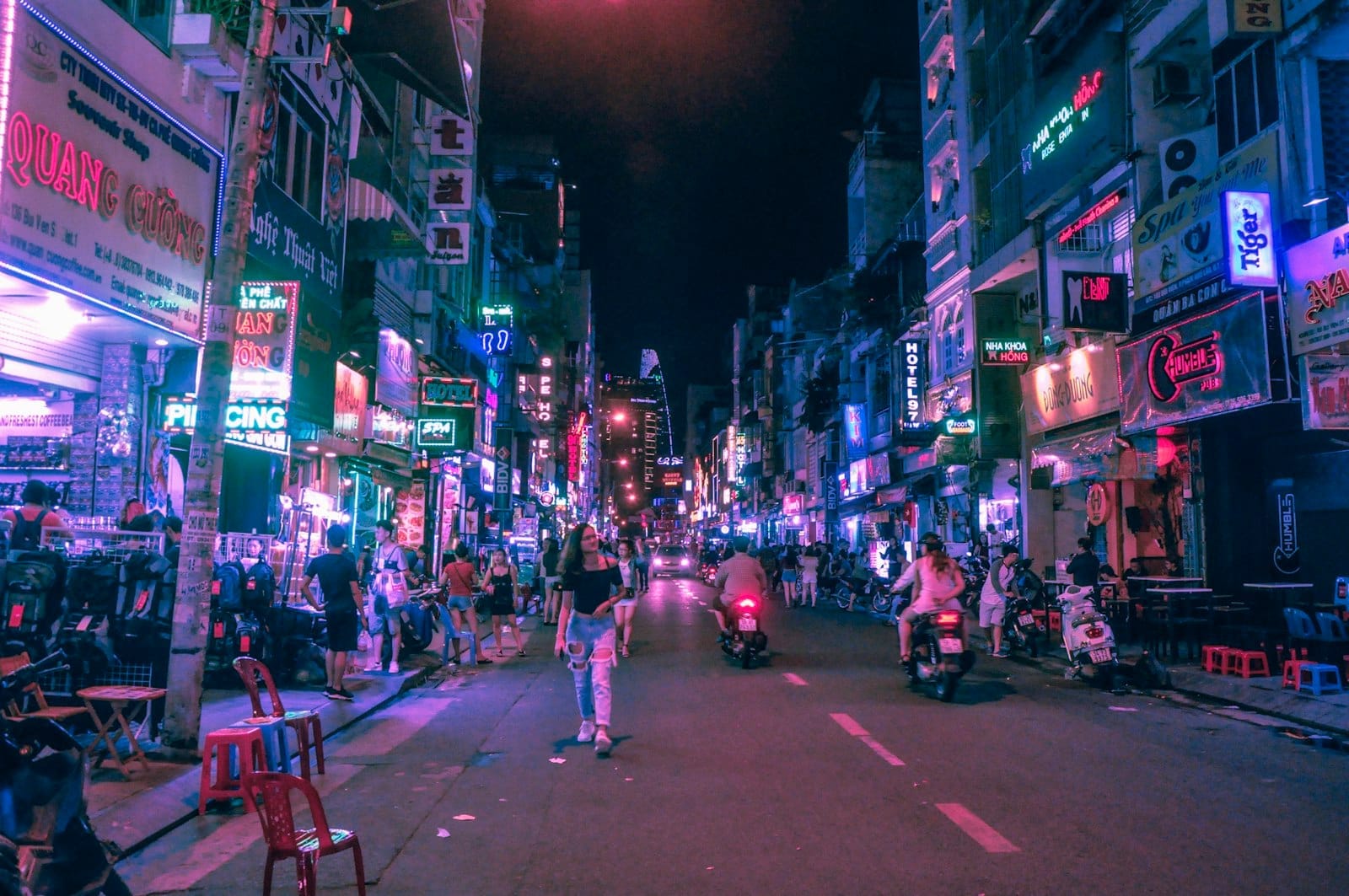
Bui Vien Walking Street is a roughly 500-meter pedestrianized strip in the Pham Ngu Lao backpacker district of District 1. Every evening, traffic is banned from 7 PM and the road fills entirely with people: bar stools spill onto the asphalt, speakers compete from both sides of the street, and the neon glow from dozens of signs blurs together into something that feels closer to a festival than a street. The atmosphere peaks on Friday, Saturday, and Sunday nights, but the pedestrianization is nightly. It is, without question, the loudest place in Ho Chi Minh City after dark.
The street sits inside the broader Pham Ngu Lao neighborhood, which has been Saigon's backpacker hub since the early 1990s. Commercial development in the area accelerated after 1986's Doi Moi economic reforms, and by 1993, budget guesthouses and travel agencies had clustered around Bui Vien and the surrounding alleys. In 2017, city authorities officially designated the street as a pedestrian walking zone, formalizing what had already been the social reality for years. The schedule has since expanded to nightly pedestrianization from 7:00 PM to 2:00 AM.
ℹ️ Good to know
The street is now pedestrianized nightly from 7:00 PM to 2:00 AM. Motorbike traffic is blocked during these hours every evening, making the full stretch a vehicle-free walking zone after dark.
How the Street Changes Through the Night
Arrive at 7 PM and Bui Vien is already warming up but still navigable. Plastic stools are being arranged, vendors are setting up grills, and the early crowd, often solo travelers or small groups doing their first night out in the city, is choosing seats with some deliberation. The light is fading, the air smells of charcoal smoke and frying garlic, and you can still hold a conversation at a normal volume.
By 9 PM, the street has transformed. The volume from competing sound systems makes sustained conversation difficult unless you are pressed close together. The crowd thickens to the point where moving from one end to the other takes real effort. The demographic is a genuine mix: Western backpackers, groups of young Vietnamese, Korean and Japanese tourists, and a layer of locals who come specifically to watch the foreigners watch them. It is, in a strange way, one of the more cosmopolitan stretches of pavement in Southeast Asia.
After midnight, things thin slightly but the remaining crowd is more committed. The side streets and alleys branching off Bui Vien, particularly around De Tham and Bui Thi Xuan, stay lively and offer slightly quieter options. By 1:30 AM, bar staff are visibly beginning to wind down even as the last holdouts order another round.
Tickets & tours
Live prices and dates from our booking partner. If you book, we may earn a commission at no extra cost to you.
Private full-day trip from Ho Chi Minh City to Mekong Delta
From 52 €Instant confirmationFree cancellationLandmarks of Ho Chi Minh City half-day tour
From 33 €Instant confirmationFree cancellationCu Chi tunnels guided experience from Ho Chi Minh City
From 33 €Instant confirmationFree cancellationHalf-day Cu Chi Tunnels guided tour from Ho Chi Minh City
From 21 €Instant confirmationFree cancellation
The Physical Experience: What You Will Actually See and Hear
The street is narrow enough that sound from one side bounces off the buildings on the other. Most establishments are open-fronted bars and clubs, with seating that extends onto the pedestrian zone. Live covers bands are common, playing everything from Vietnamese pop to classic rock, and it is not unusual to hear three different songs bleeding into each other simultaneously from three different venues. There is no quiet corner on Bui Vien itself when it is at full capacity.
Overhead, a web of LED lights and colored lanterns stretches across much of the street's length, which makes it photogenic in a deliberately maximalist way. Street food carts offer grilled corn, squid on skewers, and banh mi, and eating standing up while watching the crowd is one of the more enjoyable ways to spend time here. Drinks are priced for backpackers: a local beer will cost far less than in the bars of central District 1.
💡 Local tip
Photography tip: The best overhead shots of the LED canopy come from the second-floor terraces of bars near the middle of the street. Ask if you can go upstairs to take a photo; most staff will not mind.
Historical and Cultural Context
Pham Ngu Lao's emergence as a backpacker zone after 1993 was part of a broader opening of Vietnam to international tourism following the normalization of foreign relations. Bui Vien was the street where budget hostels, cheap restaurants, and travel agencies converged, making it a practical base for travelers arriving with limited funds. That economy of scale still defines the street: the prices are low, the English is serviceable, and the infrastructure for helping someone navigate their first days in Vietnam is dense and accessible. For context on how this area fits into the wider city, see the Ho Chi Minh City nightlife guide.
The 2017 pedestrianization was a city-planning move that reflected a practical reality: the density of foot traffic had already made motor vehicle navigation near-impossible most evenings. The formal designation gave the street a cleaner identity and has since anchored it as a recognized city attraction rather than simply a zone of informal activity.
Practical Walkthrough: Getting There and Getting Around
Bui Vien is walkable from Ben Thanh Market in about 10 to 15 minutes on foot. The most direct route heads southwest on Pham Ngu Lao Street and then turns onto Bui Vien itself. Grab (Vietnam's dominant ride-hailing app) is the simplest option if you are coming from another part of the city; drop-off points are typically on the surrounding streets since the walking zone limits vehicle access every evening.
The pedestrianized section runs roughly 500 meters. You can walk the full length in under ten minutes on a quiet evening, but budget considerably more time on a weekend evening when the crowd is dense. The surrounding alleys, particularly De Tham Street running parallel, are worth exploring as they offer slightly lower prices and a fraction of the noise.
Accessibility on busy nights is genuinely difficult for anyone with mobility limitations. The road surface is uneven, the crowd is dense, and there is no formal crowd management. Daytime visits before the pedestrian zone takes effect at 7 PM are more manageable for those with limited mobility, as foot traffic is lighter even though motorbikes are present.
⚠️ What to skip
Keep a firm hold on bags and phones in the densest crowd sections, particularly between 9 PM and midnight. Opportunistic theft is a documented risk on any high-density pedestrian street, and Bui Vien is no exception.
Honest Assessment: Who Will Love It and Who Should Skip It
Bui Vien does exactly what it sets out to do: it concentrates cheap drinks, loud music, and international company into a small, easy-to-find space. For first-time visitors to Ho Chi Minh City who want a low-effort introduction to Saigon's social scene, or for budget travelers looking for an affordable night out, it delivers consistently.
Travelers who want to understand the city more deeply will find Bui Vien limiting after an hour or two. The street is globally generic in ways that other parts of Ho Chi Minh City are not. If your interest is in Vietnamese food culture, the street food scene in surrounding neighborhoods offers far more than what the vendors on Bui Vien provide. If you want a more local nightlife experience, the bars on Nguyen Hue or around District 3 feel considerably less performative.
Anyone who is sensitive to noise, crowd density, or aggressive street-side sales pitches should approach with low expectations or avoid peak weekend hours entirely. The street can feel overwhelming rather than exciting when the crowd is at its largest, and the aggressive sales calls from some venue touts can wear on patience quickly. Those seeking authentic local culture over tourist spectacle will likely find better experiences elsewhere in the city.
Insider Tips
- Come on a weekday evening rather than a Saturday if you want to actually hear the live music. The bands are the same; the decibel competition from neighboring bars is significantly reduced.
- The side alley off Bui Vien near the De Tham intersection has several small local beer spots (bia hoi) where you sit on tiny plastic stools and pay roughly half of what the main-strip bars charge. They fill with a mix of locals and savvy travelers from around 6 PM.
- If you want the neon and LED overhead lights in your photos but cannot handle the crowd, arrive right at 7 PM on a Saturday. The lights are on, the street is pedestrianized, and the crowd has not yet reached its peak density.
- Many of the bars on the upper floors of buildings facing the street have open terraces. These offer both a better view of the street below and noticeably lower noise levels compared to ground-floor seating.
- Food on Bui Vien itself is convenient but not remarkable. Walk three minutes to the surrounding streets in Pham Ngu Lao for significantly better banh mi, pho, and com tam at lower prices.
Who Is Bui Vien Walking Street For?
- First-time visitors to Ho Chi Minh City wanting a quick, easy social experience
- Budget backpackers looking for affordable drinks and an international crowd
- Travelers who want to understand the city's backpacker infrastructure and history
- Groups who want a single destination where everyone can find something to do
- Night photographers interested in neon-lit, crowded street scenes
Planning a trip? Discover personalized activities with the Nomado app.