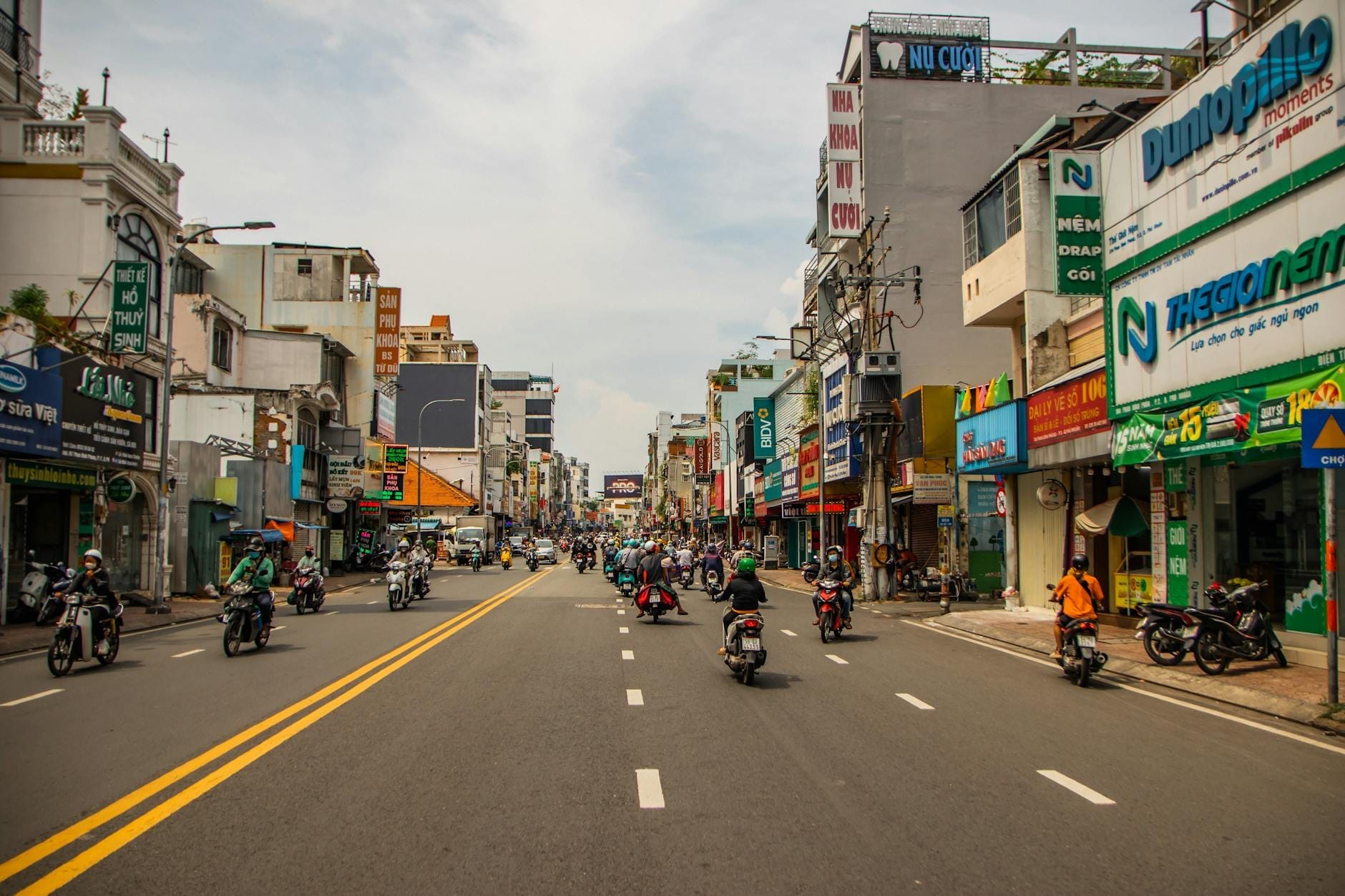
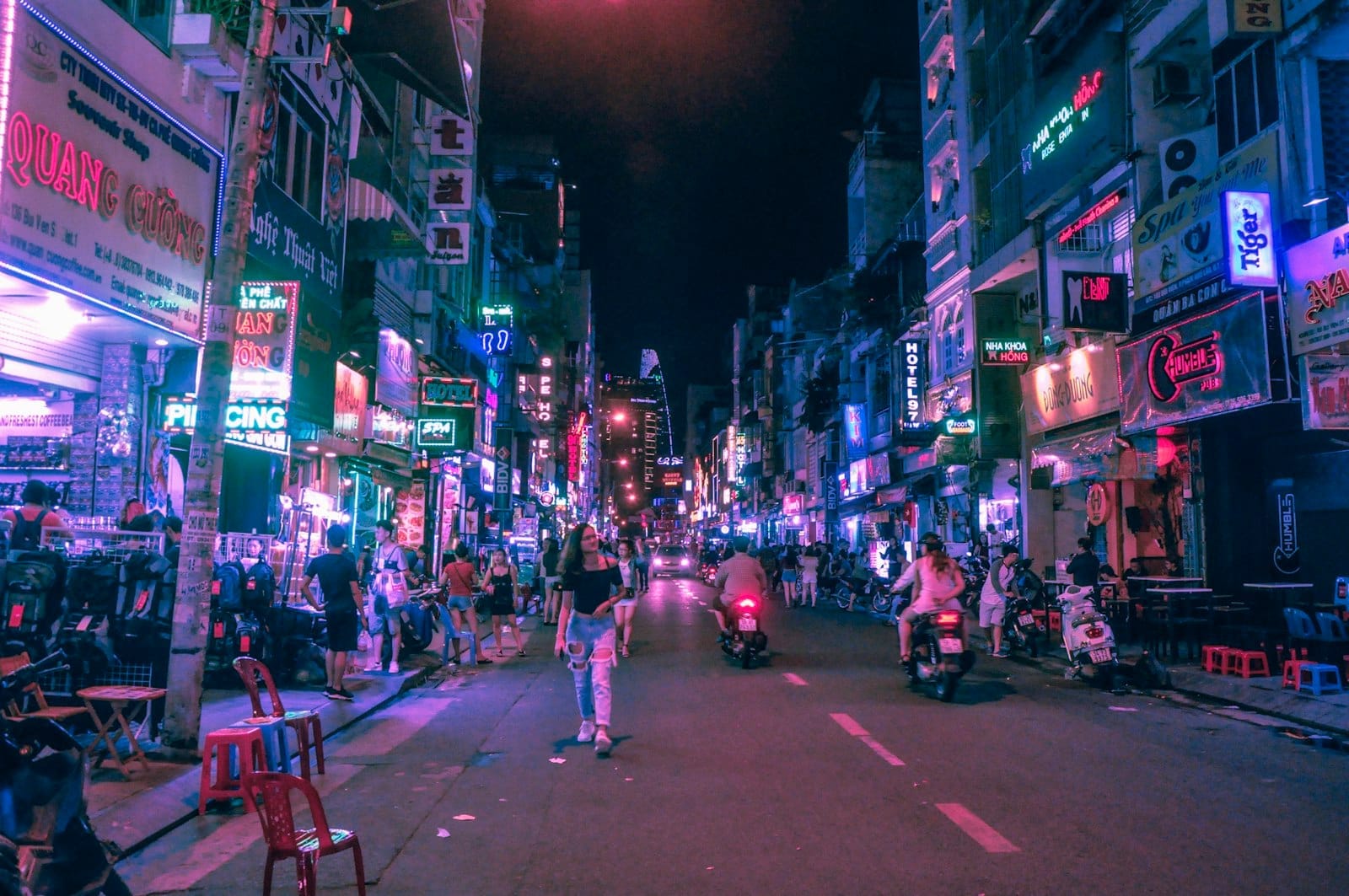
Phạm Ngũ Lão is District 1's backpacker heartland, a compact grid of guesthouses, travel agencies, noodle stalls, and open-fronted bars packed between Đề Thám, Bùi Viện, and the streets that connect them. It's the city's most international neighborhood by night and one of its most practical by day, sitting within easy walking distance of the War Remnants Museum, Reunification Palace, and Ben Thanh Market.
Phạm Ngũ Lão is the neighborhood that has absorbed generations of first-time visitors to Ho Chi Minh City and, despite its reputation, remains genuinely useful: cheap, central, and dense with services. It runs loud around the clock, but nothing in the city puts you closer to major sights for less money.
Orientation
Phạm Ngũ Lão sits in the southwestern corner of District 1, roughly bounded by Phạm Ngũ Lão Street to the north, Đề Thám Street running parallel one block south, and Bùi Viện Street forming the lower edge. Short cross-streets and covered alleyways stitch the three together into a walkable grid that takes less than ten minutes to cross end to end. To the east, the neighborhood bleeds into the wider commercial fabric of District 1 proper. To the west, Nguyễn Thái Học Street marks a natural transition toward the quieter residential blocks leading to the Fine Arts Museum.
The neighborhood's position within District 1 is genuinely convenient. September 23rd Park, the large public green space on the northern edge of the quarter, acts as both a boundary marker and a useful landmark for navigation. The War Remnants Museum is a ten-minute walk north along Võ Văn Tần. Reunification Palace sits roughly fifteen minutes northeast on foot. Ben Thanh Market is about the same distance to the east.
Understanding the street layout matters here. Phạm Ngũ Lão Street and Đề Thám Street run east-west and carry most of the guesthouses and travel agencies. Bùi Viện, one block further south, is where the nightlife concentrates. The short connector streets between them host food stalls and smaller bars. First-time visitors sometimes arrive expecting a single landmark street and are surprised to find a whole interconnected quarter.
Character and Atmosphere
By six in the morning, the neighborhood is already moving. Bánh mì carts and pho stalls set up on the corners around September 23rd Park, drawing a mix of local workers heading into the city and travelers recovering from the previous night. The air at this hour carries charcoal smoke from the grills, exhaust from the first motorbikes, and the faint smell of wet pavement from overnight cleaning crews. It is about as close as this neighborhood gets to calm.
Through the middle of the day, the streets are functional rather than atmospheric. Travel agency staff lean out of shopfronts hawking bus tickets and day tours. Guesthouse touts watch doorways. Small supermarkets with currency exchange counters do steady business. The light in the afternoon is direct and hot, and the narrow streets provide little shade. Most long-term visitors retreat indoors between noon and three, leaving the footpaths to fresh arrivals hauling backpacks.
After dark, the neighborhood shifts register entirely. Bùi Viện Street, known locally as Bùi Viện Walking Street, is closed to vehicles on weekend evenings and becomes one of the densest concentrations of open-air bars in Southeast Asia. Neon signs, competing sound systems, and plastic stools spilling across the footpath make it a full sensory assault. Weeknights are somewhat quieter but follow the same pattern. The crowd is overwhelmingly international on Bùi Viện itself, though the side streets attract more local Vietnamese, particularly younger residents drawn by the lower prices and the general atmosphere of anonymity.
⚠️ What to skip
Bùi Viện on a Friday or Saturday night is not for everyone. Sound levels from competing bars are extreme, and the footpaths become difficult to navigate after ten o'clock. If you need early nights or light sleep, book accommodation at least two streets north of Bùi Viện, or consider the calmer streets near District 3.
Comparisons to Bangkok's Khao San Road are common and not entirely wrong, but Phạm Ngũ Lão is denser and louder, and it operates against a backdrop of a genuinely large city rather than a tourist enclave. Local life does continue here: Vietnamese families run several of the best food stalls, residents navigate through the crowds on motorbikes, and the nearby park fills each morning and evening with people doing tai chi or walking dogs. It is a mixed space, not a theme park, but the tourist infrastructure is thick enough to insulate visitors from much of it.
What to See and Do
The neighborhood itself is more of a base than a destination. What it offers directly is street life, market browsing, and the evening bar scene. For serious sightseeing, you will be walking or taking short rides outward.
The War Remnants Museum is the single most visited attraction in the immediate vicinity, around ten to fifteen minutes on foot heading north. It is one of the most affecting museums in Vietnam and essential context for understanding modern Ho Chi Minh City. Plan at least two hours and go in the morning before the tour groups arrive.
The Reunification Palace is roughly fifteen minutes northeast and worth a half-day for the combination of Cold War architecture, preserved interiors, and its significance in Vietnamese history. From there, you are close to Notre Dame Cathedral and the Central Post Office, two of the city's most recognizable French colonial landmarks, both on the same block.
September 23rd Park: the green space bordering the neighborhood to the north, good for morning walks and people-watching
Street markets along Đề Thám and Bùi Viện: cheap clothing, souvenirs, electronics, though counterfeit goods are common
Museum of Fine Arts: a 15-minute walk west on Phó Đức Chính, one of the city's underrated institutions housed in a preserved colonial building
Ben Thanh Market: 15 minutes east, useful for food and fresh produce though the surrounding stalls lean heavily tourist
Day tour booking: the area is the city's main hub for organized tours to Cu Chi Tunnels, the Mekong Delta, and beyond
If you are planning day trips from the city, the cluster of travel agencies here makes logistics straightforward. Organized departures to the Cu Chi Tunnels and the Mekong Delta leave regularly from pickup points in the district. Prices are competitive but vary, so compare two or three agencies before booking.
⚠️ What to skip
Markets in Phạm Ngũ Lão sell counterfeit goods including branded clothing, pirated DVDs, and fake-branded souvenirs. These are illegal to bring into many countries. Buy locally made crafts and food products without concern, but treat branded goods with scepticism.
Eating and Drinking
The food options here range from excellent Vietnamese street stalls to mediocre tourist-facing restaurants, and knowing which is which matters. The best eating tends to happen at the simplest places: plastic-stool pho shops on the side streets, bánh mì carts near the park in the early morning, and the com tam rice stalls that set up at lunch. Prices at these spots are low even by Saigon standards.
The wider street food scene across Ho Chi Minh City is well-documented, and Phạm Ngũ Lão is one of the easier entry points because vendors here are accustomed to foreign customers and often have English menus. For a fuller picture of what to eat across the city, the Ho Chi Minh City street food guide covers regional specialties and where to find them.
Restaurants fronting on Bùi Viện and the main stretch of Phạm Ngũ Lão Street cater primarily to international tastes: English-language menus, Western breakfasts, pizza, and familiar Asian dishes repackaged for travelers. These are convenient and usually fine, but rarely memorable. The neighborhood's Vietnamese food punches above its weight when you look past the laminated menus.
For drinking, Bùi Viện is the obvious answer and the bars here are cheap, social, and built for groups. For a deeper look at the city's after-dark scene beyond this strip, the Ho Chi Minh City nightlife guide covers rooftop bars, live music, and late-night options across the city. Bia hoi corner spots offer locally brewed fresh draft beer for very little money. There is no shortage of cocktail bars in the two-dollar range. The quality is consistent at the lower-middle tier: nobody is making serious cocktails here, but nobody is charging serious cocktail prices either.
Bánh mì: available from carts near September 23rd Park from early morning
Pho and bun bo Hue: side-street stalls on the alleyways between Đề Thám and Bùi Viện
Com tam (broken rice with grilled pork): lunch staple at no-frills spots throughout the quarter
Bia hoi: fresh draft beer served at street-corner spots, typically well under 20,000 VND per glass
Western-style cafés: several reliable options on Đề Thám with good coffee and air conditioning
💡 Local tip
Coffee culture in Ho Chi Minh City is serious, and even in the backpacker district you can find excellent Vietnamese iced coffee (ca phe sua da) at the smaller local cafés tucked off the main streets. Avoid the tourist-facing chains for this one.
Getting There and Around
Phạm Ngũ Lão is in the center of District 1 and accessible from almost anywhere in the city in under thirty minutes. From Tan Son Nhut International Airport, the most practical option is a metered taxi or ride-hailing app; the journey takes twenty to forty minutes depending on traffic and costs a fraction of what the same ride would in other major Asian cities. Grab (the dominant ride-hailing app across Southeast Asia) works reliably here and eliminates the need to negotiate fares.
Ho Chi Minh City's metro network is still expanding. Metro Line 1 connects Ben Thanh Station, roughly fifteen minutes' walk northeast of Phạm Ngũ Lão, to the eastern suburbs. For a practical overview of getting around the city more broadly, the guide to getting around Ho Chi Minh City covers bus routes, metro options, and ride-hailing in detail.
Within the neighborhood, everything is walkable. The core grid of Phạm Ngũ Lão Street, Đề Thám Street, and Bùi Viện can be covered on foot in minutes. For reaching major sights, walking is practical for most destinations within District 1: the War Remnants Museum, Reunification Palace, Notre Dame Cathedral, and Ben Thanh Market are all within a fifteen-minute walk. The Fine Arts Museum is slightly further west but still manageable without transport.
Bus services connect the neighborhood to other parts of the city. Several route-buses stop along the main streets and near September 23rd Park, with clear signage for major destinations. Xe om (motorbike taxis) and traditional cyclos are also available, though negotiate the price before you get on. For longer journeys or those with luggage, Grab remains the simplest and most transparent option.
Where to Stay
Phạm Ngũ Lão has more accommodation options per square meter than anywhere else in the city. The range runs from dormitory hostel beds at a few dollars per night to mid-range boutique guesthouses at the upper end of the backpacker bracket. For anything resembling a luxury hotel, you will want to look further into District 1 or toward District 3. The complete guide to where to stay in Ho Chi Minh City covers the full range of accommodation zones across the city.
The best streets for accommodation depend on your tolerance for noise. Phạm Ngũ Lão Street and the alleyways running off Đề Thám offer a better balance of access and quiet than Bùi Viện, which is unusable for early sleepers on weekends. Properties one or two blocks north of Bùi Viện on the Đề Thám side tend to hit the right spot: close to everything, but separated from the worst of the sound. Check that your room faces away from the street if light sleep is a priority.
The neighborhood suits solo backpackers, budget-conscious couples, and travelers who prioritize convenience and social atmosphere over comfort or quiet. It is a poor fit for families with young children, light sleepers, or travelers who find persistent street-level noise and heavy foot traffic stressful. The practical upside is hard to argue with: you can walk to the city's best museums, book day trips from your doorstep, eat well for very little, and get a taxi to the airport without any logistical complexity.
ℹ️ Good to know
If you want to be near District 1's sights without the noise and crowd density of Phạm Ngũ Lão, District 3 is a ten-minute ride away and offers quieter streets, good local restaurants, and a noticeably more relaxed pace. It works especially well for travelers staying more than a few days.
Practical Notes
Currency exchange booths are everywhere in Phạm Ngũ Lão, and rates are generally competitive. ATMs are also plentiful. The Vietnamese Dong (VND) is the only currency you need; while some tourist-facing businesses quote prices in USD, paying in VND gives you better control over the rate. Keep small bills for street food and market stalls.
The neighborhood is a natural starting point for planning the rest of your time in Ho Chi Minh City. Travel agencies here book day trips to the Cu Chi Tunnels and Mekong Delta, rent motorbikes, and sell onward bus tickets to Dalat, Mui Ne, and Hanoi. For broader planning, the Ho Chi Minh City itinerary guide helps structure how to distribute your time across the city's distinct neighborhoods and major sights.
English is widely spoken across the quarter, more so than in almost any other part of the city. Most guesthouses, restaurants, and tour agencies have English-fluent staff. This makes the neighborhood easy for first-time visitors to Vietnam, though it also means you are relatively insulated from the Vietnamese-language city around it. If that matters to you, plan deliberate excursions outward during the day rather than anchoring entirely in the backpacker grid.
TL;DR
Central to District 1 and within walking distance of the War Remnants Museum, Reunification Palace, Notre Dame Cathedral, and Ben Thanh Market
Best suited to budget travelers, solo backpackers, and first-time visitors to Ho Chi Minh City who want convenience and social atmosphere
Bùi Viện Walking Street is one of the loudest nightlife strips in Southeast Asia: factor this into accommodation choices
Street food is genuinely good and cheap; tourist-facing restaurants are convenient but unremarkable
Not the right fit for light sleepers, families with young children, or travelers looking for local Vietnamese neighborhood character over international backpacker infrastructure
Top Attractions in Phạm Ngũ Lão (Backpacker District)
Ho Chi Minh City's tropical climate divides sharply into a dry season and a wet season, and timing your visit makes a bigger difference than most travelers expect. This guide breaks down every month, from ideal dry-season windows to the pros of traveling in the rain.
Ho Chi Minh City rewards deep exploration, but some of the most memorable experiences in southern Vietnam sit just beyond the city limits. These are the best day trips from Ho Chi Minh City, from underground war history to slow-boat river journeys.
Ho Chi Minh City's transport network is more layered than most visitors expect. From the newly opened Metro Line 1 to app-based motorbike taxis that slice through gridlock, this guide breaks down every practical way to get around Saigon, with honest assessments of what actually works.
Whether you have a long weekend or nearly a week, this guide breaks down exactly how to spend 2, 3, or 5 days in Ho Chi Minh City. From the war history of District 1 to the Chinese temples of Cholon and the tunnel networks of Cu Chi, every day is mapped out with honest advice on timing, crowds, and what's genuinely worth your time.
From cheap beers on Bùi Viện to cocktails 40 floors above the Saigon River, Ho Chi Minh City's nightlife runs seven days a week and rarely stops before 3 AM. This guide breaks down every scene by neighborhood, budget, and vibe so you spend less time deciding and more time out.
From crispy bánh xèo in District 4 to late-night snails on Nguyễn Thượng Hiền Street, Ho Chi Minh City's street food scene is one of the most diverse and affordable in Southeast Asia. This guide breaks down the essential dishes, the best neighborhoods to find them, honest pricing, and the traps worth avoiding.
Ho Chi Minh City, still widely called Saigon, packs more experiences per square kilometer than almost any city in Southeast Asia. This guide covers the top attractions, day trips, nightlife, food, and practical planning tips so you can spend less time deciding and more time exploring.
Ho Chi Minh City's food scene runs from sidewalk plastic stools to contemporary kitchens earning Michelin recognition. This guide cuts through the noise with specific restaurants, real prices in Vietnamese Dong, neighborhood breakdowns, and honest assessments of what's worth your time.
Choosing where to stay in Ho Chi Minh City (Saigon) shapes your entire trip. This guide breaks down the best neighborhoods by travel style and budget, with honest assessments of what each area delivers — and what it doesn't.