Mekong Delta Day Trip from Ho Chi Minh City: What to Expect Before You Go
The Mekong Delta, known in Vietnamese as Đồng bằng Sông Cửu Long, is one of Southeast Asia's great river landscapes. Stretching across more than 40,500 km² of southwestern Vietnam, it rewards travelers who go in with the right expectations and the right timing.
Quick Facts
- Location
- Southwestern Vietnam, approx. 60–170 km from Ho Chi Minh City depending on destination
- Getting There
- Organized day tours depart from HCMC; bus to Mỹ Tho (~70 km, ~1.5–2 hrs); bus to Cần Thơ (~170 km, ~3–4 hrs)
- Time Needed
- Full day minimum for a day trip; 2–3 days to explore meaningfully
- Cost
- Organized day tours from HCMC typically start around USD 15–40 per person; costs vary by operator and itinerary
- Best for
- Nature lovers, river culture enthusiasts, travelers seeking contrast to city life
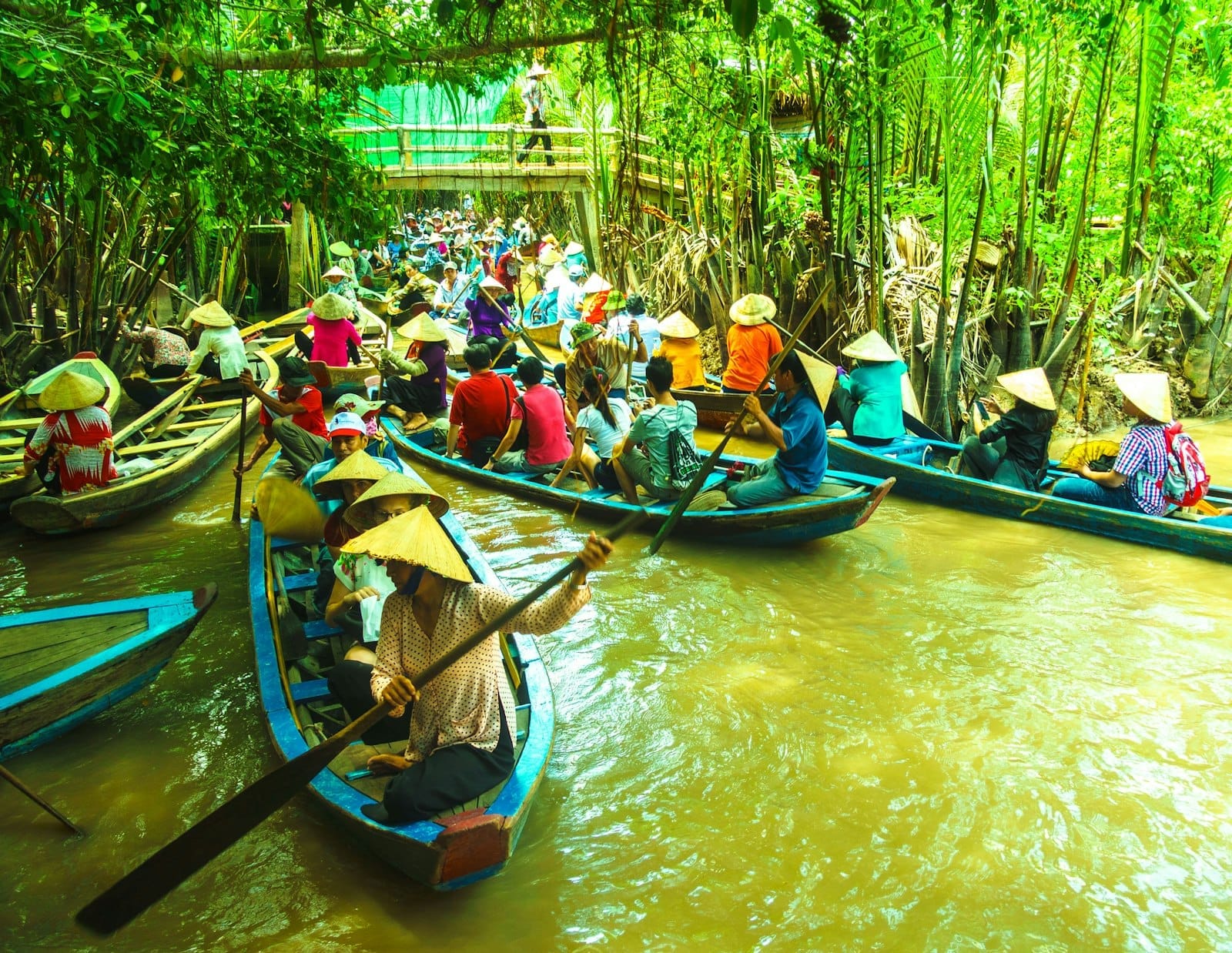
What the Mekong Delta Actually Is
The Mekong Delta is not a single site with a gate and a ticket booth. It is a vast river delta spanning over 40,500 km² across approximately 13 provinces in southwestern Vietnam, fed by the Mekong River as it fractures into two major channels before reaching the East Sea. The Vietnamese name, Đồng bằng Sông Cửu Long, translates literally to 'Nine Dragon River Plain', which gives you a sense of the scale. This is one of the most productive agricultural regions in Asia, responsible for a significant share of Vietnam's rice output and fruit exports.
For travelers coming from Ho Chi Minh City, the delta functions as a day trip or short overnight destination that offers a genuine counterpoint to the city's concrete and traffic. The landscape is flat, green, and cut through by an intricate web of canals. Villages sit close to the water's edge. Boats move coconuts, rice, and passengers along channels so narrow that branches sometimes brush the roof of the vessel. The air smells of river mud, ripening fruit, and woodsmoke in the early morning.
ℹ️ Good to know
The Mekong Delta has no centralized opening hours, entry fee, or single address. You access it through organized tours, public buses, or private transport from Ho Chi Minh City. Plan your specific destination before you go: Mỹ Tho for the closest access point, Cần Thơ for the most rewarding floating market experience.
Choosing Your Destination Within the Delta
The most visited access point for HCMC-based travelers is Mỹ Tho, the capital of Tiền Giang Province, roughly 70 km southwest of the city. It sits on the northern bank of the Mekong's first major channel and can be reached in under two hours by bus or car. Most budget day tours head here, offering boat rides through the channels, visits to coconut candy workshops, and fruit orchards. It is accessible, but the experience can feel compressed and heavily touristed, especially on weekends when dozens of boats carry groups through the same narrow waterways simultaneously.
Cần Thơ, the delta's largest city and unofficial capital, sits around 170 km from HCMC and requires 3–4 hours of travel by road. The additional distance is worth it for one reason above all others: the Cái Răng floating market. This is Vietnam's largest floating market, operating in the early morning hours on the Cần Thơ River. Produce vendors load their boats with mountains of watermelon, pineapple, and pomelo, hanging a sample from a bamboo pole to indicate what they are selling. The market is busiest roughly between 6 and 8 a.m. and fades by mid-morning. Seeing it properly almost always requires an overnight stay in Cần Thơ.
Other destinations worth considering include Châu Đốc near the Cambodian border, Ben Tre province (famous for coconut products and quieter waterways), and Trà Vinh with its Khmer temple culture. If you are planning a broader southern Vietnam itinerary, the day trips from Ho Chi Minh City guide covers transport logistics and comparative options in detail.
Tickets & tours
Live prices and dates from our booking partner. If you book, we may earn a commission at no extra cost to you.
Private full-day trip from Ho Chi Minh City to Mekong Delta
From 52 €Instant confirmationFree cancellationGuided tour of Cu Chi Tunnels and Mekong Delta in a small group
From 40 €Instant confirmationFull-Day Guided Tour to Cu Chi Tunnels and Mekong Delta
From 83 €Instant confirmationMekong Delta full-day tour from Ho Chi Minh City
From 30 €Instant confirmationFree cancellation
What You Will Actually See and Experience
Arrive early enough and the delta reveals itself slowly. The light at 6 a.m. over the water is soft and hazy, with mist sitting on the river surface. Fishermen check nets. Women in conical hats paddle small wooden boats loaded with vegetables to riverside markets. The sounds are a mix of low-throttle boat engines, birdsong, and the occasional radio playing from a riverside house.
Most organized day trips include a boat journey through smaller canals, a stop at a riverside cottage industry (coconut candy production, rice paper making, or honey bee farms are common), a fruit tasting session, and occasionally a short bicycle ride through village paths lined with banana palms. These elements are genuinely enjoyable, though the itinerary at the budget end can feel formulaic by mid-afternoon, with multiple groups cycling through the same stops in sequence.
The boat journey itself is usually the highlight. Vietnamese sampan-style boats, narrow and low in the water, navigate channels where the canopy of water palm and banana trees closes overhead, blocking out the sky entirely. The air drops several degrees in temperature. The only sounds are the paddle or the quiet hum of a small motor. These moments, brief as they are, carry a quality that is difficult to find anywhere in the Ho Chi Minh City area.
💡 Local tip
Wear quick-dry clothing and bring a small dry bag for your phone and camera. Boat transfers can involve stepping from dock to vessel over shifting gaps, and light spray is common on wider river crossings. Flat sandals or grippy shoes work better than flip-flops for these transitions.
Seasonal Conditions and When to Visit
The delta operates on two seasons: a dry season roughly from November to April, and a wet season from May to October. For day trips, the dry season is more comfortable: lower humidity, less rain, and clearer water channels. Roads are easier to navigate and boats operate more predictably.
The wet season brings a different character entirely. Between August and October, much of the upper delta floods deliberately, a phenomenon known locally as mùa nước nổi, or the 'floating water season'. Rice paddies submerge. Villages access one another by boat. The landscape transforms from patchwork green fields to an inland sea with trees and houses rising from the water. Some travelers find this version of the delta more dramatic and photogenic, though road access to certain areas becomes limited and organized tours are fewer.
For guidance on how the seasons affect the broader Ho Chi Minh City region, the best time to visit Ho Chi Minh City guide is a useful starting reference.
Organized Tours Versus Independent Travel
The Mekong Delta is one of the few destinations near Ho Chi Minh City where an organized tour genuinely outperforms independent travel for first-time visitors. The reason is logistical: boats, local guides who can arrange market access at the right hour, and knowledge of which channels are worth entering all require local relationships that take time to build. Budget tours from the Phạm Ngũ Lão area start around USD 15 per person and typically use shared minibuses. Mid-range tours with smaller group sizes and more flexible itineraries run USD 30–60.
If you prefer to go independently, the easiest approach is a direct bus from HCMC's Mien Tay Bus Station (Bến xe Miền Tây) to Mỹ Tho or Cần Thơ, then arrange a boat from the local pier on arrival. This works well for travelers who are comfortable with unstructured logistics and have a night or two to spend. The getting around Ho Chi Minh City guide covers the bus station options and ride-hailing context for reaching the terminal.
One honest note: if you take a very cheap group day tour, expect the itinerary to include stops at shops selling local products, often with mild pressure to purchase. This is common across the region and not unusual, but worth knowing in advance so it does not disrupt expectations.
A Brief Historical and Cultural Note
The Mekong Delta has been occupied since at least the 4th century BC, with its modern ethnic and cultural character shaped by centuries of overlapping Khmer, Vietnamese, Chinese, and Cham presence. The region came under Vietnamese political control through gradual southward expansion in the 17th and 18th centuries, replacing earlier Cambodian administration. Today, ethnic Khmer communities, known as Khmer Krom, still live throughout the delta, particularly in Trà Vinh and Sóc Trăng provinces, maintaining Buddhist temple complexes with distinct Khmer architectural traditions.
The delta's economic significance is considerable. It produces roughly half of Vietnam's total rice output and a large proportion of the country's freshwater fish, shrimp, and tropical fruit exports. The waterway network, developed and expanded over centuries, functions as a working transport and trade infrastructure, not a heritage display. The boats you see on the river are carrying actual cargo to actual markets. This is what gives the delta its texture: it is not a reconstruction of rural life, it is rural life.
Who This Experience Is Right For, and Who It Is Not
Travelers who respond well to open-air landscapes, slow travel, and interactions that require patience and observation tend to find the delta deeply rewarding. Photographers, nature-oriented travelers, and anyone who has spent several days in HCMC and wants a complete change of pace will find the contrast meaningful.
Travelers with limited time who expect dramatic sights comparable to Angkor Wat or the Cu Chi Tunnels may leave underwhelmed. The delta's appeal is cumulative and atmospheric, not monument-based. If your trip to HCMC is only 2–3 days and you have not yet visited the city's own major sites, consider the things to do in Ho Chi Minh City before committing a full day to the delta.
Travelers with mobility limitations should assess tours carefully in advance. Boat boarding often involves stepping across uneven surfaces, and canal-side paths are sometimes unpaved and uneven. Some operators accommodate reduced mobility; confirm before booking.
Insider Tips
- Book a tour that departs before 7 a.m. if Cần Thơ's Cái Răng floating market is on your itinerary. The market thins significantly by 9 a.m. and is largely over by 10. Any tour advertising a floating market visit that includes a 2-hour drive and a 9 a.m. arrival is showing you the aftermath.
- Bring small denomination Vietnamese Dong in cash. Riverside vendors and small orchards rarely accept cards, and on-boat tips for boatmen are standard practice. Having VND 20,000–50,000 notes ready avoids awkward change requests.
- If you visit during the dry season (November to April), mornings are cooler and the delta light is particularly good for photography between 6 and 8 a.m. By noon, the heat and glare off the water can be uncomfortable without a hat and sun protection.
- Ask your tour operator specifically which canal routes are included. The smaller secondary channels through water palm forests (dừa nước) offer a genuinely different experience from the main river crossings. Not all budget tours include them.
- Consider staying one night in Cần Thơ rather than doing a rushed day trip. The city has a pleasant riverside promenade, local restaurants serving freshwater fish dishes, and the ability to reach the floating market at its peak without a 3 a.m. wake-up from Ho Chi Minh City.
Who Is Mekong Delta For?
- Travelers who have already seen HCMC's main sites and want contrast
- Nature-oriented visitors interested in river ecosystems and working agricultural landscapes
- Photographers drawn to early-morning light, boat life, and rural market scenes
- Families with older children comfortable with boat travel and outdoor walking
- Anyone planning a longer southern Vietnam itinerary who wants regional geographic context
Planning a trip? Discover personalized activities with the Nomado app.