Saigon Zoo & Botanical Garden: History, Animals, and What to Expect
Thảo Cầm Viên Sài Gòn is one of the oldest zoological gardens in the world, established in 1864 during the French colonial period. Set across 20 hectares in District 1, it combines animal enclosures, mature tropical plantings, and a small amusement area into a single compact site that draws both local families and curious travelers.
Quick Facts
- Location
- 2 Nguyễn Bỉnh Khiêm, Bến Nghé Ward, District 1, Ho Chi Minh City
- Getting There
- ~15 min by bike or ride-hail from central District 1; Grab is the most reliable option from the city centre
- Time Needed
- 2–3 hours for a relaxed visit; 1 hour if only doing the botanical section
- Cost
- Adults (over 1.3m): 60,000 VND; Children (1m–1.3m): 40,000 VND; Under 1m: Free (current prices)
- Best for
- Families with children, history enthusiasts, joggers and picnickers seeking green space in the city centre
What Is Thảo Cầm Viên Sài Gòn?
Thảo Cầm Viên Sài Gòn, commonly known as Saigon Zoo and Botanical Garden, is one of the world's oldest zoos and Vietnam's largest zoological garden. That claim is not marketing language. The institution was founded by decree on March 23, 1864, just three years after France established its colonial administration in Saigon, making it one of the oldest zoos in Southeast Asia and among the earliest zoological gardens established anywhere in the world.
The site began at 12 hectares and expanded to 20 hectares by 1865. In 1990, the animal enclosure areas were extended to approximately 25,000 square metres. The name Thảo Cầm Viên Sài Gòn was officially adopted in 1954/1956, replacing colonial-era nomenclature. Today the garden sits at the northeastern edge of District 1's core, positioned along the Thị Nghè Channel, with its main gate on Nguyễn Bỉnh Khiêm Street.
For travelers building an itinerary around District 1, the zoo is one of the few places in the central area where you can spend two hours outdoors without stepping into a tourist cafe or a souvenir shop. That contrast is part of what gives it value.
The Grounds: Gardens, Animals, and Atmosphere
The botanical section is the most underappreciated part of the site. Mature tropical trees, some planted in the 19th century, provide dense canopy cover along the main pathways. In the morning, before the school groups arrive, the garden section has the quality of a proper urban park: shaded benches, the sound of birds moving through the upper branches, and the kind of thick green quiet that is genuinely difficult to find in central Ho Chi Minh City.
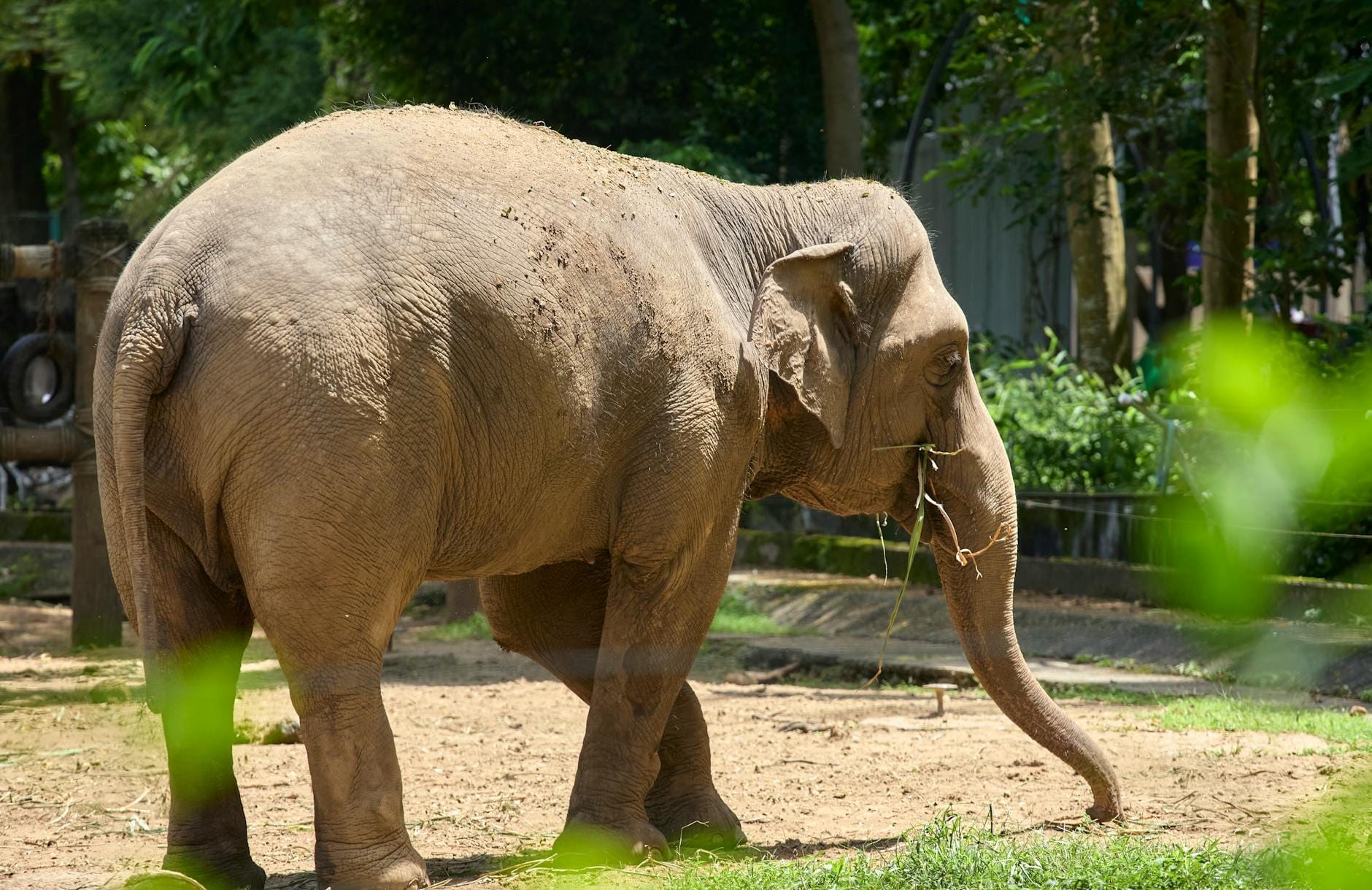
The zoo houses a range of species including elephants, hippopotamuses, crocodiles, big cats, primates, and a reptile house. The collection is broad rather than deep. Animal welfare standards here are in line with what you'd expect from a public zoo of this age and budget in Southeast Asia. Enclosures are generally functional rather than spacious, and some feel dated. Visitors who have recently been to newer private wildlife parks in the region may find the facilities underwhelming. That is worth saying plainly.
ℹ️ Good to know
The zoo also contains a small amusement area with rides that primarily targets children under 12. If you are visiting without children, the rides section is easy to skip entirely without affecting the rest of the experience.
There is also a museum of Vietnamese history on site, the Ho Chi Minh City Museum of History (Bảo Tàng Lịch Sử), located near the main entrance. It is technically a separate institution with its own admission fee, but the two sites share the same entrance gate area and many visitors combine them into a single morning.
Tickets & tours
Live prices and dates from our booking partner. If you book, we may earn a commission at no extra cost to you.
Ho Chi Minh Saigon River Dinner Cruise with Live Music
From 81 €Instant confirmationFree cancellationSaigon countryside guided bike tour with lunch
From 107 €Instant confirmationSaigon markets and streets seasonal walking tour
From 23 €Instant confirmationFree cancellationSaigon shopping tour of markets, malls and hidden gems
From 17 €Instant confirmation
How the Experience Changes by Time of Day
Early morning (opening until around 8:30am) is the clearest window for a peaceful visit. Locals use the garden paths for walking and light exercise, and the animals are generally more active in the cooler air. The light comes through the tree canopy at a low angle and the humidity has not yet peaked. If you are carrying a camera and interested in the botanical side, this is the only time the garden genuinely rewards careful attention.
By mid-morning on weekdays, school groups begin to arrive in significant numbers, particularly between 9am and 11am. Paths around the more popular enclosures (elephants and primates especially) become crowded quickly. The amusement area gets loud. If you are visiting on a weekday and want a quieter experience, entering as close to opening time as possible makes a real difference.
Weekends attract large family groups throughout the day. The garden functions as one of the main green recreation spaces for District 1 residents, so weekend afternoons in particular feel less like a tourist attraction and more like a neighbourhood park that happens to have zebras in it. That is not a criticism. It is simply a different atmosphere from what some visitors expect.
💡 Local tip
Avoid visiting between 11am and 2pm regardless of the day. The combination of full sun, high humidity, and reduced animal activity in the midday heat makes this the least rewarding window. Many animals retreat to shaded areas of their enclosures and are barely visible.
Historical and Cultural Context
The garden was originally established under the direction of French botanist Jean Baptiste Louis Pierre, who was commissioned by the French colonial administration to create a scientific botanical collection. The intent was partly scientific documentation of Indochinese flora and partly the kind of colonial prestige project that major European powers routinely funded in their overseas territories during the 19th century.
That history is visible in the layout. The garden's structure follows a formal European design logic, with broad main pathways and a clear organizational logic around specimen trees and water features, rather than the more organic form you find in Asian garden traditions. The tension between that European skeleton and the tropical vegetation that has grown into and around it over 160 years gives the place an unusual visual character.
The adjacent HCMC Museum of History reinforces this historical layer significantly. A combined visit to both institutions, followed by a walk down Dong Khoi Street to the south, makes for one of the more historically coherent half-days available in the city centre.
Getting There and Practical Logistics
The main entrance is at 2 Nguyễn Bỉnh Khiêm Street, Bến Nghé Ward, District 1. The gate is clearly marked and hard to miss. From the Nguyen Hue or Ben Thanh area, the most efficient option is a Grab ride (roughly 10–15 minutes depending on traffic) or a bicycle rental. The route along Nguyễn Bỉnh Khiêm from the south is pleasant and mostly flat.
Metro Line 1 now operates nearby, with Ba Son station within walking distance of the zoo. Public bus routes also connect to the area, though navigating Ho Chi Minh City's bus network without Vietnamese language ability remains genuinely difficult. Grab is still the practical default for most visitors.
💡 Local tip
Ask your Grab driver to drop you on Nguyễn Bỉnh Khiêm Street directly in front of the main gate. Some drivers unfamiliar with the address default to a nearby side entrance. The main gate has the ticket booths and the map kiosk.
Admission is paid in cash at the gate. Current ticket prices: adults (over 1.3m height) 60,000 VND, children (1m to 1.3m) 40,000 VND, children under 1m free. Prices are low even by local standards. For broader planning, check the full Ho Chi Minh City attractions guide for context on how the zoo fits into a multi-day itinerary.
Maps are available at the entrance either as printed sheets or via QR code. The pathways through the zoo are paved and manageable with a stroller, though some sections near older enclosures have uneven surfaces. The site is large enough that comfortable shoes make a difference, especially in the afternoon heat.
Photography and What to Bring
The botanical garden section photographs well in morning light, particularly the large ficus and tropical hardwood specimens along the main allée. The animal enclosures are more challenging photographically because most barriers use thick mesh or glass at an awkward angle for longer lenses. A compact camera or phone camera handles the botanical sections better than large SLR setups with standard zoom lenses.
Bring water. There are vendors and small kiosks inside the grounds, but prices are higher than outside and selection is limited. Sunscreen is important if you are visiting after 9am. The canopy covers some pathways but animal enclosure areas are largely exposed. The garden temperature in the dry season (roughly November through April) is more forgiving than the wet season months, when afternoon humidity can make extended outdoor visits uncomfortable.
⚠️ What to skip
The wet season brings frequent afternoon downpours, sometimes starting as early as 1pm. If you are visiting between May and October, aim to arrive early and plan to be finished by noon. The garden has limited covered shelter away from the main entrance building.
For travelers managing a tight schedule, the Ho Chi Minh City itinerary guide covers how to sequence this with nearby attractions like the Reunification Palace and the War Remnants Museum for an efficient day in the centre.
Who This Attraction Is Not For
Travelers specifically seeking high-quality zoo experiences with modern enclosures and active conservation programs will likely be disappointed. The infrastructure reflects the institution's age and public funding constraints. Animal welfare here is not comparable to leading contemporary zoological institutions in Europe or North America, and visitors sensitive to that should factor it into their decision.
Solo travelers primarily focused on culture, food, or nightlife will probably find better use of two hours elsewhere in the city. The zoo earns its place in an itinerary most clearly when children are in the group, when you want green space and shade, or when the historical angle (the museum, the colonial-era garden design) is genuinely interesting to you.
Insider Tips
- The HCMC Museum of History shares the entrance gate area and has its own separate admission. It is one of the better natural history and archaeology museums in the city and adds about 45 minutes to an already-planned zoo visit at minimal extra cost.
- The large shade trees along the main botanical allée near the entrance are among the oldest in the city. Some specimens date to the original 19th-century plantings. Look for the labelled specimens near the central fountain area.
- Weekday mornings between 7am and 9am attract local joggers and elderly residents doing morning exercise. The atmosphere during this window is completely different from weekend afternoons and feels more like a genuine neighbourhood green space than a tourist site.
- If you are visiting with young children, the amusement rides section requires separate payment from the main admission. Budget for this separately or the ticketing area can become a friction point.
- The garden section along the northeastern perimeter, closest to the Thị Nghè Channel, is the quietest part of the grounds and rarely crowded even on weekends. It is a good retreat if the main paths feel too busy.
Who Is Saigon Zoo & Botanical Garden For?
- Families with children under 12 looking for an affordable, shaded outdoor activity
- History and architecture enthusiasts interested in French colonial-era urban planning and botanical collections
- Travelers who want a green, walkable break from the density of the city centre
- Visitors combining the zoo with the adjacent HCMC Museum of History for a single cultural morning
- Early risers who want to see the city at a slower pace before the day heats up
Nearby Attractions
Other things to see while in District 1 (Colonial Quarter):
- Bến Nghé Canal & Riverside Walk
The Bến Nghé Canal cuts through the heart of District 1 as one of Ho Chi Minh City's oldest urban waterways, linking the Saigon River to the city's colonial core. Free to walk any hour of the day, the riverside path offers a grounded, unhurried perspective on a city that rarely slows down.
- Bến Thành Market
Bến Thành Market has anchored the heart of Saigon since 1912 and remains one of Ho Chi Minh City's most recognizable landmarks. With nearly 1,500 booths spread across 13,000 square meters, it sells everything from fresh produce and dried seafood to ao dai fabric, lacquerware, and street food. This guide covers the realities of visiting, including when it is worth your time and when it is not.
- Bitexco Financial Tower & Saigon Skydeck
The Bitexco Financial Tower is District 1's most recognizable skyscraper, its lotus-inspired silhouette rising 262 meters above the Saigon River. The Saigon Skydeck on the 49th floor offers a glass-enclosed, 360-degree panorama that takes in the whole city at once, from colonial rooftops to the river bends to the sprawling suburbs beyond.
- Saigon Central Post Office
Built between 1886 and 1891 and attributed to Gustave Eiffel's engineering office, the Saigon Central Post Office is one of the finest French colonial buildings in Southeast Asia. It functions as a working post office to this day, meaning you can mail a postcard home from inside a genuine architectural landmark. Free to enter and centrally located in District 1, it earns its place on most itineraries.
Planning a trip? Discover personalized activities with the Nomado app.