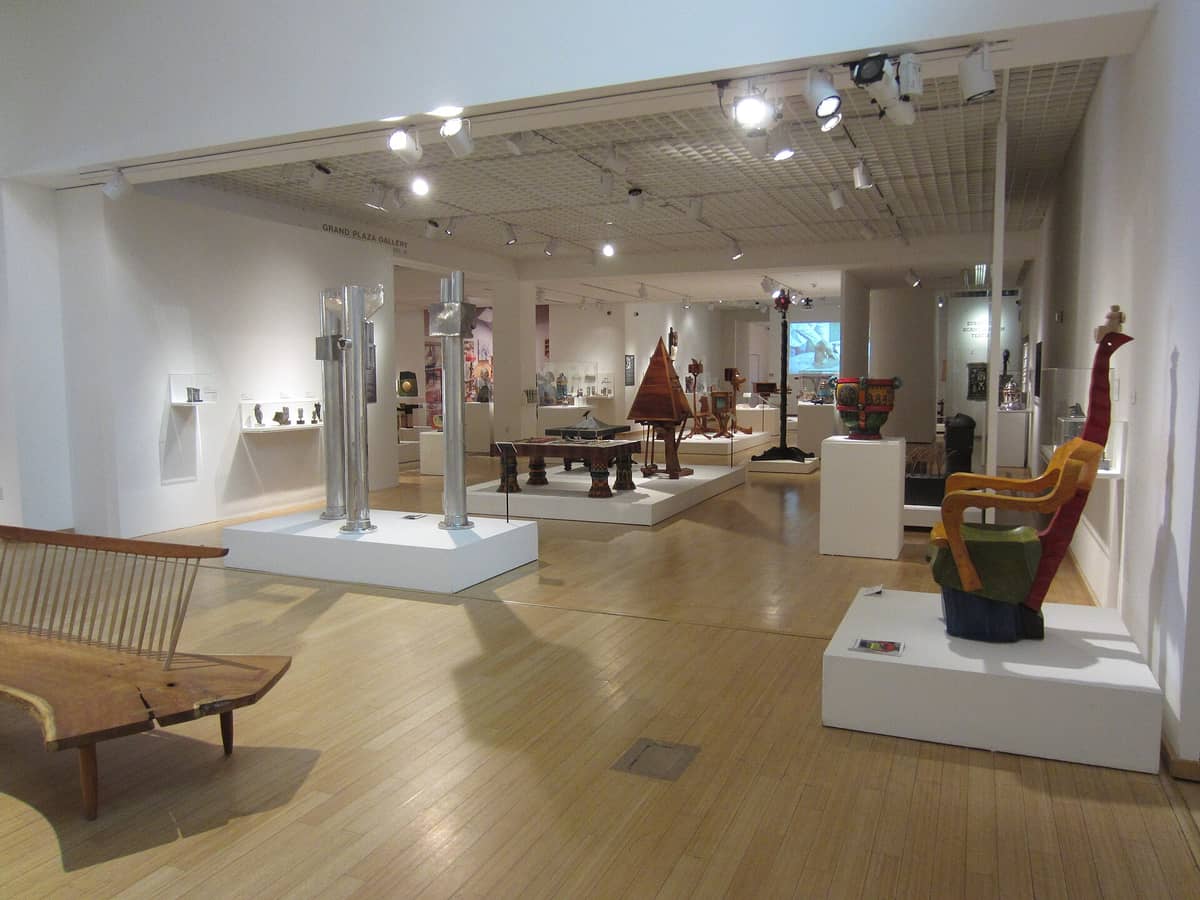
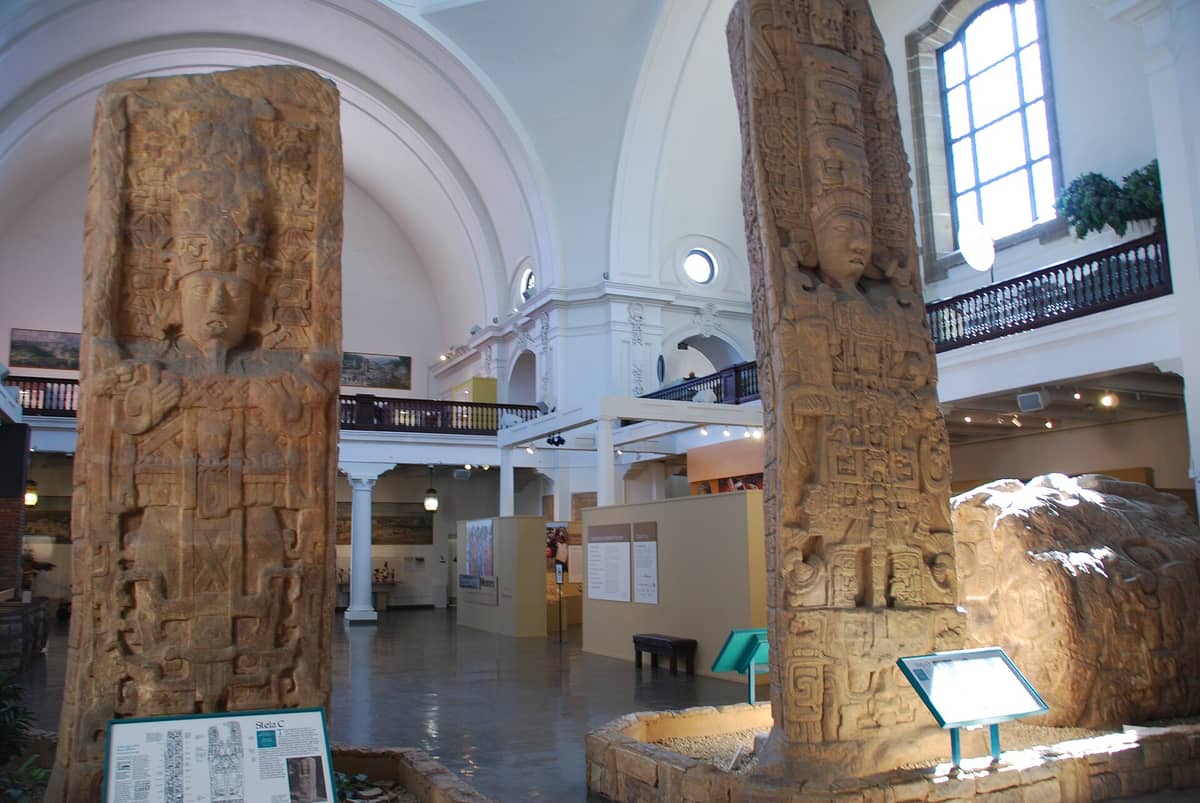
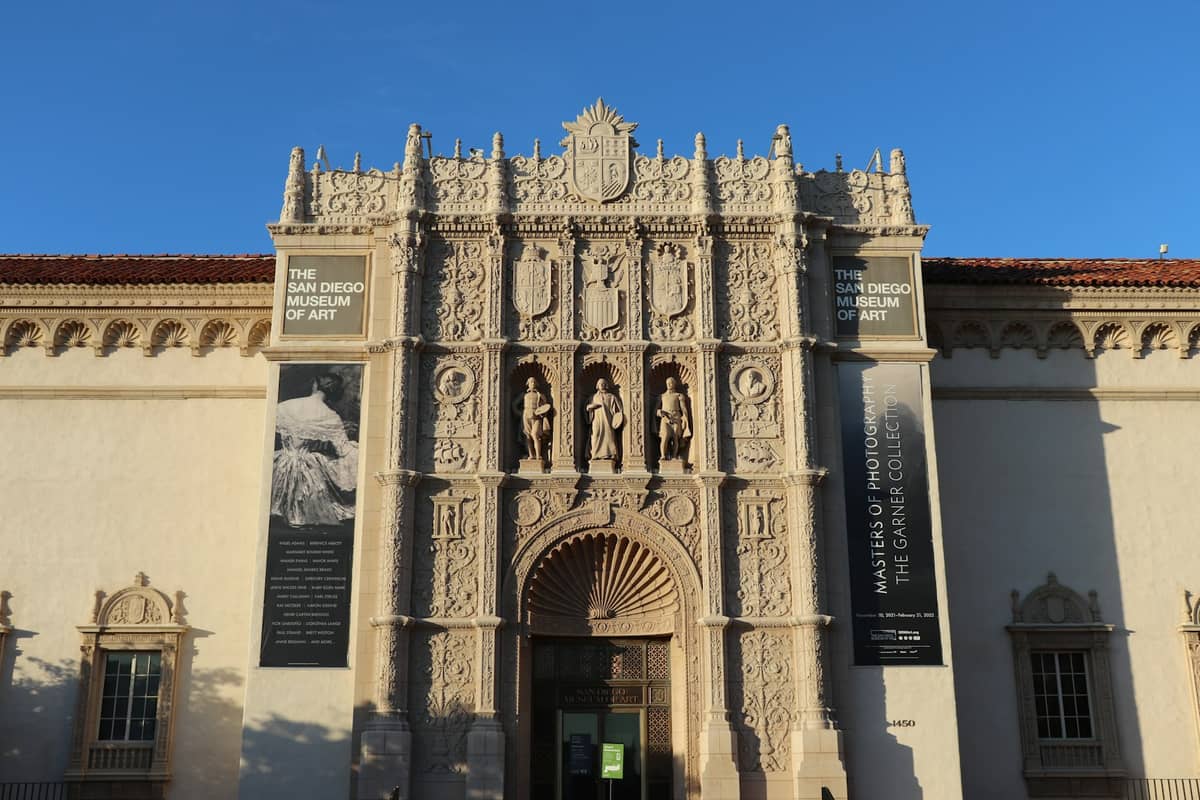
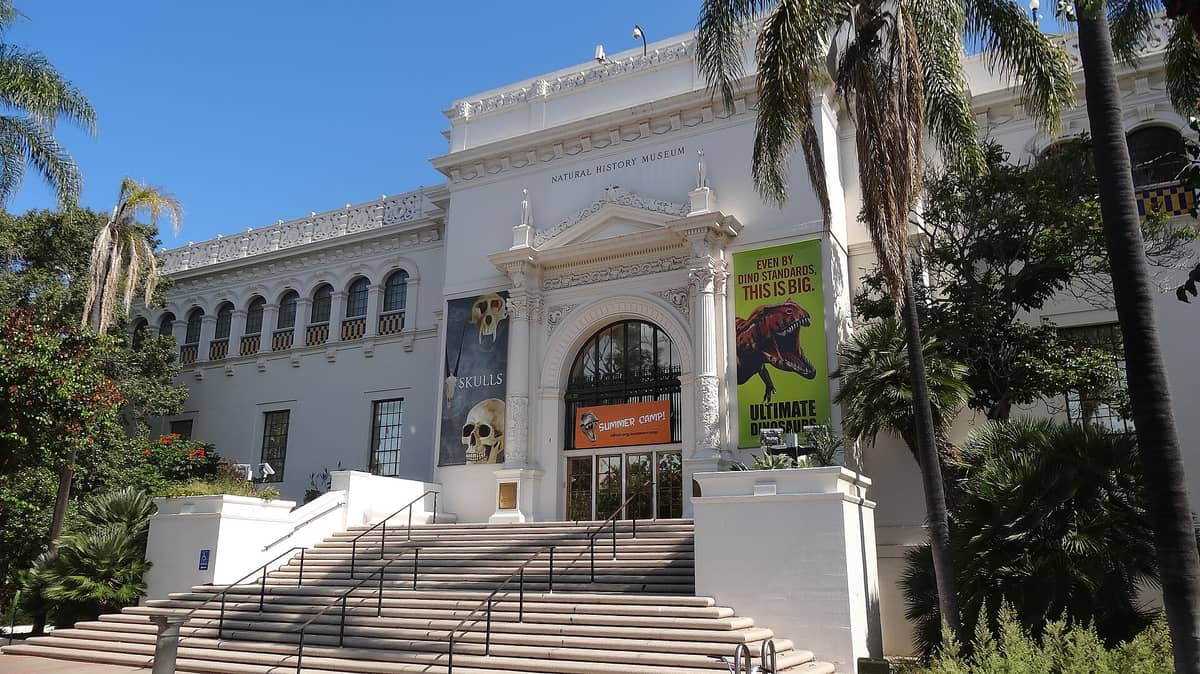
Balboa Park is San Diego's defining urban park, a more than 1,000-acre cultural district in the middle of the city that holds the San Diego Zoo, more than a dozen museums, ornate Spanish Colonial Revival architecture, and miles of walking paths. It sits between downtown and the residential neighborhoods of Hillcrest and North Park, making it central to almost any visit to the city.
Balboa Park is where San Diego keeps its best things: a world-famous zoo, a concentration of museums that would anchor most major cities, and enough green space to spend a full day without running out of ground to cover. It is not a neighborhood in the residential sense, but it functions as the cultural center of gravity for the entire city, drawing locals on weekend mornings and visitors throughout the year.
Orientation
Balboa Park occupies a roughly rectangular plateau in central San Diego, bounded by 6th Avenue to the west, Upas Street to the north, 28th Street to the east, and Russ Boulevard and Interstate 5 to the south. Its distinctive Cabrillo Bridge, which carries El Prado over Cabrillo Canyon and State Route 163, has served as an entry point from the west since 1914.
The park's position in the city is genuinely central. Hillcrest sits immediately to the northwest, North Park borders the eastern edge, and downtown San Diego is about two miles to the south via Park Boulevard. Mission Valley lies just north of the park's upper boundary, accessible from Highway 163, which runs directly beneath the mesa. This placement means Balboa Park is reachable from nearly any part of the city within 15 to 20 minutes by car.
The park divides broadly into two major zones. The western cultural corridor, centered on El Prado, holds the highest density of museums, gardens, and performance venues, all clustered around a pedestrian promenade that runs from the Cabrillo Bridge to the Plaza de Panama. The eastern section, accessed via Park Boulevard, contains the San Diego Zoo and additional green space. Inspiration Point, located at Park Boulevard and Presidents Way, is a major parking and tram stop for visitors arriving by bus or car.
Character and Atmosphere
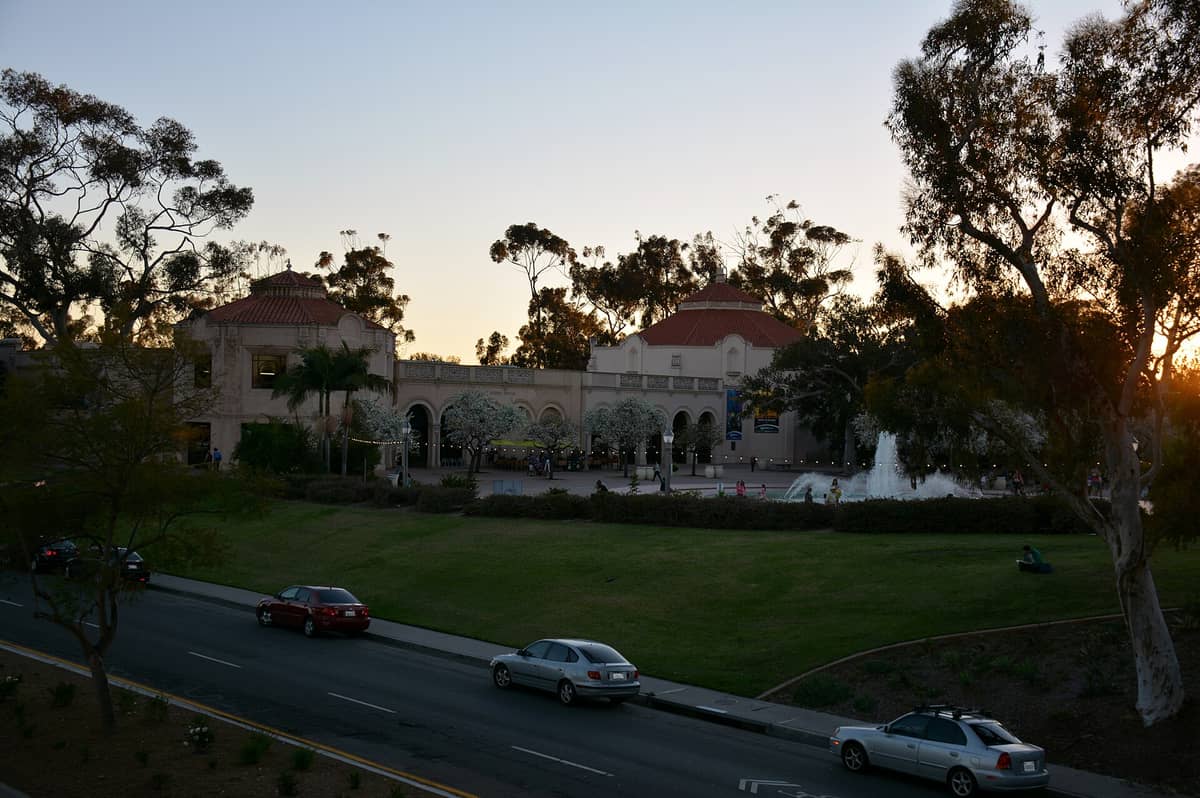
Early mornings in Balboa Park belong to locals. By 7 a.m. on any given weekday, joggers are looping the trails through Florida Canyon, dog walkers have taken over the open lawns near the Marston House, and cyclists are moving through the quieter east side paths. The air carries eucalyptus from the canyon edges and, on warmer mornings, the faint scent of the botanical gardens opening up. The Spanish Colonial Revival buildings along El Prado catch the low morning light in a way that makes the ornamental facades look almost three-dimensional.
By late morning, particularly on weekends, the character shifts. Families push strollers along El Prado, the free outdoor stage near the House of Hospitality starts drawing a small crowd, and the line at the San Diego Zoo entrance begins to form. The park absorbs visitors well given its scale, but the central promenade between the Cabrillo Bridge and the Plaza de Panama can feel congested on summer afternoons, particularly when multiple museum events or performances overlap.
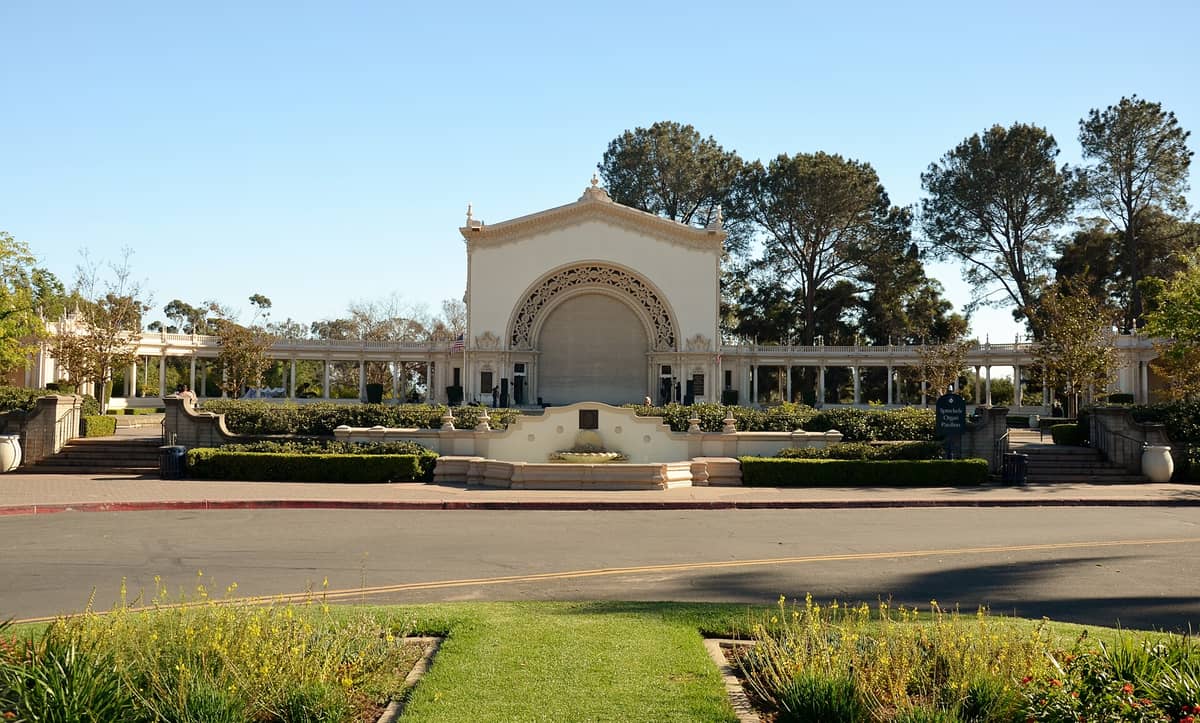
Afternoons in the park follow a reliable Southern California rhythm: the marine layer usually burns off by midday, the sun flattens the shadows out of the canyon, and the temperature often settles into the low-to-mid 70s Fahrenheit. The Organ Pavilion area fills up on Sunday afternoons when free concerts are held, drawing a genuinely mixed crowd of retirees, young families, and curious visitors who stumbled onto the performance while passing through.
After dark, the park is open but largely quiet. The museums close, the tram stops running, and most visitors have left. The grounds are technically open 24 hours with no gates, which means the park is accessible at night, but the lighting is sparse away from the main promenade. Visitors walking alone through the canyon paths after sunset should factor that in. The Prado restaurant, located inside the House of Hospitality, operates into the evening and provides one of the few anchors of activity after 8 p.m.
⚠️ What to skip
The park has no gates and no admission fee to enter the grounds themselves, but individual attractions, including the San Diego Zoo and all major museums, charge separate admission. Hours and prices change seasonally, so check each institution's official website before visiting.
What to See and Do
The scale of Balboa Park means that a single visit, even a full-day one, will not cover everything. Most visitors anchor their day around one or two major attractions and treat the walks between them as part of the experience rather than transit between stops.
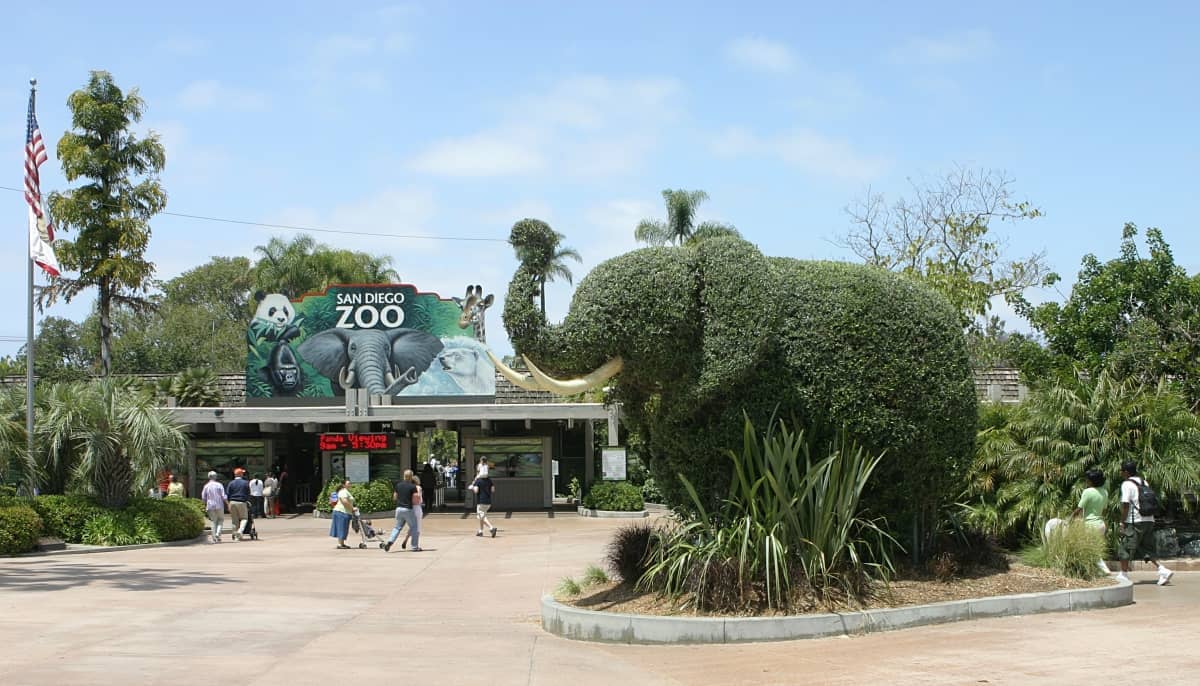
The San Diego Zoo is the park's most visited attraction, occupying the northern section and home to more than 12,000 animals across over 680 species and subspecies. It is worth arriving when it opens to see the animals most active before the midday heat settles in. The zoo has its own entry plaza on Zoo Drive off Park Boulevard, separate from the museum cluster along El Prado.
San Diego Air and Space Museum: located in the southern section of the park near Pan American Plaza, with an impressive collection of aircraft and space artifacts
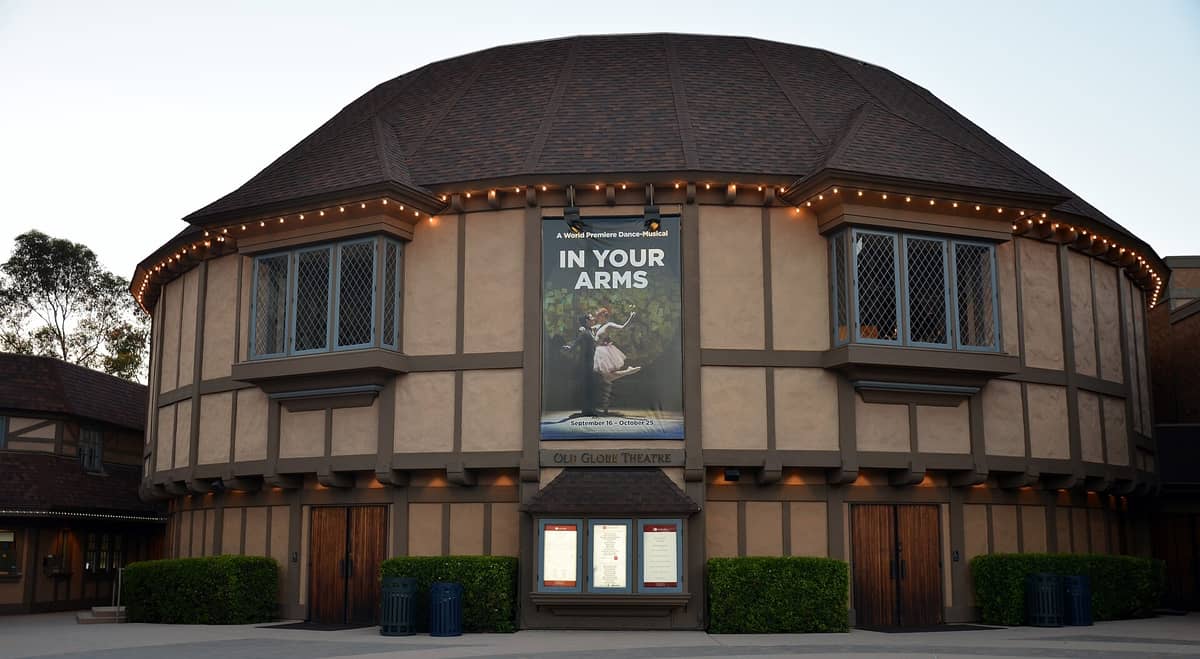
Old Globe Theatre: a Tony Award-winning theatre complex near the Sculpture Garden, offering plays year-round
Spreckels Organ Pavilion: site of the world's largest outdoor pipe organ, with free Sunday concerts held at the Organ Pavilion
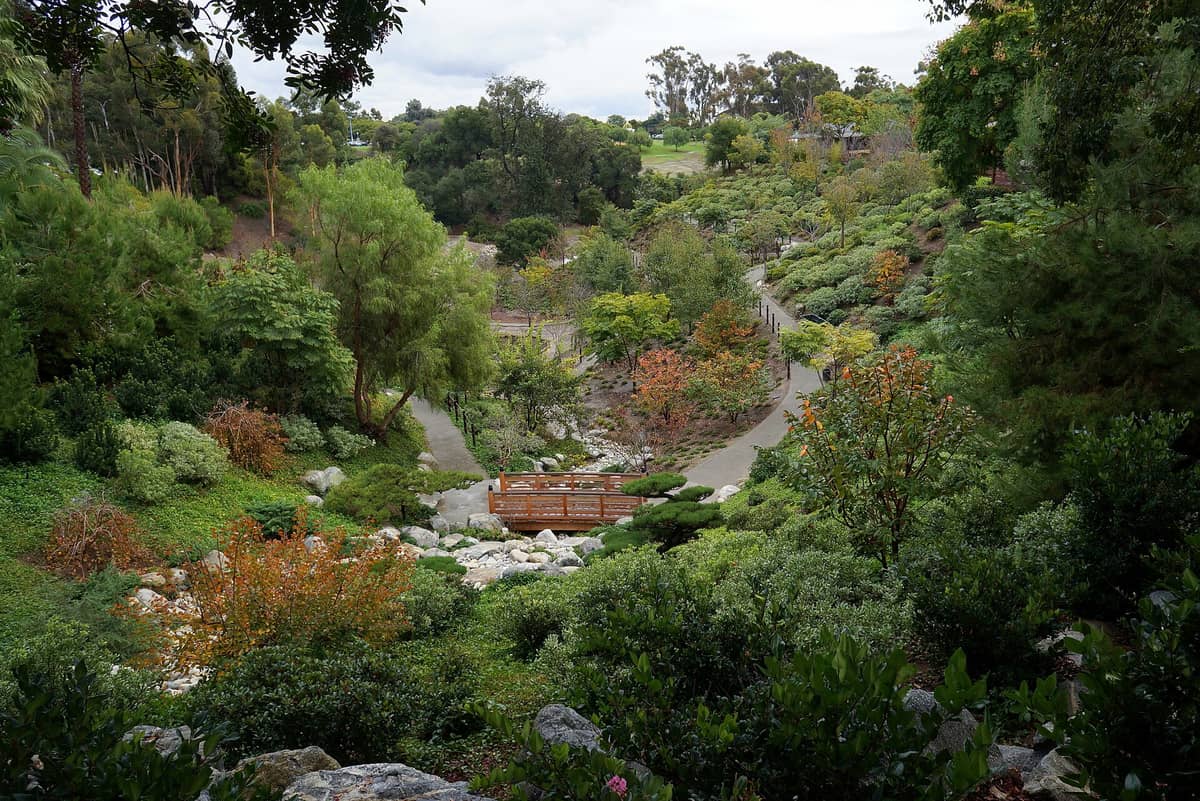
Japanese Friendship Garden: a 12-acre garden in Balboa Park near the canyon south of the Organ Pavilion
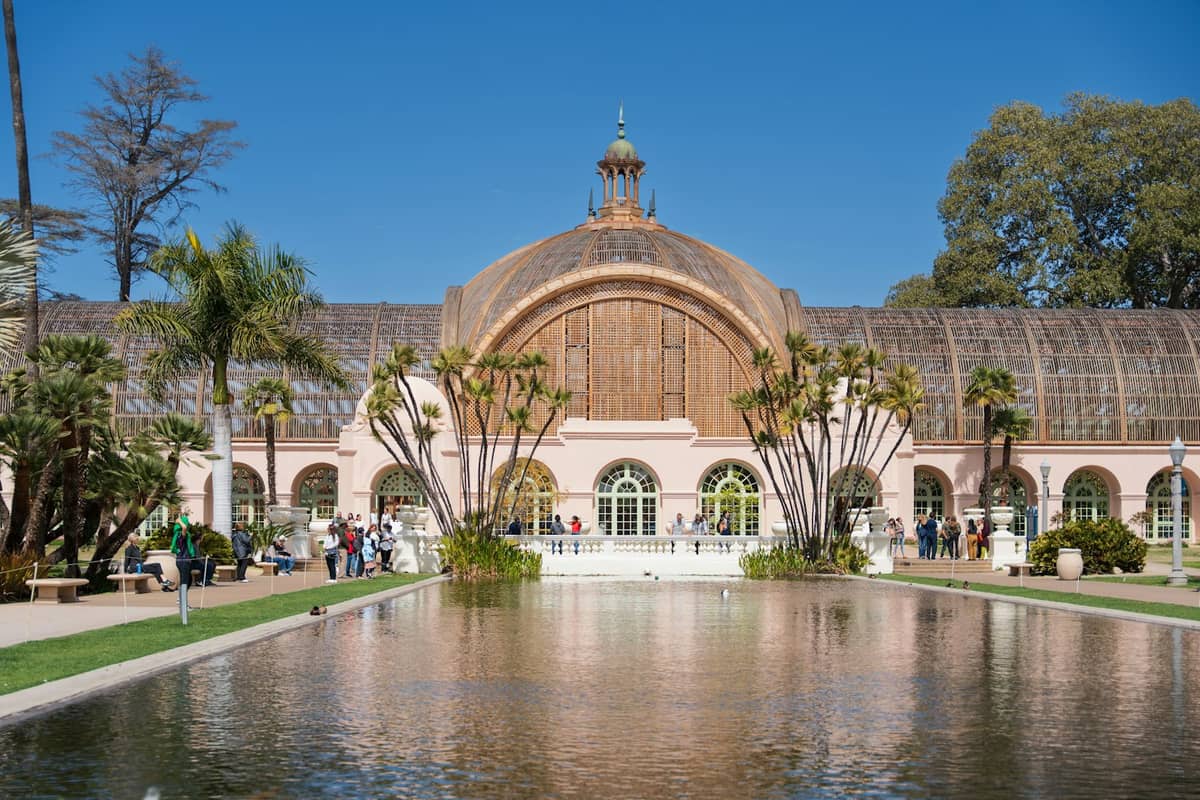
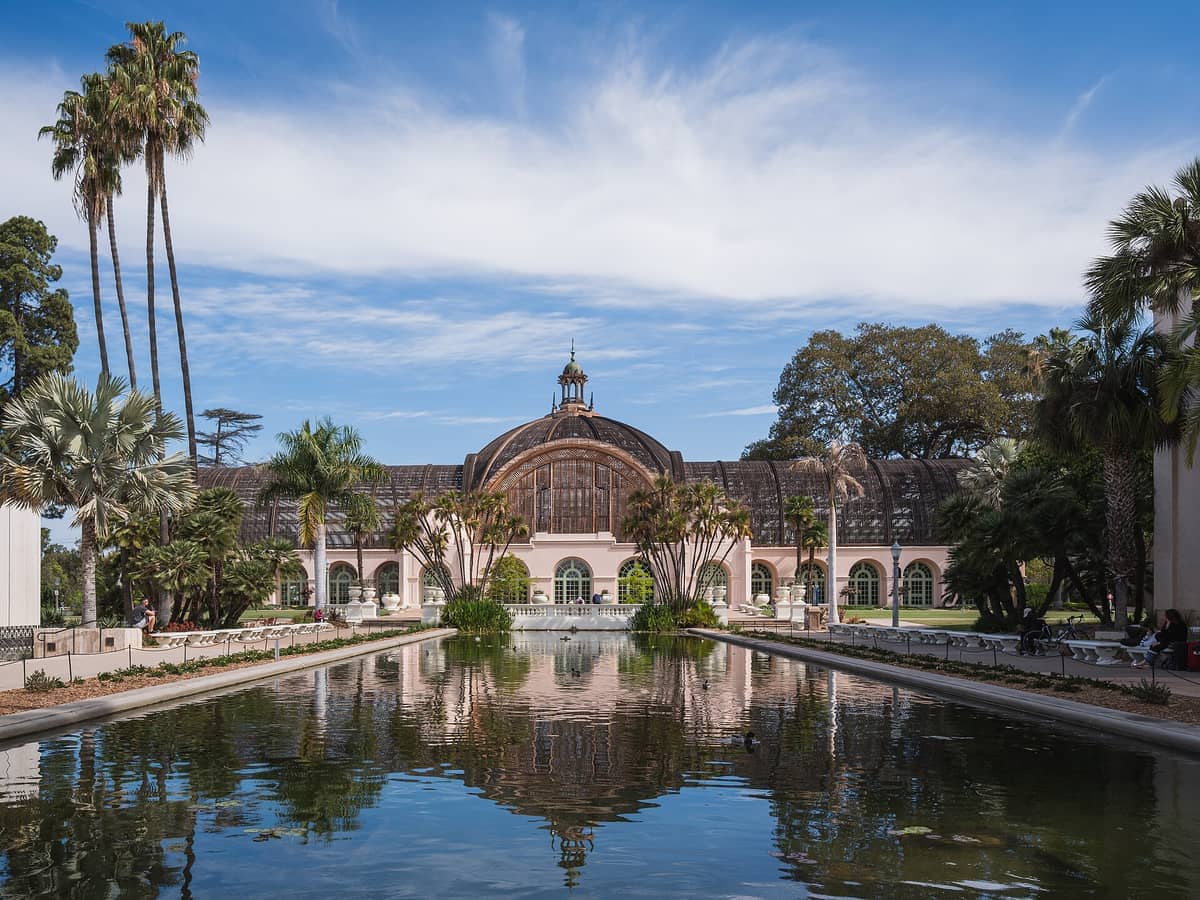
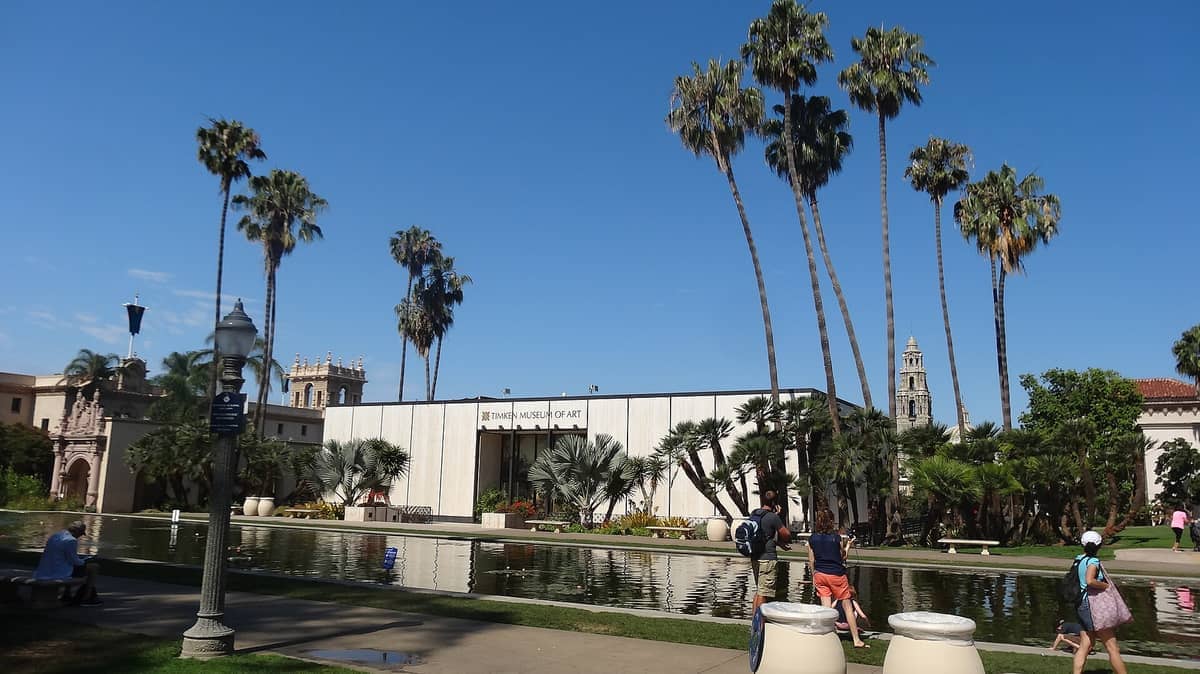
Balboa Park Botanical Building: a wood-lath structure from the 1915 exposition, housing more than 2,000 plant species; the reflecting pool in front is one of the park's most photographed spots
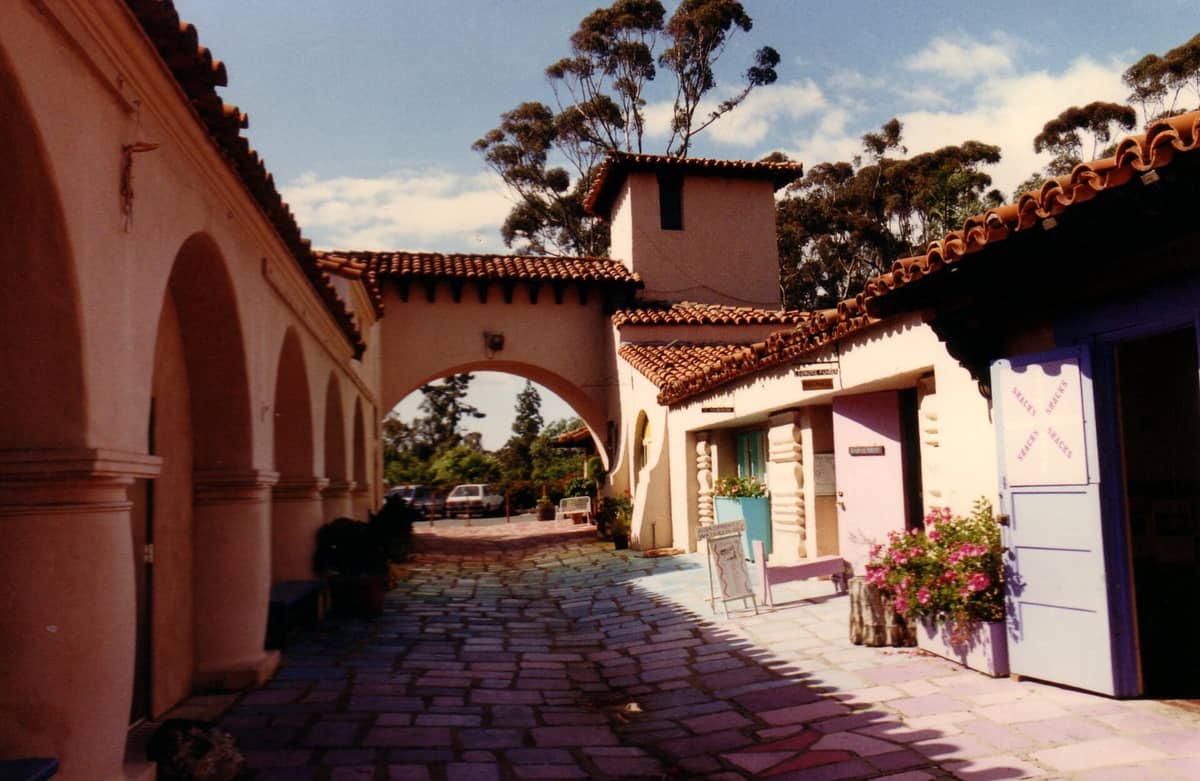
Spanish Village Art Center: a working art colony in the northeast section where artists rent studios and sell work directly
For visitors interested in the park's deeper cultural and historical context, it is worth knowing that the park was originally set aside as public land in 1868. The Spanish Colonial Revival architecture that defines the central promenade was built for the 1915 Panama-California Exposition, with additional structures added for the 1935 California Pacific International Exposition. A full guide to the Balboa Park Botanical Building and the exposition legacy is a useful starting point for first-time visitors.
💡 Local tip
The Balboa Park Explorer Pass lets visitors bundle admission to multiple museums at a discount. It is sold online and at the Visitors Center inside the House of Hospitality on El Prado. If you plan to visit more than two or three museums in a single trip, it typically saves money.
Eating and Drinking
The park itself has a limited but functional food and drink scene, concentrated around the main visitor areas. The most notable dining option is The Prado at Balboa Park, a full-service restaurant located inside the House of Hospitality on El Prado. It serves California-Latin cuisine in an ornate, tiled dining room and operates for lunch and dinner, with a Sunday brunch option. Reservations are advisable on weekends.
Lighter options inside the park include the San Diego Zoo's multiple food stands and cafes (available to zoo ticket holders), a cafe inside the Fleet Science Center, and a small cafe near the Botanical Building. These are convenient but not remarkable: expect standard cafe sandwiches, snacks, and coffee at tourist-site prices. Bring a water bottle regardless, especially in summer.
For a proper meal, the neighborhoods immediately surrounding the park offer significantly better options. Hillcrest, a ten-minute walk west from the park via University Avenue, has one of the densest restaurant strips in San Diego, with strong representation in brunch spots, ramen, Thai, and independent cafes. North Park, accessible along 30th Street east of the park, is where much of San Diego's craft beer scene is concentrated, with multiple brewpubs, wine bars, and a strong independent dining scene running along University and 30th.
If you are planning an evening around Balboa Park and want to explore the broader food and drink landscape, the craft beer guide to San Diego covers North Park and the surrounding inner neighborhoods in detail. For a broader food overview, the what to eat in San Diego guide is a practical starting point.
Getting There and Around
By car, the park is most easily reached via Park Boulevard from downtown or via Highway 163, which runs along the western canyon edge and connects to the Cabrillo Bridge entrance on the northwest side of the park. Inspiration Point, at Park Boulevard and Presidents Way, is the primary parking area and offers free parking for the first 3 hours in Lower Inspiration Point. Parking on weekdays is generally straightforward. On weekends and during events, the lots fill early, particularly in summer, and street parking in surrounding neighborhoods fills the spillover.
By public transit, San Diego MTS operates bus routes that serve the park from downtown and surrounding neighborhoods. The most direct approach is to board a bus that terminates at or passes Inspiration Point, at Park Boulevard and Presidents Way. From there, the free tram operated by the City of San Diego circulates through the central cultural district during park operating hours, connecting Inspiration Point to the various museum stops along El Prado and continuing to the zoo entrance. Check the current MTS route map at sdmts.com before traveling, as schedules and route numbers are subject to change.
From downtown, the park is approximately two miles north via Park Boulevard, a straightforward drive or a ride-share trip of under ten minutes in normal traffic. Ride-hailing via Uber or Lyft is convenient for drop-offs at specific park entrances. Walking from downtown takes about 40 minutes along Park Boulevard and is feasible for visitors who enjoy a long walk, though most skip this in favor of transit or a short ride. For context on how the park fits into a broader San Diego itinerary, the getting around San Diego guide covers transit options citywide.
ℹ️ Good to know
The park's free tram connects Inspiration Point, the museums along El Prado, the Zoo entrance, and several other stops within the cultural district. It operates from 8 a.m. to 8 p.m. daily and is one of the easiest ways to move between the Zoo and the museum corridor without walking the full distance. Confirm current tram hours at balboapark.org before your visit.
Where to Stay
There are no hotels inside Balboa Park itself. The closest accommodation options are concentrated in Hillcrest, immediately northwest of the park, and in the downtown corridor about two miles to the south. Hillcrest has a mix of smaller boutique hotels and independent guesthouses that put visitors within walking distance of the park's west entrance at 6th Avenue and Upas Street. Downtown offers a wider range of hotel types, from budget chains near the convention center to upscale properties along the waterfront, with easy drive or ride-share access to the park.
For visitors whose primary reason for coming to San Diego is Balboa Park, staying in Hillcrest or the Uptown area offers the most convenient access on foot. For visitors who want the park as one stop among many, including the Gaslamp Quarter, the waterfront Embarcadero, or day trips to La Jolla, a downtown hotel is a more flexible base. The where to stay in San Diego guide breaks down the tradeoffs by neighborhood and travel style.
Practical Notes for Visitors
The park's open-access policy, no gates, no entry fee, open 24 hours, is one of its genuinely distinctive features. You can walk in at any time without planning, without paying, and without a ticket. That said, most of what draws visitors, the Zoo, the museums, the gardens with paid entry, operate on their own hours and price structures. Arriving without checking those in advance is a common mistake, particularly for families who assume all of the park is free.
San Diego's Mediterranean climate means Balboa Park is pleasant year-round, but the experience shifts noticeably by season. Summer brings the largest crowds, particularly July and August, when families are traveling and San Diego's tourism peaks. September and October are widely considered the most comfortable months for spending time in the park: temperatures settle into the mid-70s Fahrenheit, summer crowds thin out, and the afternoon light is particularly good. Winter visits are mild and uncrowded, though the occasional rainy day from December through February can limit time outdoors.
The park hosts major events throughout the year, including outdoor concerts, food festivals, and cultural celebrations, many of which are free to attend. The free things to do in San Diego guide covers many of the park's no-cost offerings alongside other citywide options. Visitors planning a first-time visit to the city and wondering how the park fits into a broader itinerary will find the 3 days in San Diego itinerary a useful planning resource.
TL;DR
Balboa Park is a more than 1,000-acre cultural park in central San Diego, home to the San Diego Zoo, more than a dozen museums, formal gardens, and miles of canyon trails. Entering the park itself is free at any hour.
Best for: culture-focused travelers, families, museum-goers, and anyone who wants to understand San Diego beyond its beaches.
Not ideal for: visitors who want nightlife, a walkable restaurant strip immediately outside the park, or beach access. The park is inland and quiets down after dark.
Stay nearby in Hillcrest for walkable park access, or in downtown if you want a broader base for exploring the city.
Allow a full day minimum if visiting both the Zoo and the museum corridor. Two days is reasonable for visitors who want to go deeper into the collections or attend a performance at the Old Globe.
Three days is enough to hit San Diego's best neighborhoods, beaches, and cultural landmarks without feeling rushed. This itinerary is built around logical geography, real logistics, and practical notes on what's worth your time and money.
San Diego County's coastline stretches for roughly 70 miles, offering everything from calm family-friendly coves to dramatic cliff-backed surf breaks. This guide covers the best beaches by type, with practical details on what to expect at each one.
San Diego's Mediterranean climate means hiking is possible year-round, and the range of terrain is remarkable. Coastal bluffs, chaparral canyons, pine-forested ridges, and Sonoran Desert all sit within an hour or two of downtown. These are the trails worth lacing up for.
San Diego punches well above its weight as a museum city. Balboa Park alone holds more than a dozen institutions, while the Embarcadero and La Jolla add world-class maritime and ocean science destinations. This guide covers the top 18 museums worth your time and money.
San Diego's Mediterranean climate means it's genuinely good to visit any time of year, but the right season depends on what you want to do. This guide breaks down weather patterns, crowd levels, and key events for every month so you can pick the trip that actually fits your goals.
San Diego rewards those who look up, out, and across. From the windswept cliffs of Point Loma to La Jolla's hilltop memorial, these are the city's finest viewpoints, with panoramas spanning the Pacific, San Diego Bay, and the mountains beyond.
San Diego Comic-Con is one of the largest pop culture conventions in the world, drawing over 130,000 attendees to downtown San Diego each July. This guide covers badge access, hotel booking strategy, transportation logistics, and how to make the most of the event even without a badge.
San Diego has more craft breweries per capita than almost any other American city, with taprooms spread across North Park, Miramar, Little Italy, and beyond. This guide breaks down the best neighborhoods, standout breweries, guided tour options, and practical tips to help you drink well without wasting a trip.
San Diego sits at one of the most geographically rich crossroads in North America. Within a few hours you can reach a Mexican border city, a desert national park, a mountain apple-farming town, and downtown Los Angeles. This guide covers the best day trips from San Diego with real logistics and no filler.
San Diego's finest pleasures often cost nothing at all. This guide covers the best free beaches, parks, public art, viewpoints, and cultural experiences across the city, with practical tips on when to go and what to expect.
San Diego spans over 325 square miles of coastline, canyons, and urban neighborhoods, and getting around efficiently requires knowing which transport options actually work for visitors. This guide covers everything from airport arrivals and MTS trolley fares to driving realities, rideshare logistics, and neighborhood-by-neighborhood navigation.
San Diego offers a dense cluster of amusement park options for a coastal city in the U.S. This guide breaks down every major park, with real pricing, crowd patterns, and a clear take on who each park suits best.
The San Diego County Fair is one of California's largest annual events, drawing millions of visitors to the Del Mar Fairgrounds each summer. This guide covers 2026 dates, hours, parking, ticketing, crowd strategy, and what to actually eat and do once you're inside.
San Diego has a legitimate claim to the fish taco's North American popularization, and the scene in 2026 is more varied than ever. This guide breaks down where to eat, what to order, how much to pay, and which spots are actually worth the line.
San Diego's Mediterranean climate, dramatic coastline, and world-class dining make it one of California's top destinations for couples. This guide covers the most romantic experiences in the city, from free sunset walks to splurge-worthy dinner cruises, with practical notes on what's worth your time.
San Diego offers year-round golf across a wide range of public, municipal, and resort courses, headlined by the world-famous Torrey Pines. This guide covers the best courses by budget and skill level, 2026 green fee breakdowns, booking strategies, and seasonal advice to help you plan the right round.
San Diego rewards the curious. Beyond the zoo and the beaches, the city holds a swaying 1912 suspension bridge, a sea cave you reach by climbing down a hand-carved staircase, and a mural park that doubles as a National Historic Landmark. This guide covers the spots that most visitors never find.
Summer in San Diego means warm, dry coastal days, packed beaches, and a full calendar of events. But the season has quirks that catch visitors off guard. This guide covers the weather reality, top activities, crowd patterns, and logistics so you can make the most of your trip.
San Diego in winter is genuinely underrated. Daytime highs hover in the mid-60s°F, hotel rates drop significantly from summer peaks, and January kicks off some of the best whale watching on the West Coast. This guide covers the weather realities, best activities, and what to skip during the off-season.
San Diego's after-dark scene runs deeper than most visitors expect. This guide breaks down the best bars, nightclubs, rooftop lounges, live music venues, and neighborhood nightlife across the city, with practical details on hours, prices, and how to get around.
San Diego has a reputation as an expensive coastal city, but it rewards travelers who know where to look. From always-free beaches and rotating museum days to smart transit choices and shoulder-season savings, this guide covers every practical angle for keeping costs down without missing the best the city has to offer.
San Diego resorts range from iconic oceanfront landmarks to secluded inland spa estates. This guide breaks down the top properties by location and type, explains seasonal pricing, and warns you about resort fees and common booking misconceptions before you commit.
The San Diego to Las Vegas route is one of Southern California's most popular road trips, but driving isn't always the best choice. This guide breaks down every realistic option, from the 5-hour I-15 drive to sub-90-minute flights, with a clear take on cost, convenience, and when each mode makes sense.
The distance from San Diego to San Francisco is about 500 miles via I-5, and how you cover it makes a big difference to your trip. This guide breaks down every realistic option: nonstop flights under two hours, a full-day drive with serious scenic potential, and a leisurely Amtrak journey for those who want to watch California roll by.
San Diego rewards walkers like few other American cities. From Balboa Park's museum corridor to Old Town's adobe ruins and La Jolla's coastal bluffs, these self-guided walking tours cover the city's most compelling neighborhoods with practical route advice, timing tips, and a clear take on what's worth your time.
San Diego's 70 miles of coastline and year-round mild climate make it one of the best places in the country for water sports. This guide covers the best surf breaks, snorkeling spots, kayak launch points, and rental prices so you can get in the water without the guesswork.
Two days in San Diego can cover a surprising amount of ground — beaches, world-class museums, historic neighborhoods, and some of the best tacos in California. This itinerary cuts through the noise with specific timing, current prices, and honest takes on what's worth your time.
San Diego is one of the most family-friendly cities in the United States, with world-class zoos, beach-side parks, hands-on museums, and a climate that cooperates nearly year-round. This guide covers the best things to do in San Diego for kids, honest ticket prices, the smartest times to visit, and practical logistics to help you spend less time planning and more time enjoying it.
Two world-class wildlife parks, one city, and a decision that trips up thousands of visitors every year. This guide breaks down the real differences between the San Diego Zoo and the San Diego Zoo Safari Park — location, animals, experience, tickets, and which one is worth your time based on who you're traveling with.
Sesame Place San Diego is Southern California's only Sesame Street-themed park, combining rides and water attractions in Chula Vista. This guide covers pricing, seasonal schedules, crowd tips, and how it stacks up against other San Diego family attractions so you can decide whether it belongs on your itinerary.
San Diego's shopping scene spans polished coastal malls, historic waterfront villages, and eclectic neighborhood streets worth exploring on foot. This guide breaks down where to shop, what to expect, and what to skip — with parking details, seasonal hours, and neighborhood-by-neighborhood advice.
San Diego packs an extraordinary range of experiences into one city: world-class museums, wild coastline, historic neighborhoods, and a craft beer scene that rivals anywhere in the country. This guide cuts through the noise to tell you what's genuinely worth your time, what to avoid, and how to plan your visit season by season.
San Diego sits just 20 miles from one of the world's busiest international borders, making Tijuana an obvious day trip. This guide covers exactly how to get there, how long it takes, what to expect at the crossings, and how to make the most of your time on both sides of the border.
San Diego offers year-round whale watching with distinct seasons for gray and blue whales. This guide breaks down exactly when to go, which tours are worth the money, what sightings actually look like by month, and how to watch whales for free from shore.
San Diego's food identity runs deeper than tourists expect. Border-influenced Mexican cooking, Pacific seafood, a serious craft beer scene, and year-round farmers' markets combine into something genuinely distinctive. This guide covers the essential dishes, the best neighborhoods to eat in, and the practical details that help you eat well without wasting a meal.
San Diego spreads across a large coastal geography, and where you base yourself shapes your entire trip. This guide breaks down the best neighborhoods to stay in San Diego, with honest price ranges, transit access, and who each area actually suits.