Fleet Science Center: San Diego's Hands-On Science Museum in Balboa Park
The Fleet Science Center anchors the eastern edge of Balboa Park's museum row with interactive science exhibits, a giant-dome theater, and monthly planetarium evenings. It draws curious visitors of all ages, from toddlers tackling discovery stations to adults catching an IMAX-style documentary under a five-story screen.
Quick Facts
- Location
- 1875 El Prado, Balboa Park, San Diego, CA 92101
- Getting There
- MTS bus routes along Park Blvd; short walk from Balboa Park stops. Parking off Space Theater Way via Park Blvd.
- Time Needed
- 2–3 hours for exhibits; add 45–60 min for a dome show
- Cost
- Adults $29.95 | Seniors $27.95 | Juniors (3–12) $24.95 | Under 3 free. Verify current rates at fleetscience.org.
- Best for
- Families with school-age kids, science enthusiasts, rainy-day seekers, dome-film fans
- Official website
- www.fleetscience.org
What Is the Fleet Science Center?
The Fleet Science Center opened in 1973 as the Reuben H. Fleet Science Center, named after the San Diego aviation and aerospace entrepreneur who pioneered early airmail routes and founded Consolidated Aircraft. Over five decades, it has evolved from a regional science showcase into one of Southern California's most substantive interactive science museums, occupying a prominent spot at 1875 El Prado inside Balboa Park. The name was simplified to Fleet Science Center in later years, though you will still hear locals refer to it by its longer original title.
At its core, the Fleet is two things operating under one roof: a hands-on exhibit hall where visitors engage with phenomena ranging from electricity and light to engineering and life sciences, and the Heikoff Giant Dome Theater, a five-story dome screen that screens large-format science documentaries and planetarium programs. That combination sets it apart from most of the other institutions lining El Prado. The San Diego Museum of Art deals in objects to observe quietly; the Fleet invites you to push, pull, and experiment.
The Fleet sits within Balboa Park, San Diego's 1,200-acre cultural park, placing it within easy walking distance of a half-dozen other institutions. If you are planning a full day across multiple museums, the Fleet works well as either a morning anchor or an afternoon wind-down, since the dome shows run on a fixed schedule that can structure the rest of your visit.
The Heikoff Giant Dome Theater: What to Expect
The dome theater is the single most distinctive feature of the Fleet, and it is worth understanding what it is before you arrive. The screen wraps 180 degrees overhead, filling peripheral vision in a way that a standard flat cinema screen cannot. Films are projected at extremely high resolution across the entire surface, so the sensation during space or ocean documentaries can feel genuinely immersive rather than merely large.
Seating is raked and tilted back slightly so that viewers look upward and outward simultaneously. This is comfortable for the first 30 to 40 minutes but can cause mild neck strain during longer programs, particularly for visitors who prefer to sit upright. Arrive a few minutes early and choose a seat toward the middle rings rather than the front rows, where the curvature is most pronounced. The theater has step-free entrances and designated wheelchair areas, and assistive headsets and closed-captioning systems are available.
💡 Local tip
Dome show slots fill quickly on weekends and school holidays. Check the current schedule at fleetscience.org and book your show time when you purchase entry tickets, so you can plan the rest of your visit around it.
On the first Wednesday of each month, the theater hosts Sky Tonight planetarium evenings, with galleries staying open until 8:15 p.m. This is one of the few times Balboa Park draws an older, quieter crowd specifically for astronomy content, and the atmosphere is noticeably different from weekend afternoons dominated by school groups and families.
The Exhibit Halls: A Practical Walkthrough
The hands-on galleries are distributed across multiple levels and zones, covering physical science, natural history, and engineering design. Exhibits are built around the assumption that direct manipulation produces understanding better than passive reading, so almost everything has a lever, button, mirror, or sensor attached to it. The interactive density is high relative to most science museums of comparable size, which means noise levels rise considerably once school groups arrive, typically after 10:30 a.m.
Physical science stations demonstrate wave mechanics, electricity, and optics through apparatus visitors can adjust themselves. The energy and motion exhibits tend to hold attention longest because cause and effect are immediate. Life science areas incorporate content around biology and ecology, with some exhibit rotation occurring periodically. Check the website for any traveling exhibition currently in residence, as these rotate in and significantly change what is on offer.
The youngest visitors, roughly ages 3 to 6, are best served by the dedicated discovery areas designed for small hands and short attention spans. Older children, ages 7 to 12, tend to get the most out of the main exhibit floors, where the science is complex enough to prompt genuine questions. Adults without children can move through comfortably but should set realistic expectations: this is fundamentally a participatory family science museum, not a research institution with archival depth.
ℹ️ Good to know
Accessibility Morning takes place on the third Saturday of every month from 9:00 a.m. to 10:00 a.m., one hour before the museum opens to the general public. This quieter window is designed for visitors with sensory sensitivities, autism spectrum conditions, or other needs that make standard museum environments difficult.
How the Experience Changes by Time of Day
Arriving at or just after 10:00 a.m. when the museum opens gives you the clearest run at popular exhibits before organized school groups filter in. By late morning, the noise level in the main halls climbs noticeably, and specific stations can develop short queues. The smell of the building in early hours is clean and slightly climate-controlled, the kind of cool indoor air that immediately signals air conditioning is working hard against San Diego's warm exterior.
Early afternoon, roughly 1:00 p.m. to 3:00 p.m., is typically the most crowded period on weekdays during school terms and throughout summer. If your priority is the dome theater rather than exhibit time, arriving mid-afternoon for a late show and spending less time in the galleries is a reasonable strategy.
By 3:30 p.m. onward, school groups have largely departed and the galleries become calmer. This window, in the hour before 5:00 p.m. closing, is underused by most visitors but particularly pleasant for adults or older teens who want to engage with exhibits at their own pace without competing for a station. Light through the building's exterior windows shifts toward warm afternoon tones, and the energy on the floor drops to a comfortable level.
Getting There and Practical Logistics
The Fleet is located at 1875 El Prado, the main promenade that runs through Balboa Park's institutional core. MTS bus routes serve Park Boulevard, and from the nearest stops it is a short walk into the park. The museum operates its own parking lot on the south side of the building, accessed via Space Theater Way off Park Boulevard. This lot is smaller than the general Balboa Park lots, so on busy weekend mornings it fills early. The free general park lots along Presidents Way are a longer walk but rarely full outside of special events.
If you are arriving by rideshare, the drop-off point on El Prado works well and deposits you at the main entrance. For a broader orientation to moving around the park and the city, the getting around San Diego guide covers MTS transit options and parking strategy in detail.
The museum is open daily from 10:00 a.m. to 5:00 p.m. until its full closing on August 21, 2026, with the exception of Thanksgiving and Christmas Day. Group rates apply for parties of 15 or more and must be arranged in advance. Children aged 2 and under enter free. Verify current pricing directly with the Fleet before purchasing, as admission rates adjust periodically.
⚠️ What to skip
The Fleet does not have a full-service restaurant on site. There is a café-style option, but for a proper meal you will want to plan around the park's nearby options or walk to the Prado restaurant within the park. Bring water, particularly in summer when Balboa Park temperatures can reach into the low-to-mid 80s°F even with the park's tree cover.
Photography and What to Know Before You Shoot
The interior exhibit halls are reasonably well-lit for photography, with warm overhead lighting that captures well on smartphone cameras. The most visually interesting shots tend to come from the optics and light exhibits, where mirrors and refraction create compositions that do not require any special equipment to photograph well. Children interacting with glowing or motion-based exhibits photograph particularly naturally here.
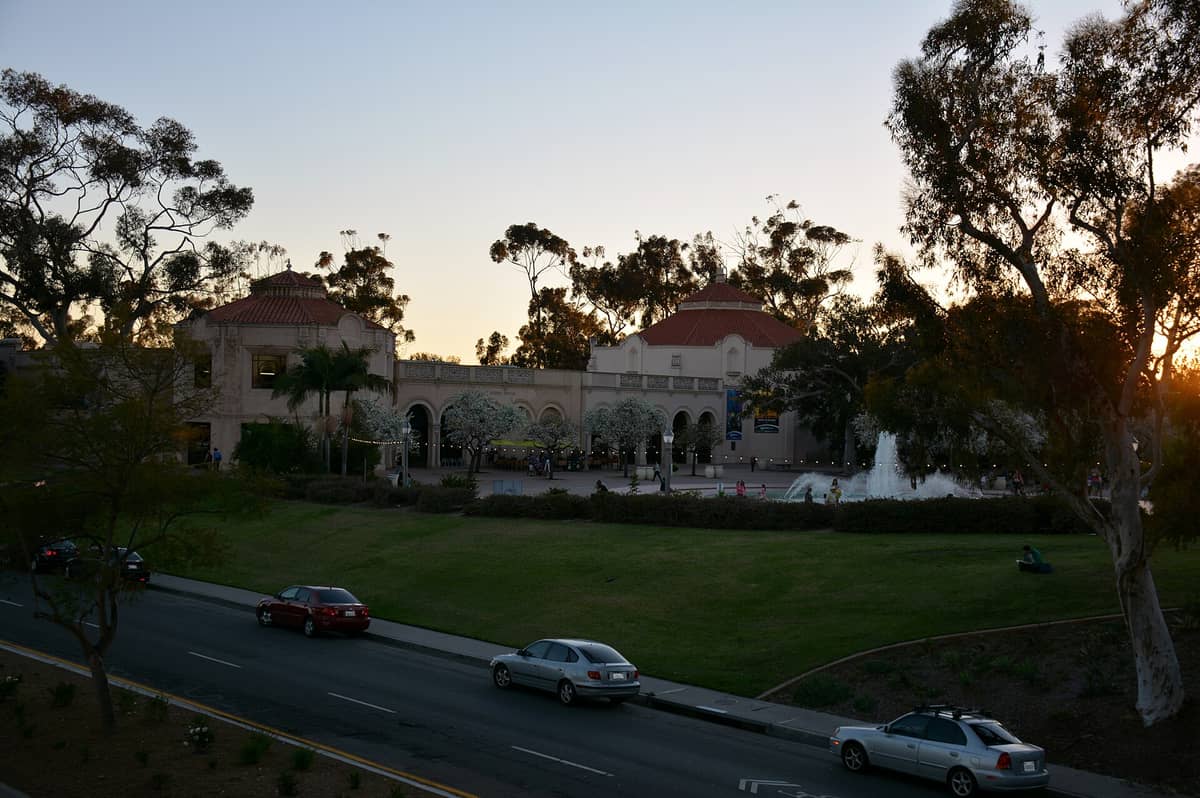
Photography inside the dome theater during shows is generally not permitted and is difficult in any case due to the complete darkness during projection. The exterior of the Fleet building, rendered in a Spanish Colonial Revival style consistent with the broader Balboa Park architecture from the 1915 Panama-California Exposition era, photographs best in morning light when the facade faces east and the surrounding plaza is relatively clear of crowds.
For wider architectural photography of the El Prado corridor, combine a visit to the Fleet with a walk past the Balboa Park Botanical Building and the Spreckels Organ Pavilion, both of which offer strong exterior photographic subjects within the same walkable precinct.
The Bottom Line: Who Gets the Most From This Place
The Fleet Science Center delivers most reliably for families with children between about 4 and 14 years old. Within that age range, the combination of interactive exhibits and a dome film constitutes a genuinely full and substantive outing. The science content is accurate and current, and the exhibit design encourages sustained engagement rather than passive observation.
Adult visitors traveling without children will find the dome theater worth the admission on its own if the current programming aligns with their interests. The exhibits, while well-executed, are calibrated for younger audiences and may feel thin to visitors with a scientific background seeking depth over interaction.
If you are building a full day in Balboa Park around the cultural museums and want to anchor it with broader context, the best museums in San Diego guide offers comparisons across the park's institutions, including the San Diego Museum of Art and the San Diego Natural History Museum, which are both within a short walk of the Fleet.
Insider Tips
- Book your dome show time when you buy admission online rather than at the door. Weekend mid-morning showings, especially during summer and school breaks, sell out. Locking in a show time lets you structure the rest of your exhibit time around it instead of scrambling.
- The first Wednesday of each month is Sky Tonight planetarium evening, when the galleries stay open until 8:15 p.m. This is the best time for adults to visit without the daytime family crowds, and the planetarium format is distinctly different from the documentary films shown at other times.
- Third Saturday of the month, 9:00 a.m. to 10:00 a.m., is Accessibility Morning: a quieter pre-opening window for visitors with sensory sensitivities. If this applies to someone in your group, it is significantly calmer than any other time slot.
- The parking lot directly behind the Fleet via Space Theater Way off Park Boulevard is the most convenient option but fills early on weekends. If you arrive after 10:30 a.m. on a Saturday, head directly to the larger free lots along Presidents Way and budget an extra 10 minutes of walking.
- Visitors with an aid or companion due to disability may be entitled to free admission for that companion. Ask specifically at the ticket counter when purchasing, as this policy is not prominently advertised.
Who Is Fleet Science Center For?
- Families with children aged 4 to 14 looking for a full, structured half-day activity
- Science enthusiasts of any age who want to catch a large-format dome documentary
- Visitors seeking an indoor option during overcast June mornings or rare rainy winter days
- Travelers building a full Balboa Park museum day across multiple institutions
- Groups with accessibility needs, particularly on monthly Accessibility Morning Saturdays
Nearby Attractions
Other things to see while in Balboa Park:
- Botanical Building and Lily Pond
Built for the 1915 Panama-California Exposition, the Botanical Building and Lily Pond is one of Balboa Park's most photographed landmarks and one of San Diego's few genuinely free indoor plant experiences. The structure, historically billed as one of the largest wood lath buildings in the world, shelters over 2,100 plant varieties beneath a domed roof that filters light into something close to dusk at midday.
- Comic-Con Museum
Opened in November 2021, the Comic-Con Museum brings the legendary San Diego convention to life year-round in Balboa Park. Rotating exhibitions, interactive experiences, and deep dives into comics, film, and sci-fi make it a serious destination for pop culture fans, not just Comic-Con regulars.
- Japanese Friendship Garden
Tucked into about 12 acres of Balboa Park, the Japanese Friendship Garden & Museum is San Diego's dedicated space for Japanese landscape design, cultural art, and quiet reflection. Symbolizing the bond between San Diego and its sister city Yokohama, the garden rewards visitors with stone lanterns, koi ponds, a centuries-old bronze Kannon statue, and rotating museum exhibitions.
- Mingei International Museum
Dedicated to folk art, craft, and design from cultures across the globe, Mingei International Museum occupies a 41,000-square-foot landmark in Balboa Park. With a rotating mix of textile, ceramic, furniture, and everyday-object exhibitions, it rewards slow, deliberate visitors who appreciate the handmade and the human.