Mingei International Museum: Folk Art and Design in the Heart of Balboa Park
Dedicated to folk art, craft, and design from cultures across the globe, Mingei International Museum occupies a 41,000-square-foot landmark in Balboa Park. With a rotating mix of textile, ceramic, furniture, and everyday-object exhibitions, it rewards slow, deliberate visitors who appreciate the handmade and the human.
Quick Facts
- Location
- 1439 El Prado, Balboa Park, San Diego, CA 92101
- Getting There
- San Diego MTS Bus Route 7 stops near Balboa Park; the museum is a short walk from Park Boulevard entrances. Parking lots are available on the park's east side.
- Time Needed
- 1.5 to 2.5 hours for a full visit; 45 minutes if focusing on one exhibition
- Cost
- Entry Level free for all; Exhibitions Level $15 adults (18+), $10 students/educators/military with ID, $5 exhibitions admission after 5pm Fridays for non-members; free for everyone on the third Tuesday of each month
- Best for
- Design enthusiasts, craft collectors, families with curious kids, and Balboa Park regulars looking beyond the big-name museums
- Official website
- mingei.org
What Mingei International Museum Actually Is
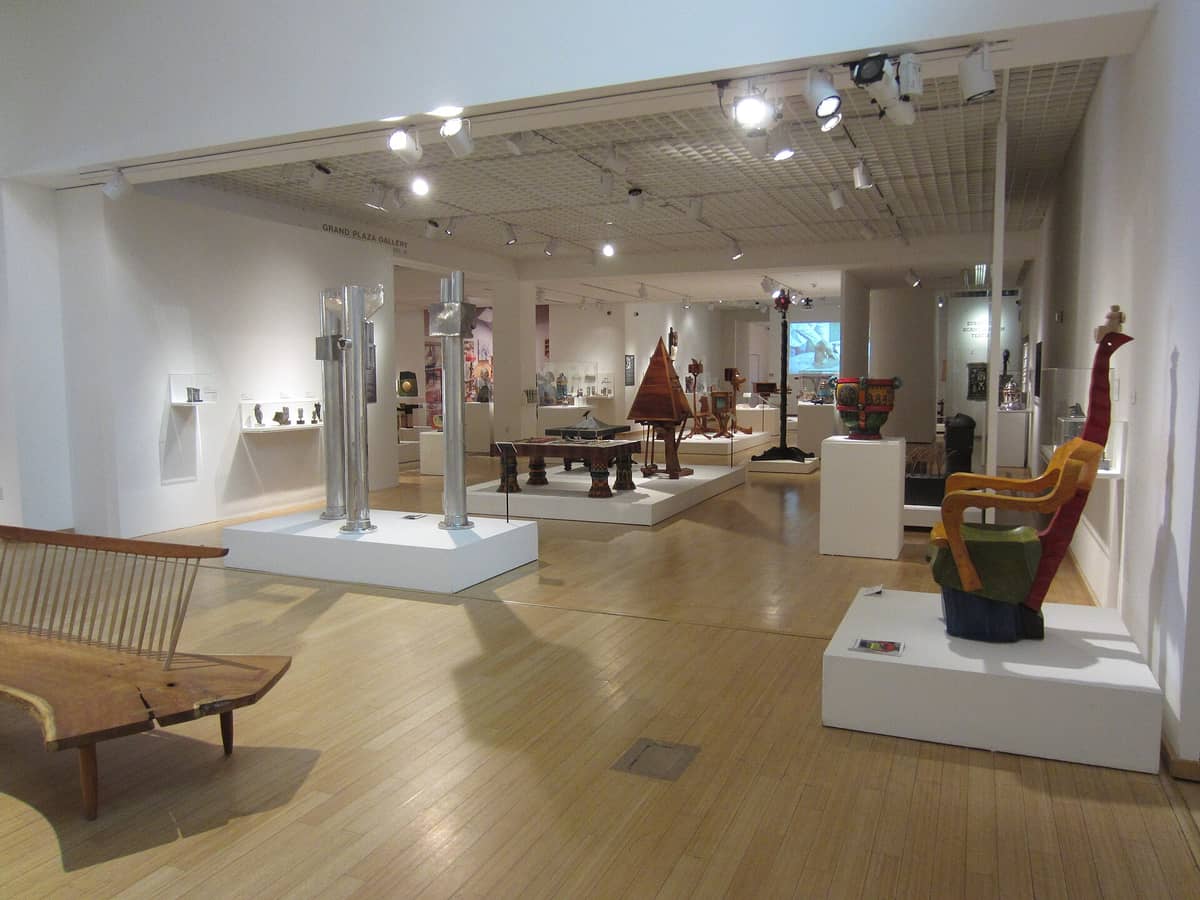
The word "mingei" comes from the Japanese folk craft movement of the early 20th century, a philosophy that saw artistic worth in the objects ordinary people make and use every day: a hand-thrown bowl, a woven basket, a painted toy. That idea shapes everything about this museum. Mingei International Museum, founded in 1978 and relocated to its current Balboa Park home in August 1996, does not organize itself around the fine arts hierarchy of painting and sculpture. Instead, it asks visitors to look carefully at ceramics, textiles, jewelry, furniture, and everyday objects drawn from dozens of cultures and centuries.
The museum occupies 41,000 square feet across two main levels inside a Spanish Colonial Revival building on El Prado, the main pedestrian promenade of Balboa Park. The Entry Level is free to all and offers a taste of the current exhibitions along with the gift shop, which tends to carry genuinely well-chosen craft objects rather than generic souvenirs. The Exhibitions Level, which requires a paid ticket for visitors 18 and older, holds the main rotating galleries and the permanent collection highlights.
💡 Local tip
Third Tuesday of every month: admission to all levels is free for everyone, with no ID or membership required. If your schedule allows it, this is the easiest way to experience the full museum at no cost.
The Building and Setting
El Prado is one of the most architecturally coherent pedestrian corridors in California, lined with Spanish Colonial Revival facades that date to the 1915 Panama-California Exposition. Mingei's building fits that context without being dominated by it. Inside, the spaces are clean and well-lit, designed to let objects breathe. Lighting is calibrated for fiber and ceramic work, which means colors read true rather than washed out or artificially saturated.
Morning light on El Prado is particularly good for the exterior buildings, and arriving early, between 10am and 11am on a weekday, means the galleries are quieter. The Friday extended hours, open until 8pm with a reduced $5 exhibitions admission after 5pm for non-members, attract a different crowd: local residents who use the evening as a relaxed cultural outing rather than a tourist stop. That late-afternoon to evening window has a noticeably different energy, less rushed and more contemplative.
Mingei sits in excellent company. The San Diego Museum of Art and the Timken Museum of Art are both within a short walk on El Prado, making it straightforward to combine two or three museum visits in a single half-day in Balboa Park.
What You Will See Inside
The permanent collection spans folk art and craft from Africa, Asia, the Americas, and Europe, with particular depth in Japanese mingei objects, pre-Columbian textiles, and American craft traditions. Labels are substantive without being dense, often placing a single object in its social and material context in a few precise sentences.
Rotating exhibitions change the character of the Exhibitions Level considerably from visit to visit. Past programming has focused on everything from the history of the surfboard as a designed object to indigenous weaving traditions. The curatorial approach tends toward specificity over spectacle: rather than overwhelming visitors with quantity, shows typically center on a focused argument about craft, material, or cultural exchange.
The museum also maintains a free Digital Guide accessible through the Bloomberg Connects app, which allows visitors to explore supplementary content on their phones without needing to take a guided tour. It works in the galleries and does not require Wi-Fi once downloaded. For visitors who want depth without the overhead of a formal tour, this is worth downloading before you arrive.
ℹ️ Good to know
The Entry Level includes access to a portion of the current exhibitions and the museum store. Even visitors who do not pay for the Exhibitions Level can get a meaningful sense of the museum's focus and quality.
Hours, Tickets, and Getting There
Mingei International Museum is open Tuesday through Sunday. Standard hours are 10am to 5pm, Tuesday through Thursday and on weekends. On Fridays the museum stays open until 8pm, with a discounted $5 admission for the final three hours of the day. The museum is closed on New Year's Day, Independence Day (July 4), Thanksgiving Day, and Christmas Day.
Admission for the Exhibitions Level is $15 for adults 18 and older. Students, educators, and military personnel with valid ID pay $10. Members enter free. The Friday after‑5pm rate of $5 exhibitions admission applies to all non‑members. Verify current prices at mingei.org before your visit, as rates can be updated.
By public transit, San Diego MTS Bus Route 7 runs along Park Boulevard, which borders the east side of Balboa Park, and provides a direct connection from downtown and City College. From the Park Boulevard stops, the walk to El Prado takes roughly 5 to 10 minutes through the park. Rideshare drop-off is practical on El Prado itself or at the nearby parking areas. Balboa Park does have several surface parking lots, and they tend to fill up on weekend afternoons, particularly when multiple museum events coincide.
⚠️ What to skip
Weekend afternoons in summer can be crowded across Balboa Park as a whole, with parking difficult by midday. Arriving before 10:30am or after 3pm significantly reduces competition for spots. Alternatively, park near City College Trolley Station and take a short Route 7 bus or rideshare ride to the park.
Practical Details for Different Visitor Types
Accessibility is taken seriously here. The museum has published a formal Accessibility Statement and the building itself is navigable by wheelchair across both levels. If accessibility is a priority consideration, checking the current statement at mingei.org or calling ahead is advisable.
For families, the craft and design focus works better than it might at first seem. Objects from many cultures are visually arresting in ways that do not require prior art knowledge, and the museum avoids the hushed, hands-off atmosphere that can make some galleries uncomfortable for children. The free Entry Level is a low-risk way to gauge whether younger members of your group are engaged before committing to tickets for the upper exhibitions.
Visitors combining Mingei with a broader park day have strong options nearby. The Balboa Park Botanical Building is free and a two-minute walk west. The Spreckels Organ Pavilion hosts free Sunday concerts. For a full museum day in San Diego, see the best museums in San Diego guide to plan your route efficiently.
The Bottom Line: Who Will Love This, Who Might Not
Mingei rewards visitors who are willing to slow down and look carefully. The experience is cerebral and material at the same time: you are looking at objects meant to be touched and used, presented in a context that asks you to think about why they were made and what they meant to the people who made them. That combination is not for everyone.
Visitors expecting the scale or blockbuster programming of the San Diego Museum of Art may find Mingei quieter and more restrained. The rotating exhibitions are intellectually strong but do not try to compete with large traveling shows in terms of crowd spectacle. If you are looking for an easily photographable highlight or a checklist attraction, this may not satisfy. If you are the kind of traveler who can spend 20 minutes in front of a single textile and leave feeling like you learned something concrete, Mingei is your museum in Balboa Park.
Photography is generally permitted in the galleries for personal use, though some traveling exhibitions may restrict it. Check with floor staff on arrival if you plan to photograph extensively. Natural light does not reach the interior galleries directly, so phone cameras will benefit from the museum's own ambient lighting rather than flash, which is typically prohibited.
Insider Tips
- Download the Bloomberg Connects Digital Guide before arriving. It works offline in the galleries and adds context that wall labels alone do not cover, without requiring a docent tour.
- The museum store on the Entry Level carries functional craft objects, books, and jewelry selected with genuine curatorial care. It is worth 10 minutes even if you are not buying, as the inventory reflects the same philosophy as the exhibitions.
- Friday evenings after 5pm offer the best combination of low admission ($5), thin crowds, and a more local, relaxed atmosphere. It is noticeably different from a weekend afternoon visit.
- If you are visiting multiple Balboa Park museums in one day, start at Mingei when it opens at 10am. The galleries are quietest in the first hour, and the deliberate pace the museum rewards works better before fatigue sets in.
- The third Tuesday free day is listed on the museum's website but not widely advertised on third-party booking platforms. Check mingei.org directly to confirm the date for your visit month.
Who Is Mingei International Museum For?
- Design and craft enthusiasts who want to look carefully at made objects from multiple cultures
- Travelers doing a full Balboa Park museum day who want something intellectually distinct from natural history or fine art
- Budget travelers who can visit on the third Tuesday of the month or on Friday evenings after 5pm
- Families with curious kids who respond to visually striking, culturally specific objects
- Anyone interested in the Japanese mingei philosophy or in the broader folk art traditions of Asia, the Americas, and Africa
Nearby Attractions
Other things to see while in Balboa Park:
- Botanical Building and Lily Pond
Built for the 1915 Panama-California Exposition, the Botanical Building and Lily Pond is one of Balboa Park's most photographed landmarks and one of San Diego's few genuinely free indoor plant experiences. The structure, historically billed as one of the largest wood lath buildings in the world, shelters over 2,100 plant varieties beneath a domed roof that filters light into something close to dusk at midday.
- Comic-Con Museum
Opened in November 2021, the Comic-Con Museum brings the legendary San Diego convention to life year-round in Balboa Park. Rotating exhibitions, interactive experiences, and deep dives into comics, film, and sci-fi make it a serious destination for pop culture fans, not just Comic-Con regulars.
- Fleet Science Center
The Fleet Science Center anchors the eastern edge of Balboa Park's museum row with interactive science exhibits, a giant-dome theater, and monthly planetarium evenings. It draws curious visitors of all ages, from toddlers tackling discovery stations to adults catching an IMAX-style documentary under a five-story screen.
- Japanese Friendship Garden
Tucked into about 12 acres of Balboa Park, the Japanese Friendship Garden & Museum is San Diego's dedicated space for Japanese landscape design, cultural art, and quiet reflection. Symbolizing the bond between San Diego and its sister city Yokohama, the garden rewards visitors with stone lanterns, koi ponds, a centuries-old bronze Kannon statue, and rotating museum exhibitions.