Best Time to Visit San Diego: A Season-by-Season Guide
San Diego's Mediterranean climate means it's genuinely good to visit any time of year, but the right season depends on what you want to do. This guide breaks down weather patterns, crowd levels, and key events for every month so you can pick the trip that actually fits your goals.
TL;DR
- San Diego has a Mediterranean climate with average highs around 67°F in winter and 82°F in late summer, making every month workable.
- September and October are the sweet spot: summer-like warmth (highs 78-82°F), minimal rain, and noticeably thinner crowds than July and August. Check the best beaches in San Diego to plan your itinerary.
- June brings 'June Gloom' — persistent coastal fog that can smother beach mornings for weeks. July and August clear up but draw peak crowds and hotel prices.
- The rainy season runs roughly November through March, but total annual rainfall is only about 10-11 inches. Rainy days are infrequent, not monsoon-level.
- Winter (December-February) is San Diego's low season: quieter, cheaper, and still mild enough for outdoor sightseeing, though not ideal for swimming.
Understanding San Diego's Climate
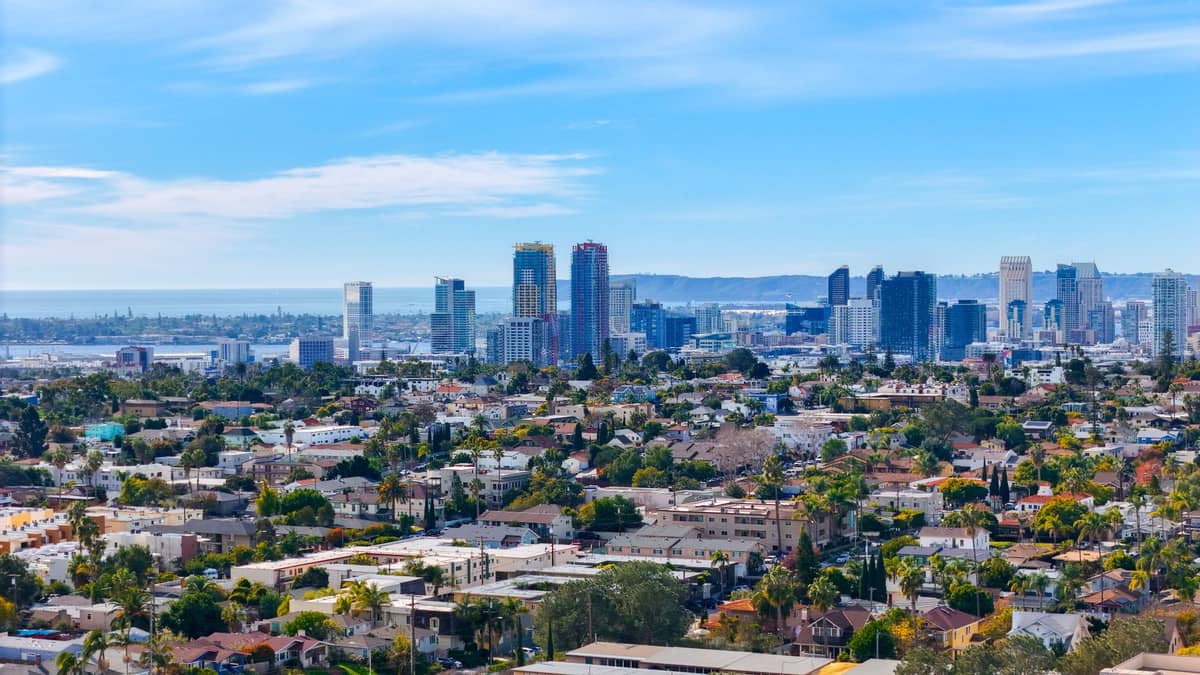
San Diego sits at roughly 32.7°N latitude on California's Pacific coast, and its climate is textbook Mediterranean: warm, dry summers and mild, occasionally wet winters. The annual average temperature hovers around 64°F (18°C), and the city receives only about 10-11 inches of rain per year spread across roughly 40 rainy days. For comparison, New York City gets around 46 inches annually. That context matters: San Diego's 'rainy season' is nothing like what most visitors imagine when they hear the phrase.
One climate feature that surprises many first-time visitors is the marine layer: a low coastal cloud and fog system that rolls in off the Pacific, especially during late spring and early summer. Locals call it 'May Gray' and 'June Gloom.' It's not rain, but it can keep the coast under a thick grey ceiling until noon or later, day after day. Beaches in La Jolla and Pacific Beach get hit hardest. Inland neighborhoods like North Park or Mission Valley often break into sunshine an hour or two earlier, which is worth knowing if you're flexible.
ℹ️ Good to know
San Diego's coastal temperature can differ significantly from inland temperatures. On a summer day when La Jolla sits at 72°F under partial clouds, the Gaslamp Quarter downtown might be 78°F and Mission Valley could reach 88°F. If you're planning beach days, check a coastal-specific forecast, not just the city-wide average.
Spring (March through May): Good Weather, Some Caveats

Spring is an underrated window for visiting San Diego. Rain tapers off through March, average highs climb from around 66°F to 72°F by May, and the city hasn't yet reached summer pricing. Balboa Park looks its best in April when gardens are in full bloom, and the hiking trails in the hills above the city offer green scenery that disappears by July.
The main downside is May Gray. By mid-May, the marine layer starts asserting itself along the coast, and beach mornings can feel genuinely disappointing if you weren't expecting it. If sun-on-sand is your priority, plan beach activities for the afternoon and spend mornings at inland attractions like Balboa Park or Old Town San Diego State Historic Park. The fog typically burns off by noon.
Summer (June through August): Peak Season, Peak Prices
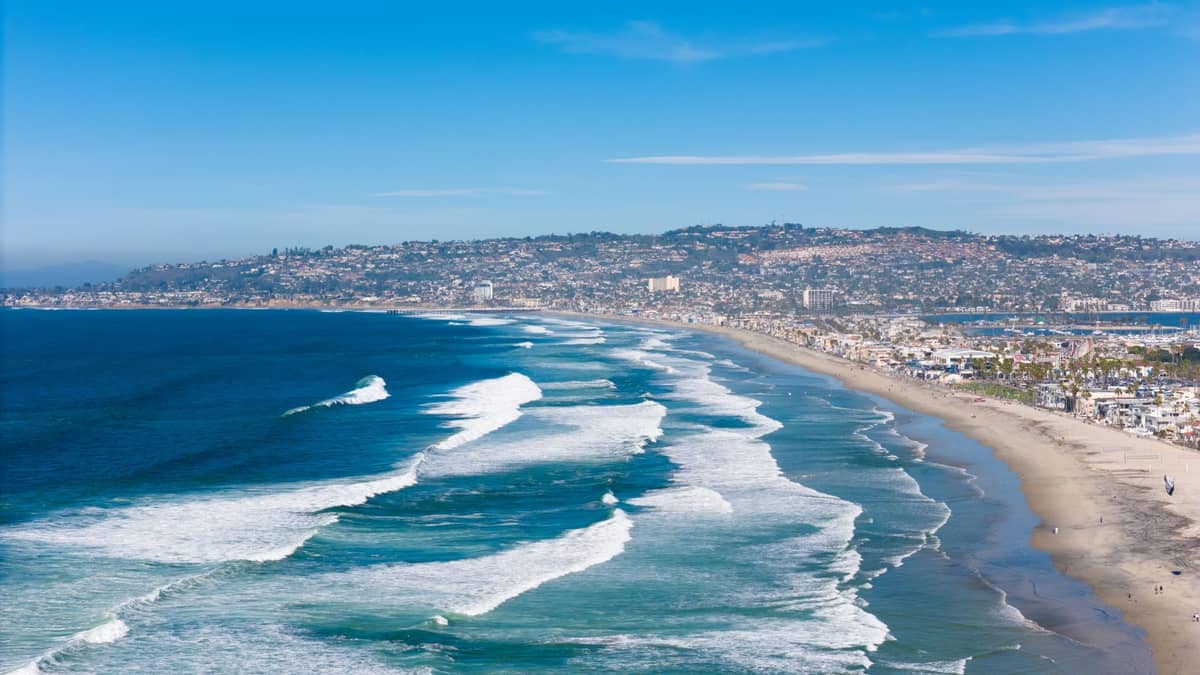
Summer is when San Diego gets crowded, and the crowds are real. Hotels along the coast raise rates significantly from late June through August. Parking at beach neighborhoods like Pacific Beach and Ocean Beach becomes a genuine ordeal on weekends. SeaWorld, the San Diego Zoo, and Legoland all hit maximum capacity on summer weekends. If you're traveling with children and flexibility is limited, summer works, but budget for higher costs and plan to arrive at popular spots early.
The weather trade-off is that June Gloom clears up through July and August. Average highs reach 78-82°F with almost no rainfall, and evenings stay warm at 65-68°F. Coastal breezes keep conditions comfortable compared to the brutal heat inland California can experience. That said, Santa Ana wind events can occasionally push even coastal temperatures into the 90s, though this is more common in fall than summer.
One major summer draw is Comic-Con International, which takes over the Convention Center in late July. It's genuinely a spectacle, but it makes downtown hotels near-impossible to book for those dates. Plan far ahead or stay in a neighborhood further from the Convention Center if you're not attending. Our Comic-Con San Diego guide has the logistics covered.
⚠️ What to skip
Booking summer weekends without advance reservations is a mistake in San Diego. Hotels in La Jolla, Coronado, and Mission Bay can sell out weeks ahead during July and August. If your travel dates are flexible, even shifting to a Tuesday-Thursday stay can cut rates noticeably.
Fall (September through November): The Best-Kept Secret

September and October are objectively the best months for most visitors to San Diego, and the local climate data backs this up. Average highs run 78-82°F through September and drop to a still-comfortable 74-76°F in October. Rainfall is essentially zero through September and minimal in October. The marine layer that plagues June has dissipated, so you get the warm temperatures without the coastal fog. School is back in session, so beach crowds thin considerably after Labor Day.
There is one genuine weather risk in fall: Santa Ana wind events, typically from October through November. These dry, hot winds blow from the inland desert toward the coast and can spike temperatures dramatically. They also raise wildfire risk across Southern California. They pass in a few days and are not predictable months in advance, but it's worth monitoring forecasts if you're visiting in late October or November. Outside of Santa Ana events, fall offers excellent conditions for hiking around San Diego and whale watching, as gray whale migration begins in late fall.
- September Peak warmth without peak crowds. Ocean temperatures are at their annual high (around 70°F), making this the best month for swimming. Hotel rates drop after Labor Day weekend.
- October Comfortable temperatures (highs 74-76°F), minimal rain, and good value on accommodation. Some Santa Ana wind risk, but also beautiful clear-sky days.
- November Temperatures cool into the low 70s, rain begins picking up by month's end. Gray whale watching season starts. Fewer tourists and noticeably lower prices than summer.
Winter (December through February): Low Season, Real Value

Winter in San Diego is the low season for tourism, and the savings are real. Hotel rates drop across the board, popular attractions have shorter queues, and the city feels like it belongs to locals again. Average highs sit around 64-68°F, lows around 47-54°F. It's not swimming weather at the beach, but it's entirely comfortable for walking, cycling, and outdoor sightseeing. Snow in the city is extraordinarily rare.
The rainy season concentrates most of its activity in January through March, with February typically being the wettest month at around 2-2.6 inches. To put that in perspective, Seattle averages about 5 inches in February. Rain in San Diego tends to arrive in distinct storm events separated by stretches of clear weather, rather than constant drizzle. Winter is also prime season for gray whale watching off the coast, and the whale watching season runs roughly December through April. The Cabrillo National Monument at the tip of Point Loma is one of the best free vantage points for spotting migrating whales.
✨ Pro tip
If you visit in January or February, Balboa Park's museums are quieter and the Botanical Building's lily pond is full. The San Diego Museum of Art, the Natural History Museum, and the Fleet Science Center all see their lowest attendance of the year in winter — shorter lines, no reserved-entry requirements.
Crowds, Prices, and Practical Planning
Beyond weather, timing your visit around crowds and cost is just as important. San Diego in summer is a different logistical experience than San Diego in February. For families, summer aligns with school calendars but competes with everyone else's plans. For couples or solo travelers, shoulder seasons offer the same attractions in a calmer setting. Explore the San Diego for couples guide for timing tips specific to romantic travel, or the San Diego with kids guide if school holidays are a constraint.
- July-August: Peak crowds, peak prices, best beach weather (once June Gloom clears). Book accommodation 2-3 months ahead.
- September-October: Near-peak weather, noticeably lighter crowds, better rates. The objectively strongest value window.
- November-March: Low season. Mild weather for sightseeing, some rainy days, lowest prices. Not ideal for beach swimming.
- March-May: Spring shoulder season. Good for hiking and parks, some marine layer at coast in May. Mid-range prices.
- Comic-Con weekend (late July): Downtown hotel prices spike dramatically regardless of other factors. Book 6+ months out or stay outside downtown.
Getting around San Diego matters too, since the city is spread across a large area. Public transit via MTS buses and the San Diego Trolley covers downtown, Mission Valley, and some beach corridors, but many neighborhoods require a car or ride-share. The guide to getting around San Diego covers your options by neighborhood and trip type.
FAQ
What is the best month to visit San Diego?
September is the single strongest month: water temperatures are at their annual peak (around 70°F), summer crowds have thinned after Labor Day, rainfall is effectively zero, and hotel rates drop from summer highs. October is a close second with similar conditions and even better prices.
Does San Diego get cold in winter?
By Southern California standards, yes. Average highs in December and January sit around 64-68°F, and nighttime lows can drop to the high 40s°F. It rarely feels cold in the way most of the US does in winter, but a jacket is needed for evenings, and ocean swimming is uncomfortable for most people. Snow in the city itself is extremely rare.
What is June Gloom in San Diego?
June Gloom (and its earlier counterpart, May Gray) refers to a marine layer of low clouds and fog that settles along the San Diego coast from roughly May through mid-July. It typically clears by noon, but mornings at the beach can feel overcast and grey. Inland neighborhoods like North Park and Mission Valley often break into sunshine earlier in the day.
Is San Diego crowded in summer?
Yes, genuinely crowded. July and August bring families on school holiday, plus major events like Comic-Con in late July. Beach parking fills early on weekends, popular attractions have long queues, and accommodation prices are at their annual peak. If you can shift to September, you get comparable weather with a markedly different crowd level.
When is whale watching season in San Diego?
Gray whale migration passes through San Diego waters from roughly December through April, with peak sightings typically in January and February. This makes winter a compelling reason to visit despite the cooler temperatures and occasional rain. The Cabrillo National Monument at Point Loma offers excellent shore-based whale spotting, while several operators run boat tours from the Embarcadero.