Old Town San Diego State Historic Park: Where California Began
Old Town San Diego State Historic Park preserves the original Euro-American settlement of San Diego in a compact, walkable historic core. Entry is free, the museums and visitor center are generally open daily during posted hours, and the mix of restored adobe buildings, period museums, and working artisan shops rewards a leisurely two-hour visit.
Quick Facts
- Location
- 4002 Wallace Street, Old Town, San Diego, CA 92110
- Getting There
- Old Town Transit Center (Trolley Green & Blue Lines, Coaster, multiple MTS bus routes) — short walk to park entrance
- Time Needed
- 1.5 to 3 hours for a thorough visit; half a day if you stop for a meal
- Cost
- Free to enter the park; some individual attractions (e.g., Whaley House Museum) charge separate admission
- Best for
- History lovers, families with children, first-time San Diego visitors, and anyone seeking a walkable cultural afternoon without an admission fee
- Official website
- www.parks.ca.gov/?page_id=663
What Is Old Town San Diego State Historic Park?
Old Town San Diego State Historic Park is a California State Parks property that protects the site of San Diego's first Euro-American civilian settlement, concentrated on the flatlands below Presidio Hill. The park covers a compact historic area, and its core — centered on the open plaza — feels noticeably different from the rest of modern San Diego. Most of the historic core is oriented to foot traffic, so walking sets the pace.
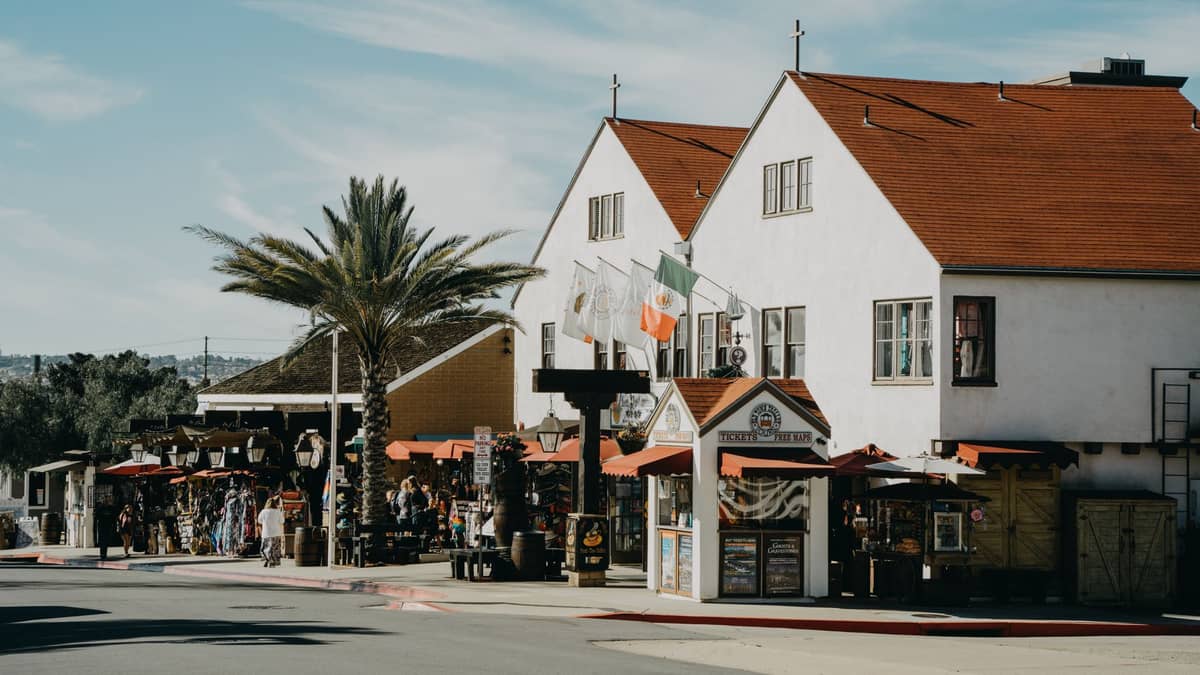
The settlement here developed in the 1820s, after Mexico gained independence from Spain and civilians began moving down from the original hilltop presidio. What you see today is a mix of genuine historic structures, carefully reconstructed adobe buildings, and working retail and restaurant businesses operating inside period-appropriate facades. It functions as both a legitimate historic site and a lively public destination.
The park is a logical anchor for anyone spending time in Old Town San Diego, and it fits naturally into broader itineraries built around San Diego's cultural and historical sites.
💡 Local tip
Start at the Robinson-Rose House Visitor Information Center near the park entrance on San Diego Avenue. Rangers hand out free maps and can point you toward any living history demonstrations scheduled for that day — these are easy to miss if you wander in without one.
The Historical Context: Why This Place Matters
The Spanish established a presidio on the hill above this site in 1769, making San Diego the first permanent European settlement on the California coast. The civilian town that grew at the base of that hill in the 1820s is what Old Town San Diego State Historic Park now commemorates. By the time American forces arrived during the Mexican-American War in 1846, Old Town was already a functioning community with adobe homes, a courthouse, a jail, and commercial buildings arranged around a central plaza.
What makes the park historically significant is that it represents a layered colonial history: Spanish mission-era foundations, Mexican territorial governance, and early American occupation all left physical and documentary traces here. The reconstructed buildings are based on historical records, land surveys, and photographic evidence from the mid-19th century, and California State Parks has generally been careful about distinguishing between original structures and reproductions.
For a broader picture of the mission era that preceded Old Town's civilian period, the Mission Basilica San Diego de Alcalá — California's first mission, founded in 1769 — sits about six miles northeast and is worth pairing with a visit here.
What You'll Actually See: A Walkthrough of the Park
The park's seven blocks are compact enough to cover on foot without planning a route in advance. The central plaza is grassed and open, ringed by two-story wooden and adobe structures. On weekday mornings, it's quiet enough that you can read the interpretive panels without crowds pressing in. On weekend afternoons, especially in summer, tour groups and families fill the plaza and the noise level rises considerably.
Among the reconstructed buildings is the Colorado House, rebuilt in 1992 after a fire destroyed the 19th-century hotel; it now houses the Wells Fargo Museum. The original La Casa de Estudillo — a large adobe hacienda originally built in the 1820s for a prominent San Diego family — is the most architecturally impressive building in the park. Its thick whitewashed walls, terracotta tile floors, and central courtyard communicate the domestic scale of California rancho life more effectively than any interpretive panel. Step inside and the temperature drops noticeably even on warm afternoons.
The Seeley Stable, a two-story structure interpreting the era of horse-drawn transportation, houses a collection of wagons and period tack. Children tend to gravitate here. Across the plaza, various adobe rooms function as small exhibit spaces covering topics from 19th-century law enforcement to domestic life and commerce. The quality of interpretation varies between rooms, with some feeling more polished than others.
ℹ️ Good to know
Visitor Center and museum hours: generally daily 10:00–17:00, with some museums and exhibits operating on slightly shorter or seasonal schedules. The park grounds themselves are accessible daily. Verify current hours on the official California State Parks website before your visit, as they are subject to change.
How the Park Changes by Time of Day
Early mornings — arriving shortly after the visitor center opens — give you the clearest views of the adobe architecture and the most relaxed atmosphere. The plaza is often empty except for a few park staff and the smell of wood and dry earth that the buildings hold from the cooler overnight air. Shadows from the surrounding structures fall across the central courtyard in sharp relief, making this the best window for photography.
By late morning on weekends, restaurants and shops open, and the park transitions into a more social environment. The scent of tortillas cooking drifts from nearby kitchens. Mariachi performances occasionally happen in the plaza around midday, particularly on weekends and during Mexican holidays, which adds genuine atmosphere but also compresses the available space significantly.
Afternoon visits between 13:00 and 15:00 tend to draw the heaviest foot traffic, especially in summer. The open plaza offers little shade, and temperatures that feel comfortable in the morning can become tiring after an hour of walking in direct sun. If you're visiting between June and September, a morning start is strongly preferable. Autumn afternoons — September and October specifically — offer a reasonable balance of good light and manageable crowds.
Getting There and Getting Around
Old Town Transit Center is one of the best-served transit hubs in San Diego. The Green and Blue trolley lines both stop here, as do COASTER commuter rail trains and a large cluster of MTS bus routes. From downtown San Diego or the Gaslamp Quarter, the trolley ride typically takes around 10–15 minutes. From Mission Valley, it's a bit shorter. Arriving by transit is genuinely easy and eliminates the parking question entirely.
By car, street parking on the surrounding blocks is metered and can fill quickly on weekends. There are private parking lots near the park, but walking from the transit center is faster than circling for a space on a busy Saturday.
Within the park itself, the historic core is primarily pedestrian, with most areas closed to through traffic by private vehicles. Most pathways are flat and paved or compacted, making movement through the park manageable for strollers and wheelchairs on the main routes. An Accessible Guide is available at the Visitor Information Center in the Robinson-Rose House, and accessible parking and restrooms are available. Visitors with specific access needs can contact the park in advance at +1 619-220-5422.
💡 Local tip
Photography tip: The best light on the adobe facades falls in the morning, when the sun is still east of the plaza. By midday, the flat overhead light flattens architectural details. The La Casa de Estudillo courtyard is worth photographing from inside, where the framing of the doorways creates natural composition.
The Bottom Line: What the Park Does Well and Where It Struggles
Old Town San Diego State Historic Park succeeds at creating a walkable, free public space with genuine historical content and architecture that you can't access anywhere else in San Diego. The density of history in a small area is real, and the absence of a gate or admission fee makes it accessible to visitors on any budget.
The park's commercial elements — shops selling Mexican folk art, souvenirs, and food — are integrated throughout the historic blocks rather than confined to a separate retail zone. For some visitors this adds energy; for others it makes the line between heritage site and tourist market harder to locate. The interpretation quality also varies. Some rooms and exhibits are thoughtfully curated with primary source material. Others feel underfunded, with older panels and sparse displays.
Visitors seeking a purely quiet or contemplative historic experience may find the weekend atmosphere too commercial. Those who want deeper engagement with San Diego's indigenous heritage — before the Spanish and Mexican periods — will find the park's coverage thin and should supplement their visit with resources from the San Diego Natural History Museum in Balboa Park, which covers pre-contact California history in more depth.
The park does work well within a broader Old Town itinerary. It pairs naturally with Presidio Park up the hill, where the original Spanish fort site sits above the civilian settlement and offers good views over the valley.
What to Bring and Practical Notes
Comfortable walking shoes are sufficient — the grounds are flat and you won't encounter uneven terrain beyond a few steps up to building thresholds. In summer, a hat and water are worth carrying given the limited shade in the central plaza. In winter, the mild San Diego climate (average highs around 62–66°F / 17–19°C) makes a light layer enough.
Public restrooms in the park are open approximately 10:00 to dusk. Several full-service restaurants operate within the historic blocks, ranging from casual taquerias to sit-down Mexican dining, so lunch inside the park is a practical option rather than just a convenient one.
If you're building a full-day itinerary around Old Town, the 3-day San Diego itinerary guide includes Old Town alongside other neighborhoods in a practical sequence that avoids unnecessary backtracking across the city.
Insider Tips
- Check the California State Parks website or call ahead to find out if any living history programming is scheduled on your visit day. Costumed interpreters demonstrating blacksmithing, weaving, or period cooking appear on an irregular schedule and transform the experience compared with a standard self-guided walk.
- The Whaley House Museum, located a short walk from the main park grounds, charges separate admission and is managed independently. It covers an important and unusual chapter of San Diego history — it served as the first commercial theater and county courthouse in the city. Budget an extra 45 minutes and check its current hours separately before visiting.
- The park is most photogenic in the first hour after opening. The plaza empties the light of competing crowds, and the low-angle morning sun brings texture out of the adobe walls in a way that midday sun simply does not.
- Parking is genuinely easier on weekday mornings. If you're driving on a weekend, arrive before 10:30 or plan on several minutes of circling. The Old Town Transit Center option eliminates this entirely and takes about ten minutes from downtown by trolley.
- The central plaza occasionally hosts free outdoor events including Dia de los Muertos celebrations in early November and Mexican Independence Day events in September. These can be excellent or overwhelming depending on your tolerance for crowds — check the park calendar if you're visiting around those dates.
Who Is Old Town San Diego State Historic Park For?
- First-time San Diego visitors who want geographic and historical context for the city's origins in a compact, walkable format
- Families with school-age children who respond well to physical spaces, period artifacts, and the occasional costumed ranger rather than static museum displays
- Budget travelers: the park itself costs nothing to enter, and it can fill two to three hours without spending a dollar
- Photography enthusiasts interested in adobe architecture, Spanish colonial aesthetics, and street-level cultural scenes
- Visitors combining Old Town with a Presidio Park hike or a Trolley day covering multiple San Diego neighborhoods in a single loop
Nearby Attractions
Other things to see while in Old Town San Diego:
- Presidio Park
Perched on a hillside above Old Town San Diego, Presidio Park marks the site of the original Spanish presidio established in 1769, making it the birthplace of European California. Free to enter and largely overlooked by casual tourists, the park rewards those willing to make the short climb with panoramic views, manicured grounds, and a window into the city's deepest roots.