Old Town San Diego is the city's oldest settled neighborhood, centered on a state historic park that preserves adobe houses, plazas, and museums from early 19th-century California. It sits at a major transit crossroads and offers a concentrated dose of history, Mexican-influenced cuisine, and heritage tourism within a compact, walkable area.
Old Town San Diego is where the city formally began, and that origin story is still visible in the adobe walls, dirt-packed plazas, and mission-era street plan that survive at its core. Compact, historically rich, and anchored by one of California's most-visited state parks, it operates as both a working neighborhood and a living museum, drawing visitors who want context for the city they're exploring and locals who come for the food.
Orientation
Old Town San Diego occupies roughly 230 acres on the northwestern edge of the city's urban core. The neighborhood is bookended by two major freeways: Interstate 8 forms the northern boundary, and Interstate 5 runs along the western edge. To the east, the neighborhood transitions toward Mission Hills and the broader Uptown district via San Diego Avenue and Congress Street. Mission Valley lies just beyond the I-8 interchange to the north.
The street grid reflects its pre-American origins. Taylor Street runs northeast to southwest through the upper portion of the neighborhood, while Juan Street and Congress Street cut across the historic core. San Diego Avenue is the main commercial spine, lined with shops, restaurants, and heritage buildings that connect the old plaza to the surrounding blocks. The result is a neighborhood that feels more like a village center than a typical San Diego commercial strip.
Old Town sits roughly 3 miles north of downtown's Gaslamp Quarter and about 5 miles southeast of Ocean Beach. Its position at the junction of I-5 and I-8 makes it one of the most transit-accessible neighborhoods in San Diego, a practical base for visitors who want to reach multiple parts of the city without a car.
Character & Atmosphere
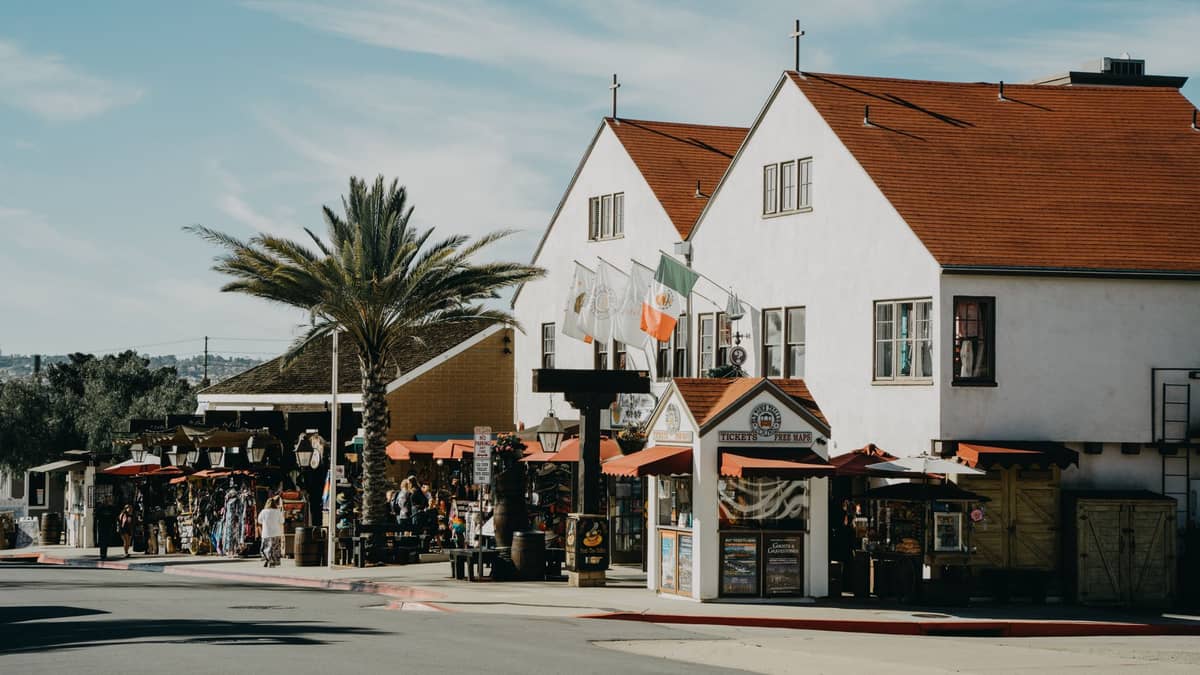
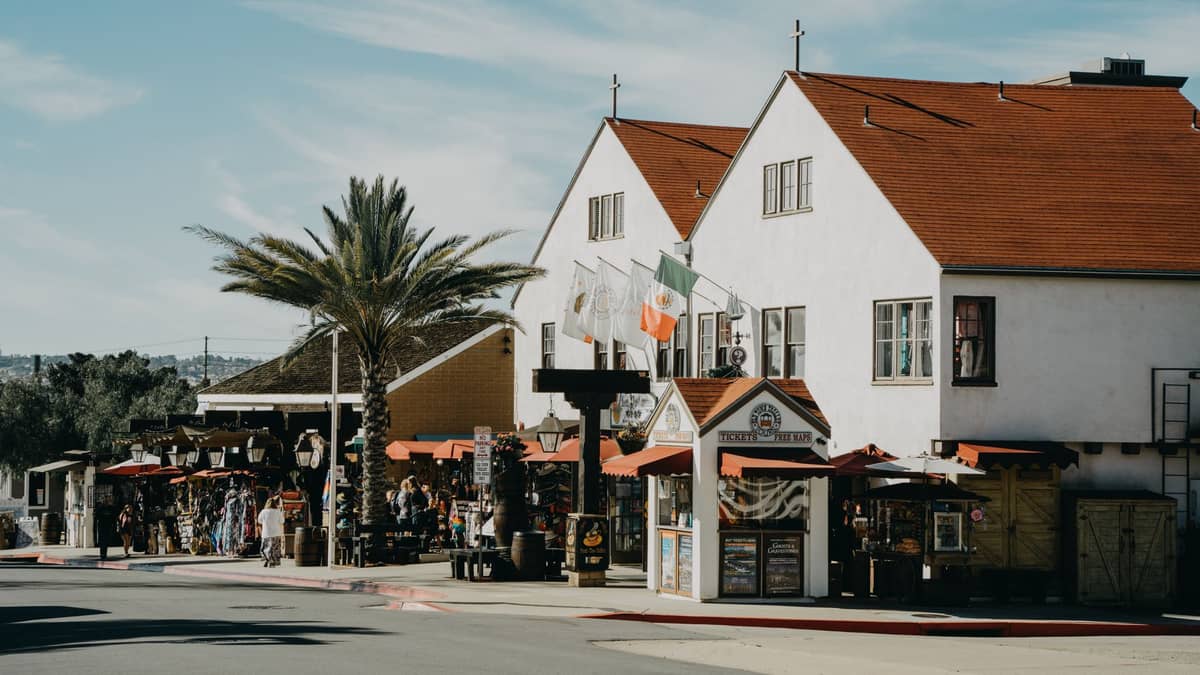
Mornings in Old Town have an almost village-like calm. The plaza at the heart of the state historic park is quiet before 9 a.m., with low light catching the whitewashed adobe walls of the historic casas. The roosters and donkeys kept at some living-history exhibits add an unexpected layer of atmosphere. Staff begin setting up interpretation stations, and the smell of tortillas from nearby restaurants starts drifting across the square around 10 a.m.
By midday the neighborhood shifts gear. Tour groups arrive, the main souvenir shops on San Diego Avenue fill up, and the outdoor seating areas at Mexican restaurants fill with lunch crowds. This is the peak tourist window, and the central plaza area can feel crowded, particularly on weekends and during the summer months. Mariachi music occasionally plays from restaurant courtyards. Afternoons carry a relaxed pace: visitors drift between museums and shops, while the upper residential streets near Taylor Street remain genuinely quiet.
After dark, Old Town changes character. Most of the historic park's outdoor areas are unlit and essentially empty by evening, when the neighborhood's energy concentrates in the restaurant corridors along San Diego Avenue. It's a relatively contained nightlife scene compared to the Gaslamp Quarter. The transit center remains active late into the night given its role as a trolley and bus hub, but the side streets off the main commercial strip are notably quieter.
⚠️ What to skip
Safety data for Old Town shows crime rates above national averages, with drug-related incidents making up a significant share of reported offenses. Exercise standard urban awareness, particularly after dark and around the transit center. The historic park itself is well-managed and generally safe during daylight hours.
What to See & Do
The centerpiece of any visit is Old Town San Diego State Historic Park, a free, open-air park covering about six blocks of reconstructed and original structures from the 1820s through 1870s. Entry to the park grounds is free, though some museums within charge admission. Rangers and docents offer walking tours that explain the layered history of the site, from the Spanish colonial period through Mexican rule and into American statehood.
La Casa de Estudillo is one of the most significant surviving adobe structures in California, a large U-shaped hacienda that once belonged to one of the region's most prominent families. Fully restored and furnished with period pieces, it gives a clear picture of how wealthy Californio families lived in the 1820s and 1830s. The Robinson-Rose House, which sits at the plaza's edge, serves as the park's visitor center and provides the best orientation for first-time visitors.
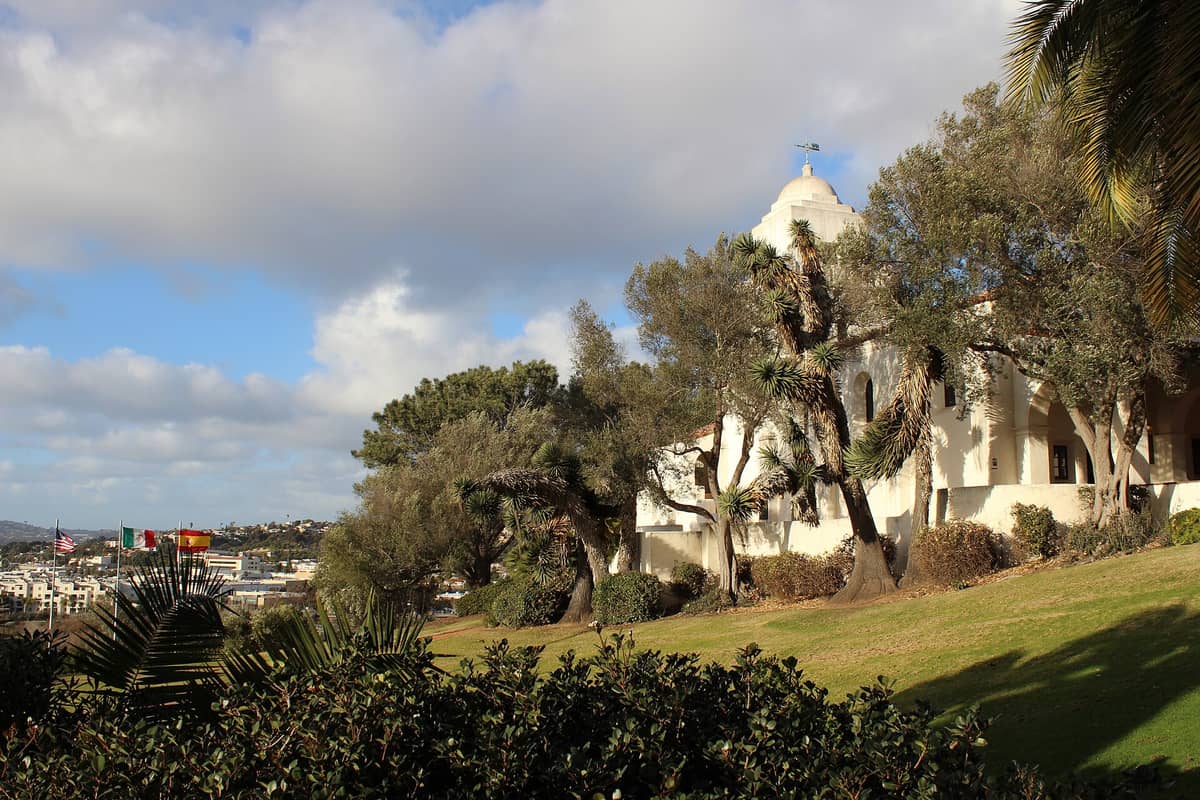
A short walk uphill from the plaza, Presidio Park marks the location of California's first Spanish settlement from 1769 and houses the Junipero Serra Museum at its summit. The hilltop offers some of the best views in the neighborhood, looking across Mission Valley and toward the bay. It's a genuine local park with grassy slopes, picnic areas, and far fewer crowds than the plaza below.
Old Town San Diego State Historic Park: free entry; museum buildings generally open daily during daytime hours
La Casa de Estudillo: restored 1820s adobe hacienda
Robinson-Rose House: visitor center and exhibits on Old Town history
Presidio Park and Junipero Serra Museum: hilltop history site with city views
El Campo Santo Cemetery: one of the oldest cemeteries in San Diego, adjacent to the park
Heritage Park: a collection of Victorian buildings relocated to Old Town, located just east of the historic core
Spanish colonial-era walking tours offered by state park rangers
💡 Local tip
The state park's free ranger-led tours typically depart from the Robinson-Rose visitor center on weekend mornings. Check the California State Parks website for current schedules before visiting, as hours and programming vary seasonally.
Eating & Drinking
Old Town's food identity is defined by Mexican and Californio cuisine, which makes sense given the neighborhood's history as part of Mexican Alta California. The concentration of Mexican restaurants along San Diego Avenue is one of the highest in the city, ranging from sit-down establishments with full bars to casual counters serving carne asada burritos and fresh guacamole. Several restaurants occupy historic buildings or open-air courtyards, adding atmosphere to the meal.
Old Town is a reasonable place to try San Diego's approach to Mexican food, though the restaurants here skew more toward tourist-facing menus than the street-level taquerias you'd find in neighborhoods like Barrio Logan or City Heights. For a deeper dive into the regional food traditions, the San Diego fish tacos guide covers where to find the best versions across the city, including spots beyond Old Town.
Several restaurants have outdoor courtyard dining that works particularly well in the afternoon, when the sun drops behind the surrounding buildings and the temperature is comfortable. Margaritas are practically obligatory in this corner of the neighborhood, and several bars make them with fresh-squeezed lime juice and quality tequila rather than the sour mix version. Prices are mid-range to slightly above average for San Diego, reflecting the tourist footfall.
Coffee options are limited within the historic core itself, but the surrounding blocks have a few cafes that open early for commuters using the transit center. For a wider selection of independent cafes and restaurants, the Mission Hills neighborhood directly to the east is worth a short walk up Washington Street.
ℹ️ Good to know
Old Town's restaurants tend to fill quickly on weekend afternoons, particularly between noon and 2 p.m. If you're visiting the historic park on a Saturday or Sunday, either eat an early lunch before the crowds arrive or plan to explore the park first and eat later in the afternoon.
Getting There & Around
The Old Town Transit Center is the neighborhood's defining practical asset. It functions as one of San Diego MTS's major hubs, served by the UC San Diego Blue Line and Green Line trolleys along with a large number of bus routes. The Blue Line trolley connects Old Town directly to downtown San Diego, the Gaslamp Quarter, Little Italy, and the US-Mexico border crossing at San Ysidro. The Green Line runs east through Mission Valley toward Santee. Multiple bus routes connect to Pacific Beach, Mission Beach, Point Loma, Mission Hills, and beyond.
From downtown, the Blue Line trolley reaches Old Town Transit Center in approximately 15 to 20 minutes. From San Diego International Airport (SAN), MTS bus routes provide a connection, though the quickest option from the airport is typically a rideshare or taxi, which takes around 10 minutes depending on traffic. For full transit planning, the getting around San Diego guide covers all the MTS routes, trolley lines, and rideshare options in detail.
On foot, the historic park and its immediate surroundings are entirely walkable. The flat plaza area and San Diego Avenue corridor require no hills. However, Presidio Park sits on a significant hill above the neighborhood, and the walk up takes about 15 minutes from the plaza at a moderate pace. Heritage Park, to the east, is a flat 5-minute walk from the main plaza.
Driving to Old Town is straightforward given the freeway access, but parking can be competitive during peak hours, particularly on weekends. Several parking lots surround the transit center and the historic park, some of which charge fees. Street parking on Taylor Street and the side streets fills quickly after 10 a.m. on busy days.
Where to Stay
Old Town has a modest hotel inventory compared to downtown or the beach communities, but what's available tends to be competitively priced given the neighborhood's transit connections and proximity to multiple city areas. Several mid-range hotels operate near the transit center, offering easy trolley access to downtown without downtown prices.
Old Town works well as a base for visitors who want to prioritize history and easy transit access over beach proximity. If your priority is the waterfront, neighborhoods like Little Italy or the Embarcadero are closer to the bay, while Pacific Beach suits those focused on beach life. For a full comparison of neighborhood accommodation options, the where to stay in San Diego guide breaks down the tradeoffs by area.
The best-positioned hotels in Old Town are within walking distance of both the transit center and the historic park, allowing you to step out in the morning before the day-tripper crowds arrive. The neighborhood is not known for luxury or boutique accommodation options, so travelers looking for resort-style stays will find better options elsewhere in the city.
Connecting to the Rest of San Diego
Old Town's transit hub status makes it a natural anchor for a broader San Diego itinerary. From the transit center, you're roughly 15 minutes by trolley from the Gaslamp Quarter and downtown, and about 20 minutes by bus from the beaches at Pacific Beach or Ocean Beach. Balboa Park, with its concentration of museums and gardens, sits about 2 miles southeast and is reachable by bus or a 40-minute walk through Mission Hills.
The neighborhood also makes a logical first or last stop on a San Diego walking tour itinerary, since its history precedes every other neighborhood in the city. Understanding Old Town gives context to the rest of San Diego: the street names, the mission-era architecture that shows up in scattered form across the city, and the cultural identity that still shapes neighborhoods from Logan Heights to Mission Valley.
TL;DR
Old Town San Diego is the city's historic origin point, centered on a free state park preserving adobe buildings and plazas from the early 1800s. It's the best place in San Diego to understand the city's Spanish and Mexican past.
The Old Town Transit Center is one of the city's main MTS hubs, making this neighborhood unusually easy to reach by trolley or bus from downtown, the airport corridor, and the beaches.
The food scene is Mexican-focused and solid, though it leans toward tourist-friendly menus rather than neighborhood taquerias. Outdoor courtyard dining is a genuine draw on pleasant afternoons.
Crime rates in Old Town are above national averages, and visitors should apply standard urban awareness, particularly around the transit center at night and on quieter side streets after dark.
Best suited for history-focused travelers, first-time San Diego visitors wanting geographic and cultural context, and anyone using transit as their primary way of getting around the city.
Three days is enough to hit San Diego's best neighborhoods, beaches, and cultural landmarks without feeling rushed. This itinerary is built around logical geography, real logistics, and practical notes on what's worth your time and money.
San Diego County's coastline stretches for roughly 70 miles, offering everything from calm family-friendly coves to dramatic cliff-backed surf breaks. This guide covers the best beaches by type, with practical details on what to expect at each one.
San Diego's Mediterranean climate means hiking is possible year-round, and the range of terrain is remarkable. Coastal bluffs, chaparral canyons, pine-forested ridges, and Sonoran Desert all sit within an hour or two of downtown. These are the trails worth lacing up for.
San Diego punches well above its weight as a museum city. Balboa Park alone holds more than a dozen institutions, while the Embarcadero and La Jolla add world-class maritime and ocean science destinations. This guide covers the top 18 museums worth your time and money.
San Diego's Mediterranean climate means it's genuinely good to visit any time of year, but the right season depends on what you want to do. This guide breaks down weather patterns, crowd levels, and key events for every month so you can pick the trip that actually fits your goals.
San Diego rewards those who look up, out, and across. From the windswept cliffs of Point Loma to La Jolla's hilltop memorial, these are the city's finest viewpoints, with panoramas spanning the Pacific, San Diego Bay, and the mountains beyond.
San Diego Comic-Con is one of the largest pop culture conventions in the world, drawing over 130,000 attendees to downtown San Diego each July. This guide covers badge access, hotel booking strategy, transportation logistics, and how to make the most of the event even without a badge.
San Diego has more craft breweries per capita than almost any other American city, with taprooms spread across North Park, Miramar, Little Italy, and beyond. This guide breaks down the best neighborhoods, standout breweries, guided tour options, and practical tips to help you drink well without wasting a trip.
San Diego sits at one of the most geographically rich crossroads in North America. Within a few hours you can reach a Mexican border city, a desert national park, a mountain apple-farming town, and downtown Los Angeles. This guide covers the best day trips from San Diego with real logistics and no filler.
San Diego's finest pleasures often cost nothing at all. This guide covers the best free beaches, parks, public art, viewpoints, and cultural experiences across the city, with practical tips on when to go and what to expect.
San Diego spans over 325 square miles of coastline, canyons, and urban neighborhoods, and getting around efficiently requires knowing which transport options actually work for visitors. This guide covers everything from airport arrivals and MTS trolley fares to driving realities, rideshare logistics, and neighborhood-by-neighborhood navigation.
San Diego offers a dense cluster of amusement park options for a coastal city in the U.S. This guide breaks down every major park, with real pricing, crowd patterns, and a clear take on who each park suits best.
The San Diego County Fair is one of California's largest annual events, drawing millions of visitors to the Del Mar Fairgrounds each summer. This guide covers 2026 dates, hours, parking, ticketing, crowd strategy, and what to actually eat and do once you're inside.
San Diego has a legitimate claim to the fish taco's North American popularization, and the scene in 2026 is more varied than ever. This guide breaks down where to eat, what to order, how much to pay, and which spots are actually worth the line.
San Diego's Mediterranean climate, dramatic coastline, and world-class dining make it one of California's top destinations for couples. This guide covers the most romantic experiences in the city, from free sunset walks to splurge-worthy dinner cruises, with practical notes on what's worth your time.
San Diego offers year-round golf across a wide range of public, municipal, and resort courses, headlined by the world-famous Torrey Pines. This guide covers the best courses by budget and skill level, 2026 green fee breakdowns, booking strategies, and seasonal advice to help you plan the right round.
San Diego rewards the curious. Beyond the zoo and the beaches, the city holds a swaying 1912 suspension bridge, a sea cave you reach by climbing down a hand-carved staircase, and a mural park that doubles as a National Historic Landmark. This guide covers the spots that most visitors never find.
Summer in San Diego means warm, dry coastal days, packed beaches, and a full calendar of events. But the season has quirks that catch visitors off guard. This guide covers the weather reality, top activities, crowd patterns, and logistics so you can make the most of your trip.
San Diego in winter is genuinely underrated. Daytime highs hover in the mid-60s°F, hotel rates drop significantly from summer peaks, and January kicks off some of the best whale watching on the West Coast. This guide covers the weather realities, best activities, and what to skip during the off-season.
San Diego's after-dark scene runs deeper than most visitors expect. This guide breaks down the best bars, nightclubs, rooftop lounges, live music venues, and neighborhood nightlife across the city, with practical details on hours, prices, and how to get around.
San Diego has a reputation as an expensive coastal city, but it rewards travelers who know where to look. From always-free beaches and rotating museum days to smart transit choices and shoulder-season savings, this guide covers every practical angle for keeping costs down without missing the best the city has to offer.
San Diego resorts range from iconic oceanfront landmarks to secluded inland spa estates. This guide breaks down the top properties by location and type, explains seasonal pricing, and warns you about resort fees and common booking misconceptions before you commit.
The San Diego to Las Vegas route is one of Southern California's most popular road trips, but driving isn't always the best choice. This guide breaks down every realistic option, from the 5-hour I-15 drive to sub-90-minute flights, with a clear take on cost, convenience, and when each mode makes sense.
The distance from San Diego to San Francisco is about 500 miles via I-5, and how you cover it makes a big difference to your trip. This guide breaks down every realistic option: nonstop flights under two hours, a full-day drive with serious scenic potential, and a leisurely Amtrak journey for those who want to watch California roll by.
San Diego rewards walkers like few other American cities. From Balboa Park's museum corridor to Old Town's adobe ruins and La Jolla's coastal bluffs, these self-guided walking tours cover the city's most compelling neighborhoods with practical route advice, timing tips, and a clear take on what's worth your time.
San Diego's 70 miles of coastline and year-round mild climate make it one of the best places in the country for water sports. This guide covers the best surf breaks, snorkeling spots, kayak launch points, and rental prices so you can get in the water without the guesswork.
Two days in San Diego can cover a surprising amount of ground — beaches, world-class museums, historic neighborhoods, and some of the best tacos in California. This itinerary cuts through the noise with specific timing, current prices, and honest takes on what's worth your time.
San Diego is one of the most family-friendly cities in the United States, with world-class zoos, beach-side parks, hands-on museums, and a climate that cooperates nearly year-round. This guide covers the best things to do in San Diego for kids, honest ticket prices, the smartest times to visit, and practical logistics to help you spend less time planning and more time enjoying it.
Two world-class wildlife parks, one city, and a decision that trips up thousands of visitors every year. This guide breaks down the real differences between the San Diego Zoo and the San Diego Zoo Safari Park — location, animals, experience, tickets, and which one is worth your time based on who you're traveling with.
Sesame Place San Diego is Southern California's only Sesame Street-themed park, combining rides and water attractions in Chula Vista. This guide covers pricing, seasonal schedules, crowd tips, and how it stacks up against other San Diego family attractions so you can decide whether it belongs on your itinerary.
San Diego's shopping scene spans polished coastal malls, historic waterfront villages, and eclectic neighborhood streets worth exploring on foot. This guide breaks down where to shop, what to expect, and what to skip — with parking details, seasonal hours, and neighborhood-by-neighborhood advice.
San Diego packs an extraordinary range of experiences into one city: world-class museums, wild coastline, historic neighborhoods, and a craft beer scene that rivals anywhere in the country. This guide cuts through the noise to tell you what's genuinely worth your time, what to avoid, and how to plan your visit season by season.
San Diego sits just 20 miles from one of the world's busiest international borders, making Tijuana an obvious day trip. This guide covers exactly how to get there, how long it takes, what to expect at the crossings, and how to make the most of your time on both sides of the border.
San Diego offers year-round whale watching with distinct seasons for gray and blue whales. This guide breaks down exactly when to go, which tours are worth the money, what sightings actually look like by month, and how to watch whales for free from shore.
San Diego's food identity runs deeper than tourists expect. Border-influenced Mexican cooking, Pacific seafood, a serious craft beer scene, and year-round farmers' markets combine into something genuinely distinctive. This guide covers the essential dishes, the best neighborhoods to eat in, and the practical details that help you eat well without wasting a meal.
San Diego spreads across a large coastal geography, and where you base yourself shapes your entire trip. This guide breaks down the best neighborhoods to stay in San Diego, with honest price ranges, transit access, and who each area actually suits.