The Gaslamp Quarter is San Diego's most historically layered downtown neighborhood, where 19th-century commercial buildings share the block with rooftop bars and late-night clubs. Sixteen and a half blocks of Fifth Avenue form the spine of the district, connecting the waterfront to Broadway with a density of dining, drinking, and live entertainment that few other San Diego neighborhoods can match.
The Gaslamp Quarter is downtown San Diego's historic entertainment core: a compact grid of preserved Victorian-era buildings, packed restaurants, and high-energy bars running south from Broadway to the waterfront at Harbor Drive. It's the neighborhood that never really quiets down, and that is both its greatest appeal and its most honest drawback.
Orientation
The Gaslamp Quarter occupies a tight, walkable rectangle in the heart of downtown San Diego. Its official boundaries run from the south side of Broadway to Harbor Drive (north to south), and from the east side of Fourth Avenue to the west side of Sixth Avenue (west to east). In practical terms, Fifth Avenue is the neighborhood's central spine: walk it from Broadway down to the Gaslamp Quarter Arch at Fifth and L Street and you've covered the essential length of the district in about 10 to 15 minutes on foot.
The neighborhood connects directly to the rest of downtown San Diego at every edge. To the north, Broadway leads toward Little Italy and the civic center. To the south, Harbor Drive opens onto the waterfront, where the Embarcadero and the USS Midway Museum sit within easy walking distance. The San Diego Convention Center borders the district to the southeast, which explains why the Gaslamp Quarter fills up and prices spike around major conventions and Comic-Con every summer. East Village, San Diego's up-and-coming arts and residential district, begins just across Sixth Avenue.
Travelers staying in the Gaslamp Quarter can reach most of San Diego's major attractions without a car. Balboa Park is about a 15-minute trolley or rideshare ride north. The beaches at Pacific Beach and Mission Bay are roughly 20 to 30 minutes by car or transit. For a broader picture of how this neighborhood fits into the city, the where to stay in San Diego guide provides useful comparisons with other downtown and coastal options.
Character & Atmosphere
The Gaslamp Quarter changes character more dramatically across the hours of a single day than almost any other San Diego neighborhood. Walk Fifth Avenue on a weekday morning and the district is surprisingly quiet. Delivery trucks idle outside restaurants, coffee shops open their doors, and the red-brick facades of late-19th-century commercial buildings catch the low coastal light in a way that makes it easy to read the architectural detail: ornate cornices, iron awnings, arched windows above ground-floor bars that haven't cleaned up from the night before. At this hour, the neighborhood reads more as a historic district than an entertainment zone.
By midday the sidewalks fill with convention-goers, office workers from the surrounding towers, and tourists working their way toward the waterfront. The density of restaurants means you're never far from a patio lunch, and the smell of food from a dozen different kitchens is constant along the busier blocks between Market Street and J Street. In the afternoon, the district has a relaxed, almost pedestrian-mall quality. Street performers occasionally work the corner near the Arch. The light turns warm and golden by around 4 p.m., bouncing off the glass-and-steel buildings that rise behind the Victorian streetscapes.
After 9 p.m. the Gaslamp Quarter becomes a different place entirely. The bars and clubs that line Fourth, Fifth, and Sixth Avenues fill up quickly on weekends, and the noise level rises substantially. Groups move between venues, lines form outside the more popular clubs, and the sidewalks along Fifth Avenue can feel genuinely crowded between 10 p.m. and 2 a.m. This is not a neighborhood that winds down early. If you value quiet evenings, be honest with yourself: the Gaslamp Quarter is not the right base, regardless of how convenient the location is.
⚠️ What to skip
Weekend nights in the Gaslamp Quarter, particularly Friday and Saturday, bring significant noise and street activity until 2 a.m. and beyond. Hotel rooms facing Fifth Avenue or the main bar blocks will be loud. Ask specifically for a room on a higher floor or a quieter side of the building when booking.
What to See & Do
Despite its reputation as a nightlife district, the Gaslamp Quarter carries serious historical weight. The neighborhood contains 94 documented historic buildings, making it one of the most concentrated examples of Victorian-era commercial architecture in Southern California. The William Heath Davis House at 410 Island Avenue is the oldest surviving structure in downtown San Diego, built in 1850, and now operates as the Gaslamp Museum. It's a small but well-curated stop that puts the neighborhood's 19th-century past into clear context, particularly the period when Alonzo Horton developed what was then called New Town into the city's commercial center.
The Louis Bank of Commerce at Fifth Avenue and F Street, completed in 1888 in Baroque Revival style, is one of the best individual buildings to photograph in the district. The Balboa Theatre on Fourth Avenue, opened in 1924, still operates as a live performance venue and is worth checking for concerts or productions during your visit. Walking the blocks between Market and G Street, you'll pass several other significant 1880s and 1890s structures that have been restored at street level for restaurant and retail use while preserving the original facades above.
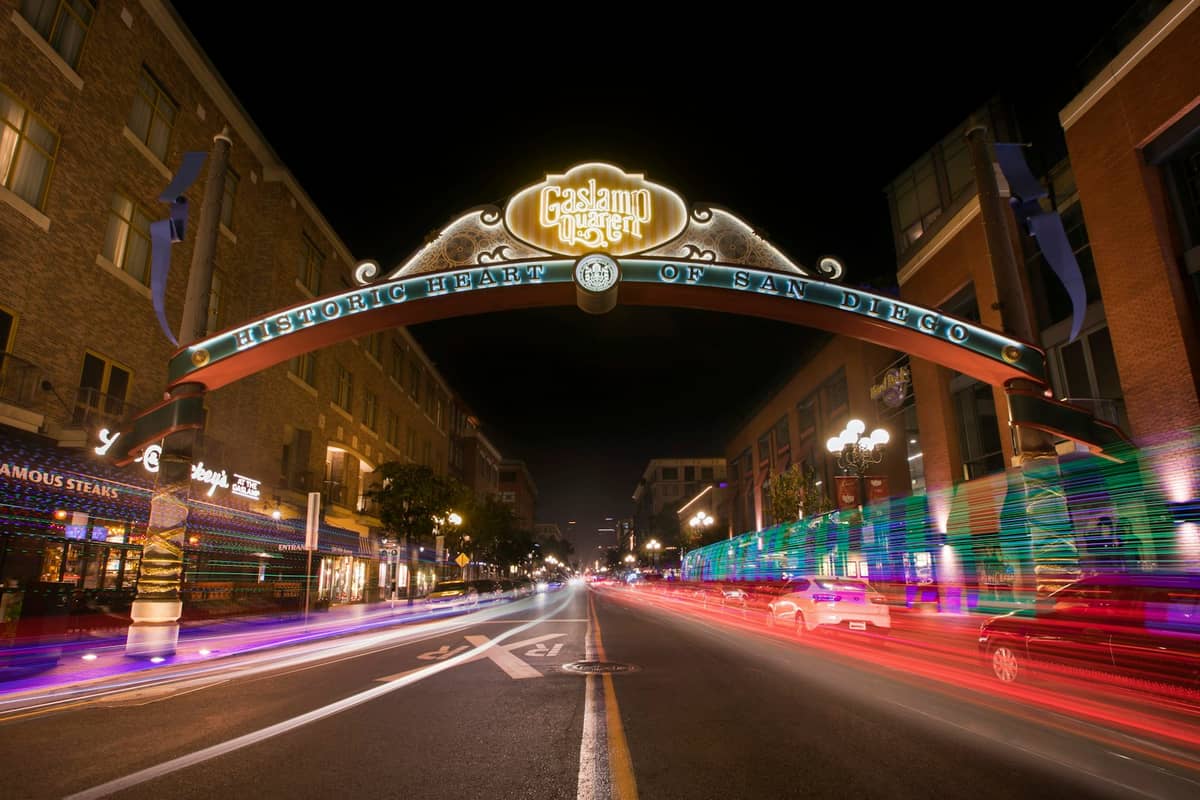
The Gaslamp Quarter Arch at Fifth Avenue and L Street marks the southern end of the district and makes a logical turning point for any walking tour. From there, Harbor Drive and the waterfront are a short walk south, leading to the USS Midway Museum and the broader Embarcadero, San Diego's working waterfront. The Maritime Museum of San Diego is also along this route, accessible on foot in under 20 minutes.
Gaslamp Museum at the William Heath Davis House (410 Island Avenue): oldest downtown structure, walk-through history of the district
Balboa Theatre (Fourth Avenue): 1924 historic venue, check current programming
Louis Bank of Commerce (Fifth Ave at F Street): standout 1888 Baroque Revival architecture
Gaslamp Quarter Arch (Fifth Ave at L Street): the southern landmark and gateway toward Harbor Drive and the waterfront
Self-guided walking tour of the 16-block historic district: pick up a map at the Gaslamp Museum
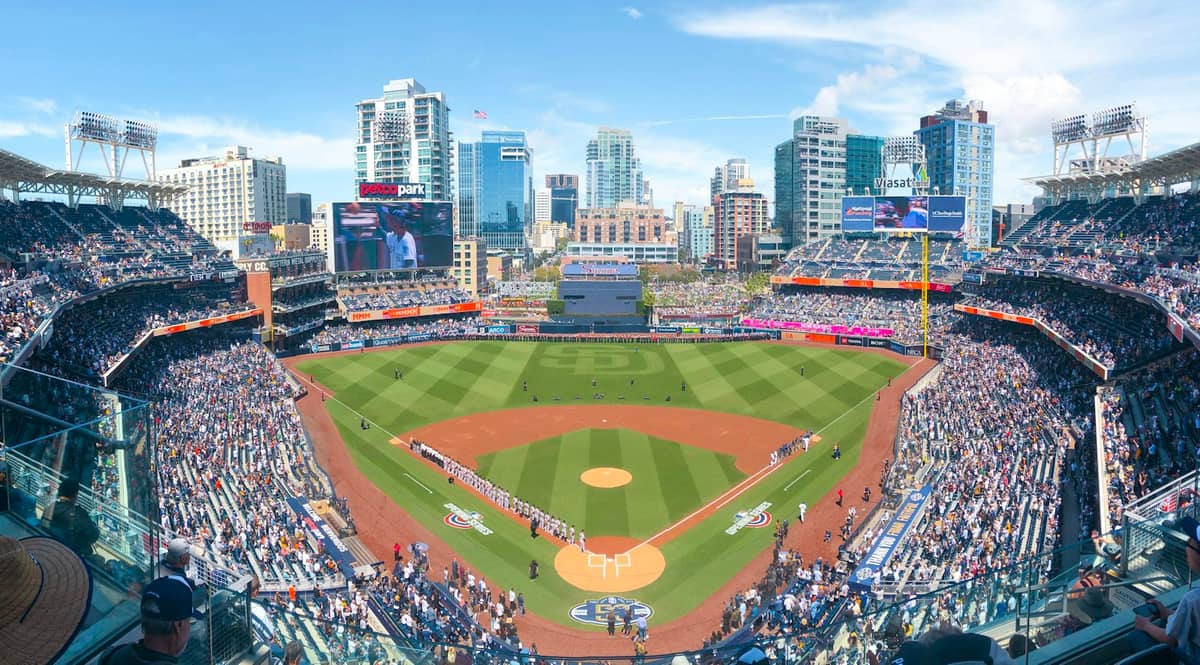
Petco Park (just northeast of the district): home of the San Diego Padres, worth attending a game if the schedule aligns
Petco Park sits just northeast of the Gaslamp Quarter boundary on Park Boulevard, and on game nights the energy spills directly into the neighborhood. If you're interested in the broader range of San Diego attractions, the things to do in San Diego guide covers options across the full city.
💡 Local tip
The Gaslamp Museum at the William Heath Davis House offers guided walking tours of the historic district on selected days. These tours cover architectural history and the neighborhood's rougher 19th-century past in detail that a solo walk won't give you. Check the museum's current schedule before your visit.
Eating & Drinking
The Gaslamp Quarter has more than 100 restaurants within its 16 blocks, which means the range of quality and price is enormous. At the top end, several well-regarded steakhouses and seafood restaurants occupy the ground floors of historic buildings, with menus priced accordingly. At the lower end, you'll find casual spots, sports bars with pub menus, and international quick-service options on the side streets. The challenge isn't finding somewhere to eat; it's filtering out the tourist-oriented, high-volume spots from places that put genuine effort into their food.
Fifth Avenue has the densest concentration of restaurants, particularly between Market Street and J Street. The blocks closer to Broadway tend toward more casual dining and bars. Side streets, especially along Island Avenue and the blocks east toward Sixth Avenue, occasionally have options that draw more of a local crowd and carry slightly less street-front markup. For lunch, the district is competitive on price; dinner on weekends can run expensive, especially at the waterfront-adjacent spots near Harbor Drive.
San Diego's food culture is strongly defined by fresh seafood and fish tacos, and the Gaslamp Quarter has no shortage of either. For a deeper look at what to order across the city, the San Diego fish tacos guide is a practical starting point. Craft beer is equally central to the local food scene; the craft beer guide for San Diego covers both the Gaslamp Quarter options and the broader taproom scene in neighborhoods like North Park.
The bar scene in the Gaslamp Quarter is extensive and skews toward high-volume nightlife venues rather than quiet cocktail bars. Rooftop bars have become increasingly common in the district, offering views over the Victorian rooflines toward the bay. These are popular at golden hour and fill up quickly after 8 p.m. on weekends. Wine bars and quieter cocktail spots exist but require more searching; they tend to be on the eastern and western edges of the district, away from the main Fifth Avenue corridor.
Getting There & Around
The Gaslamp Quarter is one of the most accessible neighborhoods in San Diego for visitors arriving without a car. The San Diego Trolley serves the district directly, with the Gaslamp Quarter station at Harbor Drive near Fifth Avenue (on the Green Line, plus limited Silver Line service) placing riders at the southern gateway of the neighborhood. From downtown's Santa Fe Depot, where Amtrak and the COASTER commuter rail arrive, it's a short trolley ride or a walkable 15 minutes on foot along Broadway and then south on Fifth Avenue.
San Diego International Airport (SAN) is approximately 3 miles northwest of the Gaslamp Quarter. The MTS bus route 992 connects the airport to downtown; rideshare services (Uber and Lyft) are readily available at the airport and typically reach the Gaslamp Quarter in 10 to 15 minutes depending on traffic. Taxis are also available from designated stands. Verify current fares and schedules directly with MTS or the airport's ground transportation information, as these change periodically.
Within the Gaslamp Quarter itself, walking is the only sensible way to navigate. The district is compact enough that every block is reachable on foot. For connections to the rest of San Diego, the trolley is the most useful tool: Blue Line service runs northwest toward Old Town and then on toward UTC and UC San Diego; Green Line service runs through Mission Valley toward SDSU and Santee. Orange Line service runs east toward El Cajon. For a full picture of transit options across the city, the getting around San Diego guide covers trolley, bus, rideshare, and driving logistics in detail.
ℹ️ Good to know
Driving into the Gaslamp Quarter on weekend evenings is strongly inadvisable. Parking garages fill quickly after 7 p.m., street parking is minimal, and the combination of pedestrian traffic and late-night bar activity makes navigation slow and frustrating. Use the trolley or rideshare if you're coming from elsewhere in the city.
Where to Stay
The Gaslamp Quarter has a solid stock of hotels ranging from major chain properties to boutique options housed in converted historic buildings. Staying in the district makes sense for travelers who want walkable access to restaurants, nightlife, and the waterfront, and who plan to use transit or rideshare rather than a car. The Convention Center proximity also makes it the obvious choice during major events, though room rates rise sharply during Comic-Con, large trade shows, and Padres playoff runs.
The best-positioned hotels for nightlife-free sleep are those on the northern blocks of the district, closer to Broadway, or on the western fringe along Fourth Avenue. The middle section of Fifth Avenue, between Market and J Street, is where the noise is highest on weekend nights. Travelers who are light sleepers, traveling with young children, or looking for a romantic and quiet base would likely find neighborhoods like Little Italy or the Embarcadero waterfront hotels more comfortable, with easy trolley access back to the Gaslamp Quarter for evenings out.
For a full comparison of where to stay across San Diego's neighborhoods, including pricing tiers and neighborhood suitability by traveler type, the where to stay in San Diego guide is the most useful starting resource.
Practical Notes
The Gaslamp Quarter is a busy entertainment district, and the safety considerations that apply to any city's nightlife zone apply here. The main blocks are well-lit and have high pedestrian traffic most nights of the week, which provides a reasonable baseline of safety. Standard urban precautions apply: keep your belongings secured on crowded sidewalks, use licensed rideshare or taxis rather than accepting informal rides, and stick to the main streets if you're unfamiliar with the area after midnight.
The Gaslamp Quarter is in Pacific Standard Time (PST, UTC-8) in winter and Pacific Daylight Time (PDT, UTC-7) during daylight saving months. U.S. emergency services are reached at 911. Tap water in San Diego meets federal drinking water standards and is safe to drink. Tipping in restaurants typically runs 18 to 20 percent of the pre-tax bill for table service; verify current norms locally, as expectations have shifted upward in recent years.
The neighborhood is at its most interesting to explore during September and October, when San Diego's Mediterranean climate delivers warm days (around 70 to 76°F) with minimal chance of rain, and the summer convention crowds have thinned. For timing your visit across the full city, the best time to visit San Diego guide breaks down the seasonal trade-offs in detail.
TL;DR
The Gaslamp Quarter is San Diego's primary historic entertainment district: 16 blocks of Victorian commercial architecture, over 100 restaurants, and dense nightlife between Broadway and Harbor Drive.
Best suited to travelers who want walkable access to downtown dining and nightlife, proximity to the Convention Center, and easy trolley connections to the rest of the city.
The noise level on weekend nights is significant, especially along Fifth Avenue's mid-district blocks. Not recommended as a quiet base for families with young children or light sleepers.
Daytime visitors get the best of the district: architectural walking tours, the Gaslamp Museum, the Balboa Theatre, and easy access to the waterfront and USS Midway Museum on foot.
No car needed: the San Diego Trolley stops at Gaslamp Quarter station near Harbor Drive and the Arch, and the airport is under 20 minutes by rideshare.
Three days is enough to hit San Diego's best neighborhoods, beaches, and cultural landmarks without feeling rushed. This itinerary is built around logical geography, real logistics, and practical notes on what's worth your time and money.
San Diego County's coastline stretches for roughly 70 miles, offering everything from calm family-friendly coves to dramatic cliff-backed surf breaks. This guide covers the best beaches by type, with practical details on what to expect at each one.
San Diego's Mediterranean climate means hiking is possible year-round, and the range of terrain is remarkable. Coastal bluffs, chaparral canyons, pine-forested ridges, and Sonoran Desert all sit within an hour or two of downtown. These are the trails worth lacing up for.
San Diego punches well above its weight as a museum city. Balboa Park alone holds more than a dozen institutions, while the Embarcadero and La Jolla add world-class maritime and ocean science destinations. This guide covers the top 18 museums worth your time and money.
San Diego's Mediterranean climate means it's genuinely good to visit any time of year, but the right season depends on what you want to do. This guide breaks down weather patterns, crowd levels, and key events for every month so you can pick the trip that actually fits your goals.
San Diego rewards those who look up, out, and across. From the windswept cliffs of Point Loma to La Jolla's hilltop memorial, these are the city's finest viewpoints, with panoramas spanning the Pacific, San Diego Bay, and the mountains beyond.
San Diego Comic-Con is one of the largest pop culture conventions in the world, drawing over 130,000 attendees to downtown San Diego each July. This guide covers badge access, hotel booking strategy, transportation logistics, and how to make the most of the event even without a badge.
San Diego has more craft breweries per capita than almost any other American city, with taprooms spread across North Park, Miramar, Little Italy, and beyond. This guide breaks down the best neighborhoods, standout breweries, guided tour options, and practical tips to help you drink well without wasting a trip.
San Diego sits at one of the most geographically rich crossroads in North America. Within a few hours you can reach a Mexican border city, a desert national park, a mountain apple-farming town, and downtown Los Angeles. This guide covers the best day trips from San Diego with real logistics and no filler.
San Diego's finest pleasures often cost nothing at all. This guide covers the best free beaches, parks, public art, viewpoints, and cultural experiences across the city, with practical tips on when to go and what to expect.
San Diego spans over 325 square miles of coastline, canyons, and urban neighborhoods, and getting around efficiently requires knowing which transport options actually work for visitors. This guide covers everything from airport arrivals and MTS trolley fares to driving realities, rideshare logistics, and neighborhood-by-neighborhood navigation.
San Diego offers a dense cluster of amusement park options for a coastal city in the U.S. This guide breaks down every major park, with real pricing, crowd patterns, and a clear take on who each park suits best.
The San Diego County Fair is one of California's largest annual events, drawing millions of visitors to the Del Mar Fairgrounds each summer. This guide covers 2026 dates, hours, parking, ticketing, crowd strategy, and what to actually eat and do once you're inside.
San Diego has a legitimate claim to the fish taco's North American popularization, and the scene in 2026 is more varied than ever. This guide breaks down where to eat, what to order, how much to pay, and which spots are actually worth the line.
San Diego's Mediterranean climate, dramatic coastline, and world-class dining make it one of California's top destinations for couples. This guide covers the most romantic experiences in the city, from free sunset walks to splurge-worthy dinner cruises, with practical notes on what's worth your time.
San Diego offers year-round golf across a wide range of public, municipal, and resort courses, headlined by the world-famous Torrey Pines. This guide covers the best courses by budget and skill level, 2026 green fee breakdowns, booking strategies, and seasonal advice to help you plan the right round.
San Diego rewards the curious. Beyond the zoo and the beaches, the city holds a swaying 1912 suspension bridge, a sea cave you reach by climbing down a hand-carved staircase, and a mural park that doubles as a National Historic Landmark. This guide covers the spots that most visitors never find.
Summer in San Diego means warm, dry coastal days, packed beaches, and a full calendar of events. But the season has quirks that catch visitors off guard. This guide covers the weather reality, top activities, crowd patterns, and logistics so you can make the most of your trip.
San Diego in winter is genuinely underrated. Daytime highs hover in the mid-60s°F, hotel rates drop significantly from summer peaks, and January kicks off some of the best whale watching on the West Coast. This guide covers the weather realities, best activities, and what to skip during the off-season.
San Diego's after-dark scene runs deeper than most visitors expect. This guide breaks down the best bars, nightclubs, rooftop lounges, live music venues, and neighborhood nightlife across the city, with practical details on hours, prices, and how to get around.
San Diego has a reputation as an expensive coastal city, but it rewards travelers who know where to look. From always-free beaches and rotating museum days to smart transit choices and shoulder-season savings, this guide covers every practical angle for keeping costs down without missing the best the city has to offer.
San Diego resorts range from iconic oceanfront landmarks to secluded inland spa estates. This guide breaks down the top properties by location and type, explains seasonal pricing, and warns you about resort fees and common booking misconceptions before you commit.
The San Diego to Las Vegas route is one of Southern California's most popular road trips, but driving isn't always the best choice. This guide breaks down every realistic option, from the 5-hour I-15 drive to sub-90-minute flights, with a clear take on cost, convenience, and when each mode makes sense.
The distance from San Diego to San Francisco is about 500 miles via I-5, and how you cover it makes a big difference to your trip. This guide breaks down every realistic option: nonstop flights under two hours, a full-day drive with serious scenic potential, and a leisurely Amtrak journey for those who want to watch California roll by.
San Diego rewards walkers like few other American cities. From Balboa Park's museum corridor to Old Town's adobe ruins and La Jolla's coastal bluffs, these self-guided walking tours cover the city's most compelling neighborhoods with practical route advice, timing tips, and a clear take on what's worth your time.
San Diego's 70 miles of coastline and year-round mild climate make it one of the best places in the country for water sports. This guide covers the best surf breaks, snorkeling spots, kayak launch points, and rental prices so you can get in the water without the guesswork.
Two days in San Diego can cover a surprising amount of ground — beaches, world-class museums, historic neighborhoods, and some of the best tacos in California. This itinerary cuts through the noise with specific timing, current prices, and honest takes on what's worth your time.
San Diego is one of the most family-friendly cities in the United States, with world-class zoos, beach-side parks, hands-on museums, and a climate that cooperates nearly year-round. This guide covers the best things to do in San Diego for kids, honest ticket prices, the smartest times to visit, and practical logistics to help you spend less time planning and more time enjoying it.
Two world-class wildlife parks, one city, and a decision that trips up thousands of visitors every year. This guide breaks down the real differences between the San Diego Zoo and the San Diego Zoo Safari Park — location, animals, experience, tickets, and which one is worth your time based on who you're traveling with.
Sesame Place San Diego is Southern California's only Sesame Street-themed park, combining rides and water attractions in Chula Vista. This guide covers pricing, seasonal schedules, crowd tips, and how it stacks up against other San Diego family attractions so you can decide whether it belongs on your itinerary.
San Diego's shopping scene spans polished coastal malls, historic waterfront villages, and eclectic neighborhood streets worth exploring on foot. This guide breaks down where to shop, what to expect, and what to skip — with parking details, seasonal hours, and neighborhood-by-neighborhood advice.
San Diego packs an extraordinary range of experiences into one city: world-class museums, wild coastline, historic neighborhoods, and a craft beer scene that rivals anywhere in the country. This guide cuts through the noise to tell you what's genuinely worth your time, what to avoid, and how to plan your visit season by season.
San Diego sits just 20 miles from one of the world's busiest international borders, making Tijuana an obvious day trip. This guide covers exactly how to get there, how long it takes, what to expect at the crossings, and how to make the most of your time on both sides of the border.
San Diego offers year-round whale watching with distinct seasons for gray and blue whales. This guide breaks down exactly when to go, which tours are worth the money, what sightings actually look like by month, and how to watch whales for free from shore.
San Diego's food identity runs deeper than tourists expect. Border-influenced Mexican cooking, Pacific seafood, a serious craft beer scene, and year-round farmers' markets combine into something genuinely distinctive. This guide covers the essential dishes, the best neighborhoods to eat in, and the practical details that help you eat well without wasting a meal.
San Diego spreads across a large coastal geography, and where you base yourself shapes your entire trip. This guide breaks down the best neighborhoods to stay in San Diego, with honest price ranges, transit access, and who each area actually suits.