USS Midway Museum: What It's Really Like to Tour an Aircraft Carrier
The USS Midway Museum puts visitors aboard one of the longest-serving aircraft carriers in U.S. Navy history, docked on San Diego's downtown waterfront. From flight deck aircraft to cramped crew quarters, the scale of this ship is difficult to grasp until you're standing on it.
Quick Facts
- Location
- 910 N Harbor Drive, San Diego, CA 92101 — Navy Pier, Embarcadero
- Getting There
- MTS bus routes along Harbor Drive; walkable from Santa Fe Depot and downtown trolley stops
- Time Needed
- 2.5 to 4 hours for a thorough visit; half a day if you do the audio tour fully
- Cost
- Adults ~$39–$41 USD; Youth (4–12) ~$29–$31; Veterans ~$26; Active-duty military and children under 3 free. Buy online for slight discount. Verify current prices at midway.org.
- Best for
- Military history enthusiasts, families with school-age kids, aviation fans, anyone curious about life at sea
- Official website
- www.midway.org
What the USS Midway Museum Actually Is
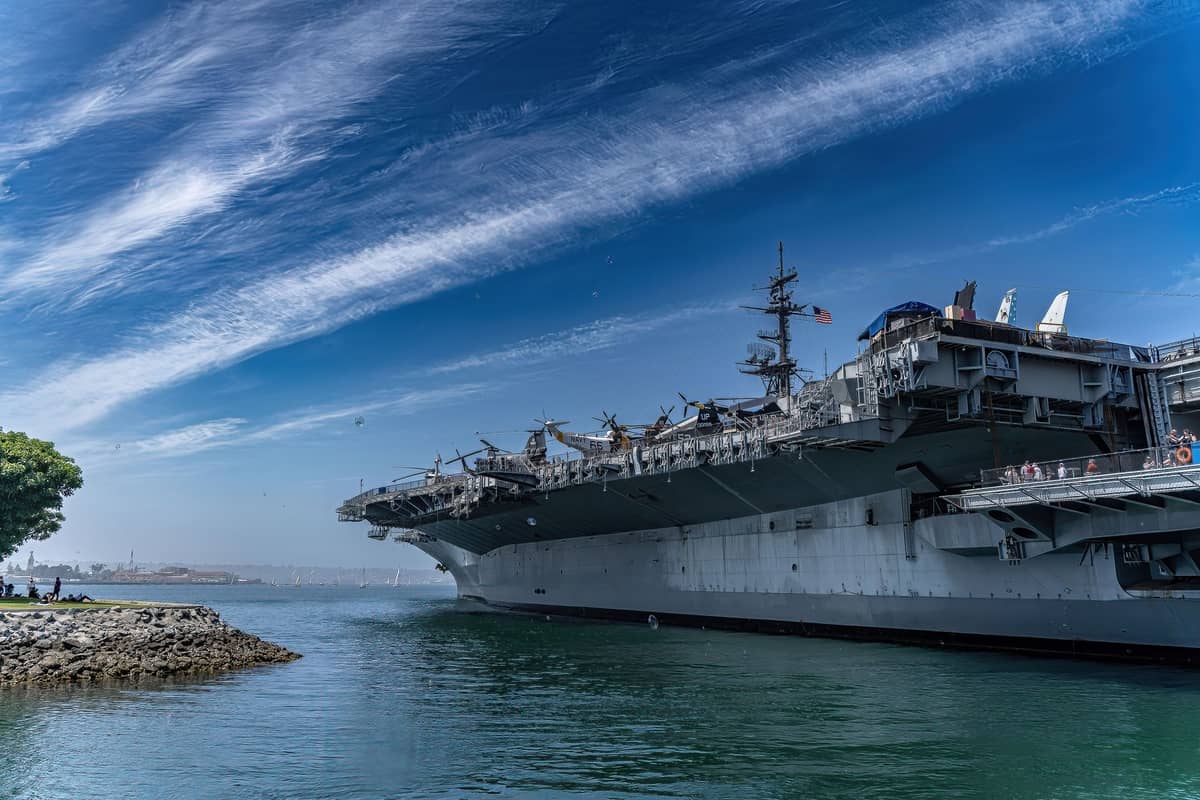
The USS Midway Museum is a permanently berthed aircraft carrier converted into one of the most-visited naval museums in the United States. The ship, USS Midway (CV-41), was commissioned in September 1945, making it the largest ship in the world at the time of its commissioning. It served for 47 years through the Cold War, the Vietnam War, and Operation Desert Storm before being decommissioned in 1992. Since opening as a museum in 2004, it has sat at Navy Pier on San Diego's downtown Embarcadero, accessible to anyone willing to pay the admission fee and climb aboard.
This is not a replica or a reconstruction. You walk the actual flight deck, descend into the actual engine spaces, and sit in a cockpit that once launched off a real carrier deck. The scale is what catches most people off guard. From the pier, the ship looks large. Once you're on the flight deck, looking out across the bay toward Coronado with aircraft arranged around you, the full dimensions become real in a way no photograph quite conveys.
💡 Local tip
Buy tickets online at midway.org before you arrive. Online prices run a few dollars lower than gate prices, and you skip the ticket queue, which can stretch on weekends and summer mornings.
The Ship Itself: Scale, Smell, and Sensation
Stepping through the entry hatch from the gangplank puts you onto the hangar deck, a cavernous enclosed space where aircraft are displayed at close range. The lighting is industrial, the ceiling is low relative to the room's width, and the smell is a faint mix of metal, oil, and climate-controlled air. Aircraft here include attack jets, helicopters, and trainers, many of which visitors can climb into via cockpit simulators or simply walk around at arm's length.
From the hangar deck, the audio tour (included with admission and available in multiple languages) guides you through a self-paced route. The path branches frequently, letting you follow the audio guide's suggested sequence or wander independently. Crew quarters, the captain's cabin, the brig, the barber shop, the post office: each space is small, utilitarian, and carefully interpreted with placards that explain its function without over-dramatizing it.
The flight deck is reached via elevator or stairway and delivers the most visually striking part of the visit. On a clear San Diego day, which describes most days here, the expanse of the flight deck with the downtown skyline behind you and San Diego Bay stretching south is genuinely arresting. Roughly 29 aircraft are displayed on the flight deck in various configurations, including a restored F-14 Tomcat, an A-6 Intruder, and several other Cold War-era aircraft. Placards and audio stops explain each one with enough detail to satisfy aviation enthusiasts without overwhelming general visitors.
⚠️ What to skip
If you or anyone in your group has mobility limitations, note that approximately 60% of exhibits are wheelchair accessible. Elevators connect the main decks, but areas like the engine room and the island (bridge structure) require steep, narrow naval ladders. Video kiosks outside inaccessible spaces provide overviews of what's inside. Check midway.org/visit/accessibility before visiting.
Historical Context: Why This Ship Matters
CV-41 holds a specific place in naval history that makes it more than just a large ship to walk around. Commissioned just days after World War II ended, the Midway was designed for a war that was already over, yet it became one of the most active carriers of the Cold War era. Its design was progressively updated over the decades, including an angled flight deck and enclosed hurricane bow, transforming it from a straight-deck World War II carrier into a modern angled-deck carrier. These modifications are visible in the ship's structure and are explained in the exhibits.
The museum's exhibits pay particular attention to the ship's role in Operation Desert Storm in 1991, where it served as the flagship of the combined naval force. Personal accounts from crew members are woven throughout the audio tour, grounding the broader history in individual experience. This biographical approach to military history works well for visitors who might otherwise find naval specifications abstract.
The ship's location in San Diego is no coincidence. San Diego has been a major U.S. Navy hub for over a century, and the Embarcadero has long been the visible face of that relationship between the city and its military presence. If you want context for how this fits into the city's wider history, the Maritime Museum of San Diego, just a short walk up the waterfront, covers the broader arc of San Diego's seafaring past, from sailing ships to submarines.
When to Visit and How Crowds Behave
The museum is open daily from 10:00 a.m. to 5:00 p.m., with last admission at 4:00 p.m. It is closed on Thanksgiving Day and Christmas Day. Verify current hours at midway.org before your visit, as hours occasionally shift around holidays and special events.
Mornings on weekdays between September and May represent the most comfortable visiting conditions. By 10:15 a.m. on a Tuesday in October, the hangar deck is quiet enough to read every placard in peace, the audio tour feels conversational rather than rushed, and the flight deck is almost empty. Contrast this with a Saturday in July, when school groups and summer tourists pack the narrower passageways and cockpit simulators have queues.
Summer is San Diego's peak tourist season, and the Midway feels it. If July or August is your only option, arrive right at 10:00 a.m. and start with the flight deck before it fills. The hangar deck gets crowded by mid-morning regardless of season, partly because the cockpit experiences are concentrated there.
ℹ️ Good to know
San Diego's coastal climate means outdoor deck time is comfortable in most months. Summer mornings can start with low coastal clouds (locally called 'June Gloom,' which persists well into July), clearing by midday. For photography of the flight deck with blue sky, plan to arrive after 11:00 a.m. during summer months.
Getting There and Getting Around
The museum is at 910 N Harbor Drive on the downtown Embarcadero, accessible on foot from most of downtown San Diego in under 15 minutes. From the Gaslamp Quarter or the Convention Center area, Harbor Drive is a straightforward walk along the waterfront. MTS bus routes serve the Harbor Drive corridor, and the Santa Fe Depot Amtrak and trolley station is roughly a 10-minute walk northeast of the ship.
Paid parking is available in lots adjacent to the museum, though rates in the Embarcadero area are not low. A better strategy is to park in the broader downtown area or use public transit. The guide to getting around San Diego covers transit options in detail, including MTS day pass pricing, which can make a waterfront visit more economical.
The ship's interior involves a significant amount of walking and stair climbing, even on accessible routes. Wear flat, closed-toe shoes with grip. The ship's metal deck surfaces can be slippery, particularly on the hangar deck, and the narrow passageways require some lateral maneuvering. Larger backpacks can be cumbersome in tighter spaces.
Photography, Cockpits, and What Kids Actually Enjoy
The flight deck offers the most photogenic conditions on the ship. Wide-angle lenses or a smartphone camera capture the aircraft arrangements well, with the Coronado Bridge visible to the south and the downtown skyline to the east. The island (the bridge structure rising above the flight deck) creates strong geometric shapes against the sky. Early afternoon light is generally better than morning for flight deck shots given the ship's orientation.
Cockpit simulators on the hangar deck are genuinely popular with children, and the wait times reflect that. Some simulators are motion-based flight simulators that require an additional fee beyond admission. The standard cockpit climb-ins, where visitors sit in a stationary cockpit and manipulate controls, are included with admission. Children who have any interest in aircraft will want to spend significant time in this area; budget accordingly if you're visiting with kids.
For families looking to extend the day, the Embarcadero waterfront connects directly to broader downtown attractions. The Embarcadero itself offers a pleasant walk north or south along the waterfront, with views across San Diego Bay. Families planning a full San Diego trip may also find the guide to San Diego with kids useful for combining the Midway with other family-oriented stops nearby.
Who May Not Enjoy This and What to Manage Expectations About
The USS Midway Museum rewards curiosity. Visitors who approach it with genuine interest in naval history, aviation, or the experience of shipboard life tend to leave satisfied or better. Visitors who are primarily looking for a passive, air-conditioned stroll with minimal reading and engagement often find the visit long and repetitive after the first hour. The museum's strongest quality is depth, not spectacle.
The admission price is not low, and it is worth assessing honestly before purchasing. If naval and aviation history are not interests you or your travel companions share, the money and half-day might serve you better at one of San Diego's other attractions. The museum is not a compromise option for mixed groups: it works best when at least one person in the group is genuinely enthusiastic about what the ship represents.
Visitors primarily focused on San Diego's arts and culture institutions may find the Balboa Park museum cluster a better fit, with options ranging from natural history to contemporary art within a walkable park setting.
Insider Tips
- The audio tour is 60-plus stops long and most visitors complete around half. Prioritize the flight deck, the captain's sea cabin, and the Combat Direction Center if time is limited. These three areas represent the clearest picture of what active service aboard the Midway looked like.
- Active-duty military personnel receive free admission with valid military ID, including active-duty reservists. Confirm current policy at midway.org before visiting, especially for dependents.
- The ship's cafeteria on the hangar deck serves basic food and drinks at typical tourist-attraction prices. Bringing your own water bottle is a better move — the visit involves more walking than most people anticipate, and staying hydrated matters, particularly on warm days when the flight deck collects heat.
- For the clearest bay and skyline views from the flight deck, position yourself on the port (left, facing the bow) side of the ship, where Coronado and the bay open up without obstruction. This side also tends to be less crowded since most visitors cluster near the aircraft displays on the starboard side.
- The museum periodically hosts evening events, including Saturday night concerts and private functions. On those evenings, standard visiting hours may be shortened or the ship may close earlier than usual. Check the events calendar on midway.org if you're planning a late-afternoon visit.
Who Is USS Midway Museum For?
- Military history enthusiasts who want more than a display case — the ship itself is the exhibit
- Families with school-age children interested in aircraft, ships, or how large institutions operate
- Aviation fans who want to inspect Cold War-era aircraft up close and sit in actual cockpits
- Travelers on a longer San Diego itinerary who want contrast with the city's beach and outdoor offerings
- First-time San Diego visitors looking to understand the city's deep and ongoing connection to the U.S. Navy
Nearby Attractions
Other things to see while in Embarcadero & Downtown Waterfront:
- Maritime Museum of San Diego
The Maritime Museum of San Diego is one of the largest collections of historic ships in the United States, moored along the downtown waterfront. From the iron-hulled Star of India to a full-scale replica of a 16th-century galleon, this is hands-on naval history at its most tangible.
- Rady Shell at Jacobs Park
The Rady Shell at Jacobs Park is the San Diego Symphony's permanent open-air home on the downtown waterfront, set against the backdrop of San Diego Bay. Whether you're attending a ticketed concert or simply wandering the public grounds during park hours, this architecturally striking venue delivers one of the most scenic settings in Southern California.
- Waterfront Park
Waterfront Park sits along San Diego's downtown bayfront, offering free access to interactive splash fountains, open event lawns, and sweeping views of San Diego Bay. Anchored by the 1930s County Administration Center, it works equally well as a family outing, a midday break, or a front-row seat for waterfront sunsets.