Museum of Us: Inside Balboa Park's Most Thought-Provoking Museum
Housed beneath one of San Diego's most recognizable skyline landmarks, the Museum of Us transforms anthropology into something genuinely engaging. From ancient civilizations to contemporary questions of identity, this Balboa Park institution makes a strong case for a half-day visit.
Quick Facts
- Location
- 1350 El Prado, Balboa Park, San Diego, CA 92101
- Getting There
- MTS Route 7 and Rapid 215 stop along Park Boulevard near Balboa Park; ride-share drop-off on Park Blvd or El Prado. Street parking is available on adjacent roads, but check posted signs for time limits and restrictions.
- Time Needed
- 2 to 3 hours for the full museum; add 30 minutes if climbing the California Tower
- Cost
- Adults (18+) $19.95 USD; Seniors (62+), military members, students and teachers with ID, and youth (6–17) $16.95 USD. Verify current pricing at museumofus.org before visiting.
- Best for
- Cultural travelers, history enthusiasts, architecture lovers, families with older kids
- Official website
- museumofus.org
What the Museum of Us Actually Is
The Museum of Us occupies one of the most architecturally striking buildings in all of Southern California: the Spanish Colonial Revival landmark at the heart of Balboa Park, capped by the California Tower. Founded during the Panama-California Exposition of 1915 as the San Diego Museum, it spent over a century operating under the name San Diego Museum of Man before formally rebranding as the Museum of Us on August 2, 2020. That name change was not cosmetic. It signaled a deliberate shift in how the institution frames anthropology: less about cataloguing distant cultures in glass cases, more about asking what humans share across time, geography, and difference.
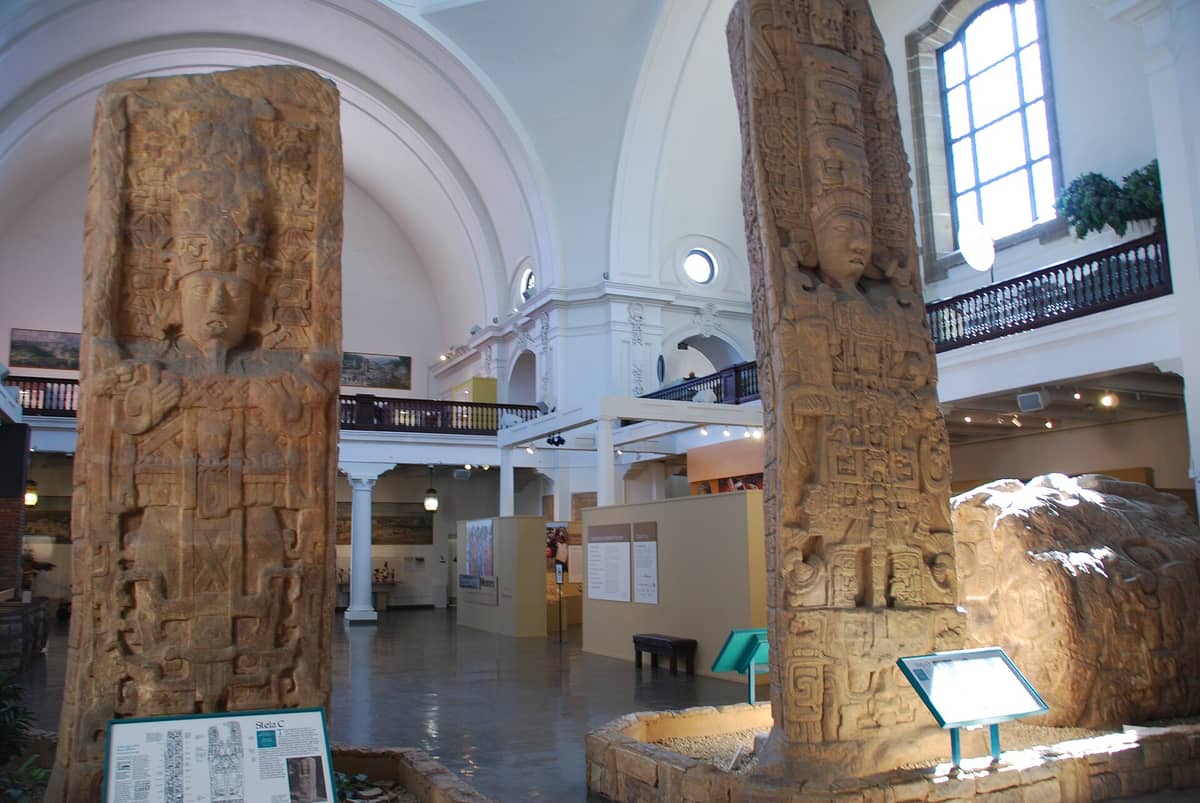
The museum's collection spans ancient Egypt, indigenous Americas, Maya civilization, and human evolution, but the curatorial lens is consistently comparative and humanist. Exhibits tend to ask questions rather than simply present artifacts. That approach makes the museum unusual among peer institutions in San Diego and gives it a character that rewards visitors willing to spend more than a quick walk-through.
ℹ️ Good to know
Open daily 10:00 a.m. to 5:00 p.m., except select closure dates. Check museumofus.org/your-visit before you go for any holiday or special-event closures.
The Building: Architecture Worth Stopping For
Before you walk through the entrance, pause on El Prado and look up. The California Tower rises about 198 feet above the plaza and is ornamented with Spanish Baroque and Churrigueresque detailing: ceramic tile domes, carved stone reliefs, and a belfry visible from much of the park. The facade along El Prado uses richly molded plasterwork and arched colonnades that glow a warm ochre in the afternoon light. It was designed by Bertram Goodhue for the 1915 Exposition and is now a California Historical Landmark.
The California Tower itself is open for timed tours, which involve climbing a narrow interior staircase. The reward at the top is a panoramic view over Balboa Park's tree canopy, downtown San Diego, and on clear days, a sliver of the Pacific. Note that the tower is not ADA-accessible and requires sustained stair climbing. Tower access is separate from general admission, and tour slots are limited, so check availability when you buy your ticket.
If the architecture interests you on its own terms, the surrounding area of Balboa Park contains a concentration of Spanish Colonial Revival structures from the same 1915 Exposition, making it one of the best-preserved examples of that architectural style in the United States. The Balboa Park Botanical Building and the Spanish Village Art Center are within easy walking distance.
Navigating the Exhibits
The museum is organized across multiple galleries on interconnected floors, and the layout can feel slightly labyrinthine on a first visit. Pick up a floor map at the front desk. The permanent collection highlights include exhibits on ancient Egypt, with original mummies and funerary artifacts; a Maya gallery covering the archaeology and living culture of Mesoamerican peoples; and displays on human evolution that are accessible enough for teenagers but substantive enough to hold adult attention.
Rotating temporary exhibits occupy a significant portion of the floor space, and these are often where the museum takes its most ambitious swings. Past exhibitions have addressed beer's social history, the science of race, and the experience of incarceration. These temporary shows change the character of a repeat visit considerably, so it is worth checking the current lineup at museumofus.org before you go.
The galleries are generally quiet and climate-controlled, which makes the museum a genuinely good option on unusually warm San Diego days or during the June marine layer period when coastal fog keeps morning temperatures cool and grey. Families with children under ten may find the exhibit text dense, but there are interactive elements throughout that give younger visitors something to do with their hands.
💡 Local tip
Start with the upper floors and work your way down. The upper galleries are quieter earlier in the day, and the ground-floor gift shop naturally draws crowds as the afternoon progresses.
When to Visit: Timing and Crowds
Weekday mornings between 10:00 a.m. and noon are the quietest window. The museum sits inside Balboa Park, which draws school groups particularly from September through May. If you arrive on a weekday and see school buses in the parking areas along Park Boulevard, expect more foot traffic inside, especially in the ground-floor galleries and near the interactive displays.
Weekend afternoons, particularly from 1:00 p.m. onward, bring the highest visitor density. The El Prado corridor outside fills with families moving between the cluster of Balboa Park museums, and the Museum of Us entrance queue, while rarely long, can slow entry slightly. Saturday mornings strike a reasonable balance between convenience and crowd levels.
Weather has minimal effect on the indoor experience, but it shapes how you combine this museum with other Balboa Park stops. On overcast mornings, which are common June through August along the San Diego coast, the soft light is actually ideal for photographing the building's facade without harsh shadows. On Santa Ana wind days in autumn, when temperatures can push into the mid-80s, the air-conditioned galleries feel particularly welcome.
Getting There and Practical Logistics
The museum's address is 1350 El Prado, San Diego, CA 92101. MTS Bus Route 7 connects downtown San Diego to Balboa Park along Park Boulevard; from the stop, the walk to the museum entrance on El Prado takes about ten minutes. If you are using a ride-share service, ask to be dropped on El Prado or Laurel Street rather than the park's interior roads. For a broader look at getting around the city, the getting around San Diego guide covers MTS routes and transit passes in detail.
Street parking exists along Sixth Avenue and Laurel Street, and there are free lots along Pan American Road East inside the park. On weekends, these fill by mid-morning. Additional free parking in the Inspiration Point lot off Presidents Way, with a shuttle connection, is a practical backup.
On accessibility: the main entrance, classroom, and East Door are ADA-accessible via ramp, and Evernham Hall is reachable by ramp. Wheelchairs are available at no charge. The California Tower tour, however, requires stair climbing and is not wheelchair accessible. Visitors with mobility limitations should factor this in when deciding whether to add a tower tour to their ticket.
⚠️ What to skip
The California Tower tour involves narrow staircases and is not ADA-accessible. If mobility is a concern, skip the tower but note that the main museum galleries are fully accessible.
How It Fits Into a Balboa Park Day
The Museum of Us is one of more than a dozen museums clustered in Balboa Park, and most visitors combine it with at least one other stop. The San Diego Museum of Art is directly across El Prado, making it an obvious pairing for a full cultural day. The San Diego Natural History Museum is a short walk east and appeals to overlapping audiences interested in science and deep history.
If you are spending a full day in the park, budget roughly two to three hours for the Museum of Us including tower time, then use the midday hours at the nearby Spanish Village Art Center or the Botanical Building before returning to another museum in the afternoon. The park's free outdoor spaces provide good transition time between paid venues.
Travelers planning their broader San Diego itinerary around cultural attractions will find the best museums in San Diego guide useful for deciding how to prioritize the park's offerings across multiple days.
Who Will Get the Most Out of This Museum
Visitors with a genuine interest in anthropology, archaeology, or world cultures will find the museum rewarding and unhurried. The collection is substantial enough for specialists without being inaccessible to curious generalists. Travelers who approach museums as tick-box exercises, or who prefer strictly visual or interactive experiences, may find the text-heavy exhibit format less engaging.
Families with children under eight should know that this is not a primarily hands-on environment. There are interactive elements, but the museum's strengths lie in narrative and artifact depth rather than sensory play. Older children and teenagers, particularly those with school-level interest in history or social studies, tend to engage well.
Solo travelers and couples who value quiet, unhurried exploration will find the Museum of Us one of the more comfortable Balboa Park options. The galleries rarely feel congested outside peak weekend hours, and the pace naturally slows to match the material.
Insider Tips
- Buy tickets online in advance if you want the California Tower tour. Tower slots are timed and capped, and they do sell out on busy weekend mornings before walk-up visitors arrive.
- The museum's second-floor windows overlook the El Prado courtyard. If you want to photograph the California Tower facade from an elevated angle without going into the tower itself, these interior windows offer an underused vantage point.
- The gift shop stocks a better-than-average selection of books on anthropology, indigenous art, and Mesoamerican history. If you are a reader, give it ten minutes at the end of your visit.
- The Balboa Park Explorer Pass covers the Museum of Us alongside several other park museums. If you plan to visit three or more paid museums in the park over one or two days, the pass is worth calculating against individual admission totals.
- On weekday afternoons around 2:00 to 3:00 p.m., school group visits typically wind down and the museum empties noticeably. This window offers some of the quietest gallery time of any weekday.
Who Is Museum of Us For?
- Cultural travelers who want depth beyond surface-level artifact displays
- Architecture enthusiasts drawn to the 1915 California Tower and Spanish Colonial Revival buildings
- Families with school-age children who have some background in history or social studies
- Solo visitors who prefer a slow, contemplative museum pace
- Anyone combining multiple Balboa Park museums in a single day
Nearby Attractions
Other things to see while in Balboa Park:
- Botanical Building and Lily Pond
Built for the 1915 Panama-California Exposition, the Botanical Building and Lily Pond is one of Balboa Park's most photographed landmarks and one of San Diego's few genuinely free indoor plant experiences. The structure, historically billed as one of the largest wood lath buildings in the world, shelters over 2,100 plant varieties beneath a domed roof that filters light into something close to dusk at midday.
- Comic-Con Museum
Opened in November 2021, the Comic-Con Museum brings the legendary San Diego convention to life year-round in Balboa Park. Rotating exhibitions, interactive experiences, and deep dives into comics, film, and sci-fi make it a serious destination for pop culture fans, not just Comic-Con regulars.
- Fleet Science Center
The Fleet Science Center anchors the eastern edge of Balboa Park's museum row with interactive science exhibits, a giant-dome theater, and monthly planetarium evenings. It draws curious visitors of all ages, from toddlers tackling discovery stations to adults catching an IMAX-style documentary under a five-story screen.
- Japanese Friendship Garden
Tucked into about 12 acres of Balboa Park, the Japanese Friendship Garden & Museum is San Diego's dedicated space for Japanese landscape design, cultural art, and quiet reflection. Symbolizing the bond between San Diego and its sister city Yokohama, the garden rewards visitors with stone lanterns, koi ponds, a centuries-old bronze Kannon statue, and rotating museum exhibitions.