The West End is Vancouver's most densely populated downtown neighbourhood, a place where high-rise residential towers and heritage homes share tree-lined streets between Stanley Park and the central business district. It is the city's LGBTQ+ heartland, a beach neighbourhood, and a practical base for exploring all of Vancouver.
The West End sits at the western tip of Vancouver's downtown peninsula, where the grid of residential streets gives way to English Bay beach on one side and the forest edge of Stanley Park on the other. It is one of Canada's most densely populated urban neighbourhoods, yet it never feels claustrophobic: the water is always close, the trees are never far, and the pace of life on streets like Davie and Denman runs at a distinctly relaxed register compared to the financial core just a few blocks east.
Orientation
The West End occupies the western half of Vancouver's downtown peninsula. Its official boundaries run west of Burrard Street, east of Lost Lagoon, and south of West Georgia Street, though most visitors experience it as the neighbourhood that fills the space between downtown's office towers and the trees of Stanley Park. The Burrard Street corridor is the clearest dividing line: cross it heading west and the office buildings give way almost immediately to apartment towers, small grocers, and cafés at street level.
The neighbourhood's internal geography is straightforward. Robson Street runs east-west through the northern portion, connecting downtown shopping to the park entrance. Denman Street runs north-south along the western edge and is the commercial spine closest to English Bay. Davie Street cuts diagonally through the southern half, linking the beach to the Burrard Bridge. Each of these streets has a distinct character, and together they define the three overlapping worlds that make up the West End: the park-and-beach fringe, the Davie Village social scene, and the quieter residential blocks in between.
To the north and west, Stanley Park forms a natural boundary that is also one of the neighbourhood's greatest assets. West Georgia Street leads directly into the park, and the park's southern edge connects to the Stanley Park Seawall, which curves around to English Bay Beach and eventually Sunset Beach, forming an almost complete waterfront loop. To the east, the Burrard and Vancouver City Centre SkyTrain stations are a short walk away, making the rest of the city readily accessible.
Character and Atmosphere
The West End has a quality rare in North American cities: it is a genuinely mixed urban neighbourhood that has been dense for decades without feeling like a development project. The towers here are not new, and the side streets between them retain mature trees, modest gardens, and the occasional Victorian-era house that survived twentieth-century redevelopment. Alexandra Park, Morton Park, and a string of smaller green spaces punctuate the grid and give residents somewhere to sit that is not a beach or a forest.
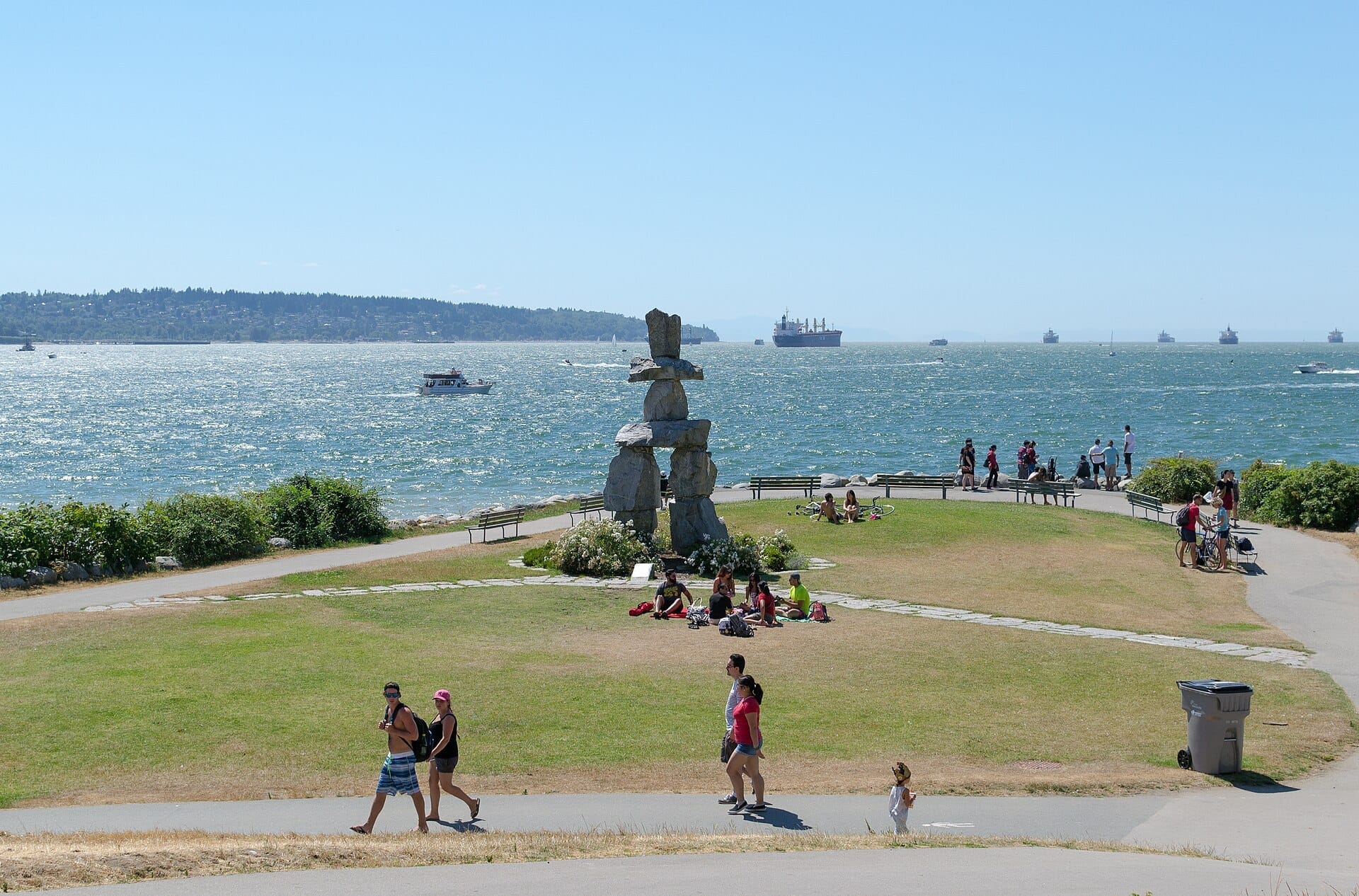
In the early morning, the neighbourhood belongs to its residents. Dog walkers move along the seawall before the tourists arrive. The coffee shops on Denman fill with people in running gear. The light is soft and low off English Bay at that hour, hitting the apartment windows and the water at the same pale angle. By mid-morning on a summer weekend, the dynamic shifts: English Bay Beach fills with people, the seawall becomes a slow-moving parade of cyclists, rollerbladers, and joggers, and the outdoor tables on Denman and Davie fill up quickly.
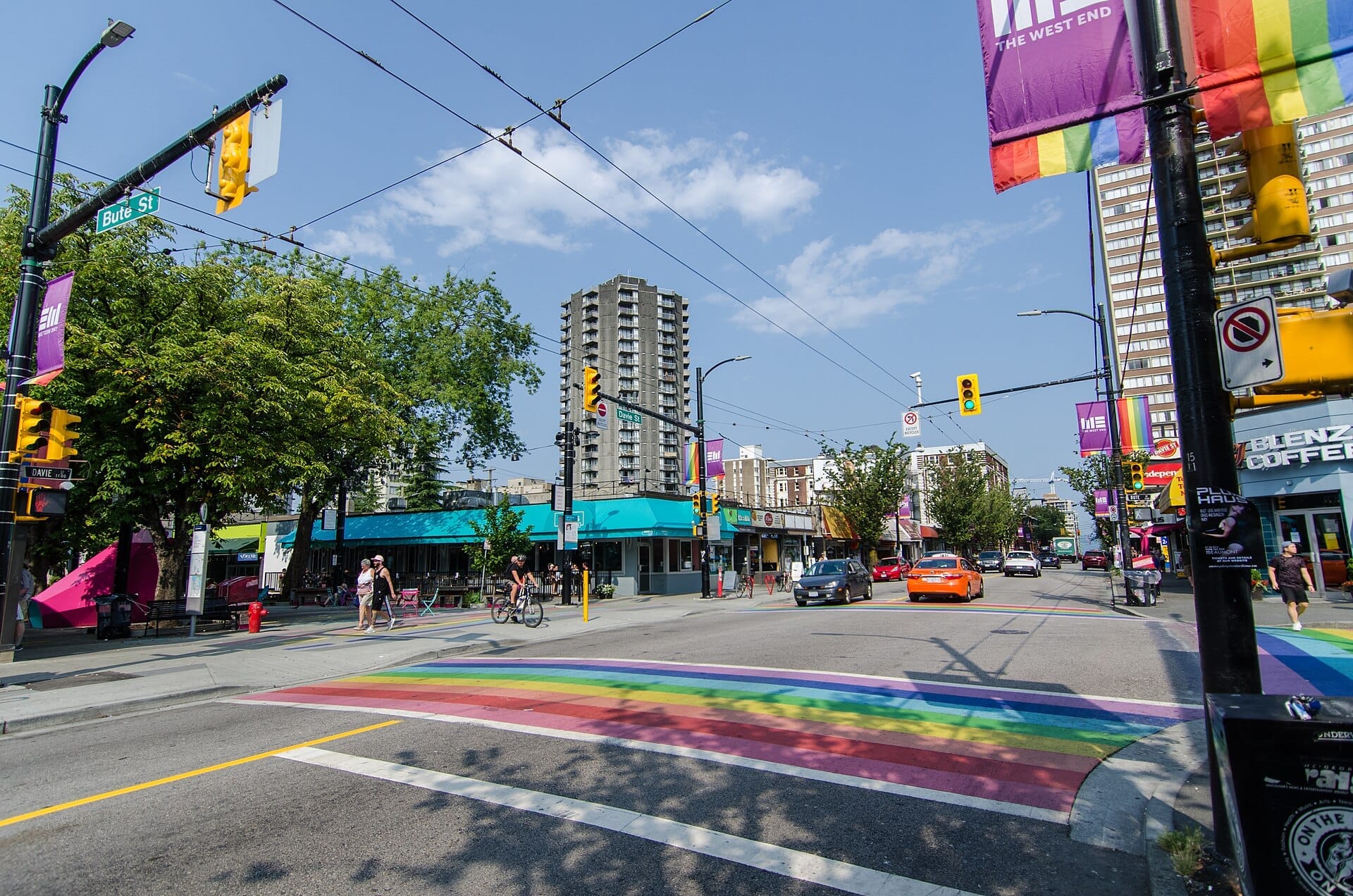
Davie Village, the stretch of Davie Street roughly between Burrard and Jervis, is the most visibly distinct section of the neighbourhood. The rainbow crosswalks, the flags, and the concentration of bars, late-night restaurants, and community services make it Canada's most prominent LGBTQ+ commercial district. The atmosphere is welcoming and social at most hours, and the street is at its most alive after 9pm. For context on the wider Vancouver nightlife landscape, the Vancouver nightlife guide covers how Davie Village fits into the city's broader after-dark scene.
ℹ️ Good to know
The West End is one of the most walkable neighbourhoods in Canada. Most residents and visitors can reach English Bay Beach, Stanley Park, and the commercial streets of Denman and Davie without needing transit at all. If you are staying here, you may not need a transit pass for days at a time.
The neighbourhood is notably quieter and more residential east of Bute Street and north of Davie. These blocks have a calmer, almost suburban feel despite being ten minutes on foot from downtown. Side streets like Comox, Pendrell, and Barclay are pleasant for an evening walk, especially around Barclay Heritage Square, where a group of late Victorian and Edwardian homes has been preserved as a reminder of what the entire neighbourhood once looked like.
What to See and Do
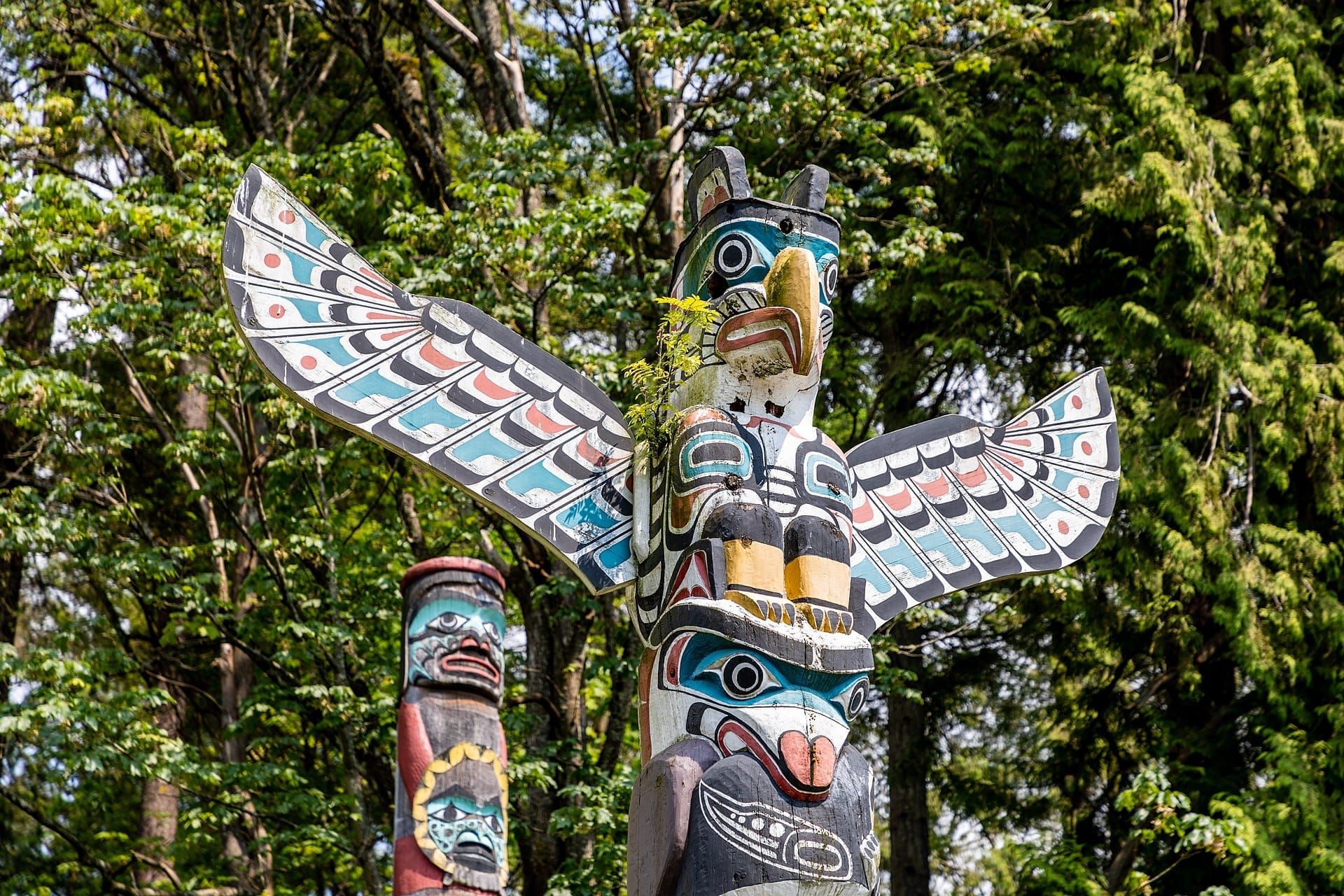
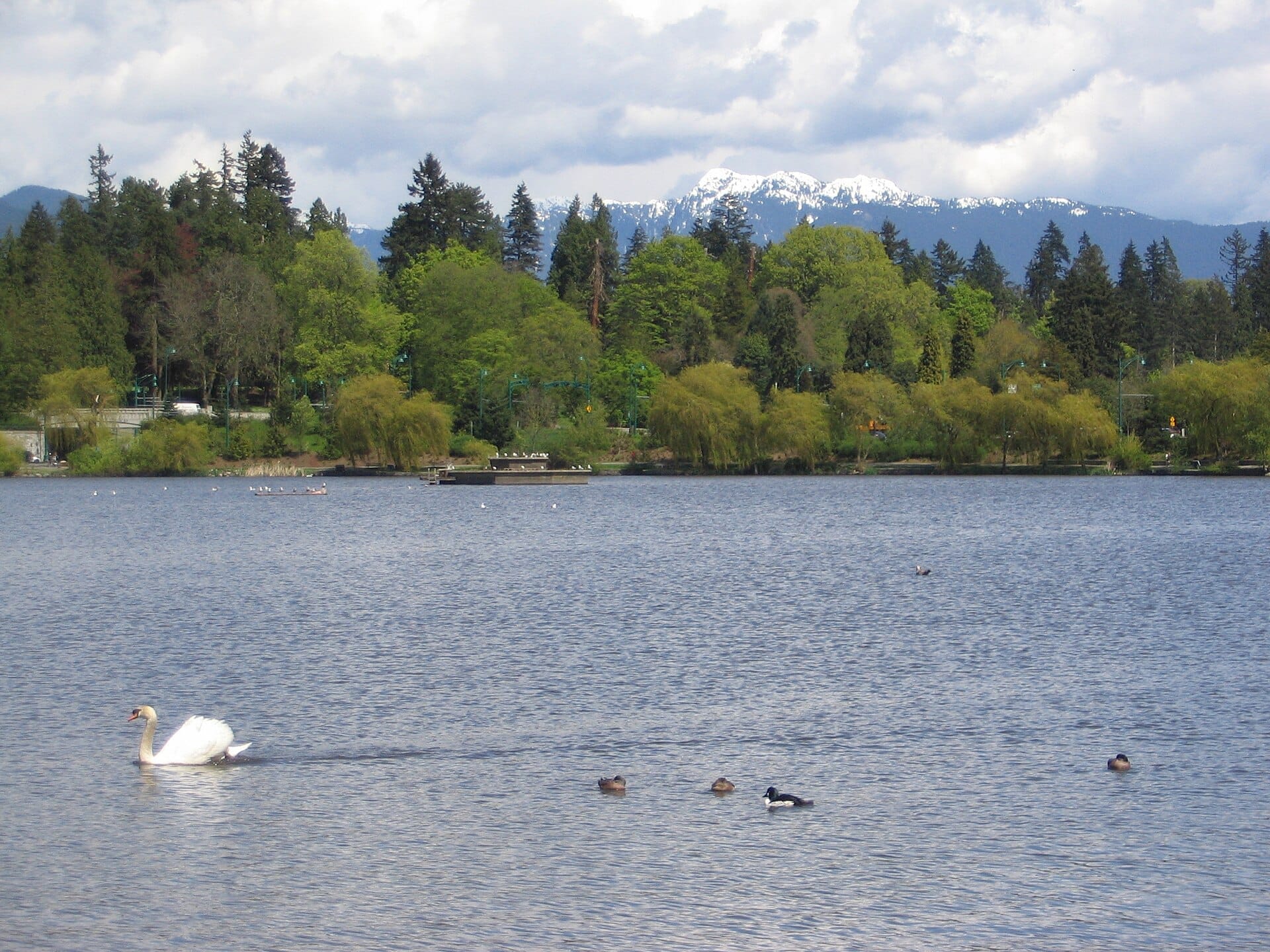
Stanley Park is the West End's defining neighbour and one of the most consequential urban parks in North America. The 405-hectare forest sits at the tip of the peninsula and is accessible on foot from anywhere in the neighbourhood in under fifteen minutes. Most visitors head straight for the seawall loop, but the park's interior trails, Lost Lagoon, and Brockton Point totem poles reward those who venture beyond the waterfront path.
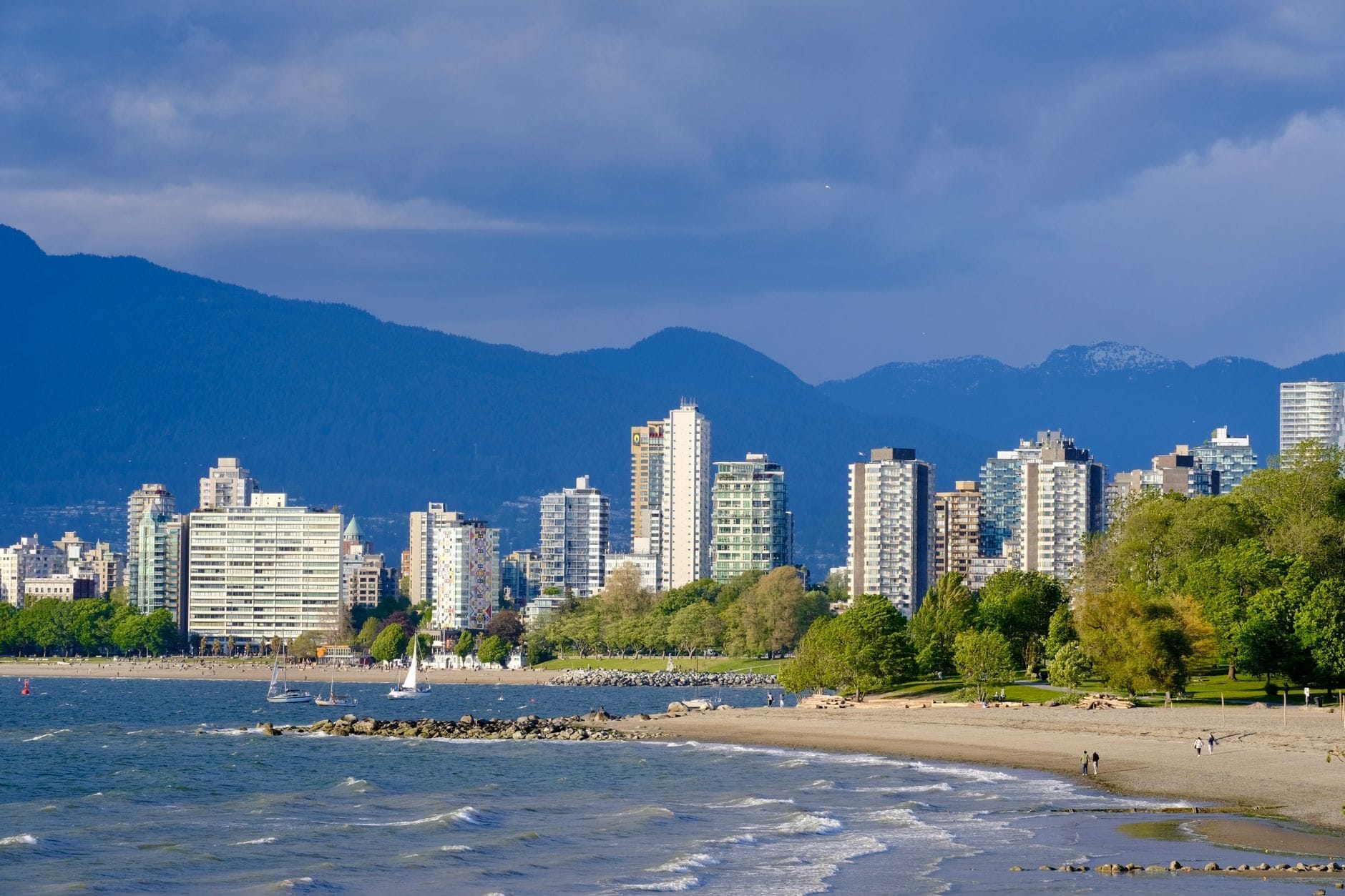
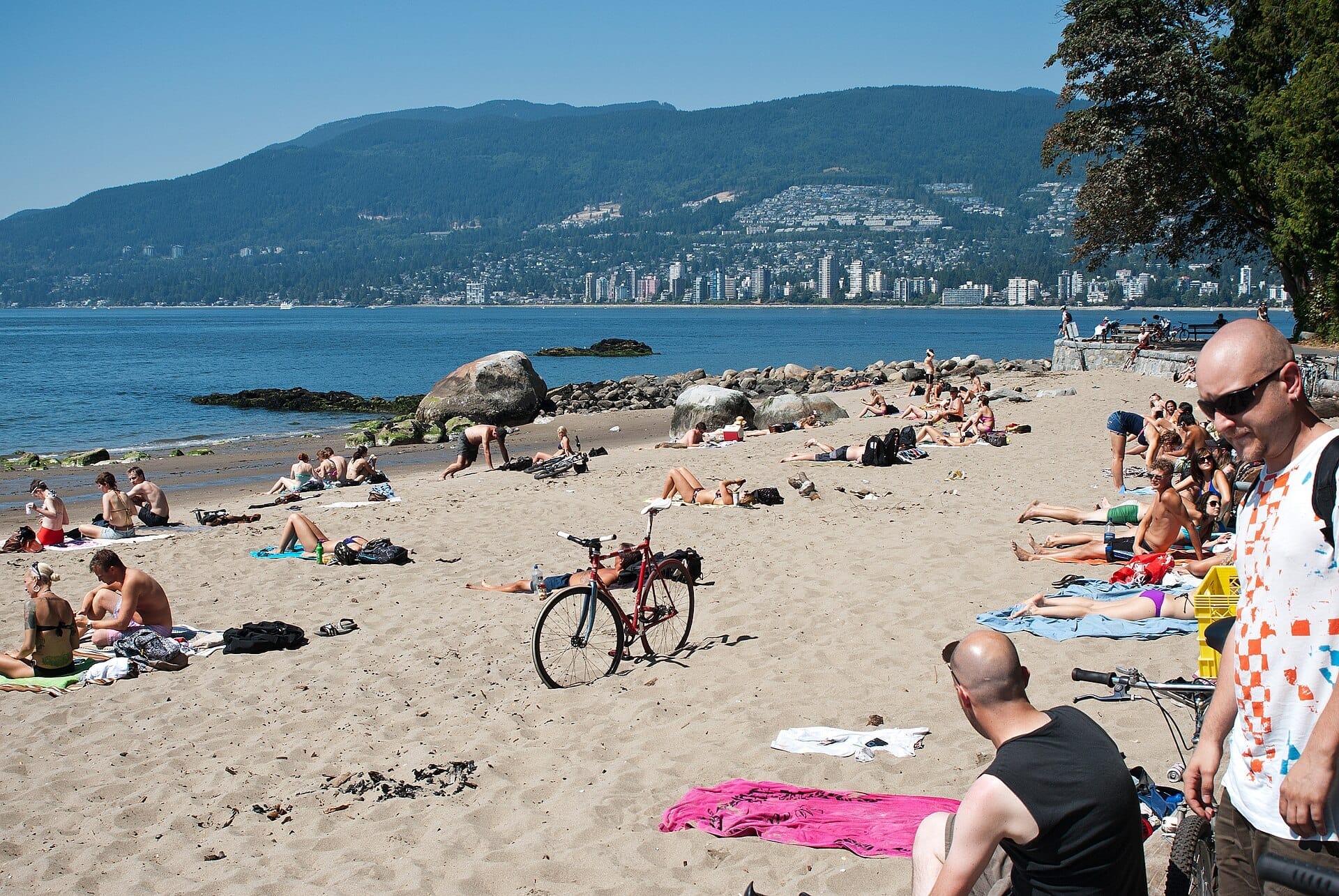
English Bay Beach is the West End's most popular gathering point. The wide sandy crescent at the foot of Denman Street fills with sunbathers in summer and draws walkers year-round. It is one of the best places in Vancouver to watch the sunset, with the North Shore mountains forming the backdrop across the water. Sunset Beach, a quieter and slightly less crowded stretch just south along the seawall toward the Burrard Bridge, is worth the extra five-minute walk.
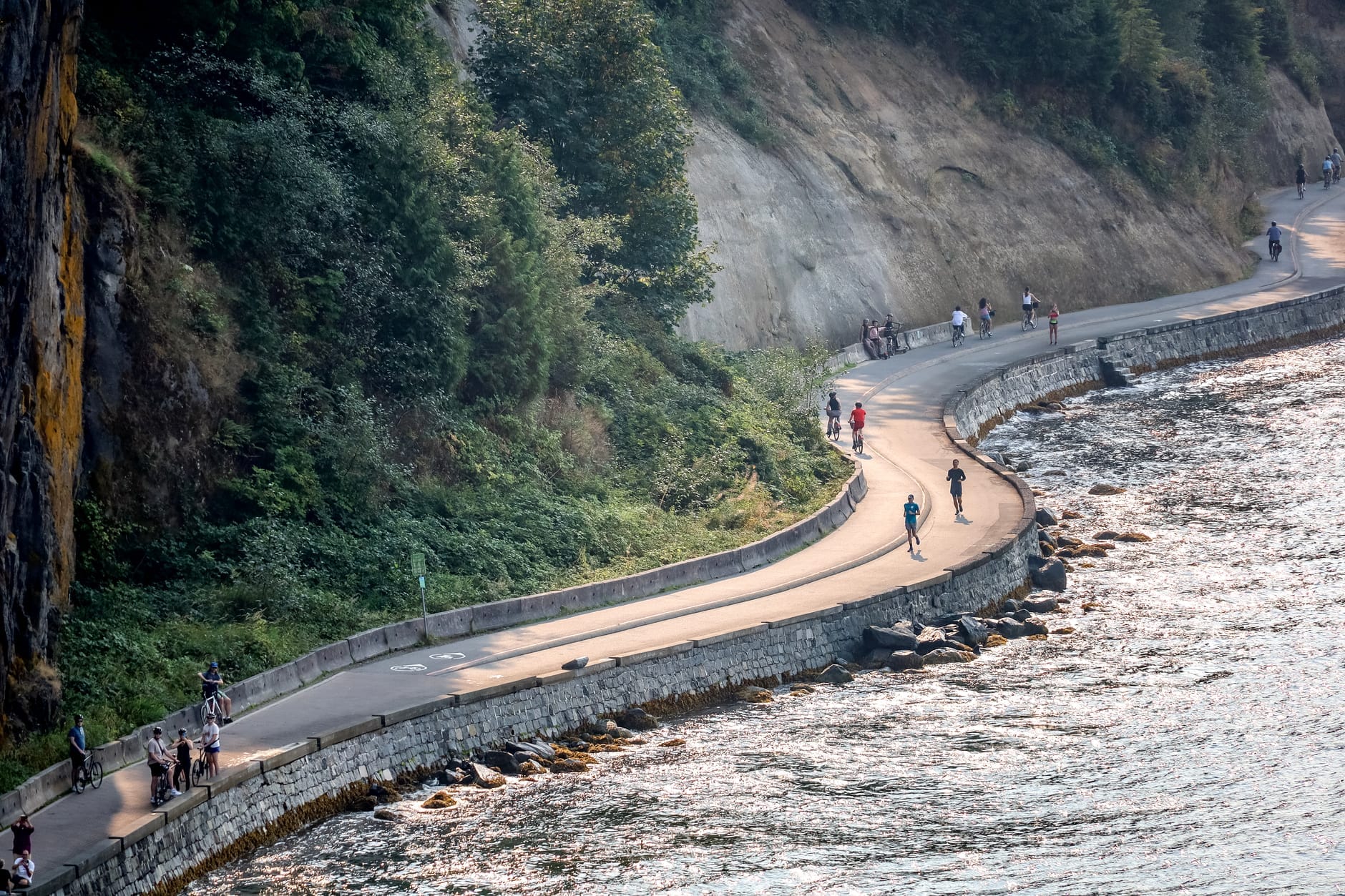
Walk or cycle the Stanley Park Seawall: the full loop is about 8.8 km and takes 1.5 to 3 hours depending on pace
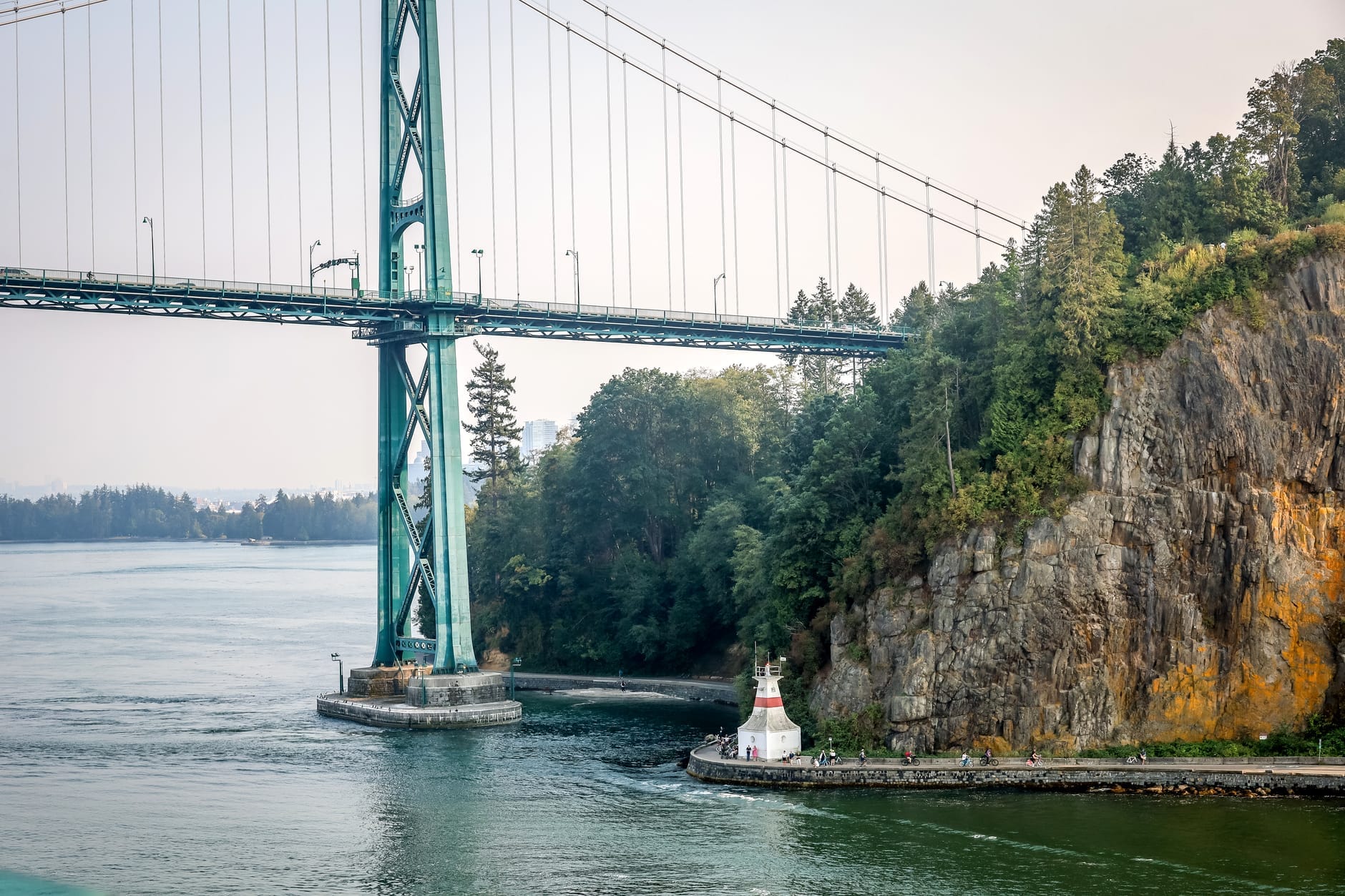
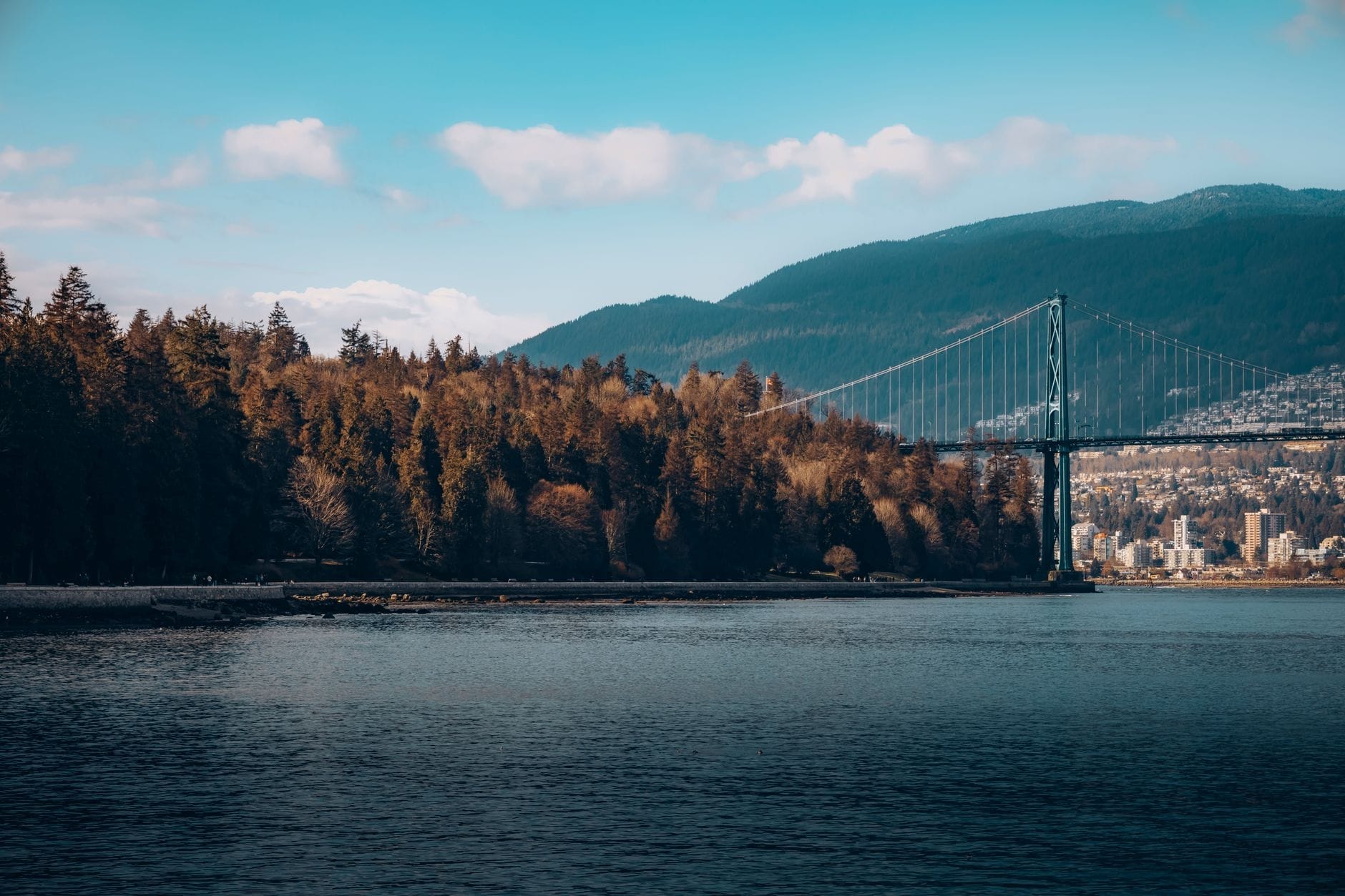
Visit Prospect Point for views over the Lions Gate Bridge and Burrard Inlet
Explore Barclay Heritage Square on Barclay Street between Nicola and Broughton for preserved heritage homes
Watch the sunset from English Bay Beach, facing west toward the mountains
Browse the weekend events and performances that often happen in Alexandra Park near English Bay
Walk the length of Denman Street from West Georgia down to Beach Avenue for the full range of the neighbourhood's food and retail scene
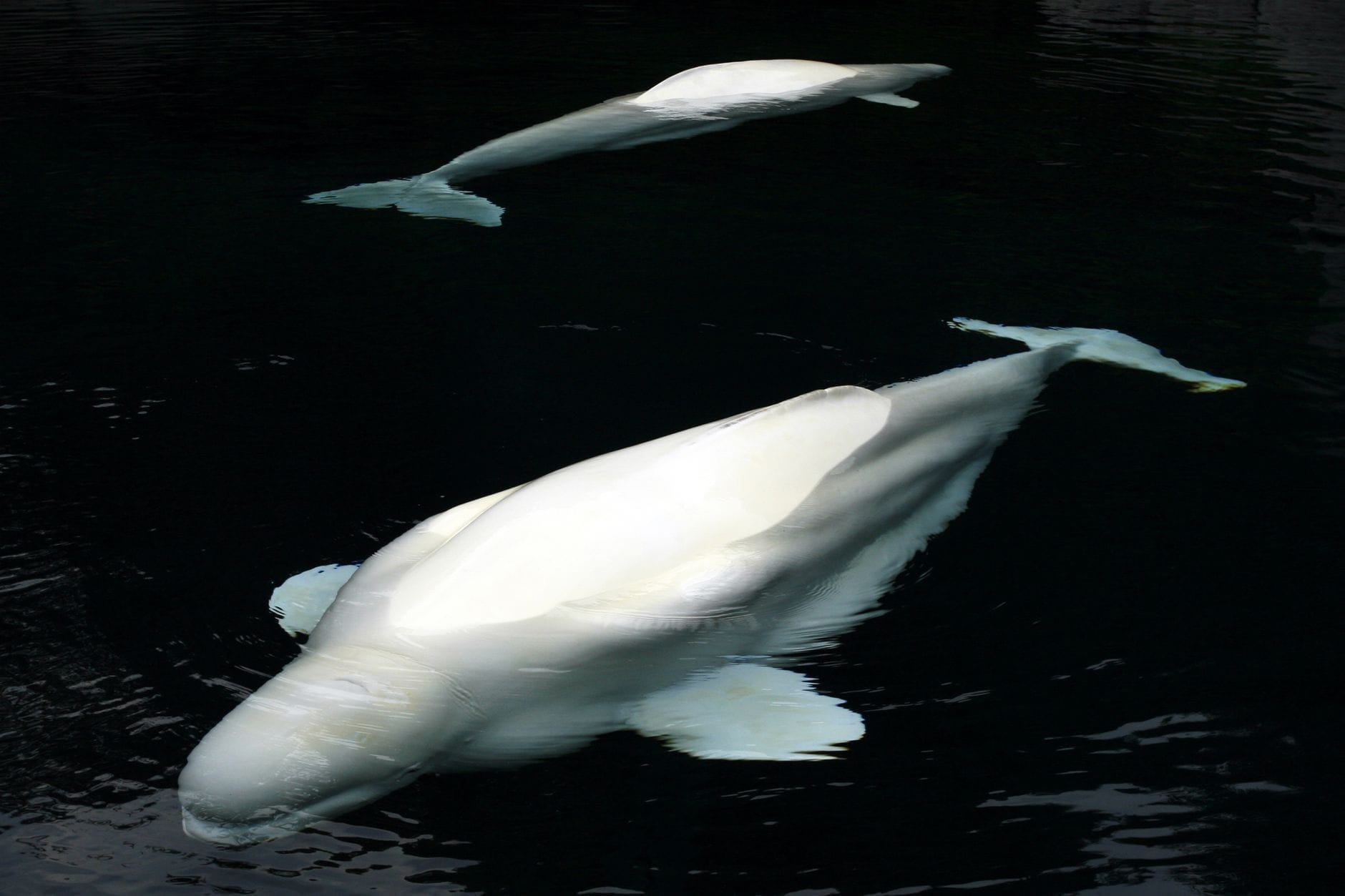
The Vancouver Aquarium sits inside Stanley Park and is a short walk from the West End's northern edge via the park entrance at the foot of West Georgia. It is one of the largest aquariums in Canada and a reasonable half-day activity, particularly for visitors traveling with children. Check the official Vancouver Aquarium website for current admission prices before visiting.
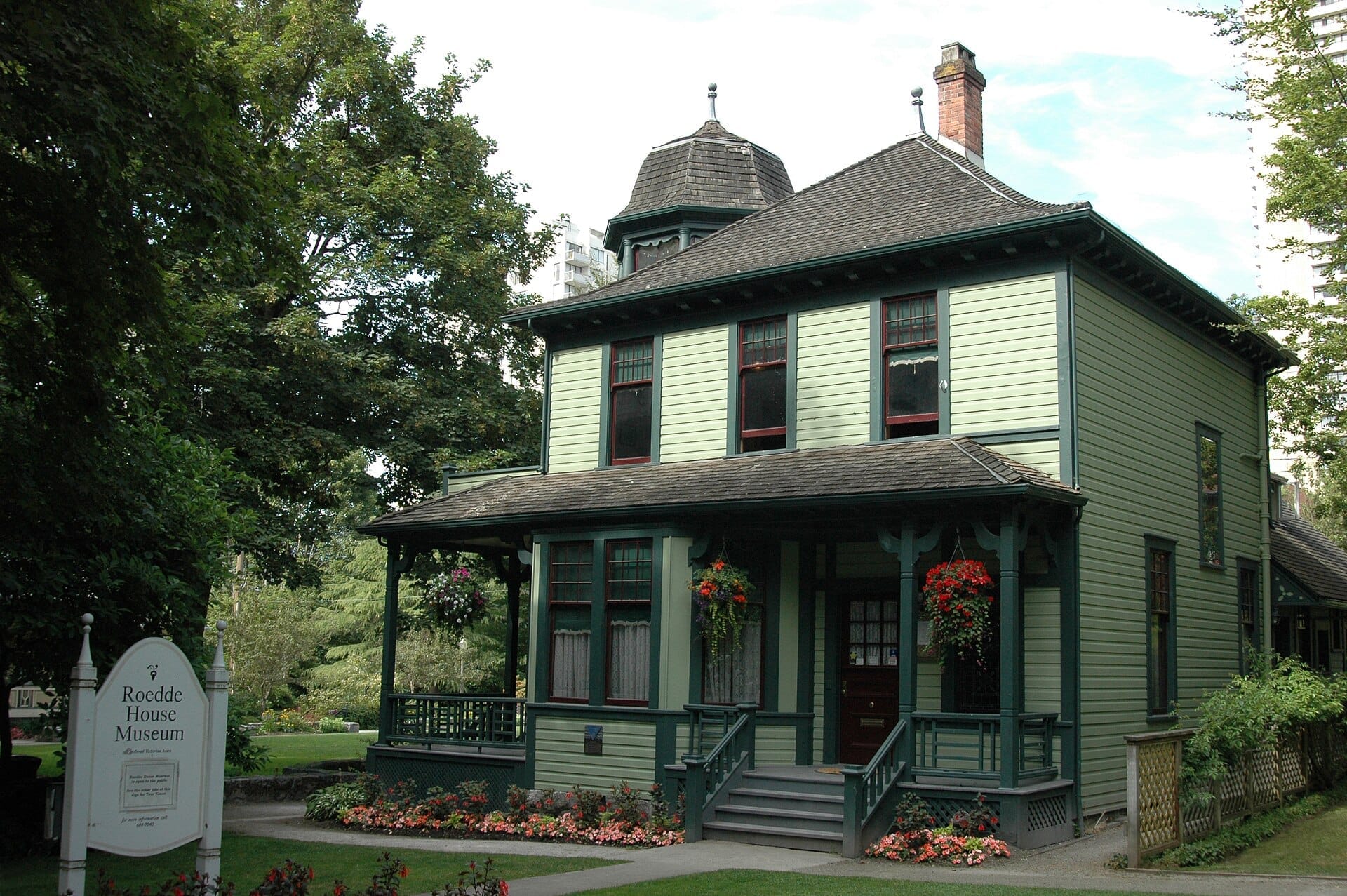
For those interested in what makes the neighbourhood tick historically, the Roedde House Museum on Barclay Street is a restored Queen Anne-style home from 1893 that once belonged to Vancouver's first bookbinder. It is one of the few surviving examples of the West End's original residential architecture and offers guided tours.
💡 Local tip
The seawall is popular year-round but becomes very crowded on summer weekends, particularly between English Bay and the park entrance. If you want to cycle the full loop without navigating heavy foot traffic, aim for early morning on a weekday. The seawall has designated lanes for cyclists and pedestrians.
Eating and Drinking
The West End's food scene is concentrated on two corridors. Denman Street, running north-south along the western edge of the neighbourhood toward English Bay, has the highest density of restaurants and is the place most visitors end up for a meal after a day at the beach or on the seawall. The selection is diverse and unpretentious: Japanese ramen, Indian curry, Thai noodles, pizza, and seafood restaurants occupy a stretch of perhaps six or seven blocks.
Davie Street is the neighbourhood's other main eating and drinking corridor, with a character that is more social and bar-oriented, particularly in the Davie Village section between Burrard and Jervis. The bars here tend to stay open late, and the restaurants are oriented toward casual dining and late-night food rather than destination cooking. The street is also home to the neighbourhood's best late-night food options.
Robson Street, at the neighbourhood's northern boundary, spans from the downtown shopping district into the West End and has a mix of chain restaurants and independent spots. It is less locally focused than Denman, but it serves the practical need of feeding the many people staying in the hotels along its length. For a broader overview of what to eat across the city, the Vancouver food guide covers the full range of Vancouver's culinary neighbourhoods.
Japanese and Korean food: several well-regarded ramen shops and izakayas along Denman and Robson
Seafood: fresh fish and chips and casual seafood on Denman, closer to English Bay
Coffee: independent cafés on Denman and Davie, particularly busy in the mornings
Grocery options: several small supermarkets and produce shops along Davie and Denman make the neighbourhood practical for self-catering in apartment rentals
Late-night food: Davie Street has the most options after midnight, with a mix of pizza, shawarma, and diner-style spots
Price points across the West End are moderate. You can eat well on a budget on Denman Street without much effort, and there are few genuine fine-dining establishments in the neighbourhood itself. Those looking for higher-end restaurants will find more options in Yaletown or along the Robson Street corridor closer to downtown. The West End's strength is variety and accessibility rather than culinary ambition.
Getting There and Around
The West End does not have a SkyTrain station of its own, but Burrard Station on the Expo and Millennium Lines sits at the corner of Burrard and West Georgia, right on the neighbourhood's eastern edge. From there, the walk to English Bay takes about twelve minutes heading west along Robson or Davie. Vancouver City Centre Station is one block east on Granville. For a full overview of how to navigate the city, the getting around Vancouver guide covers all transit options in detail.
Several bus routes serve the neighbourhood directly. The 5 Robson runs east-west along Robson Street. The 6 Davie runs along Davie Street from downtown toward the Burrard Bridge. The C23 and C21 serve the beach and park fringe. Buses are operated by TransLink and accept Compass Cards or contactless payment. Fares should be confirmed at translink.ca before travel, as they are subject to change.
Cycling is practical within the West End. There is a protected bike lane network that connects through the neighbourhood and links to the seawall path, and several bike-share stations are located near English Bay and along Davie. The flat terrain makes it accessible for casual cyclists. Walking, however, is genuinely the dominant way to get around: almost everything in the neighbourhood is within a fifteen-minute walk, and the streets are well-lit and well-used at most hours.
Driving into the West End is straightforward via West Georgia Street from downtown, but parking is limited and expensive by Vancouver standards. The neighbourhood's residential streets have permit-only parking for much of the day. Most visitors staying here are better served by arriving on transit or by foot from adjacent downtown hotels.
⚠️ What to skip
West Georgia Street through the neighbourhood funnels all traffic heading into Stanley Park, which means it can experience significant congestion on summer weekends and during special events. If you are traveling by car to the park entrance from downtown, expect delays between roughly 10am and 6pm on sunny summer days.
Where to Stay
The West End has a solid range of accommodation, with the highest concentration of hotels clustered along Robson Street and near the Burrard Street boundary. These locations put guests within walking distance of both downtown amenities and the neighbourhood's beaches and parks. For a comprehensive look at accommodation options across Vancouver, the where to stay in Vancouver guide covers all major neighbourhoods.
The West End suits travelers who want the convenience of downtown proximity without the exclusively commercial environment of the central business district. It is a good fit for couples, solo travelers, and anyone planning to spend significant time on the seawall, at the beach, or in Stanley Park. Families will find it comfortable and relatively low-stress, with easy access to the aquarium and the park's attractions.
Apartment and vacation rental options are widely available here, which suits longer stays. The neighbourhood has the grocery infrastructure to support self-catering, and the walkable streets make it easy to run daily errands without a car. Those staying in the Davie Village area should be aware that the street is lively until late on weekends: lighter sleepers should look for accommodations on quieter side streets or on the Denman and Robson corridors.
The West End is a less obvious choice for business travelers focused on downtown meetings, though Burrard Station is close enough to make it workable. Travelers primarily interested in nightlife across the whole city may prefer Yaletown or the Granville Strip area, which offer more concentrated options in a smaller footprint. The West End's strengths are green space, waterfront access, and residential character, not nightlife density.
Who this neighbourhood suits
The West End is one of the most straightforwardly pleasant urban neighbourhoods in Canada for a visitor, but it is not without friction. In peak summer, English Bay Beach becomes genuinely crowded by mid-morning on weekends, and the seawall between the beach and Stanley Park can feel more like a managed queue than a leisure walk. The neighbourhood's popularity means accommodation prices are high relative to the rest of Vancouver outside downtown.
The neighbourhood is safe and well-used at most hours, including late at night on Davie Village. The West End does not have the safety concerns associated with some blocks in the Downtown Eastside to the northeast. Travelers who want guidance on which parts of Vancouver to approach with more awareness can consult the Vancouver safety guide for a balanced overview.
For travelers who want to be in a neighbourhood that actually functions as a neighbourhood rather than a hotel district, the West End delivers consistently. There are residents going about their lives on every block, which gives the streets a texture and authenticity that purely tourist-oriented areas cannot replicate. The trade-off is that it is not the most architecturally dramatic part of Vancouver: the high-rise residential towers that make up most of the building stock are functional rather than beautiful.
TL;DR
Best for: travelers who want waterfront access, park proximity, and a genuine residential neighbourhood within walking distance of downtown Vancouver
Davie Village is Canada's most prominent LGBTQ+ district and is welcoming to all visitors, with the most active street scene after 9pm
Stanley Park and English Bay Beach are the neighbourhood's headline draws; the seawall loop is one of the best free activities in the city
Transit access is good via Burrard SkyTrain Station at the eastern boundary, but most of the neighbourhood is best navigated on foot
Summer weekends bring significant crowds to the beach and seawall; early mornings are the best time to enjoy both without the crowds
Not ideal for travelers focused exclusively on nightlife or fine dining; both are available but not the neighbourhood's core strength
Three days is enough time to cover Vancouver's best neighbourhoods, waterfront parks, and mountain views without feeling rushed. This itinerary organizes the city logically by geography, cuts out the tourist traps, and works whether you're on foot, SkyTrain, or a borrowed bike.
Vancouver's art scene spans a former provincial courthouse turned major museum, an intimate Haida gallery downtown, a world-class anthropology collection at UBC, and a full gallery district along South Granville. This guide covers the best art galleries in Vancouver for every interest and budget.
Vancouver has over 18 kilometres of oceanfront beaches, from lively urban strands with mountain backdrops to tidal flats perfect for families. This guide covers every beach worth your time, with clear notes on what to expect at each one.
Vancouver's museum scene spans world-class Indigenous art collections, civic history, space science, maritime heritage, and forensic curiosities. These are the best museums in Vancouver, organized by theme and neighbourhood, with practical tips for each.
Vancouver's temperate oceanic climate means it's visitable year-round, but each season offers a completely different experience. This guide breaks down weather, crowds, hotel prices, and key events by season so you can pick the right time for your trip.
Vancouver is one of the most visually dramatic cities in the world, where a downtown skyline meets ocean inlets and snow-capped peaks. This guide covers the best viewpoints across the city, from free hilltop parks and seawall walks to mountaintop gondolas and elevated observation decks.
Vancouver's garden scene ranges from a world-class 55-acre botanical garden to an authentic Japanese tea garden and a tropical conservatory open year-round. This guide covers every significant plant-focused attraction in the city, with notes on the best seasons to visit each.
Vancouver sits at the gateway to some of the most dramatic scenery in North America. Whether you head north toward Whistler, west to Vancouver Island, or east into the Fraser Valley, these are the best day trips from Vancouver, with realistic travel times, transport options, and what to prioritise once you arrive.
Vancouver is one of Canada's most expensive cities, but a remarkable number of its best experiences cost nothing. These 22 free activities cover Stanley Park, beaches, North Shore hikes, waterfront walks, and neighbourhood explorations across the city.
Vancouver's transit network is one of the best in North America, but navigating zones, passes, and peak hours takes some planning. This guide covers every mode of transport, from the Canada Line SkyTrain to cycling the seawall, with current fares and practical tips on when to skip the car entirely.
Vancouver sits at the edge of one of the most dramatic hiking landscapes in North America. These are the best trails near the city, from steep North Shore climbs to peaceful forest walks, chosen for scenery, accessibility, and what makes each one worth the effort.
Vancouver delivers a compelling luxury travel proposition: world-class 5-star hotels steps from the waterfront, a dining scene that punches well above its size, and wilderness experiences that no other major city can match. This guide covers where to stay, when to book, what to spend, and how to get the most out of high-end Vancouver.
Vancouver packs an extraordinary range of experiences into a compact, walkable city on Canada's Pacific coast. This guide covers the best things to do in Vancouver BC, from iconic outdoor adventures to neighbourhood deep-dives, with practical assessments, current pricing context, and logistics to help you make the most of your time.
Vancouver hosts one of Canada's largest Lunar New Year celebrations, anchored by a 1.3 km parade through historic Chinatown and a full 15-day festival season. This guide covers the parade route, top events across Metro Vancouver, transport logistics, and what first-timers often get wrong.
Vancouver sets a high bar for romantic travel. Mountains meet ocean, world-class restaurants sit steps from forested trails, and the city shifts beautifully with every season. This guide covers the best things to do in Vancouver BC for couples, from free waterfront walks to splurge-worthy experiences worth every dollar.
December transforms Vancouver into one of Canada's most festive winter cities, with major light displays, Christmas markets, and ice skating — all against a backdrop of mild, rainy Pacific weather. This guide covers everything you need to plan a December visit, from the best seasonal events to practical logistics.
Summer is Vancouver's best season by most measures: dry weather, long daylight hours stretching past 9 pm, and a calendar packed with outdoor events. This guide covers what to do each month, how much it costs, where crowds get bad, and what the city actually feels like when temperatures hit their annual peak.
Getting from Vancouver to Vancouver Island is straightforward once you know which route to take, when to book, and what to expect on the water. This guide covers every BC Ferries route, current fare ranges, reservation rules, and practical tips for making the most of a day trip or longer stay.
Vancouver's after-dark scene spans gritty dance clubs on the Granville Strip, polished cocktail lounges in Yaletown, independent craft beer bars on Main Street, and live music in Gastown. This guide breaks down where to go, what to expect, and how to avoid a bad night out.
Vancouver has a reputation for being pricey, and on accommodations and dining, that reputation is earned. But a huge share of what makes the city worth visiting costs nothing at all. This guide breaks down real daily costs, the best free attractions, affordable food strategies, and how to get around without spending a fortune.
Vancouver is one of Canada's most visited cities, and for good reason. But visitors increasingly ask: is Vancouver safe? This guide uses recent crime data, neighborhood-by-neighborhood context, and practical tips so you can explore with confidence.
The Vancouver Seawall is the world's longest uninterrupted waterfront path, stretching about 22 km along the waterfront from Coal Harbour to Kitsilano Beach, with some sources including extensions out to roughly 28–30 km. This guide covers every section of the route, cycling rules, seasonal conditions, rental options, and the best spots to stop along the way.
Vancouver's shopping scene spans luxury boutiques on Alberni Street, 330-store malls reachable by SkyTrain, a working public market on a former industrial island, and independent-label strips on Main Street and Commercial Drive. This guide breaks down every major option by neighbourhood, budget, and transit access so you can shop smarter.
Vancouver is one of the most approachable solo travel destinations in North America. From the Stanley Park Seawall to Granville Island's food stalls, this guide covers everything you need to plan a confident, well-timed solo trip to British Columbia's Pacific coast city.
The trip from Vancouver to Calgary covers roughly 970 km and can be done by plane, car, or bus. Each option has real trade-offs. This guide breaks down the costs, logistics, and seasonal considerations so you can choose the route that actually works for your trip.
The Vancouver to Seattle corridor is one of the most-traveled cross-border routes in North America. Whether you're driving I-5, riding the Amtrak Cascades train, or taking a budget coach, this guide breaks down travel times, costs, border logistics, and the smartest ways to avoid delays.
Everything you need to plan the Vancouver to Whistler drive via Highway 99, including key stops along the Sea to Sky corridor, shuttle alternatives, winter driving laws, and the best times to make the trip. Whether you're heading up for ski season or a summer adventure, this guide covers it all.
Vancouver's temperate oceanic climate means mild, rainy winters and warm, relatively dry summers — but the details matter for trip planning. This guide breaks down Vancouver weather month by month, covering temperatures, precipitation, crowd levels, and what to pack for every season.
From Stanley Park playgrounds to Science World and the Granville Island Kids Market, Vancouver delivers serious family value across every budget and season. Practical logistics, clear assessments, and the specific details parents actually need.
Vancouver's food scene is one of the most diverse in North America, shaped by Pacific seafood, deep Asian culinary traditions, and a thriving modern restaurant culture. This guide breaks down what to eat, where to eat it, and what to skip across the city's best food neighborhoods.
Choosing where to stay in Vancouver shapes your entire trip. This guide covers every major neighbourhood, realistic price ranges, seasonal timing, and clear trade-offs so you can match your accommodation to how you actually plan to spend your days.