Second Beach: Stanley Park's Sandy Shoreline and Outdoor Pool
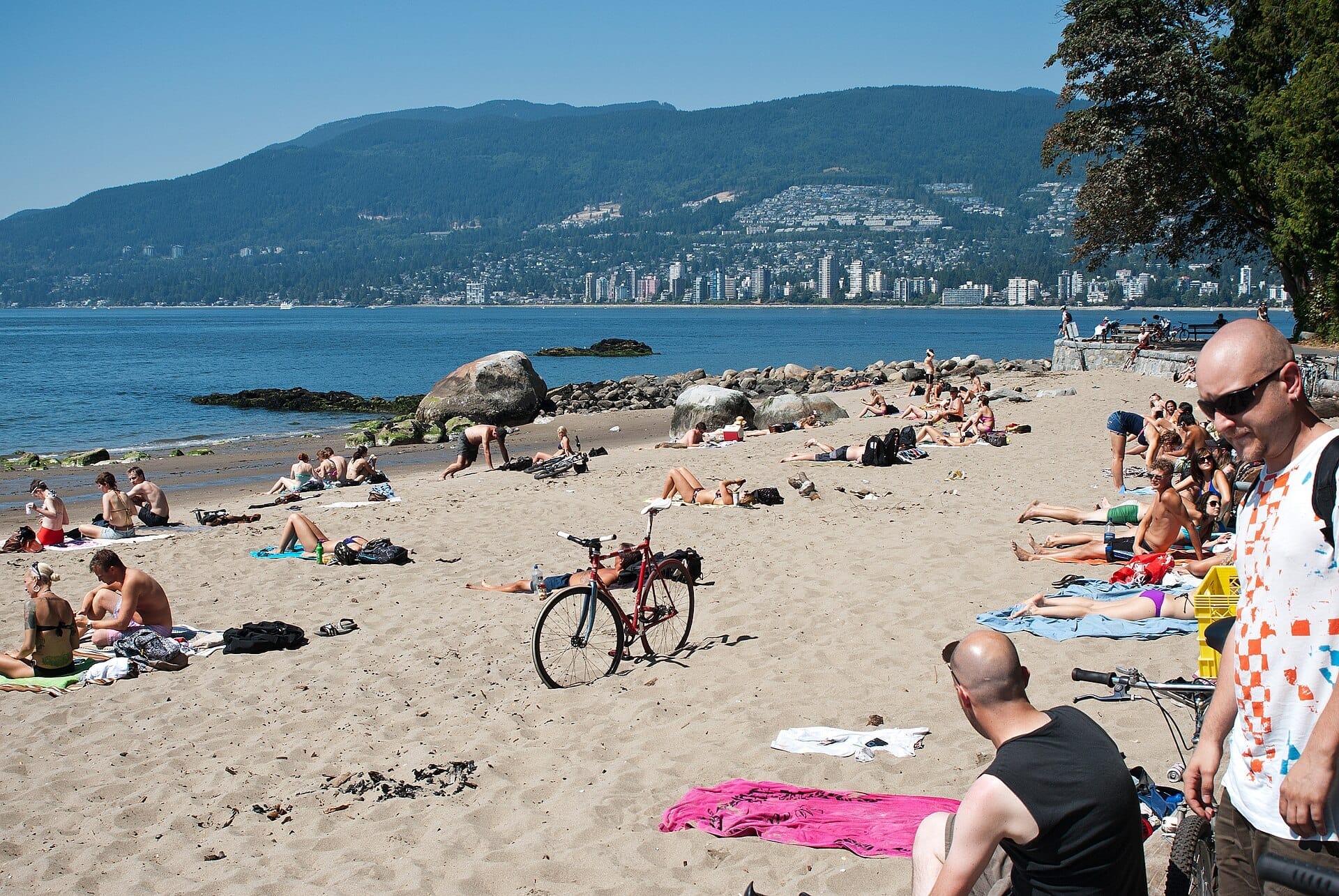
Second Beach sits on the southwest edge of Stanley Park, facing English Bay and the North Shore Mountains. It combines a sandy, family-friendly beach with one of Vancouver's few outdoor public pools, a playground, and easy access to the Stanley Park Seawall.
Quick Facts
- Location
- 8501 Stanley Park Dr, Vancouver, BC V6G 3E2 (southwest edge of Stanley Park)
- Getting There
- Walk or cycle from downtown via the Stanley Park Seawall; paid parking available nearby on Stanley Park Dr
- Time Needed
- 1 to 3 hours depending on whether you use the pool
- Cost
- Beach is free; outdoor pool approx. CAD $8 for adults (May to September, verify current rates)
- Best for
- Families with children, swimmers, sunset watchers, casual cyclists on the seawall
- Official website
- www.destinationvancouver.com/things-to-do/listings/second-beach
About Second Beach
Second Beach is a public beach and recreation area on the western side of Stanley Park, roughly two kilometres from the park's main Georgia Street entrance. It faces English Bay to the south and the Strait of Georgia to the west, with an open horizon that brings in ocean breezes and, on clear days, views of the North Shore Mountains across the bay.
Unlike the rockier shorelines elsewhere in Stanley Park, Second Beach has actual sand, which makes it the park's most practical spot for towels, sandcastles, and wading. The beach itself is free and open to the public as part of Stanley Park's parkland. What draws most families here, beyond the sand, is the adjacent outdoor saltwater pool, which has operated at this location since its original construction in 1932.
Second Beach connects directly to the Stanley Park Seawall, making it a natural stop on any seawall walk or cycle. Many visitors arrive on foot from the West End in under 20 minutes, passing through the park's forested edge before the path opens onto the beach clearing.
ℹ️ Good to know
The beach itself has no admission fee. The outdoor pool is a separate, seasonal facility open approximately May to September with its own ticket pricing (around CAD $8 for adults, with lower rates for children, youth, and seniors). Confirm current rates on the Vancouver Park Board site before you go, as prices change seasonally.
The Outdoor Pool: A Vancouver Institution Since 1932
The Second Beach Pool is the main reason this particular stretch of shoreline draws crowds that other Stanley Park beaches do not. At roughly 80 metres long, it is one of the larger outdoor public pools in the city, and one of the few that operates as a seasonal facility in a park setting rather than a recreation centre. The pool first opened in 1932 and has been updated over the decades while retaining its basic outdoor character.
The pool is designed for both casual swimming and a separate lap‑swim area. It has a graduated depth, making it accessible to children learning to swim, and the facility includes ramps and water wheelchairs for visitors with mobility needs. On summer afternoons, particularly during school holidays in July and August, the pool draws a mixed crowd of families, teenagers, and adults looking for a cooler alternative to the open bay. Arriving before 11am means shorter queues at the entry gate and more space on the pool deck.
The pool typically opens in May and closes in September, though exact dates and hours vary year to year. Check the City of Vancouver Parks, Recreation, and Culture listings for the current season's schedule before planning a visit around it.
💡 Local tip
Weekday mornings in June, before local schools let out for summer, are the quietest time to use the pool. July and August weekends see the highest demand.
Tickets & tours
Hand-picked options from our booking partner. Prices are indicative; availability and final rates are confirmed when you complete your booking.
Grouse Mountain and Capilano Suspension Bridge Park tour
From 252 €Instant confirmationFree cancellationVancouver Art Gallery Tickets
From 19 €Instant confirmationFree cancellationVancouver Stanley Park cycling tour
From 56 €Instant confirmationFree cancellationWhistler, Shannon Falls and Sky Gondola tour from Vancouver
From 135 €Instant confirmationFree cancellation
How the Beach Changes Through the Day
In the early morning, Second Beach is one of the quieter spots in Stanley Park. The light hits the water from the east at that hour, and the sand is often still cool and damp from overnight moisture. A handful of joggers and dog walkers pass through, but the beach itself is largely empty before 9am. The smell at this hour is seaweed and sea air, occasionally mixed with pine from the forest behind the beach.
By mid-morning on a clear summer day, families begin arriving with coolers and folding chairs. The sand area is not enormous, and it fills up. By 1pm on a warm Saturday in July, finding a spot near the water requires patience. The playground equipment adjacent to the beach attracts younger children, and the concession stand near the pool area does steady business through the afternoon.
Evenings at Second Beach are worth knowing about. After the pool closes and the main crowd disperses, the beach takes on a different quality. The western exposure means that on clear evenings, particularly between June and August, the sunset is full and direct from this vantage point. The light turns the water gold and deepens the colour of the North Shore mountains across the bay. A number of people arrive specifically in the early evening for this, sitting on the sand or the low concrete barriers near the beach edge. It is less crowded than English Bay Beach for sunsets, and the park forest behind gives it a more contained, quieter atmosphere.
Getting There: Your Practical Options
Second Beach sits inside Stanley Park, which means there is no SkyTrain station nearby. The most straightforward approach from downtown or the West End is on foot or by bike along the seawall. From the foot of Denman Street in the West End, it is a roughly 15 to 20 minute walk following the seawall path into the park. The route is flat, paved, and well-marked.
Cyclists can rent bikes at several shops on Denman Street, which runs through the West End neighbourhood just east of Stanley Park's main entrance. The seawall cycling path separates from the pedestrian path through most of the park, though it merges near Second Beach, so cyclists should keep speeds low in that area.
If you are driving, paid parking is available along Stanley Park Drive near Second Beach. Parking fills quickly on summer weekends and holidays, often by 10am. Plan accordingly, or consider parking near Denman Street in the West End and walking in. Ride-hailing (Uber and Lyft both operate in Vancouver) can drop you at the Stanley Park Drive entrance near the beach, which is a workable option if you want to avoid the parking situation entirely.
⚠️ What to skip
Do not rely on finding parking near Second Beach on a sunny July or August weekend. The lot fills early and Stanley Park Drive can back up significantly. Walking or cycling from the West End is faster and less stressful.
Weather, Seasons, and When to Go
Vancouver's climate is temperate and oceanic, with warm, dry summers and mild, wet winters. The beach and pool season aligns with the city's driest window: June through August, when average daytime highs reach roughly 20°C (68°F) and rainfall is comparatively low. For the full outdoor experience at Second Beach, these three months are your best bet. The best time to visit Vancouver for outdoor activities is July and early August, when you get the longest daylight hours and most reliable sunshine.
Outside of summer, Second Beach is still a pleasant place to walk. The seawall runs through year-round, and the beach is accessible even in winter, though swimming in the open bay is limited to the hardiest visitors. In October, the forest behind the beach adds colour. In December and January, the same view that gives golden sunsets in summer becomes a study in grey and silver, with mist sitting low over the water. It is a different experience, but not without appeal.
Rain is a real factor from October through March, and visiting Second Beach on a wet winter day means a damp walk with limited facilities. The pool is closed, the concession is shut, and the sand can be waterlogged. Save the beach visit for drier weather if possible.
Photography, Accessibility, and Practical Details
Second Beach photographs well in the late afternoon and early evening, when the western light is warm and the mountains across the strait are clearly visible. For shots without crowds in the frame, early morning before 9am gives the cleanest results. The pool area is photogenic in its own right, particularly on a bright day when the water catches the light, but it is also a busy public space, so be mindful of families and children when framing shots.
The pool facility is wheelchair accessible, with ramps and water wheelchairs available. The seawall path leading to Second Beach is paved and flat, making it navigable for mobility aids without significant difficulty. The beach sand itself is harder to navigate in a wheelchair, but the paved area immediately adjacent to the beach is usable.
Second Beach is part of the broader Stanley Park experience. If you are planning more time in the park, Stanley Park itself covers over 400 hectares and includes the Vancouver Aquarium, Brockton Point totem poles, Prospect Point, and Lost Lagoon, all accessible from the same seawall circuit or park roads.
Worth it or overhyped?
Second Beach is not a dramatic destination on its own. There are no heritage buildings, no particular cultural exhibits, and the sand area is modest by the standards of larger coastal beaches. What it offers is a well-maintained, genuinely pleasant urban beach within easy reach of downtown, with an outdoor pool that is unusual to find in a major city park. The sunset views are legitimately good.
Visitors expecting a wide, resort-style beach will find it small. Those looking for a full surf beach should head to Spanish Banks Beach or Wreck Beach on the UBC side of the city, where the shorelines are longer and wilder. Second Beach suits people who want a relaxed, accessible spot with amenities, particularly families with young children who will use the playground and pool.
Travelers who prioritize efficiency with limited time in Vancouver may find Second Beach best visited as part of a longer seawall walk rather than as a standalone trip. It adds texture to the Stanley Park experience without requiring a separate half-day.
Insider Tips
- The stretch of seawall between Second Beach and English Bay Beach (heading south toward the West End) is one of the less trafficked sections of the seawall on weekend mornings. If you want the ocean view without the crowds, walk this segment before 8:30am.
- The concession stand near the pool sells basic snacks and drinks but is not a full café. Bring your own food if you plan to spend a few hours here, or pick up supplies from the shops on Denman Street before entering the park.
- For sunset, arrive at least 30 minutes before the sun is scheduled to set. The best spots on the sand fill up on clear evenings, and the low concrete seawall barriers at the beach edge offer the most unobstructed western view.
- Children under 5 are admitted to the pool for free at Second Beach Pool. The pool's graduated depth makes it more forgiving for young swimmers than open-water alternatives, which is why it draws families even when English Bay is warmer and free.
- If you are cycling the full Stanley Park Seawall loop, Second Beach comes up on the southwest side before you hit the English Bay stretch. The cycling path narrows here near the beach area, so slow down and watch for pedestrians crossing between the beach and playground.
Who Is Second Beach For?
- Families with young children who want sand, a playground, and a safe outdoor pool in one spot
- Visitors doing the full Stanley Park Seawall walk or cycle who want a natural rest stop
- Sunset watchers looking for a less crowded alternative to English Bay Beach
- Travelers visiting Vancouver in summer who want an accessible outdoor swim without leaving the city centre
- Anyone spending a leisurely half-day in Stanley Park and wanting to extend it to the shoreline
Nearby Attractions
Other things to see while in West End:
- Brockton Point Totem Poles
The Brockton Point Totem Poles are an outdoor collection of nine First Nations poles carved by artists from the Squamish, Kwakwaka'wakw, Haida, Nisga'a, and Nuxalk Nations. Set in a meadow at the edge of Burrard Inlet inside Stanley Park, the site is free, open around the clock, and reachable on foot from Coal Harbour in about 20 minutes.
- Davie Village
Davie Village is the cultural and social centre of Vancouver's queer community, stretching along Davie Street between Burrard and Jervis in the West End. Free to explore at any hour, it offers a mix of LGBTQ+ history, independent cafés and bars, the iconic rainbow crosswalk at Davie and Bute, and Jim Deva Plaza, a public gathering space that doubles as a community memorial.
- English Bay Beach
English Bay Beach, also known as First Beach, has served as Vancouver's primary urban beach for over a century. Stretching along Beach Avenue in the West End, it offers free access to a sandy shoreline with mountain backdrops, reliable sunsets, and a lively summer atmosphere that fades into quiet morning solitude the rest of the year.
- Lost Lagoon
Lost Lagoon is a 16.6-hectare freshwater lake sitting at the gateway to Stanley Park in Vancouver's West End. Free to visit at any hour, it draws birdwatchers, joggers, and anyone needing a few minutes of calm at the edge of a major city. The 1.75 km perimeter trail is one of the more underrated walks in Vancouver.