Spanish Banks Beach: Vancouver's Most Expansive Shoreline
Spanish Banks Beach stretches along English Bay in Vancouver's West Point Grey neighbourhood, offering nearly 1 kilometre of tidal flats, unobstructed views of the North Shore mountains, and a noticeably quieter atmosphere than the city's more central beaches. Access is free, lifeguards patrol seasonally, and the beach connects by bike path to Jericho and Locarno.
Quick Facts
- Location
- NW Marine Drive, West Point Grey, Vancouver BC (near foot of Tolmie Street)
- Getting There
- Bus #4 or #84 from downtown; short walk or connection along NW Marine Drive
- Time Needed
- 1.5 to 3 hours depending on tide and pace
- Cost
- Free entry; pay parking C$3.50/hr or C$13/day (April 1–September 30, 6:00–22:00)
- Best for
- Low-tide walks, kite-flying, picnics, cycling, dog owners
- Official website
- vancouver.ca/parks-recreation-culture/spanish-bank-beach.aspx
About Spanish Banks Beach
Spanish Banks Beach is a public shoreline park along English Bay in Vancouver's West Point Grey neighbourhood, sitting between Locarno Beach to the east and the University of British Columbia campus to the west. The beach runs along NW Marine Drive and is technically divided into three connected sections: Spanish Bank East, Spanish Bank West, and Spanish Bank Extension. There are no fences, no admission gates, and no ticketed areas. You park, walk down, and the beach is yours.
What sets Spanish Banks apart from Kitsilano or English Bay Beach is scale. At low tide, the sandy flats can extend close to 1 kilometre from the shoreline into English Bay. That spatial generosity defines the experience: crowds dissolve into the distance, children can wade outward for what feels like forever, and the backdrop of the North Shore mountains stays wide and unobstructed across the water.
ℹ️ Good to know
Check tide tables before you visit. The beach experience changes dramatically depending on the tide cycle. At high tide, the sand narrows and the setting feels more conventional. At low tide, the exposed flats are the main attraction and the water can be a 10-minute walk from the logs.
The Historical Context Behind the Name
The name Spanish Banks commemorates a specific encounter that happened in 1792, when British explorer George Vancouver met Spanish officers Dionisio Galiano and Cayetano Valdés in the Strait of Georgia. The two expeditions were both charting the region simultaneously, and this meeting represented one of the more significant colonial-era exchanges in the area's documented history. The name was officially recorded in 1859 when Captain Richards formalized it during a hydrographic survey of Burrard Inlet.
Before European contact, the area was part of the traditional territories of the Musqueam, Squamish, and Tsleil-Waututh Nations. The beach carries multiple names reflecting this history: in Squamish, it is known as P'ékwcha (Pəqʷə́cən), and in Halkomelem as šxʷsyiΦəm. These names appear on City of Vancouver and Parks interpretive materials.
Tickets & tours
Hand-picked options from our booking partner. Prices are indicative; availability and final rates are confirmed when you complete your booking.
Grouse Mountain and Capilano Suspension Bridge Park tour
From 252 €Instant confirmationFree cancellationVancouver Art Gallery Tickets
From 19 €Instant confirmationFree cancellationVancouver Stanley Park cycling tour
From 56 €Instant confirmationFree cancellationWhistler, Shannon Falls and Sky Gondola tour from Vancouver
From 135 €Instant confirmationFree cancellation
How the Beach Feels at Different Times of Day
Early mornings at Spanish Banks, particularly between 7:00 and 9:00, are when the beach is quietest and the light is most compelling. The North Shore mountains catch the morning sun directly, and the tidal flats reflect sky and mountain in glassy sheets if you arrive shortly after low tide. Dog walkers are the dominant presence, moving in loose clusters along the waterline. The smell is clean salt air with occasional kelp when the tide has retreated far. The sand here is fine and light-coloured, and at low tide the wet flats have a firm, almost rubbery texture underfoot.
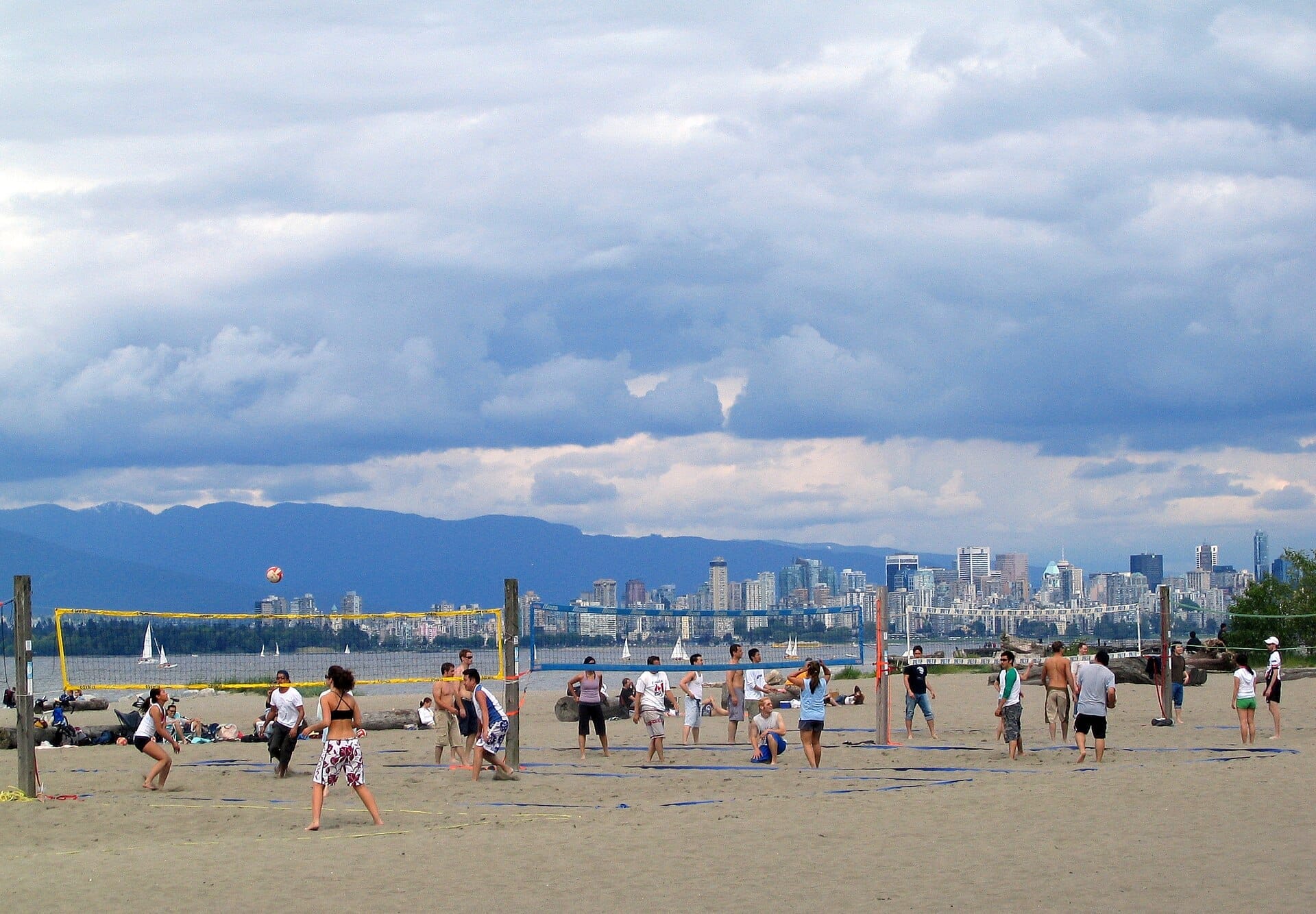
By mid-afternoon on warm summer days, the beach fills steadily. Volleyball nets go up in the designated courts near the parking areas, kite flyers stake out the open flats, and families set up closer to the concession stands. Even then, the sheer size of the beach means you can walk five minutes west toward the Extension section and find noticeably fewer people. The water temperature in English Bay peaks in July and August, generally reaching the low-to-mid teens Celsius, cool by most standards but manageable for a proper swim.
Evenings draw a different crowd. Sunset at Spanish Banks, when conditions cooperate, involves the sun dropping behind the hills of the University Endowment Lands and Vancouver Island in the distance. On clear summer evenings, the sky turns amber and pink over the Strait of Georgia and the silhouettes of freighters anchored offshore add an unexpected industrial dimension to an otherwise natural scene. This is one of the better sunset spots on Vancouver's west side, and it is consistently underused compared to the seawall at English Bay.
For a broader understanding of how the city's shorelines compare, the best beaches in Vancouver guide places Spanish Banks alongside Kitsilano, Jericho, and Wreck Beach with clear-eyed comparisons.
Getting There and Getting Around
By bus, routes #4 and #84 connect downtown Vancouver to the West Point Grey area. The walk from the bus stop to the beach along NW Marine Drive takes roughly 10 to 15 minutes depending on where you alight. This is not the most seamless transit connection, and most visitors who come repeatedly end up driving or cycling.
Cycling is a genuinely good option. A dedicated bike path connects Spanish Banks westward to the UBC campus and eastward to Locarno Beach, Jericho Beach, and eventually into Kitsilano. The route along NW Marine Drive is scenic and mostly flat. Bike racks are available near the main parking areas.
Drivers will find pay parking along the beach from April 1 to September 30, enforced between 6:00 and 22:00. Rates are C$3.50 per hour or C$13 per day as of the most recent published figures, though rates should be confirmed locally as they are subject to change. No overnight parking is permitted. Outside the paid season, parking is free and significantly easier to find.
💡 Local tip
Arriving before 9:00 on a summer weekend almost guarantees a parking spot and a quieter stretch of sand. By 11:00, the lots fill up and the street parking along NW Marine Drive becomes competitive.
If you are planning a longer day that includes nearby attractions, the UBC and Point Grey neighbourhood offers the Museum of Anthropology, the Nitobe Memorial Garden, and Wreck Beach within a short distance of Spanish Banks.
What to Bring and Practical Considerations
Because the beach is so wide and flat, sun exposure is significant on clear days. The tidal flats offer almost no natural shade, so sunscreen and a hat matter more here than at a narrower, tree-lined beach. Wind is also a regular factor, especially in the Extension section furthest west. This is why kite-flying is popular, but it also means lighter items need to be weighted down.
Public washrooms and concession stands are located near the main parking areas. Water wheelchairs are available during the lifeguard season (late May through early September) for visitors with mobility challenges, though availability should be confirmed in advance through Vancouver Parks. The terrain across the tidal flats is relatively flat but uneven in places, particularly where the sand shifts into wet, ridged sediment. For wheelchair users, the areas close to the parking lots and the groomed upper beach are accessible, but the full tidal flat walk is not reliably so.
Dogs are permitted at Spanish Banks and are a common sight year-round. There is a designated off-leash area at nearby Spanish Banks Beach Park, so standard leash rules apply on most of the beach unless posted otherwise. Check current City of Vancouver signage on arrival.
⚠️ What to skip
The tidal flats can look like a gentle paddle zone but the bottom drops off further from shore. Young children and non-swimmers should stay in the shallower sections near the upper beach, particularly at mid-to-high tide.
Photography at Spanish Banks
The primary photographic appeal is the combination of flat reflective sand, wide open sky, and the mountain range across the water. Golden hour, roughly 60 to 90 minutes before sunset in summer, is when the light angles low enough to create long shadows across the flats and saturate the mountains in warm tones. The freighters anchored in English Bay, usually three to eight vessels at any given time, add depth to long-exposure shots from the waterline.
For skyline shots toward downtown Vancouver, the Extension section at the far west end offers the cleanest framing, with the towers of the city visible at a distance and UBC campus visible to the immediate west. A wide-angle lens handles the scale of the tidal flats better than a telephoto for landscape work. Bring lens wipes if you are shooting close to the waterline, as the salt air deposits on glass quickly.
For Vancouver's other signature viewpoint photography locations, the best views in Vancouver guide covers rooftop, waterfront, and elevated perspectives across the city.
Honesty About Limitations
Spanish Banks is not the right beach if you want consistent warm swimming water, easy transit access, or beach-side restaurants within walking distance. The water temperature stays cold well into July, and the nearshore area at high tide is shallow and somewhat unremarkable for swimming. The bus connections require patience and some walking. Concession options are basic.
The beach is also genuinely affected by Vancouver's weather. Between October and March, rain, wind, and grey skies are the norm. The tidal flats in winter are atmospheric in a specific, austere way, but visitors expecting a beach experience will find it bleak. Summer, particularly June through early September, is when the beach delivers on its potential. The driest and warmest months historically are July and August.
If weather is a concern for planning purposes, the best time to visit Vancouver page covers seasonal conditions with practical detail.
Insider Tips
- The Spanish Bank Extension, the westernmost and least-visited section, is worth the extra 10-minute walk for the added space and cleaner sightlines toward the city and mountains.
- Low-tide charts for English Bay are available free online through the Canadian Hydrographic Service. Cross-reference with the weather forecast and plan your visit on an afternoon low tide in July or August for the best overall conditions.
- The concession stands near the main parking area close before sunset, so bring your own food and water if you are planning to stay for the evening light.
- Cycling from Jericho Beach to Spanish Banks takes about 10 minutes on a flat, separated path and is one of the most pleasant ways to arrive, especially on a weekend when parking is competitive.
- Water wheelchairs for visitors with mobility limitations are available during the summer lifeguard season. Contact Vancouver Parks ahead of time to confirm availability and logistics.
Who Is Spanish Banks Beach For?
- Families with young children who want space to spread out without feeling crowded
- Cyclists linking the NW Marine Drive path from Kitsilano or Jericho toward UBC
- Dog owners looking for a beach where dogs are a normal, common presence
- Photographers targeting sunset and mountain reflection shots on the tidal flats
- Visitors who want a slower, less commercial beach day away from the English Bay crowds
Nearby Attractions
Other things to see while in UBC & Point Grey:
- Museum of Anthropology at UBC
The Museum of Anthropology at UBC is one of Canada's foremost anthropology museums, set inside Arthur Erickson's soaring concrete-and-glass landmark on the University of British Columbia's Point Grey campus. With nearly 50,000 ethnographic objects and a collection rooted in Northwest Coast Indigenous cultures, it offers a serious, rewarding experience for anyone curious about the peoples of the Pacific Northwest and beyond.
- Nitobe Memorial Garden
Tucked behind the UBC Asian Centre, Nitobe Memorial Garden is a 2.5-acre traditional Japanese garden consistently ranked among the most authentic outside Japan. Designed by landscape architects recommended by the Government of Japan and completed in 1960, it rewards slow, deliberate visiting at almost any time of year.
- Pacific Spirit Regional Park
Spanning roughly 860 hectares of second-growth rainforest on Vancouver's west side, Pacific Spirit Regional Park wraps around the UBC campus and offers over 55 km of free, multi-use trails through dense forest, creek ravines, coastal cliffs, and bog. It is one of the larger continuous green spaces within the city of Vancouver, and almost nobody from outside Vancouver knows it exists.
- UBC Botanical Garden
Founded in 1916, UBC Botanical Garden is Canada's oldest university botanical garden, covering 44 hectares on the University of British Columbia campus in Vancouver. It combines serious horticultural research with a genuinely rewarding visitor experience across themed garden collections that shift dramatically with the seasons.