UBC Botanical Garden: What to Know Before You Visit
Founded in 1916, UBC Botanical Garden is Canada's oldest university botanical garden, covering 44 hectares on the University of British Columbia campus in Vancouver. It combines serious horticultural research with a genuinely rewarding visitor experience across themed garden collections that shift dramatically with the seasons.
Quick Facts
- Location
- 6804 SW Marine Drive, Vancouver, BC (UBC campus)
- Getting There
- TransLink Bus Route 4, 14, 44, 84 or R4 to UBC; parking available on site
- Time Needed
- 1.5 to 3 hours depending on pace and season
- Cost
- Paid admission; fees vary by season — check botanicalgarden.ubc.ca for current prices
- Best for
- Plant enthusiasts, photographers, slow walkers, couples, families with older children
- Official website
- botanicalgarden.ubc.ca
About UBC Botanical Garden
UBC Botanical Garden is not a decorative city park. Founded in 1916 by botanist John Davidson, it is Canada's oldest university botanical garden and operates as a living research institution across roughly 44 hectares of the University of British Columbia campus. That dual identity — scientific collection plus public garden — gives it a character quite different from a municipal showpiece. The plantings are curated with taxonomic and ecological logic, not purely for visual drama, though there is plenty of that too.
The garden sits near the southwestern tip of the UBC campus, close to SW Marine Drive, with Pacific Spirit Regional Park forming a forested buffer to the east. It feels noticeably quieter and more removed from the city than it actually is. On weekday mornings you can walk entire sections with almost no one else around, hearing wind through the tree canopy, bird calls, and the faint background hum of distant traffic.
ℹ️ Good to know
The garden is open daily, with seasonal variations and occasional holiday closures. Hours vary by season. Always confirm current times at botanicalgarden.ubc.ca before making the trip — the gates close earlier in winter than the listing sites often show.
The Collections: What You Will Actually See
The garden is organized into distinct themed sections rather than one continuous landscape. The Asian Garden occupies a significant portion of the site and contains one of North America's most substantial collections of rhododendrons and magnolias — in April and May, when these are in bloom, the effect is exceptional. Enormous specimens that have been growing for decades form overhead canopies in shades of white, pink, and deep red.
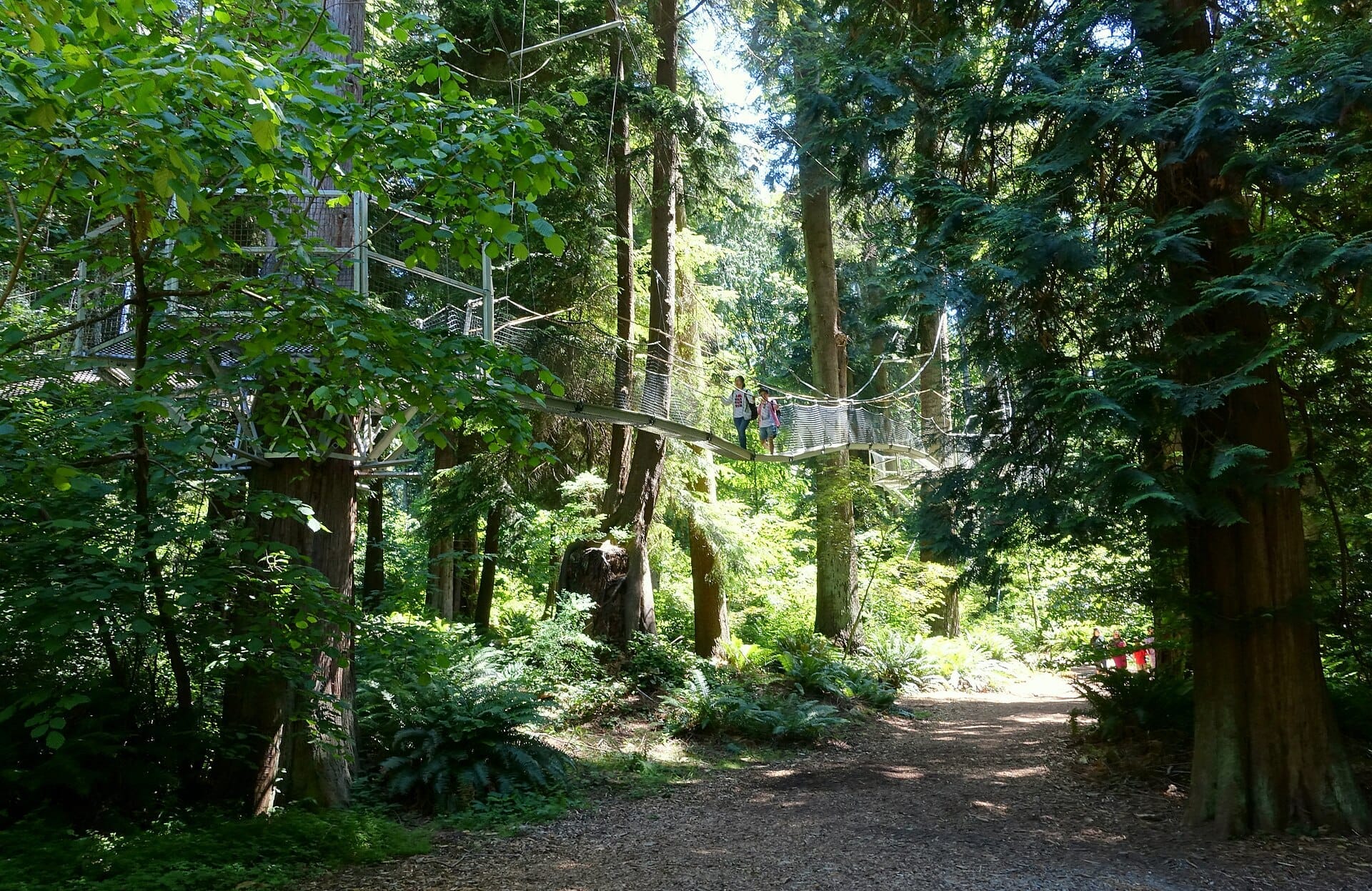
The BC Rainforest Garden demonstrates the native coastal forest ecosystem with towering conifers, ferns, and mossy ground cover. It reads almost indistinguishable from the old-growth forest sections of Pacific Spirit Park next door, which is the point. The Alpine Garden packs a surprising density of interest into a compact space: hundreds of plants from mountain ecosystems worldwide growing in carefully constructed raised beds and rock formations. For visitors with limited time, this section rewards close inspection.
The Food Garden and Physick Garden round out the collection with edible and historically medicinal plants respectively. These are educational rather than ornamental in emphasis, but for anyone interested in the functional history of plants, they add real depth to a visit. The overall circuit of the main garden takes most visitors around 90 minutes at a relaxed pace; serious plant enthusiasts or photographers should budget considerably more.
Tickets & tours
Hand-picked options from our booking partner. Prices are indicative; availability and final rates are confirmed when you complete your booking.
Full-day tour to Victoria and Butchart Gardens from Vancouver
From 163 €Instant confirmationFree cancellationChristmas guided tour of Victoria and the Butchart Gardens
From 166 €Instant confirmationFree cancellationSightseeing tour of Victoria and Butchart Gardens from Vancouver
From 140 €Instant confirmationFree cancellationGrouse Mountain and Capilano Suspension Bridge Park tour
From 252 €Instant confirmationFree cancellation
How the Experience Changes by Season
Spring, roughly March through May, is the peak season for flowering trees and shrubs. The rhododendron and magnolia collections in the Asian Garden are at their most dramatic in April, and visitor numbers climb accordingly, particularly on weekends. If crowds are a concern, arrive when the garden opens on a Tuesday or Wednesday morning.
Summer brings the broadest range of plants in active growth and the most reliable weather. Vancouver's dry season, generally June through August, means warm afternoons with low humidity. The garden stays green and full, and the longer daylight hours allow a more leisurely pace. This is also when the garden's educational programs and events tend to cluster.
Autumn is underrated here. October foliage in the Asian Garden can be genuinely striking, and the reduced crowds make photography far easier. Winter is the honest test of whether the garden appeals to you on its own terms rather than for its flowers: the structural planting, mosses, bark textures, and conifers carry the visual interest. It is quieter and sometimes quite beautiful in the rain, though shorter operating hours mean less time inside.
💡 Local tip
For photography: overcast days produce the most even light in the forested sections, eliminating the harsh shadows that dappled sun creates under tree canopies. Bring a lens cloth — morning visits often mean dew on surfaces.
Getting There from Central Vancouver
The garden is at the far western end of Vancouver, on the UBC campus, which means it requires deliberate effort to reach. From downtown Vancouver, TransLink bus routes 4, 14, 44, 84 and R4 travel directly to the UBC campus. The journey takes roughly 40 to 50 minutes depending on traffic and your starting point. This is not a spontaneous detour; plan it as a dedicated visit. For more on moving around the city efficiently, the TransLink and transit guide for Vancouver covers routes and fare information in detail.
Driving is straightforward and parking is available on site, though UBC parking fees apply and vary by lot. Ride-hailing services including Uber and Lyft operate in Metro Vancouver and can drop off directly at the garden entrance on SW Marine Drive. Taxis are also an option, though less common at this end of the city.
The garden is not within walking distance of any SkyTrain station — the nearest Canada Line stops at Oakridge and Langara are still a long bus ride away. Build travel time into your planning, and check real-time schedules on the TransLink website before you go.
What to Wear and Bring
Comfortable, flat-soled shoes are appropriate for most paths, which are a mix of paved walkways and compacted gravel surfaces. Some areas, particularly in the BC Rainforest Garden, can be uneven or slightly damp underfoot, especially after rain. Given Vancouver's temperate oceanic climate, rain gear is worth carrying at any time of year outside of July and August.
The garden is a tobacco-free environment throughout. Water is available on site. If you plan to spend a full morning or afternoon, a small snack is worth packing since there are no food vendors inside the garden itself. The UBC campus has cafes and food outlets a short walk away if needed before or after your visit.
⚠️ What to skip
Accessibility varies across different sections of the garden. Some paths and areas present challenges for wheelchair users or visitors with limited mobility. The garden recommends contacting them in advance at garden.admissions@ubc.ca or +1 604-822-4208 to discuss specific needs and plan the best route through the site.
What the UBC Area Adds to a Visit
The botanical garden sits within the broader UBC Point Grey campus, which itself offers several reasons to spend a longer afternoon in the area. The Museum of Anthropology is one of Canada's most significant cultural institutions and is less than 10 minutes by foot from the garden entrance. The Nitobe Memorial Garden, a formal Japanese garden also on the UBC campus, is another paid-admission garden that can be combined into the same visit for those specifically interested in botanical and landscape design.
Wreck Beach, one of Vancouver's most unusual and well-known beaches, is accessible via steep trails from the edge of the UBC campus and is just a short distance from the botanical garden. Pacific Spirit Regional Park surrounds much of the campus with over 70 kilometres of forested trails, giving the area a character unlike any other part of Vancouver. Combining two or three of these stops makes a full and rewarding day in the UBC area without needing to return to the city centre.
Who will love this — and who won't
The UBC Botanical Garden suits visitors who find slow, attentive looking genuinely enjoyable. Its appeal is in the depth and quality of its collections rather than in any single showpiece feature. There is no grand focal point, no Instagram moment engineered into the layout. What it offers is a sustained, quiet engagement with an exceptionally well-maintained plant collection in a forested west coast setting.
Visitors looking for high-energy entertainment, a quick photo stop, or a broad overview of Vancouver's attractions in limited time may find the travel time to UBC hard to justify. The garden is also not the right choice if you have very young children who need active play space — the tone is contemplative rather than interactive. For those reasons, this is an attraction to choose deliberately, not to fit in as a secondary stop.
For travelers specifically interested in Vancouver's botanical and green spaces, it is worth reading the broader guide to botanical gardens in Vancouver to compare options including VanDusen Botanical Garden, which is closer to the city centre and easier to combine with other neighborhoods.
Insider Tips
- Tuesday and Wednesday mornings are consistently the quietest times. Weekend afternoons, especially in April and May during rhododendron peak, see the highest visitor density.
- Buy admission online in advance if possible. The garden uses timed entry or online ticketing during busy periods, and turning up without a ticket can mean a wait.
- The Asian Garden's northern section, away from the main entrance path, is where the largest and oldest rhododendron specimens are located. Many visitors never reach this area because it requires walking past what feels like the end of the obvious route.
- If you are combining the botanical garden with the Nitobe Memorial Garden on the same day, check whether a combined admission discount is available — both are UBC-operated gardens and joint tickets have been offered in the past.
- The garden's plant sale events, typically held in spring and autumn, attract serious gardeners from across the Lower Mainland and are worth timing a visit around even if horticulture is only a passing interest — the scale and variety are impressive.
Who Is UBC Botanical Garden For?
- Plant enthusiasts and gardeners who want to see a research-quality botanical collection rather than a decorative public park
- Photographers looking for botanical and forest subjects with space and quiet to work in natural light
- Couples looking for a slow, unhurried walk in a green setting away from the city centre
- Visitors spending a full day on the UBC campus combining the museum, beach access, and forest trails
- Repeat visitors to Vancouver who have already covered the central attractions and want to explore the western end of the city
Nearby Attractions
Other things to see while in UBC & Point Grey:
- Museum of Anthropology at UBC
The Museum of Anthropology at UBC is one of Canada's foremost anthropology museums, set inside Arthur Erickson's soaring concrete-and-glass landmark on the University of British Columbia's Point Grey campus. With nearly 50,000 ethnographic objects and a collection rooted in Northwest Coast Indigenous cultures, it offers a serious, rewarding experience for anyone curious about the peoples of the Pacific Northwest and beyond.
- Nitobe Memorial Garden
Tucked behind the UBC Asian Centre, Nitobe Memorial Garden is a 2.5-acre traditional Japanese garden consistently ranked among the most authentic outside Japan. Designed by landscape architects recommended by the Government of Japan and completed in 1960, it rewards slow, deliberate visiting at almost any time of year.
- Pacific Spirit Regional Park
Spanning roughly 860 hectares of second-growth rainforest on Vancouver's west side, Pacific Spirit Regional Park wraps around the UBC campus and offers over 55 km of free, multi-use trails through dense forest, creek ravines, coastal cliffs, and bog. It is one of the larger continuous green spaces within the city of Vancouver, and almost nobody from outside Vancouver knows it exists.
- Spanish Banks Beach
Spanish Banks Beach stretches along English Bay in Vancouver's West Point Grey neighbourhood, offering nearly 1 kilometre of tidal flats, unobstructed views of the North Shore mountains, and a noticeably quieter atmosphere than the city's more central beaches. Access is free, lifeguards patrol seasonally, and the beach connects by bike path to Jericho and Locarno.