Pacific Spirit Regional Park: Vancouver's Urban Forest Escape
Spanning roughly 860 hectares of second-growth rainforest on Vancouver's west side, Pacific Spirit Regional Park wraps around the UBC campus and offers over 55 km of free, multi-use trails through dense forest, creek ravines, coastal cliffs, and bog. It is one of the larger continuous green spaces within the city of Vancouver, and almost nobody from outside Vancouver knows it exists.
Quick Facts
- Location
- University Endowment Lands, west side of Vancouver (near UBC campus)
- Getting There
- TransLink buses toward UBC along W 16th Ave or Chancellor Blvd; multiple stops near trailheads
- Time Needed
- 1 hour for a quick loop; 3+ hours to explore multiple trail sections
- Cost
- Free (no admission fee); free parking on W 16th Ave, Chancellor Blvd, and Marine Drive
- Best for
- Trail runners, dog walkers, cyclists, birdwatchers, and anyone wanting forest quiet without leaving the city
About Pacific Spirit Regional Park
Pacific Spirit Regional Park is a Metro Vancouver regional park covering approximately 860 hectares of forest, creek corridors, coastal bluffs, and bog on the western edge of the city. It surrounds the University of British Columbia Vancouver campus on three sides and extends south to the cliffs above the Fraser River estuary. The park was formally dedicated as a regional park in 1989, following a provincial decision to establish a forest preserve on the University Endowment Lands.
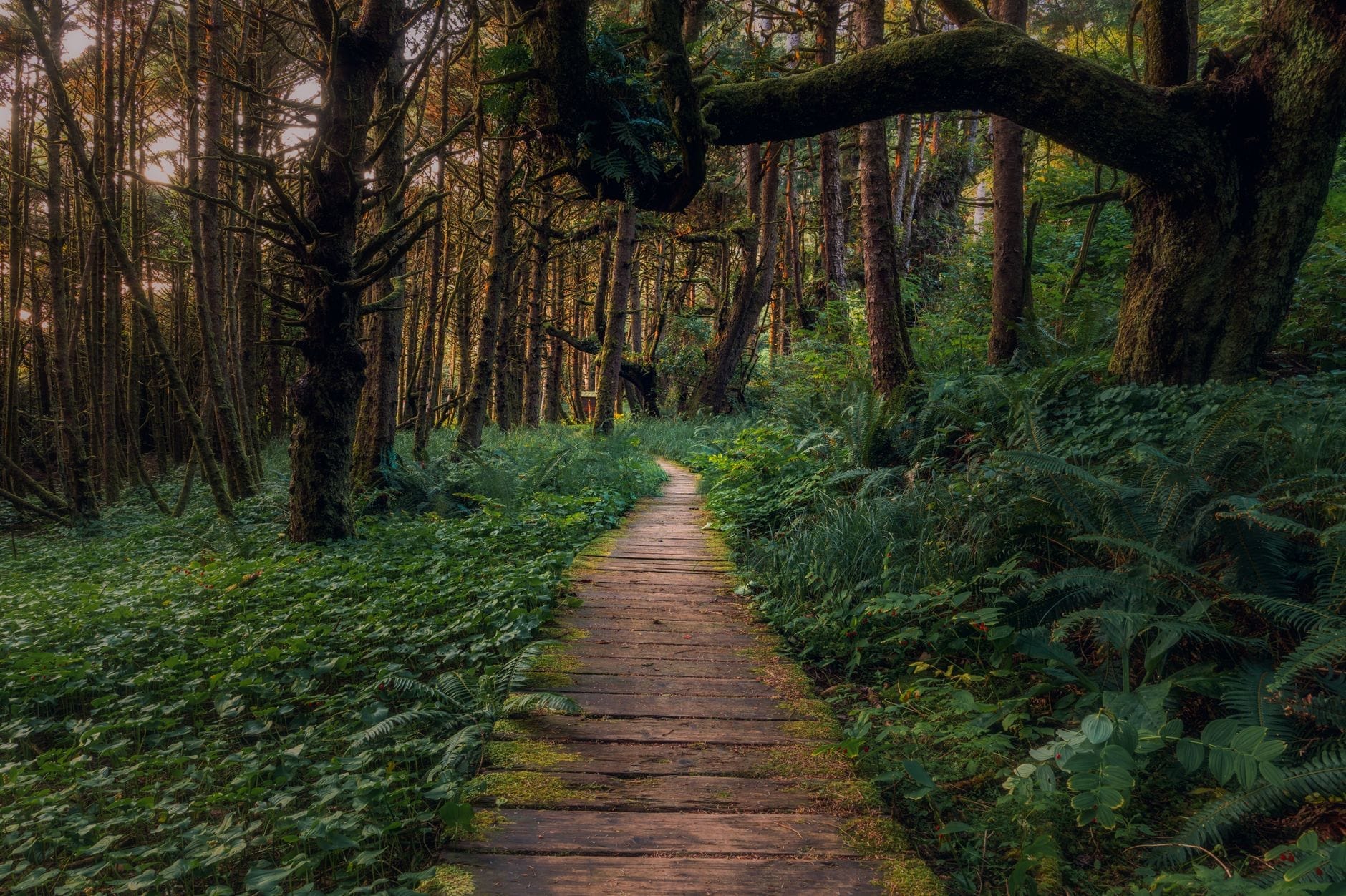
The trail network totals over 55 km, with roughly 34–50 km designated as multi-use, meaning cyclists and horseback riders share those paths with walkers. The forest is predominantly second-growth western red cedar, Douglas fir, and western hemlock, with a dense understory of sword fern and salal. After rain, the whole canopy releases a clean, resinous smell that is difficult to find anywhere this close to a city centre.
For context on how this fits into Vancouver's broader green space picture, see the hiking near Vancouver guide, which covers options from easy forest walks to serious mountain ascents.
ℹ️ Good to know
Admission is free. Trails are generally accessible year-round, with use recommended during daylight hours. Parking is also free at several roadside pull-offs along W 16th Ave, Chancellor Blvd, and Marine Drive.
The Trail Experience: What You Will Find Underfoot
Most trails in Pacific Spirit run as wide, compacted dirt paths through cathedral-like stands of tall conifers. The ground stays damp for most of the year, which keeps the ferns permanently green and the tree roots slick. Good footwear with grip matters more here than on any paved city walk.
The terrain is, by Vancouver forest standards, gentle. Elevation changes are modest across most of the park, making it accessible to a wider range of visitors than the steep North Shore trails. The exception is the southwest edge, where the land drops sharply toward the cliffs above the Fraser River estuary and Wreck Beach below. Trails near that edge involve steeper descent and rougher footing.
Several creek ravines cut through the park interior. Salish Creek and Cutthroat Creek are two of the most notable. Walking through one of these ravines, with the water audible below through a tangle of roots and mossy logs, is the closest thing to genuine backcountry feel that exists within the city boundary.
💡 Local tip
If you enter from the W 16th Ave trailheads and want a loop of roughly 5 km without navigating a map, follow the Cleveland Trail south to the Heron Trail, then return via the Sword Fern Trail. Trail signs are posted at most intersections, though a downloaded trail map from the Metro Vancouver website is worth having.
Tickets & tours
Hand-picked options from our booking partner. Prices are indicative; availability and final rates are confirmed when you complete your booking.
Grouse Mountain and Capilano Suspension Bridge Park tour
From 252 €Instant confirmationFree cancellationVancouver Art Gallery Tickets
From 19 €Instant confirmationFree cancellationVancouver Stanley Park cycling tour
From 56 €Instant confirmationFree cancellationWhistler, Shannon Falls and Sky Gondola tour from Vancouver
From 135 €Instant confirmationFree cancellation
How the Experience Changes by Time of Day and Season
Early morning, particularly on weekdays, Pacific Spirit is as quiet as any forest. The light filters green through the canopy, and you can hear individual bird calls without traffic competing. Townsend's warblers, Swainson's thrushes, and the occasional winter wren are audible in the understory. By mid-morning on weekends, the main connector trails fill with dog walkers and runners, though the side loops remain uncrowded throughout the day.
Summer is the most popular season, and the long daylight hours allow for evening walks that stretch into golden-hour light breaking through the tree gaps. The trails dry enough by July that dust becomes more of a concern than mud. Winter, by contrast, brings a different kind of atmosphere: the forest closes in, the light drops earlier, and the soundscape shifts to dripping water and wind. This is genuinely beautiful if you are dressed for it, but not for visitors expecting a comfortable stroll in city shoes.
Vancouver's wet season runs from October through March. During these months, expect muddy conditions on the earthen trails, especially those not surfaced with gravel. Waterproof footwear is not optional in winter; it is the difference between an enjoyable walk and a miserable one. On the upside, the park is rarely crowded on a grey November Tuesday, and the forest is at its most atmospheric.
If you are planning your Vancouver trip around the weather, the best time to visit Vancouver page breaks down rainfall and temperature month by month.
Getting There: Transit and Parking
The park is approximately 10 minutes by car from downtown Vancouver via West 16th Avenue or Broadway heading west toward UBC. Street parking is available along W 16th Ave (the most straightforward entry point for first-time visitors), along Chancellor Blvd on the north edge of the park, and off Marine Drive on the south side near the coastal trails.
By transit, several TransLink bus routes run toward UBC along Broadway/W 16th Ave and along Chancellor Blvd. The 99 B-Line (99 UBC/Commercial–Broadway) is an express route along Broadway to the UBC corridor, and from there local routes connect to trailheads. Check TransLink's trip planner for current routing before you go, as service patterns and stop locations can shift.
💡 Local tip
If you are combining the park with a visit to UBC, the museum and garden precinct is within walking distance of the north and west park boundaries. Plan the forest walk first while your legs are fresh, then cross into campus afterward.
What Else Is Near the Park
Pacific Spirit sits within the UBC and Point Grey area, which contains several worthwhile stops for visitors making the trip out to the west side. The Museum of Anthropology at UBC is a short walk or cycle from the park's northern boundary and houses one of Canada's most significant collections of Northwest Coast Indigenous art and material culture. Admission to MOA is not free, but the combination of a forest walk and a museum visit makes for a full half-day out of downtown.
Two formal gardens also sit near the park boundary. The Nitobe Memorial Garden is a compact, meticulously maintained Japanese stroll garden directly on the UBC campus, considered one of the most authentic Japanese gardens outside Japan. The UBC Botanical Garden covers a larger area and features plant collections from around the world. Both charge admission fees (verify current rates before visiting).
On the south edge of the park, Marine Drive leads down to Wreck Beach, a clothing-optional beach accessed by a steep trail down the cliffs. It is a significant Vancouver institution, but the descent and the return climb are strenuous and worth knowing about before you start down.
Who This Park Is For, and Who Might Be Disappointed
Pacific Spirit is ideal for people who want genuine forest, not a manicured park experience. There are no food vendors, no interpretive centres, no visitor facilities beyond basic trail signage and portable toilets at some access points. You walk in, the forest absorbs you, and you walk out. That is the entire offer.
Travelers looking for spectacular views, dramatic scenery, or social atmosphere will likely be underwhelmed. The forest canopy is too dense for mountain views, and there are no lookout platforms. The park's value is sensory and quiet: the smell of wet cedar, the softness of the trail underfoot, the absence of traffic noise once you are 200 metres from the road.
For travelers who want viewpoints and dramatic coastal scenery combined with forest walking, Stanley Park offers a more varied experience closer to downtown, including water views, beaches, and the seawall. Pacific Spirit and Stanley Park appeal to different instincts.
⚠️ What to skip
Dogs are allowed on most trails, and many sections have off-leash zones. If you are not comfortable walking near unleashed dogs, check the Metro Vancouver trail map for on-leash-only corridors before choosing your route.
Insider Tips
- The Heron Trail runs through one of the quieter interior sections of the park and connects to most of the major north-south corridors. It is a good backbone trail for building a custom loop without backtracking.
- Parking along Chancellor Blvd puts you on the north edge of the park, closest to the UBC campus and the Nitobe Memorial Garden. This is the most convenient entry point if you plan to combine the park with a campus visit.
- The south side of the park, above the cliffs near Marine Drive, has the most dramatic terrain and the fewest walkers. The trail condition here is rougher, so expect uneven ground and steep sections near the bluff edge.
- Trail intersections are numbered on Metro Vancouver's official park map, which is available as a PDF from their website. Download it before you arrive because mobile data can be unreliable under the dense canopy.
- Winter weekday mornings are the least crowded time in the park by a significant margin. If you are visiting Vancouver between October and March and want genuine solitude, a Tuesday morning walk here will deliver it.
Who Is Pacific Spirit Regional Park For?
- Trail runners seeking a soft-surface route free of city noise
- Dog owners wanting off-leash forest trails close to the city
- Visitors pairing a UBC campus itinerary with outdoor time
- Birdwatchers interested in Pacific Northwest forest species
- Travelers who prefer free, unhurried nature over ticketed attractions
Nearby Attractions
Other things to see while in UBC & Point Grey:
- Museum of Anthropology at UBC
The Museum of Anthropology at UBC is one of Canada's foremost anthropology museums, set inside Arthur Erickson's soaring concrete-and-glass landmark on the University of British Columbia's Point Grey campus. With nearly 50,000 ethnographic objects and a collection rooted in Northwest Coast Indigenous cultures, it offers a serious, rewarding experience for anyone curious about the peoples of the Pacific Northwest and beyond.
- Nitobe Memorial Garden
Tucked behind the UBC Asian Centre, Nitobe Memorial Garden is a 2.5-acre traditional Japanese garden consistently ranked among the most authentic outside Japan. Designed by landscape architects recommended by the Government of Japan and completed in 1960, it rewards slow, deliberate visiting at almost any time of year.
- Spanish Banks Beach
Spanish Banks Beach stretches along English Bay in Vancouver's West Point Grey neighbourhood, offering nearly 1 kilometre of tidal flats, unobstructed views of the North Shore mountains, and a noticeably quieter atmosphere than the city's more central beaches. Access is free, lifeguards patrol seasonally, and the beach connects by bike path to Jericho and Locarno.
- UBC Botanical Garden
Founded in 1916, UBC Botanical Garden is Canada's oldest university botanical garden, covering 44 hectares on the University of British Columbia campus in Vancouver. It combines serious horticultural research with a genuinely rewarding visitor experience across themed garden collections that shift dramatically with the seasons.