Stanley Park: Vancouver's Urban Forest at the Edge of Downtown
Stanley Park is a 1,000-acre National Historic Site bordering downtown Vancouver, offering a paved seawall, old-growth forest trails, beaches, and ocean views — all free to enter. Whether you have two hours or a full day, it rewards whatever time you give it.
Quick Facts
- Location
- Stanley Park Causeway, Vancouver, BC V6G 1Z4 (West End peninsula, adjacent to downtown)
- Getting There
- TransLink Bus 19 from downtown; 30-min walk or 10-min bike ride from Canada Place along the Coal Harbour seawall
- Time Needed
- 2 hours (seawall highlights) to a full day (forest trails + attractions)
- Cost
- Free park entry; parking, Vancouver Aquarium, and some facilities charge separately
- Best for
- Walkers, cyclists, families, photography, and anyone wanting nature within minutes of downtown
- Official website
- www.destinationvancouver.com/things-to-do/stanley-park
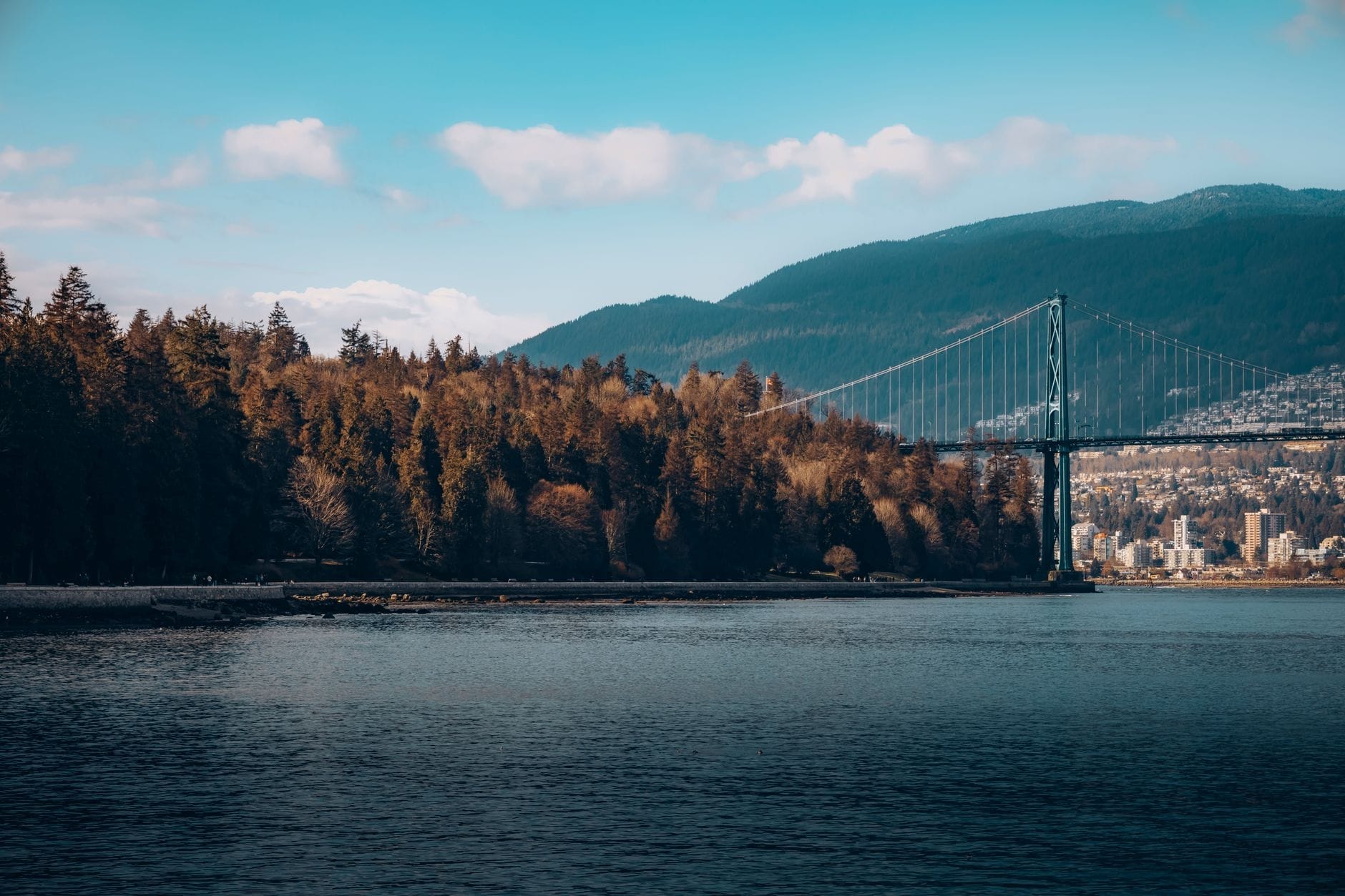
Stanley Park overview
Stanley Park is a 1,000-acre forested peninsula jutting into Burrard Inlet at the northwestern edge of downtown Vancouver. It is one of the largest urban parks in North America and a designated National Historic Site of Canada, recognized by Parks Canada for its significance as a large 19th-century urban green space. The land was established as Vancouver's first park in 1886 and officially opened in 1888, named after Governor General Lord Frederick Stanley.
Unlike many city parks that are essentially manicured lawns and paved plazas, roughly 80 percent of Stanley Park remains covered in dense second-growth and old-growth forest: Douglas fir, western red cedar, and Sitka spruce that rise high enough to block out city noise. On a quiet weekday morning inside the forest trails, it is easy to forget there is a skyline a few hundred meters away.
The park sits at the western edge of the West End neighborhood, making it walkable from both the downtown core and the residential streets around English Bay. That proximity is central to what makes it remarkable: a genuine forest wilderness reachable without a car from the middle of a major city.
ℹ️ Good to know
Park entry is free and the grounds are open 24 hours year-round. Specific facilities — the Vancouver Aquarium, restaurants, and swimming pools — have separate hours and fees. Always verify current prices with each facility before visiting.
The Seawall: The Park's Main Event
The Stanley Park Seawall is a paved multi-use path that traces the park's entire perimeter for approximately 9 kilometers (5.5 miles). It is separated into distinct lanes: one for cyclists and inline skaters, one for pedestrians. The separation is enforced by signage and social convention, and most visitors respect it — though the path gets crowded enough on summer weekends that collisions are not unheard of.
Walking the full loop takes roughly two to two-and-a-half hours at a relaxed pace. Cycling it takes about an hour. The seawall connects naturally to the broader Stanley Park Seawall route, which itself extends further along Coal Harbour toward Canada Place, or south toward Kitsilano and beyond — making it possible to build a much longer ride or walk without retracing steps.
The western stretch, facing English Bay, catches the full force of Pacific sunsets. On clear evenings, the water turns orange-gold and the mountains of the North Shore go purple behind it. The northeastern section, running along Burrard Inlet toward Prospect Point, is quieter and feels more enclosed, with the forest pressing right up to the path and cargo ships moving slowly through the narrows.
💡 Local tip
Bike rentals are available at the park entrance near Denman Street, just outside the West End. Renting a bike is the most efficient way to see the seawall and still have energy for the forest trails. Arrive before 10am on summer weekends to avoid queues at rental shops.
Tickets & tours
Hand-picked options from our booking partner. Prices are indicative; availability and final rates are confirmed when you complete your booking.
Vancouver Stanley Park cycling tour
From 56 €Instant confirmationFree cancellationCycling the Seawall: A relaxing audio tour cycle along the Stanley Park Seawall
From 5 €Instant confirmationSmall-group sightseeing city tour with Vancouver Lookout
From 45 €Instant confirmationFree cancellationThe Dark Secrets of Stanley Park tour
From 26 €Instant confirmationFree cancellation
The Forest Interior: What Most Visitors Miss
Most visitors circle the seawall and consider the park done. That is a reasonable choice, but it means missing the interior — a network of unpaved and semi-paved trails through genuine forest. The Rawlings Trail, the Bridle Path, and the network connecting Lost Lagoon to the interior all offer a fundamentally different experience: shaded, quiet, with the sounds of birds and the smell of damp cedar replacing the sounds of the city.
Lost Lagoon, the freshwater lake at the park's southern entrance near Georgia Street, is worth a slow circuit on its own. Swans, herons, and Canada geese are year-round residents, and the surrounding reeds and willows create a visual buffer from the road. For dedicated birdwatchers, it is one of the more productive urban birding spots in the city. More detail on the lagoon and its wildlife is covered in the Lost Lagoon guide.
On rainy days — and Vancouver gets many of them, particularly from October through March — the forest trails become atmospheric rather than unpleasant. The canopy keeps rain off for significant stretches, the mosses intensify to an almost luminous green, and the trails empty out. If you are visiting in the wetter months and want to experience the park at its most primordial, a forest walk in drizzle is worth considering.
Key Stops Around the Park
Brockton Point Totem Poles
The collection of totem poles at Brockton Point, on the northeastern shore, is among the most photographed spots in the park. The poles represent works by various Northwest Coast Indigenous artists and Nations. They are worth pausing at rather than photographing from a moving bicycle, as the carvings carry substantial cultural meaning. The nearby Brockton Point Totem Poles area also has a small lighthouse and views across Burrard Inlet toward North Vancouver.
Prospect Point
At the park's northwestern tip, Prospect Point stands about 62 meters above the water. From the lookout, you watch the Lions Gate Bridge span First Narrows directly below you, with ocean freighters and cruise ships passing underneath. It is one of the better viewpoints in the city and consistently draws crowds, particularly at the parking lot and café terrace in summer.
Second Beach and Third Beach
The park's western coastline has two swimmable beaches. Second Beach has a heated outdoor pool, a concession, and a playground, making it the family-oriented option. Third Beach, further north, is larger and less developed — popular with locals bringing chairs and food in the late afternoon. Both face west, which means both catch good evening light. For context on the broader beach scene, see the guide to Second Beach.
How the Park Changes by Time of Day
Early mornings are the most reliable time to visit without crowds. Before 8am, the seawall belongs mostly to local runners and dog walkers. The light on the water is flat but clear, the air smells of salt and cedar, and the park operates at a noticeably slower pace. This is also when wildlife is most active: herons stand motionless in the shallows of Lost Lagoon, raccoons move along the path edges before retreating, and the morning quiet amplifies every bird call from the forest.
By mid-morning on a summer weekend, the seawall fills rapidly. Bike rental lineups form on Denman Street, tour groups gather at the totem poles, and the parking lots on the main road through the park fill before noon. If your visit coincides with a weekend between June and August, either arrive by 9am or come mid-afternoon when some of the morning wave has moved on.
Late afternoon and early evening have their own character. The western seawall, from Third Beach back toward English Bay, draws people specifically for the sunset. On clear summer evenings, this stretch becomes genuinely crowded with a mix of locals and visitors, but the light makes it worth it. The sun drops behind the Olympic Mountains on clear days, and the colors on the water are striking.
⚠️ What to skip
Summer weekends (July and August especially) bring very high visitor volumes. The main parking lots fill by mid-morning and vehicle access can be slow. If driving, plan to arrive before 9am or use public transit. Bus 19 from downtown runs directly into the park.
Practical Details for Your Visit
Getting to the park without a car is straightforward. From downtown, the Coal Harbour seawall walk along the waterfront takes about 30 minutes on foot and is pleasant in its own right, passing by Coal Harbour marina and the float planes. TransLink Bus 19 runs from the downtown area into the park for visitors who prefer not to walk. Cyclists can follow the seawall path continuously from the Yaletown area, through False Creek and Coal Harbour, and into the park without breaking off the waterfront route.
Accessibility across the seawall is good: the paved path is wide, level enough for wheelchairs and mobility devices for most of its length, and there are washroom facilities at several points including Second Beach, Lumbermen's Arch, and the Prospect Point area. The forest interior trails are unpaved and less accessible for mobility devices, though some sections are navigable.
Weather shapes the experience significantly. Vancouver's temperate oceanic climate means rain is possible any month of the year, with the wettest stretch running October through March. The park is not less beautiful in wet weather, but layers and waterproof footwear matter. Summers are mild and mostly dry, with July averaging around 18–19 degrees Celsius, making extended outdoor time comfortable. For a broader look at how weather affects Vancouver visit timing, the
For a broader look at how weather affects Vancouver visit timing, the best time to visit Vancouver guide covers seasonal patterns in detail.
Photography Notes
The park offers a wide range of photographic subjects: the totem poles at Brockton Point shoot well in morning light when shadows are long and the crowd is thin. Prospect Point frames the Lions Gate Bridge from above, which is a classic composition. The western seawall shot — path curving away with forested hills to the right and open water to the left — works at nearly any time of day but comes alive at golden hour. Inside the forest, the cathedral-like spacing of old cedars and the shafts of light on overcast days both reward a slower approach.
Smartphone cameras handle most of the park well. The exception is low-light forest interior photography, where a camera with better sensor performance makes a real difference. Bring a light rain cover for gear if visiting outside summer.
Insider Tips
- The interior forest trails are signed but not always intuitive. Download an offline park map before you go — cell coverage drops inside the denser sections and data can be unreliable.
- If you want the totem poles at Brockton Point without the tour group crowds, arrive on a weekday before 9am. The light is better then anyway, coming from the east across the water.
- Third Beach is significantly less crowded than Second Beach on summer afternoons, even though it is a larger strip of sand. Most visitors do not walk far enough along the seawall to reach it.
- The park road that loops through the interior is open to cyclists during certain posted times when vehicle access is restricted. Check the current schedule with the City of Vancouver Parks board — these car-free hours are a much more relaxed way to cover the park by bike than the seawall on a busy day.
- Lost Lagoon is at its most atmospheric in early morning fog, which is common in spring and autumn. The combination of mist, waterfowl, and the forested edge is unlike anything else within walking distance of a North American downtown.
Who Is Stanley Park For?
- Walkers and cyclists who want a multi-hour route with consistently changing scenery
- Families with children, particularly for Second Beach's outdoor pool and the playground area
- Photographers looking for forest, ocean, mountain, and architectural subjects within a single location
- Visitors with limited time who want a concentrated dose of Vancouver's Pacific coast environment
- Travelers visiting in shoulder or off-season who want outdoor space that remains compelling even in rain
Nearby Attractions
Other things to see while in West End:
- Brockton Point Totem Poles
The Brockton Point Totem Poles are an outdoor collection of nine First Nations poles carved by artists from the Squamish, Kwakwaka'wakw, Haida, Nisga'a, and Nuxalk Nations. Set in a meadow at the edge of Burrard Inlet inside Stanley Park, the site is free, open around the clock, and reachable on foot from Coal Harbour in about 20 minutes.
- Davie Village
Davie Village is the cultural and social centre of Vancouver's queer community, stretching along Davie Street between Burrard and Jervis in the West End. Free to explore at any hour, it offers a mix of LGBTQ+ history, independent cafés and bars, the iconic rainbow crosswalk at Davie and Bute, and Jim Deva Plaza, a public gathering space that doubles as a community memorial.
- English Bay Beach
English Bay Beach, also known as First Beach, has served as Vancouver's primary urban beach for over a century. Stretching along Beach Avenue in the West End, it offers free access to a sandy shoreline with mountain backdrops, reliable sunsets, and a lively summer atmosphere that fades into quiet morning solitude the rest of the year.
- Lost Lagoon
Lost Lagoon is a 16.6-hectare freshwater lake sitting at the gateway to Stanley Park in Vancouver's West End. Free to visit at any hour, it draws birdwatchers, joggers, and anyone needing a few minutes of calm at the edge of a major city. The 1.75 km perimeter trail is one of the more underrated walks in Vancouver.