Nitobe Memorial Garden: A Genuine Japanese Sanctuary at UBC
Tucked behind the UBC Asian Centre, Nitobe Memorial Garden is a 2.5-acre traditional Japanese garden consistently ranked among the most authentic outside Japan. Designed by landscape architects recommended by the Government of Japan and completed in 1960, it rewards slow, deliberate visiting at almost any time of year.
Quick Facts
- Location
- 1895 Lower Mall, UBC Campus, Vancouver, BC V6T 1Z4
- Getting There
- Multiple TransLink bus routes serve the UBC bus loop; walk south along Lower Mall to the garden entrance
- Time Needed
- 45 minutes to 1.5 hours
- Cost
- Admission by paid ticket; check botanicalgarden.ubc.ca for current rates and policies
- Best for
- Slow walkers, photography, cultural history, couples, anyone craving genuine quiet on the UBC campus
- Official website
- botanicalgarden.ubc.ca/visit/nitobe-memorial-garden
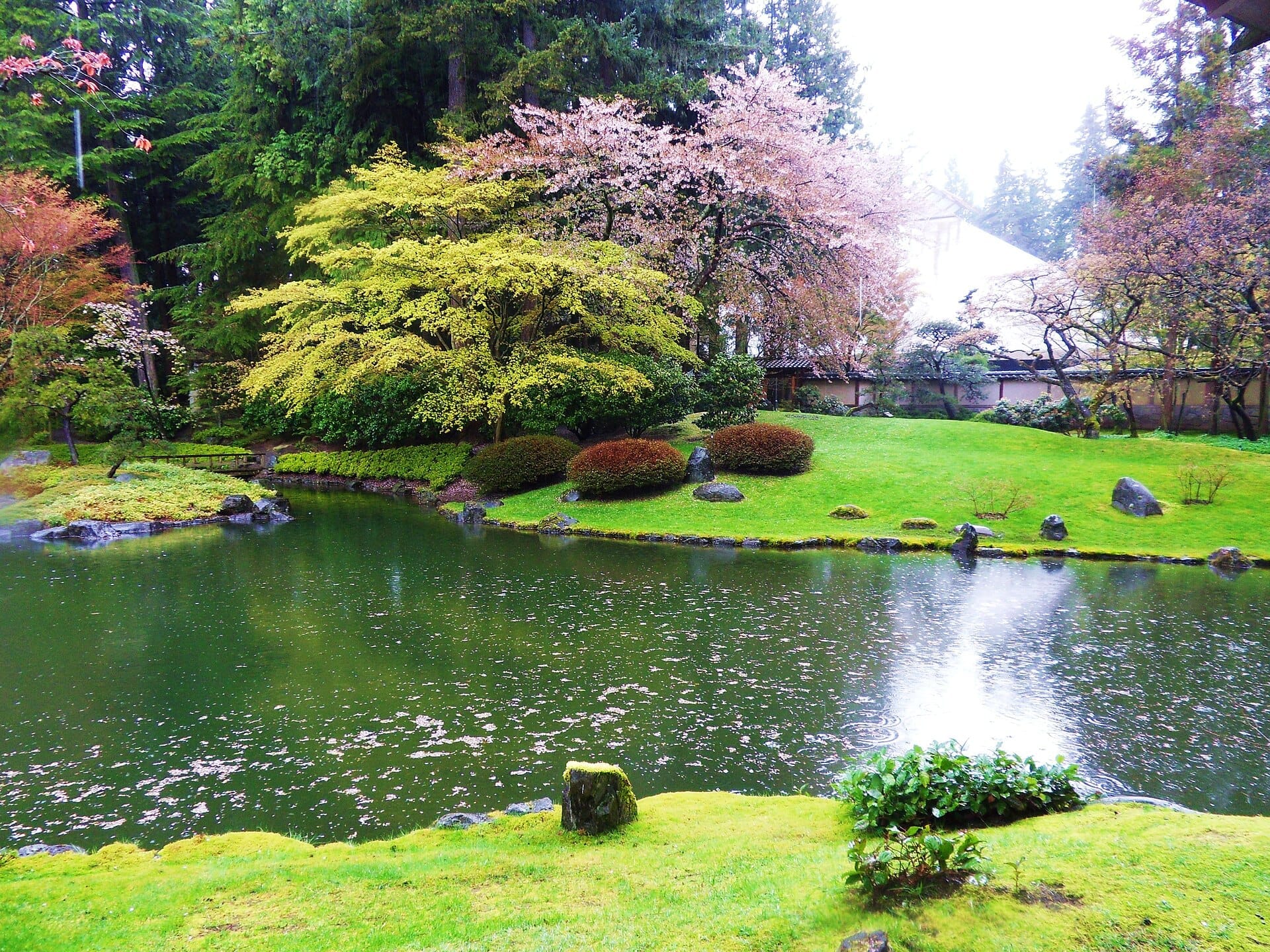
About Nitobe Memorial Garden
Nitobe Memorial Garden is a 2.5-acre traditional Japanese garden on the University of British Columbia campus, completed in 1960. It was carved from a hectare of West Coast forest by landscape architects and master gardeners recommended directly by the Government of Japan, which is a key reason the design feels so considered rather than decorative. The garden honours Dr. Inazō Nitobe (1862–1933), a Japanese scholar, diplomat, and author whose stated ambition was 'to become a bridge across the Pacific.' The choice of a garden as a memorial is fitting: Nitobe spent his career arguing that cultural understanding between Japan and the West could be built through shared knowledge and careful attention.
The garden follows two interlocking Japanese design philosophies: the Stroll Garden (kaiyushiki), which reveals different compositions as you move along the path, and the Tea Garden (chaniwa), which frames a traditional tea house and prepares the visitor mentally for the ceremony practiced inside. Both traditions are working concepts here, not museum pieces. The proportions are correct. The borrowed scenery, where the surrounding tree canopy is incorporated into views, is deliberate. The placement of every stone, lantern, and clipped shrub reflects decisions made by trained practitioners, not landscape contractors.
ℹ️ Good to know
Nitobe Memorial Garden is operated by UBC Botanical Garden. Hours vary by season: from roughly late May to early September, the garden is generally open daily from 10:00 to 16:30 with extended Thursday hours to 20:00, and from early September through October it is usually open 10:00 to 16:30 on select days; the garden is closed to the public from November through March. Always check botanicalgarden.ubc.ca for current times before making the trip out to UBC.
How the Garden Changes Through the Day and the Seasons
Morning visits, when the garden often opens at 10:00 during the main visiting season, offer the best light and the fewest other visitors. The central pond catches reflected sky at low angles, and the raked gravel areas are freshest. Sound is minimal: the soft crunch of gravel underfoot, water moving through a narrow channel, and whatever breeze is working through the tree canopy. The smell of damp moss and cedar is strongest early in the day, particularly after overnight rain.
By midday in summer, student groups from UBC sometimes pass through, and the atmosphere shifts slightly. It never becomes overwhelmed the way a downtown attraction might, partly because the garden is small enough that a crowd of twenty people feels like a lot, and UBC campus crowds tend to thin after the morning rush. Late afternoon, especially on a Thursday evening in summer when the garden stays open until 20:00, is exceptional. The low western light filters through maple and cherry branches in a way that mid-morning simply cannot replicate.
Seasonally, cherry blossom season (typically late March to mid-April in Vancouver) draws specific visitors for good reason. The garden's Somei-Yoshino cherry trees are spectacular in full bloom, and the combination of pale blossom reflected in the pond and the still-bare surrounding trees is exactly as photogenic as it sounds. That said, autumn is arguably the more underrated season: the Japanese maples turn in late October, the crowds thin considerably after the summer rush, and the garden takes on a quieter, more contemplative quality that suits its design philosophy better than the peak-season bustle.
Tickets & tours
Hand-picked options from our booking partner. Prices are indicative; availability and final rates are confirmed when you complete your booking.
Full-day tour to Victoria and Butchart Gardens from Vancouver
From 163 €Instant confirmationFree cancellationChristmas guided tour of Victoria and the Butchart Gardens
From 166 €Instant confirmationFree cancellationSightseeing tour of Victoria and Butchart Gardens from Vancouver
From 140 €Instant confirmationFree cancellationGrouse Mountain and Capilano Suspension Bridge Park tour
From 252 €Instant confirmationFree cancellation
Walking Through: What You'll Actually See
The entrance is modest, a gate off Lower Mall that gives no indication of what lies beyond. Within thirty seconds of entering, UBC's institutional architecture disappears entirely. The path curves immediately, a deliberate design move to separate the visitor from the outside world before the main composition is revealed.
The central pond is the organizing element of the Stroll Garden section. Stone lanterns are positioned at the water's edge at intervals that force you to slow down and look across rather than ahead. A zigzag bridge (yatsuhashi) crosses one of the shallower sections, a form with roots in Heian-period garden design. The bridge's sharp angles were traditionally used to confuse evil spirits, which could only travel in straight lines, but from a practical standpoint they also force you to stop and face different directions at each turn, recomposing the view.
The Tea Garden section, toward the rear of the site, is more enclosed. The tea house itself is a simple structure, and the roji (dewy path) leading to it is made of irregularly spaced stepping stones that require you to watch your footing, another deliberate mechanism to shift your mental state before entering. A stone water basin (tsukubai) near the entrance to the tea house is a functional element from the full tea ceremony tradition.
The planting throughout is a mix of Japanese and adapted Pacific Northwest species. Azaleas, Japanese maples, mosses, irises, and pines are the dominant visual elements. The moss, in particular, benefits from Vancouver's wet climate and is noticeably lush, covering stones and fallen logs in a way that would be difficult to maintain in a drier city.
The Person Behind the Name
Dr. Inazō Nitobe is not widely known outside academic and diplomatic circles, which makes the garden a more interesting memorial for those who investigate. Born in 1862 in what is now Morioka, Japan, Nitobe studied at Sapporo Agricultural College (now Hokkaido University), Johns Hopkins University, and the University of Halle in Germany. He became an agricultural economist, educator, and diplomat, serving as Under-Secretary General of the League of Nations from 1919 to 1926. He is perhaps best known internationally for his 1900 book Bushido: The Soul of Japan, written in English and intended to explain Japanese values and ethics to a Western audience. His ambition to 'become a bridge across the Pacific' was not a metaphor but a working program. He died in Victoria, British Columbia, in 1933, making his memorial garden at UBC a geographically appropriate tribute. The garden opened in 1960, honoured on the face of Japan's former 5,000-yen banknote.
Getting There and Practical Logistics
UBC is not walking distance from downtown Vancouver, so plan your transit. Multiple TransLink bus routes, such as routes 4, 14, 44, 84, 99, and 480, connect downtown and other parts of the city to the UBC bus loop; from there, the garden at 1895 Lower Mall is a short walk. If you are combining this visit with the nearby Museum of Anthropology or the UBC Botanical Garden, budget a half-day for the UBC campus rather than treating any single site as a standalone trip.
Parking is available on the UBC campus, though it is paid and subject to campus regulations. Check the UBC parking website for current rates and lot locations nearest to Lower Mall. Nitobe Memorial Garden has nearby parking on the UBC campus and is described by UBC Botanical Garden as having generally accessible facilities, though the gravel and stone paths within the garden do have some uneven surfaces; visitors with mobility considerations should factor this in.
Admission is by paid ticket, though prices are relatively modest, making this one of the more accessible cultural experiences on the UBC campus. Verify current policy at the official UBC Botanical Garden site before visiting, as pricing and donation structures can change. For context on planning your broader time at UBC, the UBC and Point Grey area has several other worthwhile stops within easy walking distance.
💡 Local tip
Wear shoes you are comfortable walking on wet gravel and uneven stone with. The garden is beautiful after rain but the paths become slick in places. A waterproof layer is sensible on any Vancouver visit between October and May.
Photography in the Garden
The garden is a strong photography subject at almost any season, but the specific challenges are worth noting. The dense tree canopy creates high-contrast lighting conditions on sunny days, with bright patches and deep shadow in the same frame. Overcast days, which Vancouver provides in reliable quantity, are often better for even exposure across the water and stone surfaces. The Thursday evening extension in summer gives you soft directional light that simply does not exist at midday.
The zigzag bridge and the central pond are the most-photographed elements. Less obvious but often more rewarding: the moss-covered stone arrangements near the tea garden path, and the reflections in the tsukubai water basin. Wide-angle lenses tend to flatten the spatial layering that makes Japanese garden design distinctive; a 35mm or 50mm equivalent focal length renders the composition more as the eye actually experiences it.
Who Should Consider Skipping This
Visitors with very limited time in Vancouver who are prioritizing iconic city views or major cultural institutions may find the transit time to UBC campus disproportionate to a 45-minute garden visit. The garden is compact: at 2.5 acres, it does not offer the scale of VanDusen Botanical Garden or the ecological variety of Pacific Spirit Regional Park, which borders the UBC campus. If your interest is specifically in Japanese garden design and cultural history, however, the specificity of Nitobe makes it more rewarding than a larger but less focused space.
Visitors expecting interactive programming, food options, or a gift shop will not find those here. This is a garden for looking, sitting, and moving slowly. Families with young children who cannot be redirected from running on stone paths or touching the lanterns may find the atmosphere difficult to manage. The garden is not designed for energetic exploration.
Insider Tips
- Thursday evenings in summer (when the garden stays open until 20:00) are the single best time to visit. The campus empties out after 17:00, the light is excellent, and you may have stretches of the path entirely to yourself.
- Combine your UBC visit strategically: the Museum of Anthropology and the UBC Botanical Garden are both within easy walking distance, making a half-day itinerary practical and worthwhile rather than making the trip to campus for Nitobe alone.
- Autumn colour peaks in late October, when the Japanese maples turn red and orange against the remaining green moss. This window is shorter than cherry season and less publicized, so crowds are considerably thinner.
- The garden is largely enclosed by mature trees, so wind is rarely a problem even on blustery Vancouver days. This makes it a genuinely sheltered option when conditions elsewhere on campus or at the waterfront are unpleasant.
- Look down as well as across: the mosses and low ground-level plantings near the tea garden path are among the most carefully composed elements in the garden and are easy to walk past without noticing.
Who Is Nitobe Memorial Garden For?
- Travelers interested in Japanese cultural history and garden design philosophy
- Photographers, particularly those working in autumn or on overcast days
- Couples looking for a quiet, unhurried experience without significant cost
- Anyone already spending time on the UBC campus who wants a deliberate contrast to the institutional environment
- Visitors researching Vancouver's Japanese Canadian history and cultural connections
Nearby Attractions
Other things to see while in UBC & Point Grey:
- Museum of Anthropology at UBC
The Museum of Anthropology at UBC is one of Canada's foremost anthropology museums, set inside Arthur Erickson's soaring concrete-and-glass landmark on the University of British Columbia's Point Grey campus. With nearly 50,000 ethnographic objects and a collection rooted in Northwest Coast Indigenous cultures, it offers a serious, rewarding experience for anyone curious about the peoples of the Pacific Northwest and beyond.
- Pacific Spirit Regional Park
Spanning roughly 860 hectares of second-growth rainforest on Vancouver's west side, Pacific Spirit Regional Park wraps around the UBC campus and offers over 55 km of free, multi-use trails through dense forest, creek ravines, coastal cliffs, and bog. It is one of the larger continuous green spaces within the city of Vancouver, and almost nobody from outside Vancouver knows it exists.
- Spanish Banks Beach
Spanish Banks Beach stretches along English Bay in Vancouver's West Point Grey neighbourhood, offering nearly 1 kilometre of tidal flats, unobstructed views of the North Shore mountains, and a noticeably quieter atmosphere than the city's more central beaches. Access is free, lifeguards patrol seasonally, and the beach connects by bike path to Jericho and Locarno.
- UBC Botanical Garden
Founded in 1916, UBC Botanical Garden is Canada's oldest university botanical garden, covering 44 hectares on the University of British Columbia campus in Vancouver. It combines serious horticultural research with a genuinely rewarding visitor experience across themed garden collections that shift dramatically with the seasons.