Vancouver Seawall: Complete Walking & Cycling Guide
The Vancouver Seawall is the world's longest uninterrupted waterfront path, stretching about 22 km along the waterfront from Coal Harbour to Kitsilano Beach, with some sources including extensions out to roughly 28–30 km. This guide covers every section of the route, cycling rules, seasonal conditions, rental options, and the best spots to stop along the way.
Plan and book this trip
Tools from our partner Travelpayouts help you compare flights and hotels. If you book through them, we may earn a commission at no extra cost to you.
Flights
Hotels map
TL;DR
- The Vancouver Seawall runs about 22 km from Coal Harbour around Stanley Park, along False Creek, through Vanier Park, and out to Kitsilano Beach — not just the 9 km Stanley Park loop most visitors know.
- The path is free to use, fully paved, and open year-round. Parking at Stanley Park lots is paid.
- Cyclists must travel counter-clockwise (one-way) around the Stanley Park Seawall loop. Riding the wrong way is prohibited and creates real safety hazards.
- July and August offer the best weather, but early mornings are the only time you'll have the path to yourself in summer.
- The Seawall connects several distinct neighbourhoods: Coal Harbour, the West End, Yaletown, and Kitsilano — making it a practical route, not just a scenic one.
The Vancouver Seawall: length and layout
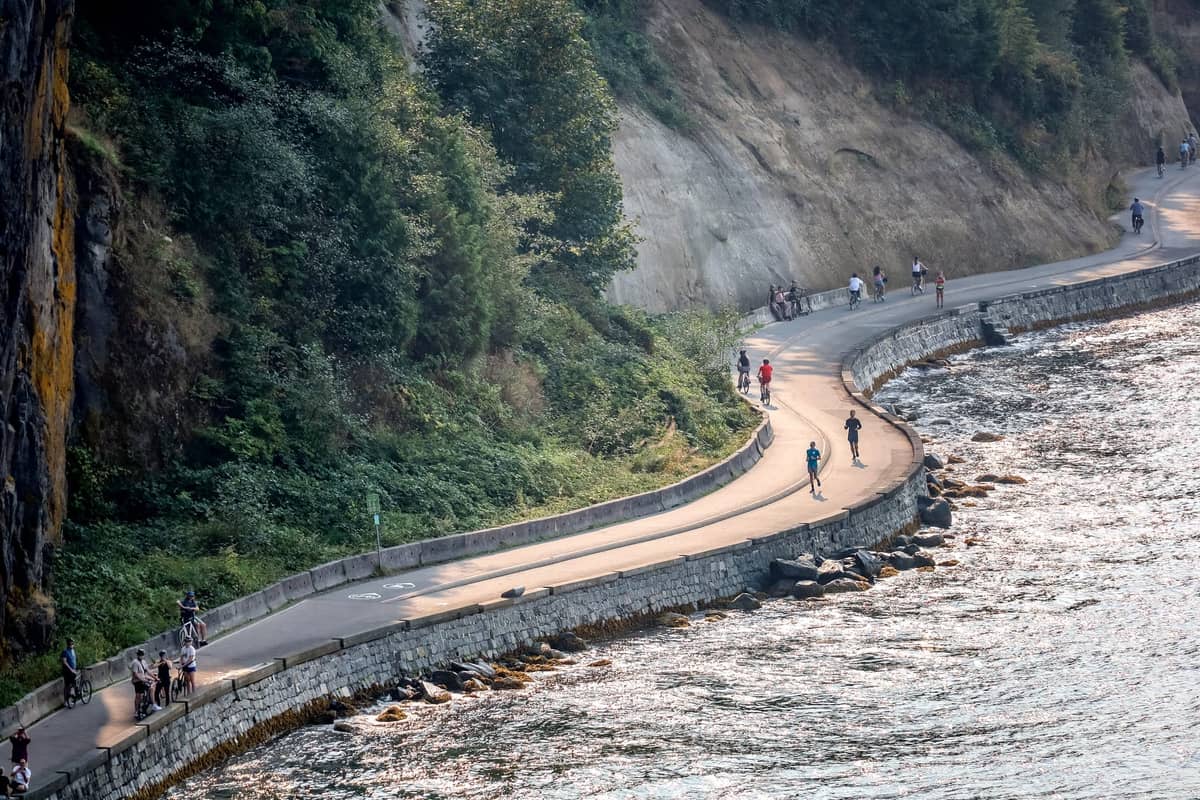
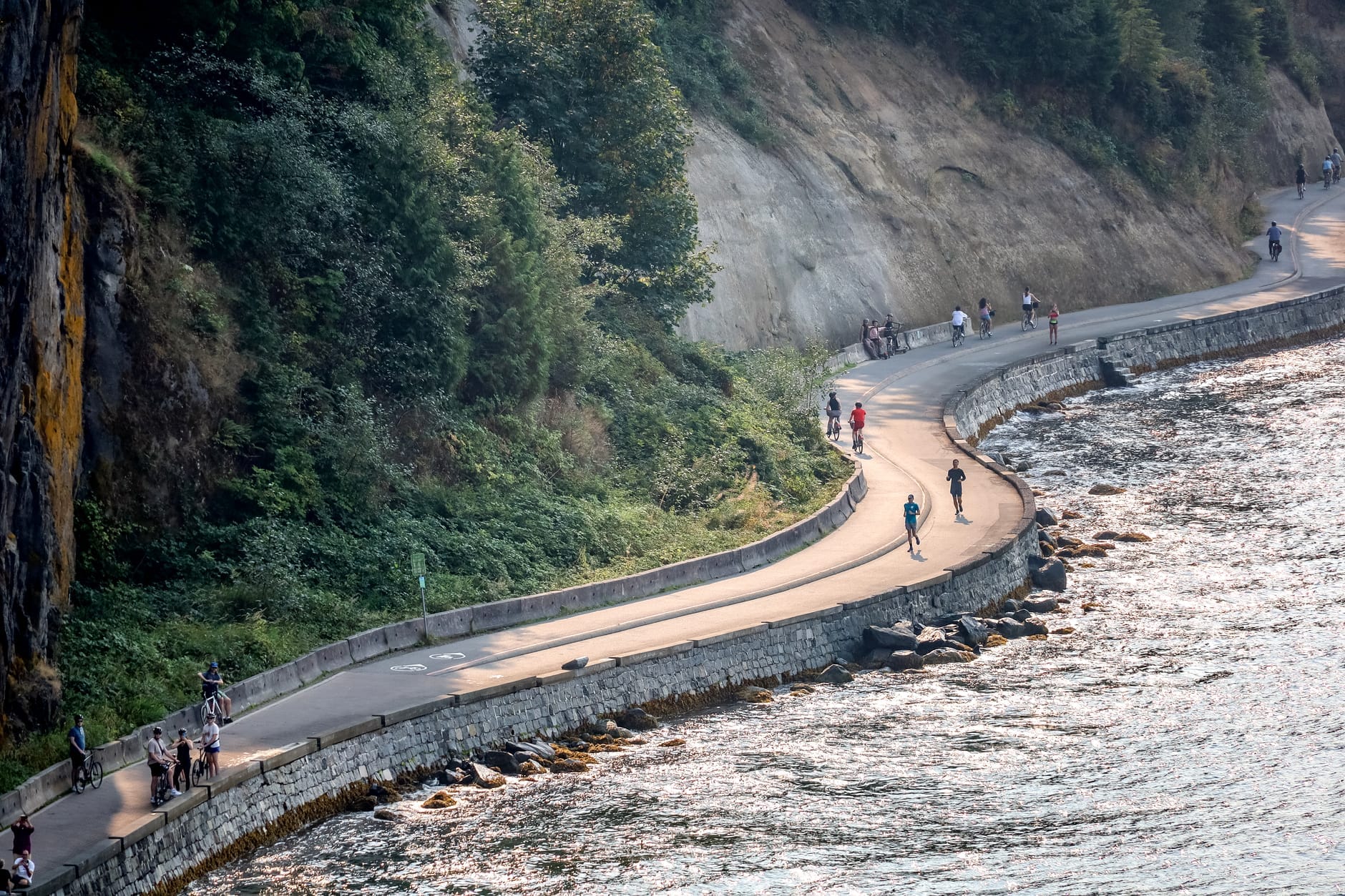
Most visitors think the Vancouver Seawall is the 9 km loop around Stanley Park. That loop is the most famous section, but the continuous waterfront path system from Coal Harbour around Stanley Park, along Sunset Beach and English Bay, around False Creek, past the Burrard Street Bridge through Vanier Park, and ending at Kitsilano Beach Park is about 22 km long. Some cyclists push further to Spanish Banks, adding several more kilometres and bringing the total route close to 30 km.
The Seawall was not originally built as a recreational trail. Construction began in 1917 as a stone retaining wall designed to protect Stanley Park's foreshore from erosion, and the full park perimeter loop was completed in 1980 after more than six decades of intermittent work. The recreational function came later, as the city recognized what it had: a continuous waterfront corridor unlike anything else in North America. Today it is often described as the world's longest uninterrupted waterfront path.
ℹ️ Good to know
The Seawall is managed by the Vancouver Board of Parks and Recreation. Current closures, construction detours, and condition alerts are posted on the City of Vancouver's official parks website. Check before you go, especially in winter or after major storms.
The Full Route: Section by Section
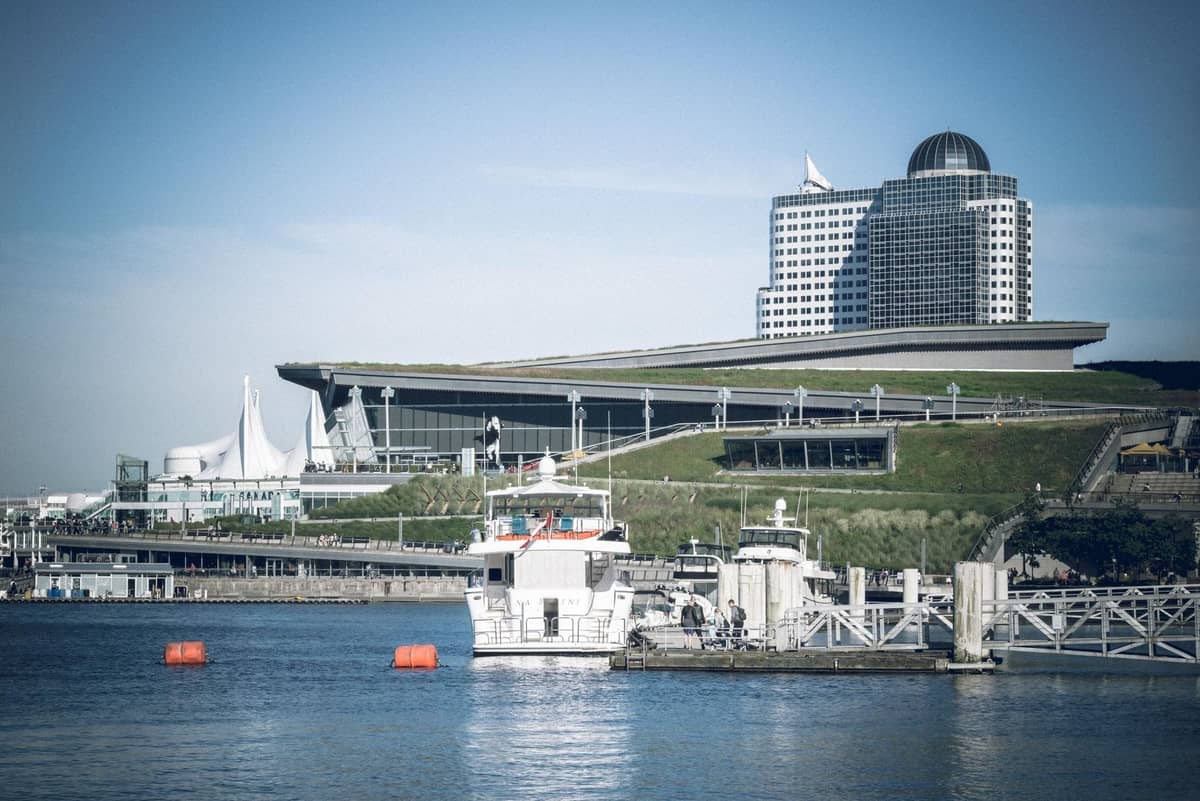
The most logical starting point for first-timers is Coal Harbour, near Canada Place and the Convention Centre. From here, the path heads west with the inlet on your left, passing moored float planes and luxury yachts before entering Stanley Park. This opening stretch is flat, wide, and well-maintained — ideal for families with strollers or anyone who wants to ease in.
Inside Stanley Park, the Seawall hugs the park's perimeter for the full 9 km loop. Key landmarks along this section include the Brockton Point totem poles, Prospect Point with its views of the Lions Gate Bridge, and the wild rocky shoreline on the park's west side. The park section is the most dramatic and the most popular — expect significant crowds on summer weekends.
After completing the Stanley Park loop, the path continues south through the West End past English Bay Beach and Sunset Beach. This stretch is where the path widens and the urban energy picks up: beach volleyball, food trucks, and a near-constant stream of joggers. False Creek begins at the east end of this section, and the path follows the water's edge through Yaletown before reaching the Olympic Village area and Science World.
The False Creek south shore runs past the Cambie Bridge and toward the Burrard Bridge, where the path crosses into Vanier Park. This quieter section has the HR MacMillan Space Centre and the Museum of Vancouver on your right and open water on your left. The final stretch to Kitsilano Beach passes some of the best views of downtown across the water, particularly at sunset.
- Coal Harbour to Stanley Park entrance Approximately 1.5 km. Flat, wide, ideal for a short walk. Float plane terminal and Convention Centre views.
- Stanley Park loop 9 km total. One-way counter-clockwise for cyclists and skaters. Walkers may go either direction on the pedestrian path.
- English Bay to False Creek Around 4 km. More urban, beach access, food vendors, and the Aquatic Centre nearby.
- False Creek to Vanier Park Roughly 3 km through Yaletown and Olympic Village. Quieter on weekdays, good cafe stops in this section.
- Vanier Park to Kitsilano Beach About 2 km. Open waterfront with downtown skyline views. The official end point of the main Seawall.
- Kitsilano Beach to Spanish Banks extension Several additional kilometres along the shore past Jericho Beach. Less maintained, more local crowd.
Cycling Rules, Bike Rentals, and What You Need to Know Before You Ride
The most important rule for cyclists: the Stanley Park Seawall loop runs one-way in a counter-clockwise direction. This was established to resolve a long-running collision problem between cyclists travelling in opposite directions. Riding clockwise around the park is prohibited, and park staff do enforce this. If you accidentally start in the wrong direction, backtrack rather than continuing against traffic.
Outside the Stanley Park loop, the rest of the Seawall is generally two-way for cyclists, with pedestrians and cyclists sharing or using parallel paths depending on the section. Pedestrians have priority everywhere. Cyclists are expected to signal, slow down around walkers, and use bells or verbal warnings. On busy summer days, the Coal Harbour section in particular can feel congested, and patience matters more than speed.
⚠️ What to skip
Helmets are legally required for cyclists of all ages in British Columbia. You can be ticketed for cycling without one. If you rent a bike, reputable rental shops will provide a helmet with the rental.
Bike rentals are available near the Seawall from several operators, typically charging around $10–15 per hour or $35–60 for a full day (verify current rates). Mobi by Shaw Go is Vancouver's public bike-share system, with docking stations near Coal Harbour, the West End, Yaletown, and Kitsilano — useful for shorter segments rather than the full route. If you plan to do the complete Seawall, renting a standard or e-bike from a dedicated shop near Stanley Park gives you more flexibility for stopping and exploring.
Best Times to Go: Crowds, Light, and Seasonal Conditions
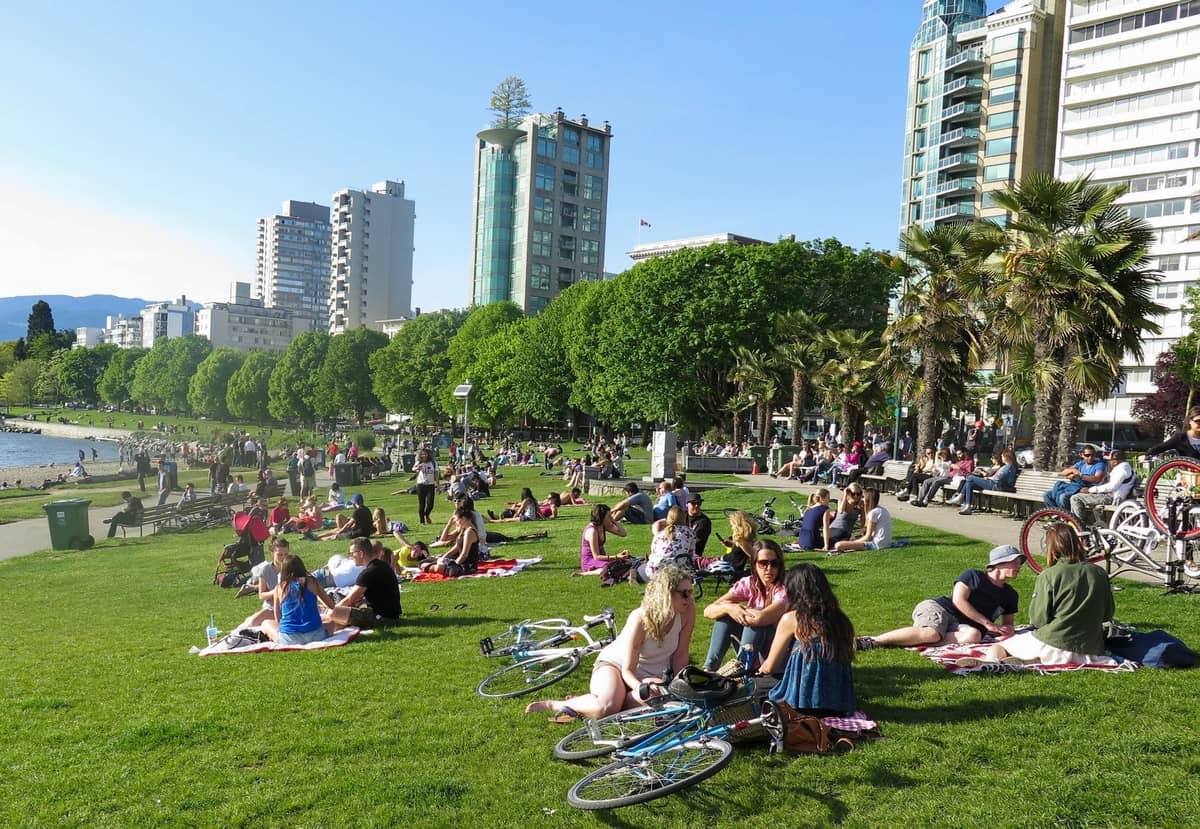
Summer (June through August) is peak season on the Seawall. July and August bring some of the best weather, with average temperatures around 17–18 degrees Celsius and among the lowest monthly rainfall totals of the year. The trade-off is crowds. On a Saturday afternoon in July, the Coal Harbour and English Bay sections can become genuinely difficult to navigate by bike, and the Stanley Park loop slows to a procession near key viewpoints. If you visit in summer, aim for before 9 AM or after 6 PM for a noticeably different experience.
Spring (April and May) and early September offer a strong alternative. Temperatures are cooler (averaging 9–14 degrees Celsius), but crowds thin significantly and the light is often excellent for photography. The North Shore mountains still have snow caps visible across the inlet in May, which makes the Prospect Point section particularly striking. Fall weekdays on the Seawall can feel almost private.
Winter use is entirely feasible. The Seawall does not close for rain, and Vancouverites use it year-round. The challenge is wind exposure on the west and north sides of Stanley Park, where sections face open ocean. After storms, logs or debris occasionally wash onto the path and temporary closures happen. Rainfall peaks from October through March, with November being the wettest month on average. Bring waterproof layers and expect to share the path mainly with committed locals rather than tourists.
💡 Local tip
For the full 28 km route in summer, start at 7:30 AM from Coal Harbour. You'll complete the Stanley Park loop before it gets busy, hit English Bay around 9 AM when the morning light is best, and arrive at Kitsilano Beach by late morning with the rest of the day free.
What to See Along the Way: Landmarks Worth Stopping For
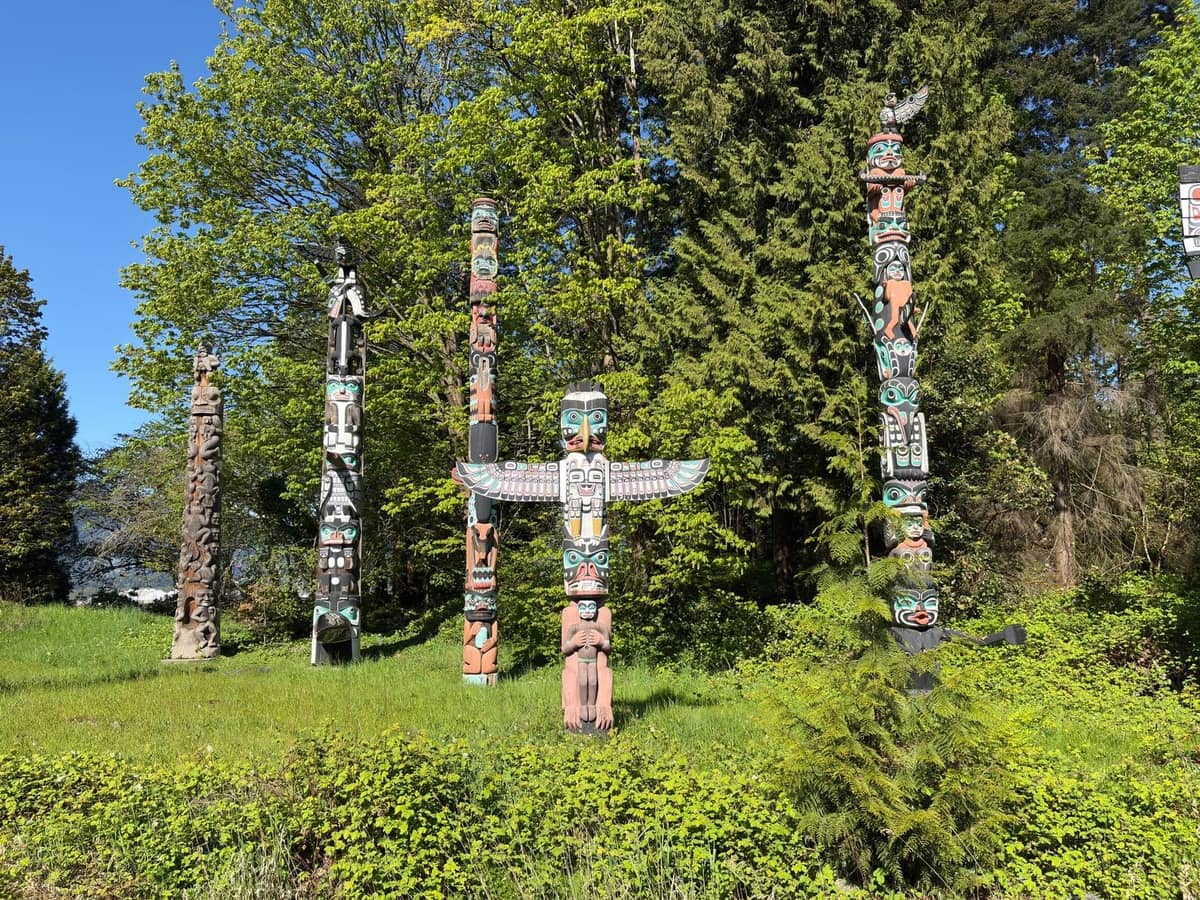
The Brockton Point totem poles are about 2 km into the Stanley Park section from Coal Harbour. The collection of poles from several Indigenous nations is one of the most photographed spots on the entire Seawall, and it's worth spending 10–15 minutes here rather than cycling past. The adjacent Brockton Point lighthouse dates to 1915 and still operates as a navigation aid.
Further around the park, Prospect Point sits at the northwest tip of Stanley Park and offers the best view of the Lions Gate Bridge from below. There's a concession stand and lookout area above the seawall level, accessible by a short path. The tidal action at the base of the bridge is surprisingly dramatic on incoming tides. On the south side of the park, the seawall passes Second Beach and its outdoor pool before re-entering the urban stretch near English Bay.
The False Creek section passes Science World at the east end of the creek — the geodesic dome is visible from most of the south shore and makes a useful landmark for orientation. Near the Cambie Bridge, the path passes through the former Expo 86 grounds, now a residential neighbourhood. The False Creek Ferries operate small passenger boats between stops along this section, which is worth knowing if you want to shorten the route or return to your starting point without retracing your steps.
- Brockton Point totem poles: 2 km from Coal Harbour entrance, allow 10–15 minutes
- Prospect Point lookout: northwest tip of Stanley Park, views of Lions Gate Bridge and North Shore mountains
- Second Beach outdoor pool: open seasonally, saltwater pool adjacent to the Seawall
- English Bay Beach: central social hub, busiest section in summer, several food vendors
- Olympic Village plaza: good coffee stops, farmer's market on some weekends
- Vanier Park: open waterfront, best unobstructed downtown skyline views from this section
- Kitsilano Beach: the natural finish point, with Kitsilano Pool (one of Canada’s largest outdoor pools) nearby
Practical Logistics: Getting There, Parking, and Connecting to Other Areas
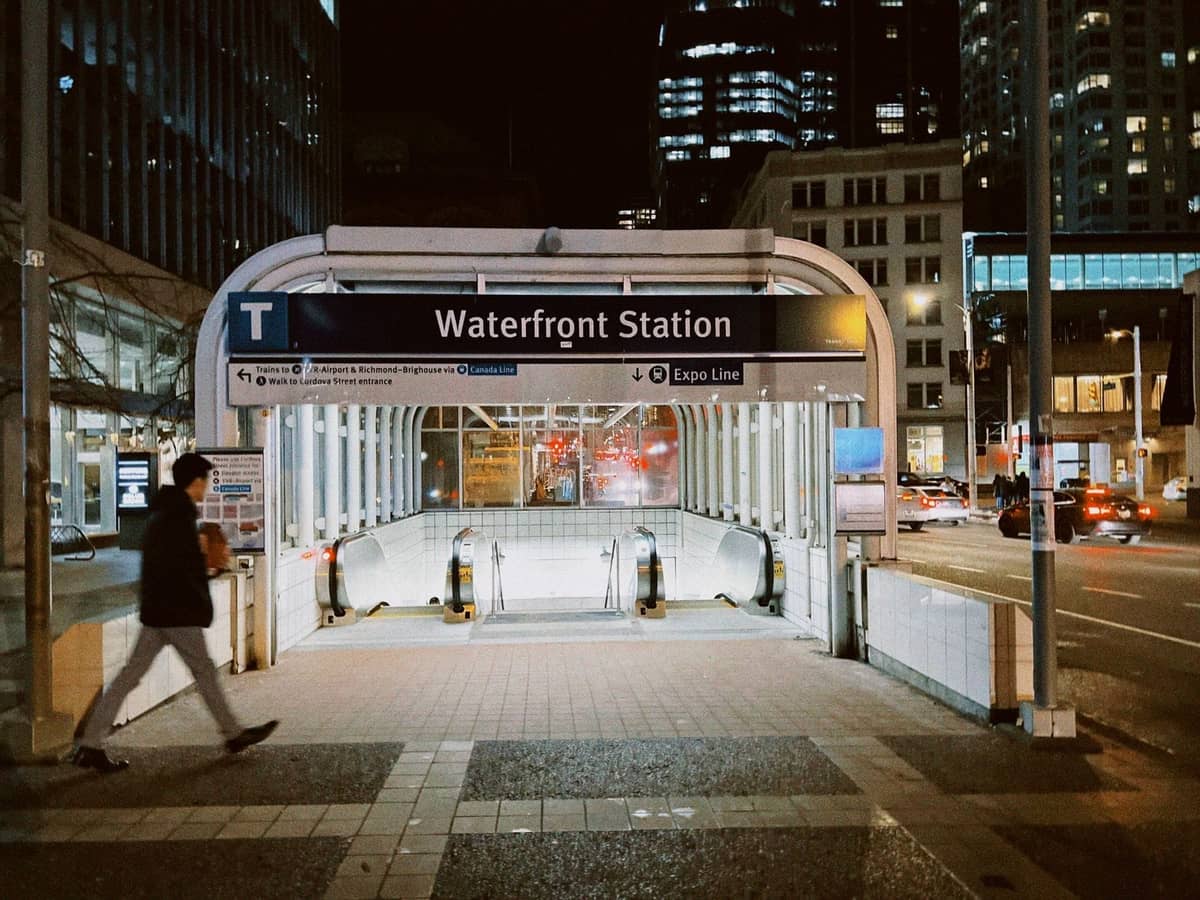
The Seawall is accessible from multiple points by transit. From downtown, the Canada Line or Expo Line to Waterfront Station puts you a short walk from the Coal Harbour starting point. The 19 bus runs along Pender Street to the downtown waterfront area near Coal Harbour. For the Kitsilano end, the 2 and 22 buses serve the area. TransLink's trip planner is the most reliable tool for current routing. See our guide to getting around Vancouver for full transit details.
Driving to the Seawall is possible but requires planning. Stanley Park has pay parking lots near the park entrance, at Prospect Point, and at several beach areas. These fill quickly on summer weekends by mid-morning. Paid street parking is available along West Cordova and West Hastings in Coal Harbour. On the Kitsilano end, street parking near Kitsilano Beach is metered and competitive. The honest recommendation: use transit or ride-hailing to reach the start point, then walk or cycle the route.
The Seawall connects naturally to several other major attractions and can anchor a longer day. A morning on the Seawall pairs well with an afternoon at Granville Island, which sits just off the False Creek section and is accessible via the False Creek Ferries. If you're doing the full route, the Vancouver summer guide covers beach options and what else to combine in the area.
FAQ
How long does it take to walk the full Vancouver Seawall?
The full 22–28 km route takes most people 5–7 hours at a comfortable walking pace with stops. If you're only doing the Stanley Park loop (9 km), plan for 2–3 hours walking. Cyclists typically complete the Stanley Park loop in 45–75 minutes and the full route in 2.5–4 hours depending on pace and stops.
Is the Vancouver Seawall free to use?
Yes, the Seawall path itself is free. There are no entry fees or passes required for walking, running, cycling, or rollerblading. You may pay for parking if you drive, and bike rentals have their own costs, but accessing the path is free.
Can I cycle both ways around the Stanley Park Seawall?
No. Cyclists and inline skaters must travel counter-clockwise around the Stanley Park loop. This is a posted rule and is enforced. Pedestrians can walk in either direction on the pedestrian portion of the path.
What is the best starting point for the Vancouver Seawall?
Coal Harbour near Canada Place is the most popular starting point and has good transit connections. It gives you a flat warm-up before entering Stanley Park. If you want to do just the Kitsilano-to-Yaletown section without the park loop, starting at Kitsilano Beach and heading east is a good option.
Is the Seawall suitable for children and families with strollers?
Yes. The path is fully paved and flat through Coal Harbour and most of the False Creek section. The Stanley Park loop has a few minor grades near Prospect Point but is otherwise manageable for most strollers and young cyclists. Avoid the busiest sections on summer weekend afternoons if travelling with small children, as foot traffic is heavy.
✨ Pro tip
If you want to do the full Seawall without backtracking, take a False Creek Ferry from Kitsilano Beach (or the dock near Vanier Park) back to the Aquatic Centre stop near Beach Avenue. The ferries run regularly and cost a few dollars, saving you the return trip and giving you a different perspective on False Creek from the water.