Kitsilano Beach: Vancouver's Favourite Urban Shoreline
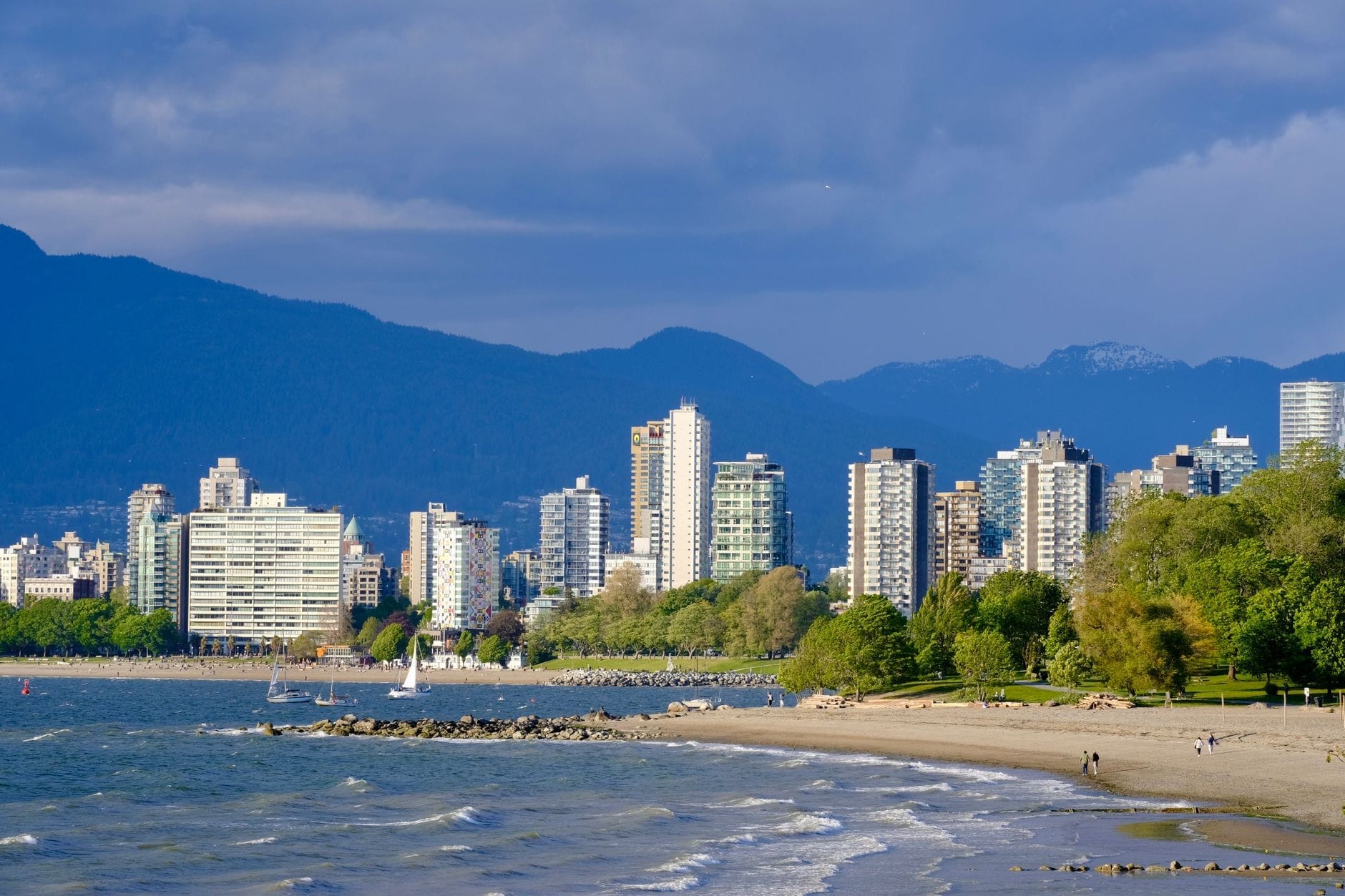
Kitsilano Beach stretches along the north edge of the Kitsilano neighbourhood, facing English Bay with clear sightlines to the North Shore mountains. Free to access year-round, it draws swimmers, volleyball players, and sunset-watchers from across the city. The beach is also home to Kitsilano Pool, reputed to be the longest outdoor pool in Canada and one of the longest saltwater pools in North America.
Quick Facts
- Location
- Kitsilano neighbourhood, Vancouver BC, facing English Bay (approx. 49.274°N, 123.155°W; official coordinates 49.27389°N, 123.15511°W)
- Getting There
- TransLink buses connect downtown to Kitsilano; no SkyTrain station directly nearby. Cycling via the waterfront corridor is a popular option.
- Time Needed
- 1 to 4 hours depending on swimming, picnicking, or a full sunset visit
- Cost
- Free (beach access). Kitsilano Pool charges a separate admission fee — verify current rates with Vancouver Park Board before visiting.
- Best for
- Swimming, sunsets, outdoor pools, families, picnics, mountain views
- Official website
- vancouver.ca/parks-recreation-culture/kitsilano-beach.aspx
About Kitsilano Beach
Kitsilano Beach sits at the northern edge of the Kitsilano neighbourhood, where the residential streets of west Vancouver give way to a wide crescent of sand along English Bay. The beach faces north across the water, which means the panorama in front of you on a clear day runs from West Vancouver's cliffs and forested slopes on the left, across to the Burrard Bridge and the downtown skyline on the right. On summer evenings, the light catches both the water and the mountains in a way that makes it easy to understand why locals treat this stretch of shoreline as something close to sacred.
Before the Canadian Pacific Railway developed the land in the late 19th century, the beach was known as Greer's Beach. The area takes its current name from the Kitsilano neighbourhood itself, which in turn references the Squamish leader Khahtsahlano. The Squamish-language name for the area is X̱epx̱páy̓em, a detail that places this very popular urban beach within a much older relationship between people and this coastline.
ℹ️ Good to know
Beach access is free year-round. Kitsilano Pool, which sits at the east end of the beach, normally operates seasonally from May to September and charges a separate admission fee, though schedules can vary slightly by year. Confirm current prices with the Vancouver Park Board before your visit.
The Beach at Different Times of Day
Early mornings at Kitsilano Beach have a different character entirely from the summer afternoons most visitors picture. By 7am on weekdays, the crowd is almost entirely local: dog walkers working the waterline, open-water swimmers in wetsuits doing long parallel sets, and cyclists cutting through on the path that connects this stretch to the broader seawall network. The sand is cool and often still damp. The smell is salt and low tide. It is one of the better times to appreciate the mountain backdrop without competition for your sightline.
By mid-morning on a summer weekend, the dynamic shifts. Parking fills quickly along Cornwall Avenue. Families arrive with folding chairs, coolers, and volleyballs. The beach volleyball courts fill up, and the lineup for Kitsilano Pool starts forming. Between noon and 3pm in July and August, this is one of the most heavily used urban beaches in western Canada. If you want space, arrive before 10am or accept that you will be sharing your patch of sand fairly closely with your neighbours.
Sunsets at Kitsilano Beach are the city's unofficial evening ritual from June through September. The north-facing orientation means you watch the light drop behind the West Vancouver mountains rather than directly into the water, producing a warm alpenglow effect that photographers and casual visitors alike show up for. By 8pm in midsummer, the crowds thin slightly from their peak, but the waterfront path stays active well into the evening.
Tickets & tours
Hand-picked options from our booking partner. Prices are indicative; availability and final rates are confirmed when you complete your booking.
Grouse Mountain and Capilano Suspension Bridge Park tour
From 252 €Instant confirmationFree cancellationVancouver Art Gallery Tickets
From 19 €Instant confirmationFree cancellationVancouver Stanley Park cycling tour
From 56 €Instant confirmationFree cancellationWhistler, Shannon Falls and Sky Gondola tour from Vancouver
From 135 €Instant confirmationFree cancellation
Kitsilano Pool: The Main Attraction for Swimmers
At the east end of the beach, Kitsilano Pool has a legitimate claim as the longest outdoor swimming pool in Canada and one of the longest saltwater outdoor pools in North America. The pool is oriented to face the mountains, and swimming laps here on a clear day is an experience specific to Vancouver in a way that few other things in the city are. The water is pumped from English Bay and treated, giving it a different character from a standard chlorinated pool, though it lacks the strong ocean smell you might expect.
The pool typically runs from late spring to early fall, generally May to September. It draws serious lap swimmers in the morning, families through the middle of the day, and a mix of both in late afternoon. The pool is heated, which matters on Vancouver's cooler summer days when the ocean temperature makes open-water swimming less appealing. If swimming is your primary goal, the pool is likely the better choice over the open beach, which can have variable water quality ratings depending on recent rainfall. Check current swim advisories through the Vancouver Park Board before getting in the water.
⚠️ What to skip
After heavy rain, beach water quality can be affected by urban runoff. Check current swim advisories on the Vancouver Park Board website before swimming in English Bay at the beach.
Getting There and Getting Around
Kitsilano Beach is roughly 3 to 4 kilometres from downtown Vancouver, which makes it an approachable cycling destination for most reasonably fit riders. The route along the waterfront, connecting through Vanier Park, is mostly flat and well-marked. From downtown, the ride takes around 20 to 25 minutes and deposits you almost directly at the beach. This is genuinely the most practical way to arrive on a busy summer day when parking is at a premium.
TransLink buses connect Kitsilano to downtown and to the broader city grid. The neighbourhood is served by multiple routes along Cornwall Avenue and West 4th Avenue. There is no SkyTrain station in Kitsilano, so transit trips from further afield will involve a bus connection. For detailed current route and fare information, check the TransLink transit guide for Vancouver before travelling.
Drivers will find street parking along Cornwall Avenue and a parking lot near the beach, but both fill quickly on summer weekends by late morning. Arriving by bike or bus on peak days is genuinely less stressful. Wheelchair-accessible parking and pathways are available, and the main beach area is noted as wheelchair accessible.
What to Bring and What to Expect
The sand at Kitsilano Beach is a medium-grain mix, firm enough underfoot near the waterline but soft further up. Barefoot walking is comfortable. The beach has washrooms, outdoor showers, picnic tables, and a concession stand near the pool area during the summer season. There is no shade to speak of on the open beach itself, so if you burn easily, sunscreen and a hat are essential rather than optional. Temperatures in Vancouver's summer sit in the high teens to low twenties Celsius on most days, comfortable for lying on the sand but cool enough that many swimmers find the water initially bracing.
For photography, the best light on the mountain backdrop comes in the morning (shooting west and northwest) and in the hour before sunset. A standard wide-angle lens captures the full sweep from the Burrard Bridge to the North Shore peaks. The beach also sits within walking distance of Kitsilano's café and restaurant strip on West 4th Avenue, which makes it easy to fold a meal into a beach visit without driving anywhere.
Pets are welcome in the surrounding park areas and there is an off‑leash dog beach nearby, but dogs are not permitted on the main Kitsilano swimming beach itself under Vancouver park bylaws. The beach is popular with families and is generally considered one of the more relaxed and well-maintained urban beaches in the city.
When Kitsilano Beach disappoints
Kitsilano Beach is not a secret. On a warm Saturday in July, it is one of the busiest public spaces in Vancouver. If you are looking for a quiet, contemplative beach experience, you will not find it here between noon and early evening in summer. The parking situation is genuinely frustrating if you drive, and the volume of people can make it feel more like a public park on a holiday weekend than a beach retreat.
The water temperature in English Bay rarely climbs above 18°C even in August, which limits the open-water swimming season for anyone without cold-water tolerance. Visitors primarily seeking warm ocean swimming may find the experience underwhelming compared to beaches in other destinations. For open-water alternatives with fewer crowds, Spanish Banks Beach to the west and Jericho Beach offer more space and a similarly strong mountain backdrop.
Outside of summer, specifically from October through April, Kitsilano Beach is a different place. The concessions close, the pool shuts down, and foot traffic drops sharply. The views remain and the walks are uninterrupted, but the infrastructure that makes the beach function as a full day destination is largely absent. For off-season visitors who want a waterfront walk in Kitsilano, this is still a worthwhile stop, just not a half-day activity.
Combining Kitsilano Beach with the Surrounding Area
The beach connects directly to the Seawall path via Vanier Park and the waterfront corridor, making it a natural stop on a longer cycling or walking loop. Vanier Park itself, just east of the beach, is home to the HR MacMillan Space Centre and the Museum of Vancouver, both worth considering if you have children with you or an interest in the city's history.
For a full day in the area, pair an early beach visit with a walk through the Kitsilano neighbourhood and a browse along West 4th Avenue's independent shops and cafés. The combination of beach, walkable commercial street, and parks makes Kitsilano one of the more coherent half-day itineraries in Vancouver for first-time visitors.
Insider Tips
- The beach volleyball courts are first-come, first-served. If court access matters to you, arrive before 9:30am on summer weekends. By 11am, wait times can be long.
- Kitsilano Pool opens in May, before most summer crowds arrive. Early May visits offer the mountain views and pool experience with a fraction of the July crowds and easier parking.
- The path between Kitsilano Beach and Vanier Park passes a small rocky point that locals use for quieter sitting and better mountain photography angles, away from the main beach crowds.
- On warm summer evenings, the beach faces west-northwest, which means the sunset light hits the North Shore mountains long after the sun has dropped behind the ridgeline. Arriving at 7:30pm rather than 9pm often produces better alpenglow colours.
- The outdoor showers near the pool are cold but functional, and the changing rooms adjacent to Kitsilano Pool are available to pool ticket holders. If you are swimming in the bay rather than the pool, pack a towel and a change of clothes since there are no changing facilities for open-water swimmers.
Who Is Kitsilano Beach For?
- Families with children who want a full-facility urban beach with a pool and washrooms
- Cyclists doing the waterfront loop who want a mid-ride stop with food options nearby
- Sunset photographers looking for mountain-backed evening light over water
- Visitors who want to combine a beach visit with a walkable neighbourhood for cafés and lunch
- Lap swimmers seeking the Kitsilano Pool experience during the May to September season
Nearby Attractions
Other things to see while in Kitsilano:
- H.R. MacMillan Space Centre
Tucked inside Vanier Park on the Kitsilano waterfront, the H.R. MacMillan Space Centre delivers immersive planetarium shows, hands-on space science exhibits, and occasional observatory evenings. It's a serious science destination that works equally well for curious adults and school-age children.
- Jericho Beach
Jericho Beach is a wide, west-facing public beach on Vancouver's west side with unobstructed views of the North Shore mountains, English Bay, and Vancouver Island on clear days. Free to access year-round, it draws a quieter crowd than Kitsilano Beach and carries layers of Indigenous, military, and maritime history beneath its relaxed surface.
- Museum of Vancouver
Founded in 1894 and housed in a distinctive flying-saucer-shaped building in Vanier Park, the Museum of Vancouver is Canada's largest civic museum. It traces the city's evolution from Coast Salish territory through the boom years to present-day neighbourhood culture, with rotating exhibitions that take genuine curatorial risks.
- South Granville
South Granville is a walkable stretch of Granville Street running south from the Granville Street Bridge to around West 16th Avenue. Known for its concentration of commercial art galleries, interior design showrooms, independent clothing boutiques, and serious restaurants, it offers a different pace and character from downtown Vancouver's busier retail strips.