Vanier Park: Vancouver's Waterfront Cultural Hub on Kits Point
Vanier Park sits on the south shore of False Creek in Kitsilano, combining open green space with three of Vancouver's most respected institutions: the Museum of Vancouver, the Vancouver Maritime Museum, and the H.R. MacMillan Space Centre. Entry to the park itself is free, and the setting alone, with mountain backdrops and downtown views, is worth the trip.
Quick Facts
- Location
- 1000 Chestnut St, Kitsilano (Kits Point), Vancouver, BC V6J 3J9
- Getting There
- TransLink buses along Cornwall Ave and Burrard St; short walk from stops. Accessible via False Creek Ferries from Granville Island.
- Time Needed
- 1–2 hours for the park; 3–5 hours if visiting one or more museums
- Cost
- Park entry free. Museum of Vancouver, Vancouver Maritime Museum, and H.R. MacMillan Space Centre each charge separate admissions (CAD); a combined Vanier Park Attractions Pass is available through the Museum of Vancouver — verify current pricing before visiting.
- Best for
- Families, culture-focused visitors, cyclists on the seawall, kite flyers, and anyone wanting a low-key afternoon with strong views
- Official website
- covapp.vancouver.ca/parkfinder/parkdetail.aspx?inparkid=120
About Vanier Park
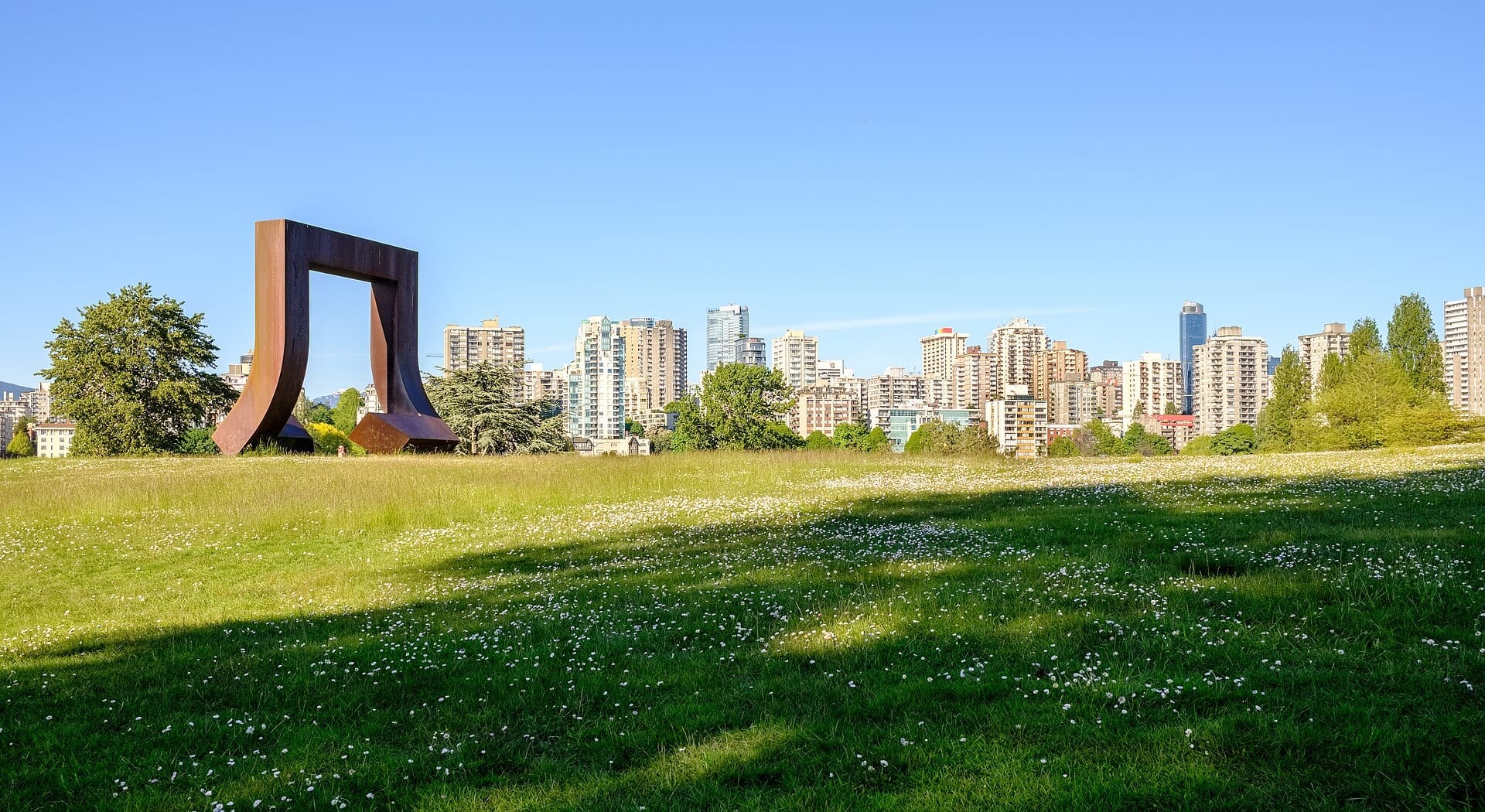
Vanier Park is a 16-hectare municipal park on Kits Point, the western tip of Kitsilano, where False Creek opens into English Bay. It is flat, wide open, and windy enough on most days that kite flyers have claimed the central grass fields as their unofficial territory. The park faces north across the water toward downtown Vancouver, and on clear days the North Shore mountains frame the skyline in a way that makes even routine afternoons feel cinematic.
What distinguishes Vanier Park from a typical city green space is what surrounds those open fields: three substantial cultural institutions sit within or immediately adjacent to the park, each with its own ticketed entry. The Museum of Vancouver, the H.R. MacMillan Space Centre, and the Vancouver Maritime Museum are clustered close enough that visitors can walk between all three in minutes. The park is the connective tissue binding them together.
ℹ️ Good to know
Vanier Park is open daily from 6:00 AM to 10:00 PM. Entry to the park grounds is free. Museum admissions are separate — check current prices on the Museum of Vancouver website, which also sells a combined Vanier Park Attractions Pass covering multiple institutions.
History and Significance of the Site
Before it was a park, this land served as a Royal Canadian Air Force base. The RCAF transferred the site to the Vancouver Park Board in the 1960s, and Vanier Park was officially opened on May 30, 1967, as part of Canada's centennial celebrations. It was named after Georges Vanier, the 19th Governor General of Canada, who had died in 1967 shortly before the park opened.
The site carries a deeper history that predates any colonial use. This area is part of the ancestral territory of the Squamish people, and the location is identified as Sen̓áḵw, a Squamish settlement of long standing. Visitors who walk the park's edges along the waterfront are moving through a landscape with layers of human presence that the tidy museum district only partially reflects.
The decision to cluster cultural institutions here rather than in downtown Vancouver has had a lasting effect on how the park functions. It draws a different crowd than a purely recreational park would: school groups arriving by bus, families with a plan, and adults moving purposefully between buildings. This gives Vanier Park a slightly more organized energy than, say, the open lawns of nearby Kitsilano Beach, even on a quiet weekday.
Tickets & tours
Hand-picked options from our booking partner. Prices are indicative; availability and final rates are confirmed when you complete your booking.
Grouse Mountain and Capilano Suspension Bridge Park tour
From 252 €Instant confirmationFree cancellationVancouver Art Gallery Tickets
From 19 €Instant confirmationFree cancellationVancouver Stanley Park cycling tour
From 56 €Instant confirmationFree cancellationWhistler, Shannon Falls and Sky Gondola tour from Vancouver
From 135 €Instant confirmationFree cancellation
The Three Museums: A Practical Overview
The Museum of Vancouver occupies a distinctive building with a crab-shaped roof designed by Gerald Hamilton, opened in 1968. Its permanent and rotating exhibitions focus on Vancouver's civic and social history from Indigenous cultures through to the city's more recent past. It is the right starting point if you want context before exploring the city more broadly.
Sharing the same building as the Museum of Vancouver, the H.R. MacMillan Space Centre is one of the more underrated stops on the Kits Point circuit. It runs planetarium shows in the dome theatre and maintains hands-on exhibits covering astronomy and space exploration. Evening laser shows run on weekends and are popular with adults as well as older kids. The dome format is genuinely worth experiencing for the immersion it creates.
The Vancouver Maritime Museum sits at the western edge of the park, closer to the water. Its centrepiece is the St. Roch, a Royal Canadian Mounted Police Arctic patrol vessel that was the first ship to complete the west-to-east traverse of the Northwest Passage and the first vessel to navigate the Passage in both directions. The ship sits inside the museum building and can be boarded for inspection. For anyone interested in maritime or Canadian Arctic history, this is a serious collection, not a token nautical display.
💡 Local tip
If you plan to visit more than one museum, ask about the Vanier Park Attractions Pass at the Museum of Vancouver ticket desk. It can reduce the combined cost of visiting multiple institutions compared to buying separate tickets. Verify current pricing and which venues are included before you visit.
How the Park Itself Changes Through the Day
Mornings at Vanier Park are quiet in a way that the rest of Kitsilano rarely is. The grass holds dew longer than most parks because the tree cover is sparse and the air off the water is cool. Joggers and dog walkers move along the paths before 8:00 AM without the museum crowds to contend with. The light on the water at that hour, angled low across English Bay, produces the kind of reflections that photographers arrive specifically to capture.
By late morning the character shifts. School groups arrive at the museums, cyclists lock up near the entrances, and the central fields start filling with people who have come solely to sit in the grass and look at the water. The wind picks up as the day progresses, which is why the park has such a visible kite-flying culture. On weekend afternoons in summer, the sky above the central lawn can have a dozen kites at once.
Sunset is the strongest reason to be here if you are not visiting a museum. The western-facing waterfront path gives an unobstructed view as the sun drops behind the North Shore mountains, turning the inlet orange and pink. It draws couples and photographers in roughly equal numbers. The park closes at 10:00 PM, which leaves time to linger well after the light fades.
Getting There and Moving Around
Vanier Park sits at the junction of two major cycling and walking routes. The seawall runs continuously from Stanley Park through Coal Harbour, along the downtown waterfront, and connects south to Vanier Park. It is one of the flattest and most direct cycling routes in the city, covering approximately 10 kilometres from Stanley Park to Kits Point without a significant elevation change.
From Granville Island, the easiest crossing is by False Creek Ferries, small passenger boats that run frequently during daylight hours and dock within walking distance of the park. This is the most pleasant approach, particularly on a clear day when the skyline view from the water is worth the short fare. It also means you can visit both Granville Island and Vanier Park in the same afternoon without backtracking.
By bus, TransLink routes along Cornwall Avenue and Burrard Street bring you within a short walk. Check the current TransLink trip planner for the most direct service from your starting point, as routing can vary. Parking is available near the museums but fills quickly on summer weekends, particularly when events are scheduled in the park. Cycling or transit is significantly less stressful than driving on busy days.
💡 Local tip
Vanier Park is wheelchair accessible and has accessible parking. The park paths are paved or compacted gravel, making most of the grounds manageable for strollers and mobility aids. The museums themselves have step-free access — confirm specific accessibility details with each venue before your visit.
Weather, Seasons, and When to Visit
Vancouver's climate means Vanier Park is genuinely worth visiting year-round, but the experience varies considerably by season. Summer, from June through August, gives the clearest skies and warmest temperatures. July averages around 18°C (64°F), and the low-lying park is one of the better spots in the city to catch a sea breeze when the rest of Vancouver feels warm and still. For more context on planning around Vancouver's weather patterns, see the best time to visit Vancouver guide.
From October through March, rainfall is significant and the park can feel raw and exposed. The open grass fields, which are such an asset in summer, offer no shelter from wind-driven rain. That said, the museums are a legitimate reason to visit in winter: the H.R. MacMillan Space Centre is fully indoors and warmer for it, and the Maritime Museum's focus on Arctic exploration feels oddly appropriate during grey, wet months. Bring waterproof footwear if visiting between November and February.
The park also hosts seasonal events including events such as the Vancouver International Children's Festival, which in recent years has taken place primarily at other venues rather than in Vanier Park, and other outdoor performances during summer. These can significantly increase crowds and reduce parking availability. If you are coming for the museums or the scenery rather than a specific event, a weekday morning visit in June or September avoids the peak summer pressure while keeping the weather reliable.
Photography Notes
The north-facing waterfront path is the strongest photography position in the park. You have the downtown skyline to the north, the Burrard Bridge to the east, and the North Shore mountains as a backdrop. The golden hour before sunset is the classic window, but the hour after sunrise produces softer, cooler light that captures the water texture more precisely than the warmer afternoon tones.
The Museum of Vancouver's crab-roof dome and the distinctive white geodesic structure of the Space Centre provide unusual architectural subjects if you are looking for something beyond landscape. Both buildings photograph well from the park's interior paths with wide-angle framing. Kite flyers add visual interest during the right wind conditions, typically mid-afternoon when the onshore breeze stiffens.
Who Should Reconsider This Stop
Vanier Park is not a destination for travelers seeking high-intensity activity or nightlife. The park itself closes at 10:00 PM, the surrounding area is quiet residential Kitsilano, and the closest late-night options are on Broadway or Granville Street, a 20-minute walk away. If your time in Vancouver is extremely limited and culture is not a priority, the museums may not justify the journey from downtown compared to more concentrated attraction zones.
The park's exposed position means it is also a poor choice during periods of heavy rain or strong onshore storms, when the wind off the water makes standing outside uncomfortable regardless of clothing. On those days the museums are still worth it, but the famous views that make Vanier Park photogenic will be obscured by low cloud.
Insider Tips
- The path between the Vancouver Maritime Museum and the water's edge is almost always less crowded than the main central lawn, and the view from that western edge is the best in the park. Walk it even if you skip the museum.
- The H.R. MacMillan Space Centre runs evening planetarium shows on weekends that are not well advertised to tourists. These are worth booking in advance, particularly in winter when dark skies arrive early and the programming tends to shift to longer narrative shows.
- If you are cycling the seawall from downtown, Vanier Park makes a logical turnaround point before heading into Kitsilano proper. Locking your bike near the Maritime Museum and walking the waterfront path takes about 15 minutes and adds almost no time to the ride.
- The Vanier Park Attractions Pass, available through the participating museums, covers admission to the Museum of Vancouver, the H.R. MacMillan Space Centre, and the Vancouver Maritime Museum. If you arrive at the Space Centre or Maritime Museum first, ask specifically about the Vanier Park Attractions Pass before paying full price at a single institution.
- Early May and late September offer the best balance of manageable crowds and good light. Summer weekends, especially during the Children's Festival period, bring significantly higher visitor numbers to what is otherwise a calm, spacious park.
Who Is Vanier Park For?
- Families with children interested in science, space, or nautical history
- Cyclists completing the full False Creek and seawall loop
- Photographers looking for downtown skyline and mountain views from the south shore
- Visitors who want to combine outdoor time with substantive museum content in a single afternoon
- Travelers seeking a calm, free outdoor space away from the downtown core
Nearby Attractions
Other things to see while in Kitsilano:
- H.R. MacMillan Space Centre
Tucked inside Vanier Park on the Kitsilano waterfront, the H.R. MacMillan Space Centre delivers immersive planetarium shows, hands-on space science exhibits, and occasional observatory evenings. It's a serious science destination that works equally well for curious adults and school-age children.
- Jericho Beach
Jericho Beach is a wide, west-facing public beach on Vancouver's west side with unobstructed views of the North Shore mountains, English Bay, and Vancouver Island on clear days. Free to access year-round, it draws a quieter crowd than Kitsilano Beach and carries layers of Indigenous, military, and maritime history beneath its relaxed surface.
- Kitsilano Beach
Kitsilano Beach stretches along the north edge of the Kitsilano neighbourhood, facing English Bay with clear sightlines to the North Shore mountains. Free to access year-round, it draws swimmers, volleyball players, and sunset-watchers from across the city. The beach is also home to Kitsilano Pool, reputed to be the longest outdoor pool in Canada and one of the longest saltwater pools in North America.
- Museum of Vancouver
Founded in 1894 and housed in a distinctive flying-saucer-shaped building in Vanier Park, the Museum of Vancouver is Canada's largest civic museum. It traces the city's evolution from Coast Salish territory through the boom years to present-day neighbourhood culture, with rotating exhibitions that take genuine curatorial risks.