Granville Island Public Market: Vancouver's Best Food Hall
The Granville Island Public Market is a working indoor market on a reclaimed industrial peninsula in False Creek. Free to enter, it draws locals and visitors alike with fresh produce, artisan foods, and a genuinely chaotic energy that no other spot in Vancouver quite replicates.
Quick Facts
- Location
- 1661 Duranleau Street, Granville Island, Vancouver, BC V6H 3R9
- Getting There
- False Creek Ferries or Aquabus to Granville Island; or bus to Granville Street Bridge and walk down; car parking available but limited
- Time Needed
- 1.5 to 3 hours for the market; longer if exploring the full island
- Cost
- Free entry; pay only for what you buy (Canadian dollars)
- Best for
- Food lovers, weekend morning visits, families, rainy-day outings
- Official website
- granvilleisland.com/public-market
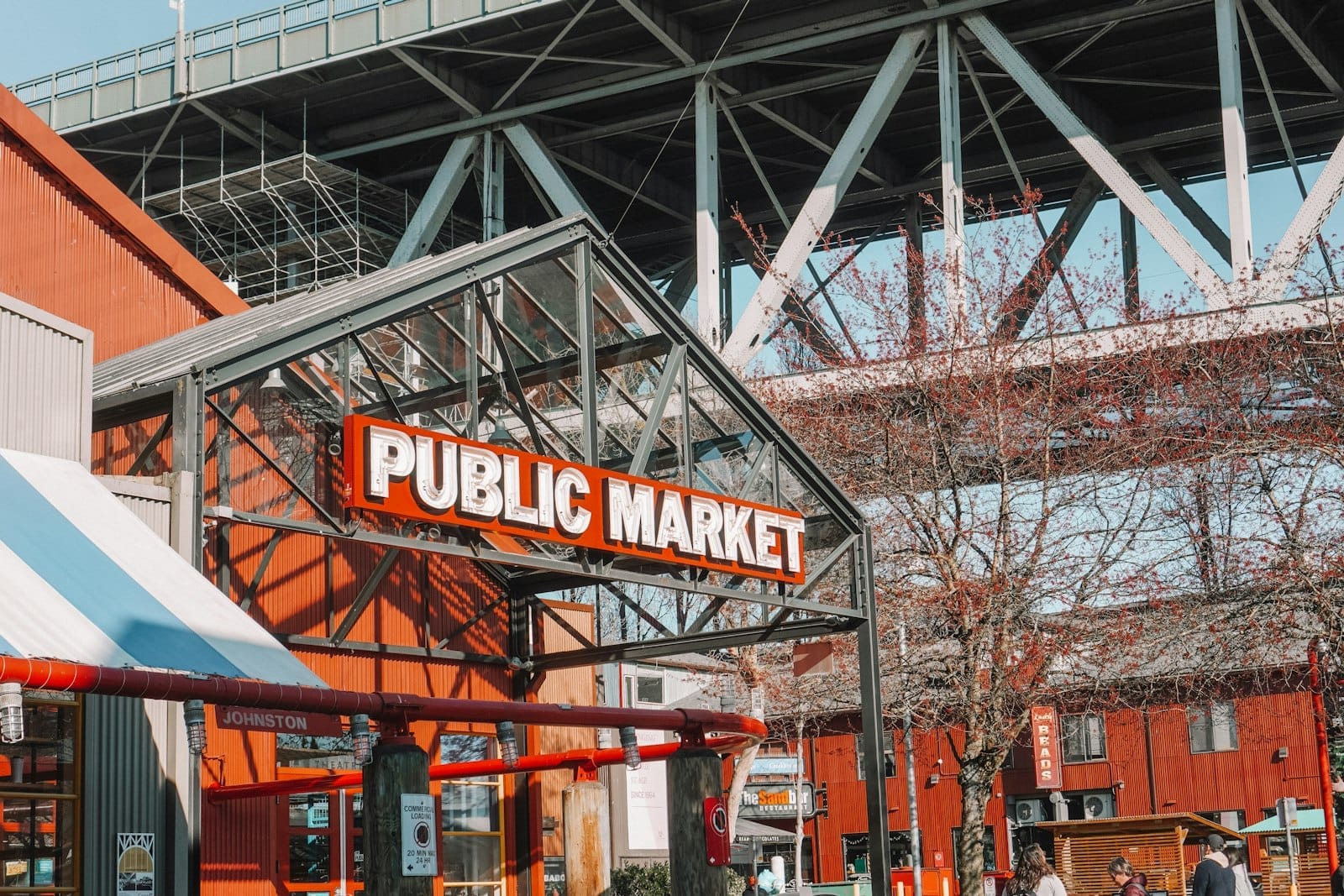
About Granville Island Public Market
The Granville Island Public Market opened in 1979 as the Public Market in a former industrial shed on a small peninsula tucked under the south end of the Granville Street Bridge, jutting into False Creek. At the time, the surrounding island was still partly operational industrial land. The market was intended as a catalyst for a broader conversion of the peninsula into a public cultural district, and that plan worked: Granville Island is now home to theatres, artisan workshops, and galleries, but the market remains its anchor and its most-visited single space.
What makes it different from a food hall or a tourist market is the mix. The vendors are overwhelmingly local and independent, selling things actually grown or made in British Columbia: Okanagan orchard fruit, Pacific salmon, locally milled grains, fresh pasta made on-site, honey from apiaries in the Fraser Valley. There are no chain tenants inside the market building itself. The noise level is real, the smells are layered and specific, and the floor is often sticky near the fish counters in summer. None of this is a complaint.
💡 Local tip
The market is free to enter. You pay only for what you buy. Budget CAD 15-30 if you want to graze seriously across multiple stalls, more if you're picking up groceries or specialty items.
How the Experience Changes by Time of Day
Early morning on a weekday is the market at its most honest. By 9:00 AM when doors open, vendors are still arranging displays, the coffee queue at the busiest espresso counter is short, and the light coming through the market's roof panels is clean and flat. This is when the bakers' cases are freshest, when the flower vendors have their full stock, and when you can actually speak to the people selling things. If you want a conversation with a cheese maker or want to watch the fishmongers arrange whole salmon fillets on ice without bumping into someone, weekday mornings are when to come.
Saturday between 11:00 AM and 2:00 PM is a different experience. The market fills to the point where navigation through the central corridor requires patience. The noise becomes genuinely loud: musicians sometimes perform near the entrance, stall vendors call out samples, and the collective sound of several hundred people in a metal-roofed shed is substantial. This version of the market is worth experiencing once, but it is not the version to choose if you want to browse carefully or eat comfortably.
Sundays are slightly calmer than Saturdays but still draw strong afternoon crowds. The late afternoon window, roughly 4:00 PM onward, often sees vendors beginning to discount perishables. If you are buying produce, bread, or prepared food to eat rather than photograph, this can be a very practical time to visit. Summer hours extend the market to 7:00 PM (June 27 through September 1), adding a golden-hour window that is particularly good for buying something to eat outside on the island's waterfront.
⚠️ What to skip
The market is closed December 25, December 26, and January 1. In January only, it also closes on Mondays for annual maintenance. Check the official site before visiting in winter.
Tickets & tours
Hand-picked options from our booking partner. Prices are indicative; availability and final rates are confirmed when you complete your booking.
Granville Island Market tour
From 73 €Instant confirmationFree cancellationGrouse Mountain and Capilano Suspension Bridge Park tour
From 252 €Instant confirmationFree cancellationVancouver Art Gallery Tickets
From 19 €Instant confirmationFree cancellationVancouver Stanley Park cycling tour
From 56 €Instant confirmationFree cancellation
Opening Hours
- Winter hours (September 1 to June 26): 9:00 AM to 6:00 PM daily
- Summer hours (June 27 to September 1): 9:00 AM to 7:00 PM daily
- Closed: December 25, December 26, January 1
- Closed Mondays in January only for annual maintenance
The Physical Layout and What to Expect Inside
The market occupies a single large industrial shed with high steel ceilings and concrete floors. The building is not beautiful in an architectural sense, but its bones, the exposed trusses, the corrugated metal and brick, are part of the original 1915 industrial fabric of the island. The interior is divided loosely into fresh produce sections, specialty food counters, a prepared food and hot food zone, and a cluster of artisan day stalls along one side where vendors rotate on short licenses.
The permanent vendors include fishmongers with whole Pacific salmon, halibut, spot prawns in season, and shellfish displayed on beds of crushed ice. The produce stalls carry a different inventory depending on the season: in July there are cherries and peaches from the Okanagan; in October there are multiple varieties of squash, apples, and root vegetables. The bakery counters typically carry sourdoughs, croissants, and regional specialties, and the cheese vendors carry both imported and BC-made selections.
The day stalls along the interior perimeter are where you find the most eclectic mix: handmade preserves, spice blends, small-batch hot sauces, artisan chocolates, locally roasted coffee. These vendors rotate, so the specific stalls you encounter will differ from one visit to the next. The floor plan is not complicated, and getting lost is not really possible, but the density of options rewards slow exploration rather than a targeted shopping mission.
Getting There: The Ferry Option Is Worth Taking
The practical question most visitors face is how to arrive. The market sits on Granville Island, which is accessible by car, on foot via the Granville Street Bridge, or by small passenger ferry across False Creek. The ferry option is the most enjoyable and, during busy periods, the most practical since parking on the island is limited and frustrating on weekends. False Creek Ferries runs small wooden boats from several points including the Aquatic Centre near the Burrard Bridge and from the docks in Yaletown. The dock for the market is directly behind the market building, meaning you arrive approximately 20 steps from the entrance.
If you drive, the island has a large surface parking lot but it fills quickly on weekends. Arriving before 10:00 AM gives a reasonable chance of a space. After noon on Saturdays, expect to circle or give up. There is no SkyTrain stop on or near the island, though bus routes on Granville Street connect to the bridge, from which the walk down to the market takes around ten minutes. The waterfront route along the seawall from downtown is around 25 minutes on foot and is genuinely pleasant in dry weather.
If you are combining the market visit with time along the water, the Stanley Park Seawall connects through the False Creek waterfront walking and cycling network, making it possible to build a half-day route that includes the seawall and ends at the market.
Historical Context: From Smelting to Spot Prawns
Granville Island was created from reclaimed land in 1915 as an industrial zone for manufacturing, welding, and smelting operations serving the growing city. For decades it functioned as a working industrial district, largely invisible to most Vancouverites. By the 1960s many of the industrial operations had declined, leaving the area underused. The federal government, which controls the island through Canada Mortgage and Housing Corporation, then a Crown corporation, undertook a major redevelopment initiative. The Public Market opening in 1979 was the critical first step, and it established the pattern of adaptive reuse that defines the island today.
The market is frequently cited in urban planning literature as a successful example of converting industrial space into public-use infrastructure without erasing its original character. The Project for Public Spaces has recognized it as one of the world's great public markets. That framing can sound like hype, but the fundamentals bear it out: the market is owned by a public entity, entry is free, vendors are mostly independent operators, and the space is genuinely used by both local residents and visitors in roughly equal measure.
Weather, Seasons, and When the Market Is at Its Best
Because the market is indoors, Vancouver's famously rainy winters do not ruin the visit, they arguably improve it. On a wet November or February day, the market is warm, the produce is seasonal and specific, and the crowds are manageable. The smells are more concentrated in cooler weather: roasted nuts, fresh bread, smoked fish. This is not a consolation version of the market; it is a genuinely good version. For broader context on planning around Vancouver's weather patterns, see the Vancouver weather guide.
Summer brings the fullest produce stalls and the longest hours, and the ability to walk out of the market and eat on the waterfront seating is real. The Pacific spot prawn season runs roughly April to June, and if you visit during that window, the market's fish counters carry them live in tanks. That is worth timing a visit around if you are interested in BC seafood. Summer also brings the largest crowds, with July and August seeing peak visitor numbers across Granville Island.
If you are planning a summer visit to Vancouver and want to understand how the market fits into a broader itinerary, the Vancouver in summer guide covers the seasonal considerations in more detail.
Accessibility and Practical Notes
The market building has level concrete floors throughout and no steps at any of the main entrances. It is broadly accessible for wheelchair users and for strollers, though weekend crowds make navigation genuinely difficult in a wheelchair if you are visiting at peak times. Weekday mornings offer far more space to move. Washrooms are available on Granville Island, including facilities near the market itself.
Most vendors accept credit cards, though a small number of the rotating day stall vendors prefer cash. Bringing some Canadian dollars avoids the occasional awkwardness. Dogs on leash are permitted in some outdoor areas of Granville Island but are generally not allowed inside the market building itself. Photography inside is generally accepted and vendors tend not to object to photos of their displays, though asking is always courteous.
ℹ️ Good to know
The market sits on federal land managed by Canada Mortgage and Housing Corporation's Granville Island operation. This is why its mandate differs from a private food hall.
Insider Tips
- The day stall vendors along the inner perimeter change regularly. If you see something specific, buy it that day. It may not be there on a return visit the following week.
- Spot prawn season (roughly April to June) is the single best time to buy Pacific seafood at the fish counters. Live prawns are available during peak weeks, which is something you will not find in most other public markets anywhere.
- The ferry from the Aquatic Centre near the Burrard Bridge runs frequently and takes only a few minutes. Taking it one way and walking the seawall back gives you the best of both approaches without any parking headache.
- The prepared food vendors along the south wall of the market have limited seating inside and a small outdoor area adjacent to the building. In good weather, buy food and walk two minutes to the waterfront benches overlooking False Creek.
- If you are visiting in January, check the official Granville Island website before you go. The market closes Mondays in January for annual maintenance, and the holiday closures (December 25, 26, and January 1) catch some visitors off guard.
Who Is Granville Island Public Market For?
- Food-focused travelers who want to eat BC produce, seafood, and artisan products rather than just look at them
- Families with young children, particularly on weekday mornings when the space is manageable and vendors are more interactive
- Rainy-day visitors looking for a genuinely worthwhile indoor experience that is free to enter
- Anyone who wants to eat lunch without committing to a restaurant, grazing across multiple stalls instead
- Travelers on a budget who want to eat well in Vancouver without spending restaurant prices