Vancouver Weather: What to Expect Every Month of the Year
Vancouver's temperate oceanic climate means mild, rainy winters and warm, relatively dry summers — but the details matter for trip planning. This guide breaks down Vancouver weather month by month, covering temperatures, precipitation, crowd levels, and what to pack for every season.
Plan and book this trip
Tools from our partner Travelpayouts help you compare flights and hotels. If you book through them, we may earn a commission at no extra cost to you.
Flights
Hotels map
TL;DR
- Vancouver has a temperate oceanic climate: mild winters (rarely below freezing in the city), warm but not hot summers, and rain spread across most of the year.
- July and August are the driest, warmest, and busiest months — average highs reach around 22°C (72°F) with only about 33mm of rain in July.
- November through January are the wettest and cloudiest months; November averages around 250mm of rainfall and skies are overcast roughly 70–75% of the time.
- Spring (March–May) and autumn (September–October) offer fewer crowds and lower prices, but expect layers and a compact umbrella — see the best time to visit Vancouver for a full breakdown.
- Snow in downtown Vancouver is rare and light; ski season runs nearby on Grouse Mountain and Cypress Mountain from roughly December to March.
Understanding Vancouver's Climate: The Basics
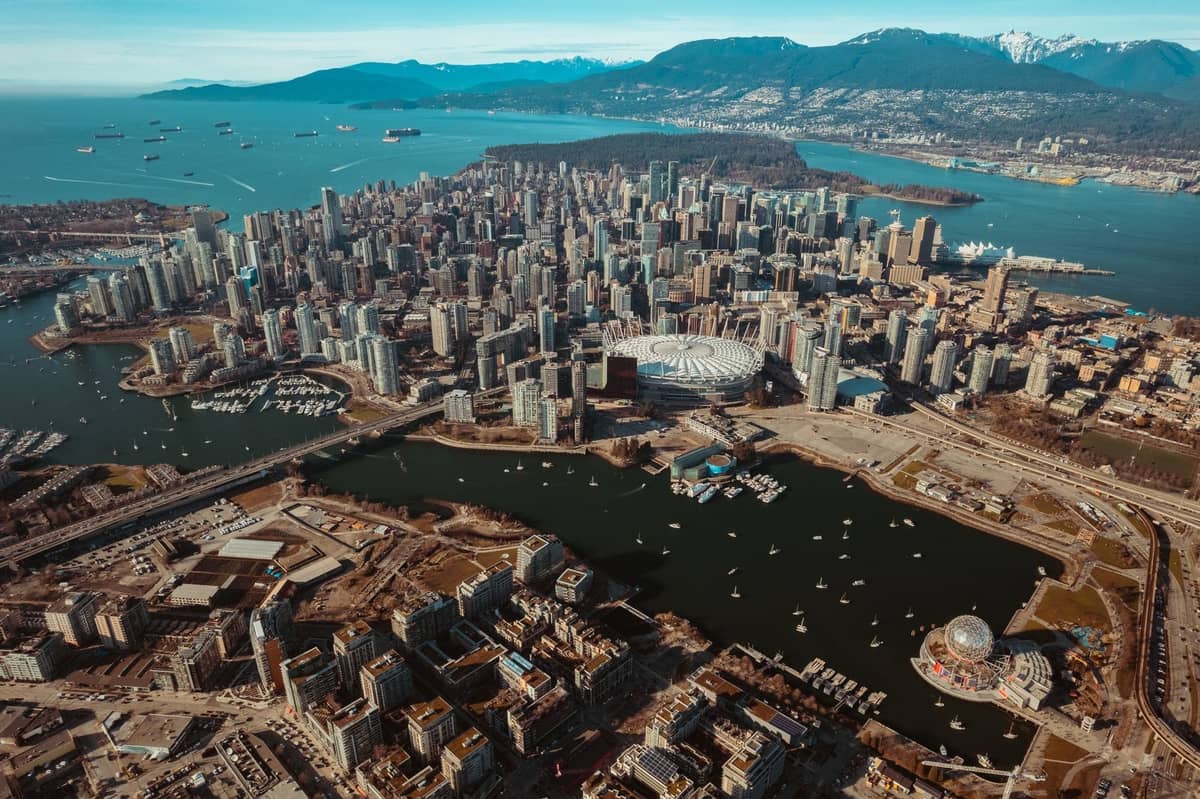
Vancouver sits at approximately 49°N on the Pacific coast of British Columbia, bracketed by Burrard Inlet to the north and the Fraser River delta to the south. That coastal position is the single most important factor shaping Vancouver weather. The Pacific Ocean acts as a giant thermal buffer, keeping winters far milder than cities at the same latitude inland, and capping summer temperatures well below what you'd find in continental climates. The Köppen classification is Cfb — temperate oceanic — which places Vancouver in the same broad category as London and Dublin, though Vancouver's summers are meaningfully sunnier and drier than either of those.
The trade-off for those mild winters is persistent rain and cloud from October through March. This isn't the dramatic, tropical downpour type of rain. It's low-intensity drizzle and grey overcast skies that can stretch for days. Locals barely register it; visitors from sunnier climates can find it oppressive by mid-February. Understanding this distinction — steady drizzle, not monsoon — changes how you pack and plan.
- Annual temperature range Roughly 2°C (35°F) on the coldest winter nights to around 23°C (73°F) on the hottest summer days. Extremes beyond this are uncommon, though the 2021 heat dome pushed temperatures briefly above 40°C — an event well outside historical norms.
- Wettest months October through March, with November typically the peak at around 250mm (9.9 inches) of precipitation.
- Driest months June through August, with July averaging only about 33mm (1.3 inches) of rain.
- Cloudiest period January, with overcast or mostly cloudy skies roughly 73% of the time.
- Clearest period August, when clear or partly cloudy skies dominate about 66% of days.
ℹ️ Good to know
Vancouver, BC is frequently confused with Vancouver, Washington — a separate city in the United States, just north of Portland, Oregon. This guide covers Vancouver, British Columbia, Canada only. The climates differ significantly.
Vancouver Weather Month by Month
January and February are the grey heart of Vancouver's wet season. Average highs sit around 6–7°C (43–45°F), lows hover near 2°C (36°F), and rain is near-constant. Snow occasionally dusts the city — a few times per season on average — but it rarely sticks for more than a day or two at sea level. The mountains directly to the north are a different story: Grouse Mountain and Cypress Mountain typically have reliable snowpack from December through March, making this a reasonable time to visit if skiing is the goal. Daylight is short, around 8–9 hours.
March and April mark a slow, uneven transition. Temperatures climb into the 9–12°C range (48–54°F), cherry blossoms typically peak in late February to mid-March (making Vancouver briefly spectacular), and rain becomes slightly less relentless. Still, April is not reliably dry — pack a waterproof layer. May is the month when the city genuinely starts to feel like spring: temperatures reach the mid-teens Celsius (around 59–63°F), patios open, and the risk of a truly washout day drops considerably.
June sits in a transitional zone that surprises many visitors. Early June can still be cool and rainy — locals call it 'Juneuary.' By late June, however, conditions shift noticeably. The second half of the month tends to be warm and largely dry, with average highs around 18–19°C (64–66°F). July is the statistical sweet spot: average highs of about 22°C (72°F), minimal rainfall, and roughly 13 hours of daylight. August matches July in sunshine percentage and is often slightly warmer, making it the peak month for beach visits to Kitsilano Beach, English Bay, and Spanish Banks.
September is legitimately pleasant and underrated. Average highs stay around 17–18°C (63–64°F) through mid-month, rainfall picks up gradually rather than all at once, and tourist crowds thin noticeably after Labour Day. It's a strong month for hiking near Vancouver and for walking the Stanley Park Seawall without the July congestion. October sees temperatures drop into the low teens and rainfall increase sharply — it's autumn in earnest. November and December complete the wet season cycle, with November the wettest month of the year and December cold, damp, and dark.
The Four Seasons at a Glance: What Each One Is Actually Like
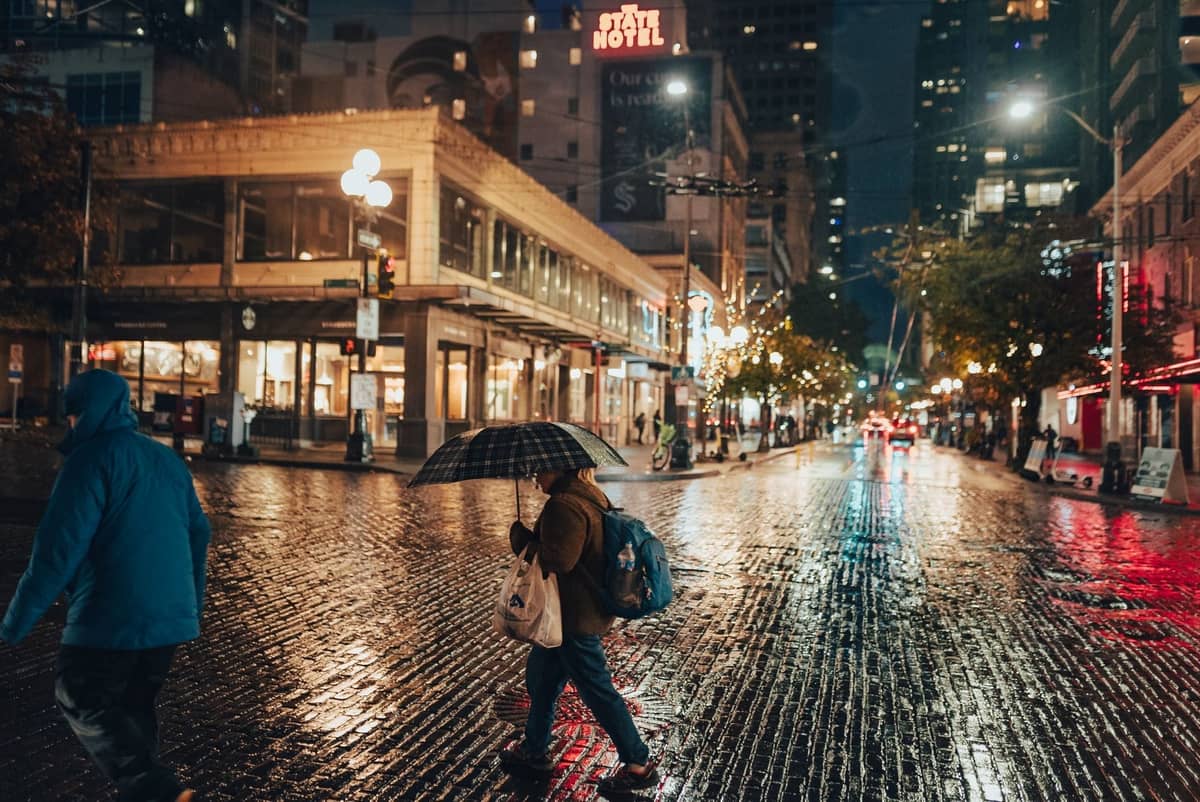
Winter in Vancouver (roughly mid-November through February) is the season that most shapes the city's reputation. The rain is real and persistent, but temperatures rarely dip below zero in the downtown core. Locals dress in waterproof layers — a good rain jacket is non-negotiable — and largely carry on with outdoor life regardless. The upside: accommodation prices drop, there are no lineups at popular restaurants, and the mountains are in prime ski season. If you're visiting primarily for city sightseeing, winter works fine logistically. Emotionally, you need to be comfortable with grey skies for days on end.
Spring (March through May) is variable and often underestimated. The cherry blossom season in late February and March draws significant crowds to neighborhoods like the West End and around Queen Elizabeth Park, and it's genuinely worth seeing. But spring weather in Vancouver is inconsistent — a beautiful 15°C day can be followed by three wet, cold ones. If you're visiting in spring, build flexibility into your itinerary. For free outdoor activities, spring is reasonable but not reliable.
Summer (June through August, with late June as the real start) is when Vancouver is at its most accessible. The city fills up — July and August see peak hotel rates and peak crowds at spots like Granville Island Public Market and Capilano Suspension Bridge. Temperatures are warm but not oppressive: the average high in July is around 22°C (72°F), and multi-day stretches above 30°C are unusual in most years. Sea temperatures at Vancouver beaches hover around 14°C (57°F) in peak summer — cool enough that many visitors prefer to swim at heated outdoor pools rather than the ocean.
Autumn (September through October) is the local's favourite season for a reason. The light turns golden, trails are less crowded, and the weather in September particularly can rival July for pleasantness. By October, you need a proper jacket and an umbrella, but the city is beautiful and far more affordable than summer. It pairs well with day trips from Vancouver before mountain roads get icy.
⚠️ What to skip
The 2021 heat dome was a statistical outlier that pushed Vancouver temperatures above 40°C for several days — an event with no historical precedent in modern records. Don't plan your trip expecting that kind of heat; it was an extreme anomaly, not a new baseline.
What to Pack for Each Season
The single most important item for any trip to Vancouver between October and May is a waterproof jacket with a hood. Not a water-resistant windbreaker — a genuinely waterproof shell. Locals don't carry umbrellas nearly as often as visitors expect, but they do wear proper rain gear. For summer, a light packable rain layer is still worth bringing, as even July has occasional wet days. Below is a practical packing breakdown by season.
- Winter (Nov–Feb) Waterproof jacket, layering base and mid-layers, warm hat and gloves, waterproof footwear. A heavy down coat is rarely necessary in the city — temperatures stay above freezing most days — but wind off the water can feel raw.
- Spring (Mar–May) Waterproof jacket is essential. Layers are key as mornings can be 8°C and afternoons 15°C. Comfortable walking shoes that can handle wet pavement.
- Summer (Jun–Aug) Light clothing for warm days, one packable rain layer, sunscreen (UV index reaches moderate to high on clear summer days), sunglasses. Evenings cool down to around 14–16°C, so a light sweater is useful.
- Autumn (Sep–Oct) Medium-weight waterproof jacket, layers, waterproof shoes or boots by October. September can still be warm enough for short sleeves midday, so flexibility matters.
Weather and Timing: Crowd and Cost Implications
Vancouver weather directly drives tourism patterns, which in turn drives prices. July and August are unambiguously the most expensive months to visit — hotel rates climb sharply, and popular attractions like Grouse Mountain and the Vancouver Aquarium have their longest queues. If budget is a priority, the months with the best weather-to-price ratio are May and September.
For travelers on a tight budget, the wet season offers real savings — hotel rates in November and January can be significantly lower than peak summer. The tradeoff is obvious, but if your itinerary is weighted toward museums, restaurants, and indoor experiences, winter is entirely workable. Vancouver's food scene, covered in detail in our guide to what to eat in Vancouver, is year-round by definition.
✨ Pro tip
The last two weeks of June offer a strong balance: summer weather is usually establishing itself, prices haven't fully peaked yet, and daylight is near its maximum (around the solstice). It's worth targeting if you have flexibility in your travel dates.
Vancouver Weather vs. Vancouver Island Weather
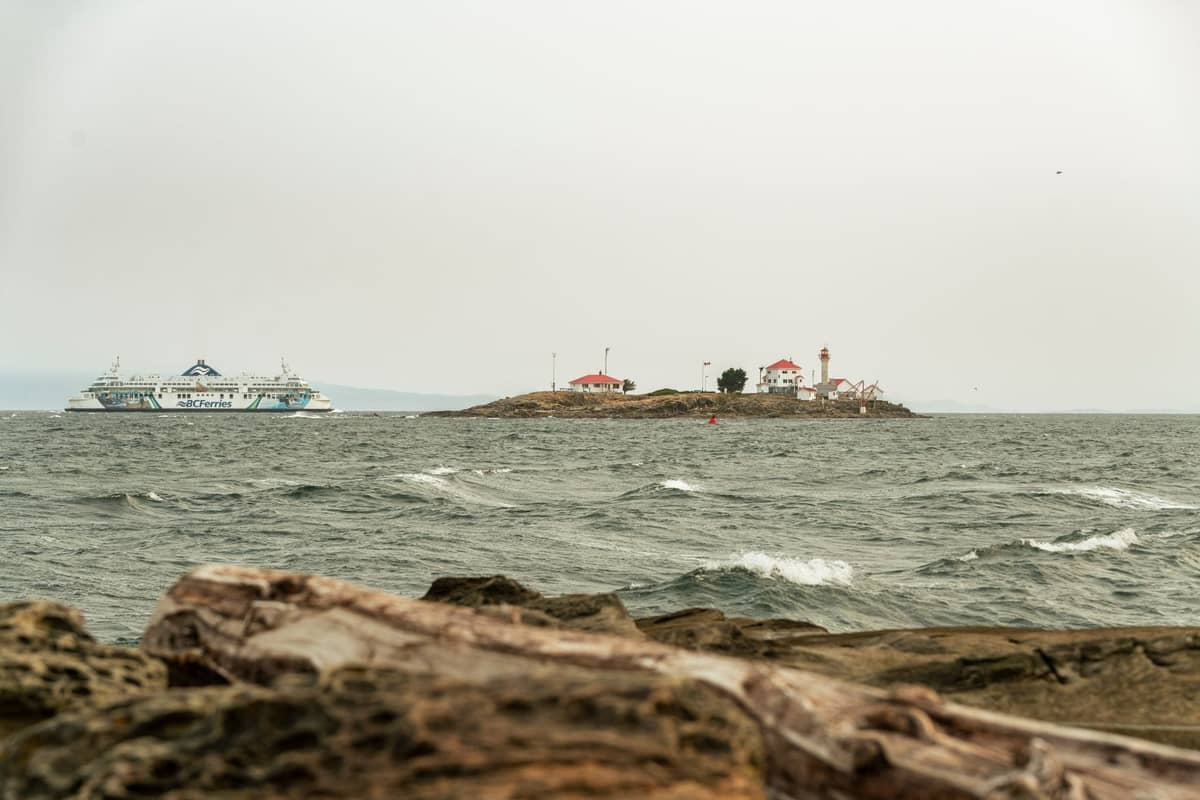
A common question from travelers is how Vancouver Island weather compares to Vancouver city weather. The short answer: Victoria and the south end of Vancouver Island are actually drier than Vancouver, sitting in a partial rain shadow created by the island's mountains. Victoria averages noticeably less annual precipitation than Vancouver. The northern parts of Vancouver Island, however, receive very high rainfall. If you're planning a day trip or overnight across the Strait of Georgia, expect broadly similar temperatures to Vancouver but potentially better skies in Victoria, especially in spring and autumn.
The ferry crossing itself is weather-dependent in a practical sense: BC Ferries sailings are occasionally delayed or cancelled in severe weather, particularly on exposed routes. Factor that uncertainty into any Vancouver Island day trip planning, especially outside summer.
FAQ
What is the best month to visit Vancouver for good weather?
July and August are the most reliable for warm, dry conditions, with average highs around 22°C (72°F) and minimal rainfall. Late June and September are strong secondary options with smaller crowds and lower prices.
Does it snow in Vancouver in winter?
Snow at sea level in downtown Vancouver is rare and usually light — a few dustings per season that rarely last more than a day or two. The North Shore mountains (Grouse, Cypress, Seymour) typically have reliable snow from December through March. If you want snow, head uphill; don't count on it in the city.
How bad is the rain in Vancouver, really?
The rain is real, especially October through March — November averages around 250mm. But it's mostly persistent drizzle and grey overcast rather than heavy downpours. Locals treat it as background weather. With a proper waterproof jacket, it doesn't have to derail your plans. Summer (July–August) is genuinely dry by comparison.
What is the weather like in Vancouver in October and November?
October starts mild (average highs around 12–14°C) with increasing rain as the month progresses. November is typically the wettest month of the year, with overcast skies most days and temperatures in the 7–10°C range. Both months require a waterproof jacket. October can still have some pleasant dry days; November very rarely does.
Is Vancouver weather in June reliable enough for outdoor activities?
Early June can still be cool and rainy — locals call the phenomenon 'Juneuary.' The second half of June is typically much better, with warm, largely dry conditions. If you're visiting in early June, plan a mix of indoor and outdoor activities and treat any sunny day as a bonus.