Capilano Suspension Bridge Park: What to Expect Before You Cross
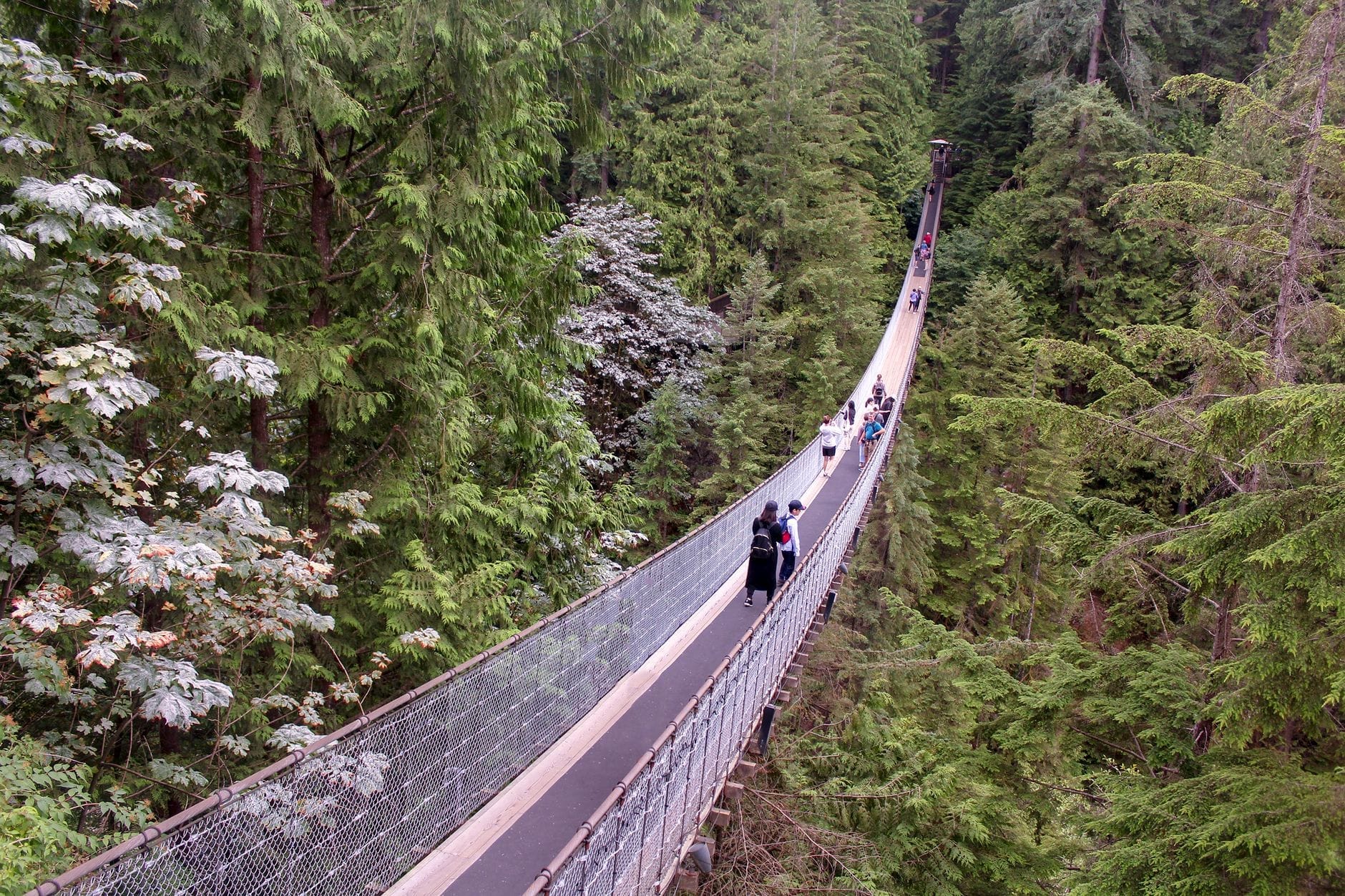
Stretching 137 metres across and hanging 70 metres above the Capilano River in North Vancouver, the Capilano Suspension Bridge is one of Canada's most visited attractions. This guide covers what the experience is actually like, how to time your visit, and whether the price of admission is worth it for your travel style.
Quick Facts
- Location
- 3735 Capilano Road, North Vancouver, BC V7R 4J1
- Getting There
- Free shuttle from Canada Place (proof of admission required) or Bus #236 from Lonsdale Quay
- Time Needed
- 2 to 3 hours for the full park
- Cost
- Paid admission (CAD, prices seasonal); check capbridge.com for current rates
- Best for
- Nature lovers, first-time Vancouver visitors, families, photography
- Official website
- www.capbridge.com
About Capilano Suspension Bridge Park
The Capilano Suspension Bridge Park is a privately owned nature attraction in North Vancouver, built around a single iconic structure: a 137-metre cable bridge suspended 70 metres above the Capilano River. That is roughly the height of a 23-storey building. The bridge sways perceptibly underfoot, and the wooden deck planks flex and knock against each other as groups cross, which is either thrilling or unsettling depending on your relationship with heights.
The bridge itself has been here since 1889, making it one of the oldest tourist attractions in the Vancouver area. The original version was a hemp rope and cedar plank construction built by Scottish civil engineer George Grant Mackay across land he owned near the river. It has been rebuilt and upgraded multiple times since, and the current steel cable version has operated for decades. The park around it has grown substantially, adding Treetops Adventure, Cliffwalk, and seasonal programming that transforms it into something different depending on when you visit.
ℹ️ Good to know
The park is open every day of the year except December 25. Hours shift significantly by season, from 8:30 a.m. in peak summer to 11:00 a.m. during Canyon Lights in late November. Always check the official hours at capbridge.com before you travel, especially in shoulder seasons.
The Full Experience: Bridge, Trees, and Cliff
Most visitors underestimate how much there is beyond the main bridge. The park has three distinct components, and rushing through all three in under an hour means missing the forest for the, well, forest.
The suspension bridge crossing takes only a few minutes each way, but the approach is half the experience. Walking through the dense second-growth Douglas fir canopy toward the bridge entrance, the temperature drops noticeably and the light becomes filtered and green. The smell of damp bark and moss is immediate. When you step onto the bridge and look down through the wooden slats at the river far below, it registers in your body in a way photos do not capture. The cables are thick and clearly engineered, but the bridge still moves.
Treetops Adventure consists of seven suspension bridges strung between old-growth Douglas firs up to 30 metres off the forest floor. This section is quieter and shadier than the main bridge, and it rewards slower walkers. Look at the support systems attached to the trees: they use a collar method designed to expand as the trees grow, rather than cutting into the bark. On the opposite side of the park, Cliffwalk is a series of narrow cantilevered walkways bolted into the granite cliff face above the river. The views here are the best for photography, looking back along the canyon toward the suspension bridge. The walkways are partially see-through underfoot.
Tickets & tours
Hand-picked options from our booking partner. Prices are indicative; availability and final rates are confirmed when you complete your booking.
Grouse Mountain and Capilano Suspension Bridge Park tour
From 252 €Instant confirmationFree cancellationVancouver City and Capilano Suspension Bridge tour with lunch
From 292 €Instant confirmationFree cancellationVancouver City and Capilano Suspension Bridge tour
From 90 €Instant confirmationFree cancellationCapilano Suspension Bridge Park tickets
From 51 €Instant confirmationFree cancellation
How the Experience Changes by Time of Day
The first 90 minutes after opening are the most valuable. On peak summer mornings, the shuttle from Canada Place begins running early, but the car park and bridge area see noticeably fewer people at 8:30 a.m. than at 10:30 a.m. Crossing the main bridge with only a handful of other people on it is a different experience from crossing it while waiting in a slow-moving queue. The canyon light is also softer and cooler in the morning, which is better for photography and more comfortable in July and August.
By midday in summer, the park is at capacity. The main bridge crossing becomes a stop-start shuffle. On Cliffwalk, narrow sections require groups to wait for each other to pass. The ambient noise shifts from birdsong and river sound to conversation and shoe-scrape. The park handles it reasonably well given the volume, but if you are visiting primarily for the natural atmosphere, this window is worth avoiding.
Late afternoon, especially after 4:00 p.m. on weekdays, is a second quieter window. Tour group buses tend to arrive in the mid-morning, and most are gone by early afternoon. Evening hours in summer (the park stays open until 8:00 p.m. from mid-May to early September) offer softer golden light filtering through the canopy. The Canyon Lights event in late November through early January transforms the park after dark with thousands of lights strung through the trees, which is a genuinely different experience from the daytime visit.
💡 Local tip
Arrive at opening time or after 4:00 p.m. on weekdays to avoid the midday tour group rush. If you are visiting during Canyon Lights (late November to early January), an evening arrival is intentional, not a compromise.
Getting There: Shuttle, Bus, or Car
The park is about 15–20 minutes from downtown Vancouver by road, sitting on the North Shore above the Lions Gate Bridge approach. The free shuttle from Canada Place is the most straightforward option for visitors staying downtown. It runs regularly during park hours and requires proof of admission for the return journey, so you book the park first. By car, the route crosses the Lions Gate Bridge and follows Capilano Road north for 1.6 kilometres. Paid parking is available on site.
By public transit, the most reliable route is the SeaBus from Waterfront Station to Lonsdale Quay on the North Shore, then Bus #236 to the park entrance. This takes longer than the shuttle but connects naturally with exploration of North Vancouver more broadly. Bus #232 from Phibbs Exchange also serves the area.
If you are building an itinerary that combines the bridge with other North Shore stops, Grouse Mountain is roughly 10 minutes further up Capilano Road by car, and Lynn Canyon Suspension Bridge offers a free alternative on the east side of North Vancouver for comparison.
Practical Details: What to Wear and Bring
The forest floor stays wet throughout most of the year. Even on a dry day in summer, morning dew lingers on the wooden walkway surfaces until late morning. Closed-toe shoes with grip are strongly recommended. Sandals and dress shoes become liabilities on the bridge and Cliffwalk.
Dress in layers in any month outside of July and August. The canyon is sheltered, but the tree canopy traps cool air and the river below keeps temperatures lower than central Vancouver. In October and November, the combination of damp air and shade makes it feel several degrees colder than the forecast. A waterproof outer layer is worth carrying from October through April.
Photography here is rewarding but requires patience. The bridge cables and crowding on peak days can clutter wide-angle shots of the span. The best angles are from the south end of the bridge looking north into the canyon, and from the upper sections of Cliffwalk looking back over the river. A mid-range zoom lens or a phone with a portrait mode handles the forest canopy well. Tripods are impractical on the moving bridge.
⚠️ What to skip
The Capilano Suspension Bridge, Treetops Adventure, and Cliffwalk are not wheelchair accessible. The park recommends contacting them directly before visiting for specific mobility needs. Not all sections of the park can be experienced by visitors with limited mobility.
Is the Admission Price Worth It?
This is the question many visitors ask after they see the ticket price, which places Capilano among the more expensive single attractions in British Columbia. The honest answer is: it depends on what you are comparing it to.
For first-time Vancouver visitors who want an immersive old-growth forest experience close to the city without committing to a full hike, the park delivers. The infrastructure is polished, the interpretive material throughout the forest is well-researched, and the combination of bridge, treetops, and cliff gives three different physical experiences in one admission. For travellers on tighter budgets, Lynn Canyon Suspension Bridge is free and involves a comparable canyon forest setting, though it is smaller in scale and has none of the additional attractions. For those wanting to compare options, the free things to do in Vancouver guide covers several strong alternatives.
The Canyon Lights event in late November and early December adds clear value for the price. The illuminated forest at night reads as a genuinely distinct experience, not just the daytime park with lights added. Families with children in particular tend to find it memorable. The Canyon Frights Halloween event in October similarly transforms the park for evening visitors.
Seasonal Highlights and Special Events
Summer (mid-May to early September) is peak season, with the longest hours and the most visitors. The forest is at its greenest and the river runs fast below from snowmelt earlier in the season. This is when the park is most photogenic but also most crowded. For a broader picture of what Vancouver looks like during these months, see the Vancouver in summer guide.
Autumn visits have a quieter quality. The Douglas firs are evergreen, so the forest does not change colour dramatically, but the low-angle October light through the canopy is particularly good. Canyon Frights runs on Fridays through Sundays from mid-October to early November, with theatrical horror elements added to the evening park experience, which makes it unsuitable for young children during those sessions.
Canyon Lights runs from late November through early January, with the park open until 9:00 p.m. most evenings during this period. The transformation is significant: the illuminations include lit trees, bridge lighting, and installations through the forest paths. This window also brings the bridge in December conditions, meaning cold, potentially wet, and rewarding in a completely different way from a summer crossing.
Insider Tips
- Book tickets online before arriving. The park does not guarantee entry for walk-up visitors during peak periods, and online pricing sometimes includes a small discount over gate prices.
- The free shuttle from Canada Place fills up on summer weekends. Arrive at the shuttle stop at least 20 minutes before the departure time you want, or take Bus #236 from Lonsdale Quay as a reliable backup.
- The south end of the bridge (the entry side) is where most people take their photos. Cross fully to the north end and walk into the Treetops section before doubling back, and you will have the southern approach to yourself for better shots once the crowds thin.
- BC residents can purchase an annual pass, which pays for itself in two visits. If you are local or planning a return, it is worth pricing against single-admission tickets on the official site.
- The park's on-site Trading Post restaurant and café are reasonably priced for an attraction of this type. Eating here is more practical than you might expect, particularly for families who do not want to rush back to the city for lunch.
Who Is Capilano Suspension Bridge For?
- First-time Vancouver visitors wanting a dramatic nature experience within 15 minutes of downtown
- Families with older children and teenagers who handle heights comfortably
- Photographers working the early morning golden hour through old-growth canopy
- Visitors in late November and December looking for a winter evening activity
- Travellers combining the North Shore with Grouse Mountain in a single day trip
Nearby Attractions
Other things to see while in North Shore:
- Cypress Mountain
Perched within Cypress Provincial Park on Vancouver's North Shore, Cypress Mountain Ski Area puts over 600 skiable acres and 61 runs within 30 minutes of downtown. From Olympic-pedigree terrain to family-friendly snow tubing, it delivers genuine mountain experience without a full resort trip.
- Deep Cove
Deep Cove is a compact waterfront community in the District of North Vancouver, set where the mountains meet Indian Arm. Free to enter and easy to reach by car or transit, it offers kayaking, the Quarry Rock trail, and a walkable village strip within about 30 minutes of downtown Vancouver.
- Grouse Grind
The Grouse Grind is a 2.5 km trail on the south slope of Grouse Mountain in North Vancouver, gaining 800 metres in elevation across 2,830 steps. Free to hike up, it demands real fitness and rewards you with sweeping city views at the top. Descent is by paid gondola only.
- Grouse Mountain
Rising to over 1,200 metres above North Vancouver, Grouse Mountain delivers sweeping city views, grizzly bear encounters, winter skiing, and the legendary Grouse Grind trail. Whether you ride the Skyride gondola or earn the summit on foot, the mountain rewards visitors in every season.