Grouse Mountain: Vancouver's Year-Round Mountain Escape
Rising to over 1,200 metres above North Vancouver, Grouse Mountain delivers sweeping city views, grizzly bear encounters, winter skiing, and the legendary Grouse Grind trail. Whether you ride the Skyride gondola or earn the summit on foot, the mountain rewards visitors in every season.
Quick Facts
- Location
- 6400 Nancy Greene Way, North Vancouver, BC V7R 4K9
- Getting There
- SeaBus to Lonsdale Quay, then Bus #236 to Grouse Mountain (approx. 30 min from downtown)
- Time Needed
- 2–5 hours depending on activities
- Cost
- Paid Mountain Admission required (prices vary by season and age; check grousemountain.com)
- Best for
- City panoramas, winter skiing, wildlife viewing, summer hiking
- Official website
- www.grousemountain.com
About Grouse Mountain
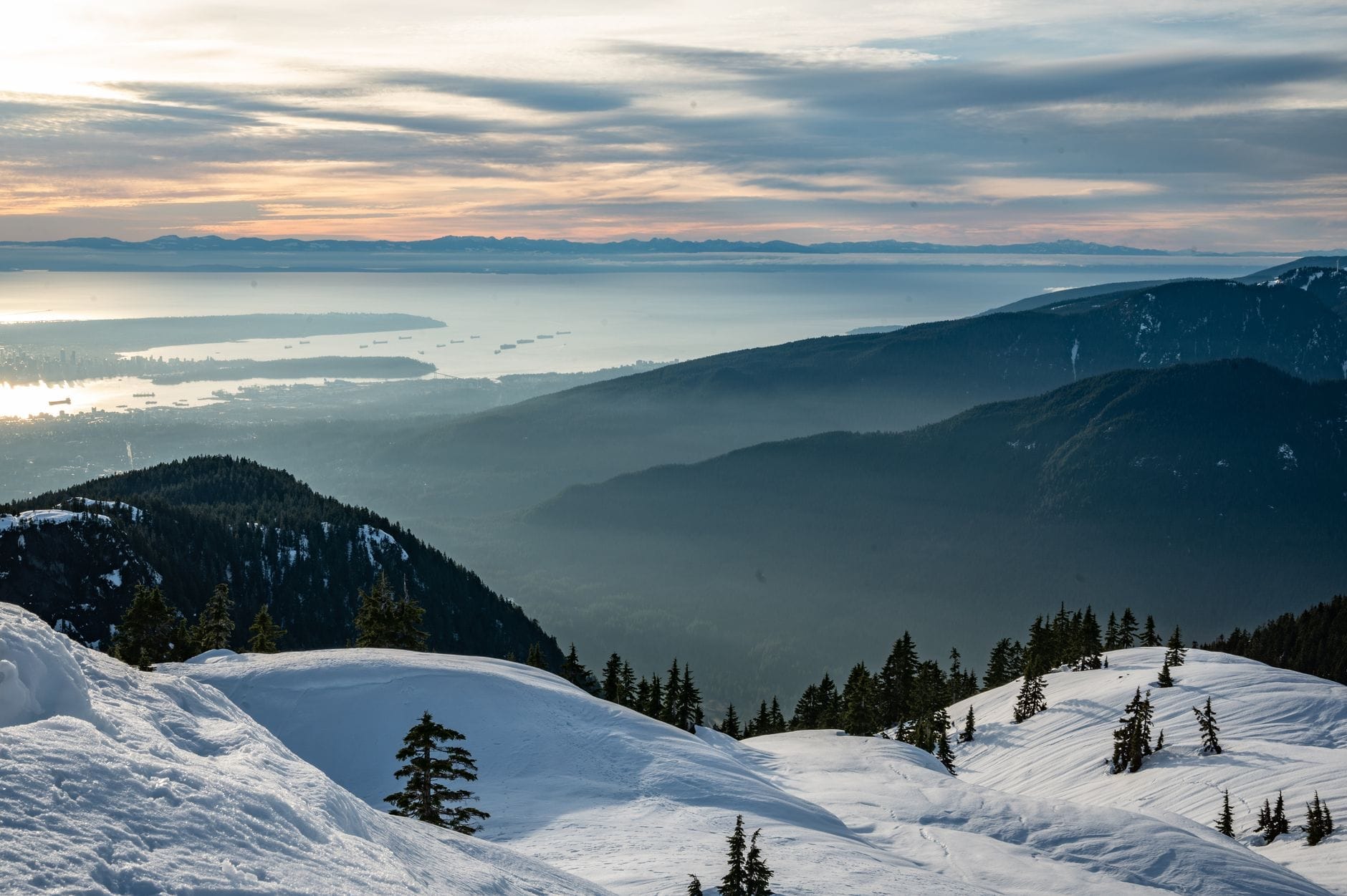
Grouse Mountain, officially marketed as Grouse Mountain Resort: The Peak of Vancouver, sits in the Pacific Ranges of the North Shore Mountains, in the District Municipality of North Vancouver. Its summit reaches over 1,200 metres (roughly 4,100 feet), and on a clear day the view south takes in the entire Vancouver skyline, the Fraser River delta, and Mount Baker floating above the Washington State horizon. It is not a wilderness escape in the traditional sense. It is a developed mountain attraction with a gondola, restaurants, ski runs, zip lines, a lumberjack show, and two resident grizzly bears. That combination makes it appealing to a wide range of visitors and occasionally disappointing to those expecting raw backcountry.
The mountain operates year-round. In winter (roughly late November through April, weather dependent), it functions as a ski and snowboard resort with four chairlifts and 33 runs. In summer, the focus shifts to hiking, wildlife encounters, scenic gondola rides, and outdoor performances. Shoulder seasons, particularly October and March, are quieter and can offer striking conditions: snow on the upper mountain against autumn foliage below, or spring melt exposing the trails while the city basks in clear skies.
ℹ️ Good to know
Mountain Admission is required to access the summit area and is separate from ski lift passes. A 'Download Ticket' for the Skyride is sold to Grouse Grind hikers who walk up but need to ride down. Check current pricing at grousemountain.com before you go, as rates vary by season and age group.
Getting There from Downtown Vancouver
The drive from downtown Vancouver is direct. Take Georgia Street west through Stanley Park, cross Lions Gate Bridge, follow the North Vancouver exits to Marine Drive, then turn left up Capilano Road for approximately 5 kilometres. The base lodge sits at the end of Nancy Greene Way. Paid parking is available at the base, with payment by Pay-By-Phone app or on-site machines (coins, Visa, MasterCard, and American Express accepted). On peak summer weekends, the parking area fills early, often before 10:00.
By public transit, the most straightforward route is the SeaBus from Waterfront Station to Lonsdale Quay, then Bus #236 directly to the Grouse Mountain base. The total journey from downtown runs about 30 minutes plus wait time. From Phibbs Exchange, Bus #232 also serves the mountain. If you are already exploring the North Shore, the bus connections are simple. In summer, Grouse Mountain operates a free shuttle from Canada Place for visitors who have purchased a round-trip Mountain Admission ticket, which simplifies the logistics considerably.
💡 Local tip
If you plan to combine Grouse Mountain with a visit to Capilano Suspension Bridge, both are reachable on the same Capilano Road corridor. The suspension bridge sits about halfway between the city and the mountain base, making a half-day itinerary of both genuinely practical.
Tickets & tours
Hand-picked options from our booking partner. Prices are indicative; availability and final rates are confirmed when you complete your booking.
Grouse Mountain and Capilano Suspension Bridge Park tour
From 252 €Instant confirmationFree cancellationGrouse Mountain small group express with skyride
From 110 €Instant confirmationFree cancellationGrouse Mountain Admission Ticket
From 51 €Instant confirmationFree cancellationNorth Shore Mountain tour with Capilano Suspension Bridge
From 141 €Instant confirmationFree cancellation
The Skyride Gondola: Riding Up vs. Walking Up
The Skyride is a large aerial tramway (gondola-style, not a small cabin) that carries visitors from the base lodge at roughly 290 metres to the summit area at around 1,100 metres. The ride takes about eight minutes and provides the first real reveal of the Vancouver panorama: the city grid spreads out below, English Bay curves to the west, and on clear days the white peaks of the Cascades are visible to the southeast. The gondola cabin is large enough to carry groups, making it accessible for families with young children, visitors with mobility limitations, and anyone who simply wants the view without the exertion.
The alternative is the Grouse Grind, a 2.5-kilometre trail that climbs 800 metres of elevation gain through approximately 2,830 rough-cut stairs and steep switchbacks. It is genuinely demanding: most fit adults complete it in 90 minutes to 2 hours. The trail typically opens in late spring once snow clears the lower sections and closes in the fall. Critically, descent via the Grouse Grind is not permitted. Hikers who walk up must purchase a Download Ticket to ride the Skyride back down. Factor this cost into your planning.
The Summit: What You Find at the Top
The summit plateau holds more activity than most visitors expect. The Refuge for Endangered Wildlife is where Grinder and Coola, two male grizzly bears rescued as cubs from the BC Interior, live in a large outdoor habitat. Viewing periods are scheduled throughout the day, and watching these animals move through a relatively naturalistic setting is genuinely engaging, particularly for children. There is also a bird of prey facility with periodic lumberjack show performances that lean theatrical but are well-executed enough to hold a crowd.
The Eye of the Wind is a wind turbine on the summit ridge with an observation pod at 100 metres. Access requires a separate ticket and capacity is limited, so booking in advance is advisable. The views from the pod are more exposed and dramatic than the main observation deck, with direct sightlines over the Fraser Valley and toward Vancouver Island on clear days.
Dining options at the summit include a sit-down restaurant with panoramic windows and a more casual cafeteria-style outlet. The quality is serviceable rather than exceptional. Prices reflect the captive mountain environment. A packed lunch or a coffee flask, consumed at one of the outdoor viewing terraces, is a reasonable alternative for budget-conscious visitors.
How the Experience Changes by Season and Time of Day
Summer mornings before 10:00 are the most atmospheric time on the mountain. The light is low and golden, the gondola queues are short, and the summit can sit above a layer of morning cloud, giving the impression of floating above the city below. By midday in July and August, the peak is crowded with tour groups and families, the viewing terrace is noisy, and the lumberjack show timing means specific areas fill with waiting visitors.
Winter visits, particularly on weekday afternoons after fresh snowfall, offer a genuinely different atmosphere. The ski runs are quieter mid-week, the snowpack silences the summit plateau, and the city lights visible on the descent at dusk produce one of the better urban panoramas in the region. Night skiing operates on a portion of the runs, with the lit trails visible from across Burrard Inlet on clear evenings.
Overcast days and low cloud are the mountain's enemy. Vancouver's climate produces a significant number of days each year where low cloud sits precisely at summit elevation, rendering the view from the top a grey wall. Before making the trip, check the webcam feed on the Grouse Mountain website to confirm visibility. The Vancouver weather patterns guide covers seasonal forecasting in more depth, but as a rule, the clearest days in the region occur in June, July, and August, with occasional exceptional clarity in October and February.
⚠️ What to skip
If clouds are sitting at 1,000 metres or below when you arrive at the base, the Skyride will carry you into cloud, not above it. Check the official webcam before buying tickets. The view is the primary reason most visitors come.
Photography on Grouse Mountain
The main panoramic viewing terrace faces south and southwest, which means the best light for city photography falls in the late afternoon and at dusk when the sun drops behind the mountain and the city is bathed in warm directional light. Early morning offers softer light but the sun is behind you, which produces a flatter result for city shots. Telephoto lenses reward the compression of Stanley Park against the skyline. The grizzly bear enclosure is best photographed from the upper viewing rail at the back of the habitat during active feeding periods.
For a different Vancouver panorama at a lower elevation and with no admission fee, Prospect Point in Stanley Park provides compelling views of Lions Gate Bridge and the North Shore mountains, including Grouse itself visible as the broad ski run corridor above the treeline.
Practical Notes for Your Visit
Temperature at the summit runs approximately 5 to 8 degrees Celsius cooler than at sea level in Vancouver. On a warm summer day in the city (say 22°C), the summit sits around 14 to 17°C with a wind chill on the exposed terrace. A mid-layer and a light windproof jacket are worth carrying even in July. In winter, full ski or snowboard gear is appropriate for the runs, with waterproof layers essential even for gondola riders who plan to walk the summit area.
Footwear matters for Grouse Grind hikers: trail shoes or hiking boots with grip are the minimum. Road runners on the Grind's wet stair sections in spring and fall are a common source of slips. The trail surface is raw rock and compacted dirt, not paved.
Visitors with mobility limitations can reach the summit via the Skyride without difficulty, but should confirm specific accessibility arrangements with Grouse Mountain directly before visiting, as the indexed sources do not provide detailed step-free access specifications. For further orientation on reaching the North Shore more broadly, the getting around Vancouver guide covers SeaBus and bus connections in detail.
Who Should Skip Grouse Mountain
Experienced hikers looking for technical backcountry terrain will find Grouse Mountain's developed summit underwhelming. The trails above the gondola top station are short and well-groomed. Budget travelers may also find the admission cost hard to justify on a hazy day when the city views are obscured. If keeping costs down is a priority, the free alternatives for elevated viewpoints in Vancouver are worth exploring first.
Visitors primarily interested in dramatic suspension bridges and forest walks may find Lynn Canyon Suspension Bridge a more cost-effective North Shore stop, as it is free to access. And those drawn specifically to the Grouse Grind as a fitness challenge should note the trail has a defined season and is closed during heavy snowpack or maintenance periods; confirm trail status before making the journey.
Insider Tips
- Check the official Grouse Mountain webcam before leaving downtown. A clear base does not guarantee a clear summit. If clouds are draped over the 1,100-metre mark, save your admission fee for another day.
- The free summer shuttle from Canada Place is genuinely worth using on a clear weekend: it bypasses the parking lot scramble and the shuttle timing aligns roughly with gondola operating hours. Confirm it is running on your visit date at grousemountain.com.
- For the Grouse Grind, start no later than 09:00 on a summer weekend if you want a quieter trail. By 10:30 the lower sections become a steady stream of people, which makes it harder to set your own pace on the narrow stair sections.
- If you are visiting in the evening for city light views, check whether Night Skiing is operating or if the summit area closes earlier. Summer sunset visits (around 20:30 to 21:00 in June and July) can be spectacular, but confirm current closing time on the Grouse Mountain website as hours vary.
- The grizzly bear feeding schedule varies by season. Ask at the base lodge for the day's activity timetable when you arrive rather than showing up at the enclosure and waiting without knowing when activity is expected.
Who Is Grouse Mountain For?
- Families with children who want wildlife encounters and a gondola ride without a full-day commitment
- Fitness-focused visitors targeting the Grouse Grind as a benchmark cardio climb
- Winter visitors looking for accessible lift-served skiing within 30 minutes of downtown Vancouver
- First-time Vancouver visitors seeking a city panorama that puts the geography of the region in context
- Photographers chasing dusk cityscapes or winter snow-and-city contrast shots
Nearby Attractions
Other things to see while in North Shore:
- Capilano Suspension Bridge
Stretching 137 metres across and hanging 70 metres above the Capilano River in North Vancouver, the Capilano Suspension Bridge is one of Canada's most visited attractions. This guide covers what the experience is actually like, how to time your visit, and whether the price of admission is worth it for your travel style.
- Cypress Mountain
Perched within Cypress Provincial Park on Vancouver's North Shore, Cypress Mountain Ski Area puts over 600 skiable acres and 61 runs within 30 minutes of downtown. From Olympic-pedigree terrain to family-friendly snow tubing, it delivers genuine mountain experience without a full resort trip.
- Deep Cove
Deep Cove is a compact waterfront community in the District of North Vancouver, set where the mountains meet Indian Arm. Free to enter and easy to reach by car or transit, it offers kayaking, the Quarry Rock trail, and a walkable village strip within about 30 minutes of downtown Vancouver.
- Grouse Grind
The Grouse Grind is a 2.5 km trail on the south slope of Grouse Mountain in North Vancouver, gaining 800 metres in elevation across 2,830 steps. Free to hike up, it demands real fitness and rewards you with sweeping city views at the top. Descent is by paid gondola only.