Lynn Canyon Suspension Bridge: The Free Alternative Worth Crossing for Its Own Sake
Built in 1912 and hanging 50 metres above the canyon floor, the Lynn Canyon Suspension Bridge delivers a genuine adrenaline moment inside one of North Vancouver's most accessible old-growth forest parks. Entry is completely free, the trails extend well beyond the bridge, and the surrounding Lynn Canyon Park rewards visitors who slow down and explore.
Quick Facts
- Location
- 3663 Park Road, Lynn Valley, North Vancouver, BC V7J 3K2
- Getting There
- SeaBus to Lonsdale Quay, then bus 228 toward Lynn Valley; transfer to bus 227 for the park entrance. Allow 45–60 min from downtown Vancouver.
- Time Needed
- 1.5–3 hours for bridge, main trails, and a stop at the Ecology Centre
- Cost
- Free entry. Paid parking applies March 1–October 31, 08:00–18:00 (verify current rates at lynncanyon.ca)
- Best for
- Nature lovers, families, budget travellers, photographers, anyone wanting forest trails without a long drive
- Official website
- lynncanyon.ca
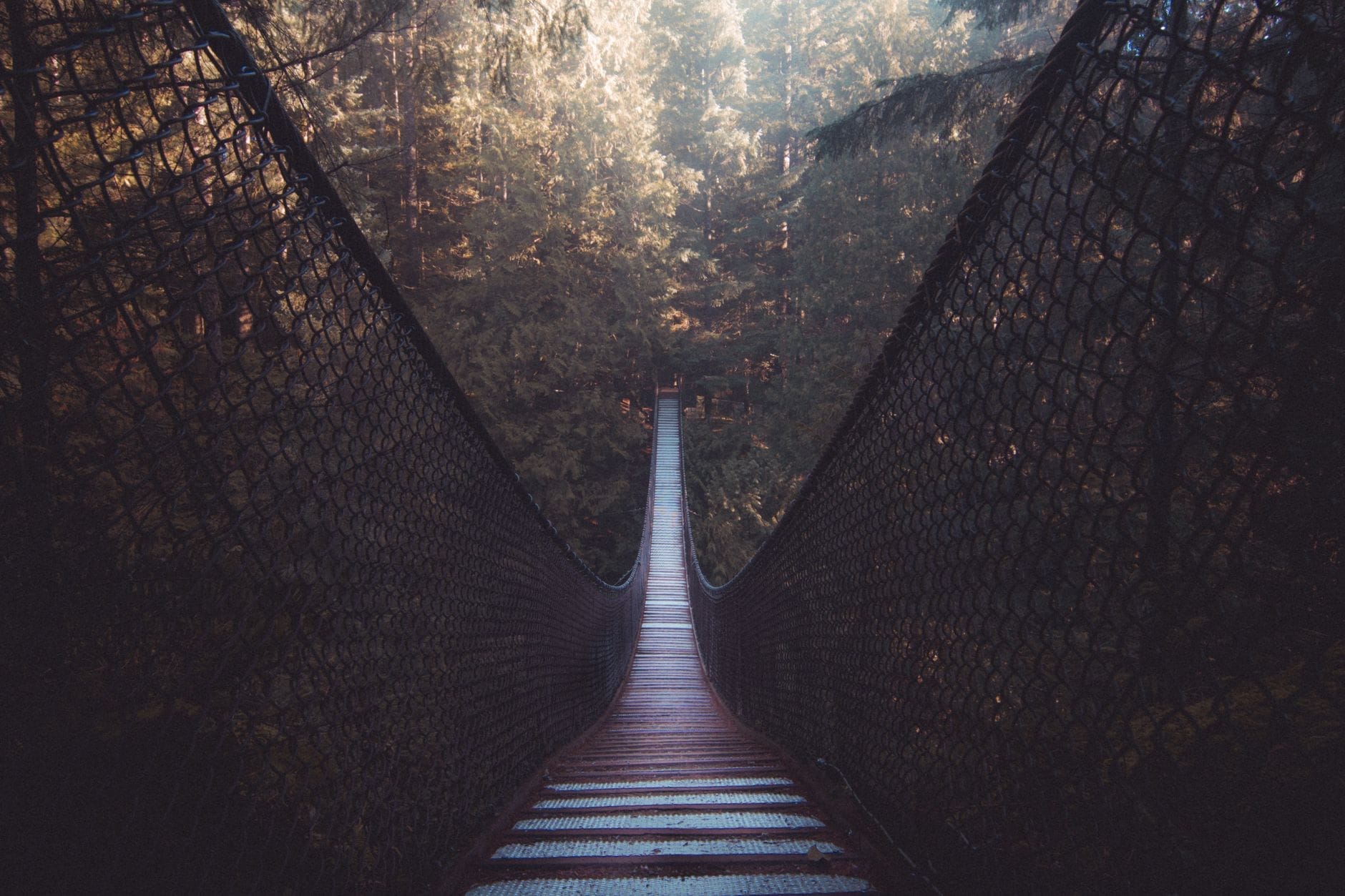
Lynn Canyon Suspension Bridge: an overview
The Lynn Canyon Suspension Bridge is a narrow, steel-cable footbridge spanning approximately 48 metres across Lynn Canyon and hanging roughly 50 metres above the canyon floor and the creek below. It sits inside Lynn Canyon Park in the Lynn Valley neighbourhood of North Vancouver, about 20 kilometres from downtown Vancouver. The bridge was originally built as a private venture in 1912, the same year the park formally opened, making it one of the older pedestrian suspension bridges in the region.
Unlike the heavily commercialized Capilano Suspension Bridge a few kilometres to the west, Lynn Canyon charges no admission fee. That distinction matters for what you actually experience: no turnstiles, no branded merchandise stands at the crossing, and a crowd that skews toward local hikers and families rather than tour groups. The trade-off is that the bridge is shorter and the surrounding infrastructure less polished. Whether that is a draw or a drawback depends entirely on what you are looking for.
ℹ️ Good to know
Lynn Canyon Suspension Bridge is free and scenic, but it is not a substitute for Capilano if you want an extensive boardwalk network and interpretive exhibits. It is a better fit if your priority is forest immersion and a real hiking context.
The Bridge Itself: What to Expect Underfoot
Stepping onto the bridge for the first time, the sway is the first thing you notice. The structure moves perceptibly with each footfall, and the motion increases when multiple people cross simultaneously. The wooden deck planks are well-maintained but not wide, and the side cables are the main thing keeping your eye from drifting straight down to the creek 50 metres below. For most adults, this produces a mild adrenaline response rather than genuine fear, but anyone with a significant phobia of heights or moving structures should know in advance that this is not a gentle stroll.
Looking downstream from the middle of the bridge, the canyon walls drop sharply into a trough of moss-covered boulders, western red cedar, and bigleaf maple. The creek itself, Lynn Creek, runs cold and fast in spring from snowmelt, and the sound of water carries clearly up to the bridge level. In summer the water levels drop and the pale grey boulders in the creek bed become visible. In winter, the canyon walls are deep green with wet moss, the air smells of damp wood and soil, and the bridge deck can be slippery: use the handrails.
⚠️ What to skip
Wet weather caution: The bridge deck and approach paths become slippery when wet. Wear shoes with grip, not sandals or smooth-soled footwear, particularly from October through March. The park notes that winter dusk arrives early; plan to be back at the trailhead well before dark.
Tickets & tours
Hand-picked options from our booking partner. Prices are indicative; availability and final rates are confirmed when you complete your booking.
Grouse Mountain and Capilano Suspension Bridge Park tour
From 252 €Instant confirmationFree cancellationVancouver City and Capilano Suspension Bridge tour with lunch
From 292 €Instant confirmationFree cancellationVancouver City and Capilano Suspension Bridge tour
From 90 €Instant confirmationFree cancellationCapilano Suspension Bridge Park tickets
From 51 €Instant confirmationFree cancellation
The Park Around the Bridge: Trails Worth Your Time
The bridge is the focal point, but Lynn Canyon Park contains several kilometres of trail that most visitors do not fully explore. The 30 Foot Pool loop is the most popular short addition: a roughly 30-minute walk downstream from the bridge that takes you to a natural swimming hole where the creek drops over a small cascade into a clear pool. In summer, local teenagers jump from the surrounding rocks, and the pool draws steady afternoon crowds. Swimming here carries real risk, the creek is cold and currents can be deceptive, and the park posts clear warnings about swimming fatalities. Observe from the trail if you are uncertain.
For something quieter, the Twin Falls Loop heads upstream and crosses the canyon at a second bridge, circling back through second-growth forest and offering views of two separate waterfalls. The full loop typically takes under an hour at a moderate pace. The bridge also forms part of the Baden-Powell Trail network, a long-distance route that traverses the North Shore mountains from Horseshoe Bay to Deep Cove.
If you are building a full day on the North Shore, the Lynn Canyon trails pair well with a drive or bus ride to Deep Cove, about 15 kilometres east, where a short hike up to Quarry Rock adds a viewpoint finish to the day.
Best Times to Visit and How the Experience Changes
Weekday mornings before 10:00 are consistently the quietest window. The bridge is short enough that even a moderate crowd creates a bottleneck, and weekend afternoons from June through September see the longest waits to cross. If you arrive between 08:00 and 09:30 on a weekday in summer, you may have the bridge largely to yourself, and the forest light in the canyon at that hour, filtering through the canopy with mist still sitting in the lower reaches, is at its most photogenic.
Autumn, roughly mid-September through October, brings the best combination of comfortable temperatures, lower crowds, and the yellow foliage of bigleaf maple in the canyon. Vancouver's driest months are June through August, so summer visits minimise the chance of rain but maximise visitor numbers. Winter visits are genuinely rewarding for anyone comfortable on wet trails: the park is far less visited, the creek is full and loud, and the forest atmosphere is markedly different from the tamed, sunny summer version.
Getting There: Transit and Driving
From downtown Vancouver, the most practical transit route begins with the SeaBus from Waterfront Station to Lonsdale Quay. From Lonsdale Quay, take bus 228 (Lynn Valley Centre) or 229 to the Lynn Valley area, then connect to bus 227, which stops at the park entrance on Peters Road. Total journey time from downtown is roughly 45 to 60 minutes. TransLink fares apply throughout; check current zone pricing and Compass Card options at translink.ca before you travel.
By car, the park is accessed from Lynn Valley Road north to Peters Road, with a signed turn onto Park Road. A parking lot sits at the trailhead. Paid parking is in effect from March 1 to October 31 between 08:00 and 18:00; outside those dates and hours, parking is free. The lot fills quickly on summer weekends, often by 10:00. If you drive, arriving before 09:00 or after 17:00 on a weekend substantially reduces the chance of circling for a space.
The Ecology Centre: Worth Fifteen Minutes
The Lynn Canyon Ecology Centre sits a short walk from the bridge and operates as a free interpretive facility covering the ecology of the temperate rainforest, local wildlife, and the hydrology of Lynn Creek. It is genuinely informative rather than performative, aimed at children but not dumbed down for adults. Displays cover Pacific salmon runs, the role of old-growth trees as nurse logs, and the invertebrate life of the creek. Opening hours as published are Monday through Friday 10:00 to 16:00 and Saturday through Sunday 12:00 to 16:00, though these vary seasonally. Confirm current hours at lynncanyon.ca before planning your visit around the centre.
For families travelling with children, the Ecology Centre adds real educational value to what might otherwise be a quick bridge crossing. Pair it with the best family-friendly stops in Vancouver if you are building a multi-day itinerary.
Photography Notes
The canyon is deep and heavily shaded by mature conifers, which means midday sun rarely penetrates effectively. Morning light on overcast days actually produces more even, workable exposures inside the canyon than bright midday sun, which creates harsh contrast between the sky and the dark canyon walls. The classic shot is from the middle of the bridge looking upstream or downstream: keep your shutter speed fast enough to compensate for bridge movement if you are handholding. A wide-angle lens in the 16–24mm range captures the full depth of the canyon without requiring you to lean dangerously over the railing.
For video, the sound design of the canyon is half the experience: the creek below, wind in the upper canopy, and the creak of the bridge cables. A windscreen on your microphone will substantially improve any audio recording.
Who Should Consider Skipping This
Visitors primarily seeking a manicured, high-production nature experience will find Lynn Canyon underwhelming compared to the Capilano Suspension Bridge, which offers a longer bridge, multiple elevated walkways, and extensive interpretive signage at a significant ticket cost. Lynn Canyon's trails are real hiking trails: some sections are steep and uneven, and the path to Twin Falls involves exposed roots and occasional scrambling. Anyone with significant mobility limitations will find the bridge itself inaccessible given the approach terrain and the narrow, swaying structure.
If you are visiting Vancouver primarily for urban culture, food, and architecture, Lynn Canyon is a half-day detour rather than a priority. In that case, the North Shore offers more dramatic alternatives like the Grouse Grind or the sea-to-sky views from Cypress Mountain for those willing to commit to a full day on that side of the inlet.
Insider Tips
- Arrive before 09:00 on summer weekends to avoid parking queues and have the bridge to yourself for photography. By 11:00 on a Saturday in July, the lot is often full and the bridge has a visible queue.
- The Twin Falls Loop is significantly less visited than the 30 Foot Pool trail. If you want solitude and the better waterfall views, turn upstream after crossing the bridge rather than downstream.
- Bus 227 stops at Peters Road near the park entrance, but the timetable is infrequent on weekends. Check the TransLink trip planner and note your return bus times before you leave the transit stop, especially in winter when daylight ends early.
- The bridge forms part of the Baden-Powell Trail. If you have a full day and strong legs, you can walk sections of this trail northeast toward Deep Cove, turning the bridge into a starting point rather than a destination.
- The Ecology Centre hosts seasonal programming including guided walks. Check lynncanyon.ca for dates if you are visiting in summer or school holiday periods, as these can add significant context to what you see on the trail.
Who Is Lynn Canyon Suspension Bridge For?
- Budget travellers who want genuine forest and canyon scenery without a ticket price
- Families with older children ready for real trails and a mild adrenaline crossing
- Photographers looking for dramatic canyon light on overcast mornings
- Hikers using the bridge as a waypoint on the Baden-Powell Trail
- Vancouver residents and repeat visitors who want an alternative to the more commercialized North Shore attractions
Nearby Attractions
Other things to see while in North Shore:
- Capilano Suspension Bridge
Stretching 137 metres across and hanging 70 metres above the Capilano River in North Vancouver, the Capilano Suspension Bridge is one of Canada's most visited attractions. This guide covers what the experience is actually like, how to time your visit, and whether the price of admission is worth it for your travel style.
- Cypress Mountain
Perched within Cypress Provincial Park on Vancouver's North Shore, Cypress Mountain Ski Area puts over 600 skiable acres and 61 runs within 30 minutes of downtown. From Olympic-pedigree terrain to family-friendly snow tubing, it delivers genuine mountain experience without a full resort trip.
- Deep Cove
Deep Cove is a compact waterfront community in the District of North Vancouver, set where the mountains meet Indian Arm. Free to enter and easy to reach by car or transit, it offers kayaking, the Quarry Rock trail, and a walkable village strip within about 30 minutes of downtown Vancouver.
- Grouse Grind
The Grouse Grind is a 2.5 km trail on the south slope of Grouse Mountain in North Vancouver, gaining 800 metres in elevation across 2,830 steps. Free to hike up, it demands real fitness and rewards you with sweeping city views at the top. Descent is by paid gondola only.