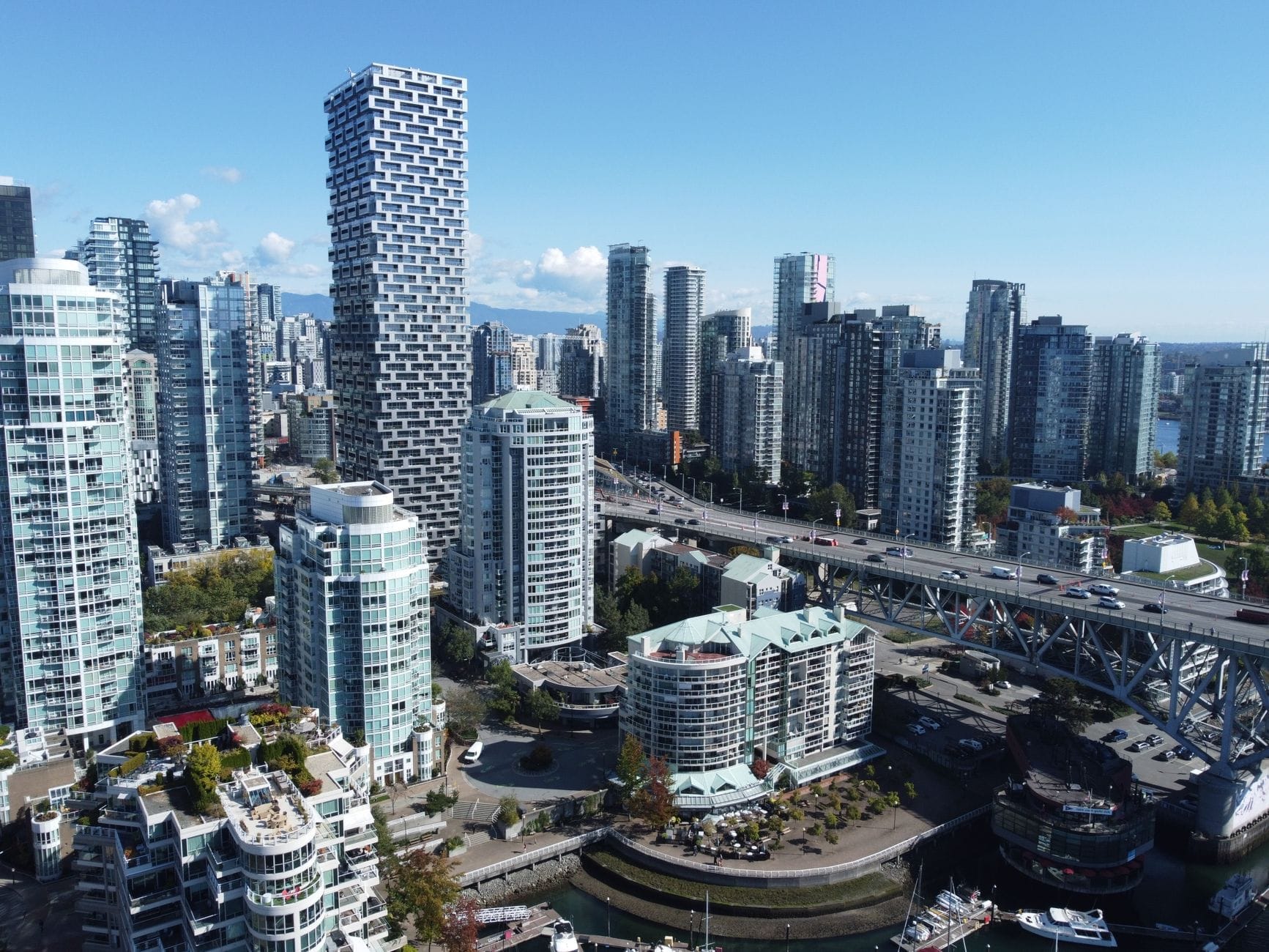
Yaletown is Vancouver's most polished inner-city neighbourhood, where former CPR warehouse loading docks have been reinvented as restaurant patios and boutique storefronts. Sitting on the southern edge of the downtown peninsula above False Creek, it combines heritage brick architecture with high-rise residential towers and direct seawall access.
Yaletown is where Vancouver's industrial past meets its upscale present: a compact grid of converted brick warehouses along Hamilton and Mainland Streets, ringed by glass towers and threaded by the False Creek seawall. It's one of the city's most walkable and well-connected neighbourhoods, built on the bones of a Canadian Pacific Railway yard that once defined the western edge of the transcontinental line.
Orientation
Yaletown occupies the southeastern corner of Vancouver's downtown peninsula, a compact district bounded roughly by Robson Street to the north, Homer Street to the west, and False Creek and Pacific Boulevard to the south and east, where the land meets False Creek. The tighter warehouse core, the part most visitors picture when they think of Yaletown, runs along Hamilton Street and Mainland Street between Davie and Nelson Streets.
To the north, Yaletown transitions seamlessly into the broader downtown core, with BC Place stadium marking the northeastern boundary on Beatty Street. Walk west on Davie Street and you reach the Granville Street entertainment area within a few blocks, with the West End further beyond. Cross the Cambie Bridge or the Granville Bridge to the south and you reach the Olympic Village neighbourhood and False Creek's south shore, with Granville Island a short bike ride or ferry hop away.
The neighbourhood's position between downtown commerce and the False Creek waterfront is what gives it its dual character. It's close enough to the central business district that office workers spill into its restaurants at lunch, yet the seawall along its southern edge, covered in detail on the Vancouver seawall guide, feels genuinely removed from city noise. This is a neighbourhood you can navigate entirely on foot once you arrive.
Character & Atmosphere
Yaletown has a specific texture that takes about ten minutes of walking to understand. The warehouse blocks along Hamilton and Mainland Streets are only two or three storeys tall, built from sand-coloured brick with wide loading-dock canopies that now shelter restaurant seating. These low heritage buildings create a human-scale corridor that feels almost European in its proportions, and then you turn a corner and a 30-storey glass tower rises directly above. The contrast is the neighbourhood in a single frame.
On a weekday morning, Yaletown belongs to dog walkers and coffee-carrying residents heading toward the seawall. The light comes in low from the east, bouncing off False Creek and catching the brick facades in warm tones. By midday the outdoor patios fill with a lunch crowd that trends young-professional: the neighbourhood has a high concentration of tech, design, and media offices in its converted warehouse spaces. The energy is purposeful without feeling frantic.
Weekend afternoons shift the mix considerably. Cyclists and runners flow along the seawall path, children crowd the water park at David Lam Park, and the patio seats on Mainland Street fill with people who are clearly not in a hurry. By early evening, Yaletown becomes one of Vancouver's primary dining-out destinations, and by 10 pm the bar scene on Hamilton Street is loud and active. This is not a quiet neighbourhood after dark on weekends.
⚠️ What to skip
Yaletown's bar strip along Hamilton Street can be noisy on Friday and Saturday nights, with crowds spilling onto the street until 2 am. If you're staying in the neighbourhood and value quiet evenings, look for accommodation on blocks closer to Smithe Street or facing False Creek rather than the warehouse strip.
The neighbourhood skews affluent. Boutiques sell high-end home goods and fashion. The restaurants are mostly full-service with wine lists. The residential towers that surround the heritage core are among Vancouver's most expensive addresses. This is not a neighbourhood that tries to be edgy or experimental, and visitors who prefer rough-around-the-edges character might find it a little smooth. What it offers instead is consistency, cleanliness, and a very high standard of public realm.
History: From Rail Yards to Real Estate
The name Yaletown came from Yale, British Columbia, a small town in the Fraser Canyon where CPR workers were based before the transcontinental railway pushed westward to the coast. When the CPR established major yards and facilities on False Creek's northern shore in the late 19th century, many of those workers relocated to Vancouver and settled near their worksite. The district took on the name of the town they'd left behind.
By the early 20th century, the area had developed into a dense industrial zone of warehouses, loading docks, and light manufacturing facilities. The brick buildings that survived, mostly along Hamilton and Mainland Streets, date from this period. The Roundhouse, the circular maintenance facility where locomotives were serviced and turned around, was the physical and operational centre of the yard.
The neighbourhood's modern character was set in motion by Expo 86, the world's fair that was held on the north shore of False Creek, including lands adjoining and east of what is now Yaletown. The expo accelerated rezoning and infrastructure investment across the False Creek basin, and in the years following, the industrial land was redeveloped into residential towers at a scale and speed that transformed the southern end of the downtown peninsula entirely. Today the Roundhouse survives as a community arts and recreation centre, and Engine 374, the locomotive that pulled the first passenger train into Vancouver in 1887, is preserved on display inside.
What to See & Do
The Roundhouse Community Arts and Recreation Centre on Davie Street is the neighbourhood's most historically significant site. The original CPR turntable pit is still visible, and the facility hosts art exhibitions, community events, and fitness programs throughout the year. Engine 374 sits in a dedicated pavilion at the corner of Davie Street and Pacific Boulevard, adjacent to the main Roundhouse building. It's a low-key attraction that many visitors walk past without realising its significance to the city's founding.
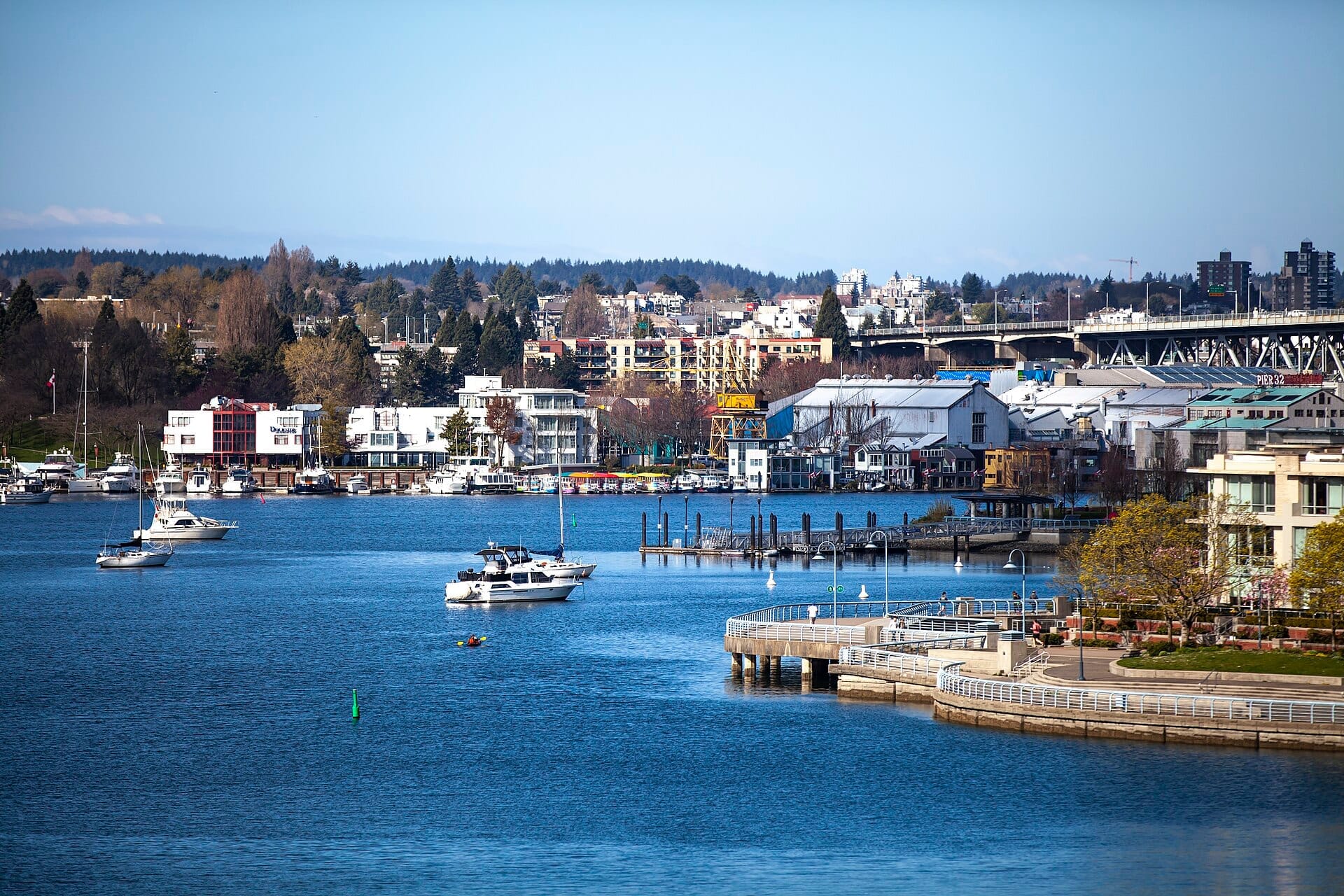
The False Creek seawall path running along Yaletown's southern edge is one of the most-used sections of the broader Stanley Park Seawall network. Walking east from David Lam Park takes you past the Olympic Village and toward Science World, the geodesic dome that anchors the eastern end of False Creek. Walking west leads toward the Granville Bridge and, beyond that, Granville Island.
David Lam Park: waterfront green space with a spray park, open lawn, and seawall access, popular with families on summer afternoons
Roundhouse Community Arts and Recreation Centre: historic CPR roundhouse with Engine 374 on display and rotating community exhibitions
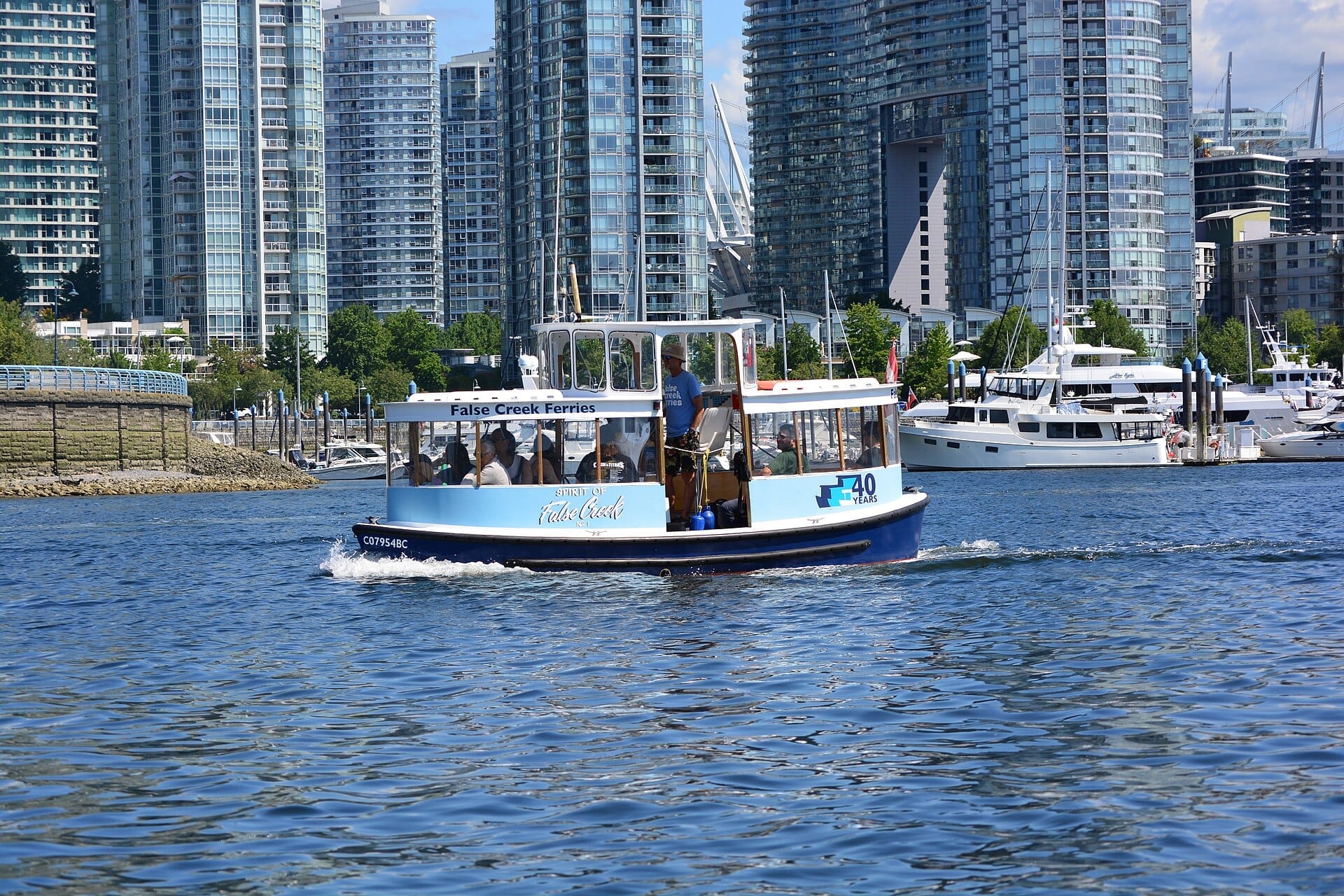
False Creek Ferries: small passenger ferries departing from the Yaletown dock connecting to Granville Island and several False Creek stops near Olympic Village and Science World
Hamilton and Mainland Street warehouse strip: the core of Yaletown's heritage architecture, best experienced on foot at a slow pace
Yaletown-Roundhouse SkyTrain Plaza: the public space around the Canada Line station features public art installations worth a look
From the Yaletown waterfront, the False Creek Ferries run small, frequent passenger boats to Granville Island and the Olympic Village neighbourhood on the south shore. It's a practical way to cross the creek and a genuinely pleasant few minutes on the water. The Yaletown ferry dock is at the foot of Davie Street, just west of David Lam Park.
💡 Local tip
If you're combining Yaletown with a visit to Granville Island, take the False Creek Ferry one way and walk back across the Cambie or Granville Bridge for a completely different perspective on the False Creek basin. The bridge walkways have good views in both directions.
Eating & Drinking
Yaletown has one of the highest concentrations of restaurants per block in Vancouver, and the general standard is high. The cuisine skews toward European-influenced contemporary cooking, modern Japanese, and upscale casual: the kind of food that pairs with a natural wine list and works equally well as a business lunch or a date-night dinner. Prices are on the higher end relative to the rest of the city, with most sit-down restaurants in the mid-to-upper range for Vancouver.
The loading-dock patios along Mainland Street are the neighbourhood's most distinctive dining setting. The wide covered canopies that originally sheltered freight now shelter diners, and on a warm evening these patios have a genuinely appealing atmosphere: brick walls, hanging plants, candlelight, the sound of the street. This strip gets crowded on weekends, and reservations at the more popular spots are advisable.
The café scene is solid, with several independent coffee shops along Hamilton Street and around the Roundhouse area catering to the neighbourhood's resident and office population. These tend to be busy in the morning and mid-afternoon but quieter during the lunch rush when most people head to the restaurant strip.
Bars and cocktail spots concentrate on Hamilton Street. The neighbourhood has a well-developed cocktail bar culture alongside more straightforward pubs, and the options tend toward the polished rather than the gritty. If you want a dive bar, you are in the wrong part of Vancouver. For craft cocktails and a curated beer selection in a designed interior, Yaletown delivers consistently.
ℹ️ Good to know
Tipping in Vancouver restaurants follows Canadian norms: 15 to 20 percent is standard on the pre-tax bill. Most restaurant terminals will prompt you with suggested amounts. Tap water is safe to drink from the tap throughout the city.
Getting There & Around
The Yaletown-Roundhouse Station on the Canada Line SkyTrain sits almost exactly in the centre of the neighbourhood, on Hamilton Street near Davie. This is the most convenient transit option for most visitors. The Canada Line runs north to Waterfront Station in downtown Vancouver, and south via Olympic Village and Marine Drive stations, across the Fraser River, and out to Vancouver International Airport (YVR). From the airport, Yaletown-Roundhouse is approximately 25 to 30 minutes by SkyTrain with no transfers required.
For general transit planning across the city, TransLink's bus network connects Yaletown to adjacent neighbourhoods along Pacific Boulevard, Davie Street, and Homer Street. The guide to getting around Vancouver covers fares, Compass Card setup, and transit tips in detail. Current fares should be verified on the TransLink website before travel, as they are updated periodically.
On foot, Yaletown is well-positioned for reaching most of downtown Vancouver's major points of interest. BC Place stadium on Beatty Street is less than ten minutes' walk northeast. The Granville Street entertainment corridor is about fifteen minutes on foot to the northwest. The walk to Gastown along the waterfront typically takes around 30 to 40 minutes if you follow the seawall east and then north.
Both Uber and Lyft operate in Metro Vancouver and are reliable options for late-night returns or for reaching destinations that aren't well-served by transit. Cycling is practical within the neighbourhood: the seawall path is well-maintained and separated from vehicle traffic, and there are bike-share stations around the Roundhouse area.
Where to Stay
Yaletown is a reasonable base for visitors who want walkable access to the False Creek waterfront and direct SkyTrain connections without paying the premium prices of hotels on Robson Street or in Coal Harbour. It suits travelers who plan to spend time in multiple parts of the city, since the Canada Line provides easy access to the airport and the Olympic Village, while the rest of downtown is walkable. For a broader overview of where to base yourself in Vancouver, the Vancouver accommodation guide compares the main neighbourhoods by type of traveler.
Accommodation in Yaletown ranges from boutique hotels in converted heritage buildings to apartment-style properties in the residential towers. The neighbourhood does not have a large volume of budget options: this is primarily mid-range to upscale territory. Travelers on tighter budgets will find better value in the West End or near Commercial Drive.
For staying in the neighbourhood itself, the blocks between Smithe Street and Nelson Street, away from the Hamilton Street bar strip, offer a quieter experience while still being close to restaurants and the seawall. Accommodation facing David Lam Park or the waterfront is the most desirable and typically the most expensive. Book well ahead for summer, particularly July and August, when Vancouver is at peak visitor volume and accommodation across the city fills quickly.
Connecting to the Rest of Vancouver
Yaletown is a good anchor point for a Vancouver itinerary, but the city's most compelling experiences lie in several directions from here. To the west, Kitsilano offers beaches, the Museum of Vancouver, and a neighbourhood feel that's distinctly different from downtown. To the east, the Olympic Village leads to Mount Pleasant and Main Street, Vancouver's most interesting independent retail and café corridor.
North of Yaletown, the downtown core includes the Vancouver Art Gallery on Robson Square and the shopping along Robson Street. Further north still, Gastown offers the city's most intact historic streetscape, and Chinatown sits just to its east. Both are reachable on foot from Yaletown in under 30 minutes, or by SkyTrain to Waterfront Station.
If you're planning a full few days in the city, the 3 days in Vancouver itinerary includes Yaletown as part of a logical route around the downtown peninsula and False Creek basin, which makes geographic sense given how the neighbourhood connects to its surroundings.
TL;DR
Yaletown is a compact, walkable neighbourhood on the south end of downtown Vancouver, built around converted CPR warehouse blocks and False Creek waterfront access.
The Canada Line SkyTrain station at Yaletown-Roundhouse provides direct connections to the airport (around 25-30 minutes) and the full downtown core.
Best for: travelers who want upscale dining, waterfront walking, and easy transit connections in a clean, well-maintained urban environment.
Not ideal for: budget travelers, those seeking rough-edged neighbourhood character, or anyone sensitive to weekend nightlife noise near the Hamilton Street bar strip.
The False Creek ferry dock and seawall path make Yaletown a practical base for day trips to Granville Island, the Olympic Village, and Science World without needing a vehicle.
Three days is enough time to cover Vancouver's best neighbourhoods, waterfront parks, and mountain views without feeling rushed. This itinerary organizes the city logically by geography, cuts out the tourist traps, and works whether you're on foot, SkyTrain, or a borrowed bike.
Vancouver's art scene spans a former provincial courthouse turned major museum, an intimate Haida gallery downtown, a world-class anthropology collection at UBC, and a full gallery district along South Granville. This guide covers the best art galleries in Vancouver for every interest and budget.
Vancouver has over 18 kilometres of oceanfront beaches, from lively urban strands with mountain backdrops to tidal flats perfect for families. This guide covers every beach worth your time, with clear notes on what to expect at each one.
Vancouver's museum scene spans world-class Indigenous art collections, civic history, space science, maritime heritage, and forensic curiosities. These are the best museums in Vancouver, organized by theme and neighbourhood, with practical tips for each.
Vancouver's temperate oceanic climate means it's visitable year-round, but each season offers a completely different experience. This guide breaks down weather, crowds, hotel prices, and key events by season so you can pick the right time for your trip.
Vancouver is one of the most visually dramatic cities in the world, where a downtown skyline meets ocean inlets and snow-capped peaks. This guide covers the best viewpoints across the city, from free hilltop parks and seawall walks to mountaintop gondolas and elevated observation decks.
Vancouver's garden scene ranges from a world-class 55-acre botanical garden to an authentic Japanese tea garden and a tropical conservatory open year-round. This guide covers every significant plant-focused attraction in the city, with notes on the best seasons to visit each.
Vancouver sits at the gateway to some of the most dramatic scenery in North America. Whether you head north toward Whistler, west to Vancouver Island, or east into the Fraser Valley, these are the best day trips from Vancouver, with realistic travel times, transport options, and what to prioritise once you arrive.
Vancouver is one of Canada's most expensive cities, but a remarkable number of its best experiences cost nothing. These 22 free activities cover Stanley Park, beaches, North Shore hikes, waterfront walks, and neighbourhood explorations across the city.
Vancouver's transit network is one of the best in North America, but navigating zones, passes, and peak hours takes some planning. This guide covers every mode of transport, from the Canada Line SkyTrain to cycling the seawall, with current fares and practical tips on when to skip the car entirely.
Vancouver sits at the edge of one of the most dramatic hiking landscapes in North America. These are the best trails near the city, from steep North Shore climbs to peaceful forest walks, chosen for scenery, accessibility, and what makes each one worth the effort.
Vancouver delivers a compelling luxury travel proposition: world-class 5-star hotels steps from the waterfront, a dining scene that punches well above its size, and wilderness experiences that no other major city can match. This guide covers where to stay, when to book, what to spend, and how to get the most out of high-end Vancouver.
Vancouver packs an extraordinary range of experiences into a compact, walkable city on Canada's Pacific coast. This guide covers the best things to do in Vancouver BC, from iconic outdoor adventures to neighbourhood deep-dives, with practical assessments, current pricing context, and logistics to help you make the most of your time.
Vancouver hosts one of Canada's largest Lunar New Year celebrations, anchored by a 1.3 km parade through historic Chinatown and a full 15-day festival season. This guide covers the parade route, top events across Metro Vancouver, transport logistics, and what first-timers often get wrong.
Vancouver sets a high bar for romantic travel. Mountains meet ocean, world-class restaurants sit steps from forested trails, and the city shifts beautifully with every season. This guide covers the best things to do in Vancouver BC for couples, from free waterfront walks to splurge-worthy experiences worth every dollar.
December transforms Vancouver into one of Canada's most festive winter cities, with major light displays, Christmas markets, and ice skating — all against a backdrop of mild, rainy Pacific weather. This guide covers everything you need to plan a December visit, from the best seasonal events to practical logistics.
Summer is Vancouver's best season by most measures: dry weather, long daylight hours stretching past 9 pm, and a calendar packed with outdoor events. This guide covers what to do each month, how much it costs, where crowds get bad, and what the city actually feels like when temperatures hit their annual peak.
Getting from Vancouver to Vancouver Island is straightforward once you know which route to take, when to book, and what to expect on the water. This guide covers every BC Ferries route, current fare ranges, reservation rules, and practical tips for making the most of a day trip or longer stay.
Vancouver's after-dark scene spans gritty dance clubs on the Granville Strip, polished cocktail lounges in Yaletown, independent craft beer bars on Main Street, and live music in Gastown. This guide breaks down where to go, what to expect, and how to avoid a bad night out.
Vancouver has a reputation for being pricey, and on accommodations and dining, that reputation is earned. But a huge share of what makes the city worth visiting costs nothing at all. This guide breaks down real daily costs, the best free attractions, affordable food strategies, and how to get around without spending a fortune.
Vancouver is one of Canada's most visited cities, and for good reason. But visitors increasingly ask: is Vancouver safe? This guide uses recent crime data, neighborhood-by-neighborhood context, and practical tips so you can explore with confidence.
The Vancouver Seawall is the world's longest uninterrupted waterfront path, stretching about 22 km along the waterfront from Coal Harbour to Kitsilano Beach, with some sources including extensions out to roughly 28–30 km. This guide covers every section of the route, cycling rules, seasonal conditions, rental options, and the best spots to stop along the way.
Vancouver's shopping scene spans luxury boutiques on Alberni Street, 330-store malls reachable by SkyTrain, a working public market on a former industrial island, and independent-label strips on Main Street and Commercial Drive. This guide breaks down every major option by neighbourhood, budget, and transit access so you can shop smarter.
Vancouver is one of the most approachable solo travel destinations in North America. From the Stanley Park Seawall to Granville Island's food stalls, this guide covers everything you need to plan a confident, well-timed solo trip to British Columbia's Pacific coast city.
The trip from Vancouver to Calgary covers roughly 970 km and can be done by plane, car, or bus. Each option has real trade-offs. This guide breaks down the costs, logistics, and seasonal considerations so you can choose the route that actually works for your trip.
The Vancouver to Seattle corridor is one of the most-traveled cross-border routes in North America. Whether you're driving I-5, riding the Amtrak Cascades train, or taking a budget coach, this guide breaks down travel times, costs, border logistics, and the smartest ways to avoid delays.
Everything you need to plan the Vancouver to Whistler drive via Highway 99, including key stops along the Sea to Sky corridor, shuttle alternatives, winter driving laws, and the best times to make the trip. Whether you're heading up for ski season or a summer adventure, this guide covers it all.
Vancouver's temperate oceanic climate means mild, rainy winters and warm, relatively dry summers — but the details matter for trip planning. This guide breaks down Vancouver weather month by month, covering temperatures, precipitation, crowd levels, and what to pack for every season.
From Stanley Park playgrounds to Science World and the Granville Island Kids Market, Vancouver delivers serious family value across every budget and season. Practical logistics, clear assessments, and the specific details parents actually need.
Vancouver's food scene is one of the most diverse in North America, shaped by Pacific seafood, deep Asian culinary traditions, and a thriving modern restaurant culture. This guide breaks down what to eat, where to eat it, and what to skip across the city's best food neighborhoods.
Choosing where to stay in Vancouver shapes your entire trip. This guide covers every major neighbourhood, realistic price ranges, seasonal timing, and clear trade-offs so you can match your accommodation to how you actually plan to spend your days.