Robson Street: Downtown Vancouver's Main Shopping Corridor
Robson Street runs through the heart of downtown Vancouver, connecting the central business district with the residential West End. A historic commercial strip dating to the 1890s, it packs international retailers, independent cafes, and street-level energy into a walkable stretch that changes character dramatically between morning and night.
Quick Facts
- Location
- Robson Street, Downtown Vancouver, BC — core commercial stretch between Burrard St and Jervis St
- Getting There
- Burrard Station or Vancouver City Centre Station (Expo/Millennium Line), then a short walk south
- Time Needed
- 1–3 hours for a leisurely walk with stops; half a day if dining and shopping
- Cost
- Free to walk; individual shops and restaurants charge standard retail/dining prices in CAD
- Best for
- Shoppers, people-watchers, first-time visitors orienting to downtown Vancouver
- Official website
- robsonstreet.ca
About Robson Street
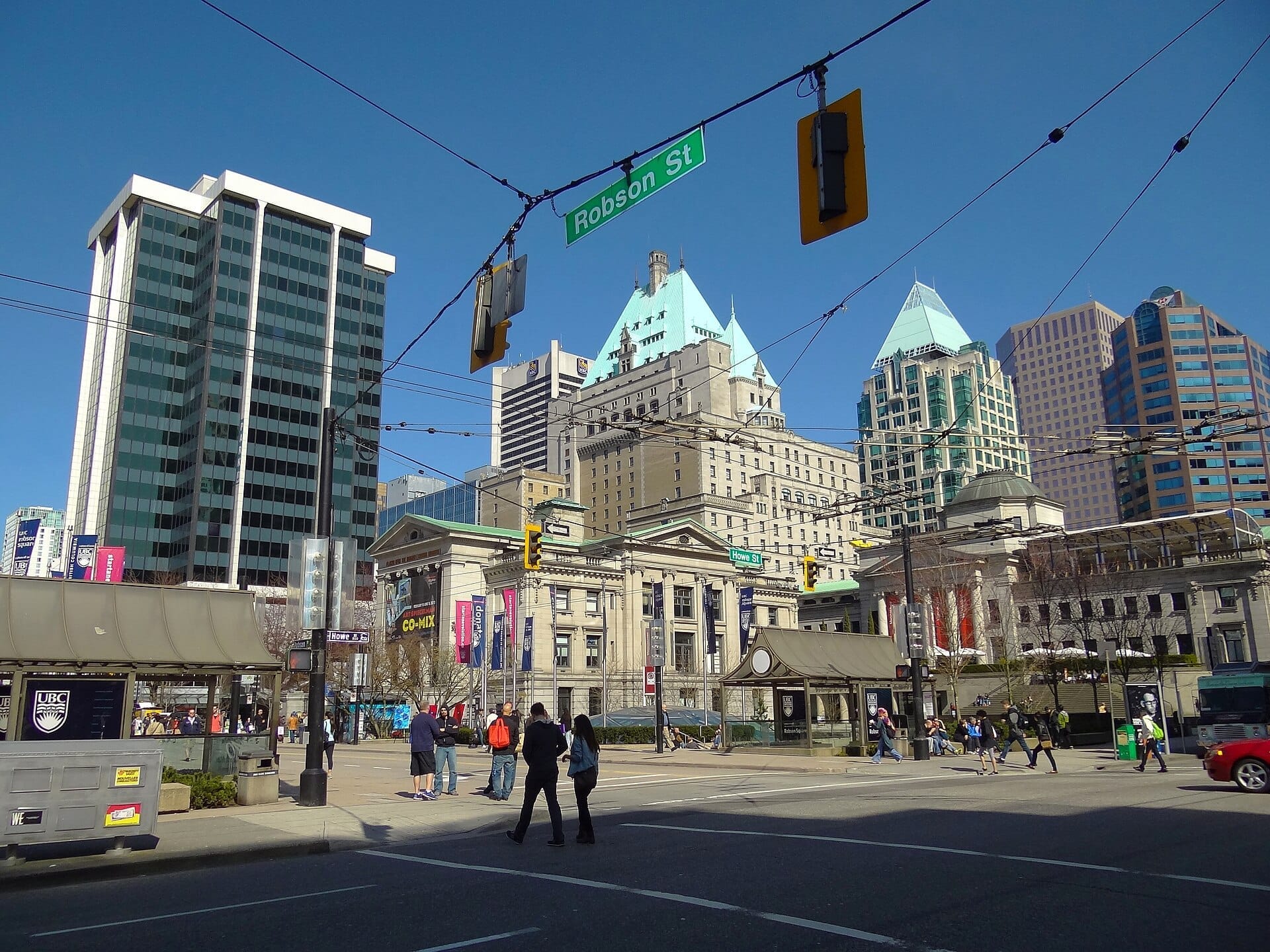
Robson Street is downtown Vancouver's primary pedestrian retail corridor, a city street that runs from the stadium district by BC Place and the library precinct through downtown and the West End to Lost Lagoon at the edge of Stanley Park. The core commercial stretch, roughly between Burrard Street and Jervis Street, is where the density of shops, restaurants, and foot traffic is highest. This is not a mall or a curated shopping district in the sense of Granville Island or a purpose-built promenade. It is a real city street with sidewalks, traffic lights, and the full cross-section of Vancouver's population moving through it at any given hour.
The street is named after John Robson, Premier of British Columbia from 1889 to 1892. Its commercial history stretches back to the late 1800s, with early development following the arrival of transit and retail along the corridor. By the mid-20th century, the blocks near Burrard had become so densely lined with German delicatessens, bakeries, and businesses serving post-war European immigrants that the area earned the nickname 'Robsonstrasse.' That character has long since shifted toward global retail chains, but the street's role as the central artery for downtown foot traffic has remained constant.
ℹ️ Good to know
Robson Street is a public thoroughfare with no admission charge. It is open at all hours. Individual shops and restaurants set their own hours, which vary by business and season.
How the Street Changes Through the Day
Early morning on Robson is relatively quiet. Between 7 and 9 a.m., the sidewalks belong to commuters cutting through downtown and locals picking up coffee. The cafes open first, then the larger retailers follow at 10 or 11 a.m. The smell of fresh espresso from street-level cafes mixes with the cool, often damp air that characterizes Vancouver mornings, particularly outside of summer. If you want to walk the length of the commercial strip without crowds pressing in from every direction, this is the window.
Midday through early evening is when Robson reaches full energy. Lunch crowds spill out of office towers, tourists navigate the sidewalks with shopping bags, and the cross streets at Thurlow and Burrard become genuinely congested with pedestrians. The sounds are layered: traffic, conversations in English, Cantonese, Mandarin, Korean, and a dozen other languages, plus the occasional street musician near the busier intersections. This is when the street feels most like the international retail corridor it has become.
After 8 p.m., the retail shops close progressively and the character shifts toward dining and bar-going. The sidewalks thin out but do not empty, particularly in summer when the long Pacific daylight keeps people outdoors until 9 or 10 p.m. Weekends push all of this activity later by an hour or two across the board.
Tickets & tours
Hand-picked options from our booking partner. Prices are indicative; availability and final rates are confirmed when you complete your booking.
Grouse Mountain and Capilano Suspension Bridge Park tour
From 252 €Instant confirmationFree cancellationVancouver Art Gallery Tickets
From 19 €Instant confirmationFree cancellationVancouver Stanley Park cycling tour
From 56 €Instant confirmationFree cancellationWhistler, Shannon Falls and Sky Gondola tour from Vancouver
From 135 €Instant confirmationFree cancellation
What You Will Find Along the Strip
The blocks between Burrard and Thurlow are dominated by international and Canadian chain retailers: sportswear brands, fast fashion, phone shops, and a handful of mid-market department stores. This section is functionally similar to any major North American shopping street, and visitors arriving with expectations of independent or artisan retail may find it underwhelming. The chains are well-stocked and convenient, but they do not represent anything distinctive about Vancouver.
Moving west past Thurlow toward Jervis, the street softens. Independents become more frequent, the restaurants get more interesting, and the residential West End neighbourhood begins to assert itself. Grocery stores, wine shops, and neighborhood bakeries start to appear alongside the lingering retail. By the time you reach Denman Street, you are effectively in a different kind of place: a walkable urban residential neighbourhood where locals shop and eat rather than a tourist corridor.
The eastern end of Robson, from Granville Street toward BC Place, is less interesting for most visitors and primarily useful as a navigation reference. This stretch is wider, less dense with shops, and more transient in character.
Getting There and Getting Around
Both Burrard Station and Vancouver City Centre Station on the Expo and Millennium SkyTrain lines are located on parallel streets within comfortable walking distance of Robson. From Burrard Station, walk south on Burrard Street for about two blocks to reach the main commercial stretch. From Vancouver City Centre Station, walk south on Granville Street and turn right onto Robson.
Several TransLink bus routes cross or run along Robson, making it easy to reach from elsewhere in downtown Vancouver or the West End without transferring to SkyTrain. The street is fully walkable, flat, and straightforward to navigate on foot. Cycling is possible, though the midday crowds make it slow going during peak hours.
Parking exists in underground structures on side streets and in nearby buildings, but driving to Robson for a shopping visit is generally inefficient. Downtown Vancouver parking fees are significant, and the SkyTrain connection is fast and frequent enough that transit is the more practical choice for most visitors.
💡 Local tip
If you arrive by SkyTrain at Burrard Station, exit toward Burrard Street, not Howe Street, to put yourself closest to the main retail blocks with the least backtracking.
Context: How Robson Fits Into Vancouver's Retail Landscape
Robson is frequently positioned as Vancouver's premier shopping street, and for international chain retail concentrated in a walkable downtown setting, that description is accurate. But it occupies a specific niche. Travelers looking for independent boutiques, local designers, or artisan goods will find more of what they are after in Main Street's Mount Pleasant neighbourhood or along South Granville. Those after a market experience rather than retail should head to Granville Island Public Market instead.
Robson's value for visitors is partly its convenience and density, but also its function as a spine for understanding downtown Vancouver's layout. Walking the full commercial stretch from Burrard to Denman orients you spatially to the downtown peninsula, puts you near English Bay at the western end, and gives you a sense of how the city transitions from its financial core to its densely residential West End. It is as useful as a navigation exercise as it is as a shopping destination.
Weather, Seasons, and What to Wear
Vancouver's temperate oceanic climate means Robson Street is a fundamentally different experience depending on when you visit. From October through March, expect overcast skies, frequent rain, and temperatures hovering between roughly 3 and 10 degrees Celsius. The street stays busy year-round because of its downtown location, but wet weather compresses the experience: people move faster, linger less, and duck into shops partly for shelter. A waterproof jacket is not optional in this period.
June through August brings the clearest conditions: drier air, temperatures in the upper teens Celsius, and long evenings that make after-dinner walks on Robson genuinely pleasant. Summer is when the street-level energy is highest and when outdoor cafe seating fills up. July and August also bring the most tourist traffic, which means more congestion on the busiest blocks. If you are visiting in summer and find the midday crowds oppressive, a weekday morning or an evening after 7 p.m. gives you the atmosphere with notably less density.
⚠️ What to skip
Robson Street has no covered pedestrian areas. In heavy rain, which is common from November through February, the experience of walking the outdoor stretch is significantly less comfortable. Check the forecast if the weather matters to your plans.
Photography and Accessibility
Robson Street is a photogenic street corridor rather than a single iconic landmark, so expectations need to be calibrated accordingly. The most visually interesting blocks are the sections where the retail density is highest and the street-level signage most layered. Early morning provides softer light and the opportunity to shoot without crowds filling the frame. The intersection of Robson and Burrard, with its tower backdrop, is a frequently used establishing shot for downtown Vancouver.
Accessibility along the street is generally solid by downtown standards. City sidewalks have curb cuts at intersections, making wheelchair and stroller navigation functional. Crossings are signalized. Accessibility inside individual businesses varies and should be confirmed with each establishment directly.
Insider Tips
- Walk the full length from Burrard to Denman rather than treating it as a loop from one SkyTrain station. The character of the street changes significantly as you move west, and Denman at the far end puts you one block from English Bay, which is worth the added ten minutes of walking.
- The blocks between Thurlow and Jervis have noticeably better independent dining options than the chain-heavy Burrard end. If you are choosing where to sit down for a meal, push slightly further west than the initial retail density might encourage.
- The side streets off Robson, particularly Davie and Denman running perpendicular into the West End, often have better coffee shops and quieter lunch spots than anything directly on the main strip. A one-block detour is usually rewarding.
- During the Vancouver Canucks NHL season, game nights at Rogers Arena cause significant pedestrian surges on nearby streets, including Robson. If you are planning a leisurely evening walk, check whether there is a home game.
- Most of the larger chain retailers on the Burrard-to-Thurlow blocks have washrooms that are technically for customer use. On a long walking day in downtown, this is worth knowing.
Who Is Robson Street For?
- First-time visitors to Vancouver who want a ground-level orientation to the downtown core
- Shoppers seeking international and Canadian chain retail in a walkable outdoor setting
- Travelers using the street as a connective route between downtown attractions and the West End
- People-watchers interested in the multilingual, multicultural daily life of a major Canadian city
- Visitors combining a walk with dining, especially in the western blocks closer to Jervis and Denman
Nearby Attractions
Other things to see while in Downtown Vancouver:
- BC Place
BC Place is Vancouver's premier indoor stadium and event venue, sitting on the north side of False Creek on the southeastern edge of downtown. From BC Lions football to Whitecaps soccer, international concerts, and trade expos, this retractable-roof arena is the city's largest indoor gathering space. Here is what it is actually like to visit, and how to make the most of your time there.
- Bill Reid Gallery of Northwest Coast Art
Opened in 2008, the Bill Reid Gallery of Northwest Coast Art is Canada's only public gallery dedicated entirely to Indigenous art of the Northwest Coast. Tucked into a quiet courtyard in downtown Vancouver, it offers an intimate, carefully curated encounter with Haida and other Northwest Coast artistic traditions.
- Canada Place
Canada Place anchors Vancouver's downtown waterfront with its sail-shaped roof, working cruise terminal, and free public promenade overlooking Burrard Inlet. Whether you're passing through or planning your first visit, here's what actually makes it worth your time.
- Coal Harbour
Coal Harbour is a free-to-explore waterfront neighbourhood on Burrard Inlet, stretching between Canada Place and the edge of Stanley Park. It combines a paved seawall, marina views, mountain backdrops, and one of the most photographed skylines in western Canada.