Bill Reid Gallery of Northwest Coast Art: A Complete Visitor's Guide
Opened in 2008, the Bill Reid Gallery of Northwest Coast Art is Canada's only public gallery dedicated entirely to Indigenous art of the Northwest Coast. Tucked into a quiet courtyard in downtown Vancouver, it offers an intimate, carefully curated encounter with Haida and other Northwest Coast artistic traditions.
Quick Facts
- Location
- 639 Hornby Street, Vancouver, BC (downtown, between Georgia and Dunsmuir)
- Getting There
- Vancouver City Centre Station (Canada Line) or Burrard Station (Expo/Millennium Lines), both a short walk away
- Time Needed
- 1 to 2 hours
- Cost
- Adults $13 CAD, Seniors $10, Students $8, Youth (13–17) $6, Family $30. Free for Indigenous visitors, children 12 and under, members, and current SFU students. Free community access 2–5 pm on the first Friday of each month.
- Best for
- Art lovers, cultural travelers, anyone wanting context for Indigenous Northwest Coast traditions
- Official website
- www.billreidgallery.ca
About the Bill Reid Gallery
The Bill Reid Gallery of Northwest Coast Art holds a distinction that sounds simple but carries real weight: it is the only public gallery in Canada dedicated exclusively to Indigenous art of the Northwest Coast. That focus gives the space an unusual coherence. You are not flipping between traditions or centuries. You are moving through a deep, sustained engagement with one of the world's most visually complex artistic lineages, anchored by the legacy of Bill Reid, the Haida artist whose work helped bring Northwest Coast art to international attention in the late twentieth century.
The gallery opened in May 2008 in downtown Vancouver and occupies a purpose-built space at 639 Hornby Street. It sits on the traditional territories of the Musqueam, Squamish, and Tsleil-Waututh Nations, a fact the gallery takes seriously in how it frames and contextualizes the work it holds. Exhibitions rotate, so the experience shifts across visits, but the permanent holdings and the architectural presence of the building itself remain consistent anchors.
ℹ️ Good to know
Hours vary by season. Summer hours (May–September) are 10:00 am to 5:00 pm daily. Winter hours (October–April) are 10:00 am to 5:00 pm, Tuesday through Saturday; check the official site for any holiday changes before you visit.
Finding the Entrance: Easier Than It Looks
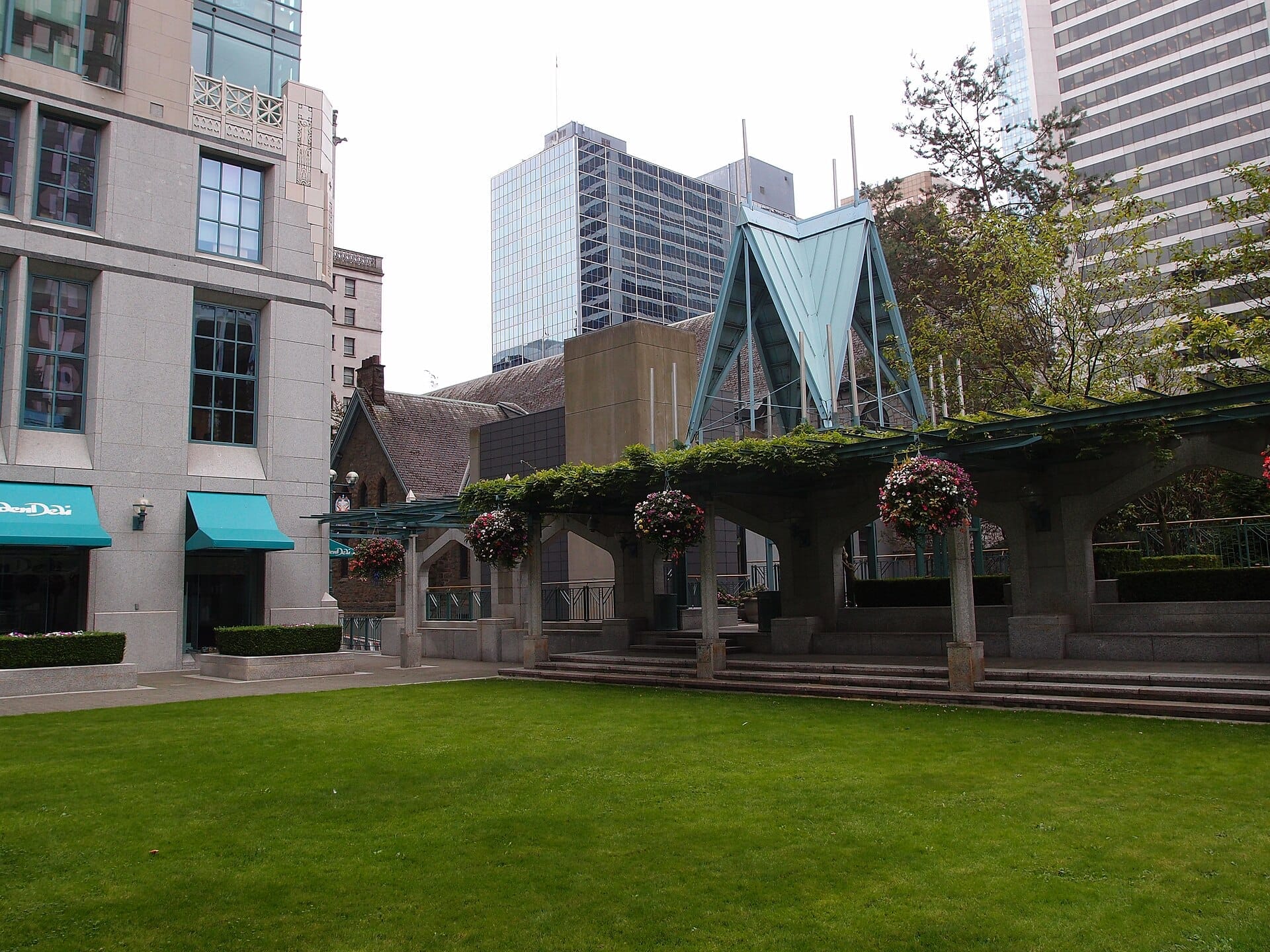
The gallery's location is easy to walk past by mistake. You approach from Hornby Street, where a sandwich board marks the turn. The actual entrance sits up a short stairway inside a courtyard tucked between Georgia Street and Dunsmuir Street. Neighboring buildings include Christ Church Cathedral and Cathedral Place, two of downtown's better-known heritage structures. First-time visitors occasionally circle the block before spotting the opening.
If you have mobility requirements, skip the Hornby Street stairway entirely. The wheelchair-accessible route enters from Georgia Street, through the passage between Christ Church Cathedral and Cathedral Place, which leads directly into the courtyard at grade level. The gallery itself spans two levels, with an elevator connecting them and an accessible washroom on the lower floor.
💡 Local tip
Underground parking is available below the gallery on weekdays from 6 am to 7 pm and on weekends from 10 am to 6 pm. It closes on statutory holidays. Street parking on the west side of Hornby Street is the alternative, though it fills quickly on weekday afternoons.
Tickets & tours
Hand-picked options from our booking partner. Prices are indicative; availability and final rates are confirmed when you complete your booking.
Vancouver Art Gallery Tickets
From 19 €Instant confirmationFree cancellationGrouse Mountain and Capilano Suspension Bridge Park tour
From 252 €Instant confirmationFree cancellationVancouver Stanley Park cycling tour
From 56 €Instant confirmationFree cancellationWhistler, Shannon Falls and Sky Gondola tour from Vancouver
From 135 €Instant confirmationFree cancellation
Bill Reid: Why the Name Matters
Bill Reid (1920–1998) was born to a Haida mother and a Scottish-American father. He grew up largely unaware of his Indigenous heritage, later immersing himself in Haida artistic traditions through careful study of museum collections and direct apprenticeship. What he developed was not a reproduction of historical forms but an evolution of them, executed with goldsmith-level technical precision. His work appears on the Canadian twenty-dollar bill (in the form of his bronze sculpture Spirit of Haida Gwaii) and in major institutions across North America.
The gallery in his name goes beyond celebrating a single artist. It treats Reid as a point of entry into a broader conversation about Northwest Coast Indigenous art, including contemporary and emerging artists working within and in dialogue with these traditions. This curatorial stance keeps the gallery from feeling like a monument to one person and makes it a living cultural institution instead.
Inside the Gallery: What You Will Encounter
The exhibition space across two floors is intimate by the standards of major art museums. That is not a criticism; it is a feature. You are not being asked to process hundreds of works in sequence. The gallery gives each object room, and the curation generally provides enough contextual framing that a visitor without prior knowledge of Northwest Coast art can follow the visual and cultural logic of what they are seeing.
Works range across media: jewelry in gold and silver, carved argillite panels, large-scale wooden sculpture, printmaking, and contemporary pieces that extend traditional forms into new territories. The formline system, a design language distinctive to Northwest Coast art characterized by flowing ovoid shapes and connected curves, becomes legible after even a short time in the space. The gallery is one of the better places in Vancouver to develop that visual literacy.
Lighting inside is gallery-standard: controlled, directed, and intentionally quiet. The atmosphere in the morning, when visitor numbers are low, is genuinely still. By early afternoon on summer days, school groups and organized tours arrive, and the dynamic changes. If contemplative engagement with individual works matters to you, aim for a weekday opening hour.
For broader context on Indigenous and anthropological collections in the region, the Museum of Anthropology at UBC holds one of the most significant collections of Northwest Coast material in the world and pairs well with a visit here.
Pricing, Access, and the First-Friday Policy
Admission for adults sits at $13 CAD in summer, with scaled pricing for seniors ($10), students with valid ID ($8), and youth aged 13 to 17 ($6). A family pass covering two adults and two youth costs $30. Individuals who self-identify as Indigenous, including First Nations, Métis, and Inuit visitors, enter free, as do children 12 and under, gallery members, and current Simon Fraser University students with valid ID.
The first Friday of every month brings free admission from 2 pm to 5 pm as part of a community access program. This is worth knowing if you are traveling on a tight budget, though those three hours in the afternoon also attract more visitors than a typical weekday morning. Accessible pricing is available on request for those who need it.
💡 Local tip
If you are a student or visiting with family, the pricing structure makes this one of downtown Vancouver's more affordable cultural stops. Compare it to larger institutions before assuming it will stretch your budget.
Getting There and the Surrounding Downtown Context
The gallery sits at the center of downtown Vancouver's cultural and commercial core. Vancouver City Centre Station on the Canada Line and Burrard Station on the Expo and Millennium Lines are both within a few minutes' walk. Most buses serving the downtown peninsula stop nearby on Georgia, Burrard, or Granville.
The surrounding blocks hold some of Vancouver's most recognizable civic architecture. The Vancouver Art Gallery is a few minutes' walk north, housed in the former provincial courthouse. Robson Square and the public library are nearby. The gallery fits naturally into a half-day exploring downtown Vancouver on foot.
The courtyard setting means the exterior approach has its own quiet character, even in the middle of a busy weekday. Georgia and Hornby is not a quiet intersection, but the gallery itself feels set back from that energy. On sunny days the courtyard catches good afternoon light, and the architectural framing of the entrance is worth pausing over before you go in.
Is it worth your time?
The Bill Reid Gallery is not a large institution, and it does not try to be. Visitors expecting the scale or encyclopedic scope of a major natural history or fine arts museum will find it more focused than they anticipated. That focus is exactly what gives it authority. Two hours is a comfortable upper limit for most visitors; one hour is enough to move thoughtfully through a typical exhibition.
Travelers with no particular interest in Indigenous art or Pacific Northwest cultural history may find the gallery does not land as strongly. But for anyone curious about the traditions that shaped this region, or about Bill Reid specifically, or about how a single artist can help revitalize a visual tradition, this is one of the most focused and rewarding cultural stops in the city.
Vancouver's art gallery landscape is worth exploring beyond this single stop. For a broader look at where to spend time with visual art in the city, the guide to art galleries in Vancouver covers the major options across different neighborhoods and budgets.
Insider Tips
- Arrive within the first thirty minutes of opening on a weekday if you want the gallery largely to yourself. The formline works and jewelry reward close, unhurried looking that is harder to do when tour groups are present.
- The sandwich board on Hornby Street is the main wayfinding marker. If you are approaching from the Burrard Street side, walk one block west to Hornby, then look for the board and the short stairway up into the courtyard.
- The first Friday community access window (2–5 pm) is free but draws more foot traffic than morning hours. If the free entry is important to you and you prefer a quieter experience, arrive right at 2 pm.
- Ask staff about the current exhibition rotation before assuming the works you have seen in photographs will be on display. The gallery rotates its exhibitions and not all holdings are shown simultaneously.
- If you plan to combine this with the Museum of Anthropology at UBC on the same day, reverse the order and visit the Bill Reid Gallery first. The UBC collection is large, and you will have more bandwidth for the downtown gallery if you see it fresh.
Who Is Bill Reid Gallery of Northwest Coast Art For?
- Travelers with an interest in Pacific Northwest Indigenous culture and art history
- Art lovers who prefer curated, focused collections over sprawling encyclopedic museums
- Families with children over 12 who are interested in art (children 12 and under enter free)
- Solo travelers doing a downtown cultural half-day on foot
- Visitors who have seen Bill Reid's public sculptures in Vancouver and want deeper context
Nearby Attractions
Other things to see while in Downtown Vancouver:
- BC Place
BC Place is Vancouver's premier indoor stadium and event venue, sitting on the north side of False Creek on the southeastern edge of downtown. From BC Lions football to Whitecaps soccer, international concerts, and trade expos, this retractable-roof arena is the city's largest indoor gathering space. Here is what it is actually like to visit, and how to make the most of your time there.
- Canada Place
Canada Place anchors Vancouver's downtown waterfront with its sail-shaped roof, working cruise terminal, and free public promenade overlooking Burrard Inlet. Whether you're passing through or planning your first visit, here's what actually makes it worth your time.
- Coal Harbour
Coal Harbour is a free-to-explore waterfront neighbourhood on Burrard Inlet, stretching between Canada Place and the edge of Stanley Park. It combines a paved seawall, marina views, mountain backdrops, and one of the most photographed skylines in western Canada.
- Robson Street
Robson Street runs through the heart of downtown Vancouver, connecting the central business district with the residential West End. A historic commercial strip dating to the 1890s, it packs international retailers, independent cafes, and street-level energy into a walkable stretch that changes character dramatically between morning and night.