Canada Place: Vancouver's Waterfront Landmark Explained
Canada Place anchors Vancouver's downtown waterfront with its sail-shaped roof, working cruise terminal, and free public promenade overlooking Burrard Inlet. Whether you're passing through or planning your first visit, here's what actually makes it worth your time.
Quick Facts
- Location
- 999 Canada Place, Downtown Vancouver, BC V6C 3T4
- Getting There
- Waterfront Station (SkyTrain Expo & Canada Line; SeaBus) — a 2-minute walk
- Time Needed
- 30–45 min for the promenade; 1.5–2 hrs if visiting FlyOver Canada
- Cost
- Free for public promenade; FlyOver Canada and other venues charge separate admission (in CAD — verify current prices)
- Best for
- Harbour views, cruise embarkation, first-time visitors, architecture
- Official website
- www.canadaplace.ca
About Canada Place
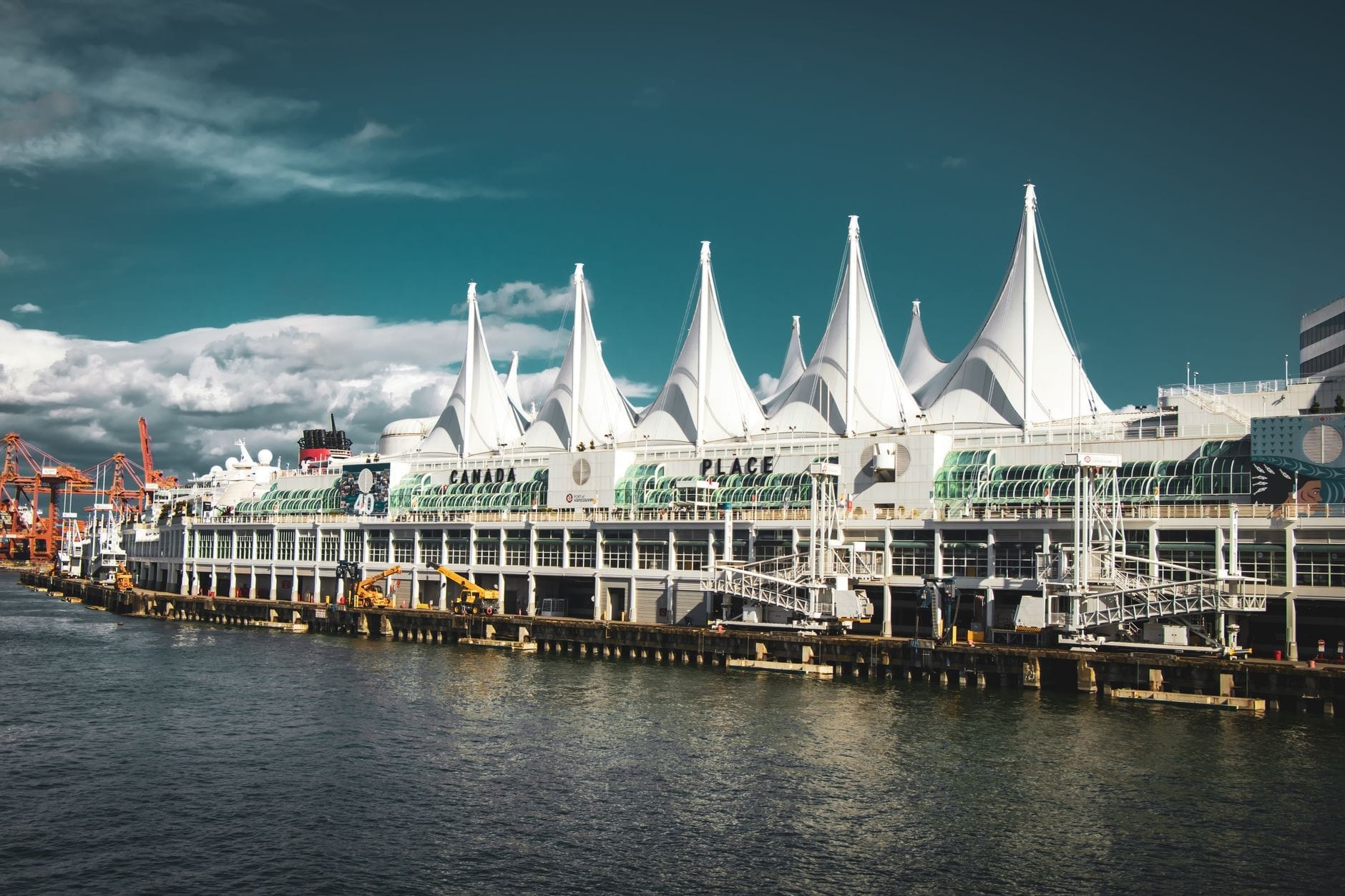
Canada Place is a multi-use waterfront complex on Burrard Inlet in the heart of downtown Vancouver. It functions simultaneously as a cruise ship terminal, convention centre, hotel, office tower, and public promenade. The structure is probably the most recognized piece of architecture on the Vancouver skyline, not because of any single detail but because of the five white fibreglass fabric roof panels that extend over the pier like sails. From the water or from the North Shore mountains, it reads immediately as a landmark.
For most visitors, Canada Place is the first meaningful stop: it's where cruise passengers embark and disembark, where major conventions are held in the adjacent Vancouver Convention Centre, and where anyone arriving at Waterfront Station and walking toward the water ends up. The public promenade that wraps around the pier is genuinely free and open daily, making it an accessible introduction to Vancouver's relationship with its harbour.
ℹ️ Good to know
The public waterfront promenade is open daily from 7:00 AM to 11:00 PM and requires no ticket. The interior facilities — FlyOver Canada, the Pan Pacific Vancouver hotel, convention spaces — each have their own hours and pricing. Check individual operators before you go.
The History Behind the Sails
The site has been in active use since the 1920s, when it operated as Canadian Pacific Railway's Pier B-C, the terminal for ocean liner traffic arriving on Canada's Pacific coast. Ships crossing from Asia and from the Panama Canal docked here. By the 1980s, the CP rail era had wound down, and the federal government saw an opportunity to reimagine the pier.
In 1982, the Government of Canada began redeveloping the site to serve as the Canada Pavilion for Expo 86, the World's Fair that would put Vancouver on the international map. Canada Place was constructed on the original footings of Pier B-C, preserving the bones of the old terminal while adding the sail roof structure that has defined the waterfront ever since. Expo 86 ran from May to October 1986 and drew over 22 million visitors. After the fair closed, Canada Place transitioned into its current role as a permanent civic and commercial hub.
The legacy of that transformation is visible in how Canada Place connects to the broader downtown waterfront. It sits adjacent to Coal Harbour, and looking west from the promenade you can follow the water all the way to the Stanley Park Seawall. The civic investment of the Expo 86 era shaped the entire northern edge of downtown Vancouver into the walkable waterfront it is today.
Tickets & tours
Hand-picked options from our booking partner. Prices are indicative; availability and final rates are confirmed when you complete your booking.
Vancouver Whitecaps Football Game at BC Place Stadium
From 15 €Instant confirmationSelf-guided tour of Western Canada with GPS audio guide
From 25 €Instant confirmationFree cancellationGrouse Mountain and Capilano Suspension Bridge Park tour
From 252 €Instant confirmationFree cancellationVancouver Art Gallery Tickets
From 19 €Instant confirmationFree cancellation
The Promenade: What the Walk Actually Delivers
The promenade circumnavigates the pier and offers unobstructed sightlines across Burrard Inlet. To the north, you're looking at the mountains of the North Shore, with Grouse Mountain visible on clear days. To the east, the SeaBus terminal and the old CPR station building (now Waterfront Station) anchor the base of Gastown. To the west, float planes from Harbour Air and Westcoast Air take off and land constantly during operating hours, buzzing low over the water at roughly 90-second intervals throughout the day.
The western edge of the promenade is the most active vantage point. Float planes landing from the south approach almost directly overhead, engines dropping from a high whine to a lower rumble as they settle onto the water. It's one of those sounds that feels specific to Vancouver and doesn't exist in many other major cities. Even in the rain, the view holds: low cloud over the North Shore mountains compresses the harbour into a grey-green panorama that feels cinematic rather than disappointing.
The northern edge of the promenade, facing directly across the inlet, is the quieter stretch. Benches line the railing, the cruise ship berths are below, and on mornings when a large vessel is docked, the scale of modern cruise ships becomes genuinely striking at close range. These are ships with 15 or more decks, dwarfing the pier structures around them. If your interest is ships, this is the viewing spot.
💡 Local tip
For the best light, visit in the morning when the sun comes from the east and catches the North Shore mountains directly. By mid-afternoon, the mountains are in shadow from the viewer's perspective. Early morning in summer also means the promenade is nearly empty before cruise passengers begin arriving.
FlyOver Canada: Worth It or Skip?
The main ticketed attraction inside Canada Place is FlyOver Canada, a flight-simulation ride that takes visitors on a filmed aerial journey across Canada's landscapes. Seats are suspended in front of a large spherical screen, and the experience combines wind, mist, and scent effects with the footage. The technology is well-executed, the production values are high, and the aerial photography of Newfoundland coastline, Prairie farmland, and BC mountain terrain is genuinely impressive.
Whether it's worth the admission depends on your travel context. If you have children, or if this is your first time in Canada and you want a fast geographic orientation, FlyOver Canada delivers a memorable 20-minute experience. For travelers who will be spending days in BC's actual landscapes, it's less essential. Ticket prices in CAD are set by the operator and should be confirmed directly, as they vary by date and package.
💡 Local tip
Book FlyOver Canada tickets online in advance, particularly during summer and cruise season (May to October). Walk-up queues on busy mornings can be 30–45 minutes. The ride itself runs approximately 8 minutes, with a short pre-show.
How Canada Place Changes Through the Day
Early morning, between 7:00 and 9:00 AM, Canada Place belongs almost entirely to commuters, joggers, and the occasional photographer. The promenade is clean, the light over the mountains is at its sharpest, and the float plane terminal begins its first operations. There's a smell of salt water and diesel that's stronger in the cooler air before foot traffic builds.
By mid-morning on a cruise day, the dynamic shifts entirely. Thousands of passengers are moving through the terminal building, luggage carts cross the promenade area, and the surrounding streets fill with taxis and shuttle vehicles. This is worth knowing if you're coming for the views rather than a cruise: the promenade itself remains accessible, but the atmosphere is far more logistical than leisurely.
Evenings are consistently pleasant. The illuminated sail structure reflects off the water, and the Convention Centre's glass facade lights up. A walk along the promenade at 9:00 PM in July, when it stays light until nearly 10:00 PM, is one of the more effortless pleasures downtown Vancouver offers.
Getting There and Getting Around
Canada Place is one of the easiest destinations to reach in Vancouver. Waterfront Station, immediately adjacent to the complex, is served by two SkyTrain lines (Expo and Canada Line), the SeaBus ferry to North Vancouver, and West Coast Express commuter rail. From most points in downtown, a direct SkyTrain ride gets you there in under 10 minutes. For transit fares and routes, check TransLink's current schedules at our guide to getting around Vancouver.
If you're walking from the downtown core, Canada Place is about 8 minutes on foot from Robson Street and roughly 5 minutes from the edge of Gastown. From the west end of downtown or Yaletown, allow 15 to 20 minutes on foot, or take the SkyTrain one stop. Parking is available in the Canada Place parkade, with accessible spaces designated for visitors with mobility needs.
Canada Place also functions as the western anchor of a longer waterfront walk. From the promenade, you can continue east past Waterfront Station toward Gastown, or head west along Coal Harbour toward the marinas and eventually Stanley Park. The entire stretch takes about 90 minutes at a relaxed pace.
⚠️ What to skip
Cruise season runs roughly May through October. During peak sailings, particularly Saturdays, turnaround days bring simultaneous arrivals and departures of multiple large vessels. The surrounding streets become congested and parking is extremely limited. Avoid driving to Canada Place on those days.
Photography, Weather, and Practical Notes
Canada Place sits on the water with no tall buildings blocking the northern view, which makes it one of the more reliable photography spots in downtown Vancouver. The best compositions combine the sail structure from ground level looking east, or the harbour panorama from the promenade railing looking north toward the mountains. A 24–35mm lens covers most scenarios; telephoto is useful for isolating float planes or freighters in the inlet.
Weather affects the experience more than most guides acknowledge. Vancouver's rainfall peaks between October and March, and on heavy rain days, the open promenade offers minimal shelter. Bring a waterproof layer regardless of season. Summer (June through August) is the most reliably dry period, with average July temperatures around 18°C (64°F). For a full picture of what to expect season by season, see the Vancouver weather guide.
The promenade is fully accessible by wheelchair, and accessible parking is available in the parkade. The interior of the complex, including FlyOver Canada, also accommodates wheelchair users, though it's worth contacting specific venues in advance to confirm any particular requirements.
Insider Tips
- The northwest corner of the promenade, where the pier juts furthest into Burrard Inlet, gives you the cleanest unobstructed sightline west toward the mountains and the float plane runway. Most visitors walk the eastern half and miss this angle entirely.
- If you want to watch float planes take off and land without the crowds, arrive before 8:30 AM. Harbour Air begins operations early, and the light is better for photography in the first two hours of the morning.
- Canada Place hosts the annual Canada Day celebrations on July 1, including fireworks over the harbour. It's one of the better urban fireworks vantage points in the city, but arrive early. The promenade fills up completely by 8:00 PM.
- The FlyOver Canada pre-show area has short films about Canadian geography and culture. These are included in your ticket and worth watching — they provide context that makes the main ride more meaningful, especially if you're new to the country.
- If you're a cruise passenger with time before embarkation, the walkable distance to Gastown is under 10 minutes. It's a far better use of waiting time than sitting in the terminal.
Who Is Canada Place For?
- First-time visitors to Vancouver who want a quick orientation to the city's relationship with its harbour
- Cruise passengers with a few hours before or after embarkation
- Families with children who will enjoy FlyOver Canada and the float plane activity
- Photographers looking for wide harbour panoramas and mountain backdrops
- Travelers building a longer waterfront walk that connects to Gastown or Coal Harbour
Nearby Attractions
Other things to see while in Downtown Vancouver:
- BC Place
BC Place is Vancouver's premier indoor stadium and event venue, sitting on the north side of False Creek on the southeastern edge of downtown. From BC Lions football to Whitecaps soccer, international concerts, and trade expos, this retractable-roof arena is the city's largest indoor gathering space. Here is what it is actually like to visit, and how to make the most of your time there.
- Bill Reid Gallery of Northwest Coast Art
Opened in 2008, the Bill Reid Gallery of Northwest Coast Art is Canada's only public gallery dedicated entirely to Indigenous art of the Northwest Coast. Tucked into a quiet courtyard in downtown Vancouver, it offers an intimate, carefully curated encounter with Haida and other Northwest Coast artistic traditions.
- Coal Harbour
Coal Harbour is a free-to-explore waterfront neighbourhood on Burrard Inlet, stretching between Canada Place and the edge of Stanley Park. It combines a paved seawall, marina views, mountain backdrops, and one of the most photographed skylines in western Canada.
- Robson Street
Robson Street runs through the heart of downtown Vancouver, connecting the central business district with the residential West End. A historic commercial strip dating to the 1890s, it packs international retailers, independent cafes, and street-level energy into a walkable stretch that changes character dramatically between morning and night.