Roedde House Museum: Vancouver's Only Victorian House Museum
Built in 1893 for Vancouver's first bookbinder, Roedde House Museum preserves a rare Queen Anne Revival home in the heart of the West End. Small-group guided tours, period furnishings, and occasional parlour concerts make this one of Vancouver's most intimate heritage experiences.
Quick Facts
- Location
- 1415 Barclay Street, Barclay Heritage Square, West End, Vancouver, BC
- Getting There
- Bus #5 Robson to Broughton St, then 2-min walk south; or ~20-min walk from Burrard SkyTrain Station
- Time Needed
- 45–90 minutes for a guided tour
- Cost
- Approx. CAD $10 adults / $7 students & seniors / $5 youth (6–18) / Free under 5. Parlour concerts ~CAD $20–25. Verify current prices at roeddehouse.org
- Best for
- History enthusiasts, architecture lovers, quiet cultural afternoons
- Official website
- www.roeddehouse.org
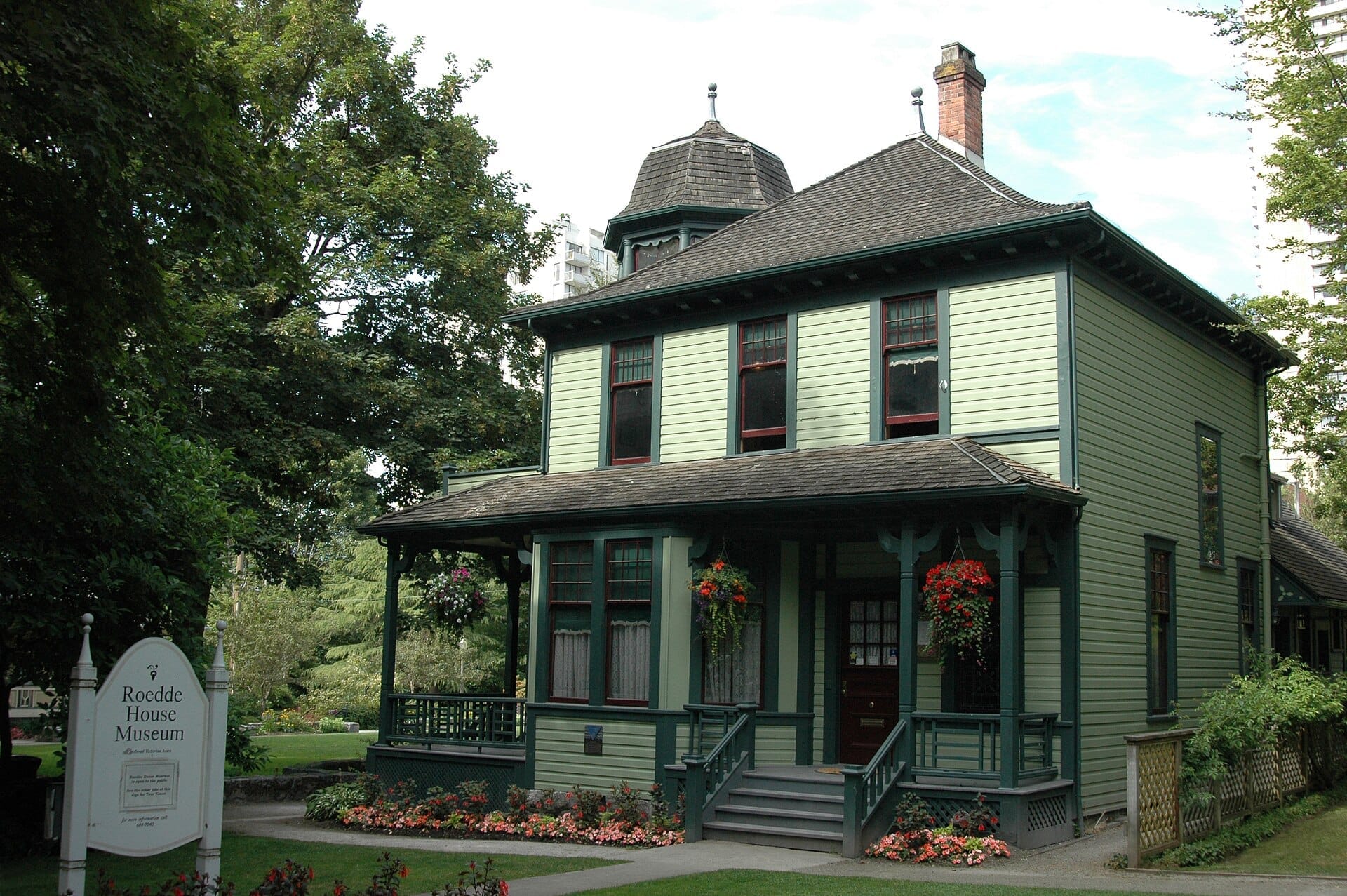
Roedde House Museum: an overview
Roedde House Museum is Vancouver's only Victorian house museum, and one of the few places in the city where you can step across a threshold and feel, credibly, that the last 130 years did not happen. Built in 1893 for Gustav and Matilda Roedde, the house occupies a quiet corner of Barclay Heritage Square in the West End, surrounded by a cluster of other heritage homes that somehow survived the condominium wave that transformed the rest of the neighbourhood.
Gustav Roedde was Vancouver's first bookbinder, who arrived in the area in 1888 when the city itself was barely two years old. That context matters: this house was built at a moment when Vancouver was a raw, ambitious frontier town, and its owners were signalling prosperity and permanence through the architectural vocabulary of the day. The result is a compact but carefully articulated Queen Anne Revival home, designed by prominent Vancouver architect Francis Rattenbury, the same figure behind Victoria's Empress Hotel and BC Legislature buildings.
ℹ️ Good to know
Opening hours vary by season. June to August: Wednesday, Thursday, Friday, and Sunday, 11:00 am–4:00 pm. September to May: Wednesday, Thursday, Friday, and Sunday, 1:00 pm–4:00 pm. The museum closes for a holiday break each year (for example, December 24 to January 13 in the 2026–27 season). Always check roeddehouse.org before visiting.
The Building: Queen Anne Revival in a Condominium City
From the street, the house announces itself with the decorative exuberance typical of late Victorian residential architecture: a prominent corner tower with a conical roof, wraparound verandah, steep gabled rooflines, and intricate wood detailing on the exterior trim. In a neighbourhood now dominated by low-rise apartment blocks from the 1960s and glass towers from the 2000s, the visual contrast is immediate and striking. The house does not look like it belongs here, which is precisely what makes it worth stopping for.
The City of Vancouver designated Roedde House as a heritage property in 1976, a decision that helped anchor the broader Barclay Heritage Square development and preserved a group of nearby homes that might otherwise have been demolished. The house itself was carefully restored through the 1980s and opened to the public as a museum in May 1990 under the Roedde House Preservation Society, a volunteer-led organization that continues to operate it today.
Architecturally, the interior is as telling as the exterior. Original period furnishings fill the rooms, chosen to reflect the domestic life of a prosperous Vancouver family in the 1890s. The parlour, with its upright piano and carefully arranged seating, gives a clear picture of how middle-class households organized social life in that era. The kitchen and service areas tell a different story, one of practical labour rather than genteel display.
Tickets & tours
Hand-picked options from our booking partner. Prices are indicative; availability and final rates are confirmed when you complete your booking.
Grouse Mountain and Capilano Suspension Bridge Park tour
From 252 €Instant confirmationFree cancellationVancouver Art Gallery Tickets
From 19 €Instant confirmationFree cancellationVancouver Stanley Park cycling tour
From 56 €Instant confirmationFree cancellationWhistler, Shannon Falls and Sky Gondola tour from Vancouver
From 135 €Instant confirmationFree cancellation
The Tour Experience: What You Actually See
Visits are guided rather than self-directed, which suits the scale and nature of the space. Groups are small, typically no more than a dozen people, and the tour runs roughly 45 minutes, though knowledgeable guides often extend this when visitors ask questions. You enter through the front door (ring the old-fashioned doorbell, which is not decorative) and move room by room through the ground floor and upper levels, learning about both the Roedde family specifically and Victorian domestic life in early Vancouver more broadly.
The furnishings reward close attention. Original pieces are interspersed with period-appropriate items sourced from the same era. Look at the wallpaper patterns, the weight and drape of the curtains, the proportions of the furniture relative to the room sizes. These details accumulate into a coherent picture of a specific social world that no longer exists. Guides here tend to have genuine specialist knowledge rather than scripted patter, and the experience is noticeably more personal than larger heritage properties.
💡 Local tip
If you have particular interest in Victorian decorative arts, textiles, or domestic history, mention it when you arrive. The guides adjust their emphasis based on what visitors want to know.
The garden around the house is modest but well-maintained, and on summer afternoons the verandah and grounds make for a pleasant few minutes before or after the indoor tour. The surrounding square, with its collection of other restored heritage homes and mature trees, extends the sense of stepping back in time beyond the house itself.
Parlour Concerts: The Museum After Dark
Roedde House hosts a series of parlour concerts that are worth knowing about separately from the regular tours. These events take place in the historic parlour itself, with a maximum audience of around 30 people, and typically feature classical chamber music or historically informed performances that fit the setting. Tickets run approximately CAD $20–25 per person, and they sell out. The acoustic in a room that size, with period furnishings and no amplification, is genuinely special.
These concerts give the house a second identity beyond daytime heritage tourism. Arriving at Roedde House on a concert evening, with the windows lit from inside and the square quiet around it, is a noticeably different experience from an afternoon tour. Check the museum's official website for the current concert schedule well in advance if this interests you.
Getting There and Practical Details
The museum sits on Barclay Street between Broughton and Nicola Streets, about four blocks south of Robson Street. The most straightforward approach by transit is the #5 Robson bus, which runs along Robson Street and deposits you a short walk from the house. From Burrard SkyTrain Station it is approximately a 20-minute walk west along Robson. The West End neighbourhood is easy to navigate on foot, and the walk along Robson itself passes restaurants, cafes, and shops if you want to combine the visit with time in the area.
If driving, be aware that parking in the West End is largely restricted to residents. There are four marked visitor parking spots directly behind the house, which is a small number relative to potential demand on busy days. Metered parking on Robson Street is an option. Given the neighbourhood's walkability and transit access, arriving by bus is usually the least stressful approach.
Accessibility: the main entrance is through the front door, and the house is a multi-storey Victorian building. The official website does not publish detailed mobility accessibility information, so visitors who use wheelchairs or have other mobility requirements should contact the museum directly by phone at +1 604-684-7040 or email at info@roeddehouse.org before visiting. The museum is a short walk from English Bay Beach and Stanley Park, making it a natural addition to a broader West End afternoon.
How It Fits Into a West End Day
Roedde House works well as part of a longer West End afternoon rather than a standalone destination requiring significant travel. After the tour, Barclay Heritage Square itself deserves a slow walk. From there, Robson Street is four blocks north if you want coffee or lunch. Lost Lagoon at the entrance to Stanley Park is a 10-minute walk west, and the Stanley Park Seawall begins just beyond it. If you are exploring Vancouver's heritage landscape more broadly, the West End's architectural history pairs well with a visit to the Vancouver Art Gallery downtown or the historic character of Gastown further east.
In summer, the house is at its most photogenic in the mid-morning when the light falls on the verandah and garden before the street gets busy. In the afternoon, particularly on weekdays, the square is quiet enough that you can linger and photograph the exterior without pedestrian traffic in the frame. On rainy days, which are frequent in Vancouver from October through March, the interior tour is entirely unaffected, and the house's warmth and human scale make it a particularly good wet-day choice.
Who Should Think Twice
Visitors primarily interested in large-scale museums with broad collections, interactive exhibits, or significant contemporary art will find Roedde House a poor match for those expectations. The house is small, the collection focused, and the experience is almost entirely narrative and interpretive rather than visual spectacle. Children under about 10 may find the guided format slow unless they have specific interest in history. Those with mobility limitations should contact the museum before visiting rather than arriving and discovering access difficulties.
The limited opening hours are also a real constraint. The museum is closed Monday and Tuesday, open only four days per week, and has a narrower window in the off-season. Planning around this is essential, particularly if you are visiting Vancouver for only a few days and have a tight itinerary.
Insider Tips
- Arrive a few minutes before your preferred tour start time rather than exactly on the hour. The guides sometimes begin with a brief introduction in the garden when weather allows, and you will miss context if you walk in mid-sentence.
- The parlour concert series fills up quickly, sometimes weeks in advance. If a concert date aligns with your Vancouver visit, book before you travel rather than after you arrive.
- Barclay Heritage Square as a whole is worth a slow circuit beyond the museum itself. Several of the surrounding houses from the same era have been restored, and reading them as a group gives a stronger sense of what the West End looked like before postwar apartment construction.
- The #5 Robson bus runs frequently and is the easiest approach. Get off at Bute Street or Broughton Street and walk one block south to Barclay. The walk from Burrard Station along Robson is pleasant in good weather but adds real time to a tight schedule.
- Photography inside the house is generally permitted for personal use, but check with your guide before photographing specific objects or rooms. The exterior, especially the tower and verandah, photographs best in morning light when the facade faces east.
Who Is Roedde House Museum For?
- History enthusiasts wanting genuine engagement with Vancouver's early settlement period
- Architecture lovers interested in Queen Anne Revival residential design and Victorian domestic interiors
- Travelers seeking a quiet, uncrowded cultural experience away from the main tourist circuit
- Classical music fans looking for an intimate parlour concert in an authentic period setting
- Anyone building a West End afternoon that combines heritage, parks, and the waterfront
Nearby Attractions
Other things to see while in West End:
- Brockton Point Totem Poles
The Brockton Point Totem Poles are an outdoor collection of nine First Nations poles carved by artists from the Squamish, Kwakwaka'wakw, Haida, Nisga'a, and Nuxalk Nations. Set in a meadow at the edge of Burrard Inlet inside Stanley Park, the site is free, open around the clock, and reachable on foot from Coal Harbour in about 20 minutes.
- Davie Village
Davie Village is the cultural and social centre of Vancouver's queer community, stretching along Davie Street between Burrard and Jervis in the West End. Free to explore at any hour, it offers a mix of LGBTQ+ history, independent cafés and bars, the iconic rainbow crosswalk at Davie and Bute, and Jim Deva Plaza, a public gathering space that doubles as a community memorial.
- English Bay Beach
English Bay Beach, also known as First Beach, has served as Vancouver's primary urban beach for over a century. Stretching along Beach Avenue in the West End, it offers free access to a sandy shoreline with mountain backdrops, reliable sunsets, and a lively summer atmosphere that fades into quiet morning solitude the rest of the year.
- Lost Lagoon
Lost Lagoon is a 16.6-hectare freshwater lake sitting at the gateway to Stanley Park in Vancouver's West End. Free to visit at any hour, it draws birdwatchers, joggers, and anyone needing a few minutes of calm at the edge of a major city. The 1.75 km perimeter trail is one of the more underrated walks in Vancouver.