Ciudad Universitaria, the main campus of UNAM in southern Mexico City, is one of the continent's great examples of Modernist architecture, built across ancient volcanic lava fields and designated a UNESCO World Heritage Site in 2007. Within its grounds lies the Pedregal de San Ángel Ecological Reserve, a 237-hectare protected wilderness of basalt bedrock and native scrub, alongside world-class museums, concert halls, and the famous mural-covered Central Library.
UNAM's Ciudad Universitaria is a world unto itself: a UNESCO-listed Modernist campus of 40 faculties, landmark murals, and open-air sculpture, all built across the hardened lava flows of the ancient Xitle volcano in southern Mexico City. It draws architecture pilgrims, culture seekers, and anyone curious about what a Latin American university city actually looks and feels like from the inside.
Orientation
Ciudad Universitaria (CU) sits in the Coyoacán borough in the southern reaches of Mexico City, roughly 12 kilometers south of the historic center. The campus occupies a large, self-contained footprint bounded by Insurgentes Sur to the west, Avenida Copilco to the north, and the residential edges of Pedregal de San Ángel to the south and east. It is not a neighborhood in the conventional sense: there are no corner shops or apartment blocks. It functions as a city-within-a-city, with its own internal road network, bus lines, libraries, stadiums, museums, and ecological reserve.
The surrounding area is shaped by this institutional gravity. To the north, Copilco is a compact, student-heavy colonia with taco stands, copy shops, and cheap comida corrida. To the northwest, along Insurgentes Sur, the commercial corridor runs continuously toward Coyoacán and San Ángel. The colonia Pedregal de San Ángel, south of the campus, is a quiet, upper-middle-class residential area with tree-lined streets that have little to offer visitors beyond access to the campus itself.
For travelers already planning to visit Coyoacán or San Ángel, UNAM sits conveniently on the same southern axis. A visit can be logically combined with the Frida Kahlo Museum or the Saturday market at San Ángel without excessive backtracking.
Character & Atmosphere
Arriving at Ciudad Universitaria by Metro on a weekday morning, you step into a different pace from the rest of Mexico City. The crowds are younger and purposeful: students crossing plazas with backpacks, academics cycling between institutes, staff moving through covered walkways that frame views of volcanic rock and open sky. There is noise, but it is the noise of a campus, not a commercial district: conversations, bicycle bells, the occasional protest rally at the rector's offices.
The midday hours bring the campus to its liveliest point. Food stalls and university cafeterias fill up, the lawns around the Central Library attract students eating lunch in groups, and the plazas between faculties develop the casual social density that gives any campus its sense of life. The architecture rewards aimless walking: wide pedestrian esplanades open suddenly onto mosaic-covered walls, and the volcanic rock of the Pedregal erupts through paved surfaces in unexpected corners, a reminder that this entire place was built on a lava field.
By late afternoon, the energy shifts toward the Cultural Center (CCU) in the southern part of campus. Students gather near the concert halls; visitors arrive for evening performances at the Sala Nezahualcóyotl. After sunset, the academic sections of campus quiet down considerably, but the CCU area stays animated on performance nights. The surrounding colonias, particularly Copilco, come into their own in the early evening as cheap restaurants fill with students and local residents.
ℹ️ Good to know
UNAM is a functioning university. On weekdays during the academic year, the campus is dense with activity. On weekends, especially Sundays, it becomes noticeably quieter and more relaxed, ideal for leisurely architecture walks without weaving through class-change crowds.
What to See & Do
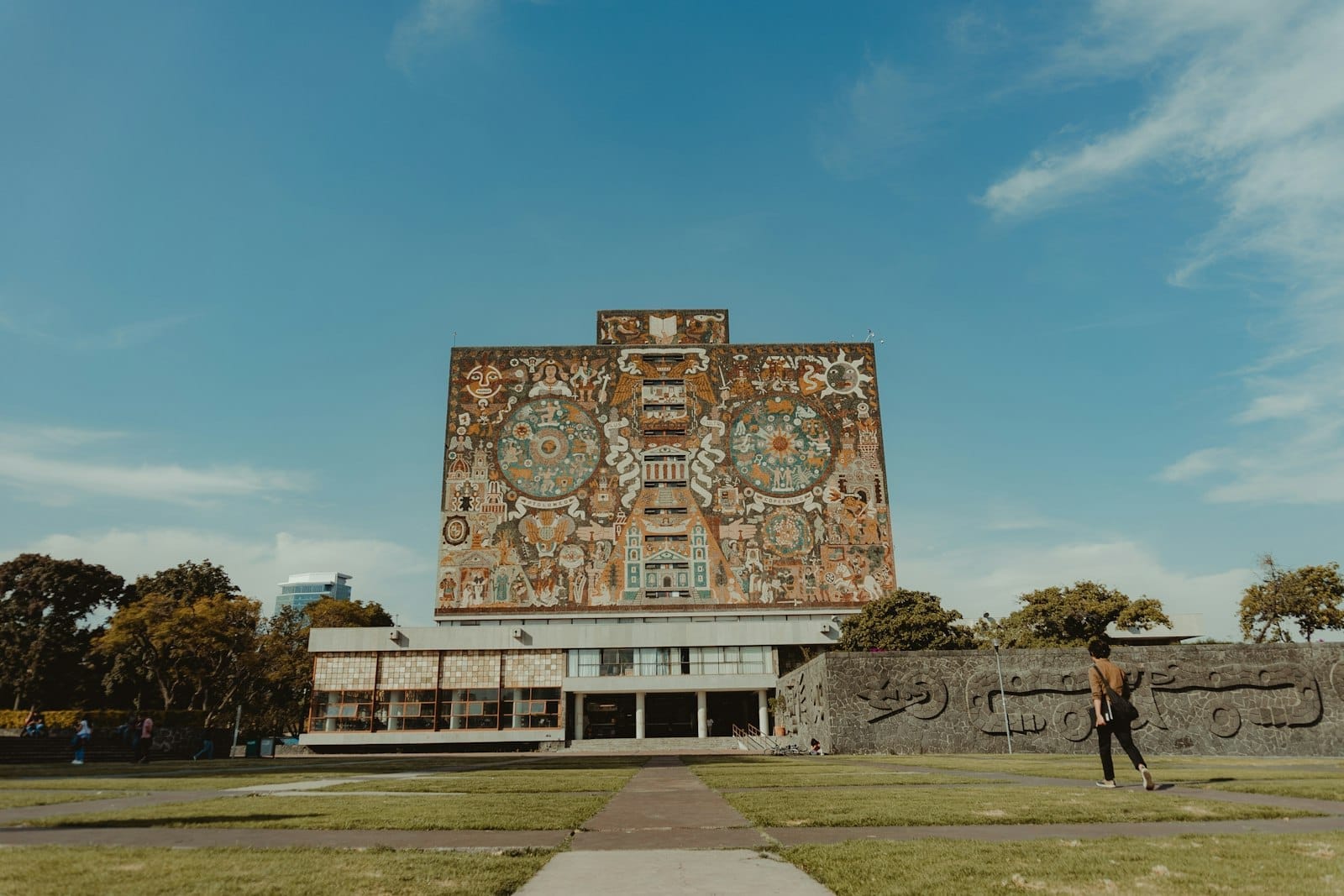
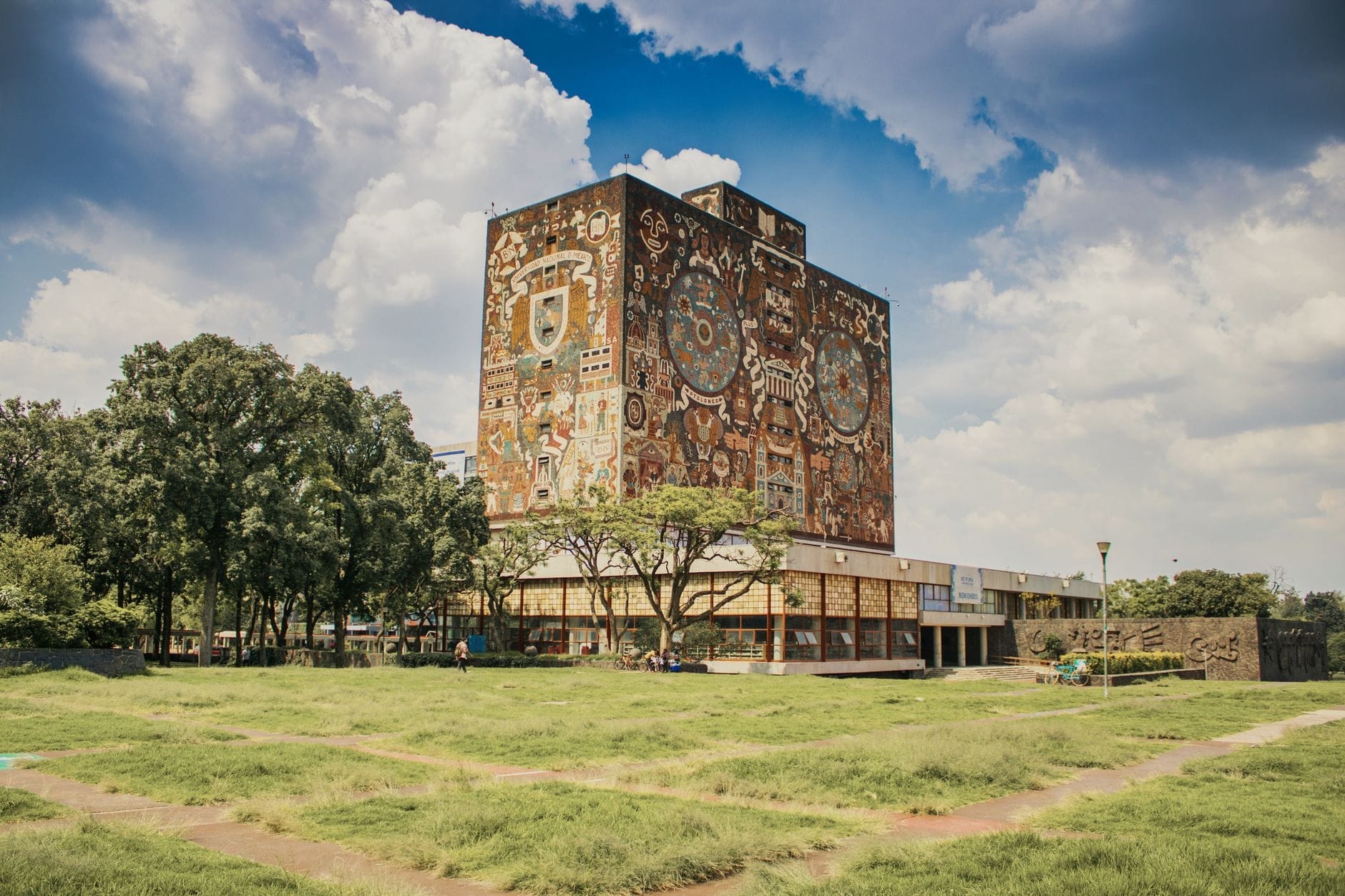
The campus was designated a UNESCO World Heritage Site in 2007, and the Central Library is the iconic reason why. Its four exterior walls are entirely covered in stone mosaic murals by Juan O'Gorman, depicting pre-Hispanic cosmology on the north face and colonial and modern Mexican history on the remaining sides. You can view the exterior freely from the surrounding esplanade. Nearby, Diego Rivera's floor mosaic at the Estadio Olímpico Universitario continues the tradition: the Olympic stadium itself is partially sunken into the lava field and features a bas-relief mural across its entrance facade. For more on the city's mural tradition, see the Museo Mural Diego Rivera for broader context.
The Espacio Escultórico is one of the more unusual art experiences in the city. Located at the edge of the University Cultural Center where the CCU meets the Pedregal reserve, it is a circular land-art installation roughly 120 meters in diameter, composed of 73 triangular basalt prisms arranged around a clearing of exposed volcanic rock. Six artists collaborated on its creation, and the result is something that photographs poorly but works powerfully in person: the scale, the silence, and the geological drama of the lava field below make it feel unlike anything else in Mexico City.
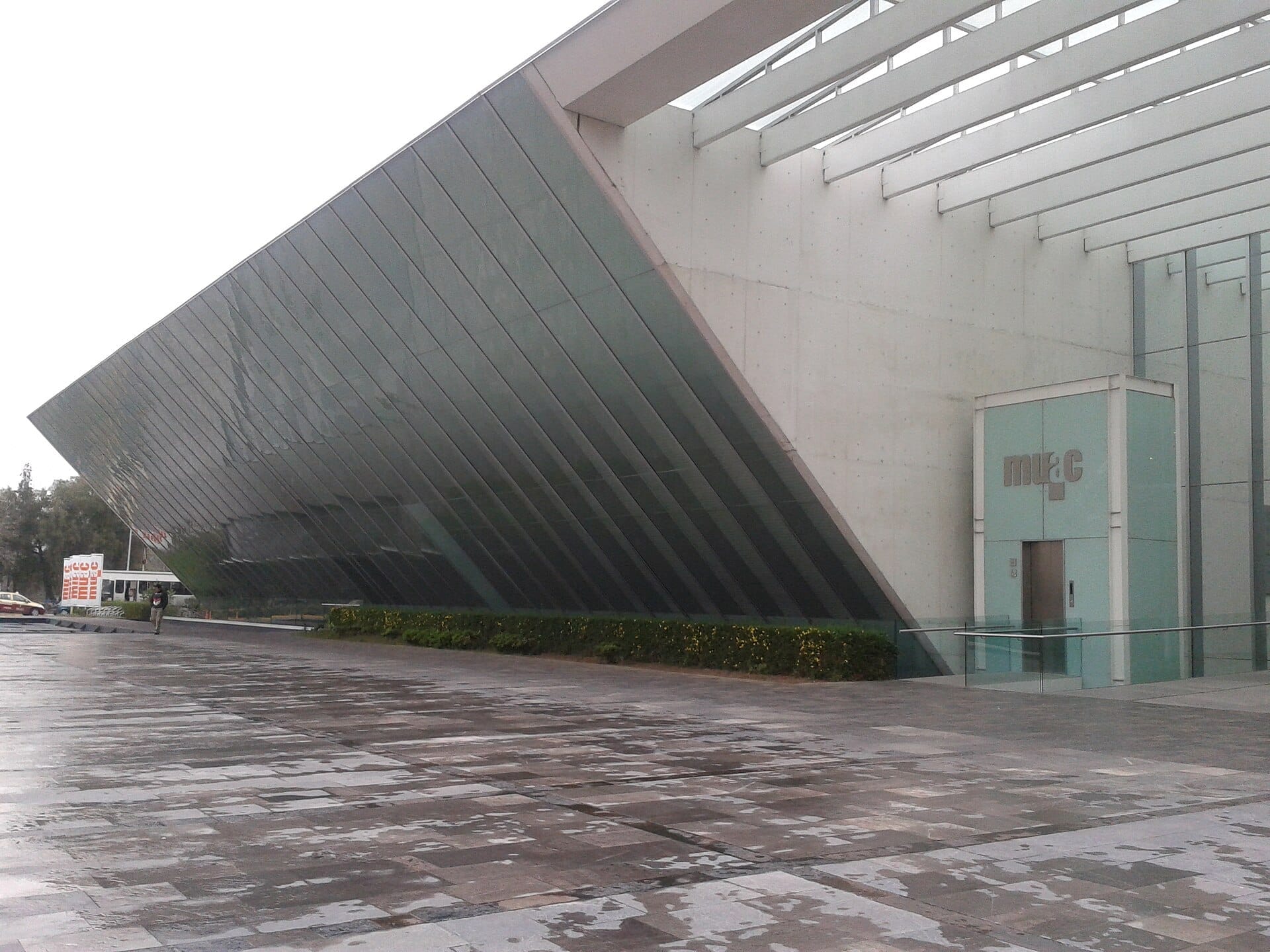
The University Cultural Center complex houses the Museo Universitario Arte Contemporáneo (MUAC), which maintains one of the strongest contemporary art programs in Latin America, with serious rotating exhibitions and a permanent collection of Mexican and international work. The Museo Universitario Arte Contemporáneo is worth planning time for independently of the campus architecture. Also within the CCU, the Sala Nezahualcóyotl is widely considered one of the finest concert halls in Mexico City for classical music.
The Pedregal de San Ángel Ecological Reserve (REPSA) occupies roughly 124 hectares within the campus. The reserve sits on the ancient lava bed created by the eruption of the Xitle volcano, which covered approximately 80 square kilometers of the southern Valley of Mexico over two thousand years ago. The basalt landscape supports a surprising density of plant and animal species adapted to the rocky, mineral-poor substrate, including xerophytic scrub, hundreds of documented plant species, and various reptiles. Access is managed, and visitors should stay on marked paths. The Botanic Garden at the reserve's edge offers a more curated entry point into the ecology.
Central Library: Juan O'Gorman's stone mosaic murals cover the entire exterior — free to view from the esplanade
Olympic University Stadium: Diego Rivera mural at the entrance, partially buried in the lava field
Espacio Escultórico: circular land-art installation on the edge of the lava reserve near the CCU
MUAC (Museo Universitario Arte Contemporáneo): leading contemporary art institution with rotating international exhibitions
REPSA / Botanic Garden: guided access into the volcanic ecological reserve
Sala Nezahualcóyotl: premier classical music concert hall, check the UNAM Difusión Cultural program for schedules
⚠️ What to skip
REPSA is a protected natural reserve with documented wildlife including rattlesnakes and other reptiles. Stick to marked paths, do not pick up animals or plants, and follow posted instructions. Access to certain areas requires coordination with reserve staff.
Eating & Drinking
Eating options within Ciudad Universitaria are functional rather than destination-worthy: university cafeterias, small food stalls near faculty buildings, and vendors selling tortas and fresh fruit around the main esplanades. Prices are among the lowest you will find anywhere in Mexico City, and the quality is adequate. These are where students eat between classes, and the appeal is economy and proximity rather than culinary ambition.
For more varied eating, the colonia Copilco to the north of campus is the natural choice. The streets around the Copilco Metro station are lined with comida corrida restaurants, taco stands, and small cafés that cater primarily to students and university staff. Lunch here between noon and 3pm is a practical, inexpensive experience. The three-course set menu (comida corrida) at these establishments typically represents strong value.
For a proper meal with more options, Insurgentes Sur connects the campus area to Coyoacán and San Ángel relatively quickly by Metrobús. The food scene in both of those neighborhoods is considerably broader. See the Coyoacán neighborhood guide for restaurant and market recommendations that pair well with a UNAM day trip.
💡 Local tip
If you are visiting for a full day, eat lunch on campus or in Copilco (cheap, practical), then walk or take the Metrobús south to San Ángel for dinner in a more atmospheric setting.
Getting There & Around
The most straightforward Metro access is via Line 3, which runs along the western edge of campus. The Universidad station is the southern terminus of Line 3 and is located directly on Insurgentes Sur adjacent to the campus. Copilco station, one stop north, gives access to the northern academic zone. From either station, it is a short walk into campus, though the main esplanade and Central Library are closest to the Universidad stop. For general guidance on navigating the city, see the getting around Mexico City guide.
The Metrobús Line 1 runs along Insurgentes Sur with a stop at Ciudad Universitaria, providing a direct surface connection north to Roma, Condesa, and the Centro. This is often the more practical option for visitors coming from those central neighborhoods, as it avoids a transfer. Journey time from Insurgentes/Sonora in Roma Norte to the CU stop is roughly 40 minutes, depending on traffic.
Within campus, UNAM operates free internal bus services (Pumabús) that run on fixed routes connecting the northern academic zone, the Olympic Stadium, the CCU, and the Botanic Garden. These run frequently on weekdays during the academic year and are the practical way to move between distant parts of the campus without walking 30 minutes in the midday sun. On weekends, frequency is reduced. Route maps are posted at stops throughout campus.
Ride-hailing services (Uber, Didi, Cabify) operate in the area and are a reasonable choice for arriving directly or departing after evening performances at the CCU when Metrobús frequency drops. Standard ride-hailing drop-off and pickup on the campus periphery works without complications. Driving and parking independently is possible but the internal road system is complex for first-time visitors.
Where to Stay
There is no hotel accommodation within Ciudad Universitaria itself, and the immediately surrounding colonias (Copilco, Pedregal de San Ángel) have very limited options aimed at visitors. Most travelers staying overnight near UNAM base themselves in Coyoacán, which is 15-20 minutes by Metrobús or ride-hailing and offers a far more pleasant pedestrian environment with restaurants and cafés. See the where to stay in Mexico City guide for a full comparison of southern neighborhoods.
For travelers whose primary reason for visiting is UNAM itself, or who have business at the university over multiple days, basing in Roma or Condesa and commuting south on the Metrobús Line 1 is the most comfortable arrangement. The journey is direct and the central neighborhoods offer far more in the way of accommodation choice, restaurants, and evening activity.
Practical Notes for Visitors
UNAM's campus is technically open to the public and does not require special permission to walk through the main areas and view the architecture. The MUAC has standard museum admission (verify current fees at the museum directly). Attending concerts at Sala Nezahualcóyotl requires purchasing tickets through UNAM's Difusión Cultural program in advance. Check the best museums in Mexico City for context on how MUAC compares to other major institutions.
The campus is large: walking from the Central Library area to the Espacio Escultórico at the CCU covers roughly 2 kilometers. In the afternoon sun at Mexico City's altitude of approximately 2,240–2,250 meters, that walk is more demanding than it would be at sea level. Wear comfortable shoes, carry water, and use the Pumabús for longer cross-campus legs. The altitude also affects exertion levels generally; see the Mexico City altitude guide if you are arriving from lower elevations.
The UNAM campus is also one of the entirely free experiences in Mexico City: the mural buildings, the Olympic Stadium exterior, the Espacio Escultórico, and walking the volcanic landscape of the reserve edge all cost nothing beyond transport to get there.
TL;DR
UNESCO World Heritage Site: UNAM's Ciudad Universitaria is one of the great Modernist architectural ensembles in Latin America, with mural buildings, land art, and a volcanic ecological reserve on the same campus.
Best for: architecture enthusiasts, contemporary art visitors (MUAC), music audiences (Sala Nezahualcóyotl), and travelers curious about how a major Latin American university actually operates.
Not ideal for: travelers seeking conventional neighborhood atmosphere, nightlife, or a range of restaurants — the area around campus is functional rather than charming.
Combine with: Coyoacán (Frida Kahlo Museum, Mercado de Coyoacán) or San Ángel (Saturday market, colonial streets) for a full southern Mexico City day.
Getting there: Metro Line 3 to Universidad or Copilco, or Metrobús Line 1 to Ciudad Universitaria stop on Insurgentes Sur.
Mexico City ranks among the top museum cities on earth, with over 150 institutions spanning pre-Columbian archaeology, muralism, folk art, contemporary art, and colonial history. This guide cuts through the noise and tells you exactly which museums are worth your time, where they are, and what makes each one well worth the trip.
Mexico City is a genuine year-round destination, but timing your visit around weather patterns, local festivals, and price cycles makes a real difference. This guide breaks down every season so you can decide when to go based on what actually matters to you.
Mexico City transforms every late October and early November into one of the world's great cultural spectacles. This guide covers the grand parade, neighborhood celebrations, ofrenda traditions, and everything practical you need to experience Día de Muertos properly.
Mexico City sits at the centre of one of the most rewarding regions in the Americas for day trips. Whether you want ancient pyramids, colonial cities, forested national parks, or floating gardens, each of these excursions can be done in a single day from CDMX and back.
Mexico City is one of the world's great bargain destinations. From world-class museums with no entry fee to sprawling parks, ancient ruins, and monumental public art, you can fill days of extraordinary sightseeing without spending a single peso on admission.
Mexico City's transport network is one of the largest in the world, covering 12 Metro lines, 7 Metrobús corridors, bike share, and rideshare apps. This guide breaks down every option with real costs, practical routes, and practical warnings so you can move through CDMX efficiently and safely.
Mexico City carries an outsized reputation for danger that doesn't match the reality most tourists experience. This guide breaks down official advisories, neighborhood safety, common crime patterns, and practical precautions so you can make an informed decision about visiting CDMX.
Lucha libre is one of the most electric live experiences in Mexico City. This guide covers the two main venues, weekly schedules, ticket prices, how to buy safely, and what to expect inside the arena so you can skip the guesswork and enjoy the spectacle.
Mexico City International Airport (IATA: MEX) is one of the busiest airports in Latin America and your gateway to one of the world's great cities. This guide covers terminals, ground transport, airlines, facilities, and practical tips to make your arrival or departure as smooth as possible.
At 2,240 metres (7,350 feet) above sea level, Mexico City is one of the highest major capitals in the world. This guide covers altitude sickness symptoms, acclimatisation strategies, climate effects, and common misconceptions so you can plan your trip with confidence.
Mexico City has become one of Latin America's top remote work destinations, combining fast fiber internet, affordable living costs, and a rich urban culture. This guide covers everything from the best neighborhoods for nomads to visa logistics, coworking costs, and daily life practicalities.
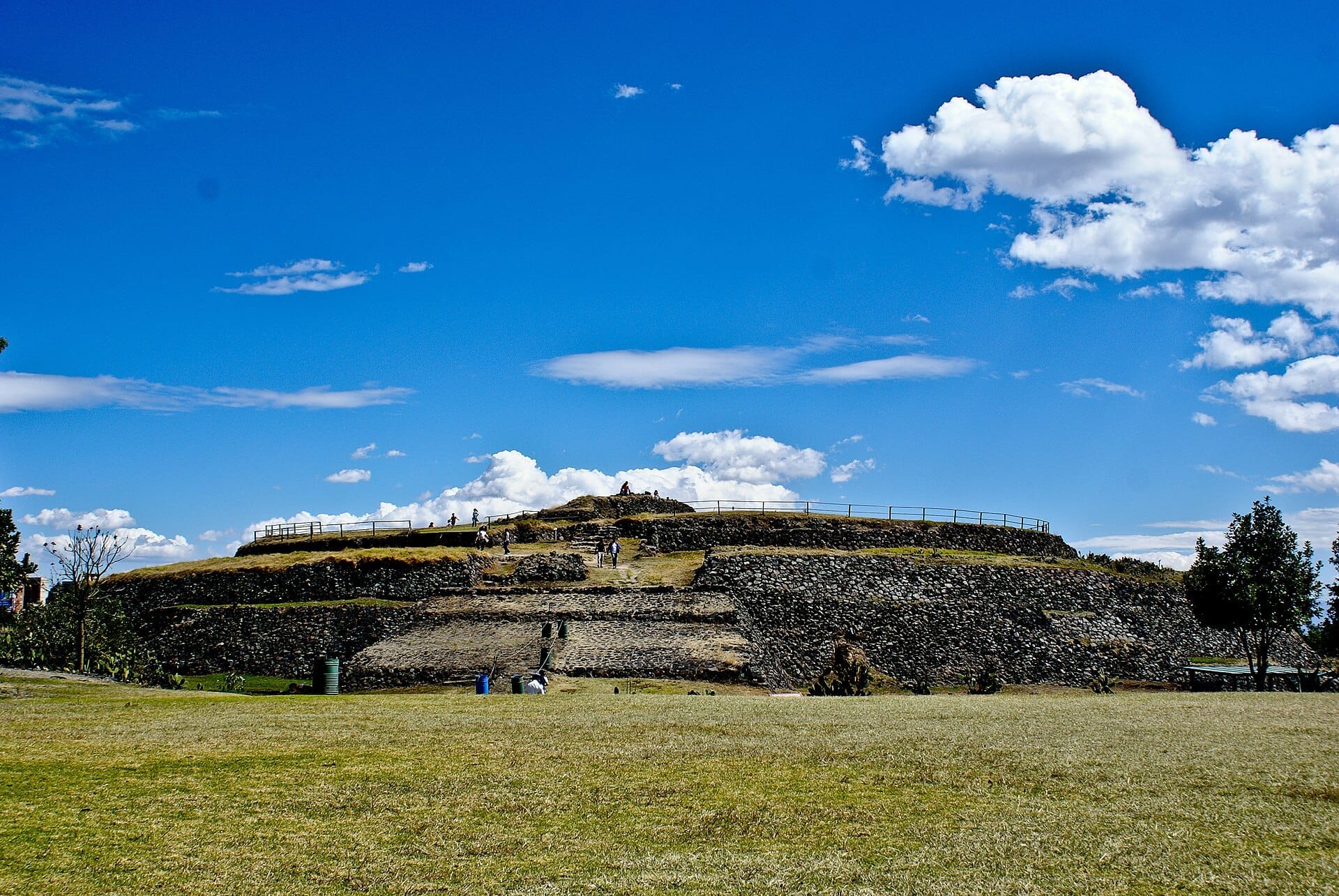
Mexico City rewards those who look beyond the obvious. This guide reveals the museums, markets, archaeological sites, and neighbourhoods that locals love but most visitors miss, from a volcanic-stone pyramid in the south to a 19th-century Moorish kiosk that once travelled to New Orleans.
Three days in Mexico City covers the highlights, but only if you plan smart. This guide breaks down exactly where to go, in what order, and what to skip — with logistics, pricing, and local context built in.
Mexico City (CDMX) rivals much larger capitals in the luxury travel market. This guide covers where to stay, where to eat, and what to do at the high end, with clear advice on pricing, neighborhoods, and how to avoid wasting money on the wrong choices.
Mexico City is the best place outside Oaxaca to explore mezcal seriously. This guide covers the top mezcalerías in Roma, Polanco, and Centro, where to buy quality bottles to take home, and the essential knowledge to taste confidently without getting burned by tourist-trap pours.
Mexico City's nightlife runs deep and late, spanning cantinas, cocktail bars, electronic clubs, live mariachi, and lucha libre events across a dozen distinct neighborhoods. This guide breaks down where to go, what to expect, and how to do it safely across CDMX's best after-dark districts.
Mexico City (CDMX) is one of the best-value major cities in North America. This guide breaks down realistic daily budgets, the cheapest ways to get around, free and low-cost attractions, and where to eat well without overspending — whether you have 3 days or 3 weeks.
Mexico City sits atop one of the ancient world's great civilizations. This guide covers every pyramid and archaeological site worth your time, from the colossal monuments at Teotihuacán to the Aztec ruins buried beneath the modern city center.
Mexico City is one of Latin America's great shopping destinations, with a range that stretches from centuries-old craft markets to high-end international boutiques. This guide breaks down the best areas by shopping style, with practical notes on prices, hours, and where the tourist traps hide.
Solo travel in Mexico City (CDMX) is more straightforward than most people expect. This guide covers the best neighborhoods to base yourself, how to get around on a budget, which attractions to prioritize, and straightforward safety advice so you can make the most of one of the world's great capitals.
Mexico City is one of the world's great street food capitals, with thousands of stands serving everything from tacos al pastor to tamales and tlacoyos at prices that rarely exceed MXN 100 for a full meal. This guide covers the essential dishes, neighborhood-by-neighborhood breakdown, timing, pricing, food safety, and how to get the most out of eating on the streets of CDMX.
Mexico City rewards those who look up, down, and out. This guide covers the best places to see the city from above, from the classic observation deck of Torre Latinoamericana to the hilltop drama of Chapultepec Castle and the wide valley views at Teotihuacán.
Mexico City rewards walkers like few capitals on earth. From Aztec ruins and colonial palaces to Art Deco parks and bohemian barrios, these are the routes and guided tours worth lacing up your shoes for.
Mexico City is one of Latin America's most rewarding family destinations, with a free world-class zoo, hands-on children's museums, canal boat rides, and ancient pyramids. This guide covers the best kid-friendly attractions, practical logistics, and straightforward tips to help families make the most of CDMX.
Teotihuacán is one of the great ancient cities of the world, and it sits just 50 km northeast of Mexico City. This guide covers every practical detail: how to get there independently, whether a guided tour is worth it, when to arrive, what the ticket situation actually looks like, and the climbing ban that catches many visitors off guard.
Mexico City (CDMX) packs pre-Hispanic ruins, landmark museums, colonial architecture, and one of the world's great food scenes into a metro area of over 21 million people. This guide covers the top things to do in Mexico City by category, with practical timing advice and logistics to help you plan a smarter trip.
Mexico City (CDMX) is a metropolis of over 21 million people, and choosing the right neighborhood to stay in makes a genuine difference to your trip. This guide breaks down the best areas by budget, travel style, and transit access — with straightforward assessments of what each zone actually delivers.