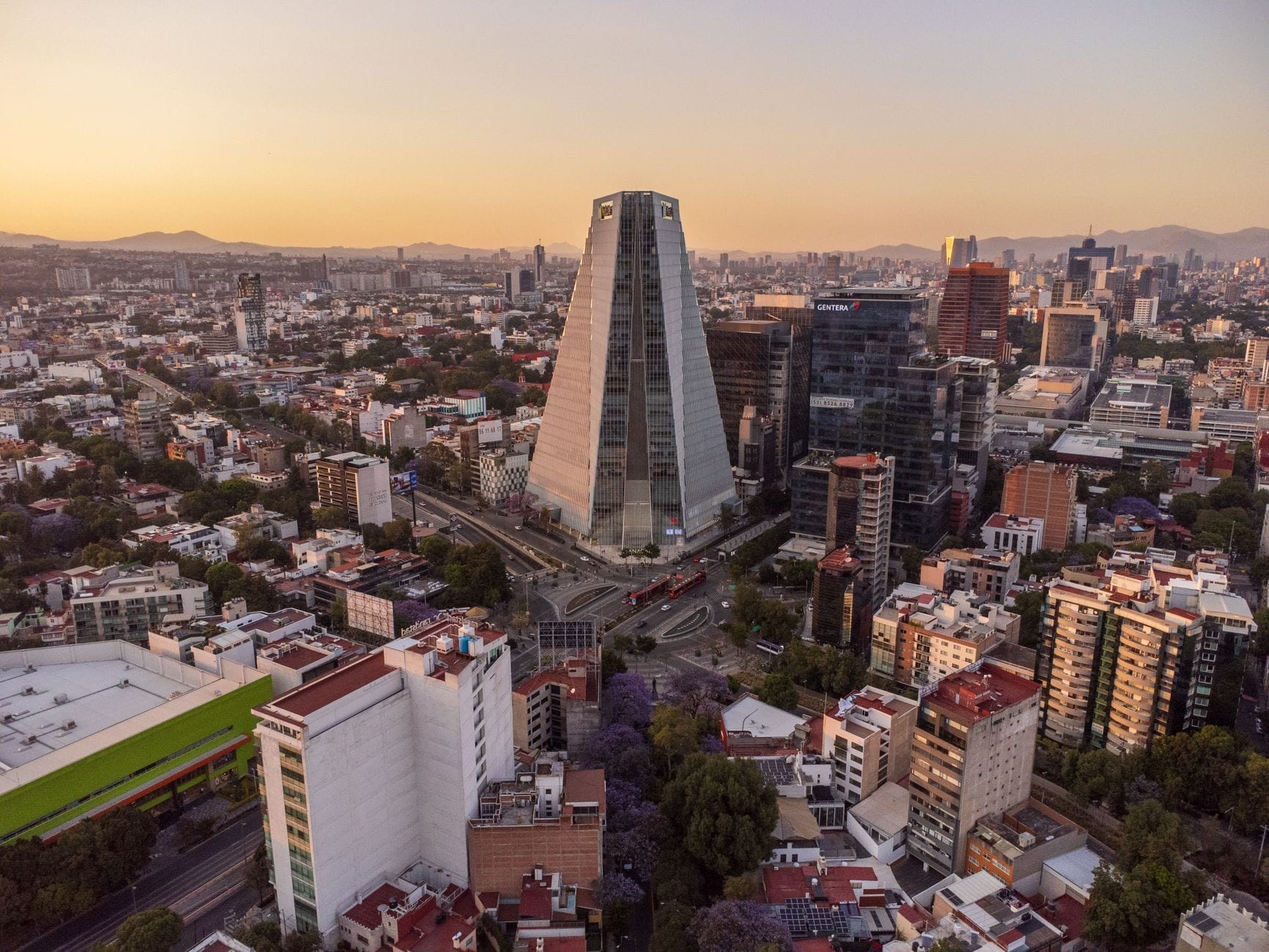
San Ángel is a colonial-era neighborhood in the southwest of Mexico City, known for its preserved architecture, art galleries, and the weekly Bazar Sábado. Set around Plaza San Jacinto and anchored by the landmark Ex-Convento del Carmen, it offers a quieter, more historic atmosphere than the city's central districts.
San Ángel feels like a small colonial town that the city grew around but never quite swallowed. Its cobblestone streets, 17th-century convents, and leafy plazas sit just a short ride from Insurgentes Sur, making it easy to reach but easy to linger in. On any given Saturday, the neighborhood transforms around the Bazar Sábado, drawing artists, collectors, and curious visitors into its most concentrated expression of local creative life.
Orientation
San Ángel occupies the southwest of Mexico City, within the Álvaro Obregón borough. Its core sits roughly 12 kilometers south of the Centro Histórico, well beyond the Roma-Condesa axis that most visitors gravitate toward. The neighborhood is loosely bounded by Avenida Insurgentes Sur to the east, Avenida Revolución to the west, Miguel Ángel de Quevedo to the north, and the Periférico and Altavista area to the south.
Avenida Insurgentes Sur is one of the longest urban avenues in the world, and San Ángel sits near its southern stretch, placing the neighborhood on the same corridor as Ciudad Universitaria (UNAM) just a few kilometers further south. This position means San Ángel benefits from good transit connections while remaining distinctly residential and calm compared to the commercial density you encounter further north along Insurgentes.
Travelers staying in the Roma-Condesa area will find San Ángel takes about 30 to 40 minutes by Metrobús or Metro. The neighborhoods of Coyoacán and San Ángel are natural companions: they share a similar colonial character and are separated by only a couple of kilometers, making it straightforward to combine both in a single day.
Character & Atmosphere
Arriving in San Ángel from Insurgentes, the shift is immediate. The wide avenue gives way to narrower colonial streets, traffic quiets, and the texture underfoot changes from smooth asphalt to uneven cobblestones worn smooth by centuries of use. Bougainvillea spills over high stone walls. The architecture is predominantly 17th and 18th century, built in the Mexican baroque tradition, with thick walls, interior courtyards, and terracotta rooftiles.
Mornings in San Ángel are unhurried. Locals walk dogs along Avenida Altavista, coffee shops open slowly, and the plazas see mostly residents rather than visitors. The light in early morning falls at a low angle across Plaza San Jacinto, catching the rough stone of the church facade and the jacaranda trees in late winter. By midday the neighborhood fills with visitors, particularly on Saturdays when the Bazar Sábado draws crowds to its courtyard stalls and surrounding streets.
Afternoons carry a different quality. The streets around Avenida de la Paz fill with students and young professionals from the nearby university area. Restaurants do strong lunch trade, and the shade of the Ex-Convento del Carmen's gardens offers a cooler break from the midday heat. By late afternoon the visitor crowds thin, and San Ángel feels more local again, particularly on weekdays.
San Ángel is not a nightlife neighborhood. After dark, a handful of restaurants and bars along Altavista and the surrounding streets stay active, but there is no major bar strip. This is a neighborhood for people who want quiet evenings in good restaurants, not late-night crowds. It draws a wealthier, older local demographic, which shapes the tone of the area significantly.
💡 Local tip
Saturday is the best day to visit San Ángel: the Bazar Sábado runs throughout the morning and afternoon, street vendors set up around Plaza San Jacinto, and the whole neighborhood has a more festive energy than on other days.
What to See & Do
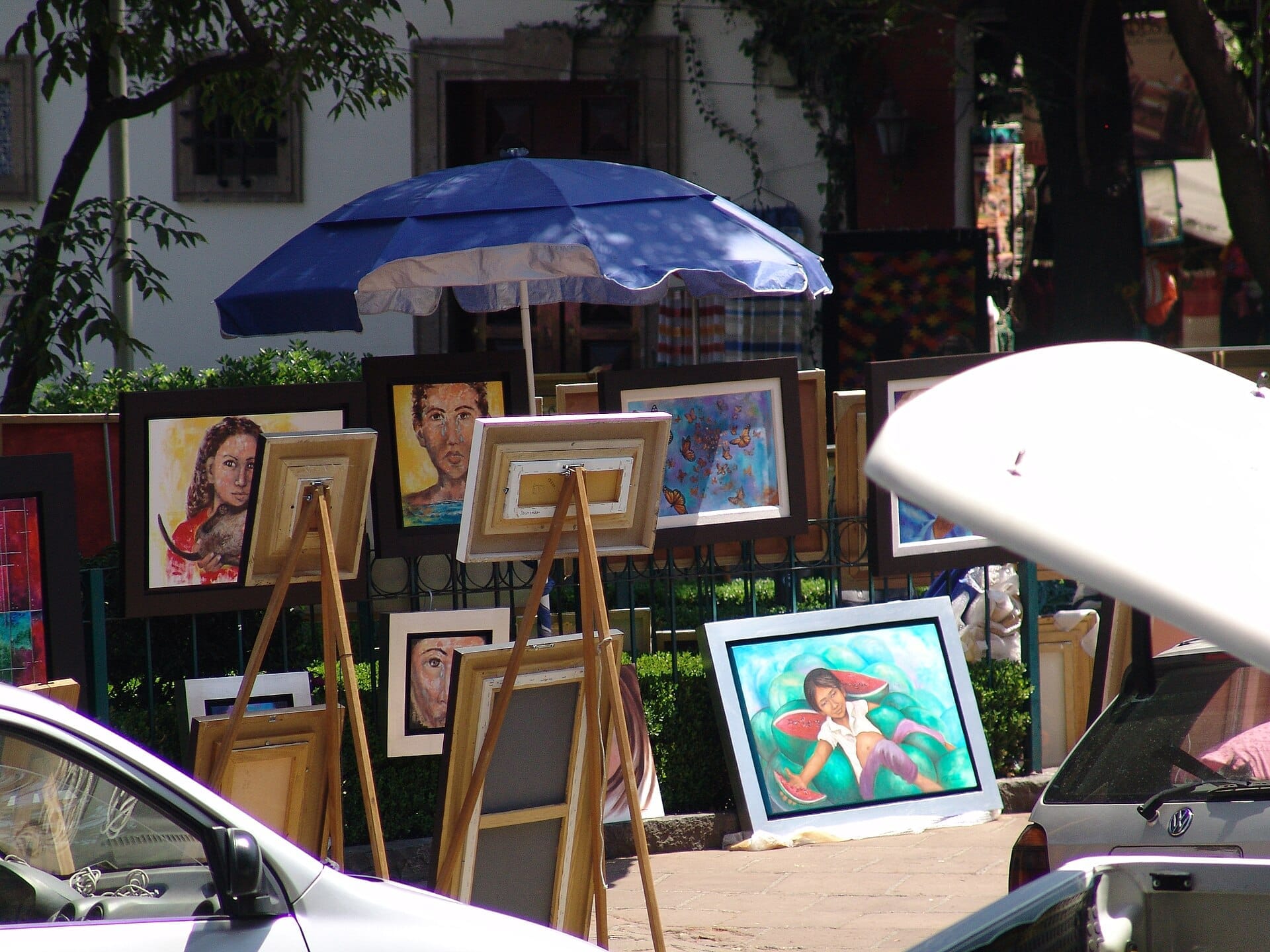
Plaza San Jacinto is the social and architectural center of San Ángel. The square is surrounded by colonial buildings, including the Iglesia de San Jacinto and a cluster of galleries and antique shops. On Saturdays, the Bazar Sábado takes over the courtyard of a historic building just off the plaza, where established Mexican artisans sell jewelry, textiles, ceramics, and paintings. The quality and price point are higher than typical tourist markets, and the curation reflects the neighborhood's arts-focused identity.
A short walk south from the plaza brings you to the Ex-Convento del Carmen, now operating as the Museo del Carmen. This 17th-century Carmelite convent is one of the most architecturally intact colonial religious buildings in Mexico City. Its Talavera-tiled domes, tranquil interior garden, and crypt are all worth your time. The museum inside covers colonial religious art and the convent's history. For more context on San Ángel's place in Mexico City's arts landscape, the best museums in Mexico City guide covers standout collections across the city.
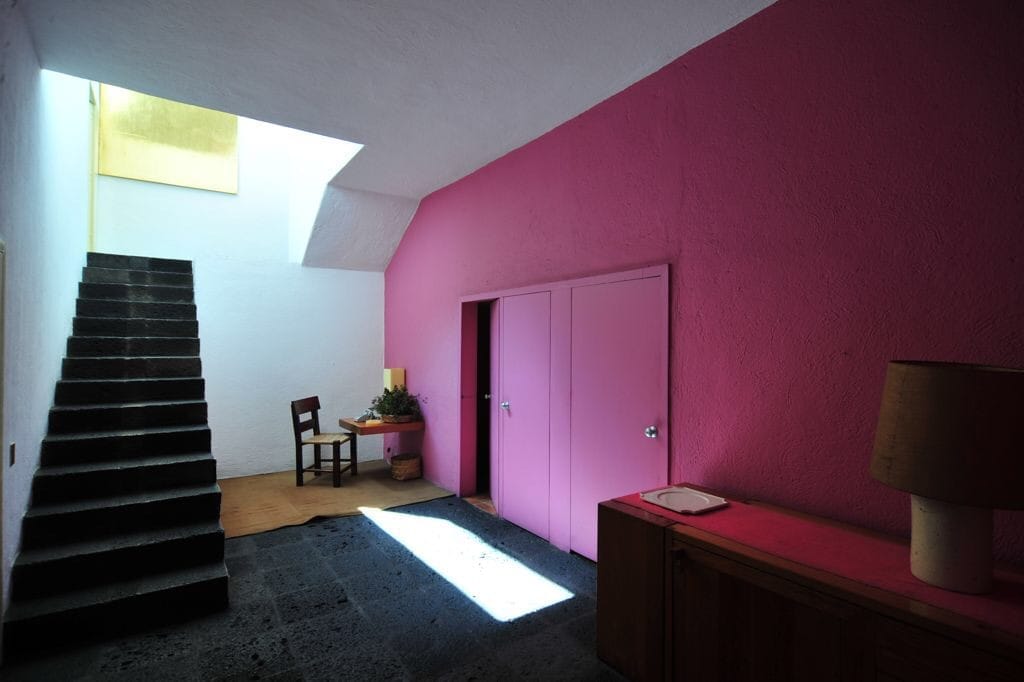
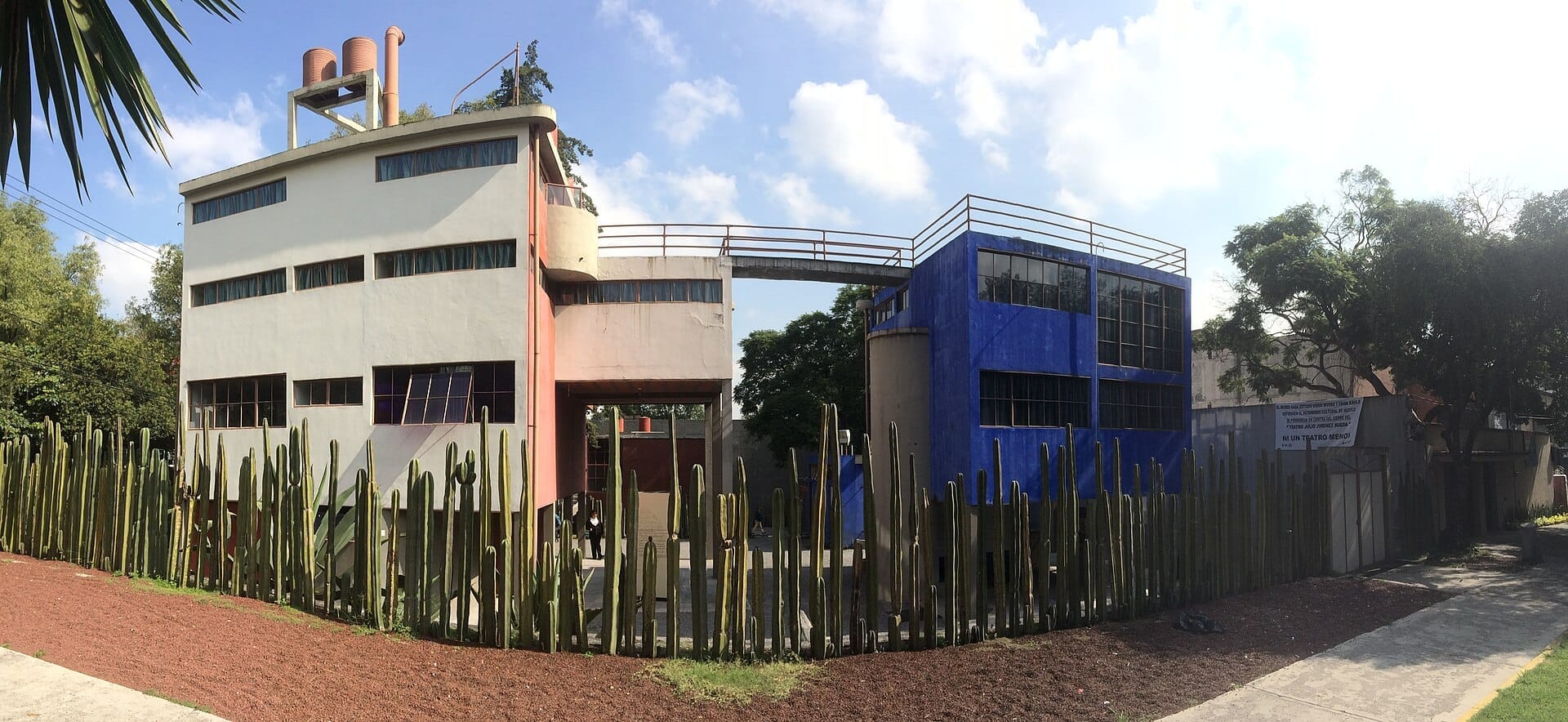
Just off Avenida Altavista, the Museo Casa Estudio Diego Rivera is one of the neighborhood's most significant cultural sites. The complex consists of two modernist houses designed by architect Juan O'Gorman in 1931-1932: one for Rivera and one for Frida Kahlo, connected by a rooftop bridge. The houses remain largely as they were during the painters' lives, with Rivera's studio preserved with his art materials and personal objects. It offers a more intimate experience than the Frida Kahlo Museum in Coyoacán, with smaller crowds on most weekdays.
The Museo Casa del Risco on Plaza San Jacinto houses a colonial art collection and is notable for its 18th-century fountain assembled largely from porcelain fragments of Chinese, European, and Mexican origin. Admission is generally free. On Saturdays, the San Ángel Saturday market extends beyond the Bazar Sábado into the surrounding streets, where vendors sell prints, used books, street food, and artesanía at more accessible prices than inside the formal bazaar.
Plaza San Jacinto and its colonial church
Bazar Sábado (Saturdays only, inside the historic house on the plaza)
Museo del Carmen / Ex-Convento del Carmen
Museo Casa Estudio Diego Rivera y Frida Kahlo (in neighboring San Ángel Inn)
Museo Casa del Risco (free entry)
Avenida Altavista for gallery browsing and cafés
Jardín de la Bombilla, a public park where Álvaro Obregón was assassinated in 1928
ℹ️ Good to know
The Museo Casa Estudio Diego Rivera y Frida Kahlo is closed on Mondays. The Museo del Carmen is also closed Mondays. Plan any museum visits for Tuesday through Sunday, and check current opening hours before visiting as they may vary.
Eating & Drinking
San Ángel's restaurant scene skews upscale relative to most of Mexico City. Avenida Altavista and the streets immediately around Plaza San Jacinto are where most of the dining is concentrated. Expect sit-down restaurants rather than street food stalls as the dominant format, with prices closer to Roma or Polanco than to the budget options you find in Coyoacán's market area. That said, the Saturday market brings street food vendors who set up around the plaza, offering tacos, quesadillas, and antojitos at neighborhood-market prices.
The neighborhood has a long association with traditional Mexican cuisine, and several restaurants specialize in regional dishes from Oaxaca, Veracruz, and the central highlands. There are also international options, Italian restaurants, and a growing number of cafés catering to the remote-working contingent that has spread south from Roma and Condesa in recent years. Avenida de la Paz, which connects toward the Metro station, has a denser cluster of more casual lunch spots.
San Ángel is not a mezcal-bar destination the way Roma Norte is, but there are reliable spots for a post-market drink. If the wider mezcal scene interests you, the Mexico City mezcal guide covers the best bars citywide. For a coffee and something sweet after a museum visit, the cafés on and around Altavista are solid choices, with some occupying the ground floors of colonial buildings.
💡 Local tip
On Saturdays, tables at the Bazar Sábado's interior restaurant offer a courtyard setting inside the historic building. It's one of the few options where you can eat inside the market itself, and it fills up quickly after midday.
Getting There & Around
The two most practical transit options into San Ángel are Metro Miguel Ángel de Quevedo (Line 3) and the Metrobús stop La Bombilla on the Insurgentes corridor (Line 1). Metro Miguel Ángel de Quevedo sits on the northern edge of San Ángel, at the intersection of Avenida Miguel Ángel de Quevedo and Avenida Revolución. From the station it is about a 10-minute walk south and east to Plaza San Jacinto, passing through the quieter residential streets that form a buffer between the busier avenues and the colonial core.
The Metrobús La Bombilla stop on Insurgentes Sur drops you slightly closer to the center of activity and is useful if you are coming from the Roma-Condesa area or from Chapultepec further north along the same corridor. The Metrobús runs on dedicated lanes along Insurgentes, which makes it faster than a taxi in traffic during peak hours. From La Bombilla, the Jardín del mismo nombre is immediately adjacent, and Plaza San Jacinto is about 5 minutes on foot heading west.
Once inside San Ángel, the neighborhood is compact enough to explore entirely on foot. Most of the key sites sit within a 15-minute walk of each other. The streets around Plaza San Jacinto are pedestrian-friendly, though the cobblestones can be challenging with rolling luggage or in heels. Ride-hailing apps including Uber, Didi, and Cabify all operate in this area and are convenient if you are heading to Coyoacán afterward or returning to a hotel far from a Metro line.
For a broader understanding of how to move around Mexico City efficiently, the getting around Mexico City guide covers all transit modes, card systems, and navigation tips in detail.
Where to Stay
San Ángel is not a primary hotel district. The neighborhood is largely residential and commercial, with a very limited accommodation inventory compared to areas like Roma, Condesa, or Polanco. What does exist tends toward boutique hotels and small guesthouses rather than international chains. For travelers specifically seeking colonial atmosphere and proximity to the neighborhood's museums, staying in San Ángel makes sense, but most visitors use it as a day-trip destination from a base elsewhere in the city.
Travelers who want to be close to both San Ángel and Coyoacán might consider staying in Coyoacán itself, which has a slightly larger selection of guesthouses and is reachable from San Ángel by taxi or ride-hailing in under 15 minutes. For a full breakdown of where to base yourself across Mexico City's neighborhoods, the where to stay in Mexico City guide compares all the main options by traveler type and budget.
If you do stay in San Ángel, the area around Avenida Altavista and the streets east of Plaza San Jacinto place you within walking distance of the main sights and most of the restaurants. The neighborhood is quiet at night, which is an advantage for light sleepers but a disadvantage for anyone who wants to walk to bars and nightlife without relying on apps.
Practical Notes & Worth Your Time?
San Ángel is one of the best-preserved colonial neighborhoods in Mexico City, but it has a particular character that will not suit every traveler. It is relatively expensive by Mexico City standards, it lacks the street-food density and budget restaurant options of Coyoacán or Centro Histórico, and outside of Saturdays it can feel quiet to the point of being underwhelming if your interests are primarily food, nightlife, or urban energy.
Where it excels is architecture, art, and a slower pace. If you are interested in Mexican muralism, the Casa Estudio alone justifies the trip. If you combine it with a visit to the Museo Frida Kahlo in Coyoacán on the same day, you get a comprehensive view of the lives and working environments of two of Mexico's most important 20th-century artists, without excessive transit time.
San Ángel is considered one of Mexico City's safer areas for visitors. The streets around the core are well-lit and frequented by residents and tourists alike. The general guidance for traveling in Mexico City applies here as it does across the city. The Mexico City safety guide covers this topic in full, including practical precautions and neighborhood-specific context.
⚠️ What to skip
Parking in San Ángel on Saturdays is a serious problem. If you are driving from elsewhere in the city, expect significant delays finding street parking near Plaza San Jacinto. Transit or ride-hailing is strongly preferable on market days.
TL;DR
San Ángel is best visited on a Saturday, when the Bazar Sábado and street market bring the colonial plazas to life with artists, vendors, and a concentrated social energy the neighborhood does not always have on weekdays.
The Museo Casa Estudio Diego Rivera and the Ex-Convento del Carmen are the standout cultural sites: both are rarely overcrowded and offer real depth for visitors interested in colonial history and 20th-century Mexican art.
This is not a budget-friendly neighborhood: expect Roma-level prices at restaurants and boutiques, with limited cheap street food except during the Saturday market.
Combining San Ángel with Coyoacán in a single day is the most efficient approach for visitors based in the northern or central city, as both neighborhoods share a similar colonial character and are close together.
Best suited to: architecture and art enthusiasts, travelers wanting a quieter southern alternative to the busier central neighborhoods, and anyone with a specific interest in Diego Rivera or muralism.
Mexico City ranks among the top museum cities on earth, with over 150 institutions spanning pre-Columbian archaeology, muralism, folk art, contemporary art, and colonial history. This guide cuts through the noise and tells you exactly which museums are worth your time, where they are, and what makes each one well worth the trip.
Mexico City is a genuine year-round destination, but timing your visit around weather patterns, local festivals, and price cycles makes a real difference. This guide breaks down every season so you can decide when to go based on what actually matters to you.
Mexico City transforms every late October and early November into one of the world's great cultural spectacles. This guide covers the grand parade, neighborhood celebrations, ofrenda traditions, and everything practical you need to experience Día de Muertos properly.
Mexico City sits at the centre of one of the most rewarding regions in the Americas for day trips. Whether you want ancient pyramids, colonial cities, forested national parks, or floating gardens, each of these excursions can be done in a single day from CDMX and back.
Mexico City is one of the world's great bargain destinations. From world-class museums with no entry fee to sprawling parks, ancient ruins, and monumental public art, you can fill days of extraordinary sightseeing without spending a single peso on admission.
Mexico City's transport network is one of the largest in the world, covering 12 Metro lines, 7 Metrobús corridors, bike share, and rideshare apps. This guide breaks down every option with real costs, practical routes, and practical warnings so you can move through CDMX efficiently and safely.
Mexico City carries an outsized reputation for danger that doesn't match the reality most tourists experience. This guide breaks down official advisories, neighborhood safety, common crime patterns, and practical precautions so you can make an informed decision about visiting CDMX.
Lucha libre is one of the most electric live experiences in Mexico City. This guide covers the two main venues, weekly schedules, ticket prices, how to buy safely, and what to expect inside the arena so you can skip the guesswork and enjoy the spectacle.
Mexico City International Airport (IATA: MEX) is one of the busiest airports in Latin America and your gateway to one of the world's great cities. This guide covers terminals, ground transport, airlines, facilities, and practical tips to make your arrival or departure as smooth as possible.
At 2,240 metres (7,350 feet) above sea level, Mexico City is one of the highest major capitals in the world. This guide covers altitude sickness symptoms, acclimatisation strategies, climate effects, and common misconceptions so you can plan your trip with confidence.
Mexico City has become one of Latin America's top remote work destinations, combining fast fiber internet, affordable living costs, and a rich urban culture. This guide covers everything from the best neighborhoods for nomads to visa logistics, coworking costs, and daily life practicalities.
Mexico City rewards those who look beyond the obvious. This guide reveals the museums, markets, archaeological sites, and neighbourhoods that locals love but most visitors miss, from a volcanic-stone pyramid in the south to a 19th-century Moorish kiosk that once travelled to New Orleans.
Three days in Mexico City covers the highlights, but only if you plan smart. This guide breaks down exactly where to go, in what order, and what to skip — with logistics, pricing, and local context built in.
Mexico City (CDMX) rivals much larger capitals in the luxury travel market. This guide covers where to stay, where to eat, and what to do at the high end, with clear advice on pricing, neighborhoods, and how to avoid wasting money on the wrong choices.
Mexico City is the best place outside Oaxaca to explore mezcal seriously. This guide covers the top mezcalerías in Roma, Polanco, and Centro, where to buy quality bottles to take home, and the essential knowledge to taste confidently without getting burned by tourist-trap pours.
Mexico City's nightlife runs deep and late, spanning cantinas, cocktail bars, electronic clubs, live mariachi, and lucha libre events across a dozen distinct neighborhoods. This guide breaks down where to go, what to expect, and how to do it safely across CDMX's best after-dark districts.
Mexico City (CDMX) is one of the best-value major cities in North America. This guide breaks down realistic daily budgets, the cheapest ways to get around, free and low-cost attractions, and where to eat well without overspending — whether you have 3 days or 3 weeks.
Mexico City sits atop one of the ancient world's great civilizations. This guide covers every pyramid and archaeological site worth your time, from the colossal monuments at Teotihuacán to the Aztec ruins buried beneath the modern city center.
Mexico City is one of Latin America's great shopping destinations, with a range that stretches from centuries-old craft markets to high-end international boutiques. This guide breaks down the best areas by shopping style, with practical notes on prices, hours, and where the tourist traps hide.
Solo travel in Mexico City (CDMX) is more straightforward than most people expect. This guide covers the best neighborhoods to base yourself, how to get around on a budget, which attractions to prioritize, and straightforward safety advice so you can make the most of one of the world's great capitals.
Mexico City is one of the world's great street food capitals, with thousands of stands serving everything from tacos al pastor to tamales and tlacoyos at prices that rarely exceed MXN 100 for a full meal. This guide covers the essential dishes, neighborhood-by-neighborhood breakdown, timing, pricing, food safety, and how to get the most out of eating on the streets of CDMX.
Mexico City rewards those who look up, down, and out. This guide covers the best places to see the city from above, from the classic observation deck of Torre Latinoamericana to the hilltop drama of Chapultepec Castle and the wide valley views at Teotihuacán.
Mexico City rewards walkers like few capitals on earth. From Aztec ruins and colonial palaces to Art Deco parks and bohemian barrios, these are the routes and guided tours worth lacing up your shoes for.
Mexico City is one of Latin America's most rewarding family destinations, with a free world-class zoo, hands-on children's museums, canal boat rides, and ancient pyramids. This guide covers the best kid-friendly attractions, practical logistics, and straightforward tips to help families make the most of CDMX.
Teotihuacán is one of the great ancient cities of the world, and it sits just 50 km northeast of Mexico City. This guide covers every practical detail: how to get there independently, whether a guided tour is worth it, when to arrive, what the ticket situation actually looks like, and the climbing ban that catches many visitors off guard.
Mexico City (CDMX) packs pre-Hispanic ruins, landmark museums, colonial architecture, and one of the world's great food scenes into a metro area of over 21 million people. This guide covers the top things to do in Mexico City by category, with practical timing advice and logistics to help you plan a smarter trip.
Mexico City (CDMX) is a metropolis of over 21 million people, and choosing the right neighborhood to stay in makes a genuine difference to your trip. This guide breaks down the best areas by budget, travel style, and transit access — with straightforward assessments of what each zone actually delivers.