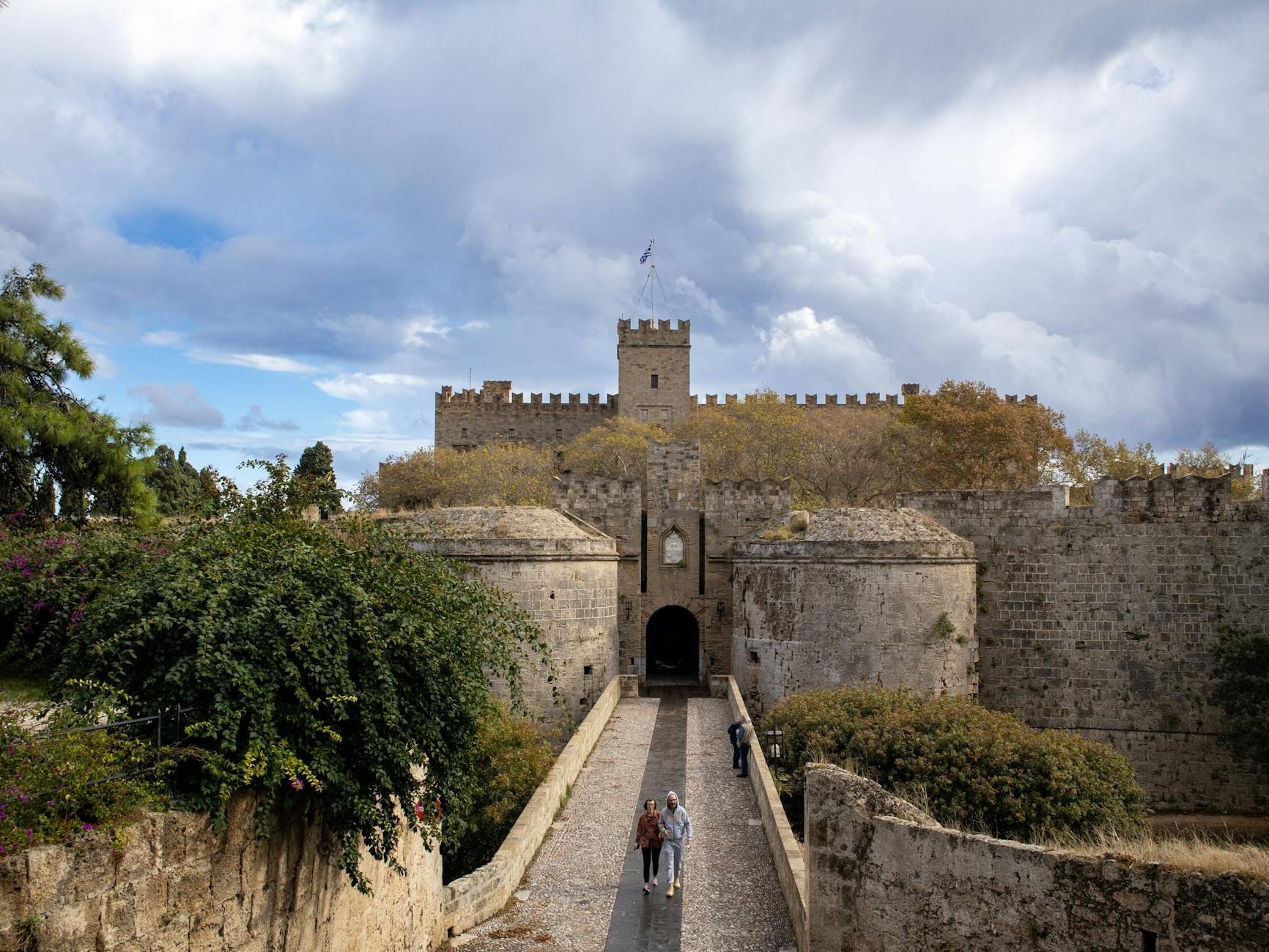
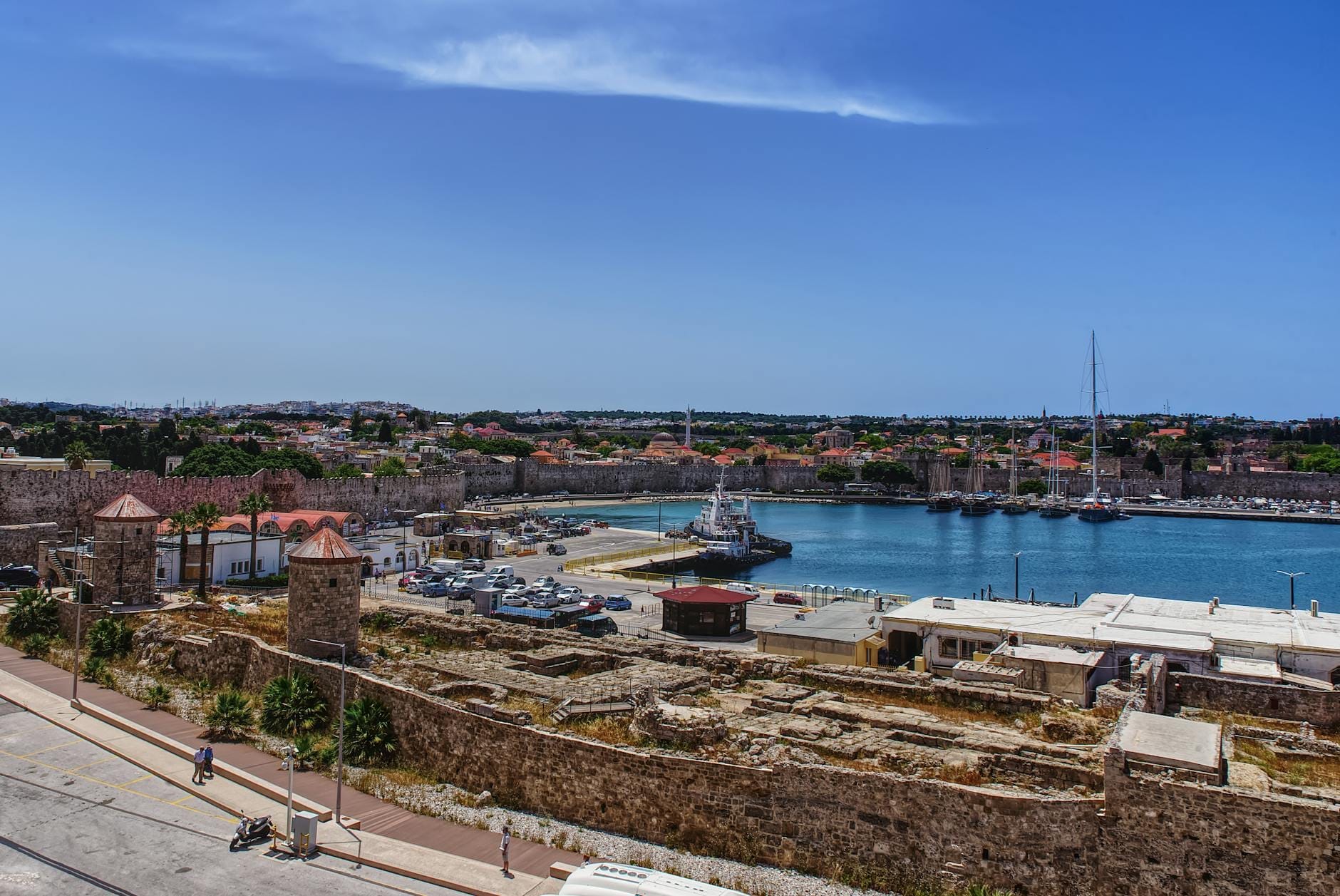
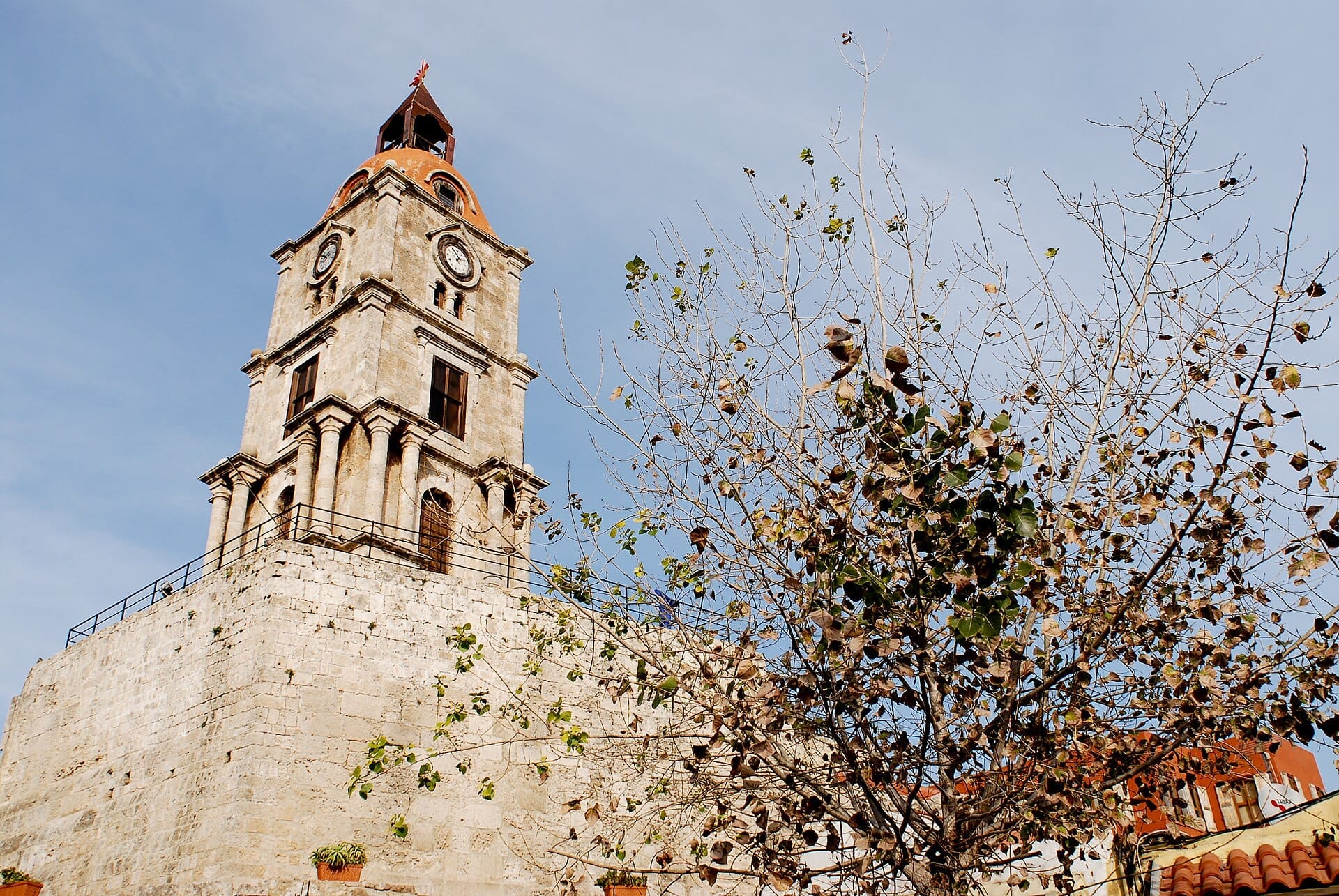
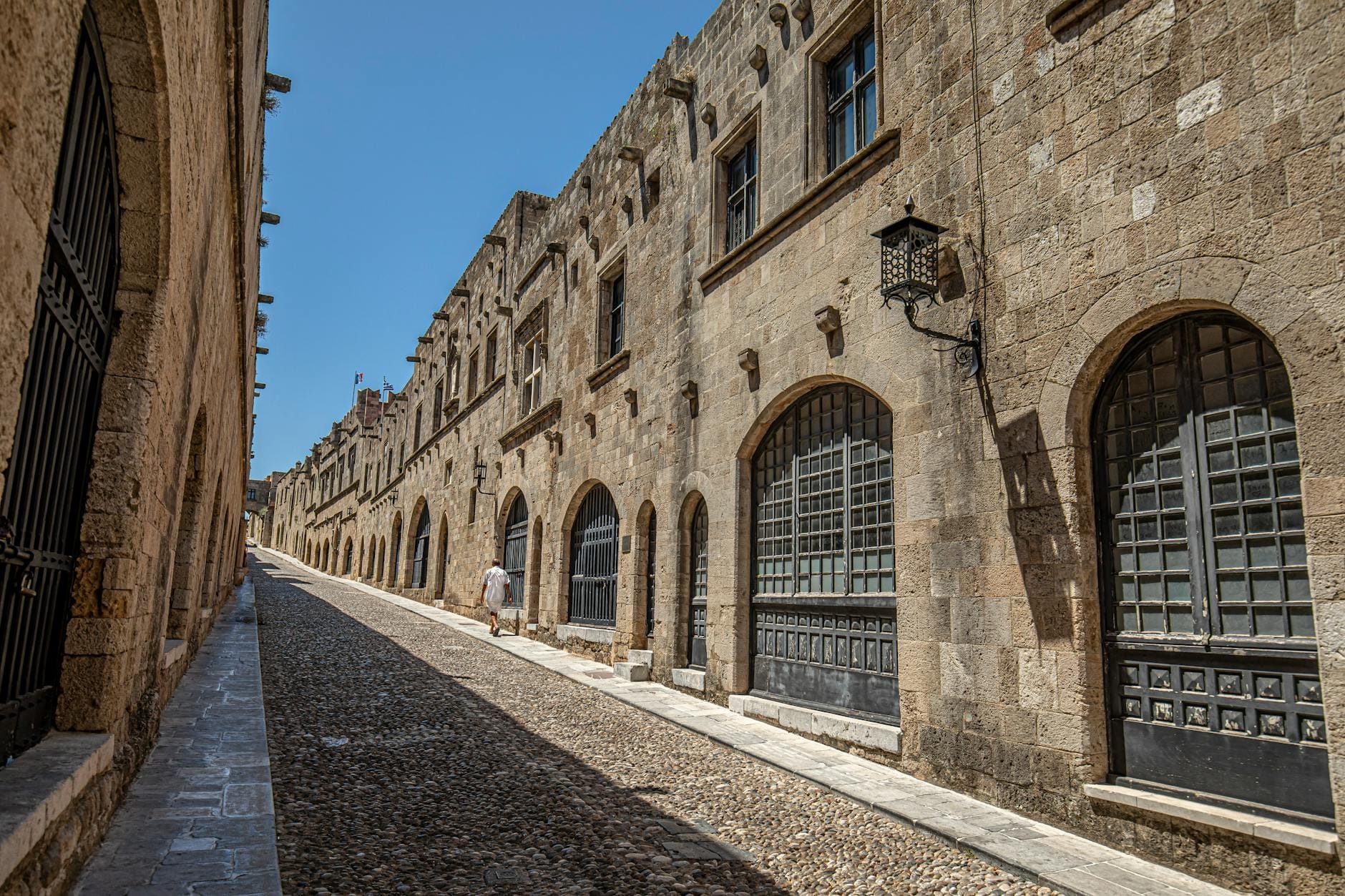
Rhodes Old Town is one of the best-preserved medieval cities in Europe, enclosed by a 4-kilometre fortified wall and designated a UNESCO World Heritage Site. Inside, Gothic knights' buildings, Ottoman mosques, Byzantine churches, and narrow cobblestone lanes exist side by side, creating a layered urban landscape unlike anywhere else in Greece.
Rhodes Old Town is a living medieval city, not a reconstruction. Behind walls built by the Knights of St. John, more than 2,000 residents share their neighborhood with millions of visitors, and the result is a place where a 14th-century street can lead you from a souvenir shop to a working Orthodox church to a minaret in less than a hundred metres.
Orientation
Rhodes Old Town sits at the northernmost tip of Rhodes island, separated from the modern city by its own walls. The fortifications run nearly 5 kilometres in total, enclosing an irregular polygon that faces the Aegean Sea on its north and east sides and backs up against the New Town to the west and south.
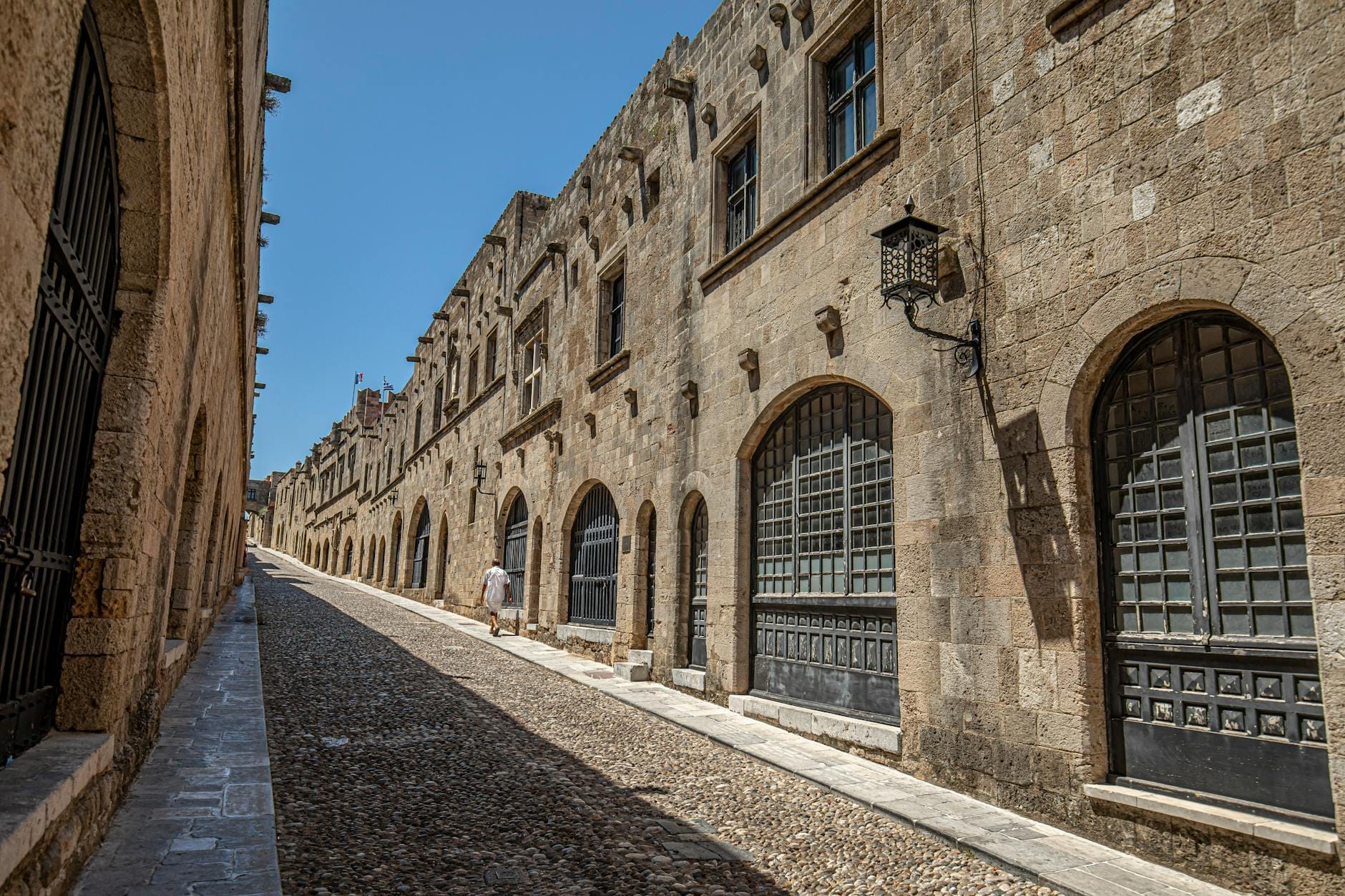
The interior divides into two distinct quarters. To the north lies the Collachium, the high town, which was the exclusive domain of the Knights of St. John from 1309 until their expulsion by the Ottomans in 1523. This is where you find the Street of the Knights (Odos Ippoton), the Palace of the Grand Master, and the great Hospital that now houses the Archaeological Museum. South and southwest of the Collachium lies the Chora, the lower town, where the civilian population lived: Greeks, Jews, Ottomans, and Genoese traders in separate but interwoven quarters. The two zones meet around Hippocrates Square (Plateia Ippokratous), which functions as the natural crossroads of the entire Old Town.
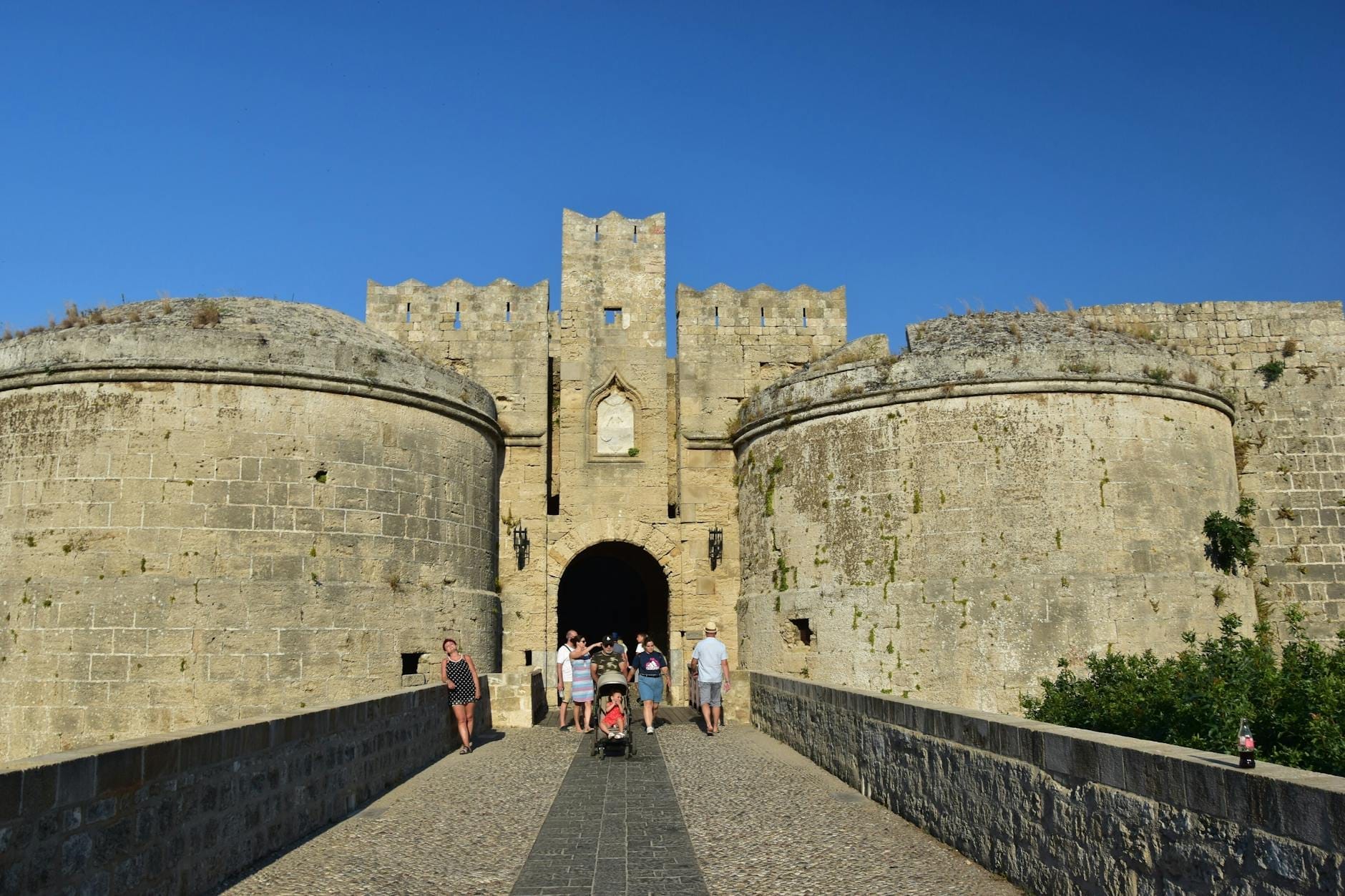
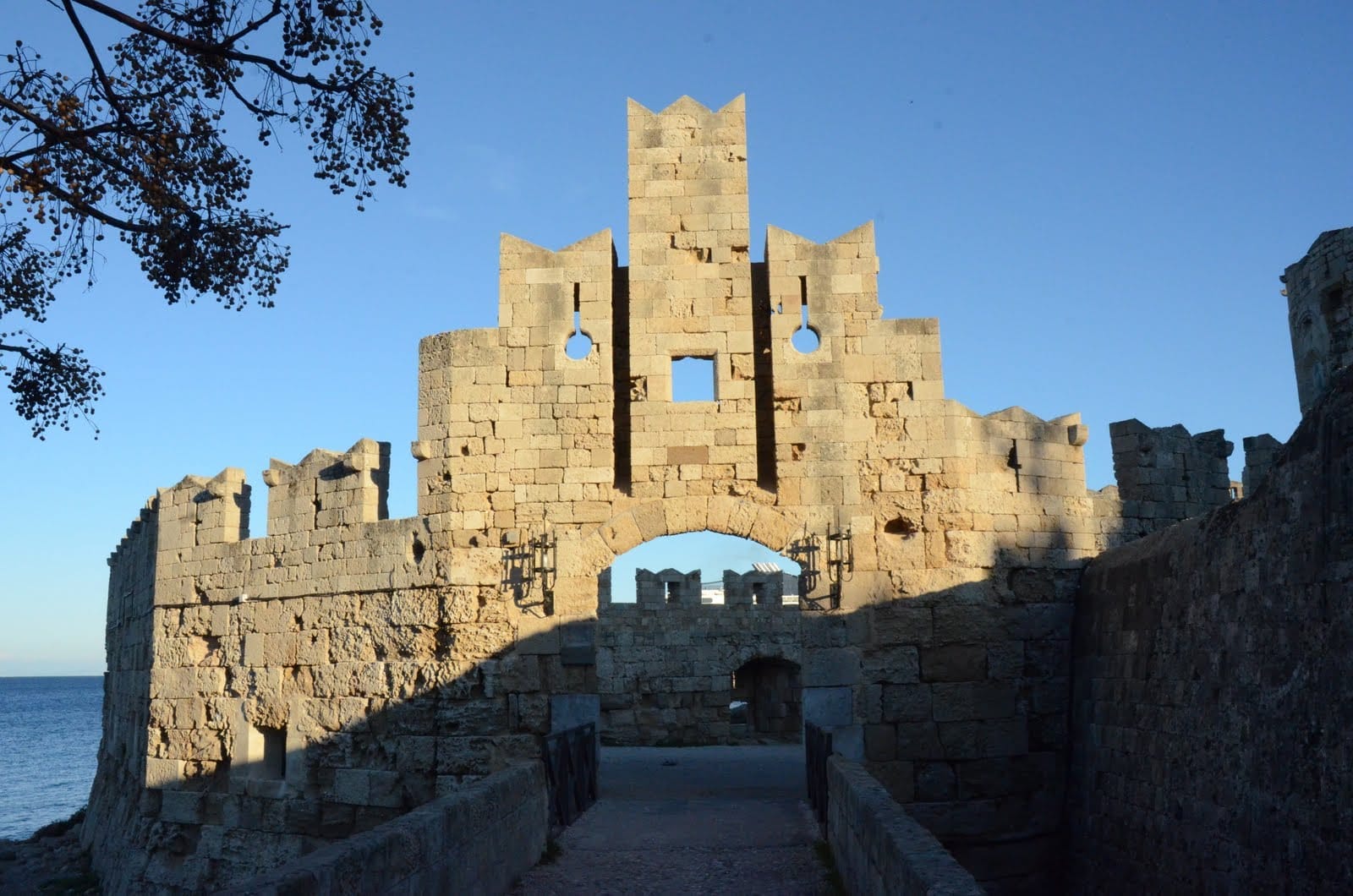
The walls have 11 gates depending on how you count the smaller posterns. The most commonly used pedestrian entrances today are Liberty Gate (Eleftherias Gate) in the north, connecting to Mandraki Harbour and the New Town; Marine Gate on the eastern harbour side; and Amboise Gate on the western wall. Each gate drops you into a different part of the city, so understanding which gate you enter from saves significant disorientation once you're inside.
The Old Town borders Rhodes New Town directly to the north and west, with Mandraki Harbour a 5-minute walk from Liberty Gate. The main island bus terminal is also near Mandraki, making it straightforward to reach the Old Town from most parts of the island without a car.
Character & Atmosphere
Early morning inside the walls is the best argument for staying in the Old Town rather than just visiting it. By 7am, the cobblestone lanes are nearly empty, the light comes in at a low angle through the stone archways, and the only sounds are the calls of swifts, the clatter of a cafe owner setting out chairs, and the occasional motorbike of a resident heading to work. The walls, which are up to 12 metres thick in places, create a microclimate: the air inside the city is noticeably cooler and quieter than on the exposed harbour promenade.
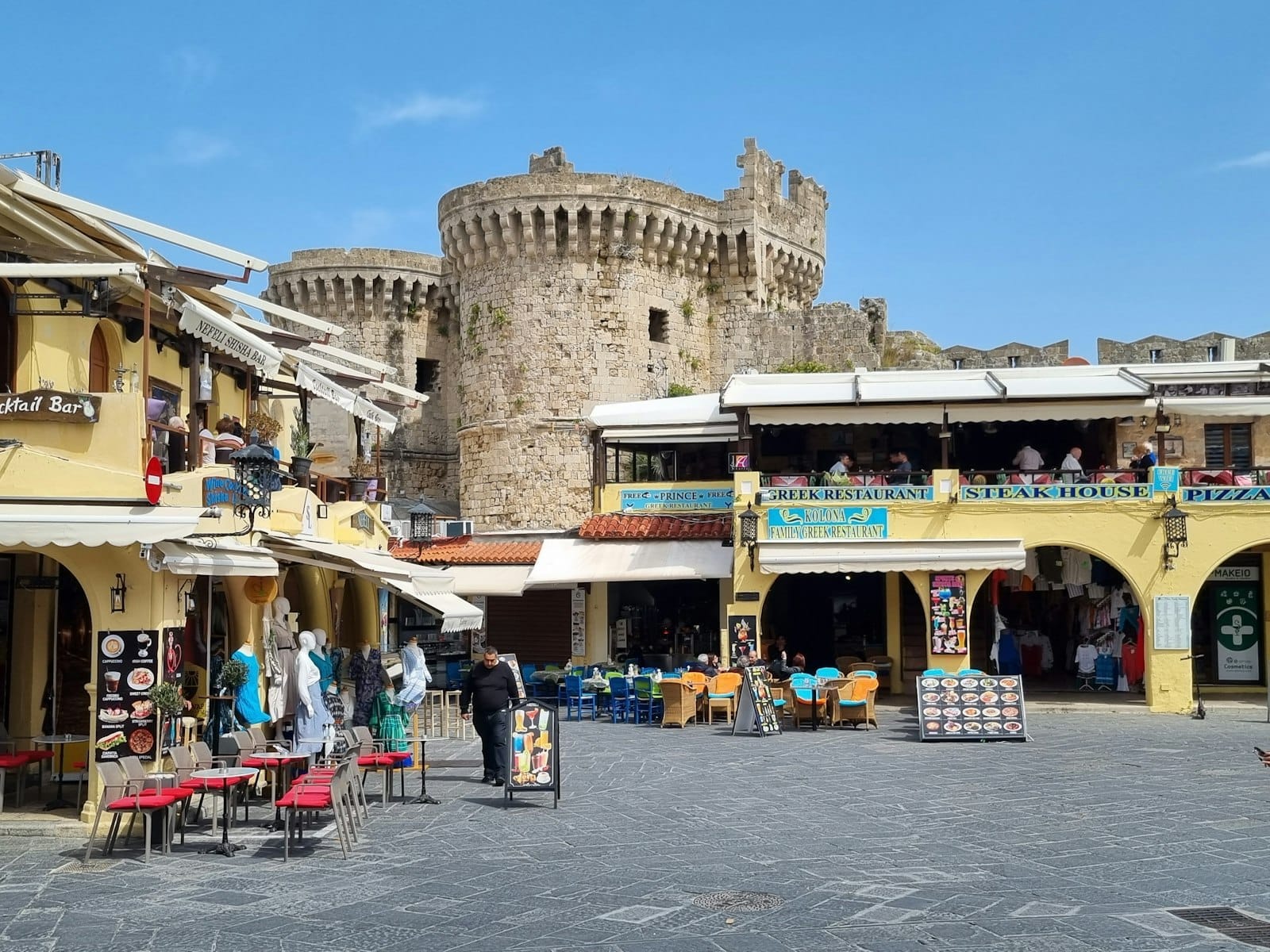
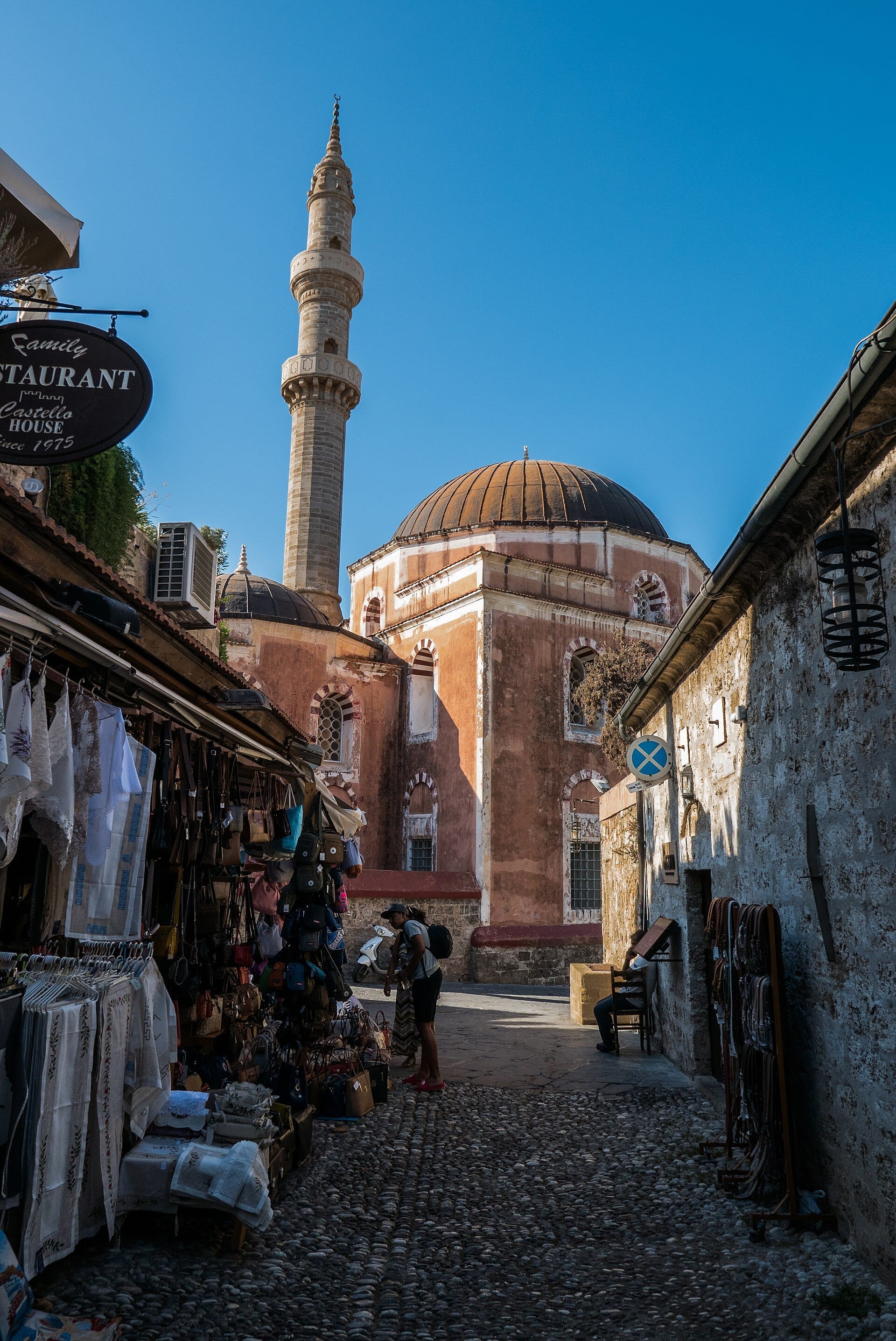
By 10am the character shifts entirely. Sokratous Street, the main commercial artery of the Chora running roughly east-west through the lower town, becomes a continuous market of leather goods, ceramics, jewellery, and linen. Cruise passengers arrive in waves from the port, and the streets around the Palace of the Grand Master fill with guided groups. This is not a criticism, just a fact of the place: Rhodes Old Town handles a large tourist volume because it has been doing so for decades, and most of its commercial core is oriented around it.
The key to finding the real texture of the place is moving off the main drag. One block north or south of Sokratous, the streets narrow to a width that two people can barely pass side by side, the shops give way to small residences with potted geraniums outside their doors, and you can find yourself completely alone at midday. The Collachium is generally quieter and more architectural in character, while the Chora's Jewish Quarter around Evreon Martyron Square (the Square of Jewish Martyrs) has a more residential feel, with cats sleeping in doorways and laundry strung between windows above.
After dark, the Old Town transforms again. The tour groups return to their hotels, the light drops golden across the pale stone, and the restaurants and bars that were invisible at noon come alive. The streets are safe and moderately lively until midnight, particularly around Hippocrates Square and the tavernas south of the Castellan courthouse. Some areas feel genuinely atmospheric at night; others, especially the quieter residential lanes deep in the Chora, are completely dark and empty by 11pm, which is either peaceful or disquieting depending on your temperament.
⚠️ What to skip
The cobblestones throughout the Old Town are uneven, polished smooth by centuries of foot traffic, and extremely slippery when wet. Shoes with grip are essential, especially if you are exploring at night or after rain. High heels are genuinely impractical here.
What to See & Do
The single most impressive monument is the Palace of the Grand Master, which anchors the northern end of the Collachium. Originally built in the 7th century on the site of a Hellenistic temple, it was expanded by the Knights into a formidable fortress-palace with towers, mosaic floors, and a drawbridge. The interior is substantial and worth the entrance fee; allow at least 90 minutes.
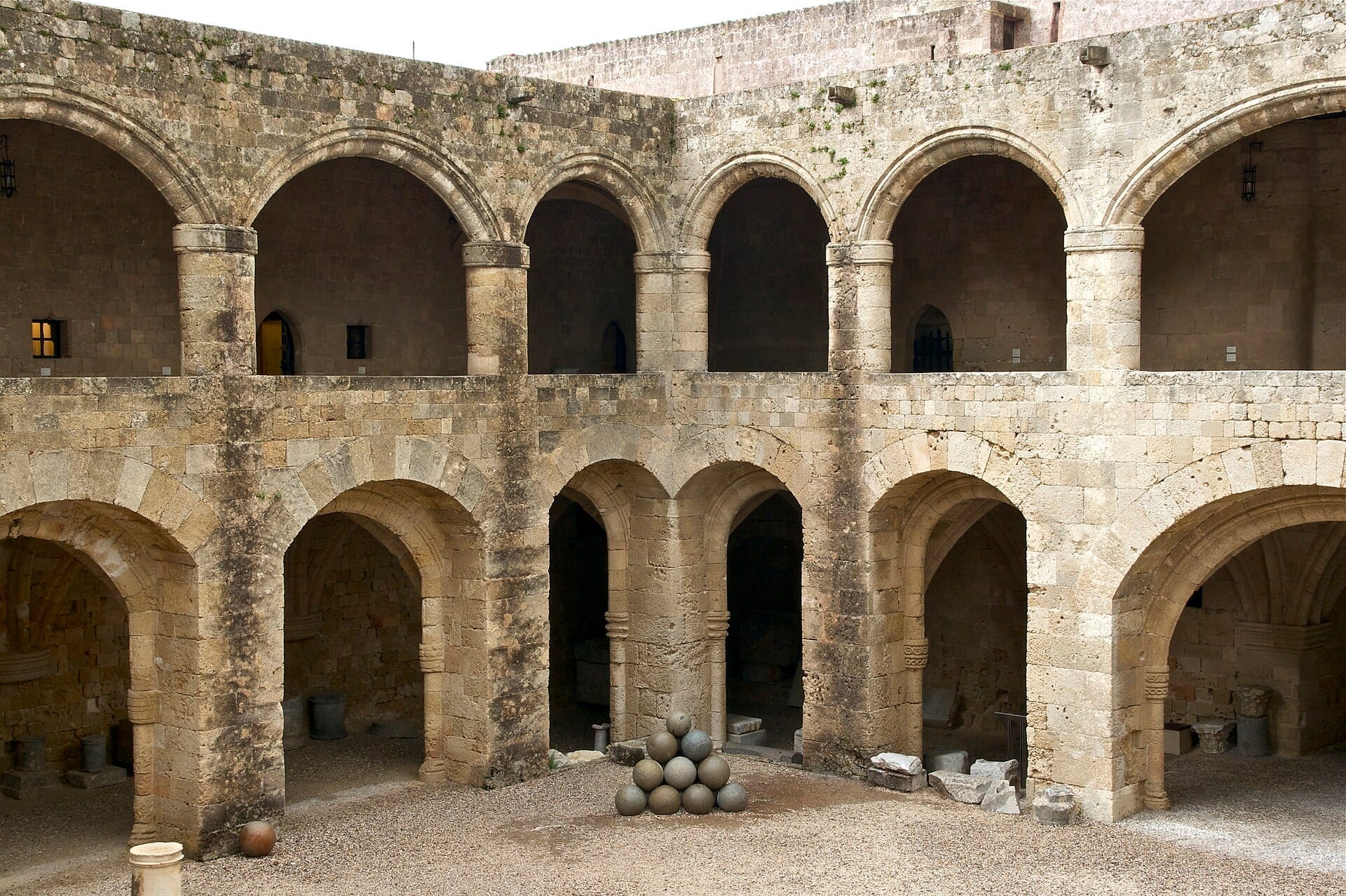
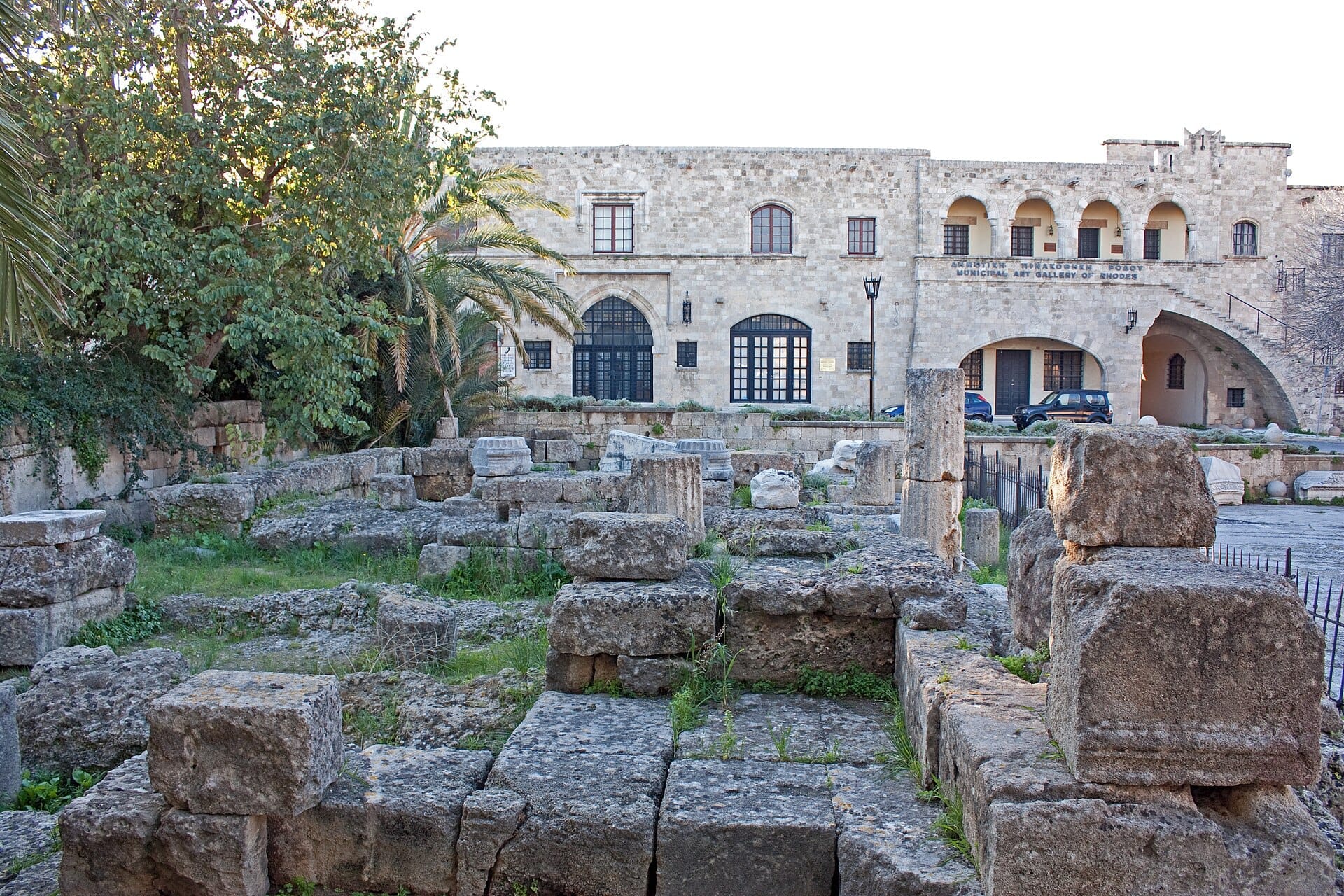
Running south from the Palace, the Street of the Knights is the most complete surviving example of a medieval street in Europe. The seven Inns of the Tongues, each representing a linguistic and national division of the Knights Hospitaller (France, England, Germany, Italy, Aragon, Auvergne, and Provence), line both sides of this straight, slightly sloping lane. The street ends at the great Hospital, now the Archaeological Museum of Rhodes, whose collection spans Mycenaean figurines through to Hellenistic sculpture and includes the famous Aphrodite of Rhodes.
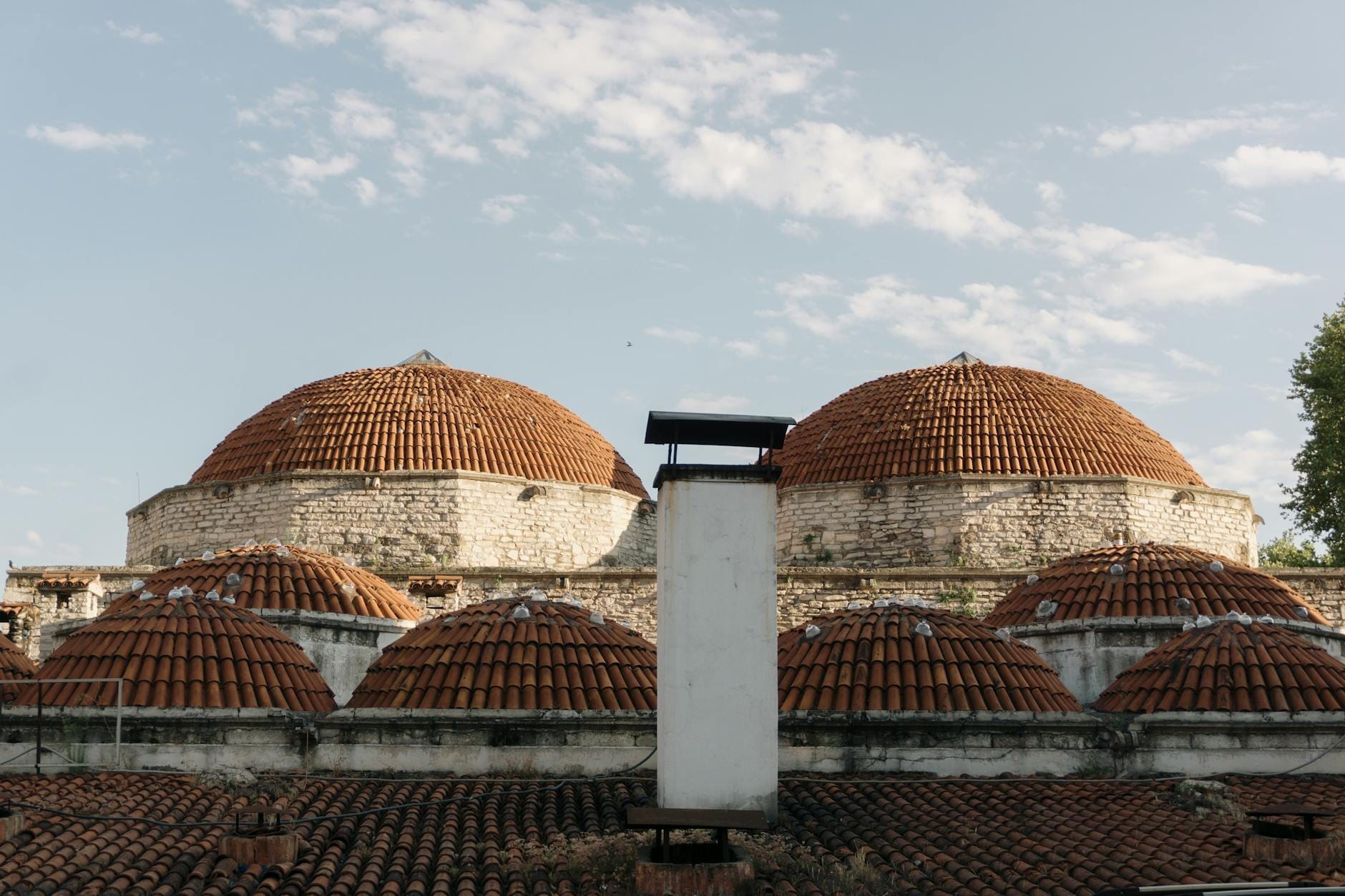
The lower town holds its own layer of history. The Mosque of Suleiman stands near the top of Sokratous Street, its pink-tinged dome and single minaret visible from several blocks away. Built after the Ottoman conquest of 1522, it is one of roughly a dozen mosques that once served the Muslim quarter, though most are now repurposed or closed. Nearby, the Ottoman Hammam on Platanos Square is one of the few functioning Turkish baths surviving in Greece, open on selected days for traditional bathing.
The harbour gates and fortified walls themselves deserve deliberate exploration. The walkway along the top of the walls offers views over both the city interior and the sea, and the dry moat that rings the landward side of the fortifications is now a pleasant public park. The full guide to Rhodes Medieval Old Town covers the walls and gates in greater detail if you want to plan a structured circuit.
Palace of the Grand Master: allow 90 minutes, entrance fee applies
Street of the Knights: free to walk, best before 10am or after 5pm
Archaeological Museum in the Knights' Hospital: strong collection, less crowded than the Palace
Mosque of Suleiman and minaret area: visible exterior; check opening times for interior access
Ottoman Hammam on Platanos Square: book ahead, operates limited hours
Square of Jewish Martyrs (Evreon Martyron): quieter corner with a moving Holocaust memorial
The dry moat walk: free, shaded, a good route to circumnavigate the walls
💡 Local tip
The Old Town's most photogenic light falls in the early morning and the hour before sunset. The Palace of the Grand Master faces west and catches the last light beautifully. If you are planning photography, the Street of the Knights is best shot before 9am when it is clear of people.
Eating & Drinking
The food landscape inside the walls splits cleanly into two categories: places that exist to catch tourist foot traffic, and places where you would actually want to eat. The former dominate Sokratous Street and the immediate vicinity of the Palace; the latter require walking a few extra blocks into the residential Chora.
Around Hippocrates Square and on the lanes radiating south toward Evreon Martyron Square, you find a range of tavernas with proper Greek menus: grilled octopus, lamb kleftiko, kolokythokeftedes (courgette fritters), and fresh fish priced by the kilo. These are not cheap by Greek standards, given the location, but they represent fair value for the quality. Expect to pay 15-25 euros per person for a full meal without wine in a mid-range taverna.
Coffee culture inside the Old Town is genuine. Several small kafeneions operate on the quieter squares of the Chora, serving Greek coffee and loukoumades (honey doughnuts) to a mix of locals and the occasional traveller who has wandered far enough from the main streets. These places typically open from 8am and close by early afternoon.
For a broader picture of where to eat across Rhodes, including options just outside the walls in the New Town, the where to eat in Rhodes guide provides a full breakdown by cuisine and budget. If you want to understand the specific dishes worth ordering, the what to eat in Rhodes guide covers local specialties in depth.
Bars cluster in the northwest part of the Chora, particularly around the lanes between Hippocrates Square and the Marine Gate. This is a small but functional nightlife zone: cocktail bars with outdoor seating, a few wine bars, and one or two places with live Greek music. It does not compare in scale to the New Town nightlife strip, but it is a more intimate and atmospheric option if you are staying inside the walls.
Getting There & Around
No private vehicles are permitted inside the Old Town walls. The streets were built for pedestrians and pack animals, and most are simply too narrow for cars. This is not an inconvenience but a defining quality of the place: the silence inside the walls is partly a product of the absence of traffic.
From Rhodes International Airport Diagoras, located roughly 16 kilometres southwest of the city, a public bus takes approximately 25-30 minutes and costs around 2.50-3 euros to the Nea Agora bus terminal near Mandraki Harbour, a 5-minute walk from Liberty Gate. A taxi from the airport costs approximately 25-30 euros. If you are arriving by ferry, the commercial port (accessible via Marine Gate) is effectively inside the Old Town walls, while the cruise terminal requires a 10-12 minute walk to Liberty Gate.
Within the Old Town itself, everything is on foot. The walled city is roughly 800 metres from north to south and 600 metres east to west, which means any two points are at most a 15-minute walk apart, though the labyrinthine street pattern can make navigation confusing. A good physical map is more useful here than a phone GPS because many lanes are too narrow to appear accurately on digital maps. The getting around Rhodes guide covers transport options across the whole island including bus routes to Lindos and other towns.
ℹ️ Good to know
If you are staying in a hotel inside the Old Town walls, your accommodation may be able to arrange luggage transfer from the nearest gate, as many hotels are inaccessible by vehicle. Confirm this when booking and check which gate is closest to your hotel before arriving.
Where to Stay
Staying inside the Old Town walls is an experience that justifies the higher prices and the logistical inconvenience of carrying your luggage through cobblestone lanes. The accommodation ranges from boutique hotels in restored knights' mansions to smaller guesthouses in traditional stone buildings. For a full comparison of accommodation options across Rhodes, including New Town hotels and beach resorts, the where to stay in Rhodes guide covers every area in detail.
The best areas to stay within the Old Town depend on what you want. The Collachium (northern quarter) puts you closest to the major monuments and gives quick access to Liberty Gate and Mandraki Harbour, but it also means you are in the most visited part of the city. By contrast, a hotel in the southern or central Chora will feel considerably more local, quieter at night, and give you more opportunity to stumble into the residential side of the neighbourhood.
The Old Town is best suited to couples, solo travellers, history enthusiasts, and anyone who wants to wake up inside a genuine medieval city. It is less practical for families with young children given the cobblestones and the impracticality of pushchairs and wheeled luggage, and the absence of a beach means it is not a good base for anyone whose priority is swimming and sun. For beach-focused trips, the hotels along the western coast in Ixia or in Faliraki to the east offer better value and easier sea access.
Travellers interested in a more refined experience in historic surroundings can find options in the luxury Rhodes guide, which includes several properties within the Old Town walls. Budget travellers are not well served inside the walls: prices are higher than anywhere else on the island and there are no hostels or budget guesthouses of note.
Practical Notes
The Old Town is busiest from late June through August, when cruise ships arrive daily and the streets around Sokratous can feel genuinely overcrowded at midday. September and October bring cooler temperatures, thinner crowds, and better light for photography. May and early June offer the best combination of open attractions and manageable visitor numbers.
If your time in Rhodes is limited, the 3-day Rhodes itinerary builds Old Town exploration into a wider island circuit that also includes Lindos and the northern beaches. If you have more time and want to understand the broader context of the Knights' history that shaped this city, the Knights of Rhodes history guide provides essential background.
Rhodes Old Town is not for everyone. If medieval architecture and layered history are not your priority, the walled city will feel like a crowded maze with expensive restaurants. But if you have any interest in how European, Byzantine, and Ottoman civilisations overlapped in the medieval Mediterranean, there are very few places in the world that tell that story as completely and as physically as this 1.5-square-kilometre enclosure of stone.
💡 Local tip
The walking tour of the Old Town works best if you enter through a different gate than you exit. Try entering via Amboise Gate on the western wall, crossing the full width of the Collachium to the Palace and Street of the Knights, descending into the Chora through Hippocrates Square, and exiting through Marine Gate onto the harbour. This route covers the main sights in a logical sequence and avoids retracing your steps.
TL;DR
Rhodes Old Town is a UNESCO World Heritage Site and one of the best-preserved medieval walled cities in Europe, with intact fortifications, Gothic knights' architecture, Ottoman mosques, and Byzantine churches in close proximity.
Best for: history travellers, couples, architecture enthusiasts, and anyone wanting to stay inside a genuinely medieval urban environment.
Not ideal for: families with pushchairs or young children, beach-first holidaymakers, or budget travellers (accommodation and food prices are the highest on the island).
Visit in May, June, September, or October to avoid the worst of the midsummer crowds; arrive at major monuments before 10am or after 5pm.
No cars are permitted inside the walls. Everything is walkable, but the cobblestones are uneven and slippery when wet: wear proper footwear.
Anthony Quinn Bay is one of the most photographed coves on the Greek island of Rhodes, but most visitors know only half the story. Here is the full history of how a Hollywood film, a failed land deal, and emerald-clear water turned a small pebble cove into one of Greece's most recognisable spots.
Rhodes has over 220 km of coastline stretching from rocky northern coves to sweeping southern sandbanks. This guide covers the best beaches in Rhodes, from the iconic bay below the Acropolis of Lindos to the wild windsurfing isthmus at Prasonisi.
Rhodes rewards visitors year-round, but timing your trip correctly means the difference between a peaceful escape and a sweaty queue. This guide breaks down every season honestly, with temperature ranges, crowd levels, pricing patterns, and clear recommendations for different travel styles.
One of the Seven Wonders of the Ancient World, the Colossus of Rhodes was a 33-metre bronze statue that stood near Mandraki Harbour around 280 BCE. Nothing physical survives, but the story, the site, and the surrounding attractions make this one of Rhodes' most fascinating stops. Here is everything you need to know.
Rhodes is an excellent base for exploring the wider Dodecanese and the island's own interior. From the spectacularly beautiful island of Symi to the ancient Acropolis of Lindos and the lush Valley of the Butterflies, these are the day trips that reward the effort of leaving your sunbed.
Rhodes is a large island covering over 1,400 km², and getting around it requires some planning. This guide covers every transport option available, from public buses and taxis to car hire and scooters, with real fares, route logistics, and honest advice on what actually works.
Rhodes is one of Greece's most complete travel destinations, combining a UNESCO-listed medieval city, diverse beaches, and layers of ancient history. But peak-season crowds and tourist-trap pricing are real concerns. Here's everything you need to know before booking.
For over two centuries, the Knights of Rhodes — formally the Order of the Knights of St. John — transformed a Greek island into the most formidable Christian stronghold in the eastern Mediterranean. This guide covers their origins, military achievements, the fall of the city, and exactly what survives today for you to explore.
Rhodes delivers genuine luxury across the full spectrum: UNESCO-listed medieval hotels, clifftop adults-only resorts, Michelin-quality dining, and private boat charters to deserted coves. This guide covers where to stay, eat, and spend your money wisely on the Greek island that consistently punches above its weight.
Everything you need to know about arriving at Rhodes International Airport 'Diagoras' (RHO). From bus routes and taxi fares to pre-booked private transfers, this guide covers all your options for reaching Rhodes Town and the rest of the island quickly and without stress.
Rhodes sits at the perfect crossroads of the Aegean for exploring by sea. This guide covers the best boat trips available, from full-day Symi cruises and Lindos sea excursions to catamaran sailings and snorkelling stops at stunning coastal bays.
Renting a car in Rhodes unlocks the island's best beaches, hilltop villages, and ancient ruins that buses simply can't reach. This guide covers licensing requirements, realistic pricing, parking rules, seasonal booking strategy, and what to watch out for on local roads.
Rhodes rewards those on a budget with an extraordinary range of free experiences. From wandering ancient and medieval streets to swimming in turquoise bays, here are 20 genuinely free ways to get the most from the island.
Rhodes rewards those who look past the headline sites. From a frescoed Byzantine monastery in the pine-covered interior to a crowd-free medieval castle with sea views, these are the places that show you a different side of the island.
Rhodes rewards couples with an exceptional mix of dramatic scenery, ancient history, and unhurried beaches. Whether you are planning a honeymoon, anniversary, or simply a getaway together, this guide covers the most romantic experiences the island offers.
October is one of the smartest months to visit Rhodes, Greece. The summer heat breaks, the crowds thin out dramatically, and the sea stays warm enough for swimming well into the month. This guide covers weather, prices, what's open, and how to make the most of the island in autumn.
Rhodes in summer is spectacular and intense in equal measure. This guide covers everything from scorching July temperatures and peak-season crowds to the quieter southern beaches and the best strategies for enjoying Greece's largest Dodecanese island without the misery.
Three days in Rhodes is enough to cover the medieval Old Town, the Acropolis of Lindos, ancient Kamiros, and a handful of excellent beaches — if you plan it right. This itinerary sequences the island's highlights by geography, not just popularity, so you spend less time driving and more time exploring.
A week in Rhodes is enough to cover its UNESCO medieval core, the clifftop drama of Lindos, a ferry to Symi, and some of the Aegean's best beaches without ever feeling rushed. This day-by-day itinerary is built around realistic travel times, crowd patterns, and practical logistics so you can spend less time planning and more time actually enjoying the island.
Rhodes Medieval Old Town is one of Europe's most intact medieval cities, a UNESCO World Heritage Site enclosed by 4 km of walls and layered with 700 years of history. This guide covers everything from the Palace of the Grand Masters to the Ottoman quarter, with practical entry info, crowd patterns, and honest recommendations.
Rhodes after dark covers a wider range than most visitors expect. Whether you want high-energy clubs on Orfanidou Street, open-air beach parties near Kallithea, or a quiet glass of wine inside the medieval walls, this guide covers every scene with practical details on venues, timing, and what to avoid.
Rhodes Old Town is one of Europe's most intact medieval cities and a UNESCO World Heritage site. This self-guided walking tour covers the essential route, every major landmark, honest crowd warnings, and practical details so you can explore at your own pace without wasting a step.
Rhodes is one of Greece's most rewarding destinations, and it doesn't have to drain your wallet. This guide breaks down realistic daily budgets, the best free and low-cost attractions, smart transport choices, and the seasonal timing that cuts costs by nearly half.
Rhodes is one of the most photogenic islands in the Mediterranean, stacking medieval architecture, turquoise bays, and ancient ruins into a remarkably compact space. This guide covers the 20 best photography locations on the island, from iconic landmarks to lesser-known viewpoints.
Choosing between Greek islands is harder than it looks. This guide breaks down how Rhodes compares to Santorini, Crete, Kos, and Mykonos across beaches, history, cost, and crowd levels — so you can book with confidence.
Rhodes is one of Greece's top destinations for windsurfing and kitesurfing, driven by reliable Meltemi winds and a string of well-organized schools on the northwest coast. This guide covers every spot, lesson price, seasonal window, and insider tip you need to plan your trip.
Rhodes punches well above its weight for family travel. Whether your kids are after slides and splash pools, wildlife encounters, or exploring real medieval castles, the island delivers. This guide covers the best family-friendly activities across beaches, nature, history, and pure entertainment.
Rhodes is one of Greece's most layered destinations, where a UNESCO-listed medieval city sits minutes from clear Aegean water. This guide covers the best things to do in Rhodes across history, beaches, food, and day trips, with honest takes on what's worth your time and what isn't.
Rhodes has a distinct culinary identity rooted in chickpeas, wild greens, handmade pasta, and cumin-heavy stews. This guide covers the essential local dishes, seasonal specialities, what to drink, and where to find the food worth seeking out.
Rhodes has one of the strongest food cultures in Greece, built on fresh Aegean seafood, sun-ripened local produce, and centuries of Mediterranean culinary tradition. This guide covers where to eat across the island, from the medieval alleyways of the Old Town to the clifftop village of Lindos, with honest assessments, realistic prices, and practical booking advice.
Choosing where to stay in Rhodes shapes your entire trip. This guide breaks down every major area honestly, from UNESCO-listed Old Town to family-friendly Pefkos, with specific hotel recommendations and seasonal tips to help you book with confidence.