Great Hamam (Yeni Hammam): Rhodes' Only Ottoman Bathhouse
Built in 1558 during the Ottoman occupation, the Great Hamam is the sole surviving bathhouse within Rhodes' UNESCO-listed Medieval Town. Currently closed to the public but recently restored, it remains one of the most architecturally distinctive buildings in Arionos Square, worth understanding in context before you arrive.
Quick Facts
- Location
- Arionos Square, Rhodes Old Town (next to Sultan Mustafa Mosque)
- Getting There
- Walk from St. Athanasios Gate or Suleiman Mosque; no public transit stops directly at the square
- Time Needed
- 15-20 minutes (exterior only; interior currently closed)
- Cost
- Free to view exterior; no interior admission currently available
- Best for
- History enthusiasts, architecture lovers, Ottoman heritage walkers
What the Great Hamam Actually Is (And Why It Matters)
The Great Hamam, known in Turkish as the Yeni Hammam (meaning 'new baths') and sometimes called the Baths of Suleiman or Mustafa Baths, is the only known bathhouse ever built inside the walls of Rhodes' Medieval Town. In a city layered with Crusader fortifications and Byzantine churches, that makes it a rare and physically distinct marker of the Ottoman period, which lasted from 1522 until Italian occupation in 1912.
The building stands in Arionos Square alongside the Sultan Mustafa Mosque, forming one of the most concentrated pockets of Ottoman civic architecture in the entire Old Town. If you are already walking the area around the Suleiman Mosque, the hamam is less than two minutes away on foot and absolutely worth pausing for, even if you cannot go inside.
⚠️ What to skip
The interior is closed to the public. The building was restored but access has not been restored. You can photograph and walk around the exterior, but do not plan your visit around entering the baths. Verify the current status with the Rhodes Town tourism office before visiting.
History: From Suleiman's Rhodes to Mustafa Pasha's Renovation
The hamam was constructed in 1558, roughly three decades after Suleiman the Magnificent drove the Knights of St. John from Rhodes in 1522. Like the mosques and minarets that appeared during this period, the bathhouse was part of a deliberate Ottoman reshaping of the city's civic life. Bathing culture was central to Ottoman social practice, functioning not just as hygiene but as a communal institution, and a city of Rhodes' size and significance would have been expected to have one.
The original structure served male bathers only. A women's section was added in the 18th century under Mustafa Pasha, which explains one of its alternative names. This expansion reflects the maturation of the Ottoman community in Rhodes over that period, as the baths became a more permanent fixture of daily life rather than a symbol of conquest.
The hamam has been restored by the Archaeological Foundation of Rhodes, a significant intervention given the building's age and the structural complexity of its dome system. For deeper context on the broader Ottoman and Crusader layers of the city, the Rhodes Medieval Old Town guide covers the full sweep of the town's architectural history across multiple periods.
Tickets & tours
Hand-picked options from our booking partner. Prices are indicative; availability and final rates are confirmed when you complete your booking.
Sunset catamaran cruise with dinner in Rhodes
From 70 €Instant confirmationFree cancellation3-Hour All Inclusive Sun and Sea Swimming Cruise in Rhodes
From 55 €Instant confirmationFree cancellationRhodes Sunset Cruise with Greek BBQ and Unlimited Drinks
From 65 €Instant confirmationFree cancellationPalace of the Grand Master Ticket and Audio Tour by App
From 30 €Instant confirmation
Architecture: Domes, Marble, and the Logic of Light
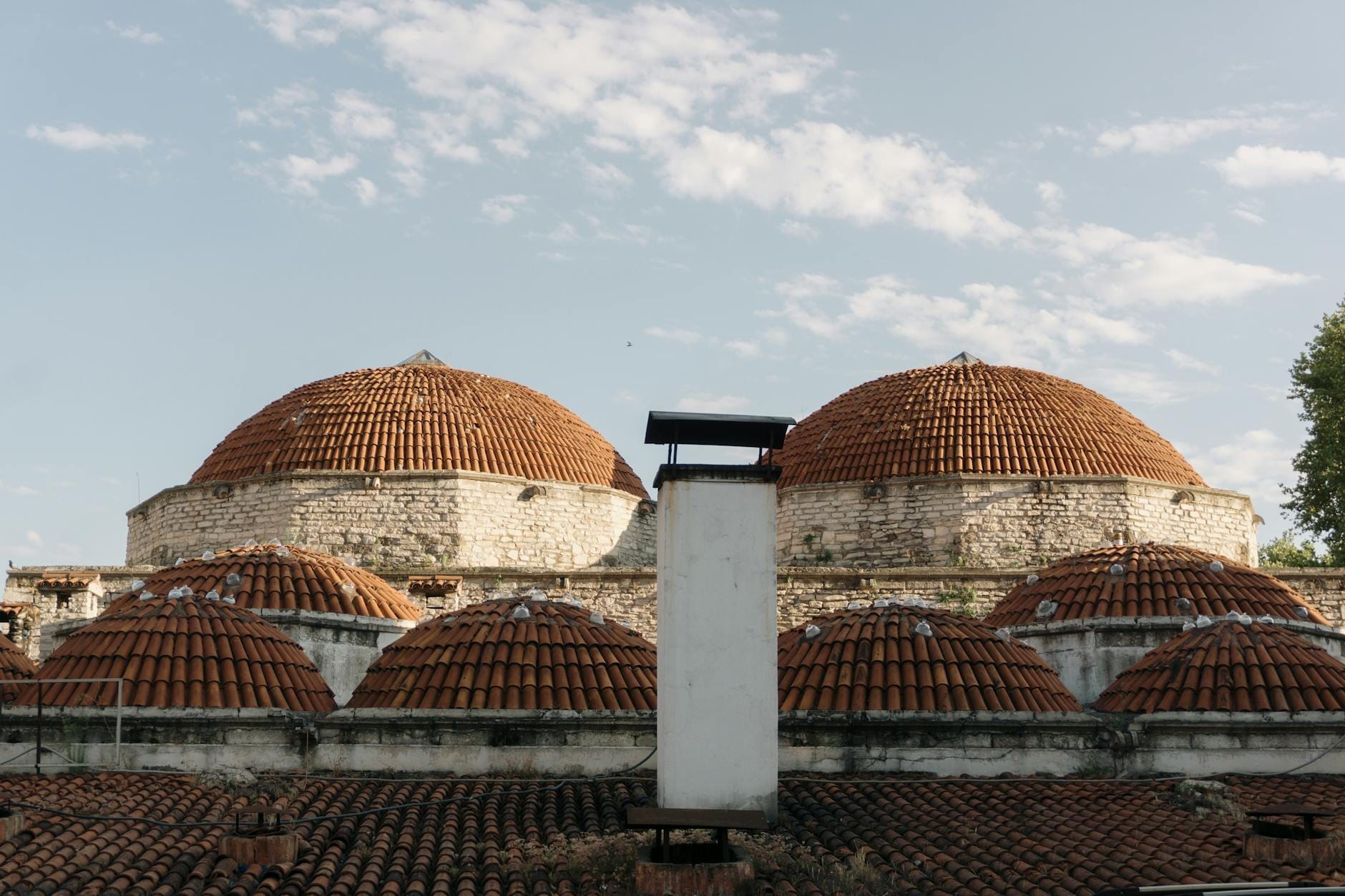
Even viewed from outside, the hamam's roofline is immediately recognizable. The structure is topped with a large central dome over the cold room (the frigidarium equivalent in Ottoman bath design) and a series of smaller domes, each punctured with small circular or star-shaped apertures. In traditional hammam design, these apertures serve a precise function: they diffuse natural light into the steam-filled interior without creating drafts that would cool the rooms.
Inside, based on pre-closure descriptions, the building features rich marble surfaces and a central water spring in the main hall. The combination of the dome geometry, the marble finish, and the controlled light sources gave the interior a quality that photographs rarely capture accurately. It is the kind of space where the architecture is inseparable from the experience it was designed to produce.
The stonework on the exterior, particularly around the entrance and lower walls, shows the layering common to Rhodes Old Town buildings, where Ottoman construction often incorporated or built directly against earlier Byzantine and Crusader masonry. This is especially visible on the east-facing facade.
Visiting the Exterior: What You Will Actually See
Arionos Square is one of the quieter squares in the Old Town, particularly in the morning before the main tourist flow reaches this part of the walled city. The hamam sits on the north side of the square, its low-profile domed roof visible above the surrounding roofline as you approach from the direction of the Suleiman Mosque. The scale of the building is smaller than most visitors expect given its historical significance.
The entrance facade is the most photogenic angle. The doorway arch retains its Ottoman detailing and the proportions of the threshold give a clear sense of how the interior was organized. On overcast days, the stone takes on a warm amber tone that reads well in photographs. In direct midday sun, the shadows become harsh and the detail flattens, so early morning or late afternoon gives better results.
💡 Local tip
Arrive before 9:30 am if you want to photograph the exterior without other visitors in the frame. The square fills up quickly once tour groups begin moving through the Ottoman Quarter after 10 am.
The Sultan Mustafa Mosque immediately adjacent is also worth a few minutes of attention. Together, the mosque and hamam form a coherent Ottoman ensemble. The Suleiman Mosque nearby on Odos Sokratous adds another layer to this same period of the city's history and takes under ten minutes to reach on foot.
Fitting the Hamam Into Your Old Town Walk
Because the interior is not accessible, the hamam works best as one stop within a broader exploration of the Old Town rather than a standalone destination. The most logical approach is to build it into a loop through the Ottoman Quarter, combining it with the Suleiman Mosque, the Street of the Knights, and the Palace of the Grand Master.
If you are doing a structured walk, the Rhodes Old Town walking tour sequences these sites efficiently. The hamam fits naturally into the middle section of that route, where the Ottoman-era buildings are most concentrated. Allow roughly 15 to 20 minutes at the square itself, though the pace of the surrounding streets encourages slower movement.
For those specifically interested in the Knights' period rather than the Ottoman layer, the Street of the Knights is the counterpoint to the hamam. Both sit within the same walled area, but they represent entirely different centuries of use and entirely different approaches to building.
ℹ️ Good to know
The Old Town's cobblestone streets are uneven throughout the Ottoman Quarter. Flat-soled shoes with grip are more practical than sandals, particularly if the stones are damp from overnight rainfall.
Who This Attraction Suits (And Who It Does Not)
The Great Hamam is most rewarding for travelers with a genuine interest in Ottoman history, Islamic architecture, or the layered urban history of Rhodes. If you understand roughly what a hammam was and what role it played in Ottoman civic life, the building reads as something more than a decorative exterior. The context transforms the experience.
Travelers looking for an active or immersive attraction will find this one limited. With no interior access, no exhibition, and no guided experience currently offered, there is not much to engage with beyond the exterior and the square itself. Families with young children may find there is nothing here to hold attention for more than a few minutes. If your priority is maximizing experiences per hour in the Old Town, the Palace of the Grand Master and the Archaeological Museum offer far more inside.
If the restoration eventually leads to reopening, the interior would become a genuinely significant visit. Check with the Archaeological Museum of Rhodes or local tourism offices for any updates on public access, as both institutions are likely to have current information on Ottoman-era sites in the Old Town.
Insider Tips
- The square is most atmospheric very early in the morning, when the Ottoman Quarter is nearly empty and the stone reflects the low-angle light. Most visitors pass through between 10 am and 1 pm, so an 8 am visit gives you the space entirely to yourself.
- The domes are easier to appreciate from a slight distance than up close. Step back to the far side of Arionos Square and look across at the full roofline to understand the building's geometry properly.
- If you want to understand what the interior looked like when operational, the Cemberlitas Hammam in Istanbul (still active) uses the same basic Ottoman bath layout and dome-and-aperture lighting system. Comparing photographs before your visit gives useful architectural context.
- The Sultan Mustafa Mosque next door is one of the few Ottoman religious buildings in the Old Town that can occasionally be viewed at closer range. Check if access is permitted on the day you visit.
- Given the restoration history, status can change. If you are visiting specifically to see an open interior, contact the Rhodes Town municipality or the Archaeological Foundation of Rhodes before travelling.
Who Is Hammam Turkish Baths For?
- Architecture and design enthusiasts interested in Ottoman building techniques
- History travelers following the full arc of Rhodes from Knights to Ottoman to Italian rule
- Photographers working the Old Town in early morning light
- Travelers building a self-guided Ottoman Quarter walking loop
- Researchers or students of Islamic civic architecture in the Aegean
Nearby Attractions
Other things to see while in Rhodes Old Town:
- Archaeological Museum of Rhodes
Housed in the 15th-century Hospital of the Knights, the Archaeological Museum of Rhodes brings together artifacts spanning the Archaic to Roman periods, including celebrated Hellenistic marble statues and intricate floor mosaics. It is one of the most historically layered museum experiences in the Aegean, where the building itself is as compelling as the collection inside.
- Harbour Gates
The Harbour Gates mark the medieval boundary between Mandraki Harbour and the walled city built by the Knights of Saint John. Free to visit at any hour, they are the most atmospheric entry point into Rhodes Old Town, framing a view that has barely changed in six centuries.
- Palace of the Grand Master of the Knights of Rhodes
The Palace of the Grand Master of the Knights of Rhodes is the most architecturally commanding structure in the medieval city. Built in the early 14th century and dramatically restored under Italian rule, it anchors the northwestern corner of the Old Town with towers, colonnaded courtyards, and a permanent collection that spans antiquity to the Ottoman period.
- Rhodes Port (Commercial Harbour)
The Rhodes Commercial Harbour, officially known as Akandia Port (Λιμάνι Ακανδίας), is the island's main gateway for passenger ferries, cargo vessels, and cruise ships. Whether you're arriving from Piraeus, island-hopping through the Dodecanese, or watching the daily rhythm of a working Greek port, this is where Rhodes begins.