Rhodes Medieval Old Town: The Complete Visitor Guide
Rhodes Medieval Old Town is one of Europe's most intact medieval cities, a UNESCO World Heritage Site enclosed by 4 km of walls and layered with 700 years of history. This guide covers everything from the Palace of the Grand Masters to the Ottoman quarter, with practical entry info, crowd patterns, and honest recommendations.
Plan and book this trip
Tools from our partner Travelpayouts help you compare flights and hotels. If you book through them, we may earn a commission at no extra cost to you.
Flights
Hotels map
TL;DR
- Rhodes Medieval Old Town is a UNESCO World Heritage Site (listed 1988), enclosed by 4 km of walls up to 12 metres high, with 11 entry gates.
- The Upper Town holds the Gothic core: the Palace of the Grand Masters and the Street of the Knights. The Lower Town is shaped by four centuries of Ottoman rule.
- Palace of the Grand Masters admission is around €10-12 for adults; most of the Old Town itself is free to walk.
- April-May and September-October are the best times to visit: manageable temperatures and thinner crowds than peak summer.
- Around 6,000 people still live inside the walls, so this is a functioning neighbourhood, not an open-air museum.
Why Rhodes Medieval Old Town Is Worth Your Time
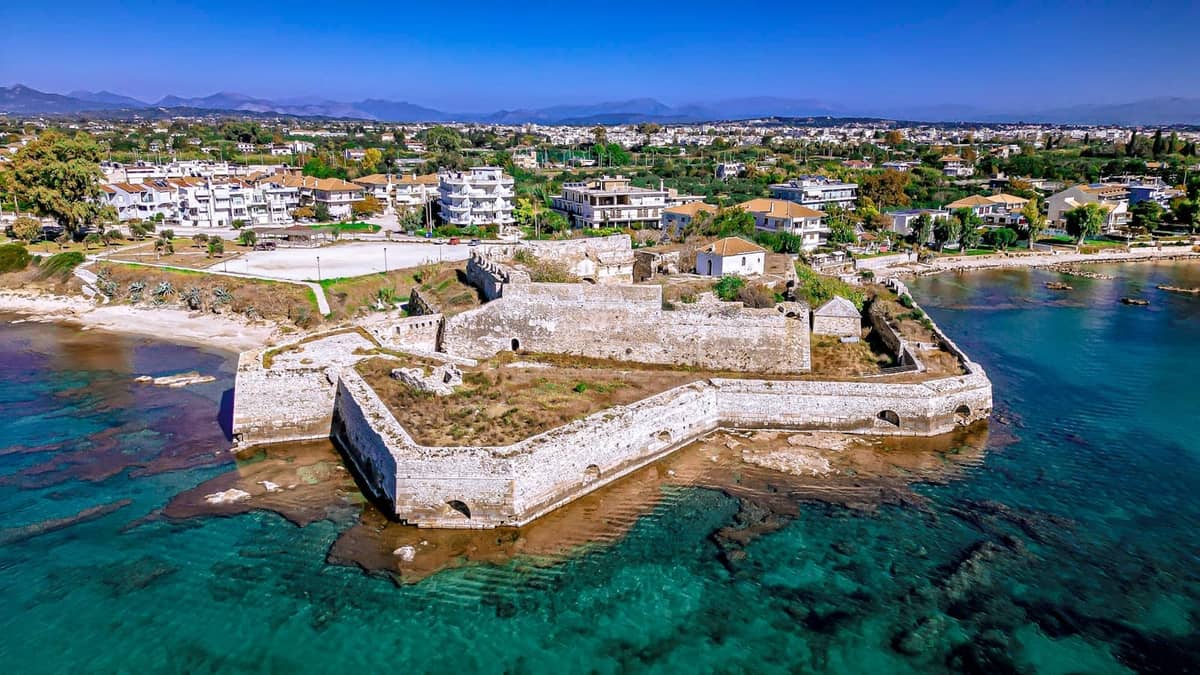
The Rhodes Medieval Old Town is not just old — it is one of the most complete surviving medieval urban environments anywhere in Europe. When UNESCO added it to the World Heritage List in 1988, the citation praised its outstanding universal value as a fortified medieval city that layered Crusader Gothic architecture over ancient Greek foundations, then absorbed four centuries of Ottoman and Italian influence on top. The result is a city where a Byzantine church sits next to a 16th-century mosque, and a Crusader hospice shares a street with a Greek taverna. For context on how this history unfolded, the Knights of Rhodes history guide covers the Hospitaller period in detail.
The city was held by the Knights of St. John from 1309 until their famous siege defeat in 1522, followed by Ottoman rule until 1912, then Italian administration until Rhodes joined Greece in 1947. Each regime left physical evidence, and none completely erased what came before. The Italian restorations of the early 20th century are sometimes dismissed as intrusive, but they preserved structural integrity that might otherwise have crumbled, and most scholars now consider them an integral part of the site's history rather than a distortion of it.
ℹ️ Good to know
The Old Town covers roughly 70 hectares inside the walls. A single day gives you the highlights; two days lets you explore the quieter residential streets and lesser-visited Ottoman monuments without rushing.
The Two Districts: Upper Town and Lower Town
The Old Town divides naturally into two zones with distinct characters. Understanding this split before you arrive saves a lot of confused wandering.
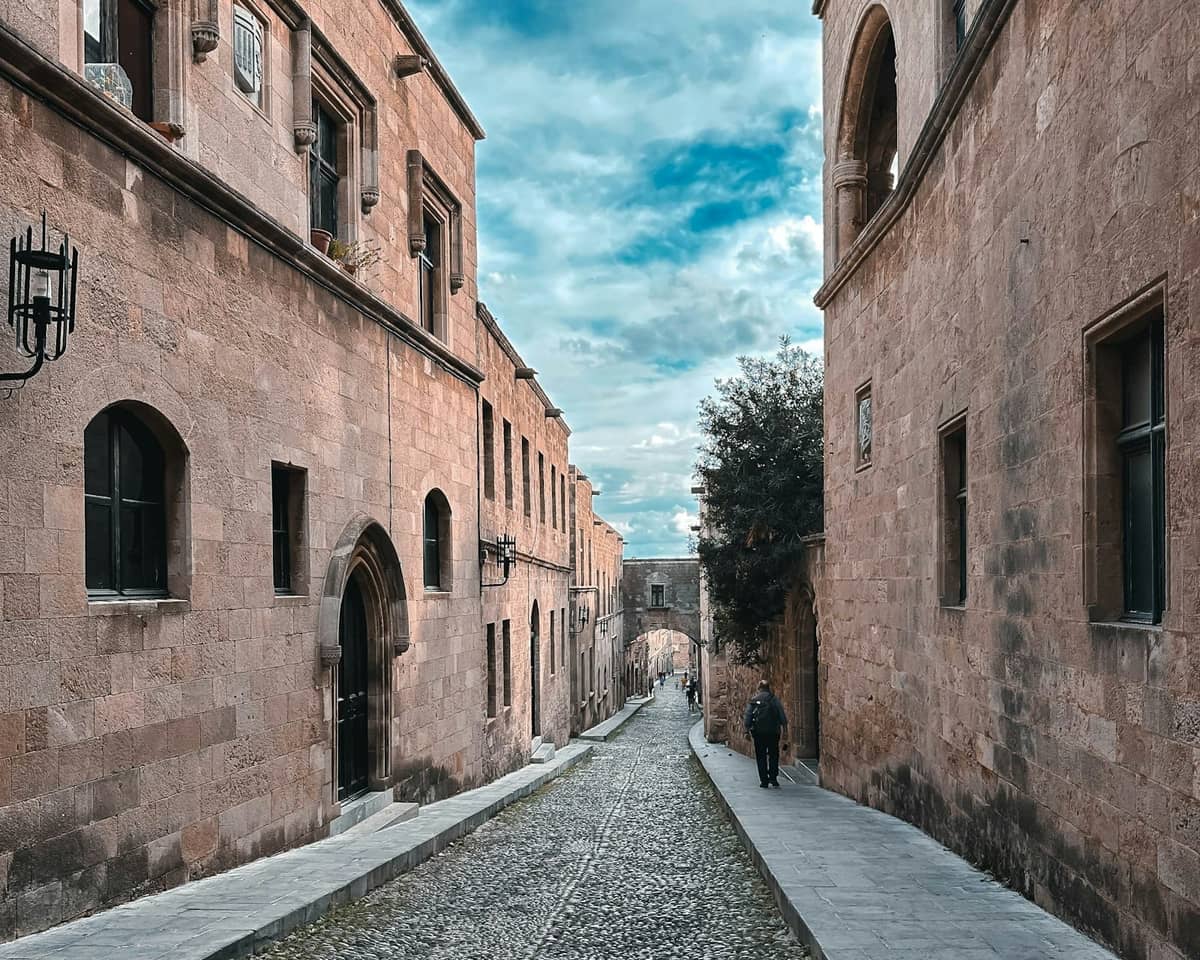
The Upper Town (Collachium) occupies the northern section and was the exclusive domain of the Knights during their tenure. This is where you find the signature Gothic streetscape: the Street of the Knights, a nearly intact medieval thoroughfare lined with the inns (auberges) of the eight Langues of the Order, and the Palace of the Grand Masters at its upper end. The palace burned in a gunpowder explosion in 1856 and was rebuilt by the Italians as a residence for Mussolini (who never actually stayed there). Its mosaic floors include pieces relocated from the ancient site of Kos, which is worth knowing before you assume everything is original.
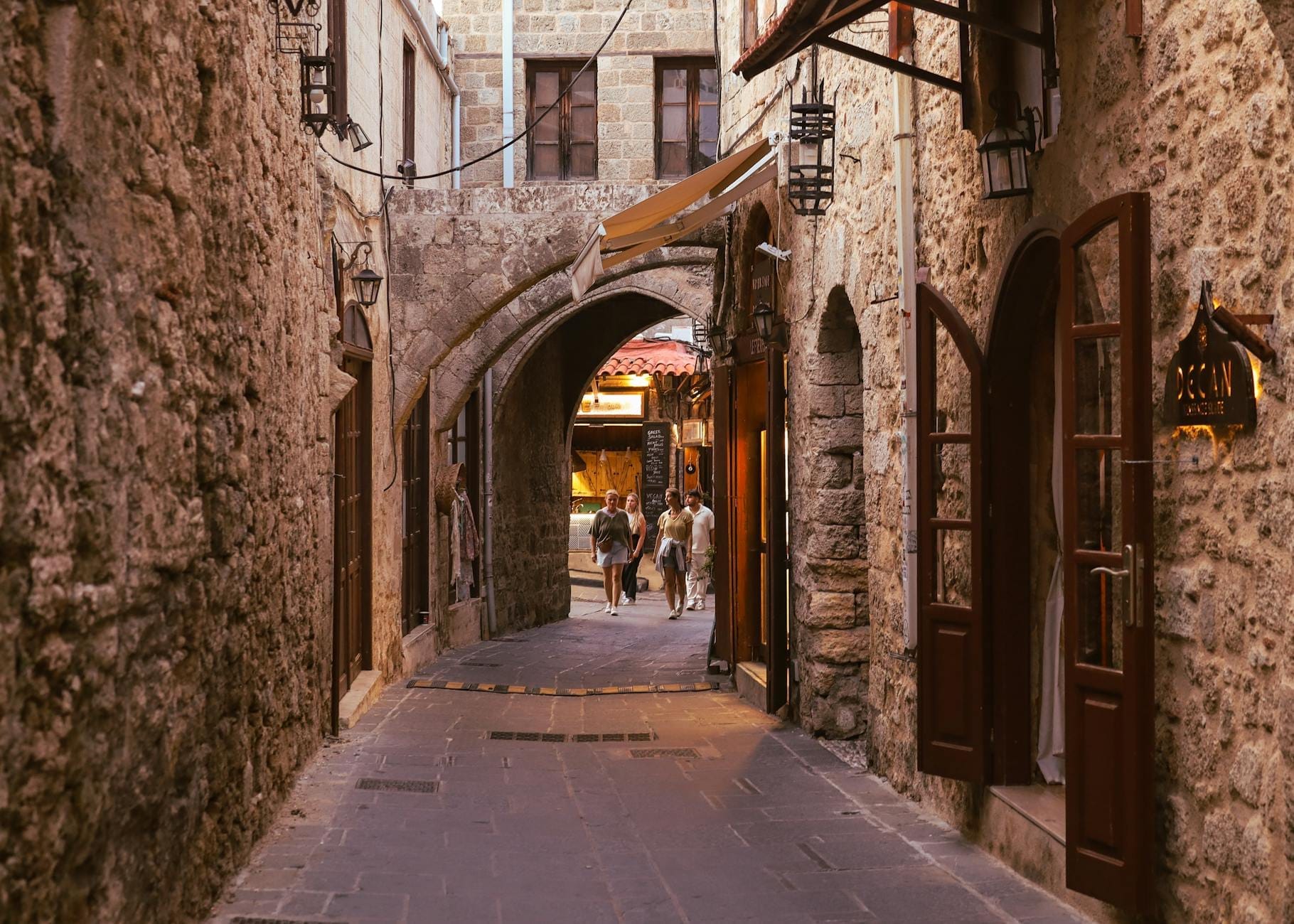
The Lower Town (Bourg) covers the larger southern and southwestern portion. After 1522, the Ottomans converted most Christian churches to mosques, established hammams (Turkish baths), and built market streets that still follow the same routes today. The Suleymaniye Mosque (Mosque of Suleiman), the covered market area around Socratous Street, and the Hammam Turkish Baths all survive from this period. The neighbourhood feels more layered and less polished than the Upper Town, which is either a drawback or a feature depending on what you're after.
- Upper Town highlights Palace of the Grand Masters, Street of the Knights, Archaeological Museum of Rhodes (housed in the old Knights' hospital), Harbour Gates
- Lower Town highlights Socratous Street (main commercial artery), Suleymaniye Mosque, Hammam Turkish Baths (still operational), Temple of Aphrodite ruins, Roloi Clock Tower with panoramic views
- The walls themselves A walking circuit of the ramparts (when accessible) gives the best overview of the city's defensive scale — check current access status on arrival as sections close periodically for restoration
Key Attractions: What to Prioritise and What to Skip
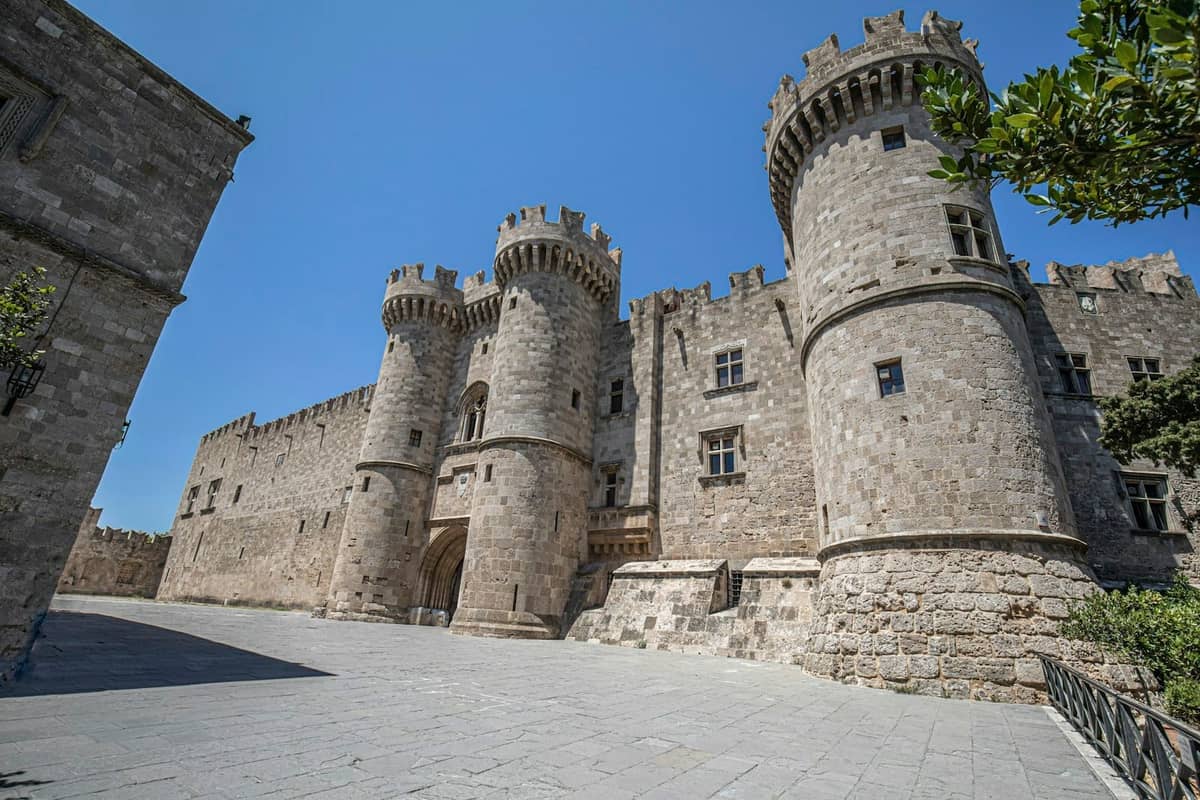
The Palace of the Grand Masters is the most visited site and, broadly, worth it. Admission is €12 for adults (verify current rates at odysseus.culture.gr before visiting). Hours in peak season (May-October) are approximately 8:30am to 8:00pm daily, with shorter winter hours. The ground floor Roman and medieval mosaic collection is genuinely impressive; the upper floors are a somewhat sparse recreation of palatial rooms. Budget 1 to 1.5 hours.
The Archaeological Museum of Rhodes occupies the 15th-century Knights' Hospital on Museum Square and houses finds from across the island, including the Aphrodite of Rhodes marble statue. It is systematically overlooked by visitors rushing to the Palace, which means shorter queues and a more relaxed atmosphere. Admission is separate from the Palace.
Socratous Street is the main commercial drag of the Lower Town and heavily touristic. The souvenir shops are mediocre and the prices are inflated. It is, however, the right route to reach the Suleymaniye Mosque and the Roloi Clock Tower, both of which are worth pausing for. The Clock Tower charges a small admission for the climb but the view over the Old Town roofscape is the clearest you will get at ground level.
⚠️ What to skip
Socratous Street after 10am in July and August is genuinely unpleasant due to tour group congestion. If you want to explore the Lower Town commercial streets, go before 9am or after 6pm when the day-trippers have cleared out.
The Hammam Turkish Baths on Arionos Square are the most underused attraction in the Old Town. These 16th-century baths still function as a public hammam and cost a few euros for entry. Most visitors walk past without realising they are open. For a one-hour break from sightseeing, this is the most distinctive thing you can do that 90% of tourists miss.
Getting In: Gates, Entrances, and Orientation
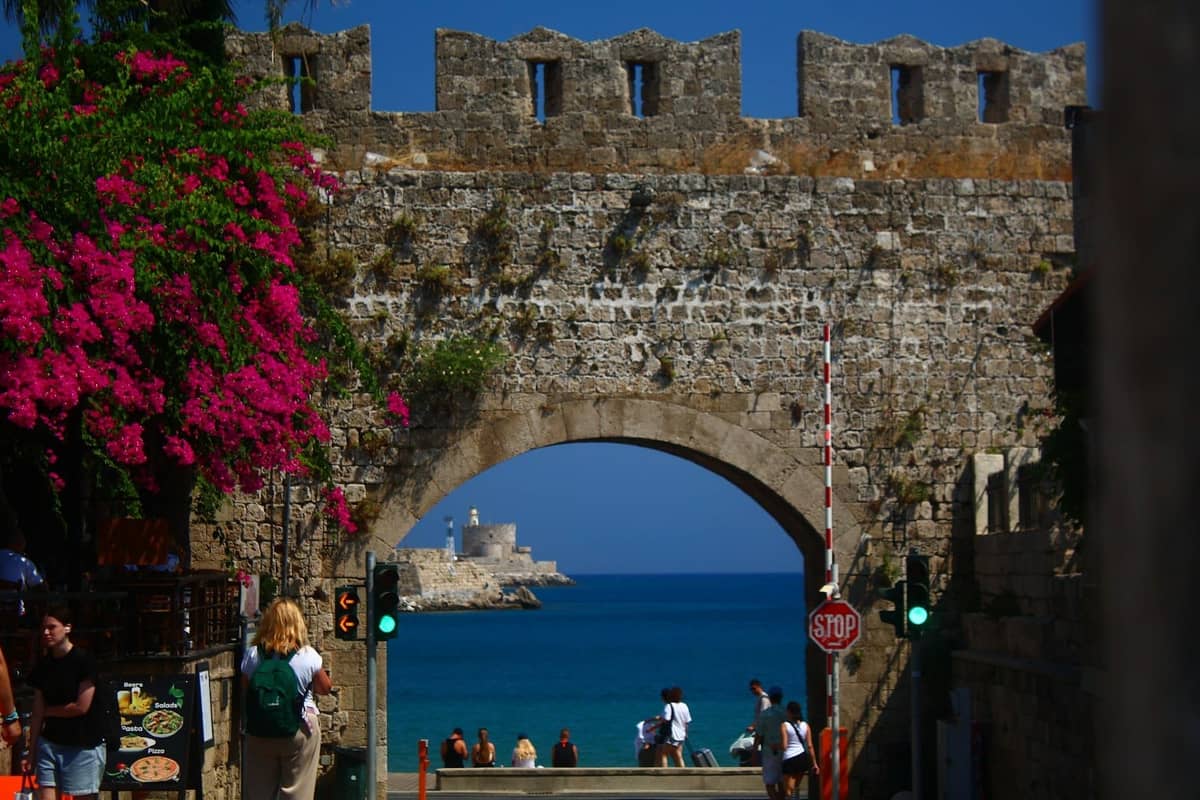
The Old Town has 11 gates, though several are pedestrian-only and a few are used mainly by residents and service vehicles. The three most useful for visitors arriving from the New Town or the harbour area are the Gate of the Naval Station (d'Amboise Gate) in the northwest, St. Paul's Gate near the commercial harbour, and the Freedom Gate (Pili Eleftherias) which opens directly onto Simi Square and the Upper Town. Most walking tour routes and airport shuttle drop-offs use the Freedom Gate or St. Paul's Gate as starting points.
Vehicles are restricted inside the walls. If you are staying at a hotel inside the Old Town, your accommodation can advise on temporary access for luggage. For everyone else, park or drop off outside the walls and walk in. The Old Town is compact enough that everything is reachable on foot within 15-20 minutes of any gate. For broader island logistics, the getting around Rhodes guide covers bus routes, taxis, and car hire in detail.
💡 Local tip
The cobblestoned streets inside the Old Town are uneven and slippery when wet or worn smooth by foot traffic. Comfortable closed-toe shoes are a practical requirement, not a suggestion. Sandals with grip are acceptable; flip-flops are not.
When to Visit: Crowds, Temperatures, and Seasonal Realities
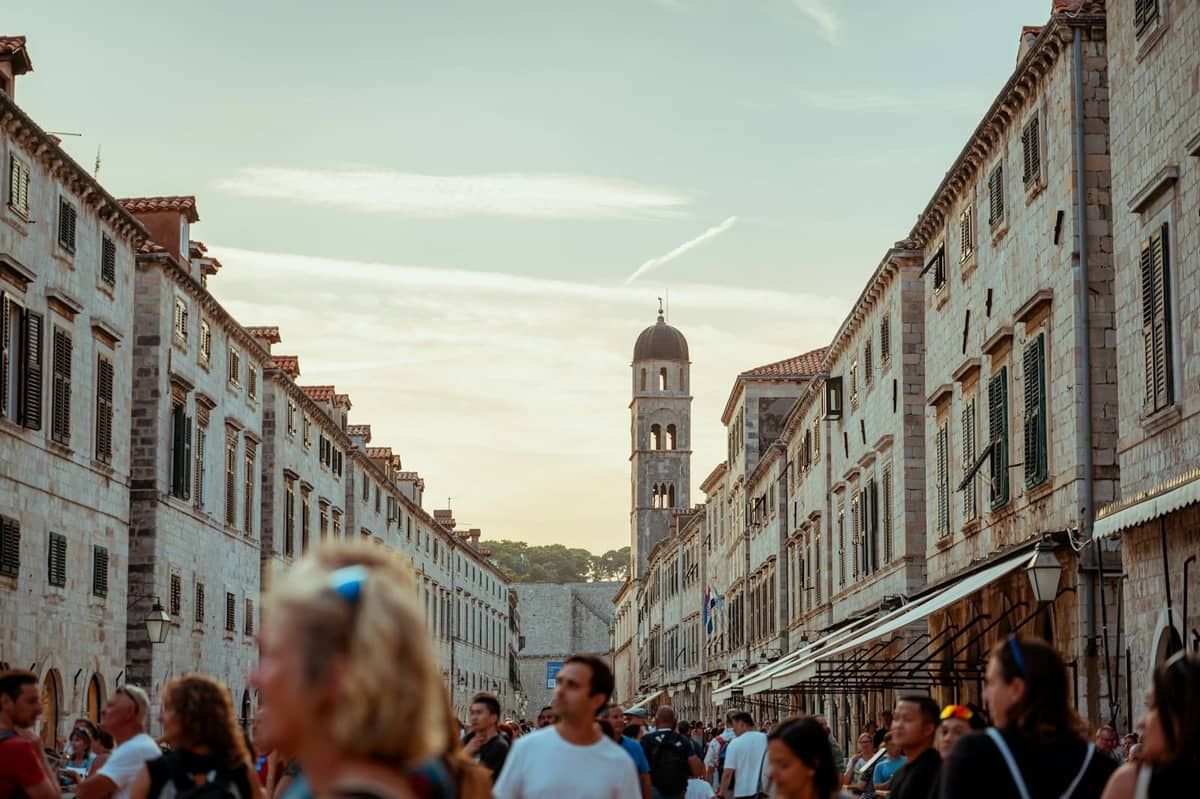
June through August is peak season across Rhodes, and the Old Town absorbs enormous visitor numbers during this period. Temperatures regularly reach 33-35°C, and the narrow streets trap heat. Cruise ship arrivals compound the congestion: on heavy cruise days, Socratous Street and the Palace queue can feel genuinely overwhelming. If your dates are fixed in summer, the best mitigation strategy is to start before 8:30am and retreat to a shaded cafe between 12pm and 4pm. For a broader picture of what summer actually looks like across the island, see the Rhodes in summer guide.
April, May, and October are the sweet spot: temperatures in the 20-26°C range, all major sites open, and crowd levels low enough to actually enjoy the Palace of the Grand Masters without queuing. October in particular is excellent for walking the walls and exploring without the summer intensity. November through March is quieter but some sites run reduced hours or close for restoration, and rain is a realistic possibility.
- April-May: Best overall balance of weather and crowds. Most sites open. Ideal for walking tours.
- June-August: Maximum heat and visitor numbers. Extended site hours. Book accommodation well in advance.
- September-October: Crowds thin progressively. Sea still warm. October is arguably the best single month.
- November-March: Very quiet, some site closures or reduced hours, occasional rain. Good for slow-travel visitors who want the city to themselves.
Practical Information: Eating, Sleeping, and Staying Smart
Staying inside the Old Town walls is an experience in itself: medieval architecture, ambient quiet after 10pm when day visitors leave, and immediate access to every site. It is also more expensive and logistically awkward (no vehicle access, cobblestone surfaces). For a full breakdown of accommodation options across the island, the where to stay in Rhodes guide covers Old Town hotels alongside New Town and coastal resort options.
Food quality varies sharply inside the Old Town. The restaurants directly on Socratous Street and around the Palace are predominantly tourist traps: expensive, mediocre, and with aggressive front-of-house staff. The better eating is in the quieter residential streets of the Lower Town, particularly around Dorieos Square and the streets east of Arionos Square, where smaller tavernas serve locals alongside tourists. For specific restaurant recommendations and what to order, the where to eat in Rhodes guide and the what to eat in Rhodes guide are the right resources.
Entry to most of the Old Town's streets, squares, and public spaces is completely free. The paid sites are the Palace of the Grand Masters, the Archaeological Museum, and the Clock Tower. If budget is a priority, you can spend a full day in the Old Town and pay very little: the Street of the Knights, the exterior of all mosques and gates, the harbour views, and the residential lanes cost nothing.
✨ Pro tip
The Old Town walking tour route is well-documented in the dedicated guide. If you prefer structure over wandering, a 2-3 hour guided group tour from Mandraki Harbour typically covers the major Upper Town sites for around €15-25 per person, and the commentary on the Knights' period is genuinely informative.
For visitors combining the Old Town with wider island exploration, the most logical day trips are to Lindos (50 km south, reachable by KTEL bus in about 1.5 hours for around €6 one way) or to the Valley of the Butterflies in summer. The day trips from Rhodes guide covers all the main options with logistics.
FAQ
Is there an entrance fee for Rhodes Old Town?
Walking the streets of Rhodes Old Town is free. The main paid attractions inside the walls are the Palace of the Grand Masters (around €10-12 for adults), the Archaeological Museum of Rhodes (separate admission), and the Roloi Clock Tower (small fee for the climb). The Hammam Turkish Baths charge a modest entry fee. Check current prices at odysseus.culture.gr before visiting as fees change seasonally.
How long do you need to see Rhodes Medieval Old Town?
A focused half-day (4-5 hours) covers the main Upper Town sites: Street of the Knights, Palace of the Grand Masters, and the Archaeological Museum. A full day allows you to add the Lower Town, the Hammam, the Clock Tower, and lunch without rushing. Two days is the ideal if you want to explore residential streets, visit all the monuments, and browse at a relaxed pace.
Can you drive inside Rhodes Old Town?
Private vehicles are restricted inside the walls. Some limited access is permitted for residents and deliveries at specific hours, but visitors should plan to park outside and enter on foot. Most car parks are located just outside the city walls near the New Town. If you are staying at a hotel inside the Old Town, contact them directly for luggage drop-off procedures.
What is the best gate to enter Rhodes Old Town?
For most visitors, the Freedom Gate (Pili Eleftherias) off Simi Square is the most convenient entry point from the New Town side and opens directly into the Upper Town near the Archaeological Museum. St. Paul's Gate is convenient if arriving from the commercial harbour. The d'Amboise Gate (Gate of the Naval Station) on the northwest side is less crowded and a good option if you want to start near the Palace of the Grand Masters.
Is Rhodes Old Town safe for tourists?
Rhodes Old Town is considered very safe by European standards. Petty theft is possible in crowded areas during peak summer, so standard precautions apply: keep bags closed in market streets, be aware in heavy cruise-day crowds. The streets are well-lit at night and the evening atmosphere is pleasant, with residents and restaurant-goers mixing comfortably. Walking alone after dark is not a concern in the main areas.