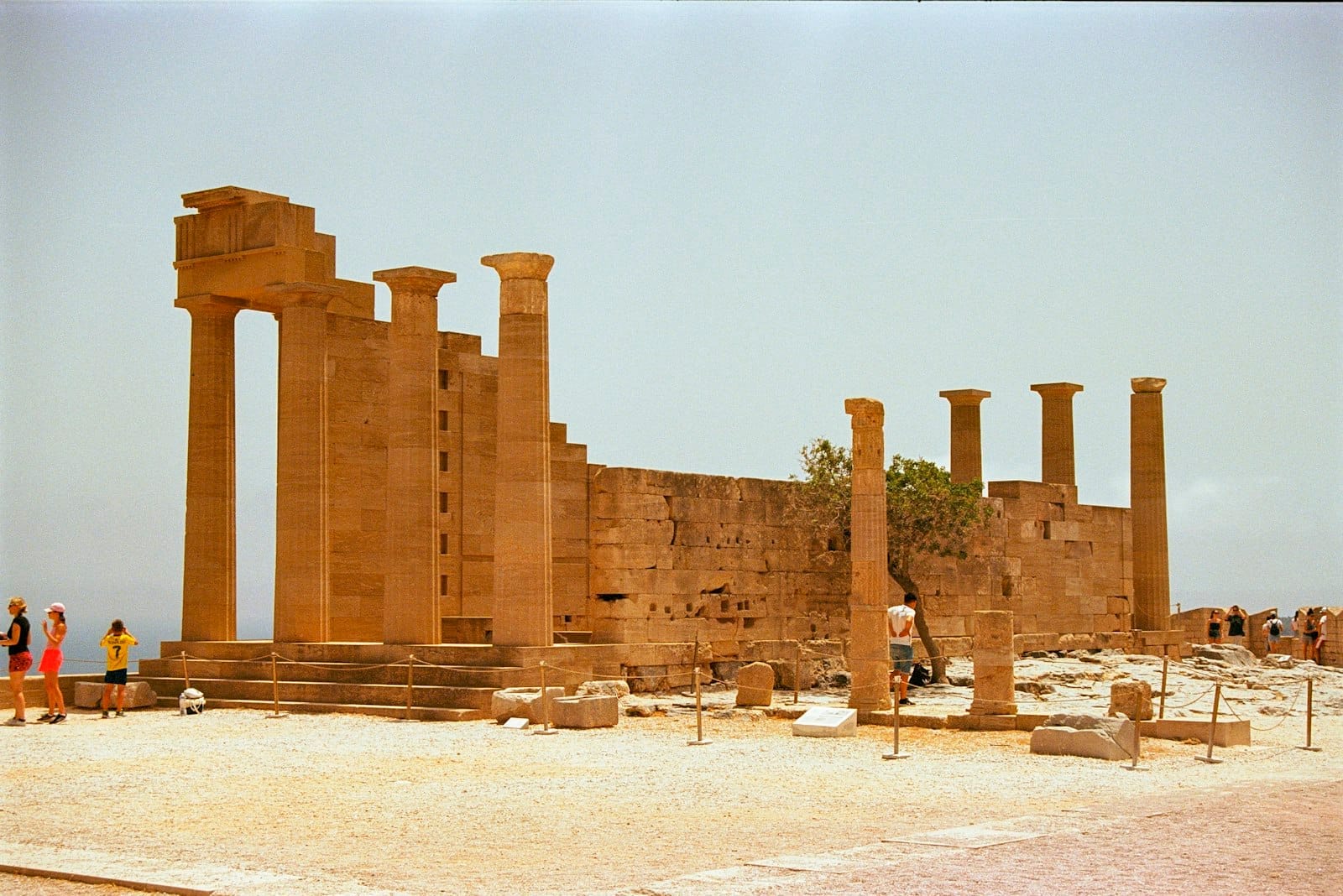
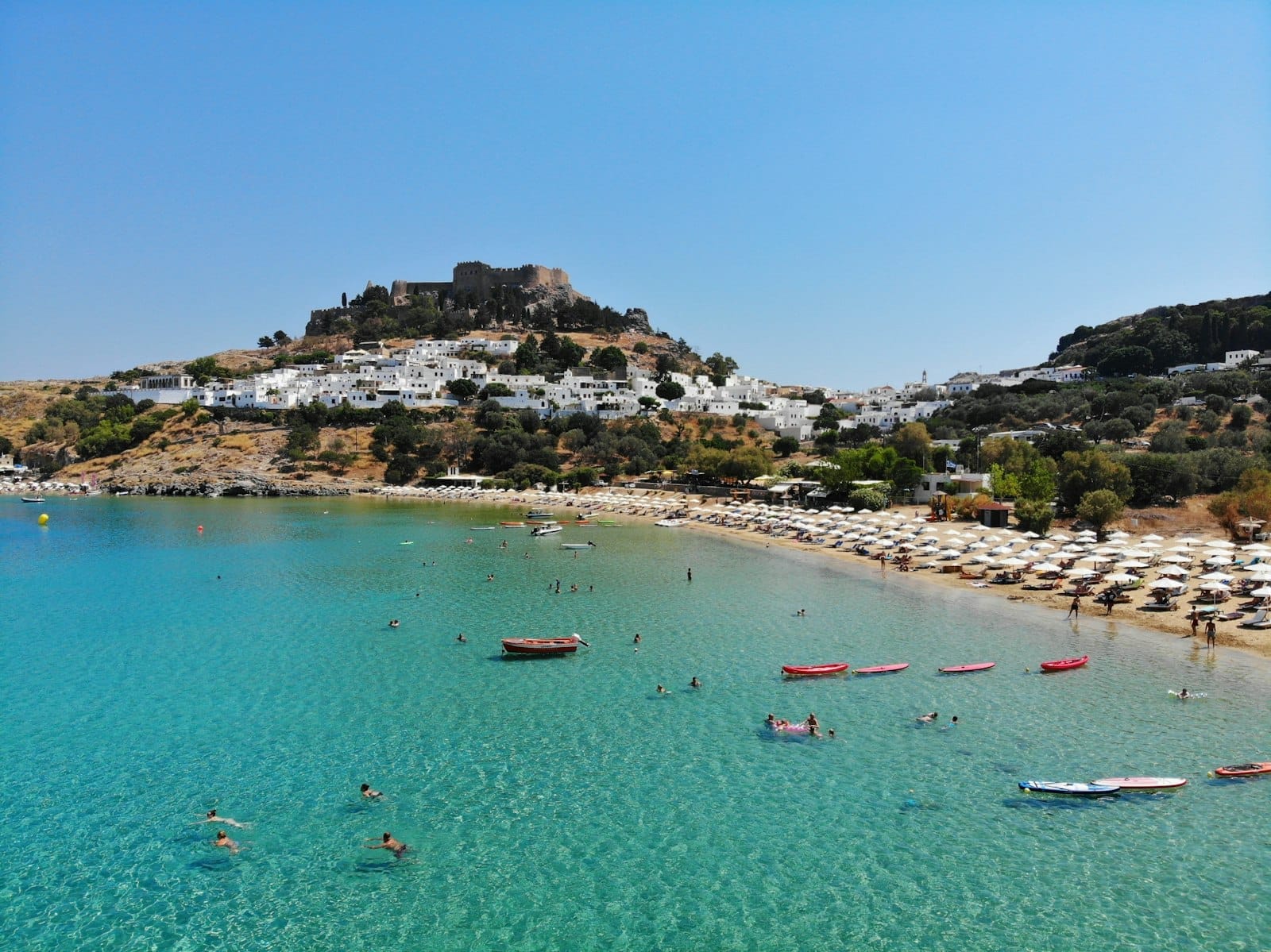
Lindos sits on the east coast of Rhodes, about 40 km south of the main city, rising from a sandy bay to a limestone cliff crowned by one of the finest ancient acropolises in Greece. The village itself is fully pedestrianized, its whitewashed houses and narrow cobbled lanes preserved by strict building controls, giving it a character found almost nowhere else in the Aegean.
Lindos is the kind of place that photographs don't quite prepare you for: a whitewashed medieval village climbing a rocky headland above two crescent beaches, with a ancient acropolis at the top and donkeys still serving as the primary uphill transport. It is, without question, the most visited destination on Rhodes outside the capital, and for good reason.
Orientation
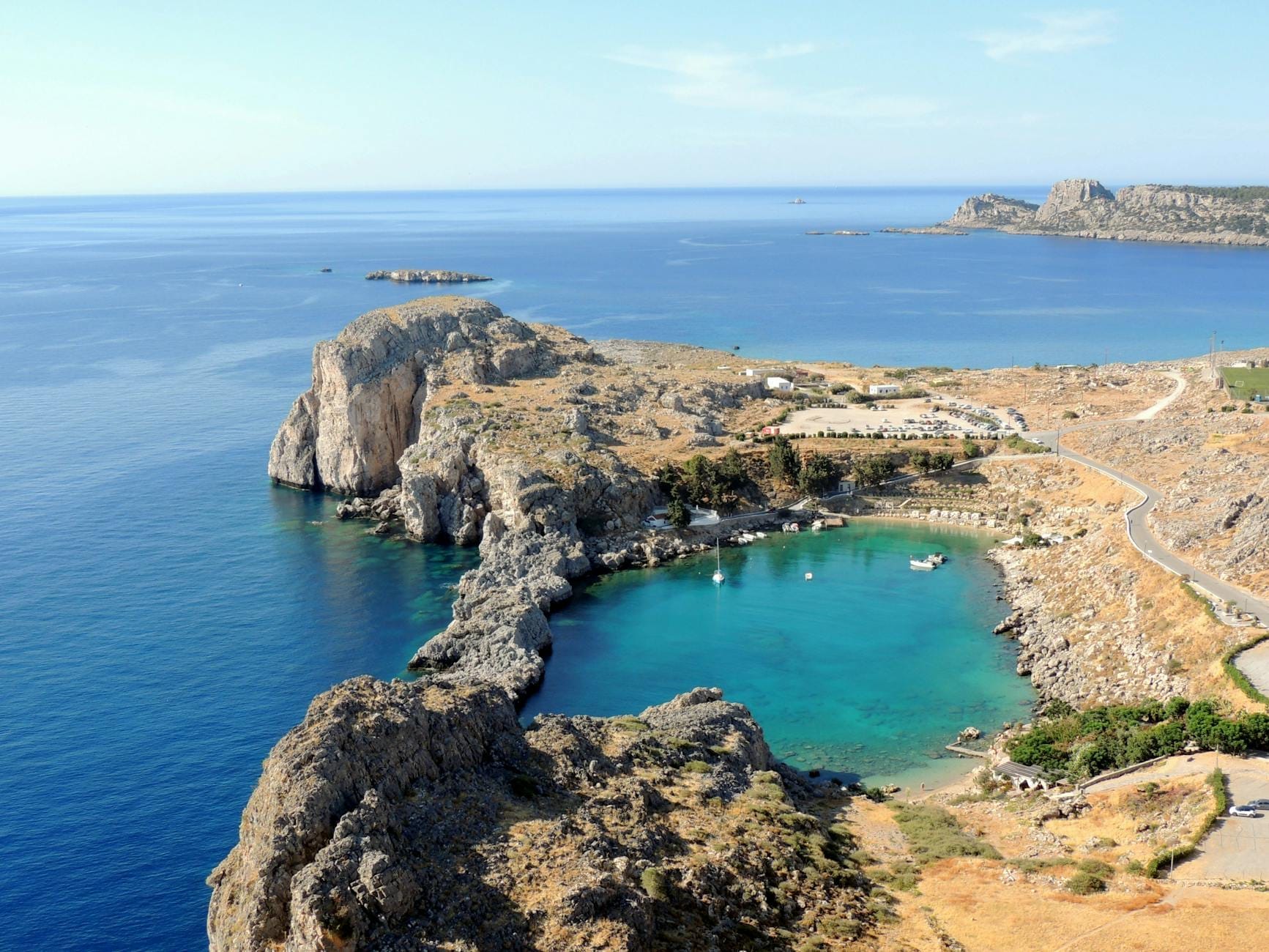
Lindos occupies a dramatic position on Rhodes' eastern coastline, roughly 40 km south of Rhodes city and about 65 km from the airport. The village sits on a narrow peninsula of sorts, with the main Lindos Beach curving to the north and St Paul's Bay tucked behind the southern headland. The acropolis rises almost vertically above the village centre on a 116-metre limestone cliff, visible from the main road long before you arrive.
The municipal unit of Lindos covers 178.9 km² and includes surrounding farmland and coastline, but the actual village is compact and entirely walkable. No cars are permitted inside the village boundaries, so the first thing you need to understand is parking: visitors arriving by car leave their vehicles in designated zones beyond the supermarket at the village entrance and continue on foot. The walk from the car parks to the village centre takes around 10 minutes on a well-worn path. From there, lanes radiate outward toward the beach, the acropolis entrance, and the outer residential fringes. There are no street signs in the conventional sense, which means navigating by landmark rather than address. A free map from the local tourist kiosk near the entrance is genuinely useful. You can also reach Lindos directly from Rhodes Old Town by public bus, with the journey taking approximately one hour.
Lindos is sometimes loosely grouped with Pefkos, a quieter resort village about 5 km further south along the coast road. If you are staying in the area rather than visiting for the day, Pefkos and Lardos offer a calmer base with easy road access to Lindos itself.
Character & Atmosphere
The first thing that strikes most visitors is the silence. After parking outside and walking into the village, the absence of engine noise is almost jarring. The only sounds are footsteps on cobblestones, the occasional clop of a donkey passing, and the chime of a church bell echoing off whitewashed walls. Lindos has been inhabited since at least the 10th century BC, and the medieval street pattern that emerged from Dorian and later Byzantine settlement has remained largely intact because strict heritage preservation laws ban new construction and exterior modifications.
By 9:00 in the morning, local shop owners are rolling up shutters and stacking shelves, and the light at that hour is extraordinary: low-angle sun catching the white plaster facades and casting sharp geometric shadows across the narrow lanes. This is the best time to walk toward the acropolis entrance. The line for the ascent is short, the heat is manageable, and the village below is still relatively calm. By 10:30, the first coach parties from Rhodes city begin arriving, and the main lane from the parking area to the acropolis can become uncomfortably crowded by midday. Most organized day tours load back onto their buses around noon, which creates a brief quietening in the early afternoon before independent visitors cycle back through.
After around 16:00, Lindos shifts into a different mode. The day-trippers have largely gone. Taverna owners arrange chairs under bougainvillea-draped terraces, the light turns amber across the bay, and the village takes on a more genuinely local feel. Residents who live in the whitewashed captains' houses (built by wealthy sea merchants between the 16th and 18th centuries, and recognizable by their distinctive pebble mosaic courtyards, known locally as chochlakia) emerge for the evening. The narrow lanes connecting the main square to the beach become social spaces rather than tourist thoroughfares.
⚠️ What to skip
Lindos is extremely crowded from late June through August, particularly between 10:00 and 14:00 when multiple coach tours overlap at the acropolis. If visiting in peak season, arrive before 09:00 or plan your acropolis visit for late afternoon. The heat on the exposed path up to the summit is also intense at midday.
The village is not all postcard perfection. The main commercial lane running from the entrance toward the acropolis is dense with jewellery shops, ceramic stalls, and linen boutiques catering almost entirely to tourists. Prices here are noticeably higher than in Rhodes city. Some visitors find the commercialization at odds with the architectural setting. Go one or two lanes off the main drag, though, and you are in a different world: cats sleeping on doorsteps, jasmine growing over stone walls, and the quiet of a village going about its day.
What to See & Do
The Acropolis of Lindos is the reason most people make the journey, and it earns its reputation. The site has been continuously used since the Bronze Age, but what you see today dates primarily from the 4th century BC, with significant additions during the Hellenistic period around 200 BC. The Hellenistic stoa stretches approximately 87 metres across the upper terrace, framing the approach to the Temple of Athena Lindia. Below the stoa, carved into the living rock, is a relief of a Rhodian trireme dating to around 180 BC, one of the most unusual sculptural monuments surviving from antiquity. The views from the summit across the Aegean, the two bays below, and the white geometry of the village are exceptional.
The ascent to the acropolis takes about 15 to 20 minutes on foot via a stone staircase. For those who prefer not to walk, donkeys are available for hire at the base of the path. The animals are part of the village landscape and have been for centuries, though animal welfare standards vary and the steep, rocky path in high heat is not a comfortable journey for either party. Walking is recommended for those who are physically able.
Within the village itself, the Church of the Panagia (Our Lady) is worth seeking out. Built in the 14th century and extended in the 17th, its interior contains frescoes covering almost every surface, with a particularly fine painted ceiling. The cobblestone courtyard outside, patterned in the traditional chochlakia style, is one of the finest examples in the village. Also look for the captains' houses that line some of the quieter lanes: these private residences are generally not open to visitors, but their doorways and courtyard glimpses tell you a great deal about the mercantile wealth that passed through Lindos between the 16th and 18th centuries. For more context on the island's layered history, the Knights of Rhodes history guide covers the broader medieval period that shaped settlements like Lindos.
Acropolis of Lindos: allow 1.5 to 2 hours for the ascent, site exploration, and descent
Church of the Panagia: free entry, modest dress required (shoulders and knees covered)
Lindos Beach: the main sandy bay directly below the village, with sun lounger hire and watersports
St Paul's Bay: a smaller, sheltered cove to the south of the headland, reached by a short walk or boat
Chochlakia courtyards: pebble mosaic floors visible through open doorways in older residential lanes
Sunset from the acropolis terrace or the high lanes above the village: one of the better evening experiences on the island
Lindos is also one of the best places on Rhodes to understand the island's ancient maritime significance. The Rhodian trireme relief on the acropolis rock is a physical reminder that this was a major Aegean trading power for centuries. For those interested in going deeper, the Saint Paul's Bay below the southern headland is traditionally associated with the apostle's landing on the island, and the small whitewashed chapel there is an atmospheric spot, particularly in the early morning before the day-trippers arrive.
Eating & Drinking
Lindos has a full range of eating options, but the price-to-quality ratio is skewed by its tourist volume. Restaurants and cafes on the main lane and those with acropolis views charge a premium that is not always matched by the food. That said, there are genuinely good tavernas in the village, particularly in the quieter streets toward the back and in the residential areas beyond the main commercial drag.
The local food scene leans heavily on the Greek taverna format: grilled fish and seafood, mezedes (small shared dishes), salads, and grilled meats. Octopus dried on a line in the sun is a common sight outside tavernas near the beach, and when it is good here, it is very good: slow-cooked, tender, and served with a drizzle of olive oil and lemon. Fresh fish is priced by the kilogram, as is standard in Greece, so always ask before ordering. Budget meals of around 12 to 18 euros per person are possible if you order mezedes rather than full mains, while a sit-down dinner with fish and wine at a terrace restaurant can easily reach 40 to 60 euros per person.
For context on what to eat across the island more broadly, the what to eat in Rhodes guide covers local specialties worth seeking out, many of which appear on Lindos menus: pitaroudia (chickpea fritters), melekouni (honey and sesame seed candy), and fresh-caught swordfish and sea bream.
Coffee culture in Lindos is a mix of Greek-style frappe and espresso bars catering to international visitors. Several cafes near the central square open early enough to serve breakfast before the main tourist rush, and these morning hours on a shaded terrace with a view over rooftops are among the more pleasant ways to start a day in the village. Bars become livelier after 21:00, particularly in summer, with a handful of small venues playing music into the early hours. Lindos is not a nightlife destination in the way that Faliraki is, but it has enough late-evening energy to keep it interesting.
💡 Local tip
Walk two or three lanes away from the main tourist route toward the residential parts of the village to find tavernas where the clientele is more mixed and the prices are lower. Ask locals or accommodation staff for current recommendations, as the restaurant landscape in Lindos changes from season to season.
Getting There & Around
The most straightforward way to reach Lindos from Rhodes city is by public bus. The KTEL bus service runs multiple times daily from the East Bus Station (also called the Eastern Bus Terminal) in Rhodes city, with the journey taking approximately one hour. Buses run from early morning through to early evening in peak season, though the timetable changes seasonally and should be verified locally or on the KTEL Rhodes website. The fare is inexpensive, typically a few euros each way. For more on navigating public transport across the island, the getting around Rhodes guide covers all options in detail.
Taxis operate from Rhodes city and can be arranged for a day trip, though the cost is considerably higher than the bus. Renting a car gives you the flexibility to stop at beaches and viewpoints along the east coast road, and is worth considering for a multi-day exploration of the south of the island. See the Rhodes car hire guide for current rates and rental tips. Note that you will not be driving into Lindos itself: the village is fully pedestrianized, and parking outside during peak season fills quickly. Arrive before 09:00 to secure a spot without a lengthy wait.
Once inside Lindos, navigation is entirely on foot. The village is small enough that you cannot get seriously lost, though the absence of street names means you will likely take a few wrong turns in the residential backstreets. The main landmarks to orient yourself by are the acropolis (always visible above you), the central square with the Church of the Panagia, and the beach path that leads north from the village entrance. Distances are short: the walk from the village entrance to the beach is about 5 minutes, and from the entrance to the base of the acropolis path is about 10 minutes.
Boat trips also connect Lindos beach to points along the east coast during summer, including excursions to nearby coves and longer trips toward the southern tip of the island. Departure times and availability vary by operator and are typically arranged directly at the beach.
ℹ️ Good to know
Lindos is approximately 65 km from Rhodes International Airport by road. A direct taxi from the airport takes around 50 to 60 minutes depending on traffic. There is no direct airport bus to Lindos: you would need to connect via the East Bus Station in Rhodes city.
Where to Stay
Staying in Lindos itself is a qualitatively different experience from visiting as a day-tripper. In the evening, after the coaches have gone, the village belongs to those who are sleeping there: the light, the quiet, the scent of jasmine in the lanes. Accommodation within the village boundaries is almost exclusively in converted traditional houses and small boutique properties. Purpose-built hotels do not exist inside Lindos, because planning restrictions prevent them. What you get instead are white-walled rooms built around chochlakia courtyards, rooftop terraces with acropolis views, and a level of architectural character that standard hotels cannot replicate.
The trade-off is that these properties tend to be expensive relative to what they offer in terms of facilities. Air conditioning, small bathrooms, and limited storage space are common. Wi-Fi quality varies. Transferring luggage into the village requires carrying it yourself from the parking area, which is a consideration if you are travelling with large bags. For couples, honeymooners, and independent travellers who prioritize atmosphere over amenity, staying in the village itself is strongly recommended. Families with young children and travellers with heavy luggage may find the logistics frustrating.
For those who want proximity without the price, Pefkos (5 km south) and the road between Lindos and Pefkos offer a range of mid-range and resort-style hotels with easy bus or taxi access to the village. The where to stay in Rhodes guide provides a fuller comparison of accommodation zones across the island, including advice for different travel styles and budgets.
Practical Tips & Honest Assessment
Lindos is genuinely worth visiting. The acropolis is one of the finest ancient sites in Greece, the village architecture is rare in its completeness and preservation, and the combination of history, beach, and landscape in one compact location is hard to match anywhere on the island. But it is also heavily touristed, and the experience you have depends enormously on when you arrive and how you approach it.
Visiting as part of an organized day tour from Rhodes city is the most common approach and the least rewarding: you arrive mid-morning with several hundred other people, queue for the acropolis, eat lunch at a tourist-facing taverna, browse the shops, and leave. A much better approach is to go independently, arrive early, spend the morning at the acropolis before it gets crowded, swim at Lindos Beach in the early afternoon, and then stay for the evening when the village empties out. For those building a wider itinerary around the island, the 7-day Rhodes itinerary integrates Lindos effectively with the rest of the east coast.
The terrain throughout the village is uneven cobblestone. Sandals and flip-flops are fine on the flat, but the path up to the acropolis requires footwear with some grip. Mobility aids and wheelchairs cannot easily navigate either the village lanes or the acropolis ascent. The site does have a donkey alternative for the hill, but the paths themselves remain challenging. Sun protection is essential at the acropolis: the summit is fully exposed with almost no shade.
Wear proper footwear for the acropolis path, not sandals or slides
Carry water: the climb is exposed and there are no vendors on the upper section of the path
Dress modestly for the Church of the Panagia (shoulders and knees covered)
The acropolis entrance fee applies: check current rates at the site entrance
Tipping 5 to 10 percent is appreciated in tavernas where no service charge is added
Ask at your accommodation for a village map: the absence of street names makes the printed map genuinely useful
TL;DR
Lindos is the most architecturally preserved village on Rhodes, with a Hellenistic acropolis, medieval lanes, and two good beaches in a single compact location.
Best for: independent travellers, couples, history enthusiasts, and anyone willing to arrive early to avoid the peak-hour crowds.
Not ideal for: families with very young children or heavy luggage (no vehicle access inside), travellers with mobility limitations, or anyone expecting resort-style facilities within the village.
Timing matters: arrive before 09:30 or after 15:00 to experience Lindos at its best. The window between 10:30 and 14:00 in peak season is crowded and hot.
The acropolis alone justifies the journey, but the full experience requires staying long enough to see the village in the late afternoon and evening, after the day-trippers leave.
Anthony Quinn Bay is one of the most photographed coves on the Greek island of Rhodes, but most visitors know only half the story. Here is the full history of how a Hollywood film, a failed land deal, and emerald-clear water turned a small pebble cove into one of Greece's most recognisable spots.
Rhodes has over 220 km of coastline stretching from rocky northern coves to sweeping southern sandbanks. This guide covers the best beaches in Rhodes, from the iconic bay below the Acropolis of Lindos to the wild windsurfing isthmus at Prasonisi.
Rhodes rewards visitors year-round, but timing your trip correctly means the difference between a peaceful escape and a sweaty queue. This guide breaks down every season honestly, with temperature ranges, crowd levels, pricing patterns, and clear recommendations for different travel styles.
One of the Seven Wonders of the Ancient World, the Colossus of Rhodes was a 33-metre bronze statue that stood near Mandraki Harbour around 280 BCE. Nothing physical survives, but the story, the site, and the surrounding attractions make this one of Rhodes' most fascinating stops. Here is everything you need to know.
Rhodes is an excellent base for exploring the wider Dodecanese and the island's own interior. From the spectacularly beautiful island of Symi to the ancient Acropolis of Lindos and the lush Valley of the Butterflies, these are the day trips that reward the effort of leaving your sunbed.
Rhodes is a large island covering over 1,400 km², and getting around it requires some planning. This guide covers every transport option available, from public buses and taxis to car hire and scooters, with real fares, route logistics, and honest advice on what actually works.
Rhodes is one of Greece's most complete travel destinations, combining a UNESCO-listed medieval city, diverse beaches, and layers of ancient history. But peak-season crowds and tourist-trap pricing are real concerns. Here's everything you need to know before booking.
For over two centuries, the Knights of Rhodes — formally the Order of the Knights of St. John — transformed a Greek island into the most formidable Christian stronghold in the eastern Mediterranean. This guide covers their origins, military achievements, the fall of the city, and exactly what survives today for you to explore.
Rhodes delivers genuine luxury across the full spectrum: UNESCO-listed medieval hotels, clifftop adults-only resorts, Michelin-quality dining, and private boat charters to deserted coves. This guide covers where to stay, eat, and spend your money wisely on the Greek island that consistently punches above its weight.
Everything you need to know about arriving at Rhodes International Airport 'Diagoras' (RHO). From bus routes and taxi fares to pre-booked private transfers, this guide covers all your options for reaching Rhodes Town and the rest of the island quickly and without stress.
Rhodes sits at the perfect crossroads of the Aegean for exploring by sea. This guide covers the best boat trips available, from full-day Symi cruises and Lindos sea excursions to catamaran sailings and snorkelling stops at stunning coastal bays.
Renting a car in Rhodes unlocks the island's best beaches, hilltop villages, and ancient ruins that buses simply can't reach. This guide covers licensing requirements, realistic pricing, parking rules, seasonal booking strategy, and what to watch out for on local roads.
Rhodes rewards those on a budget with an extraordinary range of free experiences. From wandering ancient and medieval streets to swimming in turquoise bays, here are 20 genuinely free ways to get the most from the island.
Rhodes rewards those who look past the headline sites. From a frescoed Byzantine monastery in the pine-covered interior to a crowd-free medieval castle with sea views, these are the places that show you a different side of the island.
Rhodes rewards couples with an exceptional mix of dramatic scenery, ancient history, and unhurried beaches. Whether you are planning a honeymoon, anniversary, or simply a getaway together, this guide covers the most romantic experiences the island offers.
October is one of the smartest months to visit Rhodes, Greece. The summer heat breaks, the crowds thin out dramatically, and the sea stays warm enough for swimming well into the month. This guide covers weather, prices, what's open, and how to make the most of the island in autumn.
Rhodes in summer is spectacular and intense in equal measure. This guide covers everything from scorching July temperatures and peak-season crowds to the quieter southern beaches and the best strategies for enjoying Greece's largest Dodecanese island without the misery.
Three days in Rhodes is enough to cover the medieval Old Town, the Acropolis of Lindos, ancient Kamiros, and a handful of excellent beaches — if you plan it right. This itinerary sequences the island's highlights by geography, not just popularity, so you spend less time driving and more time exploring.
A week in Rhodes is enough to cover its UNESCO medieval core, the clifftop drama of Lindos, a ferry to Symi, and some of the Aegean's best beaches without ever feeling rushed. This day-by-day itinerary is built around realistic travel times, crowd patterns, and practical logistics so you can spend less time planning and more time actually enjoying the island.
Rhodes Medieval Old Town is one of Europe's most intact medieval cities, a UNESCO World Heritage Site enclosed by 4 km of walls and layered with 700 years of history. This guide covers everything from the Palace of the Grand Masters to the Ottoman quarter, with practical entry info, crowd patterns, and honest recommendations.
Rhodes after dark covers a wider range than most visitors expect. Whether you want high-energy clubs on Orfanidou Street, open-air beach parties near Kallithea, or a quiet glass of wine inside the medieval walls, this guide covers every scene with practical details on venues, timing, and what to avoid.
Rhodes Old Town is one of Europe's most intact medieval cities and a UNESCO World Heritage site. This self-guided walking tour covers the essential route, every major landmark, honest crowd warnings, and practical details so you can explore at your own pace without wasting a step.
Rhodes is one of Greece's most rewarding destinations, and it doesn't have to drain your wallet. This guide breaks down realistic daily budgets, the best free and low-cost attractions, smart transport choices, and the seasonal timing that cuts costs by nearly half.
Rhodes is one of the most photogenic islands in the Mediterranean, stacking medieval architecture, turquoise bays, and ancient ruins into a remarkably compact space. This guide covers the 20 best photography locations on the island, from iconic landmarks to lesser-known viewpoints.
Choosing between Greek islands is harder than it looks. This guide breaks down how Rhodes compares to Santorini, Crete, Kos, and Mykonos across beaches, history, cost, and crowd levels — so you can book with confidence.
Rhodes is one of Greece's top destinations for windsurfing and kitesurfing, driven by reliable Meltemi winds and a string of well-organized schools on the northwest coast. This guide covers every spot, lesson price, seasonal window, and insider tip you need to plan your trip.
Rhodes punches well above its weight for family travel. Whether your kids are after slides and splash pools, wildlife encounters, or exploring real medieval castles, the island delivers. This guide covers the best family-friendly activities across beaches, nature, history, and pure entertainment.
Rhodes is one of Greece's most layered destinations, where a UNESCO-listed medieval city sits minutes from clear Aegean water. This guide covers the best things to do in Rhodes across history, beaches, food, and day trips, with honest takes on what's worth your time and what isn't.
Rhodes has a distinct culinary identity rooted in chickpeas, wild greens, handmade pasta, and cumin-heavy stews. This guide covers the essential local dishes, seasonal specialities, what to drink, and where to find the food worth seeking out.
Rhodes has one of the strongest food cultures in Greece, built on fresh Aegean seafood, sun-ripened local produce, and centuries of Mediterranean culinary tradition. This guide covers where to eat across the island, from the medieval alleyways of the Old Town to the clifftop village of Lindos, with honest assessments, realistic prices, and practical booking advice.
Choosing where to stay in Rhodes shapes your entire trip. This guide breaks down every major area honestly, from UNESCO-listed Old Town to family-friendly Pefkos, with specific hotel recommendations and seasonal tips to help you book with confidence.