Rhodes Old Town Self-Guided Walking Tour: The Complete Expert Guide
Rhodes Old Town is one of Europe's most intact medieval cities and a UNESCO World Heritage site. This self-guided walking tour covers the essential route, every major landmark, honest crowd warnings, and practical details so you can explore at your own pace without wasting a step.
Plan and book this trip
Tools from our partner Travelpayouts help you compare flights and hotels. If you book through them, we may earn a commission at no extra cost to you.
Flights
Hotels map
TL;DR
- The core route covers roughly 5 km through the medieval walled city, taking about 1 hour walking without stops (allow 3-4 hours with sightseeing).
- Start at D'Ambroise Gate or Liberty Gate and end at Mandraki Harbour for a logical, downhill-friendly flow.
- Top stops include the Street of the Knights, the Palace of the Grand Master, and the Archaeological Museum.
- Visit in May, June, September, or October to avoid extreme heat and cruise-ship crowds that peak July-August.
- Self-guided audio tours are available from around €7-60 in multiple languages; the streets themselves are free to walk anytime.
Why Rhodes Old Town Rewards a Self-Guided Approach
Rhodes Old Town is one of Europe's best-preserved medieval towns, enclosed by 4 km of fortified walls built by the Knights of St. John between the 14th and 16th centuries. It earned UNESCO World Heritage status in 1988, and unlike many heritage sites that feel like stage sets, this one has people living and working inside it. That combination of authentic street life and extraordinary architecture is exactly why walking it yourself, at your own pace, beats joining a group tour. For deeper context on the Knights' history, our Knights of Rhodes history guide fills in the political and military backstory that makes the buildings make sense.
Organized tours tend to cluster at the same three or four spots during the same two-hour window, which means you end up photographing other tourists instead of medieval stonework. A self-guided route lets you arrive at the Palace of the Grand Master before 9am when it opens, beat the cruise-ship groups to the Street of the Knights, and linger in the quieter Turkish and Jewish quarters that most guided tours skip entirely.
ℹ️ Good to know
Rhodes Old Town sits within the municipality of Rhodes, part of Greece's South Aegean region. The city operates on Eastern European Time (UTC+2, UTC+3 in summer). The euro is the currency; most sites accept card payments, but carry some cash for smaller cafes and market stalls.
The Route: Gates, Quarters, and Key Landmarks
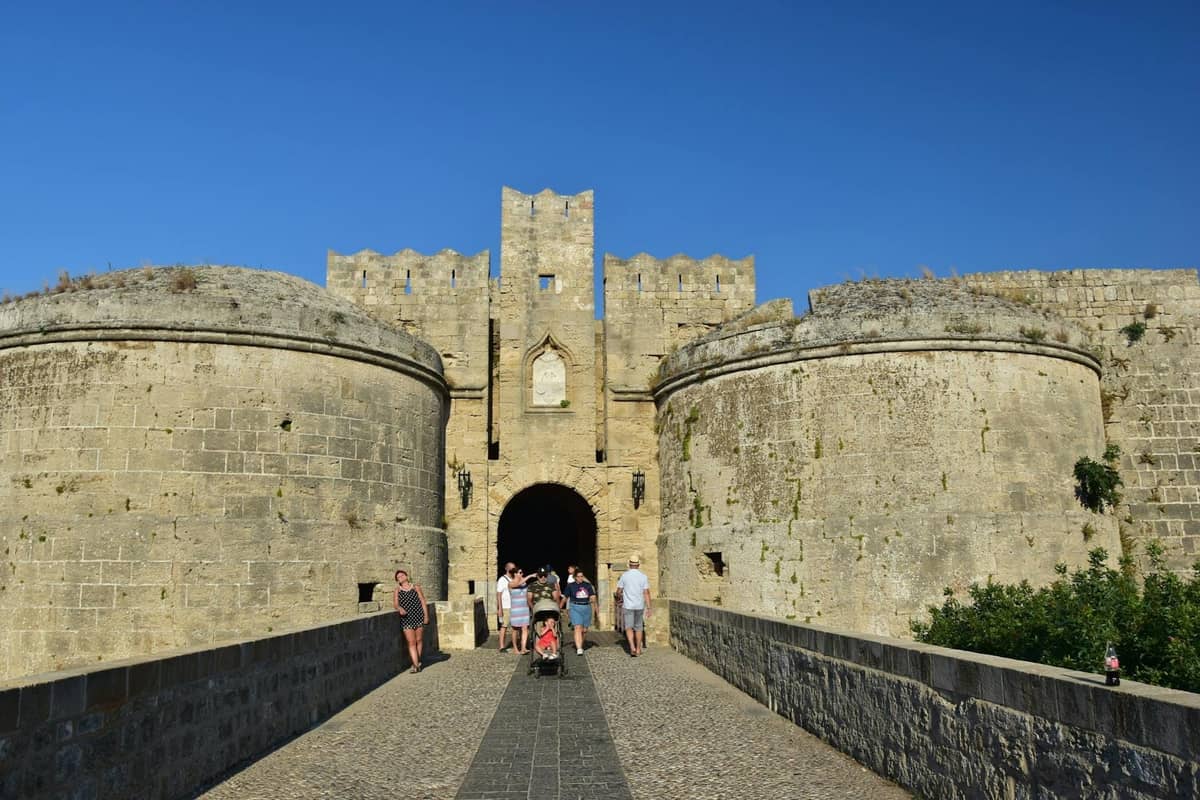
The most practical starting point is D'Ambroise Gate on the northwest wall. It is one of the Old Town's nine gates and gives you an immediate sense of the fortifications' scale before you even step inside. Alternatively, Liberty Gate (Pyli Eleftherias), which opens directly onto the moat gardens, is a good entry point if you are arriving from the New Town on foot. Both options funnel naturally toward the Collachium, the upper Knights' Quarter where the major institutional buildings are concentrated.
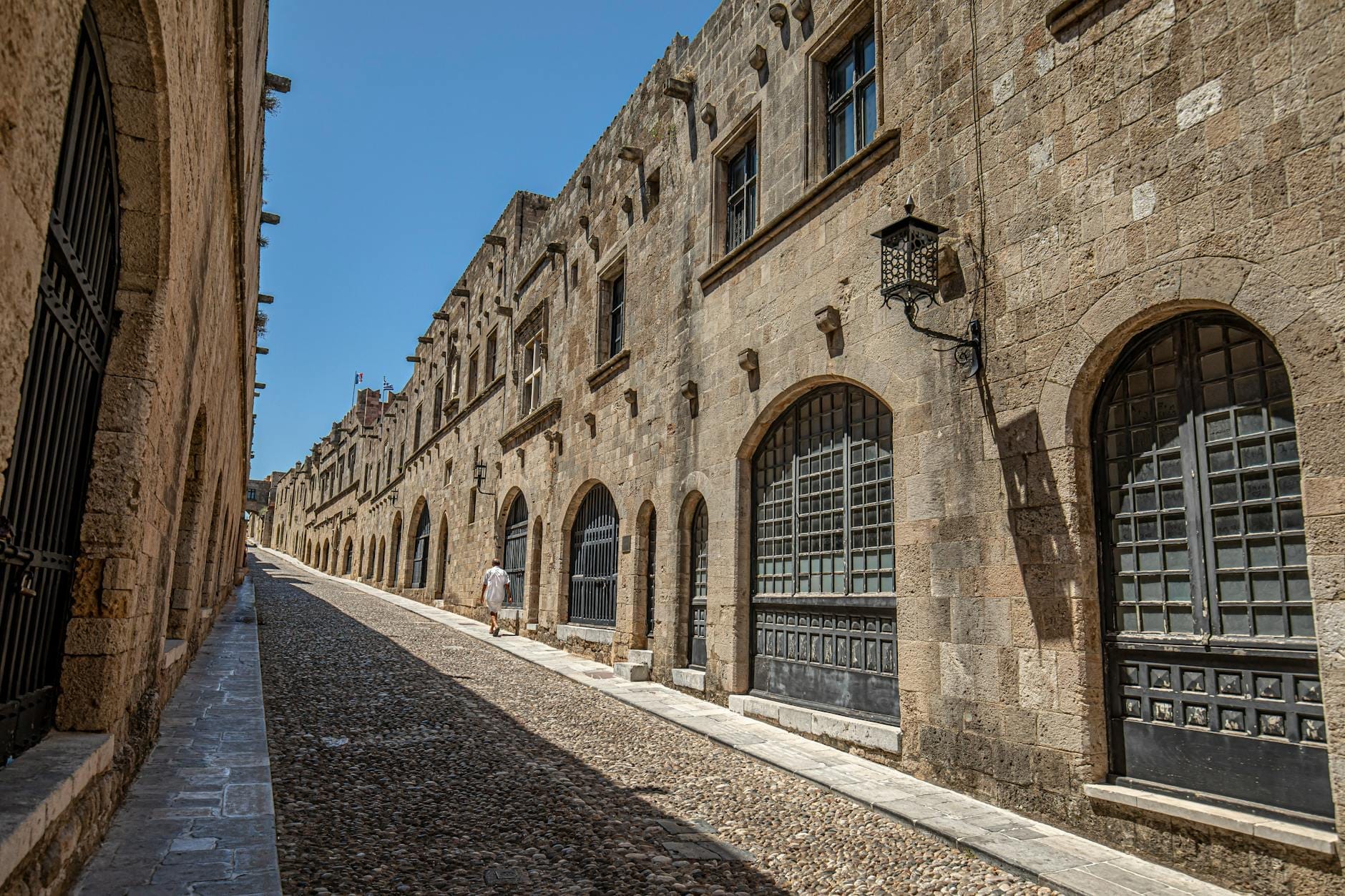
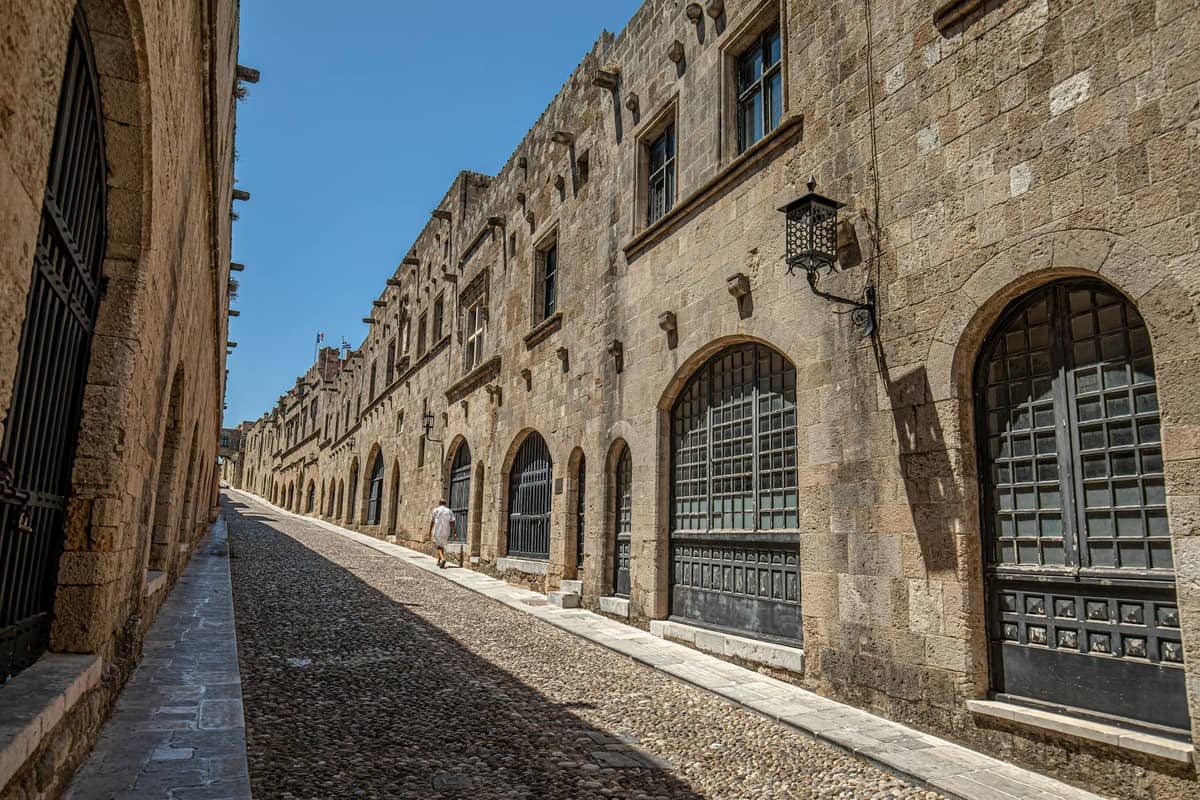
From D'Ambroise Gate, follow the walls briefly south before cutting into the Collachium. The Street of the Knights (Odos Ippoton) is a straight cobbled alley lined with the Inns of the different national tongues of the Order. It is one of the best-preserved Gothic streets in Europe, and the fact that it runs slightly downhill makes it easy to photograph along its full length from the top. The inns are not open as museums, but their facades alone justify the detour. Walk it early, ideally before 9am, because by 10am tour groups fill the lane.
At the top of the Street of the Knights sits the Palace of the Grand Master. The current building is largely an Italian reconstruction from the 1930s rather than a pristine medieval original, which is worth knowing before you visit. The interior houses mosaic floors relocated from the island of Kos and a permanent exhibition on the medieval city. Entry costs around €12 for adults. Budget 45-60 minutes inside if you want to do it properly. Directly below the Palace on Plateia Argyrokastrou is the Archaeological Museum of Rhodes, housed in the former Knights' Hospital. Its collection of Hellenistic sculpture and ancient funerary stelae is genuinely impressive and often uncrowded even when the Palace is busy.
- D'Ambroise Gate Best starting point; most impressive gate facade; connects directly to the Knights' Quarter.
- Street of the Knights (Odos Ippoton) 200m Gothic alley with national Inns of the Order; free to walk; go before 9am to avoid crowds.
- Palace of the Grand Master Partly Italian reconstruction but worth the entry fee; arrive at opening time (typically 8am in summer).
- Archaeological Museum of Rhodes Former Knights' Hospital; strong Hellenistic collection; often quieter than the Palace next door.
- Roloi Clock Tower Climb for panoramic views over the rooftops; small entry fee includes a drink at the top.
- Suleiman Mosque and Turkish Quarter Marks the transition into the Ottoman-era Bazaar district; surrounding streets have the best independent shops.
- Jewish Quarter and Plateia ton Evraion Martyron The Square of the Jewish Martyrs in the southeastern corner is quieter and often overlooked by tour groups.
- Harbour Gates (Marine Gate and St. John's Gate) The route exits naturally toward Mandraki Harbour past these sea-facing fortifications.
⚠️ What to skip
The cobblestones in Rhodes Old Town are authentic medieval paving, which means they are uneven, slippery when wet, and genuinely hard on knees over a 5 km walk. Wear proper walking shoes, not sandals or flip-flops. If you have mobility concerns, the route has no major elevation changes but the cobbles add significant difficulty.
The Turkish and Jewish Quarters: The Underrated Half of the Walk
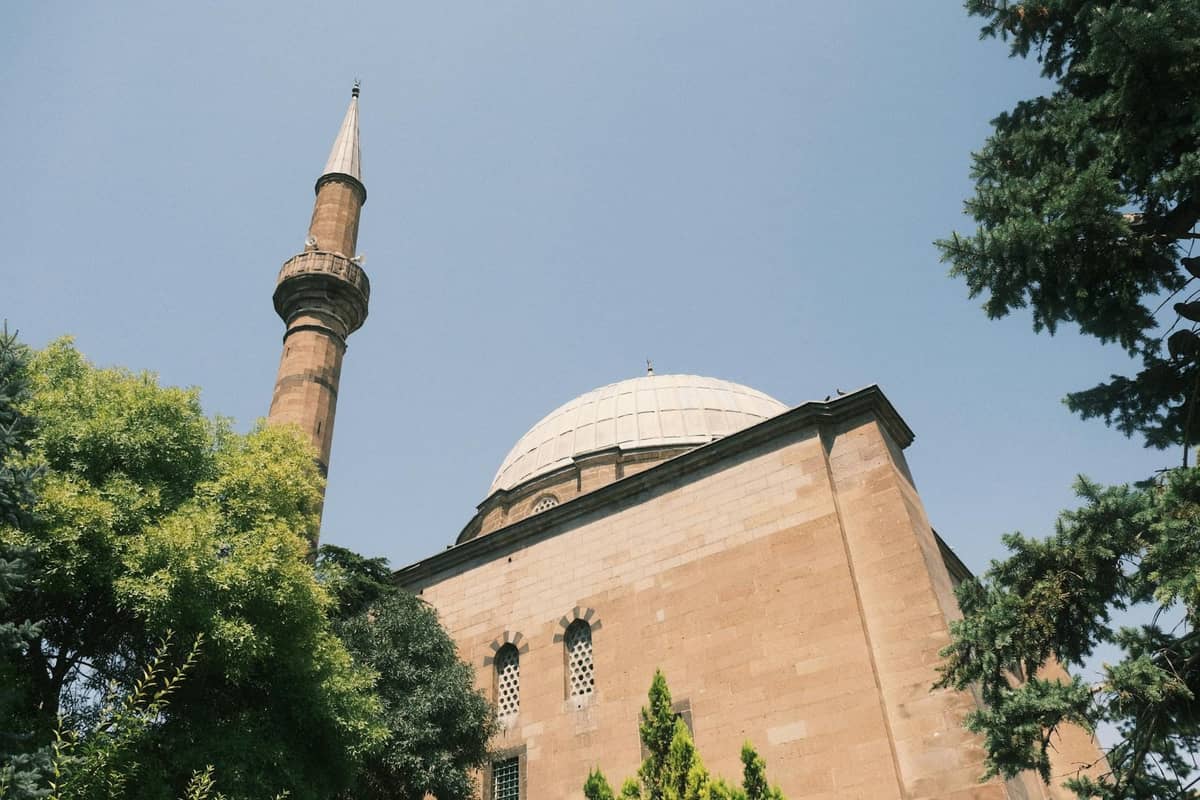
Most visitors spend their time in the Collachium and then leave, which means the southern two-thirds of the Old Town see a fraction of the foot traffic. The Ottoman-era Bazaar district, anchored by the pink-domed Suleiman Mosque on Sokratous Street, gives the town a different architectural texture entirely. Sokratous Street itself is the main commercial artery through this area and gets crowded with souvenir shops, but the lanes running off it to the south are genuinely worth exploring.
The Hammam Turkish Baths on Plateia Arionos still operate and offer a rare chance to use an Ottoman bathhouse in working condition. Sessions are gender-separated on different days, so check the schedule before including it in your itinerary. Further southeast, the Jewish Quarter around Plateia ton Evraion Martyron (Square of the Jewish Martyrs) is architecturally distinct, with the Kahal Shalom Synagogue dating to 1577 standing as one of the oldest functioning synagogues in Europe. The square is atmospheric and quiet in the early morning.
✨ Pro tip
The Old Town moat, which runs around the outside of the walls, was never filled with water. It now functions as a green walkway and is one of the most pleasant ways to approach or leave the fortifications. Walking the moat circuit takes about 30-40 minutes and gives you the best exterior views of the walls without any entrance fee.
Ending at Mandraki Harbour: What You Are Actually Looking At
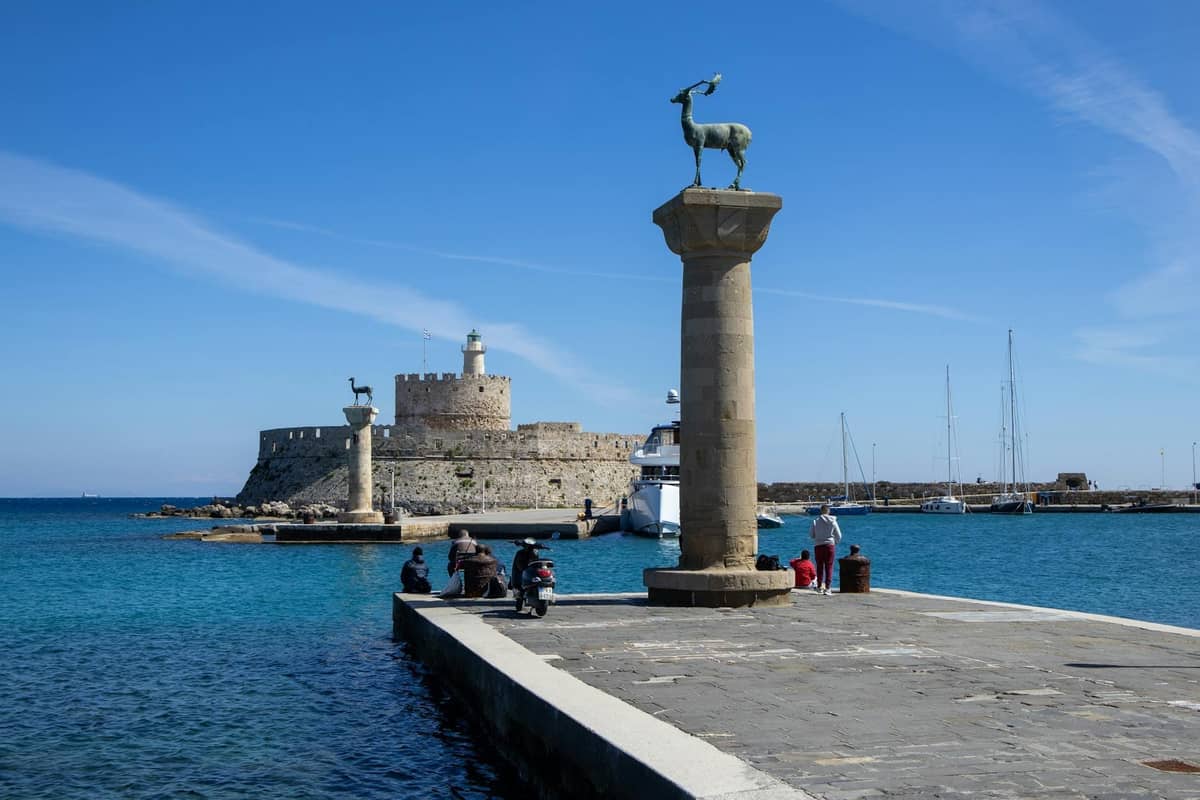
The natural end point of the walk is Mandraki Harbour, where two bronze deer statues (a stag and a doe) stand on columns marking the harbour entrance. These are commonly photographed as the spot where the Colossus of Rhodes once stood, and tour guides sometimes encourage this interpretation. The honest answer is that nobody knows exactly where the Colossus stood. The statues are modern additions, not ancient markers. The Colossus itself, one of the Seven Wonders of the Ancient World, collapsed in an earthquake around 226 BC after standing for only 54 years.
What is genuinely worth seeing at Mandraki is the Fort of St. Nicholas at the end of the breakwater and the three medieval windmills along the mole. The windmills were working grain mills, not decorative, and they date to the Knights' period. The full story of the Colossus separates confirmed history from myth more thoroughly than any harbour plaque will.
Practical Information: Timing, Costs, and Audio Guides
The streets of the Old Town are pedestrianized and accessible around the clock, which means the walk itself costs nothing. The practical costs come from individual attraction entry fees. The Palace of the Grand Master runs around €8 for adults, the Archaeological Museum is in a similar range, and a combination ticket covering multiple Knights' period sites is sometimes available at the ticket desks. The Roloi Clock Tower charges a small fee that includes a coffee or tea at the top, making it reasonable value given the views.
Self-guided audio tours are available from providers like the Grand Master Palace Rhodes website and platforms like Musement, ranging from around €7 for a basic digital download to €60 for more comprehensive licensed tours. These are worth considering if you want historical narration without committing to a group schedule. English, German, and Italian are the most commonly available languages.
- Start no later than 8am in July and August to reach the Street of the Knights before the first cruise-ship groups arrive around 10am.
- Spring (May-June) and autumn (September-October) offer temperatures of 20-26°C and significantly thinner crowds.
- Carry water: the walk is exposed in several sections and drinking fountains are rare inside the walls.
- Dress for modesty if entering any church or mosque: shoulders and knees should be covered.
- Photography is generally permitted in the streets and on the walls; some interior museum spaces restrict it.
- The Old Town has two main tourist information points near the main gates where free printed maps are available.
If this walk leaves you wanting more of the island, a 3-day Rhodes itinerary builds the Old Town walk into a broader schedule that includes Lindos and the interior villages. For those interested in the island's archaeological sites beyond the medieval city, the Acropolis of Rhodes sits on Monte Smith just west of the Old Town and takes about 20 minutes to reach on foot from D'Ambroise Gate.
What to Skip and What People Overrate
Sokratous Street is often marketed as the heart of the Old Town shopping experience. In practice, it is heavily geared toward mass-market souvenirs with prices that do not reflect any particular local authenticity. If shopping interests you, the lanes south of Sokratous toward the Jewish Quarter have more independent traders with ceramics, textiles, and jewellery at more honest prices.
The restaurants immediately adjacent to the Palace of the Grand Master and along the main tourist corridors charge a premium for location and generally deliver average food. Eating well in the Old Town is entirely possible, but it requires walking at least one or two streets back from the main sights. For a full breakdown of where the food is actually worth eating, our Rhodes restaurant guide covers the Old Town alongside the rest of the island. The deeper guide to Rhodes Medieval Old Town also covers the architectural history and district breakdown in significantly more detail than a walking route allows.
FAQ
How long does the Rhodes Old Town self-guided walking tour take?
The core route is approximately 5 km. Walking time alone is around 1 hour, but with stops at the major attractions including the Palace of the Grand Master, Archaeological Museum, Street of the Knights, and time in the Turkish and Jewish quarters, most people spend 3-4 hours. Add another hour if you plan to climb the Roloi Clock Tower or visit the Hammam.
Is the Rhodes Old Town walking tour free?
Walking the streets is completely free at any hour. Individual attractions charge entry fees: the Palace of the Grand Master and Archaeological Museum each cost around €8 for adults, and the Clock Tower charges a small fee. Self-guided audio tours from commercial providers range from €7 to €60 depending on depth and format.
What is the best time of day to walk Rhodes Old Town?
Early morning, between 7am and 9am, is consistently the best window. The light is good for photography, temperatures are manageable even in summer, and the cruise-ship day-trippers have not yet arrived. By 10-11am in July and August, the main routes through the Collachium can become very congested.
Where did the Colossus of Rhodes stand?
The honest answer is that the exact location is unknown. The most popular theory places it at or near Mandraki Harbour, but no archaeological evidence confirms this. The Colossus was one of the Seven Wonders of the Ancient World and stood for around 54 years before collapsing in an earthquake in approximately 226 BC. The bronze deer statues at the harbour entrance are modern additions, not ancient markers.
Can you walk on the walls of Rhodes Old Town?
Yes, a section of the medieval walls is accessible via a guided walk that runs from the Palace of the Grand Master. The wall walk covers about 2.5 km and is one of the better ways to understand the fortification system. It operates on specific days and times, on specific days (check locally), and charges a separate entry fee. Check locally for current schedules as these change seasonally.