The Knights of Rhodes: History of the Crusader City
For over two centuries, the Knights of Rhodes — formally the Order of the Knights of St. John — transformed a Greek island into the most formidable Christian stronghold in the eastern Mediterranean. This guide covers their origins, military achievements, the fall of the city, and exactly what survives today for you to explore.
Plan and book this trip
Tools from our partner Travelpayouts help you compare flights and hotels. If you book through them, we may earn a commission at no extra cost to you.
Flights
Hotels map
TL;DR
- The Knights Hospitaller ruled Rhodes from 1309 to 1522 — a 213-year reign that shaped the island's entire urban identity.
- Their greatest legacy is the Palace of the Grand Master and the medieval walled city, recognised as the oldest continuously inhabited medieval town in Europe and a UNESCO World Heritage Site.
- The Knights were not monks in any passive sense — they were elite warrior monks, answerable only to the Pope, running a naval powerhouse that policed the eastern Mediterranean.
- Sultan Suleiman the Magnificent finally ended their rule in 1522 after a six-month siege. The Knights left honourably and went on to defend Malta.
- Visiting the Rhodes Old Town today means walking streets that have changed remarkably little since the 14th century — still walled, still medieval, still extraordinary.
Who Were the Knights of St. John?
The Order of the Knights of St. John — known variously as the Knights Hospitaller, the Knights of Rhodes, and later the Knights of Malta — began not as a military force but as a charitable institution. Around 1023 AD, a hospital was founded in Jerusalem to care for Christian pilgrims. By the 11th century, the organisation had grown significantly under papal recognition, and by the time of the Crusades it had evolved into a full military order, with knights taking vows of poverty, chastity, and obedience while also training as some of the best-equipped soldiers in the medieval world.
This dual identity as caregivers and warriors is what set the Hospitallers apart from purely secular armies. They were answerable to the Pope alone, operated across multiple European nations, and financed their military campaigns through an extensive network of European estates called commanderies. By the 13th century, after the fall of the Crusader states in the Holy Land, they needed a new base of operations. Cyprus served briefly as a home, but it was Rhodes that would define their identity for the next two centuries.
ℹ️ Good to know
The Knights were formally known as the 'Order of the Hospital of Saint John of Jerusalem.' The 'Hospitaller' name reflects their founding mission in medical care — a mission they never entirely abandoned, even as they became one of the most feared naval forces in the Mediterranean.
Taking Rhodes: 1306–1309
The acquisition of Rhodes was not a simple transaction. The Order arrived in 1306 and faced fierce resistance from the island's defenders. The Knights formally took control in 1309 after three years of sustained military effort, with the first Grand Master Foulques de Villaret establishing their rule. From the outset, this was a place they intended to hold permanently.
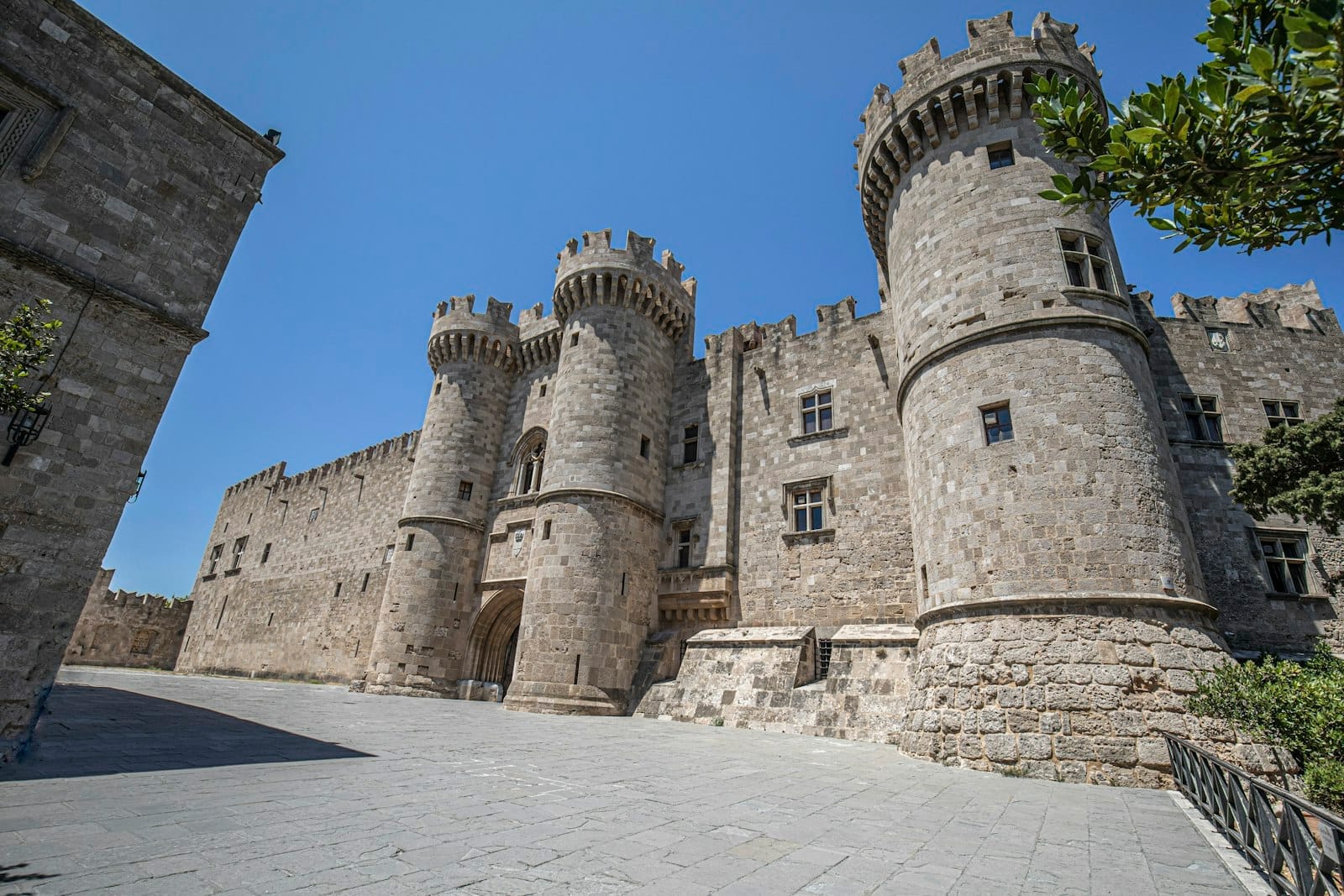
The island's strategic position made it irresistible. Sitting at the crossroads of Aegean and eastern Mediterranean trade routes, Rhodes offered a natural harbour, fertile land, and proximity to the Anatolian coast. The Knights immediately began fortifying the city, constructing walls, towers, and the administrative structures that still define the Rhodes medieval Old Town today. The Grandmaster's Palace was established around this period, later rebuilt and expanded over the following century.
Building the Crusader City: Architecture and Organisation
The city the Knights built was a deliberate statement of power and permanence. The Old Town was divided into two main zones: the Collachium, reserved for the Knights themselves, and the Burgus, where the civilian population lived and traded. This separation was rigidly enforced. Within the Collachium stood the Palace of the Grand Master, the auberges (inns of each national tongue), hospitals, and churches. The Burgus held markets, Orthodox churches, synagogues, and the homes of Greek, Jewish, and later Turkish residents.
The Order was organised into eight 'Tongues' or national divisions: Provence, Auvergne, France, Italy, Aragon, England, Germany, and Castile-Portugal. Each Tongue was responsible for a section of the defensive walls and maintained its own auberge in the city. The Street of the Knights — still one of the best-preserved medieval streets in the world — was lined with these auberges, and walking it today gives a surprisingly accurate impression of how it looked in the 15th century.
- Palace of the Grand Master The seat of power for the Order's leader, rebuilt extensively after an 1856 gunpowder explosion and later restored under Italian administration. The mosaics inside date from ancient Kos and Delos.
- Street of the Knights (Ippoton) A cobbled Gothic street running from the Palace to the old harbour area, flanked by the auberges of each national Tongue. Remarkably intact and largely car-free.
- The Great Hospital Now the Archaeological Museum of Rhodes, this 15th-century building shows the Order's continued commitment to medical care alongside military ambition.
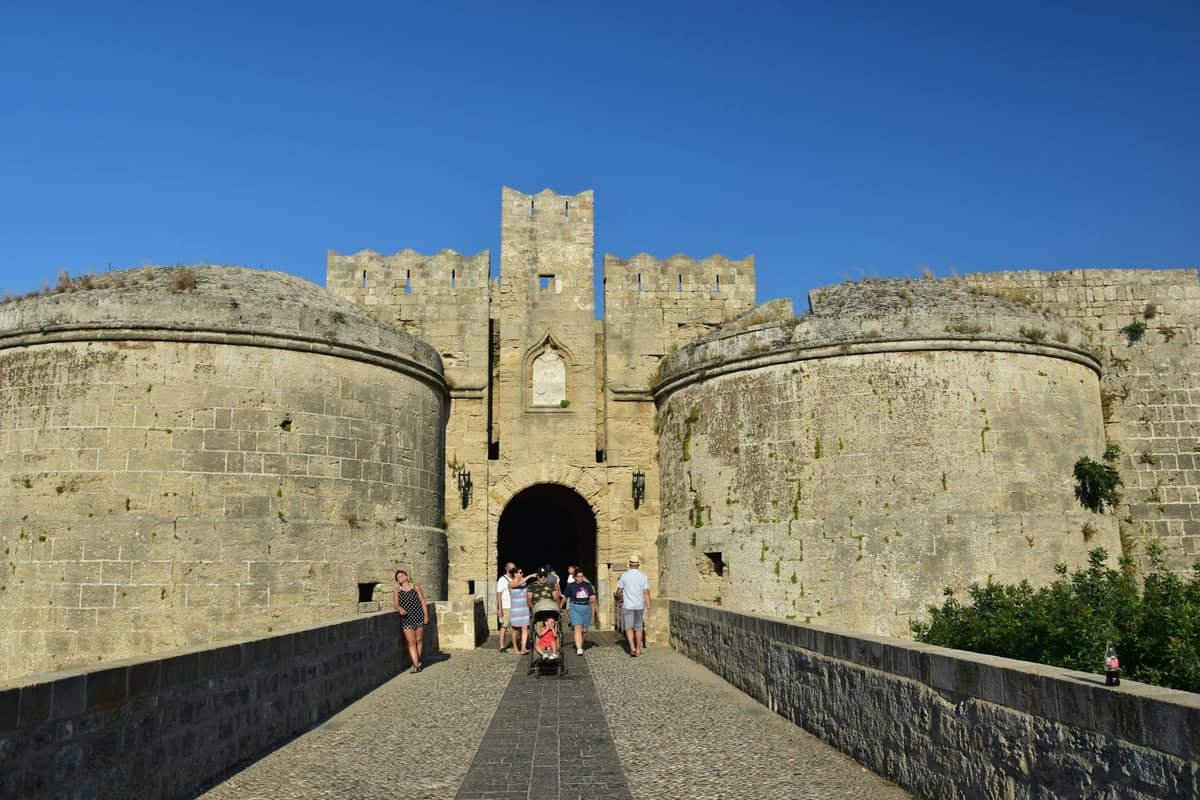
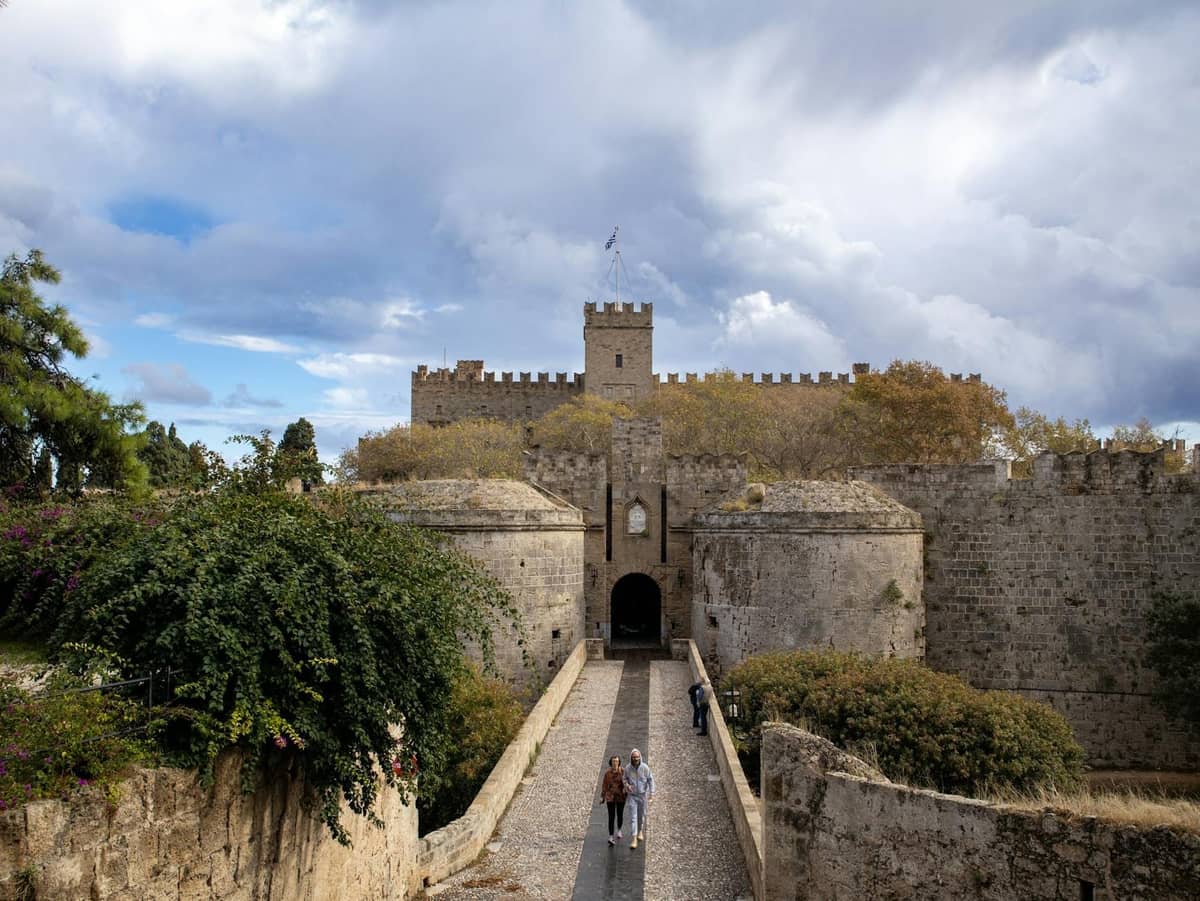
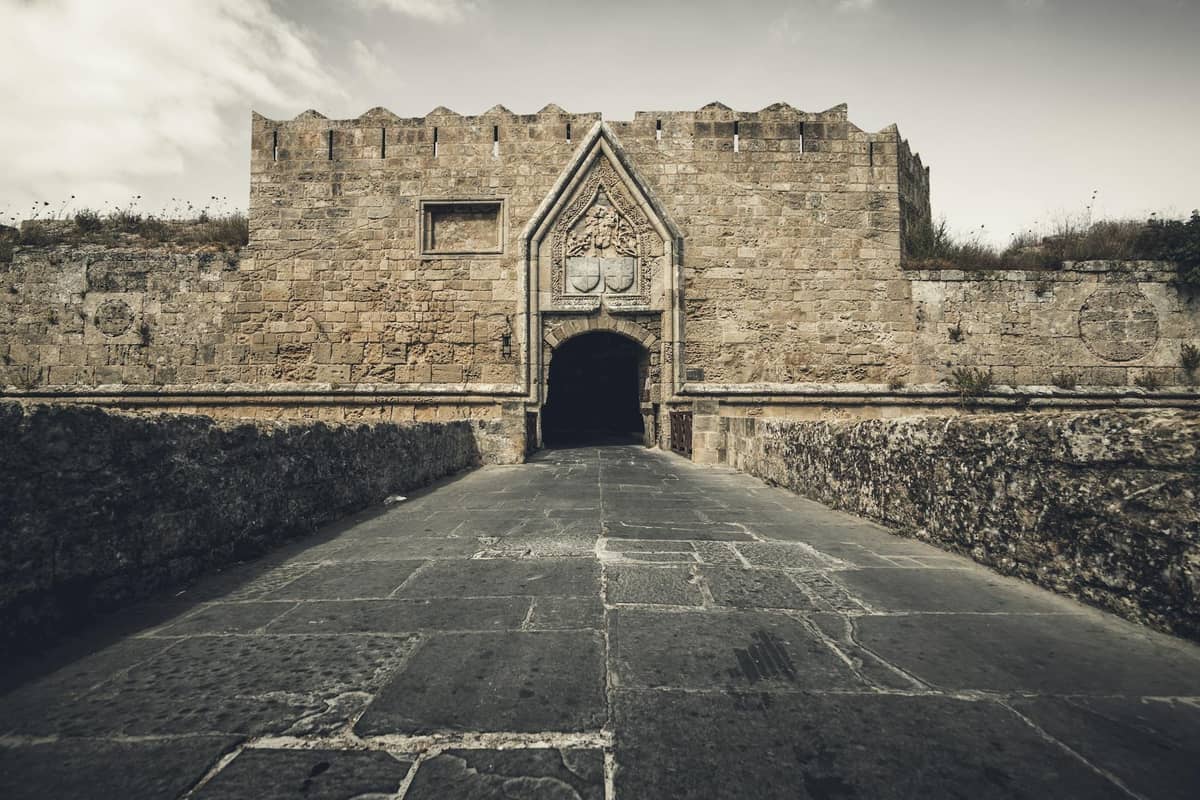
- The Medieval Walls Stretching around 4 km, with a dry moat, multiple gates, and towers. The walls were continuously updated to counter advances in artillery and siege warfare.
- Harbour Gates The sea-facing gates controlled access to the commercial and military harbours. The Fort of St. Nicholas at the harbour entrance was a key defensive outpost.
✨ Pro tip
The walking tour of the Old Town walls is one of the most underrated experiences in Rhodes. You can walk a significant portion of the ramparts in the late afternoon when crowds thin out. The views over the city and towards Turkey are exceptional. Check current access at the Palace of the Grand Master entrance — hours and access points shift seasonally.
Defending the Island: The Sieges of 1444 and 1480
The Knights were not merely building a city — they were maintaining a Christian military frontier. Their fleet regularly intercepted Ottoman and Barbary pirate ships, and they conducted raids on Ottoman coastal territories. This made Rhodes a priority target. The first major Ottoman siege came in 1444 under Sultan Murad II, and it failed. The second, in 1480 under Mehmed II (the same sultan who had taken Constantinople in 1453), also failed — despite a massive invasion force and weeks of sustained assault.
These victories enhanced the Order's reputation across Christendom and demonstrated the effectiveness of their fortifications. After the 1480 siege, the Knights carried out significant upgrades to the walls, lowering and thickening them to better absorb cannon fire, adding semicircular bastions and earthen reinforcements. These improvements reflected the changing nature of siege warfare in an era of increasingly powerful artillery. By the early 16th century, Rhodes had the most sophisticated set of fortifications in the eastern Mediterranean.
The Fall of Rhodes: Suleiman's 1522 Siege
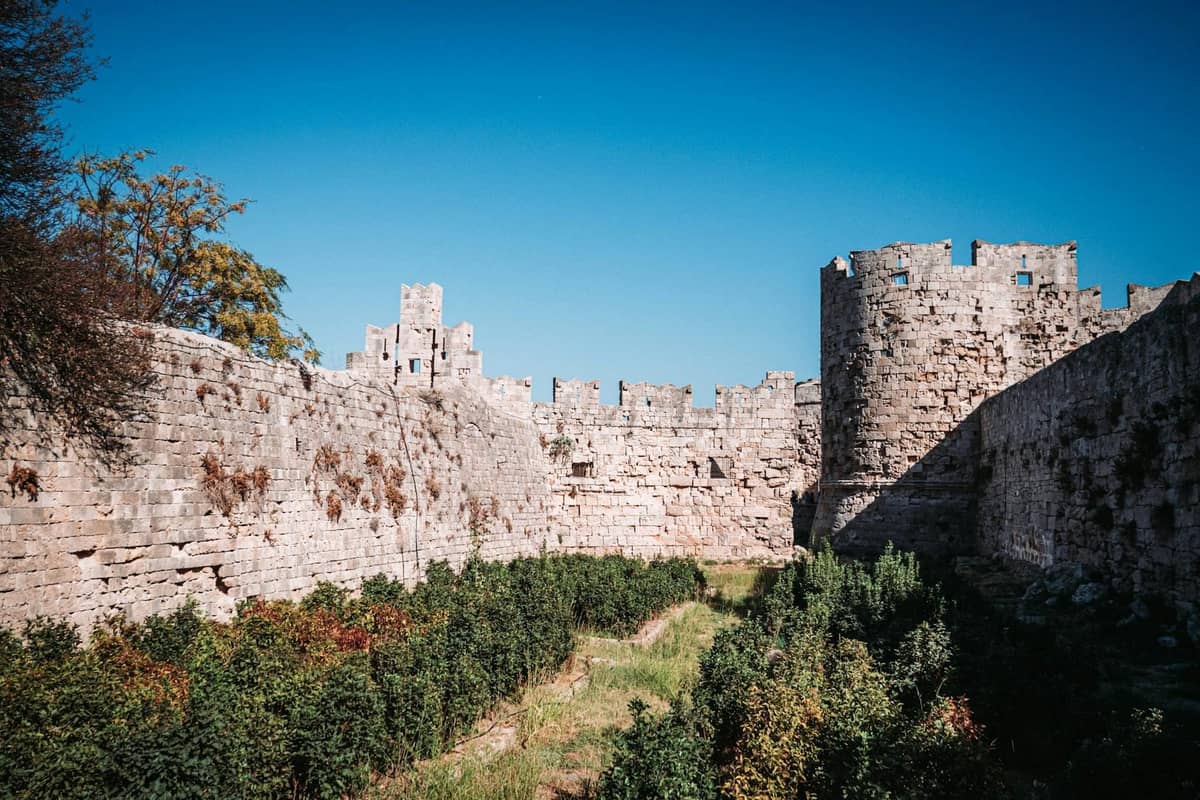
In June 1522, Sultan Suleiman the Magnificent landed an army on Rhodes intent on securing Ottoman dominance in the region. The Knights, under Grand Master Philippe Villiers de L'Isle-Adam, could muster only a few hundred knights and around 5,000 soldiers from the local population. The disparity was stark.
What followed was a six-month siege of extraordinary intensity. The Ottomans employed mining operations, digging tunnels beneath the walls to collapse them. The defenders counter-mined, and much of the battle was fought underground. Repeated assaults on the walls were repelled, often at enormous Ottoman cost. But attrition, disease, and a lack of reinforcements from European powers (who repeatedly promised support and delivered very little) eventually tipped the balance. By December 1522, the Knights faced the reality of eventual defeat.
Grand Master Villiers de L'Isle-Adam made the calculated decision to negotiate rather than fight to the last man. Suleiman, impressed by the defenders' tenacity and aware of his own heavy losses, offered genuinely honourable terms: the Knights and any civilians who wished to leave could depart freely with their possessions and honours intact. On January 1, 1523, the Knights sailed from Rhodes, accompanied by thousands of Greek and Jewish residents who chose exile over Ottoman rule. It was the end of the Crusader presence in the Aegean.
⚠️ What to skip
A common misconception holds that the fall of Rhodes was a straightforward Ottoman military victory. In reality, Suleiman lost enormous numbers of troops during the siege and offered far more generous surrender terms than was typical for the era. The Knights' reputation was actually enhanced by the defence, and they went on to repel Suleiman again at the Great Siege of Malta in 1565.
What the Knights Left Behind: What to See Today
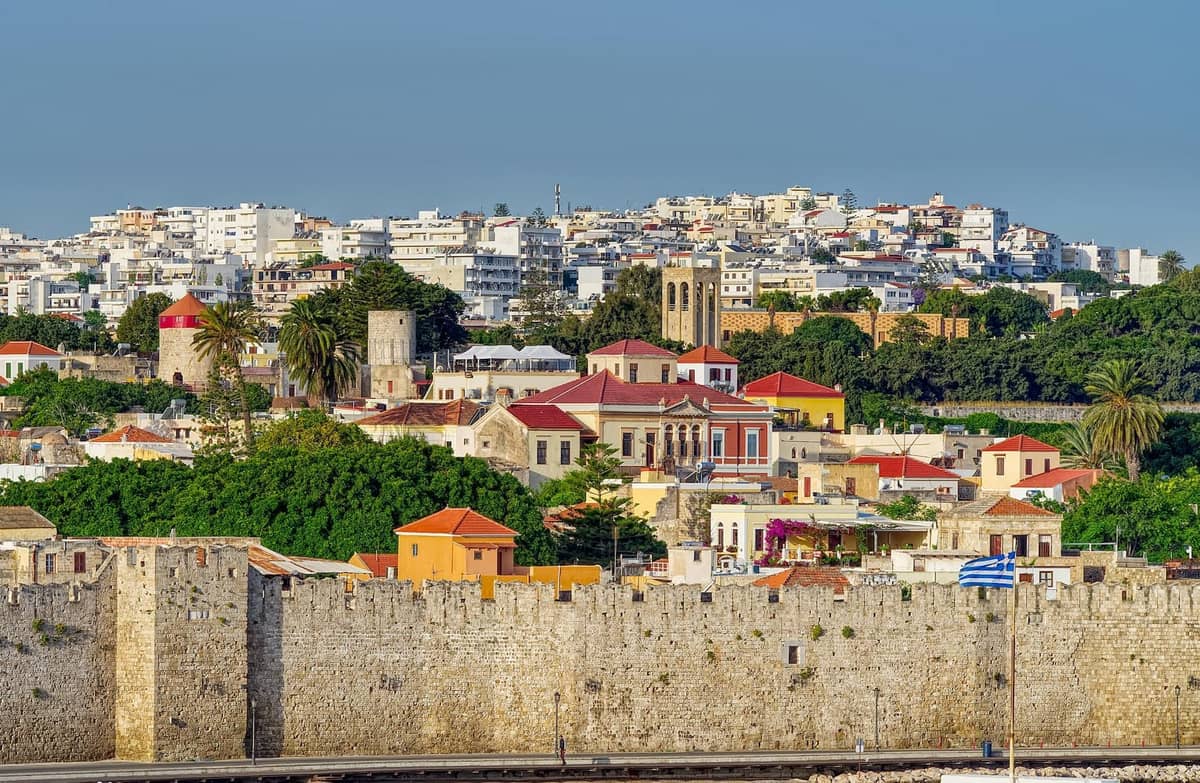
Rhodes Old Town is the most complete surviving example of a medieval Crusader city anywhere in the world. UNESCO designated the entire walled city a World Heritage Site in 1988. The scale is genuinely impressive: 4 km of walls, eleven gates, dozens of medieval structures still in use as restaurants, hotels, shops, and museums. The Palace of the Grand Master is the obvious starting point — budget at least 90 minutes and consider a guided tour to understand the layered history behind the Italian-era restoration.
The Archaeological Museum of Rhodes, housed in the Knights' former Great Hospital, holds one of the best collections of Hellenistic and Roman sculpture in Greece, including the famous Aphrodite of Rhodes. The building itself — its courtyard, its vaulted wards — is as interesting as the collection inside. Nearby, the Street of the Knights is best visited early morning, around 8–9am, before the cruise ship crowds arrive.
- Palace of the Grand Master: Open Tuesday to Sunday, typically 8am–4pm in winter, with extended hours in summer. Admission around €6–8.
- Archaeological Museum (Great Hospital): Same general hours as the Palace. Combination tickets with other sites available.
- Street of the Knights: Always accessible as a public street. Free to walk, though interior spaces have separate entry fees.
- The Medieval Walls: Accessible via guided tours departing from the Palace. Check current scheduling on arrival.
- Harbour Gates and Fort of St. Nicholas: Viewable from outside at any time. The fort sits at the end of the Mandraki breakwater.
Beyond the city itself, the Knights' influence extended across the island. Smaller fortified towers and watchtowers dot the coastline, built to provide early warning of naval attack. If you're exploring the island independently, the Rhodes Old Town walking tour is the most efficient way to cover the key Crusader-era sites in a single day without missing the context that makes them meaningful.
Planning Your Visit: Practical Notes
The best time to visit for historical exploration is April to early June or September to October. Summer (July and August) brings extreme heat and cruise ship crowds that can make the narrow streets of the Old Town uncomfortable and the major sites congested. The best time to visit Rhodes guide covers seasonal trade-offs in detail, but for anyone primarily interested in the Knights' history, a May or October visit allows you to move slowly through sites without the pressure of peak-season crowds.
Rhodes is easily reached via its international airport, Diagoras (RHO), 14 km southwest of the city. A taxi to the Old Town takes around 20 minutes and costs approximately €25–30. Buses run for around €2.50–3 but take longer. Once in the Old Town, everything covered in this guide is walkable. For the wider island, including the Lindos acropolis and coastal fortifications, a rental car is the most flexible option — see the Rhodes car hire guide for current pricing and practical advice.
💡 Local tip
If you're travelling with children or want a more structured introduction to the Knights' history, several operators in the Old Town run 2-hour guided walking tours focused specifically on the medieval period. These are far more informative than the standard audio guides at individual sites and typically cost €15–25 per person.
FAQ
How long did the Knights of Rhodes rule the island?
The Knights Hospitaller ruled Rhodes for 213 years, from 1310 until their surrender to Ottoman Sultan Suleiman the Magnificent in 1522. They left on January 1, 1523, and eventually settled in Malta.
What is the best site to visit to learn about the Knights of Rhodes?
The Palace of the Grand Master is the centrepiece of any historical visit. Combine it with the Archaeological Museum (the Knights' former Great Hospital) and a walk along the Street of the Knights for a thorough picture of their architecture and organisation. Plan around 3–4 hours for all three.
Why did the Knights of Rhodes lose to the Ottomans in 1522?
The primary factors were numerical disparity — Suleiman brought a force vastly larger than the garrison the Knights could field — and the failure of European powers to send promised reinforcements. The Knights held out for six months but faced inevitable attrition. The Grand Master chose to negotiate honourable terms rather than fight to total destruction.
Is the Rhodes Old Town worth visiting just for its history?
Absolutely, and it rewards slow exploration. The entire walled city is a UNESCO World Heritage Site and the best-preserved medieval Crusader settlement in the world. Even visitors with limited interest in medieval history tend to find the scale and atmosphere of the streets compelling. Allow at least a full day, ideally two.
Did the Knights of Rhodes have any connection to the Colossus of Rhodes?
No direct connection. The Colossus was one of the Seven Wonders of the Ancient World, built around 280 BC and destroyed by an earthquake around 226 BC — over 1,500 years before the Knights arrived. The Knights were, however, aware of the legend and the site at Mandraki Harbour is traditionally associated with it.