Best Time to Visit Rhodes: A Month-by-Month Guide
Rhodes rewards visitors year-round, but timing your trip correctly means the difference between a peaceful escape and a sweaty queue. This guide breaks down every season honestly, with temperature ranges, crowd levels, pricing patterns, and clear recommendations for different travel styles.
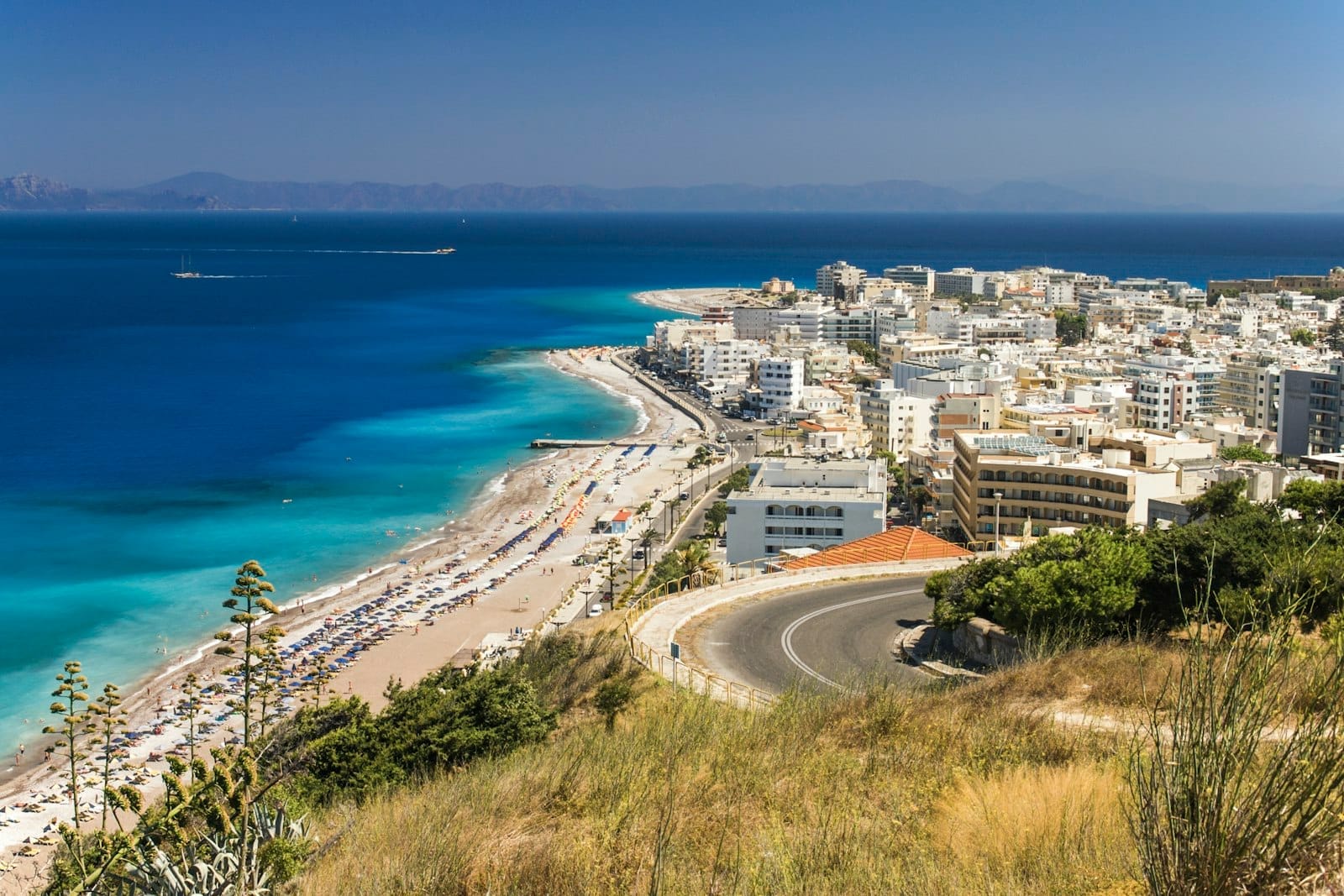
Plan and book this trip
Tools from our partner Travelpayouts help you compare flights and hotels. If you book through them, we may earn a commission at no extra cost to you.
Flights
Hotels map
TL;DR
- The best time to visit Rhodes is May-June or September-October: temperatures of 20-28°C, thinner crowds, and hotel rates 30-40% lower than peak summer.
- July and August are the hottest months (up to 38°C on bad days) and the most crowded, but they are ideal if beaches are your priority.
- Rhodes is open year-round and winter (December-February) is genuinely viable for culture-focused trips, with mild temperatures around 10-15°C.
- Shoulder season travellers get the best of both worlds: the Palace of the Grand Master without the queues and the sea warm enough to swim.
- Avoid flying in during the last two weeks of August if you are sensitive to heat and crowds. Prices peak and the experience suffers.
Understanding Rhodes' Climate Before You Book
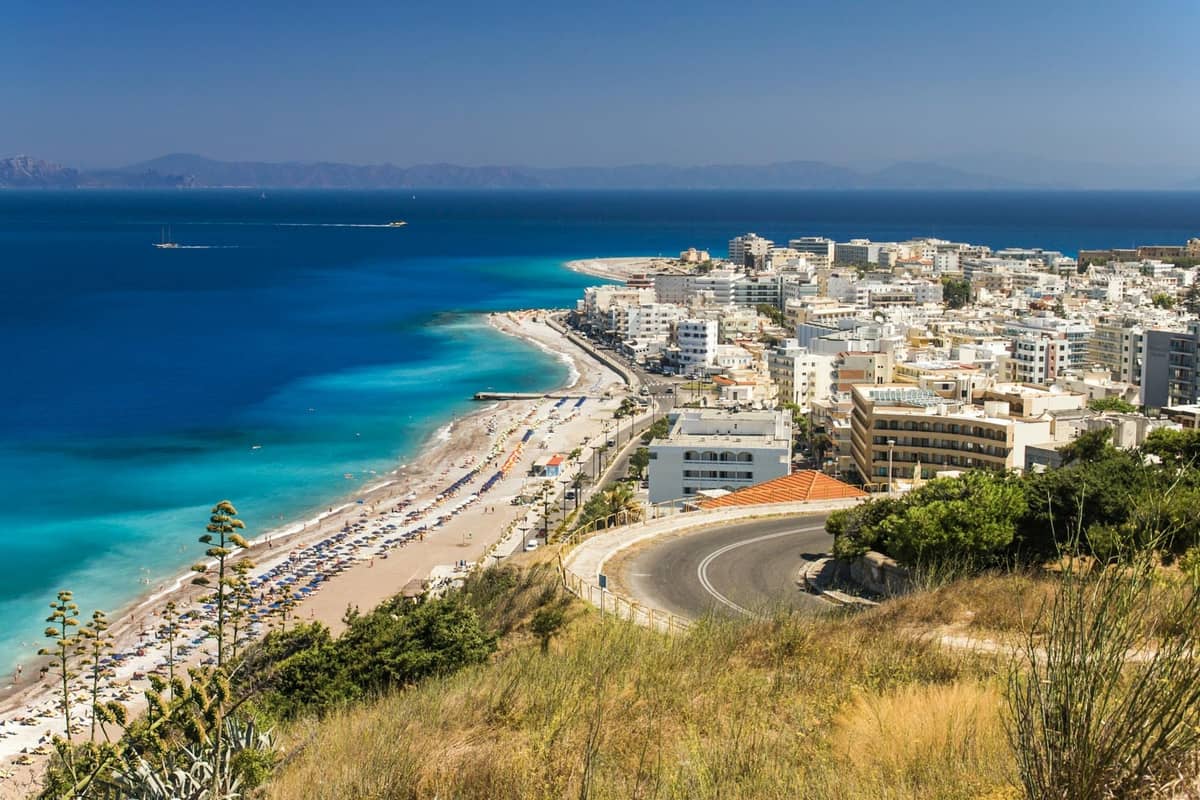
Rhodes sits in the far southeast of the Aegean Sea, closer to Turkey than to Athens, which gives it a distinctly longer and more reliable summer than most Greek islands. The climate is Mediterranean: hot, dry summers and mild, wet winters. The island records over 300 sunny days per year, which is why it markets itself as the sunniest place in Europe, a claim that is roughly accurate for the May-October window.
The key variable most visitors overlook is wind. The Meltemi, a strong northerly wind that blows across the Aegean in July and August, hits Rhodes with some force. On the west coast, particularly around Ixia and Ialyssos, this creates excellent conditions for windsurfing but can make beach lounging unpleasant. The east coast, sheltered from the Meltemi, stays calmer. If you are planning a beach holiday in peak summer, this distinction matters more than average temperature data.
ℹ️ Good to know
Rhodes' tourist season officially runs from April to November, with most hotels, restaurants, and boat trips operating fully during this window. Outside of this period, services thin out significantly outside Rhodes City itself, but the Old Town and New Town remain functional year-round.
Spring (March to May): The Smartest Window for Most Travellers
March is still quiet, with temperatures ranging from 13-18°C and occasional rain. The island's interior greens up dramatically, and the wildflowers across the hillsides around Profitis Ilias and the Valley of the Butterflies are at their peak. It is not beach weather in March, but if your agenda is history, hiking, and the medieval Old Town without another tourist in sight, this is a remarkable time to visit.
April marks the real beginning of the season. Temperatures climb to 17-22°C, the sea reaches around 16-18°C (cold for most, but manageable for committed swimmers), and direct flights start arriving from across Europe. By late April, you can sit on Lindos Beach in the sun without feeling like you are sharing it with half of Northern Europe. Hotel prices in April are typically 35-40% lower than July peaks.
May is arguably the single best month on the island. Average highs reach 24-26°C, the sea is warming toward 22°C, and the tourist infrastructure is fully operational without being overwhelmed. The Acropolis of Lindos in May can be visited at 9am with almost no queue. By July, you will wait 45 minutes in full sun for the same experience.
Summer (June to August): Peak Season, Peak Everything
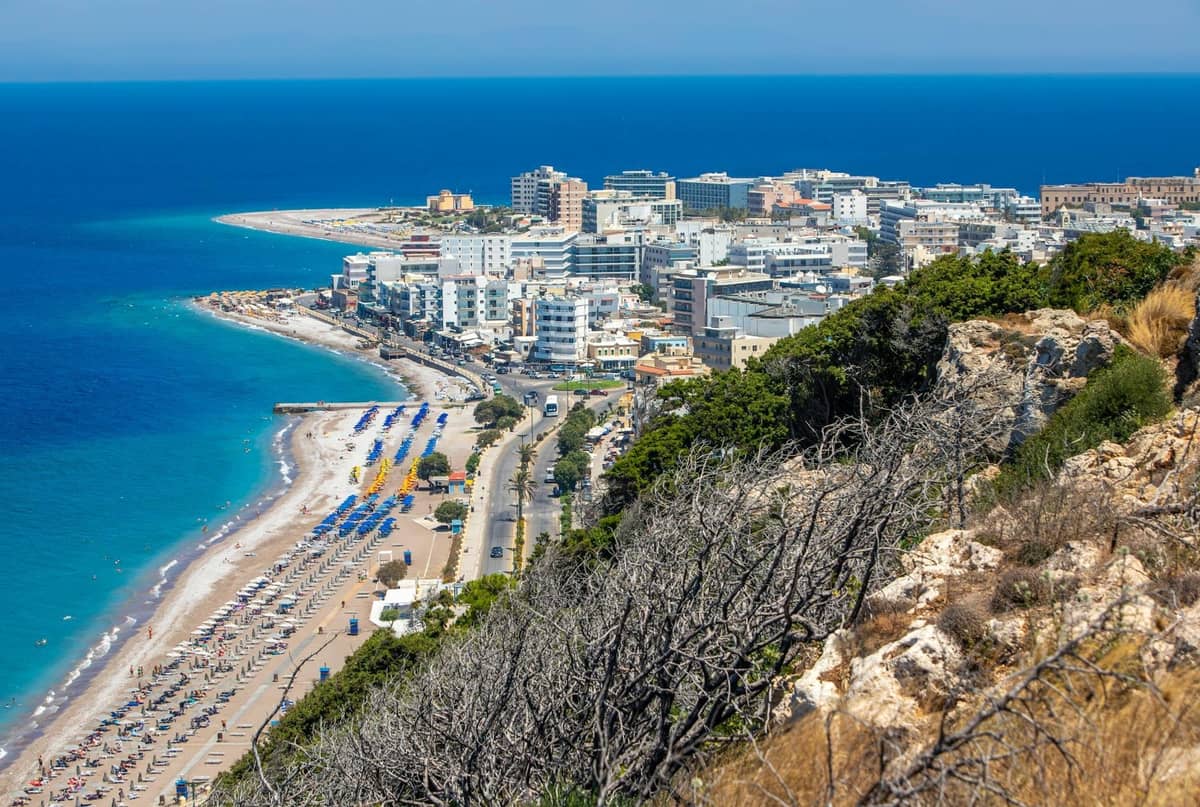
June is the sweet spot of summer. Temperatures sit at 26-30°C, the sea is fully swimmable at around 24°C, and the island has not yet hit its tourist ceiling. School holidays have not kicked in across most of Europe, so beach space is still reasonable. Prices begin to rise in the second half of June, so booking early pays off.
July and August are when Rhodes gets serious about tourism. The island receives the vast majority of its annual visitors in these two months. Temperatures regularly hit 33-35°C and can spike to 38°C during heat waves. The beaches at Faliraki and Lindos are crowded from 10am onward. Hotel rates double compared to May. If you are travelling with children focused on beach time and water parks, this works fine — but go in with realistic expectations about what the experience actually looks and feels like.
- Best for beach lovers and sun-seekers July-August delivers the hottest, driest, and longest days. Sea temperatures peak at 26-27°C. Every beach club, boat trip, and tourist activity is fully operational.
- Worst for budget travellers Peak summer hotel rates are 40-100% higher than shoulder season. Booking last-minute in July is expensive and often limited to poor locations.
- Challenging for sightseeing Visiting the Palace of the Grand Master or the Acropolis of Lindos in afternoon heat above 35°C is genuinely uncomfortable. Schedule ancient sites for early morning only.
- West coast wind warning The Meltemi wind makes beaches at Ixia and Ialyssos rough in July-August. Windsurfers love it; everyone else should head east to Tsambika or Pefkos.
⚠️ What to skip
The last two weeks of August are the single most crowded period in Rhodes. This coincides with Greek national summer holidays, meaning domestic tourists join the international influx simultaneously. Queues at Lindos, traffic on the east coast road, and fully booked restaurants are all common. If your dates are flexible, even shifting to early August or mid-September makes a noticeable difference.
Autumn (September to November): Warm, Cheaper, and Increasingly Quiet
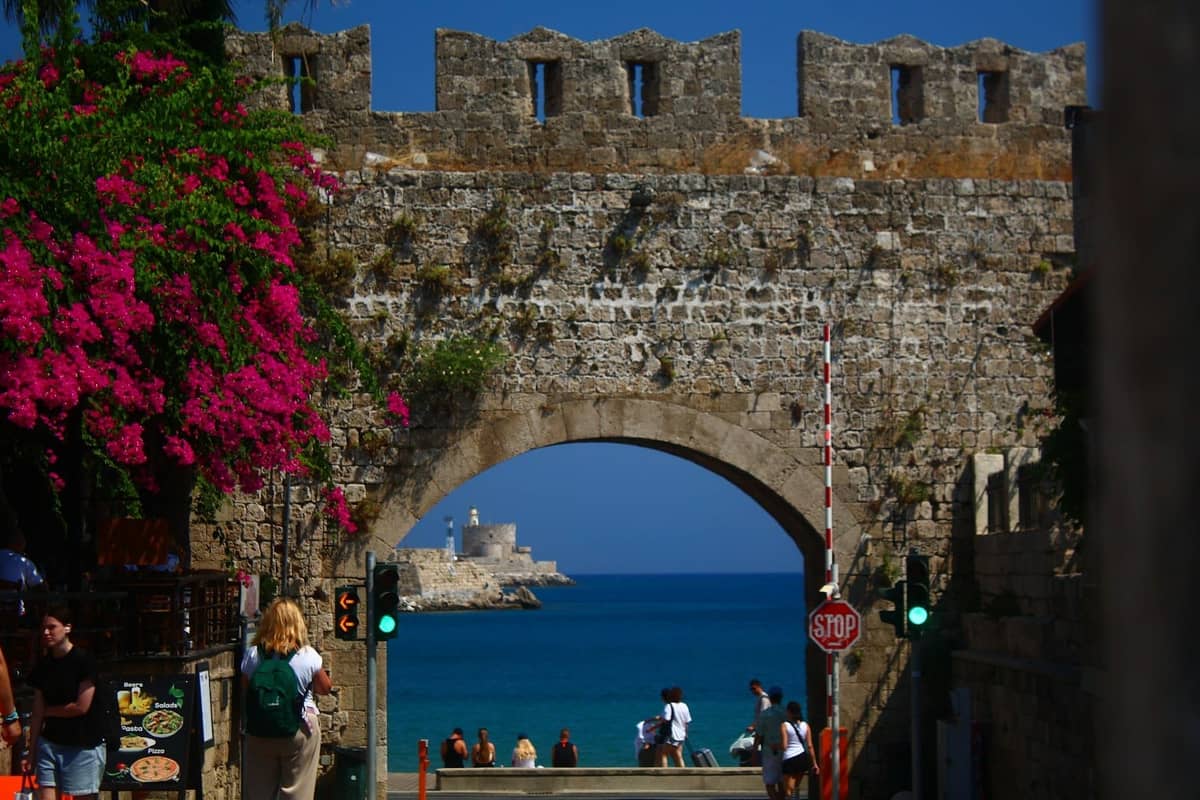
September is the hidden advantage of the Rhodes calendar. The heat drops to a very comfortable 26-29°C, the sea remains at 25-26°C (warmer than June, due to summer heat storage in the water), and hotel prices begin falling immediately after the first week. The crowds thin quickly once European school terms restart. Late September offers nearly identical beach conditions to early July at significantly lower cost.
October is excellent for couples, older travellers, and anyone who prioritises archaeology and villages over beach time. Temperatures average 22-24°C, the light is softer and better for photography, and the medieval Old Town genuinely breathes again. Many smaller tavernas are still open, local festivals occur in nearby villages, and you can explore the Valley of the Butterflies in peace. Some beach-facing businesses begin to close in the second half of October.
November sees the season winding down noticeably. Temperatures drop to 15-19°C, and rain becomes more frequent. The island transitions to a quieter, more local rhythm. Most resort hotels close by mid-November, but Rhodes City remains a functioning urban centre with open restaurants, cafes, and cultural sites. If you are comfortable with unpredictable weather and want an authentic, low-cost experience, November works. It is not, however, a beach trip.
Winter (December to February): The Honest Assessment

Rhodes has the mildest winters in Greece, which is a genuine claim rather than marketing spin. Temperatures sit at 10-15°C in December and January, with the coldest recorded lows rarely dropping below 5°C. Compare that to Athens at 6-12°C or Northern Europe in the single digits, and it is actually pleasant. Rain falls mainly as short afternoon showers rather than sustained northern European drizzle.
The Old Town is where you want to be in winter. The narrow medieval streets, the Street of the Knights, and the Archaeological Museum are all open. Locals reclaim their restaurants and the atmosphere shifts from tourist-facing to genuinely community-oriented. Hotel prices are at their annual low, with good options in the Old Town available for 40-60% less than summer rates.
💡 Local tip
If you are visiting in winter, base yourself in Rhodes City rather than a resort area like Faliraki or Pefkos. Resort infrastructure largely shuts down, but the city has good year-round dining, transport connections, and a lived-in atmosphere that most travellers find genuinely enjoyable outside of peak season.
- December-February: 10-15°C, occasional rain, Old Town and museums fully open, hotels at annual low rates
- March-April: 14-22°C, shoulder pricing, wildflowers and green hillsides, sea still cold for swimming
- May-June: 22-30°C, full tourist infrastructure operational, sea warm, prices rising but manageable
- July-August: 28-38°C, peak crowds and prices, excellent beach conditions on east coast, Meltemi affects west coast
- September-October: 22-29°C, warm sea, falling prices, best overall value of the year
- November: 15-19°C, transitional season, some closures beginning, good for independent travellers
Matching Your Travel Style to the Right Season
For families with school-age children, the choice is essentially dictated by school holidays. If that means July or August, focus on the east coast beaches and book accommodation in Pefkos or Lardos rather than Lindos village itself, where roads and parking become genuinely problematic in peak season. The best areas for families in Rhodes deserve careful thought before you commit.
Couples looking for a romantic trip, particularly honeymoons, get the best experience in May, early June, or September. The island is beautiful, the sea is swimmable, and you are not competing with package tour groups for restaurant tables. The Rhodes honeymoon guide goes into specific accommodation recommendations for this type of trip.
Windsurfers and kitesurfers are the exception to the usual summer crowd advice: they actively want July and August on the west coast, where the Meltemi delivers consistent, strong winds. Ixia and Ialyssos are the bases for this. See the Rhodes windsurfing and kitesurfing guide for school recommendations and equipment hire details.
✨ Pro tip
Book flights to Rhodes International Airport (RHO) as early as possible for June, September, and October travel. These months have become increasingly popular as travellers wise up to shoulder season advantages, and routes from major European cities fill up faster than they did five years ago. October in particular is now almost as booked as early June.
FAQ
What is the best month to visit Rhodes for good weather and fewer crowds?
May and September are consistently the strongest months. May offers temperatures of 22-26°C, a warm but not overwhelming sea, and full tourist infrastructure without the summer crowds. September provides the same benefits but with even warmer sea temperatures (25-26°C) and lower hotel prices as the season winds down.
Is Rhodes worth visiting in October?
Yes, particularly for travellers focused on history, walking, and local culture. Temperatures average 22-24°C, the medieval Old Town is far more pleasant to explore, and prices are significantly lower. Some beach-facing businesses close in the second half of October, so it is not ideal if beach access is your main goal. For everything else, October is excellent.
How hot does Rhodes get in July and August?
Average highs in July and August sit at 32-34°C, with heat waves occasionally pushing temperatures to 37-38°C. Humidity is generally low, which makes the heat more bearable than coastal Mediterranean cities further west. However, sightseeing in the afternoon is genuinely uncomfortable, and the Meltemi wind on the west coast can be disruptive.
Does Rhodes close down in winter?
No, but it does scale back significantly outside Rhodes City. The Old Town, its restaurants, museums, and most city-based services remain operational year-round. Resort areas like Faliraki, Pefkos, and Lindos village see widespread closures from November through March. If you visit in winter, stay in or near the city rather than a resort zone.
When is Rhodes cheapest to visit?
December through February offers the lowest accommodation prices, often 40-60% below peak summer rates. March and November are also significantly cheaper than the main season. For the best balance of good weather and lower prices, late September and early October represent strong value: the sea is still warm, crowds are thinning, and hotel rates have already dropped from their August peak.