Palace of the Grand Master of the Knights of Rhodes: What to Expect Inside
The Palace of the Grand Master of the Knights of Rhodes is the most architecturally commanding structure in the medieval city. Built in the early 14th century and dramatically restored under Italian rule, it anchors the northwestern corner of the Old Town with towers, colonnaded courtyards, and a permanent collection that spans antiquity to the Ottoman period.
Quick Facts
- Location
- Ippoton Street (Street of the Knights), Rhodes Old Town
- Getting There
- 5-min walk from Mandraki Harbour; enter Old Town via the harbour gates
- Time Needed
- 1.5 to 2.5 hours
- Cost
- Paid admission; combo tickets available with nearby sites. Check current prices via the official booking portal.
- Best for
- History enthusiasts, architecture lovers, families with older children
- Official website
- archaeologicalmuseums.gr/en/museum/5df34af3deca5e2d79e8c140
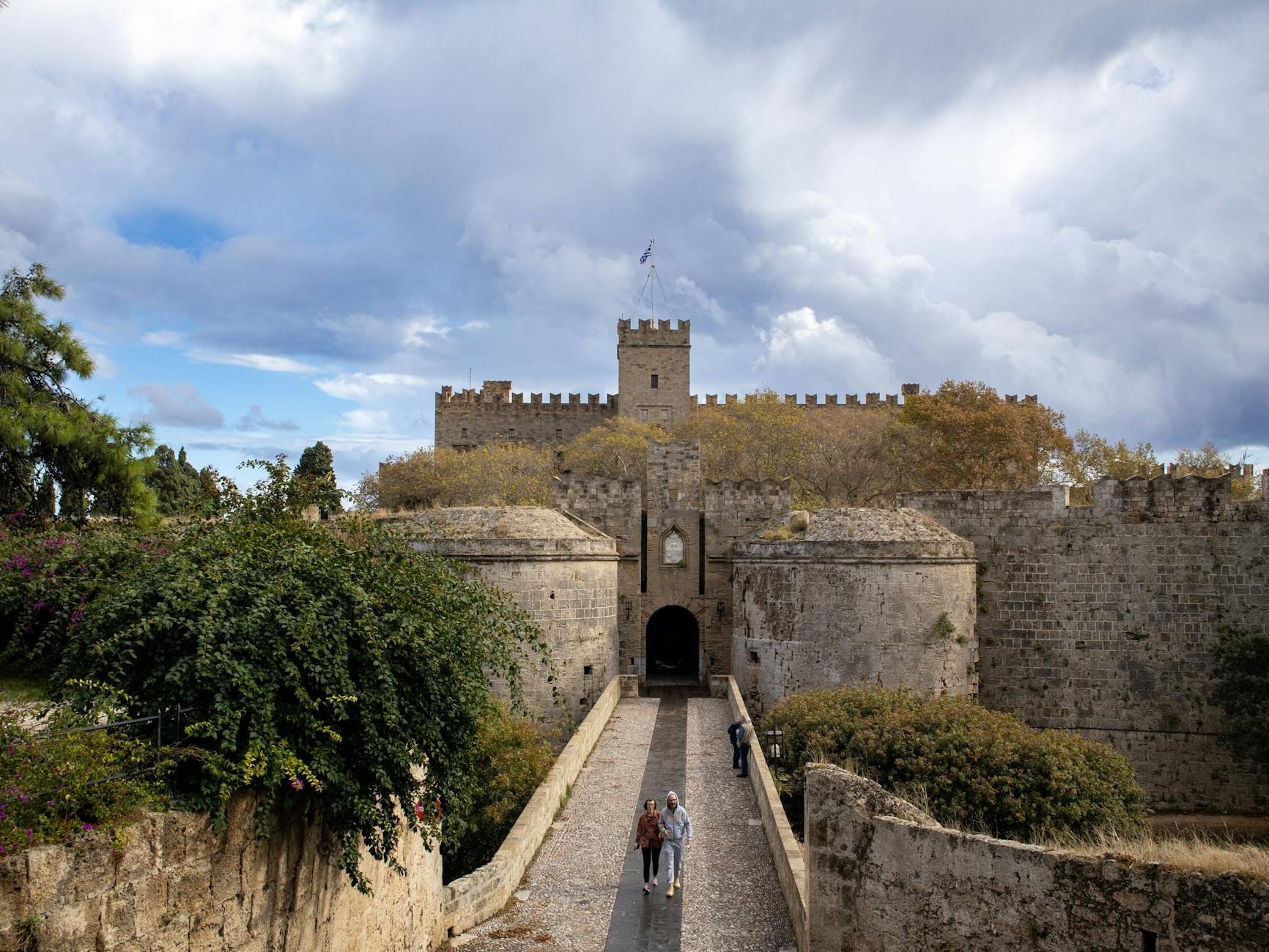
What the Palace Actually Is
The Palace of the Grand Master of the Knights of Rhodes is not simply a castle. It is a layered record of who controlled this island over seven centuries: Byzantine Christians who built a citadel here in the 7th century, the Knights Hospitaller who began converting it into a fortified administrative palace from 1309, substantially expanded in the 14th century under Grand Master Villeneuve (1319–1346), the Ottomans who repurposed it after their conquest in 1522, and finally the Italians who rebuilt most of what you see today after an ammunition store within the building ignited accidentally.
The result is architecturally complicated. The reconstruction carried out during Italian rule in the 1930s was thorough enough to be controversial: scholars note that the interior decor, including Roman floor mosaics transported from the island of Kos, gives certain rooms a theatrical quality that prioritizes visual impact over historical accuracy. That said, the exterior walls, the towers, and the basic layout of the courtyard correspond reasonably closely to the medieval original.
ℹ️ Good to know
The palace covers approximately 6,000 square metres (dimensions 80×75 m) and includes two permanent ground-floor exhibitions covering ancient and medieval Rhodes, in addition to the main ceremonial rooms on the upper floor.
Arriving and Entering
The palace occupies the highest northwestern point of the medieval city, a short walk along the Street of the Knights from the lower town. From Mandraki Harbour, you can reach the entrance in about five minutes on foot by passing through the harbour gate area and heading uphill through the old city. The approach through the Old Town itself sets the mood before you even arrive.
The main entrance is a large arched gate opening into a stone courtyard lined with arcades. In the morning, when light hits the pale limestone from the east, the courtyard reads as genuinely grand. Later in the day, particularly in July and August, that same courtyard becomes a holding area for tour groups moving in tight clusters. If you want the space to yourself, arrive close to opening time.
💡 Local tip
E-tickets are available through the official HHTicket portal. Buying online avoids the queue at the entrance desk, which can slow considerably during peak summer mornings.
Tickets & tours
Hand-picked options from our booking partner. Prices are indicative; availability and final rates are confirmed when you complete your booking.
Palace of the Grand Master Ticket and Audio Tour by App
From 30 €Instant confirmationSunset catamaran cruise with dinner in Rhodes
From 70 €Instant confirmationFree cancellation3-Hour All Inclusive Sun and Sea Swimming Cruise in Rhodes
From 55 €Instant confirmationFree cancellationRhodes Sunset Cruise with Greek BBQ and Unlimited Drinks
From 65 €Instant confirmationFree cancellation
The Interior: What You Will Actually See
The ground floor holds two permanent exhibitions. The first traces ancient Rhodes, presenting sculpture, pottery, coins, and inscriptions from the Hellenistic and Roman periods. The second covers medieval Rhodes, including documents, seals, maps, and objects connected to the Knights Hospitaller. Both are well-labeled in English and Greek and reward slow reading. These rooms tend to be quieter than the upper floor and are where serious history visitors will spend most of their time.
The upper floor is the showpiece. A series of large ceremonial halls are fitted with Roman mosaic floors brought from Kos during the Italian restoration. The mosaics are extraordinary objects in themselves, depicting Medusa, sea creatures, hunting scenes, and geometric patterns with precision that still reads as skilled craftsmanship two thousand years later. The fact that they were relocated here in the 20th century is worth keeping in mind, but it does not diminish their quality.
The rooms are furnished with heavy wooden furniture and decorated with antique maps and paintings, some original, some reproductions. The overall effect is of a reconstructed medieval palace, which is exactly what it is. Expecting archaeological site conditions will leave you surprised; treating it as a high-quality historical re-creation with genuine ancient objects embedded in it will allow you to appreciate what is actually here.
Time of Day and Crowd Patterns
The palace receives a large volume of visitors during peak summer months, particularly June through August. The most concentrated crowds arrive between 10 a.m. and 1 p.m., coinciding with cruise ship excursions and organized tours. The upper-floor mosaic rooms can become genuinely difficult to navigate during these hours, with groups blocking sightlines and audio guides competing at volume.
Visiting at opening time or in the late afternoon significantly improves the experience. By 4 p.m. on most days, the tour group traffic subsides. The light at that hour through the upper-floor windows is also better for photography. In shoulder season, April through early June and September through October, the palace is comfortably uncrowded at almost any hour and the temperatures inside the stone halls are more forgiving.
⚠️ What to skip
The palace is closed on certain public holidays, including Orthodox Easter. Hours vary between summer and winter seasons. Check current opening times through the official website before your visit, especially if traveling outside peak season.
Historical and Cultural Context
The Knights Hospitaller, a Catholic military order originally founded to care for sick pilgrims in Jerusalem, controlled Rhodes from 1309 until the Ottoman siege of 1522. During that period they transformed the island, constructing the walls, towers, and institutional buildings that define the Rhodes Old Town to this day. The Grand Master's Palace was the administrative and ceremonial heart of this operation, functioning as both a seat of government and a fortified refuge of last resort.
After the Ottoman conquest, the palace served various administrative functions and later fell into disuse. The 1856 explosion that destroyed the medieval structure was not a military event: an ammunition store within the building ignited accidentally, taking down most of the fabric. What the Italians rebuilt in the 1930s was based on historical research and surviving visual records, but it was also shaped by Mussolini-era political ambitions that saw the restoration of medieval Christian monuments as ideologically useful. That context does not erase the building's value, but understanding it sharpens your reading of the interior.
For deeper background on the order that built this palace, the Knights of Rhodes history guide covers the Hospitallers' two centuries on the island in detail.
Practical Notes for Your Visit
Footwear with grip is advisable. The stone floors in the courtyard and some interior corridors are worn smooth and can be slippery, particularly after rain or if the air inside is humid. The building involves staircases to reach the upper floor; contact the site directly if you need to confirm wheelchair accessibility before visiting.
Photography is permitted throughout the interior without flash. The mosaic floors photograph well in natural light; the upper-floor windows provide adequate illumination during daytime hours. Tripods are not practical in the busier rooms and are unlikely to be permitted during peak hours.
The palace sits at the top of the Street of the Knights, which is itself worth walking end to end. The route passes the inns of the various national tongues of the Hospitaller order, and the Archaeological Museum of Rhodes is a short walk away in the old hospital building. Combining both on the same morning is manageable and makes good use of a single admission-area visit.
If you are building a fuller day in the old city, the Rhodes Old Town walking tour covers a logical sequence that includes the palace alongside other major monuments without unnecessary backtracking.
Insider Tips
- The ground-floor medieval exhibition is consistently less crowded than the upper mosaic rooms. If the upstairs halls are packed when you arrive, go downstairs first and return to the main rooms after the tour groups have cycled through.
- The courtyard arcade offers shade and reasonable acoustics for photography even at midday. The carved lion heads and column capitals at the arcade level are easy to overlook but worth close attention.
- Combo tickets that include the Archaeological Museum of Rhodes represent good value if you plan to visit both, which is worth doing since the museum holds original medieval sculpture that gives additional context to what you see in the palace.
- The building's exterior towers are best photographed from the small street that runs along the northern wall, outside the entrance. The angle from this street shows the full height of the defensive towers more clearly than the inner courtyard does.
- In October and May, the palace often runs at a fraction of summer capacity. These months also bring noticeably cooler temperatures inside the stone halls, which makes the extended browsing the ground-floor exhibitions deserve far more comfortable.
Who Is Palace of the Grand Master of the Knights of Rhodes For?
- Travelers with a specific interest in Crusader and medieval Mediterranean history
- Architecture enthusiasts interested in Gothic and Byzantine building traditions
- Visitors who want to understand the physical setting that shaped the Knights Hospitaller story
- Families with children old enough to engage with historical context, roughly 10 and up
- Photographers targeting Roman mosaic floors and medieval stone interiors
Nearby Attractions
Other things to see while in Rhodes Old Town:
- Archaeological Museum of Rhodes
Housed in the 15th-century Hospital of the Knights, the Archaeological Museum of Rhodes brings together artifacts spanning the Archaic to Roman periods, including celebrated Hellenistic marble statues and intricate floor mosaics. It is one of the most historically layered museum experiences in the Aegean, where the building itself is as compelling as the collection inside.
- Hammam Turkish Baths
Built in 1558 during the Ottoman occupation, the Great Hamam is the sole surviving bathhouse within Rhodes' UNESCO-listed Medieval Town. Currently closed to the public but recently restored, it remains one of the most architecturally distinctive buildings in Arionos Square, worth understanding in context before you arrive.
- Harbour Gates
The Harbour Gates mark the medieval boundary between Mandraki Harbour and the walled city built by the Knights of Saint John. Free to visit at any hour, they are the most atmospheric entry point into Rhodes Old Town, framing a view that has barely changed in six centuries.
- Rhodes Port (Commercial Harbour)
The Rhodes Commercial Harbour, officially known as Akandia Port (Λιμάνι Ακανδίας), is the island's main gateway for passenger ferries, cargo vessels, and cruise ships. Whether you're arriving from Piraeus, island-hopping through the Dodecanese, or watching the daily rhythm of a working Greek port, this is where Rhodes begins.