Renting a Car in Rhodes: Everything You Need to Know
Renting a car in Rhodes unlocks the island's best beaches, hilltop villages, and ancient ruins that buses simply can't reach. This guide covers licensing requirements, realistic pricing, parking rules, seasonal booking strategy, and what to watch out for on local roads.
Plan and book this trip
Tools from our partner Travelpayouts help you compare flights and hotels. If you book through them, we may earn a commission at no extra cost to you.
Flights
Hotels map
TL;DR
- Most companies require drivers to be at least 21 with a license held for 12+ months; non-EU visitors need an International Driving Permit.
- Expect to pay around €25-35 per day for a compact car in peak season, often including unlimited mileage and basic insurance.
- A rental car is the best way to reach places like Lindos, Valley of the Butterflies, and the island's quieter southern beaches.
- Book at least 2-3 weeks ahead for July and August travel; prices spike and availability shrinks fast.
- Parking in Rhodes Town uses a color-coded system: blue lines cost €1.50/hour, white lines are free, and yellow lines are a fine waiting to happen.
Do You Actually Need a Rental Car in Rhodes?
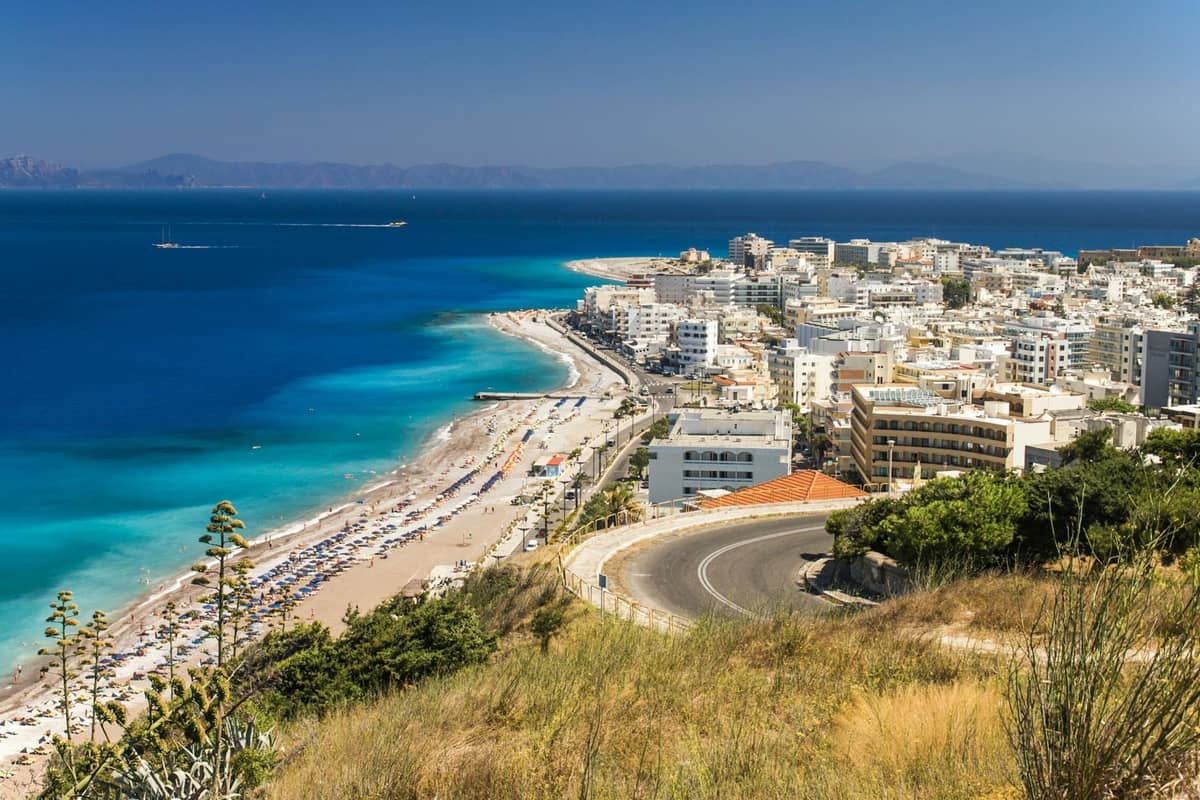
Rhodes has a reasonable public bus network (KTEL) that connects the city to major resorts and Lindos, but frequency drops sharply outside peak hours and stops altogether for most inland villages. If your itinerary includes only the main beach strips around Faliraki or Ixia and Ialyssos, you can probably manage without wheels. For everyone else, a rental car transforms the trip.
The island covers 1,401 km², and its most rewarding corners sit well off the bus routes: the medieval castle at Kritinia, the monastery at Tsambika, the surfer's paradise at Prasonisi, and dozens of small villages inland. A car gives you the freedom to leave before the tour groups arrive and stay after they leave. On balance, renting a car is the single best logistical decision most visitors to Rhodes can make.
ℹ️ Good to know
Rhodes drives on the right, the same as mainland Greece and most of continental Europe. Road signs follow standard EU conventions, and most main routes are well-marked in both Greek and Latin script.
Age Limits, License Requirements, and Who Can Drive
Minimum age requirements vary by company and vehicle class, so read the small print before booking. The standard threshold is 21 years old with a full license held for at least 12 months. Some local operators allow drivers as young as 20 if they have two full years of driving experience. For larger vehicles, SUVs, or premium categories, most companies raise the bar to 23 years old with 24 months of experience.
EU license holders can drive in Greece without any additional documentation. Non-EU visitors, including travelers from the United States, Canada, Australia, and the UK, should carry an International Driving Permit alongside their national license. Technically the IDP is a translation document rather than a standalone license, so you need both. Getting one before you leave home is straightforward through organizations like AAA (USA) or the Post Office (UK), and costs around $20.
⚠️ What to skip
If you are under 25, some companies apply a 'young driver surcharge' of €5-10 per day on top of the base rate. Always ask about this fee explicitly before confirming a booking, as it is rarely advertised upfront.
What Does Car Rental in Rhodes Actually Cost?
Prices are competitive by European standards. A compact city car like a Kia Picanto or Hyundai i10 typically runs €25-35 per day in peak season (July-August), translating to roughly €175-200 for a full week with comprehensive insurance included. Shoulder season (May, June, September, October) rates drop to €18-25 per day for the same class of vehicle. These figures assume full coverage insurance is bundled in, which most reputable local operators include as standard.
- Economy/city car (Kia Picanto, VW Up) €18-35/day depending on season. Ideal for couples or solo travelers. Fine for most island roads.
- Compact hatchback (Toyota Yaris, Ford Fiesta) €25-45/day. More comfortable for longer drives; better boot space for luggage.
- SUV or crossover €45-80/day. Useful if you plan to access rough tracks near Prasonisi or mountain villages, though most popular routes are fully paved.
- Automatic transmission Adds roughly €5-10/day over manual equivalent. Worth it if you're not confident driving stick in unfamiliar traffic.
Standard inclusions at most reputable operators cover third-party liability insurance, collision damage waiver, theft and fire protection, unlimited mileage, and 24-hour roadside assistance. Some companies market 'no deposit, no credit card required' deals aimed at travelers without a credit card, though these often come with slightly higher daily rates. Always confirm exactly what insurance is included and what the excess (deductible) is before signing anything.
✨ Pro tip
Booking platforms like DiscoverCars.com aggregate local and international operators and often beat the prices quoted directly on rental company websites. Compare at least 3-4 options before committing. If you find a better local rate after arriving at the airport, some platforms allow free cancellation up to 48 hours before pickup.
When to Book and How to Get the Best Rate
Rental car availability in Rhodes behaves like accommodation: the island is genuinely popular during summer and stock runs thin. July and August are peak season, with prices roughly 40-60% higher than May or October rates. For summer travel, booking 3-4 weeks in advance is sensible; booking 6-8 weeks out will get you the best price and widest vehicle selection.
If you're arriving at Rhodes International Airport 'Diagoras' (RHO), the airport pickup option adds convenience but sometimes costs slightly more than collecting from an in-town office. The airport sits 14 km southwest of Rhodes city center, about 20 minutes by road. If your accommodation is near the Old Town or the New Town, picking up the car on day two (after a taxi or bus transfer from the airport) can save €20-30 on the first rental day.
- Book directly through a rental platform or company website rather than through a hotel concierge — concierge bookings carry a commission markup.
- Opt for full coverage insurance at the point of booking rather than buying it separately at the counter, where it is always more expensive.
- Cancellations usually require 48 hours' notice for a full refund; check the policy carefully for summer bookings.
- Returning the car with the same fuel level you received it avoids refueling surcharges, which can be steep.
- Photograph every scratch, dent, and scuff before driving off the lot and email the photos to yourself as a timestamped record.
Parking in Rhodes Town and Around the Island
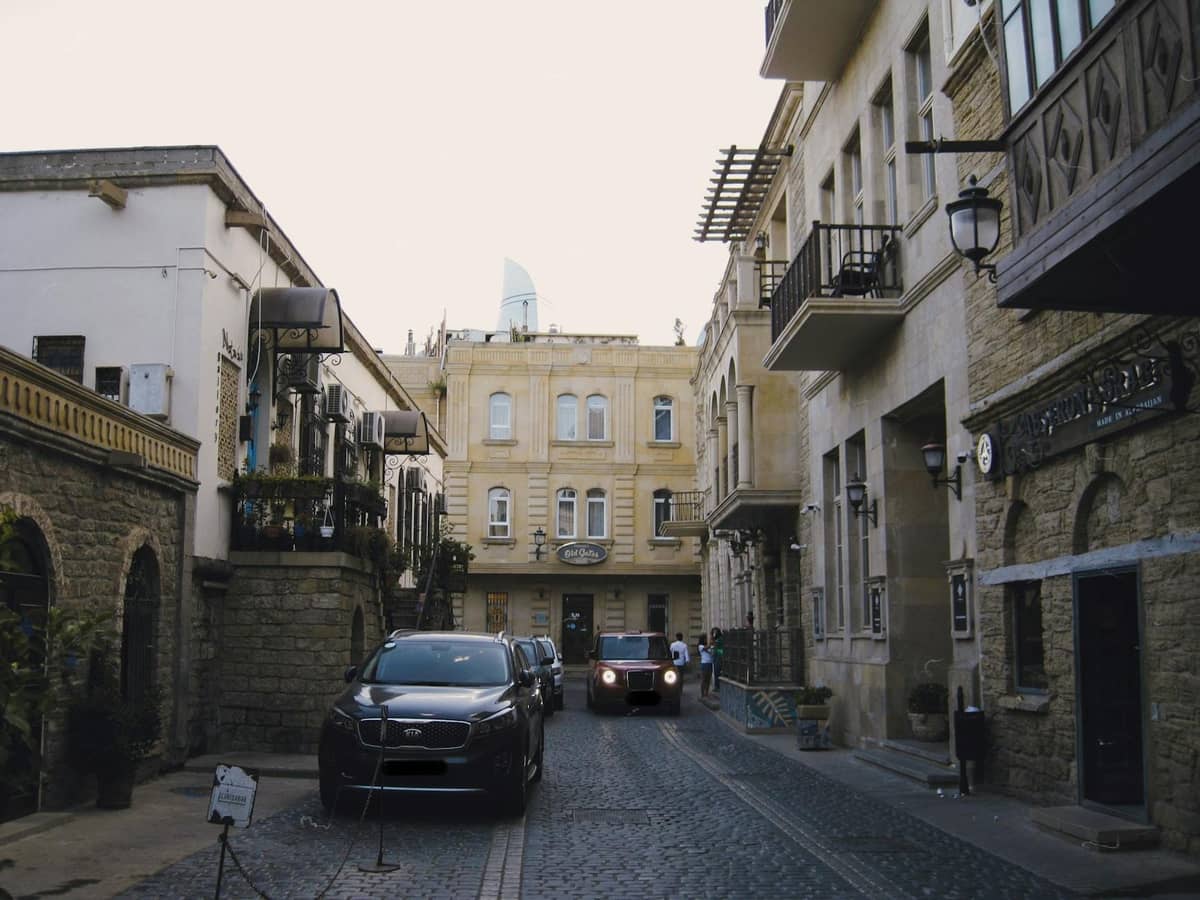
Parking within Rhodes Town operates on a color-coded system that catches many visitors off guard. White-line spaces are free and available 24 hours. Blue-line spaces require a paid ticket from automated machines at €1.50 per hour; Sunday is free across all blue zones. Yellow-line spaces are no-parking zones at all times. Machines accept coins; some accept cards. If you're spending more than a couple of hours in the city center, look for the larger paid car parks on the periphery of the Old Town walls, which are cheaper per hour than repeatedly feeding machines.
Outside Rhodes Town, parking is free across the rest of the island. At popular beach destinations like Tsambika or Anthony Quinn Bay, informal parking areas near the road fill quickly between 10am and noon in July and August. Arriving before 9:30am almost always secures a spot; arriving after 11am on a summer weekend means a 10-15 minute walk from wherever you can squeeze in along the verge.
Road Conditions, Driving Culture, and Practical Safety
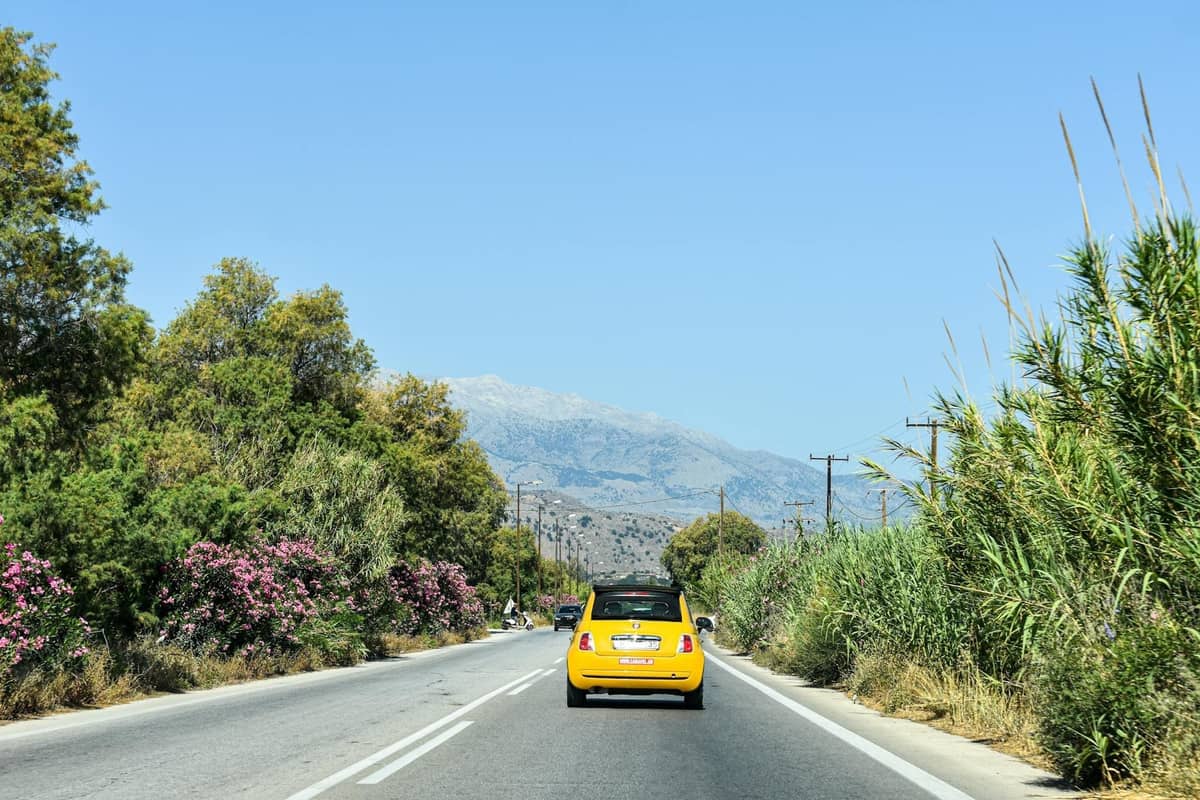
Rhodes has no motorways or highways. The main road running down the island's east coast is well-maintained and straightforward. Inland mountain roads narrow considerably and sometimes lack guardrails on sharp bends, so a confident approach to single-track driving helps. The village streets of Lindos are off-limits to private cars during peak season; there is a parking area at the top of the village from which you walk down, or park below and walk up.
Local driving habits require some adjustment. Turn signals are used inconsistently, and last-minute lane changes happen without warning on the main coastal road. Speed limits are posted but loosely observed. Keep a wider following distance than you might at home, particularly on the stretch between Rhodes Town and Lindos where traffic bunches behind slow vehicles. Overall, the roads are far less stressful than driving in Athens or any major European city.
For a complete picture of how a rental car fits into island logistics, the getting around Rhodes guide covers buses, taxis, and boats alongside car hire. If you're planning a full week, the 7-day Rhodes itinerary maps out a sensible driving route that avoids backtracking.
💡 Local tip
Fuel stations are common along the main east coast road and in larger towns, but can be sparse in the southwest and mountainous interior. If you're heading toward Prasonisi or Kritinia, fill the tank before leaving the main road. Most stations close by 8-9pm outside Rhodes Town.
FAQ
Do I need an International Driving Permit to rent a car in Rhodes?
EU license holders do not need one. Visitors from the US, Canada, Australia, the UK, and most non-EU countries should carry an International Driving Permit alongside their national license. Obtain one before traveling, as you cannot get one on the island.
What is the minimum age to rent a car in Rhodes?
Most companies require drivers to be at least 21 years old with a license held for 12 months or more. Some operators accept 20-year-olds with 2 years of experience. For larger or premium vehicles, the minimum is typically 23 with 24 months of experience. Under-25 drivers often face a young driver surcharge of €5-10 per day.
Is it worth renting a car in Rhodes for just a few days?
Yes, even 2-3 days with a rental car opens up itinerary options that buses cannot match: Prasonisi beach, Kritinia Castle, Seven Springs, and the quieter southern villages are all accessible only by private transport. The cost is low enough that the flexibility justifies it for most itineraries.
How much does it cost to rent a car in Rhodes for a week?
In peak summer (July-August), expect around €175-250 for a week in a compact car with full insurance included. In shoulder season (May, June, September, October), the same car typically runs €130-175 for a week. Prices vary by company and how far in advance you book.
Can I park near the Old Town of Rhodes with a rental car?
Yes, but parking inside the medieval walls is restricted. The most practical options are the paid car parks immediately outside the Old Town walls, or blue-line street parking in the surrounding streets at €1.50 per hour. Sunday parking in blue zones is free. Avoid yellow-line spaces entirely.